




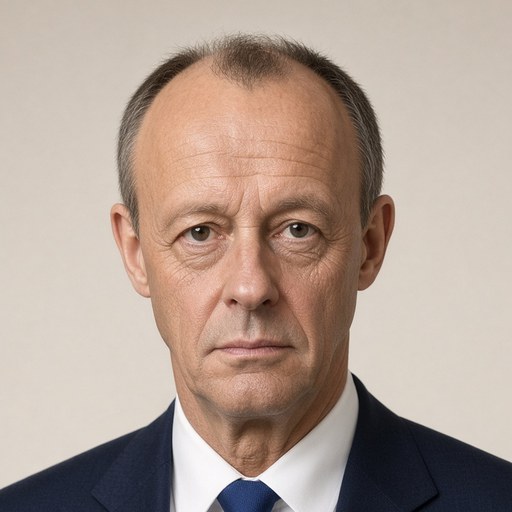
Chancellor's Speech at the International Charlemagne Prize in Aachen "A Strong Representative of a Strong Europe"
 Friedrich Merz · Chancellor of Germany
- Context
- Merz addressed European leaders at the 2025 International Charlemagne Prize ceremony in Aachen, congratulating Ursula von der Leyen as the award recipient.
- Main themes
- European unity and values, Charlemagne Prize ceremony, Ursula von der Leyen, defense of democracy and freedom, Russia's war on Ukraine, Franco-German relationship, European identity and culture, security and resilience, economic integration, rule of law and human dignity, Europe as a peace project
- Duration
- ~14 min
- Words
- 1,632
- Sentences
- 77
- Readability
- 47
- Grade
- 12.0
- Syntax
- 3.04
- Vocabulary
- 2.12
Translated from German
The broad sphere of national life a sentence belongs to. Every sentence has an Arena, so it is the denominator the other indices are read against.
Other77 sentences in 22 paragraphs
Dear Prime Ministers, dear colleagues from the European neighboring countries,
dear recipients of the Charlemagne Prize,
dear Minister-President,
dear colleagues from the governments, from the federal government and the state government, dear Mayor, dear Jürgen Linden, dear colleagues from the German Bundestag, from the European Parliament, and from the North Rhine-Westphalian State Parliament,
Excellencies,
but above all, dear Madam President, dear Ursula von der Leyen, first of all, on my part and on behalf of the entire federal government, heartfelt congratulations, dear Ursula von der Leyen, on being awarded the prestigious International Charlemagne Prize of Aachen!
“Our Europe was created to serve the people.”
So simply and yet so aptly has our award recipient expressed this time and again. We are both, if you will, children of this Europe. We are certainly among the first generation that was simply born into this Europe, into a Europe of freedom, into a Europe of peace, into a Europe of steadily increasing prosperity. This Europe has been entrusted to all of us today as the most valuable legacy of its founders, so to speak, into faithful hands.
We both – I may say this today – understand this legacy as a historical duty, the duty to preserve this Europe, a Europe that serves the people, a Europe in which we can live self-determined in freedom and in democracies. Just a few years ago, this sentence would have sounded to many like a Sunday speech. It was said that the old narrative of the peace project Europe had been told out in this time of supposedly eternal secure peace. It was said that younger generations measured the value of Europe only by very practical achievements, such as free travel, the common market, the opportunity to study or work in another country.
Yes, all of this is important achievements of Europe. That is why we have agreed, for example, to deepen and modernize the economic area of the European Union even further in the coming years, to simplify the rules and to reduce bureaucracy. We have agreed to better secure our borders together, and we have agreed to make Europe more resilient. This work towards an even safer, more competitive, and more prosperous Europe serves the people, there is no doubt about that. But the European project is more than that. The great European Helmut Kohl formulated it from this podium when he received the Charlemagne Prize in 1988, together with François Mitterrand: “The European Community, as we understand it, is much more than an association of interests, much more than a free trade zone; it is also and above all a community of values and culture.”
Today, we must ask ourselves whether we have really done enough in recent years to live up to this claim of a community of values and culture. The American Vice President J. D. Vance confronted us with this question earlier this year in Munich. What is it that we Europeans defend together? What is it that we stand for together?
Ladies and gentlemen, we do not just have any answer to that. We have the strongest and best answer that is conceivable. It is: We stand in Europe for what we have thought, developed, achieved, and fought for together over centuries through countless setbacks and catastrophes, namely the conviction that freedom and democracy are worth standing up for resolutely and, if necessary, fighting for their preservation. What unites us in Europe is the knowledge: Power must be bound to law and justice and remain so, otherwise tyranny threatens. What connects us in Europe is the enlightenment's realization: Every person is endowed with dignity, a dignity that is inviolable and whose protection is entrusted to all of us. That is the idea of Europe.
But those who look around the world see: This idea is under threat. It would be downright cynical to claim that it took another war on our continent to bring this to our attention. But the unfortunate truth is: Since the return of war to Europe, since Russia's brutal attempt at the complete subjugation of Ukraine, we Europeans are experiencing in a truly existential way how precious, but also how endangered, what we have built together is.
Ladies and gentlemen, we come together here in Aachen today as a truly European family, here in this city, which stands like hardly any other for the millennia-old roots that connect us Europeans. Here, since ancient times and then in the Middle Ages, European trade routes converged, from West to East, from North to South, over the Alps and over the Pyrenees, trade routes on which not only goods were exchanged, but also always ideas, information, and cultural achievements. Here in the Aachen Palatine Chapel, East and West Franks met, who could still speak to each other without interpreters at that time. Those who seek common roots in the Franco-German relationship will also find them here. We European peoples know very well what we stand for, what we defend today, and with what ideas we move into the future. We also know: We will have to further develop the peace project Europe, which has been so successful internally, into a peace project also externally. This includes our historical task of making Europe strong enough to restore peace on our continent and to secure freedom in the long term.
I want to tell you today: Germany will not just somehow participate in this task. Germany is ready to move forward with all determination on this task in close coordination with our European partners and neighbors. We will continue to support Ukraine with all our strength, militarily, but also economically and politically. Just yesterday, President Zelensky and I reaffirmed this together in Berlin.
A few weeks ago, we changed our constitution in Germany to raise the necessary funds for the defense of our country and thereby also to contribute to the defense of our partners and allies. We are striving for an even closer European cooperation of our defense industries, within the European Union, but also with partners such as Great Britain, Norway, and others outside this European Union. We Germans are ready to make far-reaching decisions at the NATO summit in June, decisions that do justice to Europe's responsibility for its own security and strengthen the transatlantic alliance as a whole. Yes, that is also a task and goal of Europe, to maintain, further develop, and make future-proof the transatlantic partnership as a strong alliance on equal footing. This applies when it comes to creating and maintaining a just peace for Ukraine, and it also applies to securing peace in Europe as a whole.
Germany is committed to serving this strong, united Europe. We will not stand on the sidelines when it comes to preserving and strengthening freedom and democracy, the rule of law, and human dignity on our continent. In these days and weeks, we are deciding together about the future of our continent, very concretely. Because history does not just happen. Politics is made by people, and political decisions give rise to history. I personally am firmly convinced that we hold all the possibilities in our hands to shape the future of Europe in such a way that it becomes a good future for all of us. Because the idea of the European peace community, the idea of freedom among equals, the idea of the inviolable dignity of man is of such strength. We do not need more tailwind than that.
We are already seeing in these days what can move forward. There is a new spirit of unity among the European states. This spirit was present when I sat with Emmanuel Macron, Keir Starmer, and Donald Tusk on the night train to Kyiv. This spirit was present at our meetings in Paris, in London, in Rome, in Tirana. This spirit was present when our award recipient concluded an agreement with British Prime Minister Keir Starmer just over a week ago, paving the way for a rapprochement between the United Kingdom and the European Union, in the interest of the people on both sides of the English Channel. This spirit was present last week at the Cathedral Square in Vilnius during the formation call of the German Brigade Lithuania, which will be stationed on the northeastern flank of NATO in the future.
And finally:
Henry Kissinger would certainly no longer have to ask today whom he should call if he wants to talk to Europe. He would call Ursula von der Leyen as the strong representative of a strong Europe. Dear Ursula von der Leyen, we are experiencing this very currently in the negotiations over tariffs, which you – I may say from this podium – are currently conducting on behalf of all of us, with the USA, but also with the People's Republic of China. It is right that you confidently represent the positions of the European Union with its approximately 450 million inhabitants and the largest internal market in the world. It is equally right that you made it clear from the very beginning that we Europeans do not want escalation that harms both sides. No, we want more free trade, fewer tariffs, and fewer restrictions because that benefits the people on both sides of the Atlantic.
Dear Ursula, you give Europe a voice in the world, a European voice. For this, you are being awarded the Charlemagne Prize today, richly deserved. I also personally congratulate you once again from the bottom of my heart. I connect these congratulations with a promise. In the coming years, I will work with all my strength for a Europe that draws new strength from its cohesion, a Europe that will continue to serve the people in the future, a Europe that above all defends our freedom.
Thank you very much.
The original German. The tags above are read on the English translation's sentences.
sehr geehrte Herren Premierminister, liebe Kollegen aus den europäischen Nachbarländern,
sehr geehrte Trägerinnen und Träger des Karlspreises,
sehr geehrter Herr Ministerpräsident,
liebe Kolleginnen und Kollegen aus den Regierungen, aus der Bundesregierung und der Landesregierung,
sehr geehrte Frau Oberbürgermeisterin,
sehr geehrter, lieber Jürgen Linden,
liebe Kolleginnen und Kollegen aus dem Deutschen Bundestag, aus dem Europäischen Parlament und dem nordrhein-westfälischen Landtag,
Exzellenzen,
vor allem aber sehr geehrte Frau Präsidentin, liebe Ursula von der Leyen,
zunächst auch von meiner Seite und im Namen der gesamten Bundesregierung herzlichen Glückwunsch, liebe Ursula von der Leyen, zur Verleihung der hohen Auszeichnung mit dem Internationalen Karlspreis zu Aachen!
„Unser Europa wurde geschaffen, um den Menschen zu dienen.“
So einfach und doch so treffend hat dies unsere heutige Preisträgerin immer wieder zum Ausdruck gebracht. Wir beide sind, wenn man so will, Kinder dieses Europas. Wir sind jedenfalls mit die erste Generation, die in dieses Europa einfach so hineingeboren wurde, in ein Europa der Freiheit, in ein Europa des Friedens, in ein Europa des beständig steigenden Wohlstands. Dieses Europa ist uns allen heute als wertvollstes Erbe der Gründerinnen und Gründer, sozusagen zu treuen Händen anvertraut.
Wir beide – auch das darf ich heute vielleicht so sagen – verstehen dieses Erbe als eine historische Pflicht, die Pflicht, dieses Europa zu erhalten, ein Europa, das den Menschen dient, ein Europa, in dem wir selbstbestimmt in Freiheit und in Demokratien leben können. Noch vor wenigen Jahren hätte dieser Satz in den Ohren vieler nach einer Sonntagsrede geklungen. Es hieß, die alte Erzählung vom Friedensprojekt Europa sei auserzählt in dieser Zeit eines vermeintlich ewig sicheren Friedens. Es hieß, dass jüngere Generationen den Wert Europas längst nur noch an ganz praktischen Errungenschaften mäßen, dem freien Reisen, dem gemeinsamen Markt, der Möglichkeit, in einem anderen Land zu studieren oder zu arbeiten.
Ja, das alles sind wichtige Errungenschaften Europas. Deshalb haben wir uns darauf verständigt, etwa den Wirtschaftsraum der Europäischen Union in den kommenden Jahren noch weiter zu vertiefen und zu modernisieren, die Regeln zu vereinfachen und die Bürokratie zurückzubauen. Wir haben uns darauf verständigt, unsere Grenzen gemeinsam besser zu sichern, und wir haben uns darauf verständigt, Europa wehrhafter zu machen. Diese Arbeit an einem noch sichereren, an einem noch wettbewerbsfähigeren und einem noch wohlhabenderen Europa dient den Menschen, daran besteht kein Zweifel. Aber das europäische Projekt, das ist mehr als das. Der große Europäer Helmut Kohl hat es bei der Verleihung des Karlpreises an ihn und an
François Mitterand
im Jahr 1988 von dieser Stelle aus so formuliert: „Die Europäische Gemeinschaft, wie wir sie verstehen, ist viel mehr als ein Interessensverband, viel mehr als eine Freihandelszone; sie ist auch und vor allem eine Werte- und Kulturgemeinschaft.“
Wir müssen uns heute die Frage stellen, ob wir diesem Anspruch einer Werte- und Kulturgemeinschaft in den letzten Jahren wirklich noch ausreichend gerecht geworden sind. Der US-amerikanische Vizepräsident
J. D. Vance
hat uns Anfang des Jahres in München mit dieser Frage in seiner Art konfrontiert. Was ist es, das wir Europäer gemeinsam verteidigen? Was ist es, wofür wir gemeinsam stehen?
Meine Damen und Herren, wir haben darauf nicht nur irgendeine Antwort. Wir haben darauf die stärkste und die beste Antwort, die überhaupt denkbar ist. Sie lautet: Wir stehen in Europa für das, was wir über Jahrhunderte hinweg durch unzählige Rückschläge und Katastrophen hindurch gemeinsam erdacht, entwickelt, errungen und auch erkämpft haben, nämlich die Überzeugung, dass Freiheit und Demokratie es wert sind, dass wir entschlossen für sie einstehen und, wenn notwendig, für ihren Erhalt kämpfen. Uns eint in Europa das Wissen: Macht muss an Recht und Gesetz gebunden sein und bleiben, sonst droht Tyrannei. Uns verbindet in Europa die Erkenntnis der Aufklärung: Jeder Mensch ist mit Würde ausgestattet, einer Würde, die unantastbar ist und deren Schutz uns allen anvertraut ist. Das ist die Idee Europas.
Doch wer sich auf der Welt umschaut, der sieht: Diese Idee ist bedroht. Es wäre geradezu zynisch, zu behaupten, dass es erst eines weiteren Krieges auf unserem Kontinent bedurft hätte, um uns genau das vor Augen zu führen. Aber wahr ist leider auch: Seit der Rückkehr des Krieges nach Europa, seit Russlands brutalem Versuch einer vollständigen Unterwerfung der Ukraine erleben wir Europäer auf wirklich existenzielle Art und Weise, wie kostbar, aber auch wie gefährdet das ist, was wir gemeinsam aufgebaut haben.
Meine Damen und Herren, wir kommen heute hier in Aachen als wahrhaft europäische Familie zusammen, hier in dieser Stadt, die wie kaum eine andere für die jahrtausendealten Wurzeln steht, die uns Europäer verbinden. Hier liefen seit der Antike schon und dann im Mittelalter europäische Handelswege zusammen, von West nach Ost, von Nord nach Süd, über die Alpen und über die Pyrenäen, Handelswege, auf denen nie nur Waren ausgetauscht wurden, sondern auch immer Ideen, Informationen und kulturelle Errungenschaften. Hier in der Aachener Kaiserpfalz begegneten sich Ost- und Westfranken, die damals noch ohne Dolmetscher miteinander sprechen konnten. Wer nach gemeinsamen Wurzeln im deutsch-französischen Verhältnis sucht, der findet sie auch hier. Wir europäische Völker, wir wissen sehr gut, wofür wir stehen, wofür wir uns heute verteidigen und mit welchen Ideen wir in die Zukunft gehen. Wir wissen auch: Wir werden das Friedensprojekt Europa, das nach innen so erfolgreich war, weiterentwickeln müssen, und zwar zu einem Friedensprojekt auch nach außen. Dazu gehört unsere historische Aufgabe, Europa so stark zu machen, dass es den Frieden auf unserem Kontinent wiederherstellen und die Freiheit auf Dauer sichern kann.
Ich möchte Ihnen heute sagen: Deutschland wird an dieser Aufgabe nicht nur irgendwie mitwirken. Deutschland steht bereit, bei dieser Aufgabe in enger Abstimmung mit unseren europäischen Partnern und Nachbarn mit aller Entschlossenheit voranzugehen. Wir werden weiterhin mit aller Kraft die Ukraine unterstützen, militärisch, aber auch wirtschaftlich und politisch. Erst gestern haben Präsident Selenskyj und ich das gemeinsam in Berlin bekräftigt.
Wir haben in Deutschland vor wenigen Wochen unsere Verfassung geändert, um die nötigen Mittel für die Verteidigung unseres Landes aufzubringen und dadurch zugleich auch einen Beitrag zur Verteidigung unserer Partner und Verbündeten zu leisten. Wir streben eine noch viel engere europäische Zusammenarbeit unserer Verteidigungsindustrien an, in der Europäischen Union, aber auch mit Partnern wie etwa Großbritannien, Norwegen und anderen außerhalb dieser Europäischen Union. Wir Deutsche sind bereit, beim
NATO
-Gipfel im Juni weitreichende Beschlüsse zu fassen, Beschlüsse, die Europas Verantwortung für die eigene Sicherheit gerecht werden und die transatlantische Allianz als Ganzes stärken. Ja, auch das ist Aufgabe und Ziel Europas, die transatlantische Partnerschaft als starkes Bündnis auf Augenhöhe zu erhalten, weiterzuentwickeln und zukunftsfähig zu machen. Das gilt, wenn es um die Schaffung und Wahrung eines gerechten Friedens für die Ukraine geht, und das gilt auch bei der Sicherung des Friedens in Europa insgesamt.
Deutschland stellt sich in den Dienst dieses starken, geeinten Europas. Wir werden nicht am Rande stehen, wenn es darum geht, Freiheit und Demokratie, Rechtsstaatlichkeit und Menschenwürde auf unserem Kontinent zu bewahren und zu stärken. In diesen Tagen und Wochen entscheiden wir gemeinsam über die Zukunft unseres Kontinents, wir sehr konkret. Denn Geschichte passiert nicht einfach so. Politik wird von Menschen gemacht, und aus politischen Entscheidungen erwächst Geschichte. Ich persönlich bin fest davon überzeugt, dass wir alle Möglichkeiten in unseren Händen halten, die Zukunft Europas so zu gestalten, dass sie eine gute Zukunft für uns alle wird. Denn die Idee der europäischen Friedensgemeinschaft, die Idee der Freiheit unter Gleichen, die Idee der unantastbaren Würde des Menschen ist von solcher Kraft. Mehr Rückenwind brauchen wir nicht.
Wir sehen in diesen Tagen schon, was alles vorangehen kann. Es gibt einen neuen Geist der Geschlossenheit zwischen den europäischen Staaten. Dieser Geist war da, als ich mit
Emmanuel Macron
,
Keir Starmer
und Donald Tusk im Nachtzug nach Kiew saß. Dieser Geist war bei unseren Treffen in Paris, in London, in Rom, in Tirana da. Dieser Geist war da, als unsere Preisträgerin vor gut einer Woche mit dem britischen Premierminister
Keir Stamer
ein Abkommen geschlossen hat, das den Weg für eine Wiederannäherung zwischen dem Vereinigten Königreich und der Europäischen Union ebnet, im Interesse der Menschen auf beiden Seiten des Ärmelkanals. Dieser Geist war in der vergangenen Woche auf dem Kathedralenplatz in Vilnius da beim Aufstellungsappell der deutschen Brigade Litauen, die künftig an der Nordostflanke der
NATO
stationiert sein wird.
Und schließlich:
Henry Kissinger
würde heute ganz sicher nicht mehr fragen müssen, wen er anrufen soll, wenn er mit Europa sprechen will. Er würde Ursula von der Leyen anrufen als die starke Vertreterin eines starken Europas. Liebe Ursula von der Leyen, wir erleben das ganz aktuell in den Verhandlungen über die Zölle, die du – das darf ich von dieser Stelle aus sagen – in unser aller Namen zurzeit führst, mit den
USA
, aber auch mit der Volksrepublik China. Es ist richtig, dass du die Positionen der Europäischen Union mit ihren rund 450 Millionen Einwohnern und dem größten Binnenmarkt der Welt selbstbewusst vertrittst. Genauso richtig ist es, dass du von Anfang an klargestellt hast, dass wir Europäer keine Eskalation wollen, die beiden Seiten nur schadet. Nein, wir wollen mehr freien Handel, weniger Zölle und weniger Beschränkungen, weil das den Menschen auf beiden Seiten des Atlantiks nützt.
Liebe Ursula, du gibst Europa in der Welt eine Stimme, eine europäische Stimme. Dafür wirst du heute hochverdient mit dem Karlspreis ausgezeichnet. Ich gratuliere dir dazu auch persönlich noch einmal von ganzem Herzen. Ich verbinde diesen Glückwünschen mit einem Versprechen. Ich werde in den nächsten Jahren mit all meiner Kraft an einem Europa mitarbeiten, das aus seinem Zusammenhalt neue Kraft schöpft, einem Europa, das auch in Zukunft den Menschen dient, einem Europa, das vor allem unsere Freiheit verteidigt.
Herzlichen Dank.