




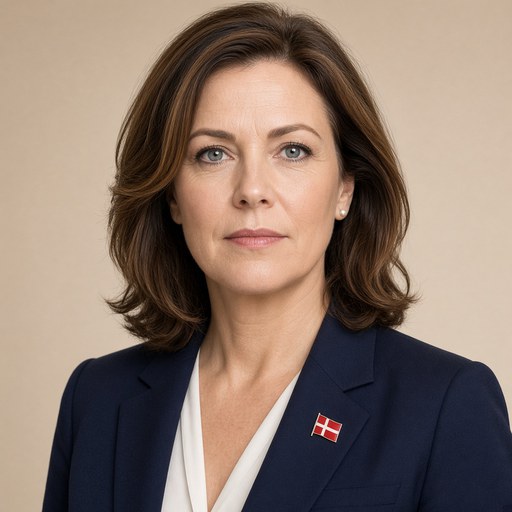
Prime Minister Helle Thorning-Schmidt's speech at the DI Summit
 Helle Thorning-Schmidt · Prime Minister of Denmark
- Context
- Thorning-Schmidt addressed the DI (Confederation of Danish Industry) Summit on September 30, 2014, outlining Denmark's economic progress, export strategy, and reform agenda.
- Main themes
- Danish business exports, Denmark-China trade relations, green transition and renewable energy, economic recovery, welfare state, public-private partnership, fiscal policy, education reform, job creation, growth policy
- Duration
- ~17 min
- Words
- 2,084
- Sentences
- 191
- Readability
- 64
- Grade
- 6.7
- Syntax
- 2.34
- Vocabulary
- 1.96
Translated from Danish
The broad sphere of national life a sentence belongs to. Every sentence has an Arena, so it is the denominator the other indices are read against.
Other191 sentences in 93 paragraphs
Three weeks ago, I stood by a hot dog stand in Beijing and was served a hot dog with everything – by Kjeld – that is, Kjeld Johannesen, the director of Danish Crown.
It was an almost surreal experience to stand in the middle of China at something as Danish as a Tulip hot dog stand. And to eat red sausages together with Danish and Chinese business people.
A very concrete piece of Denmark planted in China.
Two days later, I visited Peking University’s Primary School. Here, the fourth grade was busy building small robots and connecting them to their computers.
And what were they building the robots from? Well, it was, of course, Danish Lego bricks.
There I sat playing with Lego alongside a group of sweet Chinese kids. And behind the school uniforms and the well-groomed appearance, they are just as curious and creative as Danish children – with Lego, they get the chance to be that.
And that is precisely what the Chinese want to learn, not just from Lego, but also from Denmark: To be creative.
If I am to stay within the vocabulary of the summit, the Chinese say “Huanying Dajia” to the Danes. So I managed to say “welcome” in another language.
Denmark is present in one of the largest markets on the planet. In one of the world’s fastest-growing economies.
That is not a given. No, it is hard work to gain access to Chinese consumers. It requires a lot from you businesses. It requires a lot from us in the government. But we have come a long way through close cooperation.
The government’s active business policy is helping to pave the way for you in countries like China, Vietnam, Japan, and Brazil. Because it is in our common interest.
Danish industrial companies abroad create activity and jobs here at home.
The Chinese are interested in your high-quality products. And they also have a broader interest in Denmark. In the whole way the public sector and private companies work together.
Take, for example, green transition. Denmark has decades of experience with renewable energy and with becoming better at utilizing energy.
That is why we are leading in the field. And that is why we are being listened to politically. As at the climate summit in New York last week.
Denmark has a clear interest in setting ambitious international climate goals. It is an investment in our jobs and exports.
Countries like China are demanding green products from Danish companies. In an international competition, where it only counts to be number one.
We are that thanks to a forward-looking energy policy, a strong public-private partnership, and skilled companies.
* * *
Denmark can do something special. And Denmark is something special.
We have a strong community. We must hold on to that.
From the day the government took office, it has been our goal to bring Denmark through the crisis in a responsible way, where we include everyone.
That is why we have pursued a balanced policy for three years, where we support growth and jobs. Can afford to improve our welfare. And at the same time pursue a responsible fiscal policy.
Last year, we passed a significant Growth Plan with large tax cuts for you.
In the summer, we decided on an equally large Growth Package. Where we lower taxes on energy. Improve access to capital. And make the processing of cases in the public sector easier. You get better conditions.
We have reformed unemployment benefits. So more are in work or education – instead of being unemployed.
We have opened the door to a new and better public school. For many years, there have been one minor change after another in the school. Now we have entered into a broad agreement on a major reform. So our children can become more skilled.
Vocational schools were neglected for ten years. We are correcting that. From next year, students will have more hours and better teaching. And you will get even more skilled employees.
We have brought order to the public finances. So we avoid the budget overruns that used to be the rule rather than the exception. And if anyone knows the importance of keeping the budget and the accounts in order, it is you.
We have also organized the economic policy so that we can afford to improve our welfare.
That is a priority for the government. That is our choice. That is the Denmark I want. We do not support zero growth in public spending. And I am convinced that a secure welfare society is also important for you. A secure Denmark is a framework condition.
More jobs. Better welfare. The two legs are equally important in the government’s policy. It is about balance.
And we have come a long way.
Three years ago, Denmark was in the midst of an economic crisis.
Today, our economy is stronger.
Exports have grown. The housing market is doing better. Unemployment is falling. And most importantly: More people have entered the workforce. Private employment has increased by 35,000 since the beginning of 2013. That is shown by the new figures released this morning.
Of course, we are dependent on what happens abroad, not least in Europe. And here the outlook is somewhat mixed. We could all wish it was going faster. But here in Denmark, we have done a lot to pave the way for better times.
We are on our way. We are on the way out of the crisis.
* * *
The government’s economic policy works. Our reforms work. But we are not finished.
We must continue to improve our education. The next step will be to change the upper secondary schools so that they provide young people with a better foundation for further studies.
We will invest 5 billion kroner in the health of the Danish people. Among other things, we are addressing the common diseases cancer, COPD, and diabetes. We can do this without cutting elsewhere. Because we do not have zero growth.
And we need to have an agreement on the budget in place.
These are important tasks in the near future.
The government will maintain a sharp focus on more jobs and better welfare.
I have had the pleasure of discussing with many DI members over the years. I know that some of you want even larger tax cuts. It is not the entire wish list that we have checked off. But hand on heart: We have checked off quite a few.
I want to emphasize that the government’s results have been achieved through broad cooperation. Both in the Parliament and throughout Denmark. Also a cooperation with the business community.
We have moved away from a block policy, where a single party had a veto over the policy being pursued. We take responsibility for broad and robust decisions. For the benefit of both employees and businesses. And for our entire society.
Denmark is on track. That is where we need to stay. The time is certainly not for experiments with the Danish economy and welfare.
* * *
I also want to warn against experiments in immigration policy. Businesses need to have secure rules so that you can make your decisions on a solid basis.
At today’s summit, DI is focusing on foreign labor.
That is important. Because if you are to succeed in international competition, you need to have skilled people employed. For every highly qualified employee who gets a job in Denmark, more jobs are created for Danes.
And without good opportunities to recruit internationally, you may have to move production and jobs out of the country.
Therefore, it must be easy and quick for you to get highly qualified international labor that can create growth in Denmark. That is important.
But conversely, I do not want to invite foreigners to Denmark for low wages in jobs that can be filled by Danes. That is also important.
The government takes both considerations into account. That is our balance. And that is the common thread in the reform of international recruitment that was agreed upon just before the summer holidays.
Here we are targeting the various schemes. For example, the green card should not be used to attract highly educated foreigners who end up as cleaning assistants or convenience store employees. That has never been the intention.
The agreement means that you will find it easier to hire an IT expert from Pakistan or an engineer from Australia.
The hiring can happen faster – with the new fast track scheme. We are easing taxes for researchers and key employees. And we are cutting down on paperwork. That is something many of you have requested.
I also have news for you here today. An answer to yet another request from some of you.
When you want to hire, for example, a foreign researcher, it is not only important that you can offer good working conditions. It is also important that there are good conditions for the family that will move to Denmark. For example, that there is a proper school for the children.
Therefore, some of you have requested more international schools in Denmark.
The government will meet that request.
We will give municipalities the opportunity to establish international schools where there is a need. It is typically in the areas of the country that have one or more large companies with many foreign employees.
I find it hard to understand that not all parties in the Parliament can see that it is a good idea. International schools matter when you are out recruiting employees from other countries and getting them to feel welcome in Denmark.
The government wants a broad majority behind our new proposal. Just as a broad majority in the Parliament could support our reform of international recruitment.
Also Venstre. Yes, they are on board.
That is why I am somewhat puzzled by Venstre’s recent immigration proposal.
Why should the Danish state interfere in which countries you get your employees from?
Why should it be harder for you to hire an engineer from Pakistan than from Brunei?
And why should we single out Brazil as a country we would rather not have employees from? At the same time, we see Brazil as a growth market we want to collaborate with?
I am puzzled. And I have noted that I am not alone.
* * *
At today’s summit, DI says “welcome” to Denmark in several languages – also in Polish.
I know we agree that it should be a welcome on decent terms. DI’s members adhere to the agreements. You are part of the Danish model.
And thus, you are also part of a shared responsibility not to exclude Danes from the labor market. You have a shared responsibility to ensure that foreign employees in Denmark are not just seen as people who are here to drive down wages.
Unemployment is on the way down – fortunately. But that does not mean that individuals may find themselves in a difficult situation and be far from the labor market. Or feel like they are hanging on by their fingernails.
The government wants to do more for those people.
That is why the government is determined to combat social dumping.
That is why we have set aside an extra billion for further education.
That is why we agreed in the summer on an employment reform, where we spend more money on those who have received the least education.
And therefore, I want to conclude with a call to you businesses:
It is not enough to say welcome to skilled foreign labor. You must also say welcome to well-qualified Danish employees.
Also the machinist who has turned 50 and finds it difficult to return to the labor market.
Also the office assistant who has had a depression and wants to return to work but cannot keep up the same pace as before.
And not least the young person who is stopped in their education because he or she cannot find an internship.
Everyone should have a chance.
I am sure that you will help to lift that task.
Denmark is a strong community. And Danish businesses are part of that community.
Thank you for a good collaboration with you and with DI.
We do not agree on everything. But I actually think we have a good understanding in many areas. And when we collaborate, it is with that goal in mind: To create jobs and develop a strong Denmark.
Thank you.
The original Danish. The tags above are read on the English translation's sentences.
For tre uger siden stod jeg ved en pølsevogn i Beijing og fik serveret en hotdog med det hele – af Kjeld – altså Kjeld Johannesen, direktør for Danish Crown.
Det var en nærmest surrealistisk oplevelse at stå midt i Kina ved noget så dansk som en Tulip pølsevogn. Og spise røde pølser sammen med danske og kinesiske erhvervsfolk.
Et meget konkret stykke Danmark plantet om til Kina.
To dage senere besøgte jeg Peking University’s Primary School. Her var fjerde klasse i gang med at bygge små robotter og koble dem op på deres computere.
Og hvad byggede de robotterne af? Ja, det var naturligvis danske Lego-klodser.
Dér sad jeg og legede med Lego sammen med en flok søde kinesiske unger. Og bag skoleuniformerne og det velfriserede ydre er de lige så nysgerrige og kreative som danske børn – med Lego får de chancen for at være det.
Og det er netop, hvad kineserne gerne vil lære, ikke bare af Lego, men også af Danmark: At være kreative.
Hvis jeg skal blive i topmødets ordvalg, så siger kineserne ”Huanying Dajia” til danskerne. Så fik jeg sagt ”velkommen” på et sprog til.
Danmark er til stede på et af de største markeder på kloden. I en af verdens hurtigst voksende økonomier.
Det er ingen selvfølge. Nej, det er hårdt arbejde at få adgang til de kinesiske forbrugere. Det kræver meget af jer virksomheder. Det kræver meget af os i regeringen. Men vi er nået langt gennem et tæt samarbejde.
Regeringens aktive erhvervspolitik er med til at bane vejen for jer i lande som Kina, Vietnam, Japan og Brasilien. Fordi det er i vores fælles interesse.
Danske industrivirksomheder ude i verden skaber aktivitet og arbejdspladser herhjemme.
Kineserne er interesserede i jeres produkter af høj kvalitet. Og de har også en bredere interesse for Danmark. For hele den måde, det offentlige og de private virksomheder arbejder sammen på.
Tag for eksempel grøn omstilling. Danmark har årtiers erfaring med vedvarende energi og med at blive bedre til at udnytte energien.
Derfor er vi førende på området. Og derfor bliver der lyttet til os politisk. Som til klimatopmødet i New York i sidste uge.
Danmark har en klar interesse i at sætte ambitiøse internationale klimamål. Det er en investering i vores arbejdspladser og eksport.
Lande som Kina efterspørger grønne produkter fra danske virksomheder. I en international konkurrence, hvor det kun tæller at være nummer ét.
Det er vi takket være en fremsynet energipolitik, et stærkt offentligt-privat samarbejde og dygtige virksomheder.
* * *
Danmark kan noget særligt. Og Danmark er noget særligt.
Vi har et stærkt fællesskab. Det skal vi holde fast i.
Fra den dag regeringen trådte til, har det været vores mål at bringe Danmark gennem krisen på en ansvarlig måde, hvor vi får alle med.
Derfor har vi i tre år ført en balanceret politik, hvor vi understøtter vækst og arbejdspladser. Har råd til at forbedre vores velfærd. Og samtidig fører en ansvarlig finanspolitik.
Sidste år vedtog vi en markant Vækstplan med store skattelettelser til jer.
I sommer besluttede vi en lige så stor Vækstpakke. Hvor vi sænker afgifter på energi. Forbedrer adgangen til kapital. Og gør sagsbehandlingen hos det offentlige lettere. I får bedre vilkår.
Vi har reformeret kontanthjælpen. Så flere er i arbejde eller uddannelse – i stedet for at gå ledige.
Vi har åbnet døren til en ny og bedre folkeskole. Gennem mange år er der kommet den ene mindre ændring af skolen efter den anden. Nu har vi indgået en bred aftale om en stor reform. Så vores børn kan blive dygtigere.
Erhvervsskolerne var forsømt i ti år. Det retter vi op på. Fra næste år får eleverne flere timer og bedre undervisning. Og I får endnu dygtigere medarbejdere.
Vi har bragt orden i den offentlige økonomi. Så vi undgår de budgetoverskridelser, som før var reglen snarere end undtagelsen. Og hvis nogen kender vigtigheden af, at budgettet bliver holdt, og regnskabet passer, så er det jer.
Vi har også tilrettelagt den økonomiske politik, så vi har råd til at forbedre vores velfærd.
Det prioriterer regeringen. Det har vi valgt. Det er det Danmark, jeg ønsker. Vi går ikke ind for nulvækst i de offentlige udgifter. Og jeg er overbevist om, at et trygt velfærdssamfund også er vigtigt for jer. Et trygt Danmark er et rammevilkår.
Flere job. Bedre velfærd. De to ben er lige vigtige i regeringens politik. Det handler om balance.
Og vi er nået et stykke på vejen.
For tre år siden var Danmark midt i en økonomisk krise.
I dag er vores økonomi stærkere.
Eksporten er vokset. Boligmarkedet har det bedre. Ledigheden falder. Og vigtigst af alt: Flere er kommet i arbejde. Den private beskæftigelse er steget med 35.000 siden starten af 2013. Det viser de nye tal, der blev offentliggjort her til morgen.
Selvfølgelig er vi afhængige af, hvad der sker i udlandet, ikke mindst i Europa. Og her er udsigterne noget blandede. Vi kunne alle sammen ønske, at det gik hurtigere. Men her i Danmark har vi gjort meget for at bane vejen mod bedre tider.
Vi er i gang. Vi er på vej ud af krisen.
* * *
Regeringens økonomiske politik virker. Vores reformer virker. Men vi er ikke færdige.
Vi skal videre med at forbedre vores uddannelser. Næste skridt bliver at forandre gymnasierne, så de giver de unge et bedre grundlag for at læse videre.
Vi vil investere 5 milliarder kroner i danskernes sundhed. Blandt andet sætter vi ind mod folkesygdommene kræft, KOL og diabetes. Det kan vi gøre uden at skære andre steder. Fordi vi ikke har nulvækst.
Og vi skal have en aftale om finansloven på plads.
Det er vigtige opgaver i den kommende tid.
Regeringen vil fastholde et knivskarpt blik på flere job og bedre velfærd.
Jeg har haft fornøjelsen at diskutere med mange DI-medlemmer gennem årene. Jeg ved godt, at nogle af jer ønsker endnu større skattelettelser. Det er ikke hele jeres ønskeseddel, vi har fået krydset af. Men hånden på hjertet: Vi har sat en del krydser.
Jeg vil understrege, at regeringens resultater er nået i et bredt samarbejde. Både i Folketinget og i hele Danmark. Også et samarbejde med erhvervslivet.
Vi har gjort op med en blokpolitik, hvor et enkelt parti havde vetoret over den politik, der blev ført. Vi tager ansvar for brede og robuste beslutninger. Til gavn for både lønmodtagere og virksomheder. Og for hele vores samfund.
Danmark er på sporet. Der skal vi blive. Tiden er bestemt ikke til eksperimenter med dansk økonomi og velfærd.
* * *
Jeg vil også advare mod eksperimenter i udlændingepolitikken. Virksomhederne skal have trygge regler, så I kan træffe jeres beslutninger på et sikkert grundlag.
På topmødet i dag sætter DI fokus på udenlandsk arbejdskraft.
Det er vigtigt. For hvis I skal klare jer i den internationale konkurrence, så skal I have dygtige mennesker ansat. For hver højtkvalificeret medarbejder, der får job i Danmark, bliver der skabt flere arbejdspladser til danskere.
Og uden gode muligheder for at rekruttere internationalt, så kan I være nødt til at flytte produktion og arbejdspladser ud af landet.
Derfor skal det være nemt og hurtigt for jer at få højtkvalificeret international arbejdskraft, som kan skabe vækst i Danmark. Det er vigtigt.
Men omvendt vil jeg ikke invitere udlændinge til Danmark til lave lønninger i job, der kan besættes af danskere. Det er også vigtigt.
Regeringen tager begge hensyn. Det er vores balance. Og det er den røde tråd i den reform af international rekruttering, som blev aftalt lige før sommerferien.
Her målretter vi de forskellige ordninger. For eksempel skal green card ikke bruges til at tiltrække højtuddannede udlændinge, der ender som rengøringsassistenter eller kioskmedarbejdere. Det har aldrig været hensigten.
Aftalen betyder, at I får lettere ved at ansætte en it-ekspert fra Pakistan eller en ingeniør fra Australien.
Ansættelsen kan ske hurtigere – med den nye fast track-ordning. Vi lemper skatten for forskere og nøglemedarbejdere. Og vi skærer ned på papirarbejdet. Det er noget, mange af jer har efterspurgt.
Jeg har også en nyhed med til jer her i dag. Et svar på endnu et ønske fra nogle af jer.
Når I vil ansætte for eksempel en udenlandsk forsker, så betyder det ikke alene noget, at I kan tilbyde gode arbejdsvilkår. Det er også vigtigt, at der er gode forhold for den familie, der skal flytte med til Danmark. For eksempel, at der er en ordentlig skole til børnene.
Derfor har en del af jer efterspurgt flere internationale skoler i Danmark.
Det ønske vil regeringen imødekomme.
Vi vil give kommunerne mulighed for at oprette internationale skoler dér, hvor der er brug for det. Det er typisk de steder i landet, som har en eller flere store virksomheder med mange udenlandske medarbejdere.
Jeg har svært ved at forstå, at ikke alle partier i Folketinget kan se, at det er en god idé. Internationale skoler har betydning, når I skal ud og rekruttere medarbejdere fra andre lande og få dem til at føle sig velkomne i Danmark.
Regeringen ønsker et bredt flertal bag vores nye forslag. Ligesom et bredt flertal i folketinget kunne støtte op om vores reform af international rekruttering.
Også Venstre. Jo, de er med.
Derfor undrer jeg mig noget over Venstres seneste udlændinge-udspil.
Hvorfor skal den danske stat blande sig i, hvilke lande I får jeres medarbejdere fra?
Hvorfor skal I have sværere ved at ansætte en ingeniør fra Pakistan end fra Brunei?
Og hvorfor skal vi pege Brasilien ud som et land, vi nødigt vil have medarbejdere fra? Samtidig med, at vi ser Brasilien som et vækstmarked, vi gerne vil samarbejde med?
Jeg undrer mig. Og jeg har noteret mig, at jeg ikke er alene.
* * *
På topmødet i dag siger DI ”velkommen” til Danmark på flere sprog – også på polsk.
Jeg ved, vi er enige om, at det skal være et velkommen på ordentlige vilkår. DI’s medlemmer holder sig til overenskomsterne. I er en del af den danske model.
Og dermed er I også en del af et fælles ansvar for ikke at lukke danskere ude af arbejdsmarkedet. I har et medansvar for at sikre, at udenlandske medarbejdere i Danmark ikke bare bliver opfattet som nogle, der er her for at trykke lønnen.
Ledigheden er på vej ned – heldigvis. Men derfor kan den enkelte godt stå i en svær situation og være langt fra arbejdsmarkedet. Eller have følelsen af at holde sig fast med det yderste af neglene.
De mennesker vil regeringen gøre mere for.
Derfor er regeringen stålsat på at bekæmpe social dumping.
Derfor har vi sat en ekstra milliard af til efteruddannelse.
Derfor aftalte vi i sommer en beskæftigelsesreform, hvor vi bruger flere penge på dem, der har fået mindst uddannelse.
Og derfor vil jeg slutte af med en opfordring til jer virksomheder:
Det er ikke nok at sige velkommen til dygtig udenlandsk arbejdskraft. I må også sige velkommen til velkvalificerede danske lønmodtagere.
Også den maskinarbejder, der har rundet de 50 og synes, det er svært at komme tilbage på arbejdsmarkedet.
Også den kontorassistent, der har haft en depression og gerne vil tilbage på jobbet, men ikke magter samme tempo som før.
Og ikke mindst det unge menneske, der bliver stoppet i sin uddannelse, fordi han eller hun ikke kan finde en praktikplads.
Alle skal have en chance.
Jeg er sikker på, at I vil være med til at løfte den opgave.
Danmark er et stærkt fællesskab. Og de danske virksomheder er en del af fællesskabet.
Tak for et godt samarbejde til jer og til DI.
Vi er ikke enige om alting. Men jeg synes egentlig, vi har en god forståelse på mange områder. Og når vi samarbejder, er det med det mål for øje: At skabe arbejdspladser og udvikle et stærkt Danmark.
Tak skal I have.