




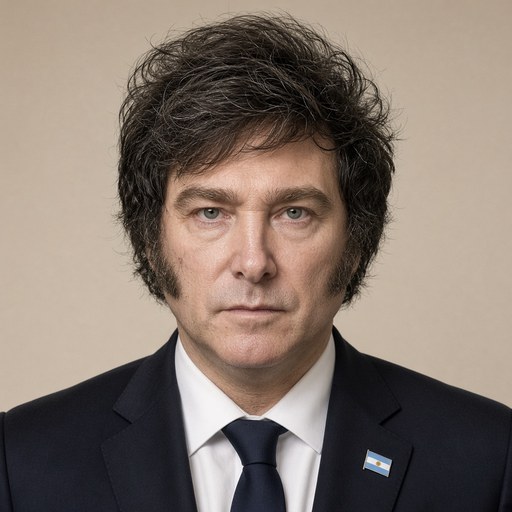
Words of the President of the Nation, Javier Milei, at the 137th inauguration of the La Rural Exhibition.
 Javier Milei · President of Argentina
- Context
- Milei addressed Argentina's Rural Society at the 137th La Rural Exhibition in Buenos Aires on July 26, 2025, celebrating agricultural achievements and defending his economic reforms.
- Main themes
- Agricultural sector achievements, economic liberalization, withholdings and tax reform, currency controls and exchange rate policy, inflation and fiscal deficit, private property rights, social justice critique, mental parasites and leftist ideology, beef exports, Argentine economic history, Rural Society, state intervention
- Duration
- ~38 min
- Words
- 4,508
- Sentences
- 172
- Readability
- 47
- Grade
- 13.0
- Syntax
- 3.27
- Vocabulary
- 2.29
Translated from Spanish
The broad sphere of national life a sentence belongs to. Every sentence has an Arena, so it is the denominator the other indices are read against.
Other172 sentences in 49 paragraphs
Good morning everyone. To begin, I want to thank the authorities of the Rural Society and, in particular, its President Nicolás Pino, for inviting me once again to speak here before all of you.
It is a pride for me to stand before this arena where, for almost a century and a half, the best representatives of our livestock activity have paraded. This institution has become a global reference, and here come judges, producers, breeders, and leaders from the sector from all countries. So much so that our genetics is sought after as a prized asset in all livestock countries around the world. But not only is our genetics valued worldwide, but also our meat: our beef exports are steadily increasing, and in 2024, we managed to exceed 900,000 tons exported for the first time in over 100 years.
I would like to congratulate all the actors in the sector for this achievement and also for continuing to hold this exhibition, which represents the essence of the national economy and brings it closer to civil society.
Exactly one year ago, I stood before you with the promise of starting a profound change in our society together. At that time, I warned that the road was not easy, but it was the right path, and we wanted to move forward steadily without jeopardizing the sustainability of progress. Because everyone — and the countryside more than anyone — has learned from the past that hasty changes are easily erased and, far from being set in stone, disappear like footprints in the sand.
Back then, we could not count on our hands to enumerate the countless problems that troubled the Argentine countryside. We came from many years of currency controls, multiple exchange rates, uncontrolled inflation with its economic unpredictability, ridiculous rates to access financing, increasingly delirious bureaucratic obstacles, ever more suffocating tariffs for the import of inputs and machinery, and, of course, the nefarious and sinister withholdings.
All these issues did not arise by chance or by magic, but were the result of a deliberate plan by politics and perpetuated by the elite over time. The question is: For what? To squeeze the most dynamic sector of the country, ultimately slaughtering the cash cow.
To give a couple of examples: of the 90 years that the Central Bank of the Argentine Republic has been in existence, for 70 of them there were currency controls, hindering international trade and the possibility of saving for Argentines. And, during more than half of the remaining 20 years, although the exchange rate was unified, it was fixed by law. That is to say, Argentina had gone almost 100 years without knowing true exchange rate floating. This was done to try to contain the inflation that the State itself had generated by financing, year after year, a giant fiscal deficit with unbacked monetary issuance and no counterpart in money demand. Thus, entrepreneurs and producers were forced to constantly raise the prices of their goods and services to keep their businesses afloat. This inflationary regime suited the political elite perfectly to easily install their anti-business narrative, in which supposedly unscrupulous speculative entrepreneurs took advantage of people's needs. In the specific case of the countryside, they used this miserable narrative to promote the violation of private property. Thus, it became normalized that those who generated the most wealth were subjected to impossible tax regimes. But it also reached the extreme of proposing agrarian reforms, inciting the breaking of silo bags, and even defending cattle theft. And all these injustices were proclaimed in a supposed supreme good, the sinister social justice.
This behavior obeys what my friend, the writer Axel Kaiser, called mental parasites, which could be defined as malignant ideas that settle in our brains and lead to poverty, feeding on our noblest intentions. I find it pertinent to pause on a specific mental parasite: that of so-called social rights. This mental parasite, inherent to the left at all times and places, seeks to generate infinite expectations in people, claiming that where there is a need, a right is born, and that all rights require state intervention and public spending. Therefore, taxes.
The problem is that needs are infinite and someone has to pay for rights. And resources are scarce, they are finite. In other words, to fulfill such nonsense, one would have to include the first law of economics, which is the law of scarcity. Because of this stupidity that “with every need there is a right,” we were led directly to the brink of the abyss. This impossible mandate of guaranteeing supposed infinite rights to rectify any need continuously leads to violating the budget constraint, which has been the main problem that besieged our country for centuries. Covering the deficit with issuance led us to remove 13 zeros from our currency and to destroy five monetary signs. Covering it with debt made us the country with the highest number of defaults in history. Covering it with taxes not only led us from being one of the most prosperous countries in the world to a country that, when we arrived, had inflation traveling at a rate of 1.5% daily — which is more than 17,000% annually — we had 57% of people in poverty, and 70% of our youth were poor.
In short, none of this was accidental. Since, as I said, Thomas Sowell: the first law of economics is scarcity, since there is not enough for everyone; while the first law of politics is to ignore the first law of economics. It must be for this reason that we had to choose, for the first time in history, an orthodox economist to fix this mess.
It is not necessary to study human history in depth to know where these fallacies lead when applied to their ultimate consequences. Just look at what happened in the Soviet Union and in other places where forced collectivization was implemented, condemning tens of millions of people to death by starvation. In total, they ended up killing 150 million human beings. Never forget that: those who lead these social rights, like social justice and equality of opportunity, lead to the equalizing guillotine that ultimately leads to totalitarianism, poverty, and famine.
Returning to the national issue, we cannot yet declare the war against the impoverishing model that the elite has mounted for so many decades to be over, but we can affirm that we are winning many battles. This translates into the reduction of costs that the agricultural sector has seen, in particular, over the last year and a half. To list some advances: we have eliminated currency controls and the PAIS Tax, returning approximately 30% of profitability to the sector; we facilitated the import of fertilizers and reduced tariffs; we allowed the import of used machinery again, reducing its cost by up to 50%; we opened the market for foot-and-mouth disease vaccines, and in the next campaign, there will already be an offer for it at half its historical value. We opened the export of live cattle and eliminated the minimum slaughter weight, two openly anti-liberal restrictions that should never have existed. We completely deregulated the production of fruits and vegetables, removed SENASA from the production function: no more controlling the thickness of the sheet metal or the height of the bathroom faucet, no more having a public official tell a producer when to harvest. We also eliminated the RUCA for all producers, except grains.
In terms of financing the sector, deregulation in the Warrant market has generated not only a reduction in the Warrant cost from 3.5% to 1%, but also allows the producer to issue their own Warrant, making their stocks liquid. We also implemented the merchandise promissory note, an old demand from the sector that is already being used, especially for the purchase of machinery. In this sense, we are also developing lines of credit in kilos of meat so that the sector can recapitalize and grow in the number of heads without fear of price variations that livestock may have. We do this in line with our campaign promise to move towards free competition of currencies, so that each sector can project its growth in a more predictable way.
On the other hand, I believe that many of you are aware of the change of era that is being experienced in terms of connectivity. Thanks to our allowing the entry of Starlink into the country, high-quality internet can be accessed in any corner of Argentina.
Thanks to all this, and to the cascade of problems inherited by the sector, only the heaviest anvil remains: the withholdings. That is why I want to take this day to make an important announcement about this great scourge that should never have existed.
Starting today, withholdings on poultry and beef will be reduced from 6.75% to 5%; withholdings on corn, from 12% to 9.30%; withholdings on sorghum, from 12% to 9.30%; withholdings on sunflower, from 7.5% and 5% to 5.5% and 4%; and also withholdings on soybeans, from 33% to 26%, and on soybean by-products, from 31% to 24.5%.
To have a sense of magnitude, this results in a reduction of withholdings of the rates for grain chains of 20% and a reduction of withholdings in the cattle and meat chain of 26%, which will be permanent, aimed at boosting the countryside, the sector with the highest productivity in the economy and heavily punished by these taxes in the last 20 years. This also includes the temporary reductions we announced on wheat and barley, which will also be permanent. I repeat, these reductions are permanent and will not be reversed while I am in government.
Eliminating withholdings is an obsession for our administration, and we have made many advances in that direction. We have already eliminated withholdings on regional economies, the dairy sector, pork, and some segments of beef. In addition, we have reduced them for wheat and barley. But it is very important to keep in mind that all this is only possible thanks to the fiscal surplus we have achieved, which we protect like water in the desert against the systematic onslaught of the political elite.
I repeat, there is no possibility of tax reduction without having a sustained fiscal surplus. This concept is not only important for society to internalize, but mainly for political leadership, which unfortunately does not seem to have heeded the cry for change that society expressed in 2023. Did they think the chainsaw was a joke?
Not far from here, the state party recently proposed in the National Congress a set of laws that attempt to lead our country to bankruptcy. Making all these measures effective and sustaining them over time would imply an increase in the dynamics of Argentine debt by an amount close to 350 billion dollars at present value. To grasp the magnitude of this nonsense, this represents an 80% increase in all our current debt. Look how funny it is when they pretend to be generous with someone else's pocket!
Financing this tax assault, the favorite activity of the elite, would imply an increase in the fiscal pressure between two and three percentage points of GDP. This would be equivalent to quadrupling the withholdings compared to their current value and that they return to being at least two percentage points of GDP. It should not surprise you that this money comes from a place where, for example, the gentleman from 125 resides.
In short, they want nothing less than to annihilate the sector for the capital sin of not needing their handouts. Financing this spending via public debt would subject the youth to higher future taxes, which would be a tragedy, considering that we inherited child poverty of 70% at the beginning of our administration.
By the way, poverty, with the management of our Minister of Human Capital, Sandra Pettovello; our Minister of Economy, Toto Caputo, taming inflation; and the Minister of Security, Patricia Bullrich, maintaining order in the streets, has allowed us to reduce poverty by more than 25 points. We have lifted 12 million Argentines out of poverty and lifted 2.5 million young people out of poverty, much to the chagrin of the state party.
In short, the pretty, bombastic, and pompous phrases that come from the House of Congress are nothing more than a sentimental show financed with someone else's pocket. Because none of those who advocate for this fiscal torpedo even thought to resign or express themselves against privileged pensions.
Financing it via issuance — to which the fiscal degenerates resort when they do not have the strength to steal outright — implies returning to the path of inflation, which has cost us so much effort to leave behind. The most regressive tax of all, since it punishes the most vulnerable more harshly. But of course, it makes those vulnerable dependent on the state, and easy to capture for votes and continue sinking the country.
For all these reasons, and to protect the fiscal surplus, which is the anchor that is leading us to the future, we will veto these laws that seek to lead the country to bankruptcy and poverty.
Ultimately, these aberrations are called "high politics" by those who claim to defend those who can no longer wait, when in reality what they are doing is exterminating the poor and the young, the most defenseless sectors of our society, who have no lobbying power or voting rights. Because they are nothing more than genocides of the future, they are murderers of our children, our poor and our defenseless, who, in order to scrape together a handful of votes today, are capable of condemning entire future generations to misery.
Today we came and live in the long term of those who did not believe in the long term, and we take responsibility for the fiscal irresponsibility that they still want to flaunt today. Such economic nonsense can only be explained when we notice that Argentina constantly performs poorly in math tests, and apparently the elite and their friends are not immune to this phenomenon. Or put in plain terms: they can't even add with an abacus.
That is why they say that an annual expenditure of 17 billion dollars can be financed with a budget cut of 30 million in the SIDE, which they now want to defund, but until very recently they wanted to manage. When in reality a cut 570 times larger would be needed.
And not to mention the falsely fiscal criticisms of our trips abroad, which have undeniably been economically beneficial for the country, and that surely in a few days we will have tremendous, but tremendous, news on the international stage thanks to the enormous work carried out by our chancellor, Minister Gerardo Werthein. And it is incredible that the same trips that, curiously, are criticized by those who spend trip after trip, paid for by congressional allowances, for personal, leisure, or political purposes. This is the central problem of what my friend Axel Kaiser describes in his book Mental Parasites: these ideas that ferment and grow in the minds of political leaders like parasites, incapacitate any rational decision on any topic, given that prejudices and dogma impose themselves over reality. As a curious fact, the word "parasite" comes from the Greek para, which means beside, and sitos, which means food. In ancient Greece, parasites were public employees responsible for supervising the harvests and the preparation of bread, and then they would eat from above. In summary, they lived off the efforts of others. Thus, we can affirm that when we refer to the elite, to high politics, we are talking about true fiscal parasites in the deepest sense of the term, and that you have been suffering from this for many years, especially the last 20.
We understand and want to address the historical demand of the sector regarding the issue of withholdings, but we can never overlook their economic implications. On the contrary, we also understand that being extremely cautious in reducing them is to perpetuate an abomination that should never have existed in the first place, and to put a ceiling on the growth of the sector and, consequently, of the entire economy. We believe we have made it clear with actions the direction in which we want to go. The path is drawn, we are walking it, and we will achieve it.
At the same time, of the 8,000 reforms we have carried out, more than 400 were to free this sector, and we continue to accelerate the process. We will make Argentina the freest and most prosperous country in the world. You, accustomed to thinking in generations, understand more than any other sector of the country what this means. That is why we are building a country where all entrepreneurs have a place and where all companies have the opportunity to develop, whether from the field or any other sector.
Today we see it clearly in how growth in other sectors, such as energy and mining, allows us to maintain fiscal balance with the reduction of withholdings. That is the true virtuous circle of Argentine growth that we will see in the coming years. Everything that helps to improve the surplus will help to accelerate the tax reduction, and in turn, will continue to enhance the surplus over time due to the natural growth of the economy. That is why we also understand that the reduction of withholdings, apart from benefiting the field, will boost the entire economy of the interior of the country more directly or indirectly, providing services to agricultural producers. From veterinarians and laboratories, or engineers and seed developers, to gas station attendants, tire repairmen, grocery store owners, whether a drone pilot or a silo builder, everyone benefits from the profitability of the private sector staying in the private sector, instead of being extirpated by the damned State.
But it is also necessary to remember that in Argentina there is no political consensus regarding the role of the field: we liberals are clear about it; the rest are not. The party of the State believes that you must eternally subordinate yourselves to subsidize the decrepit infant industries of the elite. They think that, as a sector, you are worth nothing, that you only extract rent from a fixed asset. Let us remember the fixation that the doubly condemned and now imprisoned had when she called the product that financed her entire collectivist adventure "weeds."
We know that you are the sector that invests the most and innovates the most in the entire country, generating almost all of the net foreign currency, and all of that with the State taking a huge part of your production to finance itself.
That is why today there are two and only two possible models of country: the model of freedom and that of state servitude, represented by the party of the State. That is to say, all those who do not embrace the ideas of freedom. And this is not a half-hearted issue: you either embrace them or you do not embrace them, because any intermediate path also leads to collectivism.
We are the only ones who believe in the model of freedom, whose conditions are private property and the role of the State in defending and preserving it. Opposite us is a band of outlaws, cattle thieves turned politicians, who only know how to ravage the wealth that others generated with their effort and foresight, which is why they only leave misery in their wake. And when these characters cannot steal from the producer what is theirs, they prefer to destroy it. Let us remember that not long ago, they called for breaking silo bags and filled Congress with thieves. They need to deny that we were ever a power because they need to deny you, they need to deny the great Argentine field, which was the undisputed engine of a nation that once knew how to be a beacon of freedom and wealth in the world. A nation that attracted the hungry masses of Europe with the mere promise that they could keep the fruits of their labor, without fear that others would steal them. They took political power and oppressed the true generators of wealth. And they did this to make people think that it is the action of the politician, through distribution, that produces such wealth. Today more than ever, Sarmiento's adage remains valid: civilization or barbarism.
The elite is sharpening its knives to cut its share again. Do not let them sit at the table again under false promises of civility. Let us sit down to build a new golden century for Argentina. They want to sell that liberalism is traitorous and unpatriotic, as they like to say in their delirium, they claim that we are giving the country away to foreign interests, and they, for their part, have chosen to overact their patriotism to a suspicious point, indicating a clear intention to disguise a deficiency. Here the cultural battle on their side has been key. Kirchnerism did decades of work to identify the homeland and the State, and to convince people that they are exactly the same. That is why, in that delirious worldview, enlarging the State is to do nationalism, and deregulation and tax reduction is an act of surrender and treason. This way of seeing things, so inhumane, outdated, and anachronistic, has been the ballast that has kept us sunk for a hundred years. If the way to make a country a power were to massively enlarge the State and its interferences, the Soviet Union would still be standing and communism would dominate the earth. It seems they did not take note of something that happened in 1989, the Wall fell and crushed the leftists.
We, on the other hand, come to propose something else: a true patriotism that concentrates its efforts on the greatness of society and not of bureaucracy. We know that the only real, sustainable, and lasting patriotism is liberalism, because it is the only one that ensures the progress, strength, and independence of nations and their citizens, apart from being the ideology that gave birth to the Argentine Republic. Because that is the true notion of homeland: that all Argentines can progress and that Argentina becomes a thriving and sovereign country. Not the distorted idea that Kirchnerism tried to impose, which called "national and popular" the worst of our people: crime, corruption, idleness, opportunism, blockades, and "ñoquis."
We are patriots, we love the soil of our nation, the land that saw our ancestors grow, the epic of our heroes, and the institutions founded by the founders of the generation of '37, and not those who sigh in the shadow of the restoring tyrant.
We understand by homeland what Alberdi said, the father of the Constitution that brought us the decade of greatest progress in our history: the homeland is freedom, order, wealth, and civilization organized on native soil, under its insignia and its name. In this way, we are convinced that lowering inflation is to make homeland, lowering poverty is to make homeland, lowering taxes is to make homeland, lowering insecurity is to make homeland, trading is to make homeland, regaining the respect of the world is to make homeland, revaluing our currency is to make homeland, becoming debt-free is to make homeland, and paraphrasing the motto of this centennial institution: cultivating the soil is to make homeland.
Dear friends of the Rural Society: If there is something I wanted to convey to you during my speech, it is that you have a President who values and respects the entire agricultural sector, and who is doing everything in his power to reverse the plunder to which you have been subjected by the band of looters that governed the country for the last decades. This permanent reduction of withholdings is proof of this, and it will continue moving forward. Know that our vision goes far beyond simply ordering the accounts. If that were all, tomorrow others would come to resume the cycle of misery from which we are emerging.
Our north is a long-term nation project, where the State is strictly dedicated to its essential functions, and the private sector —that is, you, but also all those who undertake, trade, produce, and risk and work throughout the country— can fully exploit their creative capacity. We are heading towards a paradigm shift where the old vices of the political class will be buried, and where the Argentina we once knew in our golden age can flourish again.
Before, economic growth provided resources to a caste obsessed with pursuing the private sector to fill their pockets. Now, growth is the tool to sustainably reduce the weight of the State on the lives and lawful activities of people.
Here it is worth mentioning this week's Parashá, which, curiously, touches on this topic. In the reading of Matot Masei, the Torah recounts how Moses, after initially opposing, ultimately agrees to let the tribes of Gad and Reuben settle in the lands east of the Jordan, before entering the lands of Israel. But Moses agrees on the condition that they accompany the Hebrew people in the conquest of the Promised Land, under the promise that they could then return to those lands. The message that emerges is that, while we all want to realize our dreams and may be tempted to seek shortcuts to achieve quick and effortless results, we must never abandon the path to the Promised Land.
In November 2023, the Argentine people elected a new government and a new model. We also decided to leave behind the yoke of the oppressive tyrant and embark on our own exodus to the Promised Land. During this project, difficulties have arisen, arise, and will continue to arise, which may tempt us to abandon the struggle and settle for easy results. Far from letting these difficulties discourage us, we must understand that they arise because we are on the right path.
We must continue this daily battle for freedom, because only by staying on the right path will we leave behind all these decades of systematic impoverishment and finally achieve prosperity. With this conquest, the mother of all conquests, we will be able to materialize our dreams and continue achieving, each one, their own personal conquests.
That is why, to conclude, I want to ask you not to stop supporting this country project, because it is the only guarantee that you will not suffer again the horror to which the political elite dragged you in the last century. Moreover, I am sure that very soon you will also begin to see the fruits of this plan, of which all of you are an indispensable part. Thus, in this solemn act, I declare the one hundred thirty-seventh Argentine Rural Exhibition inaugurated.
May God bless you all, may the forces of heaven accompany us, and long live freedom, damn it! Long live freedom, damn it! Long live freedom, damn it! Thank you very much.
The original Spanish. The tags above are read on the English translation's sentences.
Buenos días a todos. Para comenzar, quiero agradecer a las autoridades de la Sociedad Rural y, en especial, a su Presidente Nicolás Pino, por invitarme una vez más a hablar aquí ante todos ustedes.
Es un orgullo para mí estar parado ante esta pista a la que, hace casi un siglo y medio, desfilan los mejores exponentes de nuestra actividad ganadera. Esta institución se volvió referente global y aquí vienen jurados, productores, cabañeros y líderes del sector de todos los países. Tal es así, que nuestra genética es demandada como un bien preciado en todos los países ganaderos del mundo. Pero no solo nuestra genética es valorada en todo el mundo, sino también nuestra carne: nuestras exportaciones vacunas están aumentando sostenidamente y, en 2024, logramos volver a superar las 900.000 toneladas exportadas por primera vez en más de 100 años.
Me gustaría felicitar a todos los actores del sector por esta hazaña y también por seguir realizando esta exposición, que representa la esencia de la economía nacional y la acerca a la sociedad civil.
Hace exactamente un año me paré ante ustedes con la promesa de comenzar juntos un cambio profundo en nuestra sociedad. En aquel momento alerté que el camino no era fácil, sino que era el camino correcto, y queríamos avanzando a paso firme sin poner en juego la sustentabilidad del progreso. Porque todos —y el campo más que nadie— hemos aprendido del pasado que los cambios hechos a las apuradas se borran fácil y, lejos de quedar grabados en piedra, desaparecen como huellas en la arena.
En aquel entonces no nos alcanzaban las manos para enumerar los infinitos problemas que inquietaban al campo argentino. Veníamos de muchos años de cepos, múltiples tipos de cambio, inflación descontrolada con su imprevisibilidad económica, tasas ridículas para acceder al financiamiento, trabas burocráticas cada vez más delirantes, aranceles cada vez más asfixiantes para la importación de insumos y maquinaria y, por supuesto, las nefastas y siniestras retenciones.
Todas estas problemáticas no surgieron de casualidad ni por arte de magia, sino que fueron el resultado de un plan deliberado de la política y perpetuado por la casta a lo largo del tiempo. La pregunta es: ¿Para qué? Para exprimir al sector más pujante del país, terminando por faenar la vaca lechera.
Para poner un par de ejemplos: de los 90 años que lleva de vida el Banco Central de la República Argentina, en 70 de ellos hubo cepo cambiario, entorpeciendo el comercio internacional y la posibilidad de ahorro de los argentinos. Y, durante más de la mitad de los 20 años restantes, si bien el tipo de cambio estuvo unificado, estaba fijado por ley. Es decir, Argentina llevaba casi 100 años sin conocer la verdadera flotación cambiaria. Esto se hizo para tratar de contener la inflación que el propio Estado había generado al financiar, año tras año, un déficit fiscal gigante con emisión monetaria sin respaldo ni contrapartida de demanda de dinero. Así, empresarios y productores se veían obligados a aumentar constantemente los precios de sus bienes y servicios para mantener sus negocios en pie. Ese régimen inflacional les venía como anillo al dedo a la casta política para instalar con facilidad su relato antiempresa, en el cual supuestamente los inescrupulosos empresarios especuladores se aprovechaban de las necesidades de la gente. En el caso específico del campo, utilizaban este relato miserable para fomentar el avasallamiento sobre la propiedad privada. Así se normalizó que quienes generaban más riqueza estén sometidos a regímenes tributarios imposibles. Pero también se llegó al extremo de proponer reformas agrarias, incitar a romper silo bolsas e incluso a defender el robo de ganado. Y todas estas injusticias las proclamaron en un bien supremo, supuestamente, la siniestra justicia social.
Esta conducta obedece a lo que mi amigo, el escritor Axel Kaiser, denominó parásitos mentales, que podrían definirse como ideas malignas que se instalan en nuestro cerebro y que conducen a la pobreza, alimentándose de nuestras intenciones más nobles. Me parece pertinente detenerme en un parásito mental específico: el de los llamados derechos sociales. Este parásito mental, inherente a la izquierda en todo tiempo y lugar, busca generar expectativas infinitas en las personas, sosteniendo que donde hay una necesidad nace un derecho y que todos los derechos requieren intervención estatal y gasto público. Por ende, impuestos.
El problema es que las necesidades son infinitas y los derechos alguien los tiene que pagar. Y los recursos son escasos, son finitos. O sea que, para poder cumplir con semejante disparate, habría que incluir la primera ley de la economía, que es la ley de la escasez. Por esa estupidez de que “con cada necesidad hay un derecho” nos llevó directamente a las puertas del abismo. Este mandato imposible de estar garantizando supuestos derechos infinitos para rectificar cualquier necesidad lleva continuamente a violar la restricción presupuestaria, la cual fue el principal problema que asedió a nuestro país durante siglos. Tapar el déficit con emisión nos llevó a sacarle 13 ceros a nuestra moneda y a destruir cinco signos monetarios. Taparlo con deuda nos llevó a ser el país con mayor cantidad de default en la historia. Taparlos con impuestos no solo nos llevó de ser uno de los países más prósperos del mundo, sino a un país que, cuando nosotros llegamos, tenía la inflación viajando a una velocidad del 1,5% diario —que es más del 17.000% anual—, teníamos 57% de pobres y 70% de nuestros jóvenes estaban pobres.
En definitiva, nada de esto fue accidental. Dado que, como dije, Thomas Sowell: la primera ley de la economía es la escasez, dado que no hay de todo para todos; mientras que la primera ley de la política es ignorar la primera ley de la economía. Debe ser por eso que hubo que elegir, por primera vez en la historia, a un economista ortodoxo para que arregle este quilombo.
No hace falta estudiar en profundidad la historia humana para saber a dónde llevan estas falacias cuando se aplican hasta sus últimas consecuencias. Tan solo miremos lo que ocurrió en la Unión Soviética y en otros lugares donde se implementó la colectivización forzada, condenando a decenas de millones de personas a la muerte por hambruna. En total, terminaron asesinando a 150 millones de seres humanos. Nunca se olviden de eso: a los que conducen estos derechos sociales, como la justicia social y la igualdad de oportunidades, a la guillotina igualadora que termina conduciendo al totalitarismo, a la pobreza y a la hambruna.
Volviendo a la cuestión nacional, aún no podemos dar por finalizada la guerra contra el modelo empobrecedor que montó la casta durante tantas décadas, pero sí podemos afirmar que estamos ganando muchas batallas. Esto se traduce en la baja de costos que ha visto, en particular, el sector agropecuario a lo largo del último año y medio. Por enumerar algunos avances: hemos eliminado el cepo cambiario y el Impuesto PAIS, devolviéndole aproximadamente un 30% de rentabilidad al sector; facilitamos la importación de fertilizantes y redujimos aranceles; volvimos a permitir la importación de maquinaria usada, reduciendo su costo hasta un 50%; abrimos el mercado de la vacuna de aftosa y, en la próxima campaña, ya habrá oferta de la misma por la mitad de su valor histórico. Abrimos la exportación de ganado vivo y eliminamos el peso mínimo de faena, dos restricciones abiertamente antiliberales que nunca debieron haber existido. Desregulamos completamente la producción de frutas y hortalizas, sacamos al SENASA de la función de producción: basta de controlar el grosor de la chapa o el alto de la canilla de los baños, basta de que un funcionario público le diga a un productor cuándo cosechar. También eliminamos el RUCA para todos los productores, excepto granos.
En términos de financiación del sector, la desregulación en el mercado de Warrants ha generado no solo una baja en el costo de Warrant del 3,5% al 1%, sino que permite al productor emitir su propio Warrant, logrando hacer líquidos sus stocks. También implementamos el pagaré mercancía, un viejo reclamo del sector y que ya está usando, sobre todo para la compra de maquinaria. En este sentido, también estamos desarrollando líneas de créditos en kilos de carne para que el sector pueda recapitalizarse y crecer en cantidad de cabezas sin temor a las variaciones de precios que pueda tener la hacienda. Esto lo hacemos en línea con nuestra promesa de campaña de ir hacia una libre competencia de monedas, para que cada sector pueda proyectar su crecimiento de una forma más previsible.
Por otro lado, creo que gran parte de ustedes es consciente del cambio de época que se vive en términos de conectividad. Gracias a que hemos permitido el ingreso de Starlink al país, se puede acceder a internet de máxima calidad en cualquier rincón de la Argentina.
Gracias a todo esto, y a la catarata de problemas heredados por el sector, solo queda el yunque más pesado: las retenciones. Por eso quiero aprovechar este día para hacer un anuncio importante sobre este gran flagelo que nunca debió haber existido.
Desde hoy, las retenciones a la carne aviar y vacuna se reducirán del 6,75% al 5%; las retenciones al maíz, de 12% a 9,30%; las retenciones al sorgo, de 12% a 9,30%; las retenciones al girasol, de 7,5% y 5% al 5,5% y 4%; y también las retenciones a la soja, del 33% al 26%, y a los subproductos de soja, del 31% al 24,5%.
Para tener un orden de magnitudes, esto redunda en una reducción de retenciones de las alícuotas para las cadenas de granos del 20% y una reducción de retenciones en la cadena de ganado y carnes del 26%, que será permanente, lo cual busca dar impulso al campo, el sector con mayor productividad de la economía y fuertemente castigado por estos impuestos en los últimos 20 años. Esto incluye también las rebajas transitorias que anunciamos sobre trigo y cebada, que también serán permanentes. Repito, estas reducciones son permanentes y no tendrán vuelta atrás mientras yo esté en el gobierno.
Eliminar las retenciones es una obsesión para nuestra gestión y hemos dado muchos avances en esa dirección. Ya eliminamos las retenciones a las economías regionales, al sector lácteo, a la carne porcina y a algunos segmentos de carne vacuna. Además, hemos reducido las mismas para el trigo y la cebada. Pero es muy importante tener presente que todo esto es posible únicamente gracias al superávit fiscal que hemos conseguido, al cual cuidamos como agua en el desierto ante los embates sistemáticos de la casta política.
Repito, no hay posibilidad de baja de impuestos sin tener superávit fiscal sostenido. Este concepto no solo es importante que lo internalice la sociedad, sino principalmente la dirigencia política, que lamentablemente no parece haberse hecho eco del grito de cambio que la sociedad expresó en 2023. ¿Acaso creían que la motosierra era un chiste?
Sin ir muy lejos, recientemente el partido del Estado propuso en el Congreso de la Nación un conjunto de leyes que intentan llevar a nuestro país a la bancarrota. Hacer efectivas todas estas medidas y sostenerlas en el tiempo implicaría un aumento en la dinámica de la deuda argentina por una cifra cercana a los 350.000 millones de dólares a valor presente. Para tomar dimensión de este disparate, esto representa un aumento del 80% de toda nuestra deuda actual. ¡Miren qué gracioso cuando se hacen los generosos con el bolsillo ajeno!
Financiar este atropello de impuestos, la actividad favorita de la casta, implicaría un aumento de la presión fiscal entre dos y tres puntos del PBI. Esto sería el equivalente a cuadruplicar las retenciones respecto a su valor actual y que vuelvan a ser por lo menos dos puntos del PBI. No les debería sorprender que ese dinero salga de un lugar donde, por ejemplo, habita el señor de la 125.
En definitiva, ellos quieren ni más ni menos que aniquilar al sector por el pecado capital de no necesitar de sus dádivas. Financiar este gasto vía deuda pública implicaría someter a la juventud a mayores impuestos futuros, lo cual sería una tragedia, considerando que heredamos una pobreza infantil del 70% al inicio de nuestra gestión.
Dicho sea de paso, la pobreza, con la gestión de nuestra Ministra de Capital Humano, Sandra Pettovello; nuestro Ministro de Economía, Toto Caputo, domando la inflación; y la Ministra de Seguridad, Patricia Bullrich, manteniendo el orden en las calles, nos ha permitido bajar la pobreza en más de 25 puntos. Hemos sacado de la pobreza a 12 millones de argentinos y hemos sacado de la pobreza a 2 millones y medio de jóvenes, mal que le pese al partido del Estado.
En definitiva, las frases lindas, rimbombantes y pomposas que se escuchan venir de la Casa del Congreso no es otra cosa que un tribunero sensiblero, financiado con el bolsillo ajeno. Porque ninguno de los que bregan en favor de este torpedo fiscal siquiera atinó a renunciar o a expresarse en contra de las jubilaciones de privilegio.
Financiarlo vía emisión —a lo que los degenerados fiscales recurren cuando no tienen la fuerza para robar de frente— implica volver al sendero de la inflación, que nos ha costado tanto esfuerzo dejar atrás. El impuesto más regresivo de todos, dado que castiga con más fuerza a los más vulnerables. Pero claro, a esos vulnerables los hace dependientes del Estado, y fáciles de captar para votos y seguir hundiendo al país.
Por supuesto que, por todas estas razones, y para proteger el superávit fiscal, que es el ancla que nos está llevando al futuro, vamos a vetar estas leyes que lo que buscan es llevar al país a la bancarrota y a la pobreza.
En definitiva, a estas aberraciones las llaman “alta política” los mismos que dicen defender a los que ya no pueden esperar, cuando en realidad lo que están haciendo es exterminar a los pobres y a los jóvenes, los sectores más indefensos de nuestra sociedad, que no tienen poder de lobby, ni de voto. Porque no son más que genocidas del futuro, son asesinos de nuestros hijos, nuestros pobres y nuestros indefensos, que con tal de rasquetear un puñado de votos hoy son capaces de condenar a generaciones futuras enteras a la miseria.
Hoy vinimos y vivimos en el largo plazo de los que no creyeron en el largo plazo y nos hacemos responsables de la irresponsabilidad fiscal de la que aún hoy quieren hacer gala. Semejantes burradas económicas solo pueden explicarse cuando notamos que Argentina performa mal constantemente en exámenes de matemática, y aparentemente la casta y sus amigos no son ajenos a este fenómeno. O puesto en criollo: no suman ni con un ábaco.
Por eso dicen que un gasto de 17.000 millones de dólares anuales puede ser financiado con un recorte de gastos de 30 millones en la SIDE, que ahora quieren desfinanciar, pero hasta hace muy poquito querían manejar. Cuando en realidad se necesitaría un recorte 570 veces más grande.
Y ni qué hablar de las críticas falsamente fiscalistas a nuestros viajes al exterior, que es innegable que han sido de provecho económico para el país, y que seguramente en pocos días tendremos tremendas, pero tremendas, noticias en el plano internacional gracias a la enorme tarea que lleva a cabo nuestro canciller, el Ministro Gerardo Werthein. Y es increíble que los mismos viajes que, curiosamente, son criticados por quienes gastan viajes tras viajes, pagados por los viáticos del Congreso, para fines personales, pasear, o políticos, o rosca. Este es el problema central de lo que describe mi amigo Axel Kaiser en su libro Parásitos Mentales: estas ideas que fermentan y crecen en la cabeza de la dirigencia política como parásitos, inhabilitan cualquier decisión racional sobre cualquier tema, dado que los prejuicios y el dogma se imponen sobre la realidad. Como dato curioso, la palabra “parásito” proviene del griego para, que significa al lado y sitos que significa comida. En la antigua Grecia, los parásitos eran empleados públicos encargados de supervisar las cosechas y la preparación de pan, y luego comían de arriba. En resumen, vivían del esfuerzo ajeno. Así es que podemos afirmar que, cuando nos referimos a la casta, a la alta política, estamos hablando de verdaderos parásitos fiscales en el sentido más profundo de la expresión, y que ustedes lo vienen sufriendo hace muchísimos años, en especial los últimos 20.
Nosotros comprendemos y queremos atender la demanda histórica del sector con el tema de las retenciones, pero nunca podemos dejar de lado sus implicancias económicas. Por el contrario, también entendemos que ser extremadamente prudentes en reducirlas es perpetuar un adefesio que nunca debió existir en primera instancia, y ponerle un techo al crecimiento del sector y, en consecuencia, de toda la economía. Creemos que hemos dejado en claro con acciones la dirección en la que queremos dirigirnos. El camino está trazado, lo estamos transitando y lo vamos a lograr.
A su vez, de las 8.000 reformas que llevamos a cabo, más de 400 fueron para liberar a este sector, y seguimos acelerando el proceso. Vamos a hacer de la Argentina el país más libre y próspero del mundo. Ustedes, acostumbrados a pensar en generaciones, entienden más que ningún otro sector del país lo que esto significa. Por eso estamos construyendo un país en el que todos los emprendedores tengan un lugar y en el que todas las empresas tengan la oportunidad de desarrollarse, sean del campo o de cualquier otro sector.
Hoy lo vemos claramente en cómo el crecimiento en otros sectores, como energía y minería, nos permite sostener el equilibrio fiscal con la baja de retenciones. Ese es el verdadero círculo virtuoso del crecimiento argentino que veremos por los próximos años. Todo lo que ayude a mejorar el superávit ayudará a acelerar la baja de impuestos, y a su vez, seguirá potenciando el superávit en el tiempo por el crecimiento natural de la economía. Por eso también entendemos que la baja de retenciones, aparte de beneficiar al campo, potenciará a toda la economía del interior del país de forma más directa o indirecta, le provee de servicios a los productores agrarios. Desde veterinarios y laboratorios, o ingenieros y desarrolladores de semillas, hasta playeros de estaciones de servicio, gomeros, almaceneros, sea un piloto de dron o un constructor de silo, todos se benefician de que la rentabilidad del sector privado se quede en el sector privado, en lugar de que sea extirpada por el maldito Estado.
Pero también es necesario recordar que en Argentina no existe consenso político alguno respecto al rol del campo: los liberales lo tenemos claro; el resto, no. El partido del Estado cree que ustedes deben subordinarse eternamente a subsidiar a las decrépitas industrias infantes de la casta. Ellos piensan que, como sector, no valen nada, que solo extraen una renta de un activo fijo. Recordemos la fijación que tenía la doblemente condenada y ahora presidiaria, al llamarle “yuyo” al producto que había financiado toda su aventura colectivista.
Nosotros sabemos que ustedes son el sector que más invierte y que más innova en todo el país, generando casi la totalidad de las divisas netas, y todo eso con el Estado quedándose con una enorme parte de su producción para financiarse.
Es por eso que hoy existen dos y solo dos modelos de país posibles: el modelo de la libertad y el de la servidumbre estatal, representada por el partido del Estado. Es decir, todos los que no abrazan las ideas de la libertad. Y esto no es una cuestión a medias: o se abrazan, o no se abrazan, porque cualquier camino intermedio también lleva al colectivismo.
Nosotros somos los únicos que creemos en el modelo de la libertad, cuyas condiciones son la propiedad privada y el rol del Estado en defenderla y preservarla. Enfrente tenemos a una banda de forajidos, saqueadores de ganado devenidos políticos, que solo saben arrasar con la riqueza que otros generaron con su esfuerzo y previsión, por eso solo dejan miseria a su paso. Y cuando estos personajes no pueden robarle al productor lo que es suyo, prefieren destruirlo. Recordemos que no hace tanto, llamaban a romper silo bolsas y llenaban de cuatreros el Congreso. Ellos necesitan negar que alguna vez hayamos sido potencia, porque necesitan negarlos a ustedes, necesitan negar el gran campo argentino, que fue el motor indiscutido de una nación que supo ser un faro de libertad y riqueza en el mundo. Una nación que atrajo a las masas hambrientas de Europa con la sola promesa de que podían quedarse con el fruto de su trabajo, sin temor a que otros se los robaran. Ellos tomaron el poder político y oprimieron a los verdaderos generadores de riqueza. Y esto lo hicieron ni más ni menos para que la gente piense que es la acción del político, a través de la distribución, lo que produce dicha riqueza. Hoy más que nunca sigue vigente el adagio de Sarmiento: civilización o barbarie.
La casta está afilando los cuchillos para volver a cortar su tajada. No los dejen sentarse de nuevo en la mesa bajo falsas promesas de civilidad. Sentémonos nosotros a construir un nuevo siglo de oro argentino. Ellos quieren vender que el liberalismo es cipayo y vende patria, como les gusta decir en su delirio sostienen que estamos regalando el país a intereses extranjeros, y ellos, por su parte, han elegido sobreactuar el patriotismo hasta un punto sospechoso, que indica una clara intención de disimular una carencia. Aquí la batalla cultural de su lado ha sido clave. El kirchnerismo hizo un trabajo de décadas para identificar patria y Estado, y convencer a la gente de que son exactamente lo mismo. Por eso, en esa cosmovisión delirante, agrandar el Estado es hacer nacionalismo, y la desregulación y reducción de impuestos es un acto de entreguismo y traición. Esta forma de ver las cosas, tan antihumana, vetusta y anacrónica, ha sido el lastre que nos ha mantenido hundidos durante cien años. Si el camino para hacer de un país una potencia fuera agrandar gigantescamente el Estado y sus injerencias, la Unión Soviética seguiría en pie y el comunismo dominaría la tierra. Parece que no tomaron nota de algo que pasó en 1989, el Muro se cayó y aplastó a los zurdos.
Nosotros, en cambio, venimos a proponer otra cosa: un verdadero patriotismo que concentra sus esfuerzos en el engrandecimiento de la sociedad y no de la burocracia. Sabemos que el único patriotismo real, sostenible y duradero es el liberalismo, porque es el único que asegura el progreso, la fuerza y la independencia de las naciones y sus ciudadanos, aparte de ser la ideología que dio a luz a la República Argentina. Porque esa es la verdadera noción de patria: que todos los argentinos puedan progresar y que Argentina se vuelva un país pujante y soberano. No la idea tergiversada que quiso imponer el kirchnerismo, que llamó “nacional y popular” a lo peor de nuestro pueblo: delincuencia, corrupción, vagancia, ventajismo, piquetes y ñoquis.
Nosotros somos patriotas, amamos el suelo de nuestra nación, la tierra que vio crecer a nuestros antepasados, la epopeya de nuestros héroes y las instituciones que fundaron los próceres de la generación del ’37, y no aquellos que suspiran a la sombra del tirano restaurador.
Entendemos por patria aquello que dijo Alberdi, el padre de la Constitución que nos trajo la década de mayor progreso en nuestra historia: la patria es la libertad, el orden, la riqueza y la civilización organizada en suelo nativo, bajo su insignia y su nombre. De esta manera, estamos convencidos de que bajar la inflación es hacer patria, bajar la pobreza es hacer patria, bajar los impuestos es hacer patria, bajar la inseguridad es hacer patria, comerciar es hacer patria, recuperar el respeto del mundo es hacer patria, revalorizar nuestra moneda es hacer patria, desendeudarse es hacer patria, y parafraseando el lema de esta institución centenaria: cultivar el suelo es hacer patria.
Estimados amigos de la Sociedad Rural: Si hay algo que he querido transmitirles durante mi discurso es que tienen un Presidente que valora y respeta al sector agropecuario entero, y que está haciendo todo lo que está a su alcance para revertir el latrocinio al que fueron sometidos por culpa de la banda de saqueadores que gobernó el país durante las últimas décadas. Esta baja permanente de retenciones es una prueba de ello, y que seguirá hacia adelante. Sepan que nuestra visión va mucho más allá de simplemente ordenar las cuentas. Si fuera solo eso, mañana vendrían otros a retomar el ciclo de miseria del que estamos saliendo.
Nuestro norte es un proyecto de nación a largo plazo, donde el Estado se dedique estrictamente a sus funciones esenciales, y el sector privado —o sea, ustedes, pero también todos los que emprenden, comercian, producen y arriesgan y trabajan a lo largo y a lo ancho de todo el país— pueda explotar al máximo su capacidad creativa. Vamos hacia un cambio de paradigma donde los viejos vicios de la clase política queden enterrados, y donde pueda volver a florecer la Argentina que supimos ser en nuestra era dorada.
Antes, el crecimiento económico le daba recursos a una casta obsesionada en perseguir al sector privado para agrandar sus bolsillos. Ahora, el crecimiento es la herramienta para achicar de forma sustentable el peso del Estado sobre la vida y las actividades lícitas de las personas.
Aquí vale la pena mencionar la Parashá de esta semana que, curiosamente, toca este tema. En la lectura de Matot Masei la Torá relata cómo Moisés, tras oponerse inicialmente, termina por acceder a que las tribus de Gad y Rubén se establecieran en las tierras al este del Jordán, antes de entrar a las tierras de Israel. Pero Moisés accede bajo la condición de que acompañaran al pueblo hebreo a la conquista de la Tierra Prometida, bajo la promesa de que luego podrían regresar a esas tierras. El mensaje que se desprende es que, si bien todos queremos concretar nuestros sueños y podemos vernos tentados por la búsqueda de atajos para obtener resultados rápidos y sin esfuerzo, nunca debemos abandonar el camino hacia la Tierra Prometida.
En noviembre de 2023, el pueblo argentino eligió un nuevo gobierno y un nuevo modelo. Nosotros también decidimos dejar atrás el yugo del tirano opresor y encarar nuestro propio éxodo hacia la Tierra Prometida. Durante este proyecto han surgido, surgen y seguirán surgiendo dificultades, que pueden tentarnos a abandonar la lucha y conformarnos con resultados fáciles. Lejos de dejar que estas dificultades nos desanimen, debemos entender que surgen porque estamos en el camino correcto.
Debemos continuar dando esta batalla diaria por la libertad, porque solo manteniéndonos en el camino correcto dejaremos atrás todas estas décadas de empobrecimiento sistemático y alcanzaremos finalmente la prosperidad. Con esta conquista, madre de todas las conquistas, podremos materializar nuestros sueños y seguir logrando, cada uno, sus propias conquistas personales.
Por eso, para finalizar, quiero pedirles que no dejen de acompañar este proyecto de país, porque es la única garantía de que no vuelvan a sufrir el horror al que los arrastró la casta política en el último siglo. Además, estoy seguro de que muy pronto ustedes también comenzarán a ver los frutos de este plan, del cual todos ustedes forman parte indispensable. Así, en este solemne acto, dejo por inaugurada la centésima trigésima séptima Exposición Rural Argentina.
Que Dios los bendiga a todos, que las fuerzas del cielo nos acompañen, y ¡Viva la libertad, carajo! ¡Viva la libertad, carajo! ¡Viva la libertad, carajo! Muchas gracias.