





- Context
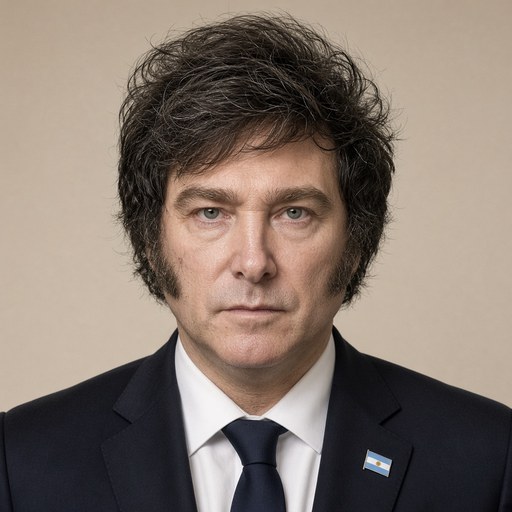
- Milei addressed Corporación América business leaders on his government's two-year anniversary, outlining economic reforms and calling for private sector partnership to drive Argentina's growth.
- Main themes
- Economic reform program, private sector entrepreneurship, fiscal surplus and stabilization, political mandate for change, structural reforms, populism rejection, monetary and exchange rate anchors, geopolitical alignment with United States, ideas of freedom, Argentine economic recovery
- Duration
- ~33 min
- Words
- 3,949
- Sentences
- 117
- Readability
- 44
- Grade
- 15.4
- Syntax
- 3.45
- Vocabulary
- 2.02
Translated from Spanish
The broad sphere of national life a sentence belongs to. Every sentence has an Arena, so it is the denominator the other indices are read against.
Other117 sentences in 22 paragraphs
Today, two years later, we begin a second half of our term that we will dedicate to generating the conditions for growth as much as possible, as quickly as possible. That is why, more than ever, we need the active participation of entrepreneurs and leading figures from the private sector to move the country forward. As I always say: there is nothing better for a worker than an entrepreneur, and nothing better for an entrepreneur than a worker; that is why spaces like this are crucial to build the Argentina of tomorrow.
And this is the case because today we are on the threshold of a giant change in our country. We have just gone through very complex elections, which were a litmus test for our economic program, the most reformist program in history. To give you a sense of scale: the Menem government, which had made the most reforms, implemented 100 structural reforms; we, in 20 months, have made 10,000 structural reforms. So it seems we have a slightly more intense reformist vocation. There is still much to do, rest assured that I still have in the pipeline, to give you an idea, about 600,000 decrees remain, the problem is that only 70,000 are digitized, but the good thing is that I can eliminate the decrees myself, so just imagine all that I still have to do in terms of reforms.
Because, while we managed to avoid the catastrophe left by the previous administration in the economic sphere, it would have been in vain if we had not managed to generate political consensus on this matter, and thus, the political attacks this year put at risk the arduous economic stabilization that our administration undertook; throughout the year, they sought to overturn the cornerstone of this management, which is the fiscal surplus.
In fact, the sabotage of the program began back in March of this year; from that moment on, we had to endure more than 40 laws that directly attempted to sabotage the economic program, and believe me, the economic program is good, because for much less, governments have been toppled. So now is the time to grow. But all of this is in the past: with the election on October 26, we obtained an uncontestable mandate from the Argentine people to deepen the direction towards change. Today, for the first time in decades, we have a people committed to fixing the disasters that a hundred years of populism have generated in our country, and a government willing to do anything to carry out that will and make it a reality.
There is a matter that is not minor, which I pointed out at the end of last year when, amid the turbulence that the world was experiencing, I had committed to entering an election year tightening fiscal policy and tightening monetary policy, and that had never happened in Argentina, it has never happened in the world, that in an election year economic policy was contractionary. Well, we did it, and I think the relevant thing about this is that for the first time, the Argentine people also decided to support discipline, that is, they did not fall for the bribe of the policy of receiving something during the election year and then having to pay higher costs. So that also seems to me to be a very important signal from the perspective of Argentines, of having decided to choose to do things right and not fall into the populist trap.
We are going to make all these proposals in reality; basically, it is going to happen because today the economic program has five anchors. As economist Federico Domínguez recently said, in addition to the three anchors that everyone already knows, which are the exchange rate, monetary, and fiscal, which ensured the economic program until October, today two more anchors are added: the geopolitical anchor and the political anchor. The political anchor is key: Argentina today has the possibility of being a protagonist of a radical change in the global rules of the game. The United States needs a firm ally in Latin America to help it organize a continent derailed for decades by 21st-century socialism. Excuse me, but the podium is small and my papers are piling up. And on the other hand, the political anchor is nothing less than the will of the people, who said no to the past; it is our popular mandate and it is the most sacred anchor of all, because it enables and underpins all the others. Without the support of the people, any action of the State is empty, and that is why it should never be taken for granted.
One of the things I have been saying throughout the various speeches this year was that there was something very interesting this year, which was the possibility for Argentines to decide to follow the path and ideas of freedom or to go backward; and that, while this generated turbulence and complicated situations in the middle, because like in chess, the black pieces also play, it was important to test the will for change that Argentines had. And this is interesting because two-thirds of Argentines decided to embrace the course towards the ideas of freedom and decided not to return to the past, and that seems to me to be a very important note, regardless of the fact that, if one looks at the elections in terms of the different forces and does not mix and mingle things that do not mix, and that later the facts demonstrated that they did not mix or add up and that it was only a strategy to disguise what would be a furious defeat.
It is interesting because the result was 41 to 24, and 41 to 24 is called the first round. And that opens up perspectives, not only for us to be calmer but also to be able to advance with much more strength. Because we are not going to calm our reformist vocation, and the support we have had will only make us accelerate even more. So buckle up, because there will be many more reforms. We also have to understand that this has never happened before in our history: no living Argentine has experienced anything similar to what we are going to live in the coming years, not only economically, given that it has been more than 120 years since Argentina was in surplus without default, but also politically. To give you an idea: today we have the same level of popularity as when we started the government, but with triple the legislative power. And this is after having done all the dirty work of ordering public accounts in these two years. If in December 2023 we had said that we would be like this today, I think none of you would have imagined it.
That is the reality, and that is why today we have the possibility of undoing 100 years of economic mistakes, 100 years that saw our country fall to the middle of the table in the concert of nations and our people in poverty, and, it should be noted, if the crisis had exploded along with hyperinflation, we would have seen poverty levels above 90% and today we would be living a reality like that of Venezuela. Sometimes it is very difficult to internalize the counterfactual, and sometimes when one describes it, it also seems exaggerated, but those of us who have sat in the electric chair will tell you someday what it is like to live a season in hell. But this fall is now an opportunity because Argentina, by simply doing things right, has the possibility of catching up in its economic growth because—as calculated by Juan Pablo Nicolini—by simply achieving fiscal balance, Argentina could grow in per capita terms by 4% for 35 years.
This is also interesting; Nicolini himself points out that when he did the work with Kehoe for the Federal Reserve of Minneapolis, they did not discriminate in the type of adjustment. In other words, they only focused on fiscal balance, and that by simply ensuring fiscal balance generated a 4% per capita and allowed us to achieve convergence in 35 years; convergence means reaching the per capita GDP of the United States in dynamic terms, to put it in simpler terms. And what is interesting is that what Juan Pablo himself said was that this work did not discriminate between whether it was done by raising taxes or cutting spending. And we not only cut spending to achieve fiscal balance, but we also strictly reduced spending by 7.5 percentage points of GDP; and that allowed us not only to achieve fiscal balance but also to do something that no government in Argentine history has done, which is to return to Argentines 2.5 percentage points in tax cuts. In fact, the total adjustment ended up being 15 percentage points of GDP, where 10 of those points were within the balance of the Central Bank, and that is what allowed for a recovery of credit. Because those funds that the State was taking were redirected to stimulate credit.
Now, the adjustment made by cutting spending for a floor of 4% per capita, and if you add what we are doing in terms of structural reforms from the Ministry of Deregulation, what we are doing from Human Capital, and what we are doing in terms of international insertion, Argentina could start to grow at rates ranging from 7% to 10%. Just by reviewing the history of the world and seeing how the rates of growth of convergence processes have accelerated, it would not be far-fetched; what happens is that a country that for more than 100 years has only lost ground seems very ambitious, but believe me, we can achieve it. Now, we cannot take this growth for granted; it depends on the Government continuing to maintain the fiscal and political responsibility that characterizes us, so that people can save and invest without fear of shocks. This growth will not be felt immediately; it will be a gradual improvement in people's pockets, but rest assured that good Argentines will be a little better every day. The night in the country has passed; today the first rays of morning are appearing, but change needs time to illuminate our entire sky.
To accelerate this process, we are now going to take on the challenge of approving the 2026 budget and passing reforms in tax, labor, and security matters, because the country still needs more freedom and more security to grow. That is to say, if we do things right, the world could start talking about growing at Argentine rates for the next few years. This growth rate, if we achieve all the reforms, would imply doubling GDP every 7 years. This is not a minor issue because it means that we could accelerate the growth rate, in the first stage, not permanently, but in the first stage of convergence, to rates of 10%. In fact, that is what China did, and indeed, China managed to do it for 15 years; therefore, it ended up quadrupling GDP in 15 years. And that can be done, and what it requires is that we do not have to invent anything; we have to do what the textbooks say. And believe me, none of those things that need to be applied am I afraid to apply. Imagine: I reduced the fiscal deficit by 15 percentage points of GDP, the rest of the things... So we are talking about every young person entering secondary school finishing it in a radically different country. We are talking about people knowing that tomorrow will always be better. We are talking about making Argentina great again once and for all.
But none of this will happen as part of a magic trick; it requires local and foreign investment to recapitalize a brutally undercapitalized country. For the first time in a long time, the correct incentives exist for Argentine savings to become investment and thus multiply. This will cause GDP, employment, and consequently wage levels to grow year after year, leading to a greater number of companies having to compete among themselves to attract employees.
Because that is what the virtue of GDP growth is about, which is nothing other than the increase in productivity: we all benefit from a more productive country, and more companies want to participate in the economy of a productive country, further pushing growth, demanding more labor, reducing unemployment, and improving wages. This is fundamental for what we call the cultural battle; when the right ideas are materialized, their defenders multiply because, after all, what kept Argentina stuck for so long was the proliferation of anti-growth ideas, politics revolved around an economic shamanism whose proposal was to print money indiscriminately and stop inflation by dancing in the rain.
The reality is that we had political leaders who celebrated defaulting on sovereign debt, as if it had no consequences for citizens. And they sold people the false belief that one can spend more than one generates eternally. In other words, what we call the kuka risk. And the issue of the cultural battle is not a minor issue; it is a much more important issue than it seems. Because we generally have three lines of action: we have the management line, which is quite tangible, it is seen regularly; we have a part that is the work in the political arena; in fact, my sister created the party and in just 6 months managed to establish it in all 24 districts, and not only that, but also, despite the most brutal campaign ever waged in history, because they defeated the one from the 23rd, despite that, we obtained 41% of the votes and two-thirds of Argentina turned violet. When everyone, 15 days or a month before, believed that the Government was falling.
And not only that, but also, another very important issue for us, which we believe gives sustainability to this, is the path of the cultural battle. That is to say, if people are not committed to the ideas, one can have a good government, two good governments, three, but sooner or later the germ of socialism is always there. Look, I remember— to understand how this works— I remember that once a friend of mine went on vacation to Cuba, and there was a boy who was asking him for money all day long, and of course, obviously, at some point he got tired and gave him a dollar, and then later he gave him another dollar. What one did not realize is that this was more than what he earned being inside the communist system. So, in socialism, or those who are these parasites, actually have the incentive to constantly try to steal from the productive sector, and everything is a great construction and a great narrative to precisely rob from the productive sector, and they will always be lurking; and the stronger the growth process and the more prosperity there is, since they are parasites, the more they will double down on their bets. That is why the cultural battle is so important, and that is why one must work hard to convey values to people and make it clear that the only thing those ideas bring is… not only do they bring backwardness but everything that implies in terms of values. The societies that are more socialist are less happy because they basically embrace the idea of envy, hatred, resentment, theft, unequal treatment before the law; nothing good can come from that. That was Sodom, and Sodom ended up destroyed.
So, this is precisely what we are fighting against day by day in every step we take. That is why the constant defense of the ideas of freedom is so important to strengthen this process, because the credibility and future of Argentina depend on those ideas not regaining popular support. We cannot allow socialism to once again halt the process of capital accumulation in Argentina, because that is the only thing that turns nations into powers through increased productivity and quality of life. For this reason, we are now entering a virtuous circle where economic growth and the cultural battle feed into each other. The improvement in quality of life strengthens more and more voters, and this deepens economic growth even further. In October, we crossed the Rubicon of this process, and there is no turning back: today is the moment for Argentina to grow. But we cannot take this for granted; it still depends on us not to let our guard down. We know what is at stake, and we know that the adversaries are looking for every possible opportunity to sink their teeth back into the public treasury. They will be on the lookout for any mistake on our part, and we cannot give them that satisfaction. We cannot and will not relax; we will not lower our arms. We will fight every battle as if it were the last, which you know I take every battle as if it were the last. We saw just a few weeks ago what happens when we stumble, and they lick their lips dreaming of coming back. That is why we must double down: today the incentives are aligned for the first time in decades, and Argentina presents a unique investment opportunity in a country that is on its way to becoming the freest country in the world and becoming a global beacon.
From all these disappointments, we finally learned what to do and how to do it. Making Argentina great again is not an empty promise; it is a commitment carved in stone that will be materialized in reality day by day. Because we have an enormous amount of potential opportunities that deserve to be seized. We have a mountain range rich in minerals that the global economy needs and that we have resisted exploiting for a long time. We have a unique wealth of ecosystems that allows us to diversify our economy, from agriculture in the Pampas plains to oil and gas extraction in the desert, tourism in the lakes, or wine in the mountains. And as if that were not enough, we aim to be pioneers in the artificial intelligence industry and to be leaders in the nuclear energy industry, given our immense amount of desert land at low temperatures.
It is interesting to mention artificial intelligence because what artificial intelligence allows is to enhance increasing returns, and enhancing increasing returns means allowing for accelerated economic growth. I often refer to artificial intelligence as akin to the idea of the pin factory, but a 21st-century model, and this is interesting because the impact it will have on the growth rate is enormous, and if we take the lead in that, it will benefit us greatly to grow much faster and improve the quality of life for all Argentines in a way that will become very tangible in a very short time, and that is not a minor issue. That is why I always remember when I was studying, when I had to study economic growth, in almost all the books on economic growth— I don’t say all because I read many, but not all of them— there is a phrase by Robert Lucas Jr. that says that the consequences of economic growth on human well-being are so staggering that when one starts to think about this, one cannot think of anything else. The reality is that when I was a sheep studying at university, I said, ‘another professor who thinks his subject is the most important,’ which later, as I became a more mature man, I realized is good because it makes one teach the subject with a lot of passion because he believes it is the most important, so it wasn’t wrong. But, aside from that, the turns of life led me to specialize in economic growth, and the best part is that I discovered that Lucas was right: when one starts to think about these kinds of things, it is so impactful on human well-being that one certainly cannot stop thinking about anything else; it must be why I sleep between 4 and 6 hours a day, but, well, for those who like peaches, they must put up with the fuzz, so here I am.
And this will inevitably generate that throughout the work of the people, it will be worth more and more each day, and this means better salaries and a thriving economy that allows Argentines to live full lives, far from the misery that the 21st-century socialism brought us. To continue moving all this forward, what we did was nothing more and nothing less than to embrace the ideas of capitalism, of free enterprise capitalism, which is nothing other than the Judeo-Christian moral values that made the West great in the first place. This is very interesting; when I honored Jesús Huerta de Soto, I was very impressed with one of his works, called “The Theory of Dynamic Efficiency,” which is basically a work that shows how the ideas of freedom lead to maximum economic growth. And beyond the arguments where he reviews all the literature in terms of welfare analysis, what is interesting is when he reaches part 4, which is the final part of the work, he says that efficiency and justice are two sides of the same coin. I understand that to many it may seem obvious, but for those of us who are forming an economy, it is a great discovery. Because basically what he says is that something that is efficient cannot be unjust; that is, at the altar of Pareto efficiency, we cannot be sacrificing justice.
And economists do this regularly; politics does this regularly: politics, in general, is guided by utilitarian issues, not by issues of values. However, one of the things we decided from the very first moment we arrived in administration was— at least that is my task— to set the course, to say where we want to go and what instruments are allowed to use and what instruments I will not tolerate us using. Never will utilitarian political calculation be above values, and this is very interesting because when you present it in these terms, the result that Huerta de Soto derives is wonderful, because it implies that everything that is efficient must necessarily be just. That is to say, the efficient must be just. That is to say, you cannot sacrifice anything in terms of justice for a supposed efficiency; that is miscalculating, to put it in some way.
Now, the most extreme reflection of all this is that if you act justly— and we all know this because it is in our base of Judeo-Christian values— by doing what is right, ethically and morally right, you may not know anything about economics and lead the economy on the maximum path of growth generating well-being for all, and that, moreover, anchored on values, generates better societies. Not a society of envious and resentful people who are willing to destroy everything because they do not like the other. Therefore, as I said before, it is not only a matter of management, it is not only the political arena, but it is also the path of the cultural battle. Because embracing Judeo-Christian values is what will allow us to achieve the civilizational and well-being achievements of the West. So, having said that, thank you all for joining me, for listening to me, may God bless you, may the forces of heaven accompany us, and long live freedom, damn it.
The original Spanish. The tags above are read on the English translation's sentences.
Hoy, dos años después, comenzamos una segunda mitad de mandato que dedicaremos a generar las condiciones para crecer lo más posible, lo más rápido posible. Por eso, más que nunca necesitamos de la participación activa de empresarios y grandes exponentes del sector privado para sacar el país adelante. Como siempre digo: no hay nada mejor para un trabajador que un empresario ni nada mejor para un empresario que un trabajador; por eso, espacios como este son cruciales para construir la Argentina del mañana.
Y esto es así porque hoy estamos en el umbral de un cambio gigante en nuestro país. Acabamos de atravesar unas elecciones muy complejas, que fueron una prueba de fuego para nuestro programa económico, el programa más reformista de la historia. Para tener un orden de magnitudes: el Gobierno de Menem hizo- que era el que más reformas había hecho- 100 reformas estructurales; nosotros en 20 meses hicimos 10.000 reformas estructurales. Así es que parece que tenemos una vocación reformista un poquito más intensa. Igual queda mucho para hacer, quédense tranquilos que tengo todavía en el tintero, para que se den una idea, más o menos todavía quedan 600.000 decretos, el problema es que solamente están digitalizados 70.000, pero lo bueno es que los decretos los puedo eliminar yo así que imagínense todo lo que tengo todavía para hacer en materia de reformas.
Porque, si bien en el plano económico logramos evitar la catástrofe que dejó plantada la administración anterior, hubiera sido en vano sino lográbamos generar consenso político al respecto y, por tanto, es así que los ataques políticos de este año pusieron en jaque la ardua estabilización económica que nuestra administración emprendió; durante todo el año buscaron voltear la piedra angular de esta gestión que es el superávit fiscal.
De hecho, el sabotaje al programa comenzó allá por marzo de este año, desde ese momento tuvimos que soportar más de 40 leyes que intentaron directamente sabotear el programa económico, y vaya que el programa económico es bueno, porque por muchísimo menos se han llevado puesto gobiernos. Así es que ahora es el momento para crecer. Pero todo esto quedó en el pasado: con la elección del 26 de octubre obtuvimos un mandato incontestable de parte del pueblo argentino para profundizar la dirección al cambio. Hoy, por primera vez en décadas, tenemos un pueblo comprometido con arreglar los desastres que cien años de populismo generaron en nuestro país, y un gobierno dispuesto a todo con tal de llevar esa voluntad y hacerla realidad.
Hay un tema que no es menor, que yo lo señalé durante el final del año pasado cuando, en medio de lo turbulento que se estaba poniendo el mundo, yo me había comprometido a entrar a un año electoral apretando la política fiscal y apretando la política monetaria, y eso no solo que no había pasado nunca en Argentina, nunca pasó en el mundo, que en un año electoral la política económica fuera contractiva. Bueno, nosotros lo hicimos y me parece que lo relevante de esto es que por primera vez también el pueblo argentino decidió acompañar la disciplina, es decir, no cayó ante el soborno de la política de recibir algo durante el año electoral y después tener que pagar mayores costos. Así es que eso también me parece una señal muy importante desde el punto de vista de los argentinos, de haber decidido elegir por hacer bien las cosas y no caer en la trampa populista.
Nosotros vamos a hacer todas estas propuestas en realidad, básicamente va a suceder, porque hoy el programa económico tiene cinco anclas. Como dijo recientemente el economista Federico Domínguez, a las tres anclas que todos ya conocen, que es la cambiaria, la monetaria y la fiscal, qué es lo que aseguraron el programa económico hasta octubre, hoy se le suman dos anclas más: el ancla geopolítica y el ancla política. El ancla política es clave: Argentina hoy tiene la posibilidad de ser protagonista de un cambio radical en las reglas de juego globales. Estados Unidos necesita un aliado firme en América Latina para ayudarla a ordenar un continente descarriado por décadas del socialismo del siglo XXI. Perdón, pero el atril es chiquito y los papeles se me se me juntan. Y por otro lado el ancla política no es ni más ni menos que la voluntad de la gente, que le dijo que no al pasado, es nuestro mandato popular y es el ancla más sagrada de todas, porque posibilita y fundamenta a todas las otras. Sin el apoyo de la gente, cualquier acción del Estado es vacía y por eso nunca hay que darlo por sentado.
Una de las cosas que fui diciendo a lo largo de los distintos discursos durante este año, era que había algo muy interesante en este año, que era la posibilidad de que los argentinos decidieran seguir el camino y las ideas de la libertad o ir para atrás; y que, si bien eso en el medio generaba turbulencias y generaba situaciones complicadas, porque como en el ajedrez las negras también juegan, era importante testear la voluntad de cambio que tenían los argentinos. Y esto es interesante porque dos tercios de los argentinos decidieron abrazar el rumbo hacia las ideas de la libertad y decidieron no volver al pasado, y eso a mí me parece una nota muy importante, al margen de que, si uno mira las elecciones en términos de las distintas fuerzas y no juntando y mezclando cosas que no se mezclan, y que después los hechos demostraron que no se juntaban ni no se sumaban y que era solamente una estrategia para maquillar lo que iba a ser una derrota furiosa.
Es interesante porque el resultado fue 41 a 24, y 41 a 24 se llama primera vuelta. Y eso abre las perspectivas, no solo para que estemos más tranquilos, sino para poder avanzar con mucha más fuerza. Porque nosotros no vamos a calmar nuestra vocación reformista y el apoyo que hemos tenido lo que va a hacer es que aceleremos aún más. Así es que abróchense los cinturones, porque van a haber muchas más reformas. También tenemos que entender que esto no sucedió nunca antes en nuestra historia: ningún argentino vivo experimentó nada similar a lo que vamos a vivir en los próximos años, no solo desde lo económico, dado que hace más de 120 años que Argentina no estaba en superávit sin default, sino desde lo político. Para que se den una idea: hoy tenemos el mismo nivel de popularidad que al empezar el gobierno, pero con el triple de poder legislativo. Y esto luego de haber hecho todo el trabajo sucio de ordenar las cuentas públicas en estos dos años. Si en diciembre del 2023 le decíamos que íbamos a estar así hoy, creo que ninguno de ustedes se lo hubiera imaginado.
Esa es la realidad y por eso hoy tenemos la posibilidad de desandar 100 años de errores económicos, 100 años que vieron la caída de nuestro país a la mitad de la tabla en el concierto de las naciones y a nuestro pueblo en la pobreza y que, dicho sea de paso, si la crisis hubiera estallado junto a la hiperinflación, hubiéramos visto niveles de pobrezas arriba el 90% y hoy estaríamos viviendo una realidad como la de Venezuela. A veces es muy difícil internalizar el contra- fáctico y a veces cuando uno lo describe también parece como exagerado, pero los que estuvimos sentados en la silla eléctrica ya les vamos a contar algún día lo que es vivir una temporada en el infierno. Pero esta caída es hoy una oportunidad porque Argentina con tan solo hacer las cosas bien tiene la posibilidad de hacer un catch up en su crecimiento económico porque- como calculó Juan Pablo Nicolini- con tan solo conseguir el equilibrio fiscal, Argentina podría crecer en términos per cápita el 4% durante 35 años.
Esto también es interesante, esto mismo lo señala el propio Nicolini, que señala que cuando él hizo el trabajo con Kehoe que lo hicieron para la reserva Federal de Minneapolis, ellos no hicieron una discriminación en el tipo de ajuste. O sea, solamente se hizo foco en el equilibrio fiscal y que con solo asegurar el equilibrio fiscal generaba un 4% per cápita y nos permitía hacer la convergencia en 35 años, convergencia es alcanzar en términos dinámicos el PBI per cápita Estados Unidos, para ponerlo en términos más fáciles. Y lo interesante es que lo que decía el propio Juan Pablo era que no discriminaba ese trabajo entre si eso se hizo aumentando impuestos o bajando el gasto. Y nosotros no solo que bajamos el gasto para alcanzar el equilibrio fiscal, sino que además bajamos el gasto en estricto rigor 7,5 puntos del PBI; y eso nos permitió no solo alcanzar el equilibrio fiscal, sino que hicimos algo que no hizo ningún gobierno en la historia argentina, y que es devolverles a los argentinos 2,5 puntos en baja de impuestos. Es más, de hecho, el ajuste total terminó siendo 15 puntos del PBI, donde 10 de esos puntos estaban dentro del balance del Banco Central, y eso es lo que permitió que haya una recuperación del crédito. Porque esos fondos que se los llevaba el Estado pasaron a dinamizar el crédito.
Ahora, el ajuste hecho por la baja del gasto por un piso de 4% per cápita y si ustedes suman lo que estamos haciendo en materia de reformas estructurales desde el Ministerio de Desregulación, lo que estamos haciendo desde Capital Humano y lo que estamos haciendo en materia de inserción internacional, Argentina podría empezar a crecer a tasas que oscilen entre el 7 y el 10%. Con solo revisar la historia del mundo y ver cómo se ha acelerado las tasas de crecimiento de los procesos de convergencia, no sería nada descabellado; lo que pasa que un país que hace más de 100 años lo único que hizo fue perder lugares parece como muy ambicioso, pero créame que lo podemos lograr. Ahora, tampoco podemos dar este crecimiento por sentado, depende desde que el Gobierno sigamos manteniendo la responsabilidad fiscal y política que nos caracteriza, para que la gente pueda ahorrar e invertir sin temor a cimbronazos. Este crecimiento tampoco se va a sentir de forma inmediata, va a ser una mejora paulatina en el bolsillo de la gente, pero tengan la certeza de que los argentinos de bien van a estar cada día un poco mejor. Ya ha pasado la noche en el país, hoy asoman los primeros rayos de la mañana, pero el cambio necesita tiempo para iluminar todo nuestro cielo.
Para acelerar este proceso ahora vamos a emprender el desafío de aprobar el presupuesto 2026 y sacar las reformas en materia tributaria, laboral y de seguridad, porque el país sigue necesitando más libertad y más seguridad para crecer. Es decir, que si hacemos las cosas bien el mundo podría llegar a hablar de crecer a tasas argentinas por los próximos años. Este ritmo de crecimiento, si logramos todas las reformas, implicaría duplicar el PBI cada 7 años nada más. Esto no es un tema menor, porque esto significa que podríamos llegar a acelerar el ritmo de la tasa de crecimiento, en la primera etapa, no de manera permanente, sino en la primera etapa de la convergencia, a tasas del 10. De hecho, eso fue lo que hizo China y, de hecho, China lo logró hacer durante 15 años; por lo tanto, terminó cuadruplicando el PBI en 15 años. Y eso sí se puede hacer y lo que requiere es no hay que inventar nada, hay que hacer lo que los libros de texto dicen. Y créanme que ninguna de las cosas esas que hay que aplicar yo tengo miedo en aplicarlas. Imagínense: bajé el déficit fiscal en 15 punto del PBI, el resto de las cosas… Así que estamos hablando de que cada joven que ingresa a la secundaria termine la misma en un país radicalmente diferente. Estamos hablando de que gente que sepa que mañana siempre va a ser mejor. Estamos hablando de volver a ser grande de una vez por todas a la Argentina nuevamente.
Pero nada de todo esto sucederá como parte o una obra de magia, requiere de inversión local y extranjera para recapitalizar un país brutalmente descapitalizado. Por primera vez en mucho tiempo existen los incentivos correctos para que los ahorros de los argentinos puedan convertirse en inversión para así multiplicarse. Esto hará que año a año crezca el PBI, el empleo y en consecuencia los niveles salariales, dando una mayor cantidad de empresas teniendo que competir entre ellas para traer empleados.
Porque de eso se trata la virtud del crecimiento del PBI, que no es otra cosa que el aumento de la productividad: todos nos beneficiamos de un país más productivo y más empresas quieren participar de la economía de un país productivo empujando aún más el crecimiento, demandando más mano de obra reduciendo el desempleo y mejorando los salarios. Esto es fundamental para lo que nosotros llamamos la batalla cultural, cuando las ideas correctas se ven materializadas se multiplican sus defensores porque, a fin de cuentas, lo que mantuvo trabada a la Argentina durante tanto tiempo fue la proliferación de ideas anti- crecimiento, la política se revolvía en torno a un chamanismo económica cuya propuesta era emitir dinero a mansalva y frenar la inflación haciendo la danza en la lluvia.
La realidad es que teníamos dirigentes políticos que festejaban defaultear la deuda soberana, como si no tuviera consecuencia alguna para los ciudadanos. Y le vendían a la gente la falsa creencia de que se puede gastar más de lo que se genera eternamente. O sea, lo que nosotros llamamos el riesgo kuka. Y el tema de la batalla cultural no es un tema menor, es un tema mucho más importante de lo que parece. Porque nosotros en general tenemos tres líneas de acción: tenemos la de la gestión, la cual es bastante tangible, se ve con regularidad; tenemos una parte que es el trabajo en la arena política, de hecho mi hermana creó el partido y en solo 6 meses logró ponerlo en los 24 distritos, y no solo eso, sino que además, a pesar de la campaña más brutal que se hizo en la historia, porque le ganaron a la del 23, a pesar de eso sacamos el 41% de los votos y dos tercios de la Argentina se pintó de violeta. Cuando todos, 15 días antes o un mes antes, creían que el Gobierno se caía.
Y no solo eso, sino que, además, otro tema también muy importante para nosotros y que creemos que lo que le da sustentabilidad a esto es lo que es la vía de la batalla cultural, es decir, si las personas no están comprometidas con las ideas, uno puede hacer un buen Gobierno, dos buenos Gobiernos, tres, pero tarde o temprano el germen del socialismo siempre está ahí. Miren, yo me acuerdo- para entender cómo funciona esto- me acuerdo que una vez un amigo mío había ido de vacaciones a Cuba y entonces había un chico que estaba todo el día pidiéndole plata y, claro, obvio, cuando llega un momento se cansaba y le daba un dólar y otro después le daba otro dólar, claro, lo que uno no se daba cuenta es que eso era más que lo que ganaba estando adentro del sistema comunista. Entonces, en el socialismo o quienes son estos parásitos en realidad tienen el incentivo de todo el tiempo tratar de robar al productivo, y todo es una gran construcción y un gran relato para justamente robarle al sector productivo, y eso siempre van a estar al acecho; y cuanto más fuerte sea el proceso de crecimiento y más prosperidad haya, como ellos son parásitos, más van a redoblar la apuesta, por eso es tan importante la batalla cultural, y por eso uno tiene que trabajar fuertemente en transmitirle los valores a las personas y dejar de manifiesto que lo único que traen esas ideas es… no sólo que traen atraso sino todo lo que implica en términos de valores, las sociedades que son más socialistas son menos felices porque básicamente abrazan la idea de la envidia, el odio el resentimiento, el robo, el trato desigual frente a la ley, nada bueno de eso puede salir. Eso era Sodoma y Sodoma, terminó destruida.
Entonces, justamente esto es lo que estamos combatiendo día a día en cada paso que damos. Por eso la defensa constante de las ideas es la libertad es tan importante para fortalecer este proceso, porque la credibilidad y el futuro de la Argentina dependen de que esas ideas no vuelvan a conquistar el ideario popular. No podemos permitir de nuevo que el socialismo frene en seco el proceso de acumulación de capital argentino, porque eso es lo único que convierte a las naciones en potencia vía aumento de productividad y calidad de vida. Por esto mismo estamos ingresando ahora en un círculo virtuoso donde crecimiento económico y batalla cultural se retroalimentan. La mejora de la calidad de vida afianza más y más votantes, y esto profundiza aún más el crecimiento económico. En octubre cruzamos el Rubicón de este proceso y ya no hay vuelta atrás: hoy llegó el momento de que la Argentina crezca. Pero no podemos dar esto por sentado, todavía depende de nosotros no descuidarnos ni bajar la guardia. Sabemos lo que está en juego y sabemos que los adversarios buscan cada oportunidad posible para volver a hincar sus dientes sobre el erario público. Ellos van a estar pendientes a cualquier error de nuestra parte y no podemos darles el gusto. No podemos ni vamos a relajarnos, no vamos a bajar los brazos. Vamos a pelear cada batalla como si fuera la última, lo cual le consta que cada batalla me la tomo como si fuera la última. Ya vimos hace pocas semanas lo que sucede cuando trastabillamos y ellos se relamen soñando con volver. Por eso hay que redoblar la apuesta: hoy los incentivos están ordenados por primera vez en décadas y Argentina presenta una oportunidad de inversión única en un país que va camino a ser el país más libre del mundo y volverse un faro global.
De todos estos desencantos aprendimos finalmente lo que hay que hacer y cómo hay que hacerlo. Hacer a la Argentina grande nuevamente no es una promesa vacía; es un compromiso grabado en piedra que día a día será materializado en la realidad. Porque tenemos una enorme cantidad de oportunidades potenciales que merecen ser aprovechadas. Contamos con una cordillera rica en minerales que la economía global necesita y que por mucho tiempo hemos resistido explotar. Contamos con una riqueza de ecosistemas única que permite diversificar nuestra economía, desde la agricultura en la llanura pampeana a la extracción de petróleo y gas en el desierto, el turismo en los lagos o el vino en la montaña. Y por si eso fuera poco, tenemos como objetivo ser pioneros en la industria de la inteligencia artificial, y volver a ser referentes en la industria de la energía nuclear, dada nuestra inmensa cantidad de tierras desérticas a bajas temperaturas.
Es interesante mencionar lo de la inteligencia artificial porque en realidad lo que permite la inteligencia artificial es potenciar los rendimientos crecientes y potenciar los rendimientos crecientes es permitir acelerar el crecimiento económico. Yo lo suelo mencionar a la inteligencia artificial como vendría a ser la idea de la fábrica de alfileres, pero modelo siglo XXI y esto es interesante porque lo que el impacto que va a tener en la tasa de crecimiento es enorme, y si nosotros picamos en punta en eso nos va a beneficiar altamente para crecer mucho más más rápido y mejorar la calidad de vida de todos los argentinos de una manera que se va a hacer muy tangible en muy poco tiempo, y eso no es un tema menor. Por eso siempre yo recuerdo cuando estaba estudiando, cuando me tocó hacer crecimiento económico en casi todos los libros de crecimiento económico- no digo todos porque leí muchos, pero no los leí todos- hay una frase de Robert Lucas Junior que dice que las consecuencias del crecimiento económico sobre el bienestar humano son tan estremecedoras que cuando uno empieza a pensar en esto no puede pensar en otra cosa. La realidad que cuando era un borrego estudiando en la universidad dije ‘otro profesor que cree que su materia es la más importante’, lo cual después ya haciendo un señor más grande me di cuenta que está bueno que así sea, porque eso hace que uno de la materia con mucha pasión porque cree que es la más importante, con lo cual no estaba mal. Pero, al margen de eso, después los devenires de la vida me llevaron a especializarme en crecimiento económico y lo mejor de todo es que descubrí que Lucas tenía razón: cuando uno empieza a pensar este tipo de cosas, es tan impactante sobre el bienestar humano que ciertamente no puede dejar de pensar en otra cosa; debe ser por eso que duermo entre 4 y 6 horas por día, pero, bueno, al que le gusta el durazno que se banque la pelusa, así que acá estoy.
Y esto va a generar que inevitablemente a lo largo del trabajo de la gente, valga cada día más, y esto significa mejores salarios y una economía pujante que permita que los argentinos vivan vidas plenas, lejos de la miseria que nos trajo el socialismo del siglo XXI. Para seguir llevando adelante todo esto, lo que hicimos fue nada más y nada menos que volver a abrazar las ideas del capitalismo, del capitalismo de libre empresa, que no es otra cosa que los valores morales judeo- cristianos que hicieron grande a Occidente en primer lugar. Esto es muy interesante, cuando lo condecoré a Jesús Huerta de Soto quedé muy impactado con uno de sus trabajos, que se llama “La teoría de la eficiencia dinámica”, que básicamente es un trabajo que muestra cómo las ideas de la libertad conllevan al máximo crecimiento económico. Y más allá de los planteos donde se revisa toda la literatura en términos de análisis de bienestar, lo interesante es cuando llega la parte 4, que es la parte final del trabajo, dice que eficiencia y justicia son dos caras de la misma moneda. Yo entiendo que a muchos le debe parecer una obviedad, pero para los que estamos formando una economía, es todo un hallazgo. Porque básicamente lo que dice es que algo que es eficiente, no puede ser injusto; es decir, en el altar de la eficiencia paretiana, no podemos estar sacrificando la justicia.
Y eso los economistas lo hacen regularmente, la política lo hace regularmente: la política, en general, se guía por cuestiones utilitaristas, no por cuestiones de valores. Sin embargo, una de las cosas que nosotros hemos decidido desde el primer momento en que llegamos a la administración fue- al menos esa es mi tarea- fijar el norte, decir a dónde queremos ir y qué instrumentos está permitido usar y qué instrumentos no voy a tolerar que usemos. Nunca el cálculo político utilitarista va a estar por encima de los valores, y esto es muy interesante porque cuando ustedes lo plantean en estos términos, el resultado que deriva Huerta de Soto es maravilloso, porque entonces implica que todo lo que es eficiente necesariamente tiene que ser justo. Es decir, lo eficiente tiene que ser justo. Es decir, ustedes no pueden sacrificar nada en términos de justicia por una supuesta eficiencia, eso es hacer mal la cuenta, como decirlo de alguna manera.
Ahora, la reflexión más extrema de todo esto es que si ustedes obran de manera justa- y eso lo sabemos todos porque está en nuestra base de los valores judíos cristianos- es que haciendo lo que es correcto, ética y moralmente correcto, puede no saber nada de economía y conducir a la economía en el máximo sendero de crecimiento generando bienestar para todos y eso, además anclado sobre los valores, generan sociedades mejores. No una sociedad de envidiosos y resentidos que están dispuestos a destruirlo todo porque no le gusta el otro. Por lo tanto, como decía antes, no solo es la cuestión de la gestión, no solo es la arena política, sino que también es la vía de la batalla cultural. Porque abrazar los valores judío cristianos es lo que nos va a permitir conseguir los logros civilizatorios y de bienestar de occidente. Así es que, dicho esto, muchas gracias a todos por acompañarme, por escucharme, que Dios los bendiga, que las fuerzas del cielo nos acompañen y viva la libertad, carajo.