




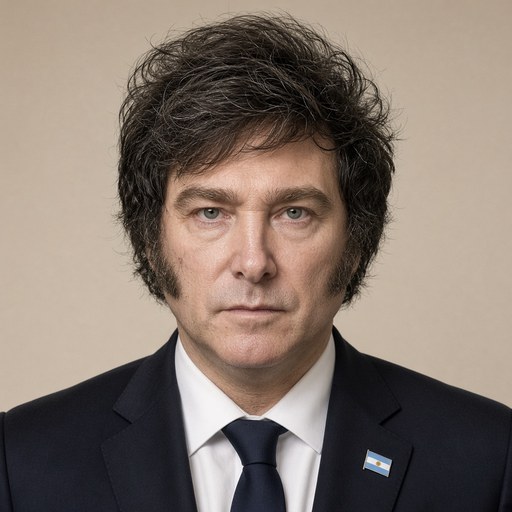
Speech by President Javier Milei at the 12th Regional Economy Congress of the Club of Freedom in Corrientes
 Javier Milei · President of Argentina
- Context
- Milei addressed the 12th Regional Economy Congress of the Club of Freedom in Corrientes, Argentina, on November 13, 2025, outlining Argentina's economic future.
- Main themes
- Economic growth potential of Argentina, capitalism and property rights, US-Argentina bilateral trade agreement, freedom and liberalism, capital accumulation and investment, Argentina's economic transformation, hockey stick of GDP growth, deregulation and property rights, Alberto Benegas Lynch liberalism, cultural battle of ideas
- Duration
- ~75 min
- Words
- 8,951
- Sentences
- 306
- Readability
- 49
- Grade
- 13.5
- Syntax
- 3.35
- Vocabulary
- 2.06
Translated from Spanish
The broad sphere of national life a sentence belongs to. Every sentence has an Arena, so it is the denominator the other indices are read against.
Other306 sentences in 55 paragraphs
To be fair to the forecasting errors, Alberto was not the only one who was wrong; I remember a case when Professor Espert entered politics, which he did at a meeting in New York City. And then at one point, the great Alberto Benegas Lynch (h) took me aside — we have the honor of having Joaquín here, a senator from the Province of Entre Ríos — and he said to me: “But you are not going to get into politics, because we need you in the cultural battle.” And I said: “Professor, no way.” Well, I was wrong by a little bit. So not only did Alberto get it wrong, I did too. So in that sense, the spontaneous order has its own mysteries.
The idea today is basically to replicate these talks that I usually have with investors and to show the Argentine case, not from the achievements we have had over the last almost two years, but basically looking towards the future and showing all the potential that Argentina has from the perspective of economic growth. That is to say, why we have entered the path that will make Argentina great again.
And in that sense, anticipating part of what I will be saying, when I get to the part about economic growth, one of the things I want to do because surely everyone was here listening to the presentations and is still not aware of the tremendous news that just came out, is that today the bilateral trade agreement with the United States has just been signed. So, as you will see, we are strongly committed to making Argentina great again.
In that sense, one of the things that a businessman basically looks at because the key to understanding here is how, what humanity discovered 250 years ago for the world to change the way it did. When one has to explain the natural condition of man, if one looks at the history of humanity, the natural condition of man has always been poverty, and that was a constant until the year 1800 of the Christian era. That is to say, what economic growth theory calls “the hockey stick,” the GDP per capita remained constant and suddenly starting from 1800, the GDP per capita begins to grow and does so more than 15 times in a world population that multiplied by more than 10 times; so basically that happened with the arrival of capitalism and then one has to understand how that process of economic growth works. Because, in addition, in the year 1800 when there were about 800 million human beings on the planet, 95% of the world’s population lived on less than one dollar, and today that number has to be changed all the time because otherwise it would be zero in a population that is 10 times larger, a little more than 10 times larger.
So, in that sense, what one has to try to explain is why that happens. Well, that happens because the stock of capital per capita increased, allowing productivity to increase. And that allowed for higher wages and radically improved living conditions. Not to mention the number of years of life of people, which have more than doubled. In that sense, the key then is to accumulate capital in per capita terms. Now, to accumulate capital, capital accumulation is achieved to the extent that one makes investments and that those investments also outpace population growth, so that the stock of capital per capita rises. That is to say, it is not only investment to replace capital, it is not gross investment; but rather that net investment is positive, that is, investment beyond amortization. And for that, basically, for you to invest, the first thing that should happen is that property rights are respected. Because if property rights are not respected, basically, you cannot appropriate the result; and if you cannot appropriate the result, why would you invest.
And not only that, but also the role that freedom plays because when you impose a regulation, you are ruining life as well, and I don’t know, the most palpable, clearest example was the case of the Rental Law in Argentina, that is to say, to see very clearly that when you impose a regulation, it is also a form of expropriation, it is a way of violating property rights, it is a way of violating what you would want to do with your property.
Therefore, both property rights and freedom play a fabulous and extraordinary role in the process of growth and also in life because if there is no respect for the right to life, we cannot advance either. That is why it is always so important when we think about politics, the normative framework is always the definition of liberalism from the great thinker of the ideas of Liberty in Argentina, Alberto Benegas Lynch (h), who says, “liberalism is the respect and restriction of the life project of others based on the principle of non-aggression and in defense of the right to life, liberty, and property.” In fact, when you take endogenous growth models, the role of the size of the population is important, which is bad news for the greens.
But beyond that, what we are emphasizing here is the role of property rights and freedom, so that when one obtains a result, that result can be appropriated. Now, when you also have the conditions to invest, whether because the returns on capital are above the opportunity cost, the interest rate; and that the interest rate is not an aberration managed by the Central Bank, it has to do with intertemporal preference: the interest rate exists because time exists, not because money exists. The point is that you also have to finance that investment. And to finance it, you need savings. That is why all populist and Keynesian-based experiments, which want to constantly stimulate consumption, stimulating consumption is shooting yourself in the foot: because they basically destroy savings, and by destroying savings, it is impossible to invest and, consequently, the economy does not grow, or grows much less than it could grow. For those who are accustomed to finance, basically the logic in terms of quantitatively looking at this problem is that you look at the ROIC, or the return on invested capital; or if you want it more basic, the ROA, the return on assets, exceeds the opportunity cost of capital, which would be represented by the WACC; and to the extent that the return on assets exceeds the WACC, you would have in financial terms the EVA, the positive EVA, that is, you would be creating value and therefore would have the incentive to make investments.
But, for that, again, you have to have financing and that financing comes from savings and again, if you either stimulate consumption cheerfully from the State or automatically generate expropriations that penalize savings or control, for example, the interest rate and do not allow the return that corresponds to the savings-investment situation, you would be damaging that growth process. So, it is important what you do in terms of savings; it is important what you do in terms of investments; it is important what you do in terms of property rights and what you do in terms of freedom. And, obviously, there is also another element that has to do with taxes, because when you collect taxes, the return, the capital falls, therefore, it gives you that genius that we can raise taxes if nothing is going to happen. That does not hold true.
That is to say, investment is not as Keynes supposed. It is very interesting: when you read “The General Theory,” a book that many who call themselves Keynesians have not read, but it doesn’t matter. First, it is very difficult to categorize Keynes because the complete works are 30 volumes. I confess that I have not read the complete works, I have not read the 30 volumes, I have only read some of the books. With one or two I got obsessed, which I read several times, which is the case of The General Theory of Employment, Interest, and Money. I read that five times and wrote a book criticizing it, where basically he does the same for both consumption and investment. He has a chapter on investment, which in investment theory is wonderful. What happens is that when he writes the next chapter, he says that investment depends on a lyrical testicular issue: mathematically it would be as if it were given exogenously; and well, nothing, and you can imagine what I meant by the first part, I leave it to your discretion.
The reality is that when you are looking at whether an investment is feasible, you care about knowing if there is cash flow, you care about taxes, you care about the interest rate, and you care about growth. If we say that Argentina will be great again, it means that Argentina will capitalize strongly, there too. Something very interesting there is that there is a Chinese symbol that simultaneously means crisis and opportunity, the reality is that Argentina, after 100 years of populism, a little more or embracing socialism of different kinds, what one has is that Argentina has de-capitalized and from being one of the richest countries in the world, it has become a middle-income country in the lower half of the table that also — as if that were not enough — what one has as a counterpart is that at the moment we took power, we were on the way to Venezuela, becoming Venezuela was much more feasible and tangible than it seemed.
Just as there was that opportunity in crisis, there is also the opportunity to move forward, because given the very low level of capitalization that Argentina has, that means that the return on capital in Argentina is very high, that is to say, there are many business opportunities in Argentina or specifically a very positive EVA, a very large ROI, and that basically the trick is how we lower the opportunity cost of capital, the weighted average cost of capital, how we lower the interest rate but not cooked up from the Central Bank by a bureaucrat but how market conditions change so that the instance comes in at a lower rate.
So, the first thing one has to explain is: well, then there is cash flow. Where is there cash flow? That is to say, where are the business opportunities? Where are the chances to do business in Argentina? And the truth is that in Argentina there are several sectors that present great opportunities for doing business. For example, one of the most important cases is the case of mining. Think, for example, that we share the same mountain range with Chile and Chile exports 50 billion dollars a year in copper; we only export 4,000. That is to say, we are underutilizing the mountain range and, consequently, we could, for example, multiply our exports by 12 and a half times. That is to say, I have my serious doubts that the Creator was so cruel to us as to give all the copper to the Chileans and nothing to us. Those who are looking at the mountain range think the same. That is not a minor issue, because in fact all mining projects, whether related to copper, gold, lithium, rare earths, basically have the potential to directly create a million jobs.
That is why one of the laws we will be sending is so important, which has to do with the law of the periglacial areas. Basically, you have the glacial zone and the periglacial area is the perimeter from which you can start, for example, to carry out mining activities. Today that is not well defined, the environmentalists who prefer that one starve to death but do not touch anything — that is to say, a very primitive attitude — what this law that we are sending to Congress allows is to return federalism to the provinces and that each province determines what the periglacial area is. And the flip side of that will be a great investment in everything related to mining.
That is why this periglacial law is so important. In fact, that idea is not even mine, the original idea is from the Governor of the Province of Mendoza, Alfredo Cornejo, and I think it is better that each province determines what the periglacial area is and that once and for all we start to take advantage of the natural riches that have been offered to us. Moreover, in terms of RIGI, because the other important sector we have is related to oil and gas, and, in fact, we have recently announced the largest investment in Argentine history in the agreement between YPF and ENI, the Italian company for 30 billion dollars. Now, it is also interesting to understand the nature of that business because basically that will allow, for example, the trade balance that the oil and gas sector will generate starting in 2031 to be 50 billion dollars, that is to say, it would be double what the Argentine agricultural sector contributes today. Not only that, but also in the RIGI we already have 25 billion dollars approved, there are 25 billion dollars pending approval; if we add the case of YPF-ENI and add the investment announced by Sam Altman, of OpenAI, for 25 million dollars: Argentina during the last year had investment announcements of 100 billion dollars. Ultimately, it seems that the trips have been paying off a little. And every time you see a mining project, when a mining project is announced, I want you to know that that medal is carried by two people: the current chancellor Pablo Quirno, and the Secretary General of the Presidency, Karina Milei, who are the ones who did the entire mining road show.
But we not only have everything related to mining, as I just mentioned, copper, gold, lithium, rare earths, everything we have in terms of oil and gas, which, in addition to those companies that want to extract through the Atlantic what they generate, is also generating great interest in the entire train sector. In other words, we are moving towards a modernization of our railway network.
But not only that, we also continue to have the best farmland in the world; Argentine agriculture had to endure during the Kirchner era the extraction of 200 billion dollars, and yet it remains competitive. It is true, we have not yet finished eliminating the export taxes, but we have significantly reduced them and removed a lot of taxes and a lot of regulations so that Argentine agriculture is undoubtedly the best farmland in the world, and without any mitigating factors; the thing is that it takes time, and obviously also in terms of the livestock sector; in fact, we see that we have quintupled our quota with the United States. It seems that the trips serve a purpose.
But we not only have that, but Argentina has also decided to reinsert itself into the world in nuclear matters, and basically, there is the issue of uranium exploitation and the development of SMRs, which will allow us to be a fundamental and central player in everything related to nuclear energy, all things that were forgotten, set aside, and had no role, and that today, thanks to the enormous work being done by Demian Reidel, have put us back on the world stage.
On the other hand, everything related to artificial intelligence: the investment that Open AI is going to make in Argentina is not a marginal investment, it is not something accessory; that is to say, they are going to turn Argentina into a global hub for artificial intelligence. One of the important characteristics that Argentina has to offer is cheap energy, and not only that, but also low temperatures, which substantially reduces the operating costs of data centers. And it will not be just any data center, but something truly cutting-edge. Thus, in terms of artificial intelligence, we will have a very important role. And later in the presentation, I will explain the role that artificial intelligence plays as a mechanism that accelerates economic growth.
Beyond that, what is clear is that there are businesses to generate cash flow, meaning there are business opportunities. That is to say, Argentina has significant chances to supply the world with its two greatest concerns or demands, which are the demand for energy and the demand for food. In other words, the conditions are in place for Argentina to enter a new golden century, leaving behind populist barbarism and becoming the world's leading power again.
On the other hand, one of the things I also pointed out was the role of taxes. Unlike what politicians usually say, who claim they will lower taxes and then not only do not lower them but also raise them after they achieve electoral results, we said during the campaign that we would lower taxes, but unlike others who say they will lower them and then raise them, we have shown that we have indeed lowered taxes; over these 20 months, we eliminated or reduced 20 taxes and returned to Argentines - something never seen in history - 2.5 points of GDP in tax reductions.
And, in fact, the fiscal plan developed by the best Minister of Economy in Argentine history, Luis “Toto” Caputo, is that by 2031, if Argentines decided that this would be the destination, we would return to Argentines in tax reductions the equivalent of 500 billion dollars, that is, more than what Argentina currently has in debt, which is 450 billion dollars.
That is why it is also very important that we have sent not only the Budget for the Extraordinary Sessions, which has a commitment to zero deficit; it also has a commitment to finally remove the "mattress law," that is, the presumption of innocence of Argentines, because for the Argentine treasury, the burden of proof is reversed: we are all guilty until proven otherwise. But we are also going to send another tax package to further reduce taxes for Argentines, and as long as we continue to grow and generate surplus financial resources, we will continue to lower taxes as we have been doing.
But not only that, it is also important what we are planning in terms of employment and modernizing labor laws, which involves not only eliminating the litigation industry but also a concept that we have… there are seven blocks, but basically what relates to the concept of precedence, which is that the smaller agreement overrides the larger agreement. That is to say, a company agreement overrides a municipal agreement; a municipal agreement overrides a provincial agreement; a provincial agreement overrides a regional agreement; and a regional agreement overrides a national agreement. For example, there is a study from the University of San Andrés, from the advanced macro students of Doctor Sturzenegger, which basically compares productivity in the Pampas region with that in the Northwest region. And it shows that productivity in the Pampas region is 20% higher. Consequently, if you set the conditions according to the Pampas region, you destroy jobs in the Northwest region; if you basically allowed those agreements to be made regionally, employment in the Northwest region would increase by 17%. And that would allow the governors of the region to free up resources that they would not have to use to hire public employees as a sort of permanent unemployment insurance, but it would also free up resources, either to lower taxes or to carry out the works that they do not do. And to focus on the tasks that they were entrusted with, which include education, security, and health. So, that would also allow for increased productivity in the provinces. So that would be all gain. That is why this law is so important.
But aside from that, why is it important for these types of issues and for wages to map with productivity? Because the transformation that Argentina is undergoing is so significant that it will require the reassignment of resources, and as long as you have more flexible labor markets, what it will allow is for people to find employment very quickly; moreover, if we are going to be generating such a huge influx of foreign currency in the tradable sector, what you will have is that the currency will inevitably appreciate, and you will have a reassignment of resources towards the non-tradable sector, that is, the service sector; people will want to go to a restaurant or go see a show, to have a more normal life, and what will happen is that the consequence of this is that the service sector will expand significantly, and the service sector is more labor-intensive and will allow for much higher wages; thus, people will not only be able to find jobs, but those jobs will also be much better paid. Consequently, it is a very important law moving forward, but also to correct the problem we have: anyone who looks at the numbers of the labor market and sees that 50% is informal clearly cannot come and say that rights are being lost. First, because all those who have acquired rights have the power to continue under the contract they currently have, so no insiders lose rights. And those who are in the informal market have no rights, so they will indeed gain rights. Therefore, one should not be psychologically manipulated by these lying fraudsters, who only want to secure their personal businesses at the expense of the employment and hunger of good Argentines.
On the other hand, I am talking about issues related to property rights, freedom, respect for life, and the possibilities of doing business; but this is all well and good, but what happens if someone violates these rights? Well, that is why we are also sending the reform of the Penal Code, making the penalties harsher because for what we have been saying to be fulfilled in Argentina: that those who do wrong must pay. But, in addition, not only that, because this is the Extraordinary package - when I met with our newly appointed Minister of the Interior, that extraordinary person Colo Santilli, I said: “this is the package for Extraordinary Sessions; now I will pass you the entire Extraordinary package and continue…” What I want to say is that we are deeply grateful for the support we have received from the population in these midterm elections, where we defeated Kirchnerism 41 to 24, and we are closing the populist night.
And while it is good to show gratitude and appreciation with words, what you see is that we will validate it with actions by continuing to be the most reformist government in Argentine history. That said, regarding the reforms, the business potential, and what we plan to do in tax matters, there are two additional discussions that are the discussion of interest rates and the discussion of growth. One very important thing is to understand what the interest rate is because the feeling one has is that the vast majority of economists do not know what the interest rate is; that is to say, economists, instead of being part of the solution, are part of the problem, and the truth is that somewhere the profession has lost its way because, honestly, it is quite offensive for an economist to hear another economist say that the interest rate is the price of money, which is quite an aberration.
Basically, the interest rate is the relative price of present goods compared to future goods; the interest rate exists because time exists, not because money exists. Basically, when you want… the good thing is that this audience understands quite a bit about Austrian economics, so what I am going to explain does not seem esoteric, but in other contexts, it does, I warn you: basically, when you look at the determination of the interest rate, it is determined by the interaction between savings and investment, and savings is nothing more than future consumption. Therefore, if you think in a general equilibrium system such that the income effects cancel out because what one gains another will lose, it means that what remains is the substitution effect; specifically, the demand curves have a negative slope. Therefore, if the price of present goods relative to future goods rises, what you will see is that present consumption decreases in favor of future consumption; that is to say, when the interest rate falls, what you will have is that if the interest rate falls, present consumption rises, and if the interest rate rises, future consumption increases. In other words, you will see that if the interest rate rises and future consumption increases, it means that savings increase. Consequently, you will find that functional relationship that shows that savings increase when the interest rate rises. And, naturally, the same applies to investment because when the interest rate falls, it means that future goods are more expensive than present goods. And that incentivizes you to shift production from the present to the future; that is to say, investment increases. How do you shift production from the present to the future? With investment. And in that context is where you determine the interest rate. Notice that money plays no role there; it is all related to the real sector.
So, if one wanted to take a picture of the interest rate, the first thing one should do is that one of the components... it is a picture, mind you, this can be done ex post, do not even think about trying to do it ex ante; but since we are Austrians, we are not going to do those things, we are going to look at the picture, we are not going to believe that we can determine the picture. I ask, please, because this is not minor, if you look at the components, then, of what the interest rate is, one has to see with the time preference. That is, if you have a whole set of people who are in a hurry, well, obviously the interest rate is going to be a monstrosity because they want to consume everything now; therefore, it is going to be very high, because present goods are going to be much more expensive than future goods. Another element that plays a very important role in the interest rate is country risk. Some things, the intellectual dishonesty of some economists, surprise me. Some out of ignorance, others because they have bad intentions; now, what I cannot internalize or assimilate is that people who have been sitting in the electric chair ignore the kuka risk. That is to say, they were so heated up predicting the catastrophe, that everything would blow up and trying to generate panic in people, that basically it was to look for the interest rate spread to predict a devaluation and deny the nature of the kuka risk. The reality is that if the interest rate is the relative price of present goods with respect to future ones, the kuka world, which is a communist world and that does not stop making communist recommendations every day, is unbelievable. Twitter is more fun than ever, listening to the kukas talk is monumental: the other day they wanted to impose a tax on ATMs; now they have come back with the inheritance tax. I mean, they have not renewed themselves at all, they continue living in the world of the Flintstones.
But I say, beyond that... in a deeply expropriating world too, right? But the reality is that, it is like when... De Pablo has an article, Juan Carlos de Pablo, has a wonderful article called "The Economy as a Decision-Making Process," then, when he presents the future scenario he says: 'well, there can be three scenarios, one is the status quo, nothing changes, so the relative prices do not change and do not have to change; then, there is the scenario of the universal flood, that is, there is going to be a novel upheaval and based on that the whole trick is to get a ticket for Noah's Ark... What color is the ticket for Noah's Ark in Argentina? No, green, in fact, I say, that is the path to paradise, the violet. But, aside from that situation, the other scenario is the end of the world scenario and the end of the world scenario is 'there is no tomorrow.' The kukas in terms of capital are the end of the world scenario because they are the reload version of the worst of Peronism fighting capital, they destroyed capital, consequently how much are future goods worth there? Zero, therefore, the interest rate is infinite. Well, that is the kuka risk and economists who tried to promote devaluation and openly want this government to fail, especially there is one who is always doing apocalyptic things because he is resentful about something else that has happened, then it seems that he forgot that he was an unpresentable who could not step on the street, who had to go out camouflaged until someone revalued him. But aside from that, that ingratitude, he denied the kuka risk, well, the election of the 26th gave him a clear lesson because country risk was halved, not only that, but also Argentina had the best historical streak in stocks, reaching to double the value of stocks as a consequence of the fall in country risk. So it seems that yes, indeed there was kuka risk and the only ones who bet on freedom were the Argentines, where two-thirds of Argentines said: "Kukas never again." So, another important part is country risk. And country risk has to do with insolvency; or with its counterpart, intertemporal solvency. What ensures intertemporal solvency? Intertemporal solvency is ensured when the debt-to-GDP ratio is non-increasing, that is, it remains constant or falls over time. Argentina has a zero deficit policy; by having a zero deficit policy, Argentina is one of the five countries in the world that has a financial surplus, the rest have deficits. That is to say, only five have financial surpluses, the remaining 190 have deficits. That means that the debt does not rise; therefore, with the expansion that GDP is having, the debt/GDP ratio is falling. Therefore, inexorably we are going to reduce country risk, we are going to exterminate it.
On the other hand, if you are a company and you go as a company you have a part of the risk, which is specific risk. Well, we have also had to endure several nonsense during the campaign, that talked about "no, the macro is fine, but the problem is the micro." Hey, the macro is the sum of all the micros. So, if the macro is doing well, what is this about the micro...? I mean, that is one of the things that was wrong. The other is when you find an economist or a politician making a lot of emphasis on the micro, it is an indicator that you have a corrupt person there. Because what a politician should do, from my point of view, is to level the playing field, so that everyone has the same field. In the literature, this is called "don't pick the winners." So, if someone comes and starts talking to me about the micro, what is the next step? That they come and talk to me about the candle sector the day Edison invented the light bulb. And guess what is behind that: corruption. Therefore, be very careful when a politician or an economist appears and says "no, well, but the micro," because that is fundamentally a lobbyist trying to influence public opinion for acts of corruption, so that those who should lose benefit. And that means passing the bill to all Argentines so that those who are not efficient benefit and the one with the handout benefits. So, be very careful with that.
In that sense, basically we are then working to pulverize country risk, and not only that, but also when you have a monetary economy, the interest rate would scale in what terms? You should also consider the effect of the inflation rate. And one of the things we are doing is lowering inflation. When we came to power, the inflation rate was running at 1.5 percent daily; if you take the wholesale inflation, which is the one that leads, it was 54% monthly. If you look at the monetary imbalance that the Central Bank had, which had about four monetary bases maturing in one day, that is to say, that we could quintuple the amount of money in one day, plus the equivalent of nine monetary bases in debt in pesos maturing in less than three months, plus the fact that there was a monetary surplus that was double that of the Rodrigazo, which could have multiplied prices by 12, inflation by 12, excuse me. We had all the conditions given for the inflation rate to go to levels oscillating between 15,000 and 20,000 percent. It is enough to do the math, and it is more than enough. Although yesterday's inflation data was 2.3%, and today inflation is traveling at levels of 30, there is still a long way to go. That is to say, a lot has been achieved but there is still a lot to do.
But I want to give you two lines of hope: the first is that monetary policy has a lag that ranges between 24 and 26 months, according to a study done at the University of Córdoba. And, for those who maliciously, from journalism, miscalculate, because they say: "Well, they have been 20 months, inflation should have disappeared by now" ... No, it is from the moment the monetary issuance was stopped. We not only made the largest fiscal adjustment in history, but we also did it in record time. The other day Toto was saying that in a meeting of the finance ministers of the world, the UK minister was saying that he had a fiscal deficit of five points of GDP and that he was going to correct one point per year, and everyone applauded him. We achieved zero deficit in one month. What we did not achieve in 123 years, we achieved in one month.
Besides, if we lowered two and a half points of taxes, I inform you that the real adjustment we made is seven and a half points, that is, we lowered public spending in real terms by 30% and that is indeed giving freedom back to people, because what Rothbard said was that the true fiscal pressure was the size of the public sector and we have lowered public spending by 30% in real terms, see if we are giving freedom back to people. But, the issue is that this was only a third of the deficit we had, in the Central Bank we had double the deficit, we had a quasi-fiscal deficit of ten points of GDP and it took us six months to fix it and make it zero, which is also a great achievement and that, unlike other intellectually dishonest people, who made the previous minister do a Bonex Plan and then gifted us the corralito, then Alcatraz, let’s say, they made strong expropriations, we did all this respecting property rights.
But what does this mean? Because the other day I heard a journalist, who is actually an operator, a hitman, and he said "no, well, but then it is already close to the months, inflation should disappear." Someone should tell that man that we only managed to fix the amount of money in the middle of last year; so by the middle of next year, or by August of next year, inflation in Argentina will have been a bad story that comes to an end.
And what also needs to be understood is that inflation is not neutral, it distorts relative prices, distorts investment and, as we lower the inflation rate and the price signal flows freely and cleanly, because inflation is to the price system what noise is to communication. The more noise there is, the worse it communicates. But it is not because the transmitter does it wrong and the receiver does not understand. It is because there is noise. Well, inflation does the same with resource allocation. Therefore, as we eliminate inflation, there will be a leap in productivity in the economy as a consequence of the elimination of inflation. It is still a one-time effect.
And the other important news that I think is worth mentioning: another of the myths we have debunked is the idea of pass-through, that when you devalued, that would go to prices. We explained the Hume-Cantillon effect and everything, but we also understand that we have 100 years of history, sorry, 90 years of history, where people were defrauded with the inflation tax and understood that the dollar was a leading indicator of what was to come. And, we, the counterpart of the fact that the Argentine economy dollarized for the equivalent of 42% of M2, the largest number since the return of democracy. That is to say, there has never been an attack of such characteristics, even so, the program resisted. I mean, look at how good the program is. But not only that, but when one looks at the monetary liabilities of the Central Bank, whether they are non-remunerated, monetary base and the remunerated ones, at the time Leliqs, Lebacs, repos, different remunerated instruments; it was a number, to give you an idea when Sturzenegger was President of the Central Bank that number was 120 billion dollars, then with the arrival of kuka risk and the destruction that occurred in the capital market, back in 2019 when Kirchnerism won, which is why it still seems strange to people who denied kuka risk in order to try to force their poor argument from an intellectual standpoint... So, what happens? When you look at the size of the monetary liabilities, from the last part of Guzmán until we arrived, it was a number that oscillated between 35 billion dollars and 45 billion dollars.
That is to say, when it reached 45 billion dollars, a devaluation occurred, and that devaluation caused the Central Bank's liabilities to drop to 35 billion; at that point, individuals positioned themselves at the rate and began to carry trade, and it would return to 45 billion and the crisis would return. It was a number that fluctuated between 35 billion and 45 billion dollars. In that sense, one of the things that happens is that, on average, the Central Bank's liabilities were around 40 billion dollars. And we, despite taking measures that were heavily criticized, for example, imagine if we had left the 20 trillion Lefis out in the open, today we would not be telling this story. But some rather precarious economists who seem to understand little spent their time criticizing the measure, but aside from that, they also lack the intellectual honesty to recognize that error. What seemed incredible was that this level of 35 billion dollars could be broken because, basically, it implied that working capital in the economy would be destroyed; thus, those who have a business know how difficult it is to build working capital, which is linked to the life cycle of what is between what is collected and what is paid in a business. The cash that people use to make transactions. So it was a very difficult number to break because, besides, if that floor was there during Kirchnerism, it clearly seemed like a super floor. Well, the attack we have received over the last 8 months, because let us not forget that all this attack began with a National Congress that was absolutely destitute, systematically voting every week on laws against macroeconomic balance, attempting to undermine it in the streets. That is, different mechanisms through which they constantly tried to sabotage the government. In that sense, basically, what one has is that incredibly the monetary liabilities of the Central Bank today are 25 billion dollars. That is to say, the Argentines decided that they sowed so much panic that they even consumed 10 billion dollars of working capital. And if you clean it, due to the effect of the increase in reserves, the number probably exceeds 15 billion dollars. And despite that attack, we are standing, we won the elections, and we are on the path to a great Argentina.
Therefore, in the face of that drop in the demand for money, the inflation rate should have been completely unanchored, and yet it remained oscillating around 2%. Therefore, as the demand for money recovers and the economy continues to grow, it is also a fact, the inflation rate will collapse.
Finally, what remains is, now, to explain economic growth. We have explained the sectors where Argentina could be generating this growth and that, moreover, are evident, because it is being generated. But now to explain the foundations of long-term growth and there, basically, we have three engines: the first engine is the Ministry of the colossus Federico Sturzenegger, which is the Ministry of Deregulation and should be called… we privately call it the ministry of Increasing Returns, but it is very nerdy for us to say the ministry of increasing returns, so we named it deregulation so that they understand us. But, in reality, the idea of that Ministry is to free increasing returns. Increasing returns means an increase in the productivity of the factor you are looking at. If you remember, I started the presentation talking about the hockey stick. That is to say, that GDP per capita remained constant until the year 1800 and, starting from the year 1800, GDP per capita rose 15 times in a context where the population multiplied by 10. That is to say, the world GDP multiplied by 150 times. So, the point is that if I had increasing returns, if the population multiplied by 10, GDP should have multiplied by 10. Well, if it did it 150 times, those are increasing returns. That is to say, production rose much more than proportionally.
In general, in neoclassical theory, that is associated with the existence, if I want to be exquisite in terms of general equilibrium terminology, I would speak of non-convexities; if I want to be more intuitive, I would speak in terms of concentrated structures; or if I want to make it easier, monopolies. Which is a polar case within concentrated structures. And from the perspective of neoclassical economics, that is wrong, and therefore it must be regulated. When you regulate monopolies and try to assimilate them to competitive firms, the flip side of that is that by killing increasing returns, you kill economic growth. In that sense, one of the things that happens is that when you look at those countries that have more regulatory burden, for example, Europe, they are the countries that grow the least in the world. That is to say, that when you regulate and kill increasing returns, you are killing economic growth.
So, in that sense, as we advance in the deregulation process, we free increasing returns and the economy grows. And that is the idea we have from the Ministry of Deregulation. It is interesting because, in the last 20 months, we have made 10,000 structural reforms. We are indeed liberating increasing returns. That is why I always say that we are the most reformist government in history and I have no doubt in asserting that we are, moreover, the best government in Argentine history.
And, moreover, not only have we fulfilled all the promises we made in the campaign, what we believed we would do in four years we did in less than two. But I want to tell you that one way to honor the support we had at the polls is to continue with our reformist agenda. And we will continue deregulating and making structural reforms because we will not stop until Argentina is the freest country in the world.
The second engine of economic growth is, because it is in the order of the presentation, not because it is weighted differently, because in terms of cash it is the one we put first from day one. There was no money for anyone except for Minister Pettovello. Here I have witnesses who can validate it, but it is human capital. So, where does the idea of human capital come from? Back in 1956, two economists separately, one Robert Solow, on the other hand, Trevor Swan, developed a growth model called “The neoclassical economic growth model.” The model was a total sensation. And the following year, Robert Solow went and empirically tested it. When he wanted to explain economic growth with that model, which was very nice in mathematical terms, what was the problem? It only explained 15%. That is to say, the instrument was very nice, but it explained nothing.
So, in that context, one of the things that happened is that the response from the University of Chicago, where the economics department was managed by George Stigler, said “your problem is that you do not consider human capital.” And there, at the University of Chicago, two strands on human capital were born. One that is the best known, which is the micro strand, which is Gary Becker, everything related to Gary Becker linked to human capital. Look at what a tribute we paid to Gary Becker that we named a ministry Human Capital. And, on the other hand, the macro version of human capital was led by Hirofumi Uzawa, who was a Japanese, who tutored the doctoral thesis of Miguel Sidrauski, who is probably one of the greatest economists in Argentine history. So look how close the whole human capital issue is to us.
However, academia, instead of positioning itself on this way of working of Uzawa and looking at human capital from a bisectorial growth model, decided to go for the idea of technological progress, and technological progress was determined by finger, that is to say, with which economic growth ended up being explained by the finger. Still, there is a very funny anecdote because I remember that… I did not witness it, but I have no reason not to believe those who told the anecdote. At a meeting of the Argentine Association of Political Economy, one economist refutes another saying “no, well, but that is by finger,” and the other replies “well, but they do it that way at MIT too,” he says. He says “well, but the finger is Samuelson's,” that is to say, it was a finger a little more qualified.
But beyond the humor, the literature decided to go that way and that is why later the literature practically disappears, until Robert Lucas Junior appears who, after finishing his contributions on rational expectations, begins to dedicate himself to economic growth issues. And in 1983, Paul Romer appears, in his doctoral thesis he develops the theory of endogenous growth; there is a strong expansion of everything that is the theory of endogenous growth. And that debate is practically settled in 1989, in a paper by Gregory Mankiw, David Romer —not Paul Romer— and David Weil, who empirically test the hypothesis with human capital and go on to explain 85% of economic growth, and say: “well, the debate is over, economic growth is human capital.”
Human capital has two dimensions: it has first-generation human capital and second-generation human capital. The first-generation one is related to the nutrition of children and the health of children. If you look, our Ministry of Human Capital, one of the very important things it has is all the part that is Childhood and Family, which is to provide support to children when they arrive, whether it is the plan for example One Thousand Days, or that the Universal Child Allowance was doubled in real terms. But we also did something that they said was impossible, which was to put an end to the managers of poverty. It took a lot to put things in place to end that.
And that is complemented by the actions of the Ministry of Health. Now, the second-generation human capital is the one related to education, and there we are also working very hard at all stages of education. But to get there, children first have to be well-formed and healthy. But we are also working on a new literacy program. We are also working on a lot of reforms to ensure that education is at the forefront, but with all that it is not enough. That is why also within Human Capital is the Ministry of Labor and together with the Ministry of Economy, and together with the Ministry of Deregulation, they are the ones designing labor reform.
I want to make a note of color, again, about the liars among journalists. The liars among journalists operate in favor of those who do not want the reforms to be made, and for at least 15 days the only thing they have done is to torpedo this reform, which I inform you that in yesterday's cabinet meeting they were reconciling the work of the Ministry of Economy, of Toto Caputo, the Ministry of Deregulation, of Sturzenegger, the Ministry of Human Capital, of Sandra Pettovello, who could not attend the meeting, but this is being worked on by Cordero; so they are sharpening the pencil, they are finishing perfecting it, and it is incredible because journalists have all the criticisms, everything. Do not let yourselves be psychologized by those liars. All those who have read that they are writing about the reform are all operators, they are all hitmen, because I am telling you, I have the cabinet here as witnesses, that yesterday the reconciliation was completed and the work is now in Legal and Technical to harmonize the three proposals. That is to say, meanwhile, the media spent their time talking about all this, so all those who listened, all the journalists who were listening to talk about this, all lied. I say this so that you know what you are facing on the other side.
But not only that, but there are also people who have been left out of the system and we are working on the reintegration and re-entry into the labor market of those who have been left out of the system. Therefore, we are not only modifying the conditions so that people can develop and contribute to economic growth, but we are also working on the conditions of the labor market so that those who are outside the system can re-enter and, looking ahead, can also be much more productive.
And finally, the other thing we are working on is in the area of international trade and what we are doing is working to make the Argentine economy more open, because those economies that are more open are more productive and richer, and the best reflection is that today the bilateral agreement with the United States was announced, where the prophets of the apocalypse said that nothing would come out.
And now we have the bonus track, and it is... leave it where it is... but beyond the humor, the bonus track is what is coming in terms of artificial intelligence. The idea of the hockey stick, the first to see it was Adam Smith in his second book, the first was 'The Theory of Moral Sentiments', the second is 'An Inquiry into the Nature' and 'Causes of the Wealth of Nations'. Part 4 is basically a model of growth, and the idea of the pin factory is the idea of increasing returns, right? I mean, one person alone can produce only 20 pins. If you basically go and divide the task into 15, per capita production jumps to 5000, that is, you go from producing 75,000 pins. That is, the idea of increasing returns… Well, and whose limit is given by the size of the market. That is, you will gain productivity by dividing labor if you have demand on the other side.
Having said that, artificial intelligence would be like the pin factory of the 21st century. And what it could do is accelerate the process of growth and convergence. For example, we say that if we maintain this course, in 10 years we will resemble Spain, in 20 years we will resemble Germany, in 30 years the United States, and in 40 years we will be the world's leading power. However, with artificial intelligence, we could resemble Spain in 5 years, Germany in 10 years, the United States in 15, and be the world's leading power in 20 years.
Therefore, that is why we are so strongly betting on artificial intelligence. And in the meantime, on the other side are the caveman slingshot throwers who want to regulate it to the point of killing it before it is born, very typical of the Kirchnerists. Therefore, summarizing everything we have said—in my mind, because I am not going to repeat it again, because I am not going to repeat the conference—on what we are doing in terms of cash flow, enabling the economy, so that the agents can express themselves in terms of investment projects, in tax cuts, in lowering interest rates, and in boosting economic growth. I have no doubt that after what happened on October 26, Argentina will be great again. Thank you very much.
The original Spanish. The tags above are read on the English translation's sentences.
Para ser justo con los errores de pronóstico, no solo erró Alberto; conozco un caso, me acuerdo cuando el profe Espert se lanzó a la política, que lo hizo en una reunión en New York City. Y entonces en un momento el prócer Alberto Benegas Lynch (h), me llevó a un costado- tenemos el honor de tenerlo a Joaquín aquí a senador por la Provincia de Entre Ríos- y entonces me dijo: “Pero usted no se va a meter en política, porque lo necesitamos en la batalla cultural”. Y le dije: “Profe, ni en pedo”. Bueno, le erré por un poquito. Así que no solo le erró Alberto, yo también. Así que en ese sentido el orden espontáneo tiene sus propios misterios.
La idea de hoy es básicamente replicar estas charlas que yo suelo tener con los inversores y que es mostrar el caso argentino, ya no desde los logros que hemos tenido a lo largo de los últimos casi dos años, sino básicamente mirando de cara al futuro y mostrar todos los potenciales que tiene Argentina desde el punto de vista del crecimiento económico. Es decir, por qué hemos entrado en el sendero que va a hacer a la Argentina grande nuevamente.
Y, en ese sentido, y anticipando a parte de lo que voy a estar diciendo, ya cuando entre la parte de crecimiento económico, una de las cosas que quiero hacer porque seguramente todos estaban acá escuchando las ponencias y todavía no están al tanto de la tremenda noticia que acaba de salir, es que hoy acaba de firmarse el acuerdo bilateral comercial con los Estados Unidos. Así es que, como verán, estamos fuertemente comprometidos en hacer grande la Argentina nuevamente.
En ese sentido, una de las cosas que básicamente mira un empresario porque la clave para entender acá es cómo, qué es lo que descubrió la humanidad hace 250 años para que el mundo haya cambiado del modo que lo hizo. Cuando uno tiene que explicar la condición natural del hombre si uno mira la historia de la humanidad la condición natural del hombre siempre fue la pobreza y eso fue una constante hasta el año 1800 de la era cristiana. Es decir, es lo que la teoría del crecimiento económico se llama “el palo de hockey” el PBI per cápita permanecía constante y de repente a partir del 1800 el PBI Per cápita empieza a crecer y lo hace más de 15 veces en una población del mundo que se multiplicó por más de 10 veces; entonces, básicamente eso ocurrió con la llegada del capitalismo y entonces uno tiene que entender cómo funciona ese proceso de crecimiento económico. Porque, además, en el año 1800 cuando en el planeta vivían cerca de 800 millones de seres humanos, el 95% de la población del mundo vivía con menos de un dólar y hoy ese número hay que estar cambiándolo todo el tiempo porque si no daría cero en una población que es 10 veces más grande, es un poco más de 10 veces más grande.
Entonces, en ese sentido, lo que uno tiene que tratar de explicar es por qué eso pasa. Bueno, eso pasa porque aumentó el stock de capital per cápita, permitió que aumentara la productividad. Y eso permitió pagar mayores salarios y mejorar radicalmente las condiciones de vida. Ni que hablar en la cantidad de años de vida de las personas, que se han más que duplicado. En ese sentido, la clave entonces es acumular capital en términos per cápita. Ahora, para acumular capital, la acumulación de capital se logra en la medida que uno hace inversiones y que esas inversiones además le ganan al crecimiento de la población, tal que el stock de capital per cápita suba. Es decir, no es solamente inversión para reponer el capital, no es inversión bruta; sino que la inversión neta sea positiva, es decir la inversión más allá de la amortización. Y para eso, básicamente, para que ustedes inviertan, lo primero que tendría que pasar es que respeten los derechos de propiedad. Porque si no se respeta el derecho de propiedad, básicamente, ustedes no se pueden apropiar del resultado; y si no se pueden apropiar del resultado para qué van a invertir.
Y no solo eso, sino que también el rol que juega la libertad porque cuando ustedes le ponen una regulación le están arruinando la vida también y qué sé yo, el ejemplo más palpable, más claro, fue el caso de la Ley de Alquileres en Argentina, es decir, para que se vea con mucha claridad que cuando ustedes le ponen una regulación también es una forma de expropiación, es una forma de vulnerar el derecho de propiedad, es una forma de violentar lo que ustedes querrían hacer con su propiedad.
Por lo tanto, tanto el derecho de propiedad como la libertad juegan un rol fabuloso y extraordinario en el proceso de crecimiento y también la vida porque si no hay respeto al derecho a la vida tampoco podemos avanzar. Por eso, siempre es tan importante cuando uno, nosotros cuando pensamos la política siempre el marco normativo es la definición de liberalismo del prócer de las ideas de la Libertad en Argentina, Alberto Benegas Lynch (h), que dice “el liberalismo es el respeto y restricto del proyecto de vida del prójimo basado en el principio de no agresión y en defensa del derecho a la vida a la libertad y a la propiedad”. De hecho, cuando ustedes toman modelos de crecimiento endógeno, el rol del tamaño de la población es importante, lo cual es una mala noticia para los verdes.
Pero, más allá de eso, lo que estamos enfatizando acá es el rol del derecho de propiedad y la libertad, para que cuando uno obtiene un resultado, ese resultado se lo pueda apropiar. Ahora bien, cuando ustedes, además, tienen las condiciones para invertir, ya sea porque los retornos del capital están por encima del costo de oportunidad, de la tasa de interés; que además la tasa de interés no es una aberración manejable por el Banco Central, tiene que ver con la preferencia inter- temporal: la tasa de interés existe porque existe el tiempo, no porque existe el dinero. El punto es que además esa inversión ustedes la tienen que financiar. Y para financiarla necesitan de ahorro. Por eso todos los experimentos populistas y de base keynesiana, que quieren todo el tiempo estimular el consumo, estimular el consumo es pegarse un tiro en el pie: porque básicamente destruyen el ahorro, al destruir el ahorro es imposible invertir y, consecuentemente, la economía no crece, o crece mucho menos de lo que podría crecer. Para los que están acostumbrado en términos de finanzas, básicamente la lógica en cuanto mirar cuantitativamente este problema es que ustedes miren el ROIC, o sea el retorno sobre el capital invertido-; o si lo quieren más básico, el ROA, el retorno sobre activos, exceda al costo de oportunidad del capital, que vendría tardado por el WACC; y en la medida que el retorno de los activos excede el WACC, ustedes en términos financieros tendrían el EVA, el EVA positivo, o sea que estarían creando valor y por ende tendrían incentivo a hacer las inversiones.
Pero, para eso, de vuelta, ustedes tienen que tener el financiamiento y ese financiamiento deviene del ahorro y nuevamente, si ustedes o estimulan el consumo alegremente desde el Estado o automáticamente generan expropiaciones que penalizan el ahorro o controlan, por ejemplo, la tasa de interés y no le permiten el retorno que corresponde a la situación de ahorro-inversión ustedes estarían dañando ese proceso de crecimiento. Entonces, es importante lo que hacen en materia de ahorro; es importante lo que hacen en materia de inversiones; es importante lo que hace en materia de derechos de propiedad y lo que hacen en materia de libertad. Y, obviamente, que también hay otro elemento que tiene que ver con los impuestos, porque cuando ustedes cobran impuestos, el retorno, el capital cae, por lo tanto, te da esa genialidad de que podemos subir los impuestos si no va a pasar nada. Eso no se cumple.
Es decir, la inversión no es como suponía Keynes. Es muy interesante: cuando ustedes leen “La Teoría General”, libro que muchos que se llaman keynesianos no lo leyeron, pero no importa. Primero que es muy difícil encasillar a Keynes, porque las obras completas son 30 tomos. Yo confieso que no leí las obras completas, no leí los 30 tomos, leí solamente algunos de los libros. Con alguno que otro me empeciné, que lo leí varias veces, que es el caso de La Teoría General de la Ocupación, el Interés y el Dinero. Ese lo leí cinco veces y escribí un libro criticándolo, dónde básicamente hace lo mismo tanto para el consumo como para la inversión. Tiene un capítulo de la inversión, que en teoría de la inversión es maravilloso. Lo que pasa es que cuando escribe el capítulo siguiente, dice que la inversión depende de una cuestión lírico testicular: matemáticamente vendría a ser como que está dada exógena; y bueno, nada, y se imaginarán lo que quise decir con lo primero, los dejo a su criterio.
La realidad es que, cuando ustedes están mirando si una inversión es factible ustedes les importa saber si hay flujo de fondos les importan los impuestos, les importa la tasa de interés y les importa el crecimiento. Si nosotros decimos que Argentina va a ser grande nuevamente significa que Argentina se va a capitalizar fuertemente, ahí también. Algo muy interesante ahí es que hay un símbolo chino que al mismo tiempo significa crisis y oportunidad, la realidad es que Argentina, después de 100 años de populismo, un poco más o de abrazar socialismo de distintos pelajes, uno lo que tiene es que Argentina se descapitalizó y de ser uno de los países más ricos del mundo, pasó a ser un país de ingresos medio de mitad de la tabla para abajo que además- como si eso fuera poco- lo que uno tiene como contrapartida es que al momento que llevábamos nosotros al poder estábamos camino a Venezuela, convertirnos en Venezuela era mucho más factible y tangible de lo que parecía.
Así como estaba esa oportunidad de crisis también está la oportunidad de salir hacia adelante, porque dado el nivel tan bajo de capitalización que tiene la Argentina eso significa que el retorno en el capital en Argentina es muy alto, es decir, que hay muchísimas oportunidades de negocio en Argentina o concretamente el EVA muy positivo, un ROI muy grande y que básicamente el truco está en cómo hacemos para bajar el costo de oportunidad del capital, el costo promedio ponderado de capital, cómo bajamos la tasa de interés pero no cocinada desde el Banco Central a mano por un burócrata sino cómo cambian las condiciones de mercado para que la instancia ingrese a más baja.
Entonces, lo primero que uno tiene que explicar es: bueno, entonces hay flujo de fondos. ¿Dónde hay flujo de fondos? Es decir, ¿dónde hay oportunidades de negocios? ¿Dónde hay chances de hacer negocios en Argentina? Y la verdad es que en Argentina hay varios sectores que presentan grandes oportunidades para hacer negocios. Por ejemplo, uno de los casos más importantes es el caso de la minería. Piensen, por ejemplo, que nosotros compartimos la misma cordillera con Chile y Chile exporta 50.000 millones de dólares por año de cobre; nosotros solamente 4000. Es decir, nosotros estamos sub utilizando la cordillera y, consecuentemente, nosotros podríamos por ejemplo multiplicar por 12 veces y media nuestras exportaciones. Es decir, yo tengo mis serias dudas de que el Creador haya sido tan malo con nosotros de darle todo el cobre a los chilenos y nada a nosotros. Los que están mirando la cordillera consideran lo mismo. Eso no es un tema menor, porque de hecho todos los proyectos mineros, ya sea en lo que tiene que ver con el cobre, el oro, el litio, las tierras raras, básicamente tenemos el potencial de crear de manera directa un millón de puestos de trabajo.
Por eso es tan importante una de las leyes que vamos a estar mandando, que tiene que ver con la ley de los periglaciares. Básicamente ustedes tienen la zona glaciar y la periglaciar es el perímetro a partir del cual ustedes pueden empezar por ejemplo a hacer actividades mineras. Hoy eso no está bien definido, los ambientalistas que prefieren que uno se muera de hambre, pero no tocar nada- es decir, una actitud bien primitiva-, lo que permite esta ley que nosotros estamos enviando al Congreso es devolverles el federalismo a las provincias y que cada provincia determine cuál es la zona periglaciar. Y la contracara de eso va a ser una gran inversión en todo lo que tiene que ver en materia de minería.
Por eso, es tan importante, por ejemplo, esta ley de periglaciares. De hecho, esa idea ni siquiera es mía, la idea original es del Gobernador de la Provincia de Mendoza, Alfredo Cornejo, y me parece que mejor que cada provincia determine cuál es la zona periglaciar y que de una vez por todas nos pongamos a aprovechar las riquezas naturales que nos han sido ofrecidas. Es más, en materia de RIGI, porque el otro también sector tan importante que tenemos es vinculado al petróleo y al gas, y, de hecho, recientemente, hemos anunciado la inversión más grande de la historia argentina en el acuerdo entre YPF y ENI, la empresa italiana por 30.000 millones de dólares. Ahora, es interesante también entender la naturaleza de dicho negocio porque básicamente eso va a permitir que, por ejemplo, la balanza comercial que va a generar el sector de oil and gas a partir del año 2031 va a ser de 50.000 millones de dólares, es decir, sería el doble de lo que aporta por ejemplo el campo argentino hoy. No solo eso, sino que además en el RIGI ya tenemos aprobados 25.000 millones de dólares, hay 25.000 millones de dólares pendientes de aprobación; si sumamos el caso de YPF-ENI y sumamos la inversión anunciada por Sam Altman, de OpenAI, por 25 millones de dólares: Argentina durante el último año tuvo anuncios de inversión por 100 mil millones de dólares. En definitiva, parece que los viajes estuvieron rindiendo un poquito. Y cada vez que vean un proyecto minero, cuando anuncien un proyecto minero, quiero que sepan que esa medalla se la cargan dos personas: el hoy canciller Pablo Quirno, y la Secretaria General de la Presidencia, Karina Milei, que son los que hicieron justamente todo el road show minero.
Pero no solamente tenemos todo lo que es vinculado entonces a la minería, como dije recién, el cobre, el oro, el litio, tierras raras, todo lo que tenemos de petróleo y gas, que además como aquellas empresas que quieren sacar por el Atlántico lo que generan, eso también está generando un gran interés en todo lo que es el sector de trenes. O sea, que vamos a una modernización de nuestra red ferroviaria.
Pero, no solo eso, sino que además seguimos teniendo el mejor campo del mundo, el campo argentino tuvo que soportar durante el kirchnerato que les extrajeran 200.000 millones de dólares y aun así sigue siendo competitivo. Es cierto, todavía no hemos terminado de eliminar las retenciones, pero hemos bajado muy fuertemente las retenciones y hemos quitado un montón de impuestos, y un montón de regulaciones para que el campo argentino sin lugar a duda sea el mejor campo del mundo y sin atenuante, lo que pasa es que demanda tiempo y obviamente también en materia, el sector ganadero; de hecho, vemos que hemos quintuplicado nuestra cuota con los Estados Unidos. Parece que los viajes para algo sirven.
Pero no solo tenemos eso sino que también Argentina ha decidido reinsertarse en el mundo en materia nuclear y, básicamente, está el tema de la explotación del uranio y está el desarrollo de los SMR, lo cual nos va a permitir ser un actor fundamental y central en todo lo que tiene que ver con la energía nuclear, todas cosas que estaban olvidadas, dejadas de lado y que no tenía ningún rol y que hoy de la mano del trabajo enorme que está haciendo Demian Reidel nos ha vuelto a poner en el tablero mundial.
Y, por otra parte, todo lo que tiene que ver con lo vinculado a inteligencia artificial: la inversión que va a ser Open AI en Argentina, no es una inversión marginal, no es algo accesorio; es decir, van a convertir en Argentina en un hub mundial de inteligencia artificial. Una de las características importantes que tiene para ofrecer Argentina es energía barata, y no solo eso, sino bajas temperaturas, lo cual baja sustancialmente el costo del funcionamiento de los data center. Y no va a ser un data center así nomás, sino que va a ser algo verdaderamente de punta. Con lo cual en materia de Inteligencia Artificial vamos a tener un rol muy importante. Y eso más adelante en la presentación voy a explicar el rol que tiene la inteligencia artificial como mecanismo que acelera el crecimiento económico.
Más allá de eso, entonces lo que queda claro es que hay negocios para conseguir flujo de fondos, o sea con lo cual hay oportunidades de negocios. Es decir, Argentina tiene chances importantes de abastecer al mundo en sus dos máximas preocupaciones o demandas, que es la demanda de energía y la demanda de alimentos. Es decir, están dadas las condiciones para que Argentina entre en un nuevo siglo de oro, y que dejemos la barbarie populista y nos volvamos a convertir en la primera potencia mundial.
Por otra parte, una de las cosas que también señalé era el rol de los impuestos. A diferencia de lo que suelen decir los políticos que dicen que van a bajar los impuestos y después no solo que no los bajan sino que después de que consiguen el resultado electoral lo suben, nosotros durante la campaña dijimos que íbamos a bajar los impuestos, pero a diferencia de otros que dice que lo van a bajar y después lo suben, nosotros habíamos mostrado que efectivamente bajamos los impuestos; nosotros, a lo largo de estos 20 meses eliminamos o redujimos 20 impuestos y le devolvimos a los argentinos -algo nunca visto en la historia- 2.5 puntos del PBI en baja de impuestos.
Y, de hecho, el plan fiscal que tiene desarrollado el mejor Ministro de Economía de la historia argentina, Luis “Toto” Caputo, es que de acá al 2031 si los argentinos decidieran que ese fuera el destino, le devolveríamos a los argentinos en baja de impuestos el equivalente a 500.000 millones de dólares, es decir, más que lo que Argentina tiene hoy de deuda, que es de 450.000 millones de dólares.
Por eso, también es muy importante que hemos enviado para las Extraordinarias no solo el Presupuesto, que tiene un compromiso con el déficit cero; también tiene un compromiso de que de una vez por todas saquemos la ley colchón, o sea la presunción de inocencia de los argentinos, porque para el fisco argentino está invertida la carga de la prueba: somos todos culpables hasta que se demuestre lo contrario. Sino también lo que vamos a hacer es enviar otro paquete tributario para también bajarle los impuestos a los argentinos y, en la medida, además que sigamos creciendo y que se genere superávit financiero excedente, vamos a seguir bajando los impuestos como lo hemos venido haciendo.
Pero no solo eso, sino que también es importante lo que estamos planeando en materia de empleo y de modernizar las leyes laborales, lo que tiene que ver no solo con eliminar la industria del juicio, sino también con un concepto que a nosotros… son siete bloques, pero básicamente lo que tiene que ver con el concepto de prelación, que es que el acuerdo más chico mata acuerdo más grande. Es decir, un acuerdo de empresa mata a un acuerdo municipal; un acuerdo municipal mata un acuerdo provincial; un acuerdo provincial mata un acuerdo regional; y un acuerdo regional mata a un acuerdo nacional. Eso, por ejemplo, hay un trabajo de la Universidad de San Andrés, de los alumnos de macro avanzada del Doctor Sturzenegger, que básicamente compara la productividad de la zona pampeana con la zona del noroeste. Y ahí demuestra que la productividad en la zona pampeana es 20% más alta. Consecuentemente si ustedes, las condiciones se fijan acorde a la zona pampeana, ustedes destruyen puestos de trabajo en la zona del Noroeste; si básicamente ustedes permitieran que se hicieran en forma regional esos acuerdos, el empleo en la zona del noroeste subiría un 17%. Y eso lo que les permitiría a los gobernadores de la región es que le liberaría recursos que no tendrían que estar tomando empleados públicos como una suerte de seguro de desempleo permanente, sino que además les liberaría recursos, ya sea o para bajar impuestos, o para hacer las obras que no hacen. Y dedicarse a las tareas que les encomendó el formato que tenemos, que tienen a cargo la educación, la seguridad, la salud. Entonces, eso les permitiría además elevar la productividad de las provincias. Entonces eso sería todo ganancia. Por eso es tan importante esta ley.
Pero, al margen de eso, por qué es importante este tipo de cuestiones y que los salarios mapeen con la productividad, porque la transformación que está llevando Argentina es tan importante que va a requerir la reasignación de recursos y en la medida que ustedes tengan marcados laborales más flexibles lo que va a permitir es que la gente pueda encontrar empleo muy rápidamente; es más, si nosotros vamos a estar generando una aluvión de divisas tan grande en el sector transable, ustedes lo que van a tener es que la moneda se va a apreciar inexorablemente y van a tener reasignación de recursos hacia el sector no transable, es ir al sector de servicios, la gente va a querer ir y a un restaurant o ir a ver un espectáculo, a tener una vida más normal y eso qué es lo que va a pasar: la consecuencia de ello es que el sector de servicios se va a expandir mucho y el sector de servicios es más intensivo en trabajo y va a permitir esto, pagar salarios muchísimos más altos; entonces, la gente va a poder, no solo conseguir trabajo, sino que además esos trabajos van a estar muchísimo mejor remunerados. Consecuentemente, es una ley muy importante hacia adelante, pero también para corregir el problema que tenemos: cualquier persona que mire los números del mercado laboral y vea que el 50% está en la informalidad, claramente no puede venir a decir que se pierden derechos. Primero, porque todos los que tienen derechos adquiridos tienen la potestad de poder seguir bajo el contrato que tienen actualmente, con lo cual nadie de los insiders pierde derechos. Y los que están en el mercado informal no tienen ningún derecho, con lo cual sí van a tener derechos. Por lo tanto, no hay que dejarse psicopatear por estos mentirosos estafadores, que lo único que quieren es asegurar sus negocios personales a costa del empleo y del hambre de los argentinos de bien.
Por otra parte, estoy hablando de las cuestiones vinculadas a los derechos de propiedad, a la libertad, el respeto a la vida, las posibilidades de hacer negocios; pero esto está muy bien, pero ¿qué pasa si alguien violenta estos derechos? Bueno, por eso también estamos mandando la reforma del Código Penal, haciendo que las penas sean más duras porque para que en Argentina se cumpla lo que venimos diciendo: que el que las hace, las paga. Pero, además, no solo eso, porque este es el paquete de Extraordinarias - cuando me junté con nuestro flamante Ministro del Interior, ese tipo fuera de serie que es el Colo Santilli, dije: “este es el paquete para Extraordinarias; ahora te paso todo el paquete de Extraordinarias y sigue…” Lo que quiero decir es que nosotros estamos profundamente agradecidos por el acompañamiento que nos ha dado la población en estas elecciones de medio término, donde le ganamos 41 a 24 al kirchnerismo, y estamos cerrando la noche populista.
Y si bien está bueno mostrar gratitud y agradecimiento con las palabras, nosotros lo que ustedes ven es que lo vamos a validar con los hechos continuando siendo el gobierno más reformista de la historia argentina. Dicho esto, sobre las reformas, sobre las potencialidades de negocios y lo que pensamos hacer en materia impositiva, pero quedan dos discusiones adicionales que es la discusión de la tasa de interés y la discusión del crecimiento. Una cosa muy importante es entender que es la tasa de interés porque la sensación que uno tiene es que la gran mayoría de los economistas no saben que es la tasa de interés, es decir, los economistas en lugar ser parte de la solución son parte del problema y la verdad que en algún lugar la profesión perdió la brújula porque, sinceramente, es bastante ofensivo para un economista escuchar que un economista diga que la tasa de interés es el precio del dinero, o sea, una cosa bastante aberrante.
Básicamente, la tasa de interés es el precio relativo de los bienes presentes respecto a los bienes futuros, la tasa de interés existe porque existe el tiempo, no porque existe el dinero, básicamente que cuando ustedes quieren… lo bueno es que este público entiende bastante de economía austríaca, por lo tanto lo que voy a explicar no resulta esotérico, pero en otros contextos sí, aviso que sí: básicamente cuando ustedes miran la determinación de la tasa de interés está determinada por la interacción entre el ahorro y la inversión, y el ahorro no es ni más ni menos que el consumo futuro. Por lo tanto, si ustedes piensan en un sistema de equilibrio general de modo tal que los efectos ingresos se cancelan porque lo que gana uno lo va a perder otro, quiere decir que lo único que queda es el efecto sustitución, concretamente, las curvas de demanda tienen pendiente negativa. Por lo tanto, si el precio de los bienes presentes respecto de los bienes futuros sube, lo que ustedes van a ver es que el consumo presente baja en favor del consumo futuro, es decir, que cuando la tasa de interés baja lo que van a tener es que, si la tasa de interés baja, sube el consumo presente y se la tasa de interés sube aumenta el consumo futuro. Es decir, ustedes van a ver que, entonces, si la tasa de interés sube y el consumo futuro aumenta quiere decir que aumenta el ahorro. Consecuentemente, van a encontrar esa relación funcional que muestra que el ahorro sube cuando sube la tasa de interés. Y, naturalmente, lo mismo vale para la inversión, porque cuando la tasa de interés baja, significa que los bienes futuros están más caros que los bienes presentes. Y eso tiene incentivo a que ustedes pasen la producción del presente al futuro; es decir, la inversión aumenta. ¿Cómo pasan producción del presente al futuro? Con la inversión. Y en ese contexto es donde ustedes determinan la tasa de interés. Fíjense que no juega ningún rol el dinero ahí, es todo vinculado al sector real.
Entonces, si uno quisiera sacarle una foto a la tasa de interés, lo primero que debería es que uno de los componentes… es una foto, ojo con esto, esto se puede hacer ex pos, no se les ocurra pretender hacerlo ex ante; pero como somos austriacos, no vamos a hacer esas cosas, vamos a mirar la foto, no vamos a creer que podemos determinar la foto. Pido, por favor, porque esto no es menor, si ustedes miran los componentes, entonces, de lo que es la tasa de interés, uno tiene que ver con la preferencia temporal. O sea, si ustedes tienen todo un conjunto de personas que están apurados, bueno, obviamente la tasa de interés va a ser una monstruosidad porque quieren consumir todo ahora; por lo tanto, va a ser muy alta, porque los bienes presentes van a estar mucho más caros que los bienes futuros. Otro elemento que juega un rol muy importante en la tasa de interés es el riesgo país. A mí, algunas cosas, la deshonestidad intelectual de algunos economistas, me sorprende. Algunos por ignorancia, otros porque directamente tienen mala intención; ahora, lo que no puedo internalizar o asimilar es que gente que haya estado sentado en la silla eléctrica ignore el riesgo kuka. Es decir, estaban tan calientes por predecir la hecatombe, que todo esto volara por los aires y tratar de generar pánico en la gente, que básicamente era buscar el spread de tasa de interés para predecir una devaluación y negar la naturaleza del riesgo kuka. La realidad es que, si la tasa de interés es el precio relativo de los bienes presentes respecto a los futuros, el mundo kuka, que es un mundo comunista y que no paran todos los días de hacer recomendaciones comunistas, que es de no creer. Twitter está más divertido que nunca, escuchar a los kukas hablar es monumental: el otro día le querían poner impuesto al cajero; ahora volvieron con el impuesto a la herencia. O sea, no se renovaron en nada, siguen viviendo en el mundo de los Picapiedras.
Pero digo, más allá de eso… en un mundo profundamente expropiador también, ¿no? Pero la realidad es que, es como cuando… De Pablo tiene un artículo, Juan Carlos de Pablo, tiene un artículo maravilloso que se llama “La economía como proceso decisorio”, entonces, cuando plantea el escenario a futuro dice: ‘bueno, puede haber tres escenarios, uno es el statu quo, no cambia nada, con lo cual los precios relativos no cambia nada y no tienen por qué cambiar; después, está el escenario del diluvio universal, o sea va a haber un revoleo de novela y en función de eso todo el truco es conseguir un ticket para el Arca de Noé… ¿De qué color es el ticket del Arca de Noé en Argentina? No, verde, de hecho, digo, ese el camino del paraíso, el violeta. Pero, al margen de esa situación, el otro escenario es el escenario del fin del mundo y el escenario del fin del mundo es ‘no hay mañana’. Los kuka en términos de capital son el escenario del fin del mundo porque son la versión reload de lo peor del peronismo de combatiendo el capital, ellos destrozaron el capital, consecuentemente ¿cuánto valen los bienes futuros ahí? Cero, por lo tanto, la tasa de interés tiene infinito. Bueno, eso es el riesgo kuka y economistas que trataban de promover la devaluación y abiertamente quieren que a este gobierno le vaya mal, en especial hay uno que todo el tiempo está haciendo cosas apocalípticas porque está resentido por otra cosa que ha pasado, entonces parece que se olvidó que era un impresentable que no podía pisar la calle, que tenía que salir camuflado hasta que alguien lo revalorizó. Pero al margen de eso, de esa ingratitud, negaba el riesgo kuka, bueno, la elección del 26 le dio una clara clase porque se redujo a la mitad el riesgo país, no sólo eso, sino que además Argentina tuvo la mejor racha histórica en acciones, llegando a duplicar el valor de las acciones como consecuencia la caída del riesgo país. Así que parece que sí, efectivamente había riesgo kuka y los únicos que apostaron por la libertad por suerte fueron los argentinos, donde dos tercios de los argentinos dijo: “Kukas nunca más”. Entonces, otra parte importante es el riesgo país. Y el riesgo país tiene que ver con la insolvencia; o con su contracara, la solvencia intertemporal. ¿Qué es lo que asegura la solvencia intertemporal? La solvencia intertemporal se asegura cuando la relación deuda- producto es no creciente, es decir se mantiene constante o cae en el tiempo. Argentina tiene una política de déficit cero; al tener una política de déficit cero, Argentina es uno de los cinco países del mundo que tiene superávit financiero, el resto tienen déficit. O sea, solo cinco tienen superávit financiero, los 190 restantes tienen déficit. Eso quiere decir que la deuda no sube; por lo tanto, con la expansión que va teniendo el PBI, la relación deuda/producto va cayendo. Por lo tanto, inexorablemente vamos a abatir al riesgo país, lo vamos a exterminar.
Por otra parte, si ustedes son una empresa y van como empresa tienen una parte del riesgo, que es riesgo específico. Bueno, eso también hemos tenido que soportar varias tonterías durante la campaña, que hablaban de “no, la macro está bien, pero el problema es la micro”. Ey, la macro es la suma de todas las micro. Con lo cual, si la macro camina bien, ¿qué es eso de que la micro…? O sea, esa es uno de las cosas que estaban mal. La otra es cuando ustedes encuentren un economista o un político haciendo mucho énfasis sobre la micro, es un indicador de que ahí tienen un corrupto. Porque lo que tiene que hacer- desde mi punto de vista- un político, es nivelar la cancha, que todos tengan la misma cancha. En la literatura esto se llama “don't pick the winners”, o sea “no elegir el ganador”. Entonces, si viene alguien y me empieza a hablar de la micro, el paso siguiente ¿cuál es? Que venga y me hable del sector de las velas el día que Edison inventó la lamparita. Y adivinen qué hay atrás de eso: corrupción. Por lo tanto, mucho cuidado cuando les aparezca un político o un economista, dice “no, bueno pero la micro”, porque eso en el fondo es un lobbista que está tratando de influir en la opinión pública para actos de corrupción, para que ganen lo que les toca perder. Y eso significa pasarle la cuenta a todos los argentinos para que se beneficien los que no son eficientes y que se beneficie el del pasamano. Con lo cual, mucho cuidado con eso.
En ese sentido, básicamente nosotros entonces estamos trabajando en pulverizar el riesgo país, y no solo eso, sino que además cuando ustedes tienen una economía monetaria, la tasa de interés se le escalaría ¿en qué términos? Deberían también contemplar el efecto de la tasa de inflación. Y una de las cosas que estamos haciendo es bajar la inflación. Nosotros cuando llegamos al poder la tasa de inflación corría al 1,5 por ciento diario; si ustedes toman la inflación mayorista, que es la que se adelanta, fue del 54% mensual. Si ustedes miran el desequilibrio monetario que tenía el Banco Central, que tenía cerca de cuatro bases monetarias venciendo a un día, es decir, que podíamos quintuplicar la cantidad de dinero en un día, más el equivalente de nueve bases monetarias en deuda en pesos venciendo a menos de tres meses, más el hecho de que había un sobrante monetario que era el doble del Rodrigazo, que podría haber multiplicado los precios por 12, la inflación por 12, perdón. Teníamos todas las condiciones dadas para que la tasa de inflación pudiera ir a niveles que oscilaban entre el 15000 y el 20000 por ciento. Solo basta hacer las cuentas, y alcanza y sobra. Si bien el dato de inflación de ayer fue del 2,3%, y hoy la inflación viaja a niveles del 30, todavía falta mucho. Es decir, se ha logrado muchísimo pero todavía falta.
Pero quiero darles dos líneas de esperanza: la primera, es la política monetaria tiene un rezago que oscila entre los 24 y los 26 meses, acorde un estudio que se hizo en la Universidad de Córdoba. Y, para aquellos que malintencionadamente, desde el periodismo, sacan mal la cuenta, porque dicen: “Bueno, ya llevan 20 meses, ya se tendría que haber terminado la inflación” … No, es desde el momento en el cual se frenó la emisión monetaria. Nosotros no solo que hicimos el ajuste fiscal más grande de la historia, sino que lo hicimos además en tiempo récord. El otro día Toto contaba que en una reunión de los ministros de Economía del mundo estaba el ministro del Reino Unido y decía que tenía un déficit fiscal de cinco puntos del PBI y que iba a corregir un punto por año, y todos lo aplaudían. Nosotros hicimos déficit cero en un mes. Lo que no logramos en 123 años, lo logramos en un mes.
Aparte, si bajamos dos puntos y medio de impuestos, les aviso que el verdadero ajuste que hicimos es de 7 puntos y medio, es decir, bajamos el gasto público en términos reales 30% y eso sí que es devolverle libertad a la gente, porque lo que decía Rothbard era que la verdadera presión fiscal era el tamaño del sector público y nosotros hemos bajado el gasto público en 30% en términos reales, miren si le estamos devolviendo libertad a la gente. Pero, el tema es que eso solamente era un tercio del déficit que teníamos, en el Banco Central teníamos el doble de déficit, teníamos un déficit cuasi fiscal de diez puntos del PBI y eso tardamos seis meses en arreglarlo y hacerlo cero, lo cual también es un gran logro y que, a diferencia de otros deshonestos intelectualmente, que hicieron que el ministro anterior hiciera un Plan Bonex y que después nos regaló el corralito, después Alcatraz, digamos, hicieron fuertes expropiaciones, nosotros hicimos todo esto respetando los derechos de propiedad.
Pero ¿qué quiere decir esto? Porque el otro día escuchaba a un periodista, que en realidad es un operador, es un sicario, y decía “no, bueno, pero entonces ya está cerca de los meses, tendría que desaparecer la inflación”. Hay que contarle a ese señor que la cantidad de dinero recién la pudimos fijar a mitad del año pasado; con lo cual para mitad del año que viene, o para el mes de agosto del mes del año que viene, la inflación en la Argentina habrá sido una mala historia que se termina.
Y lo que hay que también entender es que la inflación no es neutral, distorsiona los precios relativos, distorsiona la inversión y, en la medida que nosotros bajemos la tasa de inflación y la señal de precio fluya libremente y limpia, porque la inflación es al sistema de precios lo que el ruido a la comunicación. Cuanto más ruido hay, peor se comunica. Pero no es porque el que transmite lo hace mal y el que recibe no entiende. Es porque hay ruido. Bueno, la inflación hace lo mismo con la asignación de recursos. Por lo tanto, en la medida que eliminemos la inflación, va a haber un salto de productividad en la economía como consecuencia de la eliminación de la inflación. Igual es un efecto de una vez para siempre.
Y la otra noticia importante que me parece que vale la pena mencionar: otro de los mitos que hemos derribado es la idea del pass-through, que cuando ustedes devaluaban, eso se iba a precios. Nosotros explicábamos el efecto Hume–Cantillon y todo, pero también entendemos que llevamos 100 años de historia, perdón, 90 años de historia, donde a la gente se la estafó con el impuesto inflacionario y que entendía que el dólar era un indicador anticipado de lo que se venía. Y, nosotros, la contracara de que se dolarizó la economía argentina por el equivalente del 42% de M2, el número más grande desde el retorno de la democracia. O sea, nunca existió un ataque de semejantes características, aun así, el programa resistió. O sea, miren si el programa será bueno. Pero no solo eso, sino que cuando uno mira los pasivos monetarios del Banco Central, ya sea los no remunerados, base monetaria y los remunerados, en su momento Leliqs, Lebacs, pases, distintos instrumentos remunerados; era un número, para que más o menos se den una idea cuando Sturzenegger era Presidente del Banco Central ese número era 120.000 millones de dólares, después con la llegada del riesgo kuka y la destrucción que hubo en el mercado de capitales, allá en el 2019 cuando ganó el kirchnerismo, con lo cual por eso sigue siendo raro gente que negaba el riesgo kuka con tal de tratar de forzar su pésimo argumento desde lo intelectual… Entonces, ¿qué es lo que ocurre? Cuando ustedes miran el tamaño de los pasivos monetarios, desde la última parte de Guzmán hasta que llegamos nosotros, era un número que oscilaba entre los 35 mil millones de dólares y los 45.000 millones de dólares.
Es decir, cuando llegaban a 45.000 millones de dólares se generaba una devaluación, esa devaluación hacía que bajaran los pasivos del Central a 35.000 millones, ahí los individuos se posicionaban en tasa y ahí empezaban a hacer carry trade, y volvían a 45.000 millones y volvía a la crisis. Era un número que oscilaba entre 35.000 y 45.000 millones de dólares. En ese sentido, una de las cosas que pasa es que, en promedio, entonces los pasivos del Banco Central oscilaban en 40.000 millones de dólares. Y nosotros, a pesar de que tomamos medidas que fueron fuertemente criticadas, por ejemplo, imagínense si hubiéramos dejado los 20 billones de Lefis en la calle, hoy no estaríamos contando esta historia. Pero algunos economistas bastante precarios que parecen entender poco se pasaron criticando la medida, pero al margen de eso, que tampoco tienen la honestidad intelectual de reconocer ese error. Lo que parecía increíble era que se pudiera romper ese nivel de 35.000 millones de dólares porque, básicamente, implicaba que se destruyera capital de trabajo en la economía; entonces, aquellos que tengan una empresa saben lo difícil que es construir el capital de trabajo, que el capital de trabajo está vinculado con el ciclo de vida de lo que es entre lo que se cobra y lo que se paga en una empresa. El cash que usa la gente para hacer las transacciones. Entonces era un número muy difícil de romper porque, aparte, si ese piso estaba durante el kirchnerismo, claramente era como que parecía un recontrapiso. Bueno, el ataque que hemos recibido nosotros durante los últimos 8 meses, porque no olvidemos que todo este ataque comenzó con un Congreso de la Nación absolutamente destituyente, votando sistemáticamente todas las semanas leyes en contra del equilibrio macroeconómico, el intento de pudrirla en la calle. O sea, distintos mecanismos por los cuales todo el tiempo intentaron sabotear el gobierno. En ese sentido, básicamente, lo que uno tiene es que increíblemente los pasivos monetarios del Banco Central hoy son 25.000 millones de dólares. Es decir, los argentinos decidieron que sembraron tanto pánico que hasta se comieron 10 mil millones de dólares del capital de trabajo. Y si ustedes limpian, por el efecto de la suba de encajes, probablemente el número excede los 15.000 millones de dólares. Y, a pesar de ese ataque, estamos de pie, ganamos las elecciones y entramos en el camino de la Argentina grande.
Por lo tanto, frente a esa caída de la demanda de dinero, la tasa de inflación debería haber quedado absolutamente desanclada, y, sin embargo, quedó oscilando en torno al 2%. Por lo tanto, en la medida que se recomponga la demanda de dinero y la economía siga creciendo, también es un dato, la tasa de inflación se va a desplomar.
Finalmente, lo que queda es, ahora, explicar el crecimiento económico. Hemos explicado los sectores donde Argentina podría estar generando este crecimiento y que, además, son evidentes, porque se está generando. Pero, ahora explicar las bases del crecimiento de largo plazo y ahí, básicamente, tenemos tres motores: el primer motor es el Ministerio del coloso de Federico Sturzenegger, que es el Ministerio de Desregulación y que debería llamarse… nosotros en privado le decimos el ministerio de los Rendimientos Crecientes, pero es muy nerd que le digamos el ministerio de los rendimientos crecientes, entonces le pusimos desregulación para que nos entiendan. Pero, en realidad, la idea de ese Ministerio es liberar rendimientos crecientes. Rendimientos crecientes significa un aumento de la productividad del factor que ustedes estén mirando. Si ustedes recuerdan, yo arranqué la presentación hablando del palo de hockey. Es decir que el PBI per cápita se mantenía constante hasta el año 1800 y, a partir del año 1800, el PBI per cápita subió 15 veces en un contexto donde la población se multiplicó por 10. Es decir, el PBI del mundo se multiplicó por 150 veces. Entonces, el punto es que, si yo tuviera rendimientos crecientes, si subía, se multiplicó por 10 la población el PBI debería haber multiplicado por 10. Bueno, si lo hizo 150 veces esos son rendimientos crecientes. Es decir, la producción subió mucho más que proporcionalmente.
En general, en la teoría neoclásica, eso está asociada a la existencia, si me quiero poner en exquisito en términos de terminología de equilibrio general hablaría de no convexidades; si me quiero poner más intuitivo hablaría en términos de estructuras concentradas; o si lo quiero hacer más fácil, monopolios. Que es un caso polar dentro de las estructuras concentradas. Y desde la perspectiva de la economía neoclásica eso está mal, y entonces hay que regularlos. Cuando ustedes regulan los monopolios y los tratan de asimilar a empresas competitivas, la contracara de eso es que al matar los rendimientos crecientes matan el crecimiento económico. En ese sentido, una de las cosas que sucede es que cuando ustedes miran aquellos países que tienen más carga regulatoria, por ejemplo, Europa, son los países que menos crecen del mundo. Es decir, que cuando ustedes regulan y matan los rendimientos crecientes, están matando el crecimiento económico.
Entonces, en ese sentido, en la medida que nosotros avanzamos en el proceso de desregulación, liberamos rendimientos crecientes y la economía crece. Y esa es la idea que tenemos desde el Ministerio de Desregulación. Es interesante porque, en los últimos 20 meses, nosotros hicimos 10.000 reformas estructurales. Vaya que estamos liberando rendimientos crecientes. Por eso es que siempre digo que somos el gobierno más reformista de la historia y no tengo ninguna duda en afirmar que somos, además, el mejor gobierno de la historia argentina.
Y, además, no solo que hemos cumplido con todas las promesas que hicimos en la campaña, lo que creíamos que íbamos a hacer en cuatro años lo hicimos en menos de dos. Pero les quiero comentar que una forma de honrar el respaldo que tuvimos en las urnas es continuar con nuestra agenda reformista. Y vamos a seguir desregulando y haciendo reformas estructurales porque no vamos a parar hasta que Argentina sea el país más libre del mundo.
El segundo motor de crecimiento económico es, porque está en el orden de la presentación, no es porque está ponderado de otra manera, porque en términos de caja es el que pusimos primero desde el primer día. No había plata para nadie salvo para la Ministra Pettovello. Acá tengo testigos que lo pueden validar, pero es el capital humano. Entonces, ¿de dónde sale la idea del capital humano? Allá por el año 1956, dos economistas por separado, uno Robert Solow, por otro lado, Trevor Swan, desarrollaron un modelo de crecimiento que se llama “El modelo de crecimiento económico neoclásico”. El modelo fue una sensación total. Y, al año siguiente, Robert Solow fue y lo testeó empíricamente. Cuando quiso explicar el crecimiento económico con dicho modelo, que era muy lindo en términos matemáticos, ¿cuál fue el problema? Que solamente explicaba el 15%. Es decir, el instrumento era muy lindo, pero no explicaba nada.
Entonces, en ese contexto, una de las cosas que pasaron, es que la réplica que hubo desde la Universidad de Chicago, que el departamento de economía estaba manejado por George Stigler, dijo “tu problema es que no contemplas el capital humano”. Y ahí, en la universidad de Chicago, nacieron dos vertientes sobre capital humano. Una que es la más conocida, que es la vertiente micro, que es Gary Becker, todo lo que es de Gary Becker vinculado al capital humano. Miren qué homenaje que le hicimos nosotros a Gary Becker que a un ministerio le pusimos Capital Humano. Y, por otra parte, la versión macro de capital humano estuvo a cargo de Hirofumi Uzawa, que era un japonés, que fue quien tutoreó la tesis doctoral de Miguel Sidrauski, que probablemente es uno de los economistas más grandes de la historia argentina. Así que miren que cercano que está todo el tema de capital humano a nosotros.
Sin embargo, la academia en lugar de posicionarse sobre esta forma de trabajar de Uzawa y de mirar el capital humano desde un modelo de crecimiento bisectorial, decidió ir por la idea del progreso tecnológico, y el progreso tecnológico se determinaba a dedo, es decir, con lo cual el crecimiento económico terminaba explicando por el dedo. Igual hay una anécdota muy divertida, porque me acuerdo que… yo no la presencié, pero no tengo por qué no creerle a quienes contaron la anécdota. En una reunión de la Asociación Argentina de Economía Política, un economista le refuta a otro diciendo “no bueno, pero eso es a dedo”, y el otro le contesta “bueno, pero en el MIT también lo hacen así”, le dice. Le dice “bueno, pero el dedo es el de Samuelson”, o sea, era un dedo un poquito más calificado.
Pero más allá de la humorada, la literatura decidió ir por ese lado y por eso después la literatura prácticamente desaparece, hasta que aparece Robert Lucas Junior que, después de terminar sus contribuciones en expectativas racionales, se empieza a dedicar a los temas de crecimiento económico. Y en el año 83 aparece Paul Romer, en su tesis doctoral desarrolla la teoría del crecimiento endógeno; ahí se da una fuerte expansión de todo lo que es la teoría del crecimiento endógeno. Y ese debate prácticamente queda finiquitado en el año 1989, en un trabajo de Gregory Mankiw, David Romer —no Paul Romer— y David Weil, que lo que hacen es testear empíricamente la hipótesis con capital humano y pasan a explicar el 85% del crecimiento económico, y dicen: “bueno, se terminó el debate, el crecimiento económico es capital humano”.
El capital humano tiene dos dimensiones: tiene el capital humano de primera generación y el capital humano de segunda generación. El de primera generación tiene que ver con la alimentación de los chicos y con la salud de los chicos. Si ustedes se fijan, nuestro Ministerio de Capital Humano, una de las cosas muy importantes que tiene es toda la parte que es de Niñez y Familia, que es darle contención a los chicos cuando llegan, ya sea el plan por ejemplo Mil Días, o que se duplicó en términos reales la Asignación Universal por Hijo. Pero además hicimos algo que decían que era imposible, que era terminar con los gerentes de la pobreza. Vaya que hubo que poner cosas ahí para terminar con eso.
Y eso está complementado con el accionar del Ministerio de Salud. Ahora, el capital humano de segunda generación es el que tiene que ver con la parte vinculada a la educación, y ahí también nosotros estamos trabajando muy fuertemente en todos los estadios de la educación. Pero para llegar ahí los chicos primero tienen que estar bien formados y sanos. Pero también estamos trabajando en un nuevo programa de alfabetización. También estamos trabajando en un montón de reformas para que la educación esté en la vanguardia, pero con todo eso no alcanza. Por eso también dentro de Capital Humano está la Secretaría de Trabajo y junto al Ministerio de Economía, y junto al Ministerio de Desregulación, son los que están diseñando la reforma laboral.
Quiero hacer una nota de color, de vuelta, sobre los mentirosos de los periodistas. Los mentirosos de los periodistas operan en favor de aquellos que no quieren que hagan las reformas, y hace por lo menos 15 días que lo único que hacen es torpedear con esta reforma, que les aviso que en la reunión de gabinete de ayer estaban haciendo la conciliación entre el trabajo del Ministerio de Economía, de Toto Caputo, el Ministerio de Desregulación, de Sturzenegger, el Ministerio de Capital Humano, de Sandra Pettovello, que Sandra no pudo ir a la reunión, pero esto lo trabaja Cordero; con lo cual le están sacando punta al lápiz, lo están terminando de perfeccionar, y es increíble porque los periodistas tienen todas las críticas, todo. No se dejen psicopatear por esos mentirosos. Todos aquellos que hayan leído que están escribiendo sobre la reforma son todos operadores, son todos sicarios, porque se lo estoy diciendo, los tengo acá de testigos al gabinete, que ayer se terminó de hacer la conciliación y el trabajo ahora está en Legal y Técnica para armonizar las tres propuestas. Es decir, mientras tanto los medios se la pasaron hablando de todo esto, así que todos los que escucharon, todos los periodistas que estuvieron escuchando hablar sobre esto, todos mintieron. Digo, para que sepan con lo que se encuentran del otro lado.
Pero no solo eso, sino que además también hay gente que quedó fuera del sistema y nosotros trabajamos en la reincorporación y reinserción en el mercado laboral de aquellos que quedaron afuera del sistema. Por lo tanto, también no solo que estamos modificando las condiciones para que las personas puedan desarrollarse y puedan aportar al crecimiento económico, sino que además estamos trabajando en las condiciones del mercado laboral para que los que están fuera del sistema puedan reingresar y que, de cara adelante, además puedan ser mucho más productivos.
Y finalmente, lo otro que estamos trabajando es en materia de comercio internacional y lo que estamos haciendo es trabajar en que la economía argentina sea más abierta, porque aquellas economías que son más abiertas son más productivas y son más ricas, y el mejor reflejo es que hoy salió el acuerdo bilateral con los Estados Unidos, donde los profetas del apocalipsis decían que no iba a salir nada.
Y ahora queda el bonus track y es... dejalo que está bien dónde está... pero más allá de las humoradas, el bonus track es lo que se viene en materia de inteligencia artificial. La idea del palo de hockey, el que la vio primero fue Adam Smith en su segundo libro, el primero fue ‘La teoría de los sentimientos morales’, el segundo es ‘La investigación sobre la naturaleza’ y ‘La causa de la riqueza de las naciones’. La parte 4 es básicamente un modelo de crecimiento, y la idea de la fábrica de alfileres es la idea de los rendimientos crecientes, ¿no? O sea, una persona sola puede producir solamente 20 alfileres. Si ustedes básicamente van y dividen la tarea en 15, la producción per cápita salta a 5000, es decir, pasan a producir 75.000 alfileres. Es decir, la idea de los rendimientos crecientes… Bueno, y cuyo límite está dado por el tamaño del mercado. Es decir, ustedes van a ganar productividades dividiendo el trabajo si tienen demanda del otro lado.
Dicho esto, la inteligencia artificial vendría a ser como la fábrica de alfileres del siglo XXI. Y eso lo que podría hacer es acelerar el proceso de crecimiento y de convergencia. Por ejemplo, nosotros decimos que, de mantener este rumbo, en 10 años nos vamos a parecer a España, en 20 años nos vamos a parecer a Alemania, en 30 años a Estados Unidos y en 40 años vamos a ser la primera potencia mundial. Sin embargo, con la inteligencia artificial podríamos parecernos a España en 5 años, Alemania en 10 años, a Estados Unidos en 15 y ser la primera potencia mundial en 20 años.
Por lo tanto, de ahí nuestra apuesta tan fuerte por la inteligencia artificial. Y mientras tanto, del otro lado están los tirapiedras cavernícolas que la quieren regular a punto tal de matarla antes de nacer, muy propio de los kirchneristas. Por lo tanto, haciendo racconto de todo lo que dijimos- en la mente, porque no voy a repetir de vuelta, porque no voy a repetir la conferencia-, en lo que estamos haciendo en materia de flujo de fondos, habilitando que la economía, que los agentes, puedan expresarse en términos de proyectos de inversión, en baja de impuestos, en baja de tasa de interés y en potenciar el crecimiento económico. No tengo dudas de que luego de lo que ocurrió el 26 de octubre, Argentina va a ser grande nuevamente. Muchísimas gracias.