




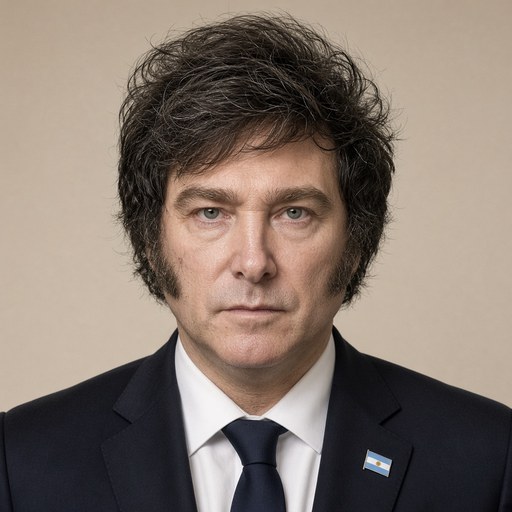
Speech by President Javier Milei at the Derecha Fest in Mar del Plata
 Javier Milei · President of Argentina
- Context
- Milei addressed the Derecha Fest libertarian conference in Mar del Plata on January 27, 2026, outlining his three-front strategy for transforming Argentina toward freedom.
- Main themes
- Cultural battle for freedom, liberalism and free-market capitalism, state intervention critique, Davos speeches, Argentina's political transformation, property rights, woke ideology rejection, moral case for capitalism, management success of libertarian governance, political victories, Western civilizational decline
- Duration
- ~29 min
- Words
- 3,477
- Sentences
- 157
- Readability
- 56
- Grade
- 11.0
- Syntax
- 2.98
- Vocabulary
- 2.03
Translated from Spanish
The broad sphere of national life a sentence belongs to. Every sentence has an Arena, so it is the denominator the other indices are read against.
Other157 sentences in 40 paragraphs
It is a pleasure for me to be at a new edition of the Derecha Fest, an event so important for the dissemination of the ideas of freedom. As you already know, I often say that there are three fronts of battle to change the country: the management front, the political front, and the cultural battle.
Through management, I have demonstrated in these first two years that liberalism is superior in practical terms because of the effects it produces, that is, people prosper when the State is taken off their backs. Who would have thought?
On the political front, we have overwhelmingly validated that idea of superiority with the votes of the people and have given it democratic backing in the last elections, increasing the distance of our party from the opposition. Thank you, boss!
Last week in Davos, I dedicated myself to explaining why liberalism, and more specifically its economic application known as free enterprise capitalism, is also the fairest and most morally virtuous system we have. This is explained because, first: if it were not just, it would not deserve to be defended, regardless of the results it produced. Defending the unjust for the sake of the personal benefits it brings is an act worthy of a cynic, and that is why it is not surprising that it is politicians who comment on this the most.
Secondly, because the waters of the world are increasingly separating the just from the sinners, and the latter are beginning to be reached by the consequences of their actions. The night is coming for the leftists! The people said enough of impoverishing us!
And it is in this context that the cultural battle plays a central role in this scenario because it is the field in which we distinguish good from evil; and it is the instrument that generates a lasting and profound change in the direction of good. It is the battle for souls, which is why I understood, and I understand the audience in Davos as the decisive place to wage that battle.
Moreover, it is much more important to use the exposure of Davos to wage the cultural battle rather than to address merely circumstantial issues. Because if we are not clear about what our north is, we get lost, just as Argentina has over the last hundred years; and as the West has in general.
That is why… Amen. Thank you. That is why… it is an area in which I am a bit unstable… Returning to the speech… The popcorn seller… Take the penguin out of the drawer so they can see that the kids have changed their minds, carry the flag that the lion brought. I already know, let’s go. I mean, we can’t edit the whole song.
Well, returning to my speeches in Davos, because it is precisely one of the most important places to wage the cultural battle, because you have to go and play as a visitor like this. That is why the three speeches have a precise concatenation. In 2024, I went to warn that the West was in danger – it seems I was right. In 2025, I went to explain why we should reject the mental parasites that the woke idea had taken root in the West. And last week, I went to explain what path to embrace, which is none other than that of the ideas of freedom and capitalism, the most moral system discovered by the history of man.
As I mentioned during my speech at the Davos Forum, for a long time we were indoctrinated with the logic that state intervention in the economy was necessary to guarantee a just growth of the economy. You see. When I say a long time, I mean more than a century; as early as the beginning of the 20th century, the American President Wilson spoke of the need for state intervention to guarantee a more equitable economic order. Wilson called this the new freedom. You see, it’s great, Huerta de Soto says, when you put an adjective on something, it means you are ruining it. For example, social justice is not justice. Obviously, the new freedom was not freedom, but rather state prison, where the only prison should be for the crooks like the lady. And it should not only be for her, but also for the partners she has in the private sector who engage in shady business.
By the way, when someone comes to offer you a superior form of freedom, it is the first suspicious sign. Generally, it is some scheme of central planning in which politicians fill their pockets at the expense of those who work, but freedom is one, the one enshrined by natural law, which is the right to life and the right to liberty. We had the entire 20th century to prove it, to demonstrate through history that the interventionist experiment failed and that reality sooner or later ends up imposing itself.
State intervention, to whatever extent, always implies an encroachment on property rights. This inevitably ends up impacting the incentives to work and produce, causing the economy to stop growing. After all, who would want to strive so that a bureaucrat or a slacker takes the benefits? I mean, who intends to direct economic growth ends up with no growth to direct in the first place? Because, like everyone, it is a nail for someone who only has a hammer. That phrase, you see, says? When your only tool is a hammer, everyone looks like a nail. Well, for politicians, everything is public spending and, obviously, theft, right? And the reality is that they get caught in those webs of intervention, and when you, let’s say, supposedly, in an absolutely arrogant position, think you find a market failure, intervention appears. And that intervention generates a worse functioning of the system and, therefore, generates more demand for intervention. And we end up in an impressive web of regulations, a web that in Argentina has lasted more than 100 years and that we have started to unravel with the largest structural reforms of the last century.
But, as I said, it is a mistake to think that free enterprise capitalism is superior because it yields better results. That is, it is not virtuous for being more efficient, but rather it is more efficient precisely because it is morally virtuous. And this is so because capitalism is rooted in the core values of Western culture, a unique culture in history whose moral superiority is indisputable, being the only one based on the natural right to life, liberty, and private property.
In this way, the West found the key to prosperity, the key to the exponential leap that the human species made starting in 1800, which consists of something very simple: There is no act more just than being the owners of our own time and our capacity to work and, consequently, being owners of the fruits that the use of our time leaves us, fruits that we can consume ourselves or exchange freely in the market. This is the basis of capitalism, a system where the only way to grow is by serving others with better quality goods at a lower price.
Naturally, if the capitalist, the successful one, is a social benefactor for serving others with better quality goods at a better price, those who have more expensive and lower quality products are not worthy of the market's favor, and if they want to do it by force, engaging in shady business with the State, they must disappear and go bankrupt. Because in that case, they are not creators of well-being; they are destroyers of well-being, they are destroyers of society, harming millions to take their bribes alongside politicians. And not to mention that this will not happen in Argentina, no matter how much they throw tons of money at the media and corrupt journalists.
That is to say, this phrase is inspired by the most important businessman in all of humanity, who is Elon Musk: The only way to grow is by solving problems for others, for which others would be willing to reward us with their money. Not using the favors of the State to charge higher prices.
You know that the path is a winding path, it is not straight, uniform, and you always find a stone in the way. So, you know: that one puts a lot of money into journalists, so I warn you that I did not kill Kennedy. He was already dead; we just executed him with good policies.
And to provide the rest of goods and services, it is necessary to invest time and effort. Here is where those Judeo-Christian values that made us great come into play. Discipline, frugality, hard work, saving, and a sense of vocation, which functioned as the cultural matrix in which the spirit of capitalism could emerge. Where, among other things, the law said: you shall not kill and it also said you shall not steal.
And, on the contrary, on the opposite sidewalk, on the sidewalk of the leftists and on the sidewalk of the patronage businessmen, there is theft, there is envy, there is laziness, there is ease, there is opportunism, and resentment, the values on which the idea of pretending to be the owner of others' property to use it according to our own will is based. If Judeo-Christian values have been an inexhaustible source of progress, the anti-values of the left and patronage businessmen end up at the other extreme: poverty, misery, and underdevelopment. And here comes into play something crucial, private property is not a human patch that works as a temporary substitute for a better world without property, as the utopian socialists or scientific socialists have wanted us to believe. It is not so. Private property is the way we have to capitalize on the fruit of our efforts and derives from something perfect, which is natural law.
There is nothing superior, much less from human legislation. Private property is what enables us to be owners of what we produce and is what allows effort, knowledge, and tenacity to make a difference in our lives. It is a principle of moral justice that encourages us to continue growing and developing as a species. Thus, its systematic violation by a State that believes itself wiser than its citizens is not primarily a problem of growth, but a violation of the basic principle of justice that the State is, in the first place, to come and protect. When private property is called into question, what makes us human is called into question. It is no coincidence that in those countries where private property is encroached upon, people regress to barbaric customs of yore. And, by the way, where there is no respect for the right to private property, there is probably also no respect for natural rights, that is, the right to liberty and the right to life. Thank you. And I have a commitment to give to you: We will continue to change until we are the freest country in the world.
And all of this is strongly related to ethics. If the human being is rational and acts to prosper, the correct ethics is that which allows human flourishing. Then, three fundamental ideas come into play. The first is self-ownership, under which every person is the absolute owner of their own body and their time. That is, no one can aggress or enslave another without violating this natural norm. The second is private property, that is, the idea that whoever in a world of scarcity first mixes their labor with a virgin resource, that is, a resource not previously appropriated, thus becomes its legitimate owner, that is, the principle of original appropriation of Locke. That is why guaranteeing this is fundamental to resolving conflicts peacefully and justly. And the third is the principle of non-aggression, under which ethics prohibits the initiation of force or threat against the person or property of another, and therefore all exchange must be voluntary. All exchange must be voluntary, not trying to use strange bridges to achieve what was not achieved through the market.
These are the foundations on which a State must be based, and it is what we summarize when we say that the role of the State, let’s say, as a result of having failed to achieve peaceful coexistence with our fellow human beings, is to protect life, liberty, and property.
Thus, we see that the system of property is none other than the system of freedom; it is the system that allows substantive freedoms to coexist among the greatest number of individuals possible without violence intervening.
And the market is nothing more than the device through which property titles are freely traded, as that saying goes, trade is a peaceful tool that turns enemies into customers and competitors into collaborators, an idea that Bastiat also expressed by saying that where trade enters, bullets do not enter.
So our task is to build an ethical world, because an ethical world is a free world, and a free world is a peaceful and prosperous world. And from these three principles arises capitalism, the most revolutionary system ever discovered by man, because to change the world, not a single drop of blood needs to be spilled. A system that has managed that in the last 200 years, the world population not only multiplied by 10, but also managed to lift 90% of the population out of extreme poverty; what a successful system it is despite the interfering governments.
And this result is due to a fundamental social technology that Adam Smith referred to as the pin factory, which is nothing other than economies of scale and the existence of increasing returns. However, increasing returns are associated with concentrated structures, which is why much of the economic and political establishment sees these concentrated structures of the economy as a problem to be solved and not a solution for productivity, regardless of the fact that they negotiate with just one under the pretext that monopolies are harmful, and they find that they can do business together. Remember that the only bad monopoly is the monopoly generated by law, because if in a virtuous process there is only one competitor left, you have no reason to attack it, unless you are a corrupt State.
This is clearly where the neoclassical trap lies, because precisely under that ghostly idea of Pareto Optimality, let’s say, what is called the first theorem of welfare economics, is derived from a mathematical structure that later allows for intervention. That is why I like Hoppe's demonstration so much, because it precisely arrives at the result of the invisible hand, but from the perspective of property rights. That is why when they say they want to perfect the functioning of the market by attacking what they call market failures, by doing so they not only open the doors to socialism, but they also undermine economic growth and end up generating the most brutal of poverty. And it goes without saying that what they call failures are not failures, but rather reality confronting them with the fact that their theoretical models are garbage. So what they seek is not for their model to map with reality, but they seek to place themselves in the position of God and twist and break reality to make it coincide with their failed models.
That is why the most extreme versions of this modus operandi always end in savage dictatorships, like those we have seen in Venezuela and Cuba over the years, not to mention Stalinism or Maoism, whose victims number in the hundreds of millions.
Today the world is changing at great speed and we are facing a new paradigm shift. We are in the internet age, where information travels at the speed of light and becomes instantaneous. This allows citizens to self-educate like never before and puts authoritarian regimes and their accomplices, the media, in jeopardy at a greater speed.
Let’s take, for example, what is happening in Iran, whose first response from the bloodthirsty government was precisely to cut off access to the internet. Or let’s take what happened in Argentina in 2023, where thanks to the internet and popular creativity we managed to create, together, the most effective political campaign in history in terms of costs. And today I cannot be speaking here if it were not for the enormous work that all of you have done on social media. Thank you very much.
That is why social democrats, who are nothing more than polite socialists, constantly seek to censor social media to prevent the people from expressing their opinions freely. I won’t even mention if they are part of a media outlet that is dedicated to lying.
And, on the other hand, have you seen how wonderful it has been since we liberated the internet market? Federico mentioned it a few days ago. And how was Argentina before Starlink and Argentina with Starlink? It seems to me that competition is giving us a better quality of life.
At the same time, the internet and all this fertile ground of information present us with a new evolutionary leap hand in hand with artificial intelligence. That is, look at where we have come as a species, wanting to prosper, that we are teaching reasoning to a bunch of stones and metals. Did you understand that? We are teaching reasoning to stones and metals. How wonderful is the human being!
And as could be expected, there are always the usual controllers asking for regulations and controls over the emerging industry. That is why, and for all the reasons mentioned earlier, we must keep a close eye on the giant opportunity cost that could imply halting progress in favor of all-powerful notions of security and responsibility proposed by these administrators of dubious legitimacy.
Argentina has reached a truly unthinkable situation, right? That populist politicians are protectionist. It’s hard to believe, right? I mean, clearly, we have… I say because what would it mean to be popular? That people can buy a greater quantity of products at a lower price, right? But no, they are obsessed with making us pay more. There must be a reason for that. Don’t doubt it.
In the face of the growth leap presented by innovation – something we also learned from the last Nobel Prize in Economics – the interveners seek new justifications to encroach upon private property and sow terror to invent needs such as a supposed responsible innovation. This constitutes, on one hand, what Hayek called the fatal arrogance, given that, under this supposed scheme of responsible innovation, they are judges and interested parties in what effectively constitutes responsibility. And, on the other hand, it presents an oxymoron, given that the role of innovation is to innovate and one cannot know ex ante its responsibility, but only ex post.
When innovation takes place, what Schumpeter defined as creative destruction occurs, that is, a break from the known to the unknown. A very clear example of this is the famous phrase by Henry Ford when he said: if I had asked the public what they wanted, they would have answered faster horses. Well, he answered them with horses that were just a little bit faster. That’s why they have horses.
When the moral foundation of the system that enabled wealth and progress in the first place is lost sight of, prohibitionist arguments end up being used to destroy creation and plunge us into stagnation. In contrast, when the system of freedom is unleashed, which is nothing other than respect for private property, humanity flourishes and naturally resolves its problems through market mechanisms.
That is why today Argentina is demonstrating to the world and especially to the right-wing parties of the world that the true path is that of libertarian liberalism. Thus, until we learn to coexist peacefully, the task of the State is to protect the three natural rights of man and ensure that they are not vulnerable to any third party. So that, with that security at their backs, citizens can unleash all their humanity and thus prosper.
Let us not fear innovation. Let us not fear creativity and its disruptive power. Let us not fear freedom because in the aggregate there will be nothing but improvement in the lives of all citizens and, ultimately, it is what will make Argentina and the West great again. And I know this because we have done it in the past. That is why I ask that God bless all Argentines, that the Forces of Heaven accompany us, and long live freedom, damn it. Long live freedom, damn it. Long live freedom, damn it. Let us make Argentina great again. Thank you very much to all.
The original Spanish. The tags above are read on the English translation's sentences.
Es un placer para mí estar en una nueva Edición de la Derecha Fest, un evento tan importante para la divulgación de las ideas de la libertad. Como ya saben, suelo decir que existen tres frentes de batalla para cambiar el país: el frente de la gestión, el frente político y la batalla cultural.
A través de la gestión, he demostrado en estos primeros dos años que el liberalismo es superior en términos prácticos porque los efectos que produce, es decir, la gente prospera cuando se le quita el Estado de encima. ¿Quién lo hubiera dicho?
En el frente político, hemos validado esa idea avasallantemente de superioridad con los votos de la gente y le hemos dado respaldo democrático en las últimas elecciones aumentando la distancia de nuestro partido con el de la oposición. ¡Gracias, jefe!
La semana pasada en Davos me dediqué a explicar por qué el liberalismo y más específicamente su aplicación económica conocida como capitalismo de libre empresa es también el sistema más justo y moralmente virtuoso que tenemos. Esto se explica porque primero: porque si no fuera justo, no merecería ser defendido, independientemente de los resultados que produjera. Defender lo injusto en pos de los beneficios personales que trae es un acto digno de un cínico y, por eso, no sorprende que sean los políticos los que comenten esto en mayor medida.
En segundo lugar, porque las aguas del mundo empiezan a separar cada vez más a los justos de pecadores y, estos últimos comienzan a ser alcanzados por las consecuencias de sus actos. ¡Se le está viniendo la noche a los zurdos! ¡La gente dijo basta de empobrecernos!
Y es, en este contexto, la batalla cultural cumple un rol central en este escenario porque es el campo en el que distinguimos el bien del mal; y es el instrumento que genera un cambio duradero y profundo en la dirección del bien. Es la batalla por las almas por eso entendí, y entiendo al auditorio de Davos como el lugar determinante para dar esa batalla.
Es más, es mucho más importante utilizar la exposición de Davos para dar la batalla cultural en lugar de atender cuestiones meramente coyunturales. Porque si no tenemos claro cuál es nuestro norte, nos extraviamos, tal como le pasó a la Argentina durante los últimos cien años; y como le pasó a Occidente en general.
Por eso… Amén. Gracias. Por eso… es un área en la que soy un poco inestable… Volviendo al discurso… El pochoclero… Saquen al pingüino del cajón para que vean que los pibes cambiaron de idea, llevar la bandera que trajo el león. Ya lo sé, vamos. Digo, no podemos editar toda la canción.
Bueno, volviendo a mis discursos en Davos, porque es justamente uno de los lugares más importantes para dar la batalla cultural, porque aparte hay que ir y jugar de visitante así. Por eso, los tres discursos tienen una concatenación precisa. En 2024 fui a alertar que Occidente estaba en peligro –parece que he tenido razón. En 2025 fui a explicar por qué debíamos rechazar los parásitos mentales que la idea woke había calado en Occidente. Y, la semana pasada fui a explicar cuál es el camino a abrazar que no es otro que el de las ideas de la libertad y el capitalismo, el sistema de mayor moral descubierto por la historia del hombre.
Tal cual mencioné durante mi discurso en el Foro de Davos, durante mucho tiempo se nos inculcó la lógica de que el intervencionismo estatal en la economía era necesario para garantizar un justo crecimiento de la economía. Ponele. Cuando digo mucho tiempo, me refiero a más de un siglo, ya a principios del siglo XX el Presidente norteamericano Wilson hablaba de la necesidad de la intervención estatal para garantizar un orden económico más equitativo. Wilson llamaba a esto la nueva libertad. Vieron que es genial, Huerta de Soto dice, cuando ustedes le ponen un adjetivo a algo quiere decir que lo están arruinando. Por ejemplo, la justicia social no es justicia. Obviamente, la nueva libertad no era libertad, sino que era prisión estatal, donde la única prisión debería ser para los chorros como la señora. Y no sólo debería ser para ella, también para los socios que tiene en el sector privado que hacen negocios turbios.
Dicho sea de paso, cuando alguien viene a ofrecerte una forma superadora de libertad es la primera señal sospechosa. Generalmente es algún esquema de planificación central en que los políticos se llenan los bolsillos a costa del que trabaja, pero la libertad es una sola, la consagrada por el derecho natural, que es el derecho a la vida y el derecho a la libertad. Tuvimos todo el siglo XX para comprobarlo, para demostrar mediante la historia que el experimento intervencionista fracasó y que la realidad tarde o temprano termina imponiéndose.
El intervencionismo estatal, a la escala que sea, implica siempre y en todo lugar un avasallamiento sobre los derechos de propiedad. Esto, indefectiblemente, termina impactando sobre los incentivos para trabajar y producir, haciendo que la economía deje de crecer. Al fin y al cabo, ¿quién querría esforzarse para que un burócrata o un holgazán se lleven los beneficios? Es decir, ¿quién pretende dirigir el crecimiento económico termina sin crecimiento que dirigir en primer lugar? Porque, como todos, es un clavo para quien solo tiene un martillo. Esa frase, ¿vieron que dice? Cuando tu única herramienta es un martillo, todo el mundo se parece un clavo. Bueno, para los políticos todo es gasto público y, obviamente, choreo, ¿no? Y la realidad es que entran en esas marañas de intervención y cuando ustedes, digamos, supuestamente, en una posición absolutamente arrogante, creen que encuentran un fallo de mercado, aparece la intervención. Y esa intervención lo que genera es un peor funcionamiento del sistema y, por ende, genera más demanda de intervención. Y terminamos así en una maraña de regulaciones impresionantes, maraña que en Argentina tuvo más de 100 años y que nosotros hemos empezado a hacerlas con las reformas estructurales más grandes del último siglo.
Pero, como ya dije, es un error pensar que el capitalismo de libre empresa es superior porque arroja mejores resultados. Es decir, no es virtuoso por ser más eficiente, sino que es más eficiente precisamente porque es moralmente virtuoso. Y esto es así porque el capitalismo está arraigado en los valores troncales de la cultura occidental, una cultura única en la historia cuya superioridad moral es indiscutible, a ser la única basada en el derecho natural a la vida, a la libertad y a la propiedad privada.
De esa manera, Occidente halló la clave de la prosperidad, la clave para el salto exponencial que dio la especie humana a partir del año 1800 y que consiste en algo muy sencillo: No hay acto más justo que ser dueños de nuestro propio tiempo y nuestra capacidad de trabajo y, por consiguiente, ser dueños de los frutos que el uso de nuestro tiempo nos deja, frutos que podemos consumir nosotros mismos o intercambiarlos libremente en el mercado. Esta es la base del capitalismo, un sistema donde la única forma de crecer es sirviendo al prójimo con bienes de mejor calidad a un menor precio.
Naturalmente, si el capitalista, el exitoso es un benefactor social por servir al prójimo con bienes de mejor calidad a un mejor precio, aquellos que tienen productos más caros y de peor calidad no son dignos del favor del mercado y, si quieren hacerlo por la fuerza, haciendo negocios turbios con el Estado, esos deben desaparecer e ir a la quiebra. Porque en ese caso no son creadores de bienestar, son destructores de bienestar, son destructores de la sociedad, perjudican a millones para llevarse sus coimas junto a los políticos. Y ni que hablar que eso no va a pasar en la Argentina, por más que le pongan toneladas de guita a los medios de comunicación y a los periodistas corruptos.
Es decir, esta frase está inspirada en el empresario más importante en serio de toda la humanidad, que es Elon Musk: La única forma de crecer es resolviéndole problemas al prójimo, por los cuales el prójimo estaría dispuesto a retribuirnos con su dinero. No usar los favores del Estado para cobrar precios más altos.
Ustedes saben que el camino es un sinuoso camino, no es rectilíneo, uniforme y siempre se encuentran una piedra en el camino. Así que, ya saben: ese le pone un montón de guita a periodistas, así que les aviso que a Kennedy yo no lo maté. Ese ya estaba muerto nada más que lo ejecutamos con buenas políticas.
Y para proveer al resto de bienes y servicios es necesario invertir tiempo y esfuerzo. Aquí es donde entran en juego esos valores judeocristianos que nos hicieron grande. La disciplina, la frugalidad, el trabajo duro, el ahorro y el sentido de vocación, los cuales funcionaron como la matriz cultural en la que pudo emerger el espíritu del capitalismo. Donde, entre otras cosas, la ley decía: no matarás y también decía que no robarás.
Y, por el contrario, en la vereda opuesta, en la vereda de los zurdos y en la vereda de los empresarios prebendarios, está el robo, está la envidia, está la pereza, está el facilismo, está el ventajismo y el resentimiento, los valores sobre los que se sustenta la idea de pretender de ser el dueño de lo ajeno para utilizarlo según nuestra propia voluntad. Si los valores judeocristianos han sido una fuente inagotable del progreso, los antivalores de la izquierda y de los empresarios prebendarios terminan en el otro extremo: pobreza, miseria y subdesarrollo. Y aquí entra en juego algo crucial, la propiedad privada no es un parche humano que funciona como sustituto temporal de un mundo mejor sin propiedad, como nos han querido hacer creer los socialistas utópicos o los socialistas científicos. No es así. La propiedad privada es la forma que tenemos de capitalizar el fruto de nuestros esfuerzos y se deriva a algo perfecto que es el derecho natural.
No existe algo superador y mucho menos por parte de la legislación humana. La propiedad privada es lo que habilita que seamos dueños de lo que producimos y es lo que habilita que el esfuerzo, el conocimiento y la tenacidad hagan una diferencia en nuestras vidas. Es un principio de justicia moral que nos incentiva a seguir creciendo y desarrollándonos como especie. Así, su vulneración sistemática por parte de un Estado que se cree más sabio que sus ciudadanos, no es sobre todo un problema de crecimiento, sino una vulneración del principio básico de justicia que el Estado es, en un primer lugar, venir a proteger. Cuando se pone en duda la propiedad privada, se pone en duda aquello que nos hace humanos. No es casualidad que en aquellos países donde la propiedad privada es avasallada, la gente retroceda a costumbres barbáricas de antaño. Y, dicho sea de paso, donde no existe respeto por el derecho a la propiedad privada, probablemente tampoco exista respeto por los derechos naturales, es decir, el derecho a la libertad y el derecho a la vida. Gracias. Y tengo un compromiso para darles a ustedes: Vamos a seguir cambiando hasta que seamos el país más libre del mundo.
Y todo esto está fuertemente relacionado con la ética. Si el ser humano es racional y actúa para prosperar, la ética correcta es aquella que permite el florecimiento humano. Entonces, entran en juego tres ideas fundamentales. La primera es la autopropiedad, bajo la cual toda persona es dueña absoluta de su propio cuerpo y de su tiempo. Es decir, nadie puede agredir o esclavizar a otro sin violar esta norma natural. La segunda es la propiedad privada, es decir, la idea de quien en un mundo de escasez mezcla primero su trabajo con un recurso virgen, o sea, un recurso no apropiado previamente, se convierte así en su dueño legítimo, es decir, el principio de apropiación originaria de Locke. Por eso garantizar esto es fundamental para resolver conflictos de manera pacífica y justa. Y, la tercera, es el principio de no agresión, bajo el cual la ética prohíbe la iniciación de fuerza o amenaza contra la persona o propiedad de otro y por ende todo intercambio debe ser voluntario. Todo intercambio debe ser voluntario, no tratar de utilizar puentes extraños para lograr lo que no se logró por mercado.
Estas son las bases sobre las que debe sustentarse un Estado y es lo que resumimos nosotros al decir que el rol del Estado, digamos, fruto de haber fracasado en lograr una convivencia pacífica con nuestros semejantes, lo que tiene que ocuparse el Estado es proteger la vida, la libertad y la propiedad.
Es así que vemos que el sistema de la propiedad no es otro que el sistema de la libertad, es el sistema que permite que coexisten entre sí las libertades sustantivas realizadas en el mundo de la mayor cantidad de individuos posibles sin que medie la violencia.
Y el mercado no es más que el dispositivo mediante el cual se comercian libremente los títulos de propiedad, tal como reza aquella frase, el comercio es una herramienta pacífica que convierte a los enemigos en clientes y a los competidores en colaboradores, idea que también plasmó Bastiat al decir que donde entra el comercio no entran las balas.
Entonces nuestra labor es construir un mundo ético, porque un mundo ético es un mundo libre y un mundo libre es un mundo pacífico y próspero. Y de estos tres principios nace el capitalismo, el sistema más revolucionario jamás descubierto por el hombre, porque para cambiar el mundo no se necesita derramar ni una sola gota de sangre. Sistema que logró que en los últimos 200 años la población mundial no sólo se multiplicara por 10, sino que además logró sacar al 90% de la población de la extrema pobreza, vaya que es un sistema exitoso a pesar de los gobiernos que interfieren.
Y este resultado se debe a una tecnología social fundamental que Adam Smith calificó como la fábrica de alfileres, que no es otra cosa que las economías de escalas y la existencia de rendimientos crecientes. Sin embargo, los rendimientos crecientes están asociados a estructuras concentradas, por eso gran parte del establishment económico y político ven estas estructuras concentradas de la economía como un problema a solucionar y no una solución de productividad, al margen de que se negocian con uno solo bajo la excusa de que los monopolios hacen daño, y encuentran que pueden hacer negocios juntos. Recuerden que el único monopolio malo es el monopolio que está generado por la ley, porque si en un proceso virtuoso queda un solo competidor, ustedes no tienen por qué agredirlo, salvo que sean un Estado coimero.
En esto entonces consiste claramente la trampa neoclásica, porque justamente bajo esa fantasmagórica idea del Óptimo de Pareto, digamos, lo que se llama el primer teorema de la economía del bienestar, está derivado de una estructura matemática que luego después permite la intervención. Por eso es que a mí me gusta tanto la demostración que hace Hoppe, porque justamente llega al resultado de la mano invisible, pero desde el derecho de propiedad. Por eso cuando dicen que quieren perfeccionar el funcionamiento del mercado atacando -que ellos llaman fallo de mercados-, pero al hacerlo no solo le abren las puertas al socialismo, sino que atentan contra el crecimiento económico y terminan generando la más cruenta de las pobrezas. Y demás está decir que lo que ellos llaman fallos no son fallos, sino la realidad echándoles en cara que sus modelos teóricos son una basura. Entonces lo que buscan ellos no es que su modelo mapee con la realidad, sino que buscan ponerse en el lugar de Dios y torcer y quebrar la realidad para que coincida con sus fracasados modelos.
Por eso las versiones más extremas de este modus operandi siempre terminan en dictaduras salvajes, como las que vimos en Venezuela y en Cuba a lo largo de estos años, por no hablar del estalinismo o del moabismo, cuyas víctimas se cuentan por cientos de millones.
Hoy el mundo está cambiando a gran velocidad y nos encontramos ante un nuevo cambio de paradigma. Estamos en la era internet, donde la información viaja a la velocidad de la luz y se vuelve instantánea. Esto le permite a la ciudadanía auto educarse como nunca antes y pone en jaque a los regímenes autoritarios a mayor velocidad y sus cómplices: los medios de comunicación.
Tomemos, por ejemplo, lo que está sucediendo en Irán, cuya primera respuesta por parte del gobierno sanguinario fue justamente cortar el acceso a internet. O tomemos por caso lo que sucedió en Argentina en 2023, donde gracias a internet y la creatividad popular logramos hacer, entre todos, la campaña política más efectiva de la historia en términos de costos. Y hoy no puedo estar hablando aquí si no fuera por el laburo enorme que han hecho todos ustedes en las redes sociales. Muchas gracias.
Por eso también los socialdemócratas, que no son ni más ni menos que socialistas de buenos modales, buscan constantemente censurar las redes sociales para evitar que el pueblo opine en libertad. Ni les digo si son parte de un medio de comunicación que se dedica a mentir.
Y, por otro lado, ¿vieron qué maravilloso desde que liberamos el mercado de internet? Lo subió hace pocos días Federico. ¿Y cómo era Argentina antes de Starlink y Argentina con Starlink? Me parece que justamente la competencia nos está dando una mejor calidad de vida.
A su vez, internet y todo este caldo de cultivo informático pone ante nosotros un nuevo salto evolutivo de la mano de la inteligencia artificial. Esto es, miren a dónde llegamos como especie, queriendo prosperar, que le estamos enseñando a razonar a un montón de piedras y metales. ¿Entendieron eso? Le estamos enseñando a razonar a piedras y metales. ¡Vaya que es maravilloso el ser humano!
Y como no podía ser de otra manera, nunca faltan los controladores de siempre pidiendo regulaciones y controles sobre la industria naciente. Por eso, y por todo lo dicho antes, tenemos que tener un ojo atento al gigante costo de oportunidad que puede implicar detener el progreso en pos de nociones todopoderosas de seguridad y responsabilidad que proponen estos administradores de dudosa legitimidad.
Argentina llegó al caso, digamos, a una cosa verdaderamente impensada, ¿no? Que políticos populistas sean proteccionistas. Es de no creer ¿no? Digo, claramente, tenemos…digo porque ¿qué sería ser popular? Que la gente pueda comprar mayor cantidad de productos a menor precio ¿no? Pero no, están obsesionados con hacernos pagar caro. Por algo será. No tengas dudas.
Ante el salto de crecimiento que presenta la innovación –cosa que también aprendimos del último Premio Nobel de Economía- los interventores buscan nuevas justificaciones para avanzar sobre la propiedad privada y siembran terror para inventar necesidad como la de una supuesta innovación responsable. Esto constituye, por un lado, lo que Hayek llamaba la fatal arrogancia, dado que, bajo este supuesto esquema de innovación responsable, ellos son jueces y parte interesada de qué constituye efectivamente responsabilidad. Y, por otro lado, presenta un oxímoron, dado que el rol de la innovación es innovar y no se puede conocer ex ante su responsabilidad, sino solamente ex post.
Cuando la innovación tiene lugar, ocurre con ella lo que Schumpeter definía como la destrucción creativa, es decir, un quiebre de lo conocido por sobre lo desconocido. Un ejemplo muy claro de esto es la famosa frase de Henry Ford cuando dijo: si le hubiera preguntado al público qué quería, me hubieran contestado caballos más veloces. Bueno, le contestó con caballos un poquitito más veloces todavía. Por eso tienen caballos.
Cuando se pierde de vista el fundamento moral del sistema que fue el que posibilitó la riqueza y el progreso en primer lugar, argumentos prohibicionistas terminan siendo utilizados para destruir la creación y sumirnos en el estancamiento. En cambio, cuando se le da rienda suelta al sistema de la libertad, que no es otra cosa que el respeto por la propiedad privada, la humanidad florece y resuelve de forma natural sus problemas a través de los mecanismos de mercado.
Por eso hoy Argentina le está demostrando al mundo y especialmente a los partidos de derecha del mundo que el verdadero camino es el de derecha liberal libertaria. Así, hasta que no aprendamos a convivir pacíficamente, la tarea del Estado es que cuide los tres derechos naturales del hombre y que no sean vulnerables por ningún tercero. Para que, con esa seguridad a sus espaldas, los ciudadanos puedan desplegar toda su humanidad y así prosperar.
No le temamos a la innovación. No le temamos a la creatividad y su poder disruptivo. No le temamos a la libertad porque en el agregado no habrá otra cosa que mejorar la vida de todos los ciudadanos y, en última instancia, es lo que volverá a ser grande a Argentina y a Occidente nuevamente. Y esto lo sé porque en el pasado ya lo hemos hecho. Por eso pido que Dios bendiga a todos los argentinos, que las Fuerzas del Cielo nos acompañen y viva la libertad, carajo. Viva la libertad, carajo. Viva la libertad, carajo. Hagamos grande a la Argentina nuevamente. Muchas gracias a todos.