




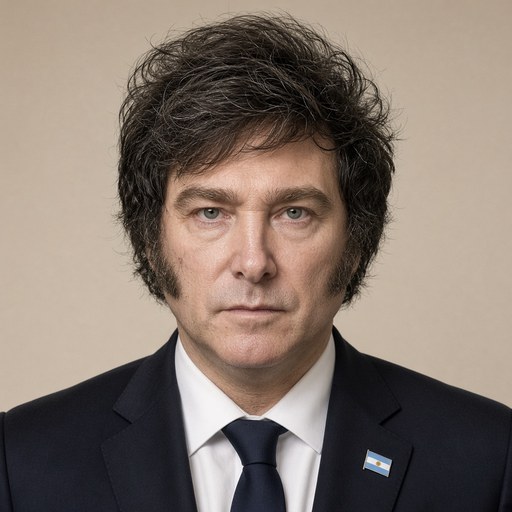
Speech by the President of the Argentine Nation, Javier Milei, at the inauguration of the International Tourism Fair, at La Rural.
 Javier Milei · President of Argentina
- Context
- Milei addressed the inauguration of the International Tourism Fair at La Rural in Buenos Aires on September 27, 2025, promoting Argentina's tourism and economic reforms.
- Main themes
- Argentine tourism potential, macroeconomic stability, fiscal adjustment and surplus, economic deregulation, infrastructure development, air connectivity, labor market reform, tax reform, investment climate, competitiveness, anti-inflationary policy, long-term economic foundations
- Duration
- ~11 min
- Words
- 1,270
- Sentences
- 54
- Readability
- 48
- Grade
- 12.4
- Syntax
- 3.09
- Vocabulary
- 2.12
Translated from Spanish
The broad sphere of national life a sentence belongs to. Every sentence has an Arena, so it is the denominator the other indices are read against.
Other54 sentences in 12 paragraphs
Good morning everyone, I would like to thank the authorities of the fair for such a kind invitation. As I said just a few days ago in the United States, when we took office in December 2023, we found a patient in critical condition. The country was on the brink of a new hyperinflation, with social indicators even worse than those of 2001. In the face of this scenario, which would have meant the worst crisis in our history, we were clear that we had to act quickly and with conviction. In just the first month, we made a five-point adjustment of GDP in the fiscal deficit at the National Treasury and another ten points of GDP in quasi-fiscal adjustment at the Central Bank in just six months. Thanks to that, Argentina is one of only five countries in the world that has a fiscal surplus without being in default, something that had not been seen in our country for 125 years of history.
We also carried out the most ambitious deregulation reform in history, demonstrating our commitment to normalizing an economy so often manipulated by politics. In other words, we are on the right path; there is no other way to move forward than by applying the ideas that made us prosperous in the first place. However, we are also aware that this is just the beginning. We are undertaking the key task of building the foundations of a successful country. Foundations that, by definition, are often hidden, but on which any building would not stand for more than a few minutes or days. This last point is an analogy of the economy that politicians do not like, as they thrive on taking flashy measures without any basis, which sooner or later lead to the collapse of everything built. We came to do something different: not to start building the house from the roof, but to lay the groundwork for long-term growth. And now that the foundations are solid, it is time to start seeing the fruits of our effort.
Speaking specifically about the sector that brings us all together here today, Argentine tourism has all the conditions to be a global spearhead. We have top-level human capital, recognized for its hospitality and quality of service. We have destinations envied by practically any country in the world: we have glaciers, lakes, waterfalls, marshes, extensive coastlines, jungles, deserts, canyons, valleys, and mountains of all kinds. We have a globally recognized gastronomic diversity, and the diversity of ecosystems I mentioned earlier gives us a potential capacity to generate raw materials rarely seen in history. With just these conditions, Argentina could have a tourism sector 20 times larger than the current one. We could host tourism consistently throughout the year without any problems. This means that we still have a lot of untapped potential.
This brings us to the question of what is needed to take advantage of all this potential: logically, we need to develop infrastructure, we need to have a hotel network with the capacity and quality sufficient to attract citizens from all over the world, we need air routes that connect our entire country, making distant destinations increasingly accessible. In this regard, our administration has already implemented a policy to regulate the air transport sector that is generating greater connectivity, both in domestic and international flights. At the same time, we have facilitated the entry of tourists by eliminating visas and bureaucratic procedures for strategic markets. And, to be able to face this growth, we also need energy and many other things. But, mainly, for all these items to be met, we need macroeconomic stability.
Because all these needs require investment and work to be satisfied. For that, we need sufficient stability so that investments can be projected for 10, 20, or 30 years, without the fear that the economy will collapse overnight. We also need to improve the competitiveness of the sector, because, as I mentioned, the tourism sector competes with the tourism sector of the entire planet.
To be able to compete more and better, we have to reform the labor market so that hiring is more accessible for different ventures. It is also necessary to rid ourselves of the scourge of the litigation industry, which drives businesses to bankruptcy to benefit a few opportunists. We also need a tax reform to lower taxes, making more ventures profitable. Our government is very clear about all of this; that is why we made the economic order that we did, and that is why we want to promote the necessary reforms for Argentina to become a competitive country and for prosperity to flourish freely.
That is why we are also clear that the solution is not to return to the catastrophic path of recurrent devaluations, nor to artificially inflate demand by issuing pesos indiscriminately or imposing regulations that force people to vacation in the country. Argentines do not need excuses to choose Argentina; they just need to have the opportunity, and the way to provide that is not by force, but by improving the offer. Because that path of macroeconomic unpredictability, to which the opposition promises to return, prevents the sector from investing, growing, and learning what works and what does not work. Without this learning, tourism remains trapped in a constant need for subsidies to sustain what does not work. Meanwhile, what does work and has genuine demand does not have the conditions to grow, because it competes for the same scarce resources, both from customers, credit, and labor as what does not.
Moreover, this prevents workers in the sector from investing in their own training and betting on their growth. At the same time, the eternal subsidy puts all the incentives on taking profits instead of growing, both from labor and capital. This traps us, makes us look at our own navels forever, and prevents us from aiming at the global tourism market, even with all the resources to do so. We do trust in Argentine talent and know that if we level the playing field, we can compete on equal terms with any destination in the world.
To make matters worse, as issuance and devaluation systematically impoverish the population, the sector becomes trapped with a clientele with fewer and fewer resources. This makes improving the offer meaningless and creates a vicious circle that leads us to lower and lower revenues and, therefore, worse services. But, for all that I have just mentioned and to prevent all these abominable catastrophes from occurring, we need to find deep and lasting solutions. We have been working in that direction; we are making the reforms that have been postponed by politics for decades. Once we finish ordering the macroeconomy, the microeconomy will take off to levels never seen before in the country, so tourism will be greatly benefited at all levels.
We are constantly repeating that fiscal order is non-negotiable, that inflation must be crushed, or that taxes and regulations must be lower. This is not a whim of ours; it is the discipline that will lead us to be a rich and prosperous country.
That is our government program, because we understand that if we do not do this, Argentina will regress and it will be increasingly difficult to recover. That is why I invite you not to give up; we are getting closer and closer to pulling the country out of the abyss. Let us make all this effort worthwhile.
May God bless all Argentines, may the strength of heaven be with us, and thank you very much to everyone. Let's go, we can do it, let's go!
The original Spanish. The tags above are read on the English translation's sentences.
Buenos días a todos, quisiera agradecer a las autoridades de la feria por tan amable invitación. Como dije hace apenas unos días en Estados Unidos, cuando asumimos nuestro mandato en diciembre de 2023 encontramos un paciente en estado crítico. El país se encontraba al borde de una nueva hiperinflación, con indicadores sociales incluso peores que los del 2001. Ante este panorama, que hubiera significado la peor crisis de nuestra historia, tuvimos claro que debíamos actuar rápido y con convicción. Solo en el primer mes hicimos un ajuste de cinco puntos del PBI del déficit fiscal a nivel Tesoro Nacional y otros diez puntos del PBI de ajuste cuasi fiscal en el Banco Central en apenas seis meses. Gracias a eso, Argentina es uno de apenas cinco países en el mundo que tienen superávit fiscal sin estar en default, algo que además no se veía en nuestro país desde hacía 125 años de historia.
También llevamos a cabo la reforma desregulatoria más ambiciosa de la historia, demostrando nuestro compromiso con normalizar una economía tantas veces manoseada por la política. Es decir, vamos por el camino correcto; no hay otra manera de salir adelante que aplicando las ideas que nos hicieron prósperos en primer lugar. Sin embargo, también somos conscientes de que esto recién empieza. Estamos llevando a cabo la labor clave de construir los cimientos de un país exitoso. Cimientos que, por definición, suelen estar ocultos, pero en los cuales cualquier edificio no duraría en pie más que unos minutos o días. Esto último es una analogía de la economía que no le gusta a los políticos, ya que viven de tomar medidas efectistas sin ningún tipo de fundamento, que más temprano que tarde llevan al derrumbe de todo lo construido. Nosotros vinimos a hacer algo distinto: no a empezar a construir la casa por el techo, sino a asentar las bases del crecimiento a largo plazo. Y ahora que los cimientos están firmes, es momento de empezar a ver el fruto de nuestro esfuerzo.
Hablando específicamente del rubro que nos convoca hoy aquí a todos, el turismo argentino tiene todas las condiciones para ser punta de lanza global. Contamos con un capital humano de primer nivel, reconocido por su hospitalidad y su calidad de servicio. Contamos con destinos envidiados por prácticamente cualquier país del mundo: tenemos glaciares, lagos, cataratas, esteros, extensas costas marítimas, selvas, desiertos, cañones, valles y montañas de todo tipo. Contamos con una diversidad gastronómica reconocida globalmente, y la diversidad de ecosistemas que mencioné anteriormente nos brinda una capacidad potencial para generar materia prima pocas veces vista en la historia. Solo con estas condiciones, Argentina podría tener un sector turístico 20 veces más grande que el actual. Podríamos acoger turismo de forma constante durante todo el año sin ningún tipo de problema. Esto quiere decir que aún tenemos mucho potencial sin ser explotado.
Lo que nos introduce a la cuestión de qué se necesita para poder aprovechar todo este potencial: lógicamente, se necesita poder desarrollar la infraestructura, se necesita contar con un entramado hotelero con la capacidad y la calidad suficiente para ser tentados por ciudadanos de todo el mundo, se necesita contar con rutas aerocomerciales que conecten todo nuestro país, volviendo cada vez más accesibles destinos lejanos. En este sentido, nuestra gestión ya puso en marcha una política de regulación del sector aerocomercial que está generando una mayor conectividad, tanto en vuelos de cabotaje como internacionales. En paralelo, facilitamos el ingreso de turistas mediante la eliminación de visas y trámites burocráticos para mercados estratégicos. Y, para poder afrontar este crecimiento, también se necesita energía y tantas otras cosas más. Pero, principalmente, para que todos estos ítems se cumplan, se necesita estabilidad macroeconómica.
Porque todas estas necesidades requieren inversión y trabajo para ser satisfechas. Para eso necesitamos la estabilidad suficiente para que se puedan proyectar inversiones a 10, 20 o 30 años, sin el temor de que la economía vuele por los aires de la noche a la mañana. También se necesita mejorar la competitividad del sector, porque, como ya mencioné, el sector turístico compite con el sector turístico de todo el planeta.
Para poder competir más y mejor, tenemos que reformar el mercado de trabajo para que contratar sea más accesible para los distintos emprendimientos. Es necesario también sacarnos de encima el flagelo de la industria del juicio, que lleva negocios a la quiebra para beneficiar a unos pocos vivos. También necesitamos una reforma fiscal para bajar impuestos, haciendo que cada vez más emprendimientos sean rentables. Nuestro gobierno tiene todo lo mencionado muy claro; por eso hicimos el ordenamiento económico que hicimos, y por eso queremos impulsar las reformas necesarias para que Argentina se vuelva un país competitivo y pueda florecer libremente la prosperidad.
Por eso también tenemos claro que la solución no es volver al catastrófico sendero de las devaluaciones recurrentes, tampoco inflar artificialmente la demanda emitiendo pesos a mansalva o imponiendo regulaciones que fuercen a la gente a vacacionar en el país. Los argentinos no necesitan excusas para elegir Argentina, solo necesitan tener la oportunidad y el camino para dársela no es a la fuerza, sino mejorando la oferta. Porque ese sendero de imprevisibilidad macroeconómica, al que la oposición promete volver, impide que el sector invierta, crezca y aprenda qué funciona y qué no funciona. Sin este aprendizaje, el turismo queda preso de una necesidad constante de subsidios para sostener lo que no funciona. Mientras tanto, lo que sí funciona y tiene demanda genuina no tiene las condiciones para crecer, porque compite por los mismos escasos recursos, tanto del cliente, como de crédito y mano de obra con lo que no.
Además, esto impide que los trabajadores del sector inviertan en su propia capacitación y apuesten a su crecimiento. A su vez, el subsidio eterno pone todos los incentivos en tomar las ganancias en lugar de crecer, tanto por parte del trabajo como del capital. Esto nos encierra, hace que nos miremos para siempre el ombligo y no podamos apuntar al mercado global de turismo, aún con todos los recursos para hacerlo. Nosotros sí confiamos en el talento argentino y sabemos que, si equilibramos la cancha, le podemos competir de igual a igual a cualquier destino del mundo.
Para peor, como la emisión y devaluación empobrecen sistemáticamente a la población, el sector queda preso de una clientela con cada vez menos recursos. Esto hace que mejorar la oferta no tenga sentido y se genere un círculo vicioso que nos lleva a cada vez menores ingresos y, por tanto, peores prestaciones. Pero, para que todo lo que acabo de mencionar y que no ocurran todas estas catástrofes aberrantes, hay que encontrar soluciones profundas y duraderas. Nosotros venimos trabajando en esa dirección; estamos haciendo las reformas que fueron postergadas por la política durante décadas. Una vez que terminemos de ordenar la macroeconomía, la micro despegará a niveles nunca antes vistos en el país, por lo que el turismo se verá ampliamente beneficiado en todos sus niveles.
Que estamos constantemente repitiendo que el orden fiscal no se negocia, que la inflación hay que pulverizarla, o que los impuestos y las regulaciones deben ser menores. No es un capricho nuestro, es la disciplina que nos llevará a ser un país rico y próspero.
Ese es nuestro programa de gobierno, porque entendemos que, si no hacemos esto, Argentina retrocede y será cada vez más difícil de recuperar. Por eso los invito a no aflojar; estamos cada vez más cerca de sacar al país del fondo del abismo. Hagamos que todo este esfuerzo valga la pena.
Que Dios bendiga a todos los argentinos, que la fuerza del cielo nos acompañe, y muchísimas gracias a todos. ¡Vamos, que se puede, vamos!