




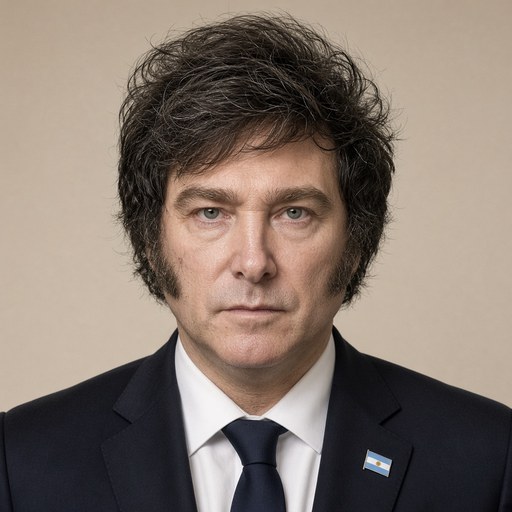
Presentation of the ZERO TOLERANCE WITH CRIME reforms by President Javier Milei and the Minister of National Security, Patricia Bullrich.
 Javier Milei · President of Argentina
- Context
- Milei and Security Minister Bullrich presented sweeping zero-tolerance penal code reforms to be submitted to Argentina's National Congress on October 2, 2025.
- Main themes
- Penal code reform, zero tolerance crime policy, increased criminal penalties, homicide and violent crime, illegal weapons carrying, theft and robbery, anti-mafia legislation, protection of security forces, property rights and usurpation, new digital and fraud crimes, victim protection
- Duration
- ~25 min
- Words
- 2,952
- Sentences
- 140
- Readability
- 53
- Grade
- 11.0
- Syntax
- 2.93
- Vocabulary
- 2.21
Translated from Spanish
The broad sphere of national life a sentence belongs to. Every sentence has an Arena, so it is the denominator the other indices are read against.
Other140 sentences in 28 paragraphs
Patricia Bullrich: Good afternoon. It is an honor to present this new Penal Code that the President of the Nation will send to the National Congress of Argentina in due time. A penal system must be able to charge those who commit crimes, punish them with severe penalties, convict them swiftly, and ensure that those convictions are enforced. Today, some of these things happen and others do not.
Our Penal Code has 100 years of patches. That is why this commission, chaired by our Minister of Justice, has presented a modern, updated penal code that defends victims and not criminals.
This new Penal Code increases the penalties for all crimes, particularly serious crimes, and incorporates offenses that citizens suffer from daily. It is a zero-tolerance code. This code has three central components: the first is the increase in penalties for simple homicide, because life is the most sacred value, which increases from 10 to 30 years. Aggravated homicides that also consider certain sectors that suffer greatly from violence, such as teachers, children, adolescents, and the elderly. Also, with a life sentence for homicides committed by violent groups in mass gatherings where they endanger everyone's lives, as we are seeing in so many places around the world, this situation of extreme violence.
We fully incorporate the Anti-Mafia Law and the Anti-Violent Groups Law so that they are included in the central body of the Penal Code, which, as you know, is applicable throughout the territory of the Republic. With this, we aim to put an end to all mafia and criminal organizations.
A very debated and never resolved issue: the carrying of weapons. If you go out on the street with a weapon and do not have a carrying permit, what are you going out for? Why does a criminal go out with a weapon? They go out to commit crimes, and with that weapon, they can kill, and yet, the penalties were nonexistent. Now, anyone who goes out with a weapon, we already know what objective they seek, and we see it in the number of victims we have in our country; they can use it to injure or to kill. The mere carrying of a weapon will now carry a non-bailable penalty, and if the person has a criminal record, it will be an aggravating factor. Also, the carrying of knives. We have discussed this so much, there have been so many deaths from the use of knives, and yet we have never had a way to incorporate it as a serious crime, the carrying of knives.
The idea is to defend the police across the country and all security forces. Until today, the concept was legitimate defense, exactly the same as a civilian. We expand it to the concept of duty fulfillment and legitimate defense in some cases, so that members of the security forces, when they have to act within the framework of the law and the Constitution, are protected by this penal code and do not end up being perpetrators when they are those whom the Nation has given weapons and the people pay their salaries so they can work for the people.
The theft in our country was a disgrace: you could steal once, a thousand times, and nothing would happen. Now there will be a penalty of up to 3 years. Robbery: robbery was a robbery against society, because it was a minimum of one month and up to three. And what happened with this? Every time someone stole, which is a little more than theft - everyone here knows that - there were no consequences. Now you steal and you go to jail. 85% of the crimes in our country, especially in large urban centers, are thefts that society suffers from every day. The one who steals and is a motorcycle thief and robs with a motorcycle, and throws a woman on the street, drags her, causes disasters, pushes elderly people, pushes minors, has no problems at all. This will be an aggravating factor, and the motorcycle thief will face a penalty of up to 15 years. They ruin families. Now, they will pay for it. Now, as I said, the penalties for thefts and robberies of cell phones are also increased. What is most stolen in the country, what costs people the most to recover, the price of their cell phone and their privacy, their data, purses, briefcases, backpacks, all mass crimes in our country that will be punished more severely. Stealing a person's belongings, their privacy, will not allow them to come in and out as happens now. You will stay inside for 3 to 12 years.
Crimes such as home invasions, new crimes such as pyramid schemes, black widows, virtual kidnappings that today are a large part of the crimes committed. Procedural fraud, revenge porn, harassment, many of these were only misdemeanors, now they are all serious crimes. All these criminal modalities that people have perfectly identified because they suffer from them daily will constitute new crimes with severe penalties.
Usurpation: entering private property, staying, usurping it, would go years without being resolved. Now it will be ordered, and the restitution of the property to its owners will be immediate. False testimony, threats will have aggravating factors because lies cannot be used as an instrument of revenge. False accusations, when linked to sexual crimes, when the possibility of seeing children or family contacts is restricted, we will incorporate for the first time in the Argentine Penal Code.
Argentina has low sentences, and we all know it, for bribery, corruption, crimes against the State. Now, impunity ends, especially with public contracts, and if the people entrusted the Presidency of the Nation or the Vice Presidency, the crime is aggravated because it is the one with the greatest responsibility: the President and the Vice President. It also applies to ministers, governors, high-ranking officials, judges, deputies, senators; whoever steals goes to jail.
Complex crimes, such as drug trafficking, human trafficking, organized crime, extortion kidnapping, child pornography, all these very serious crimes increase the penalties. Today, many important drug traffickers are released with abbreviated trials, with sentences of less than 6 years. And that is important because now this is combined with the anti-mafia law.
A fundamental concept of equality before the law is the imprescriptibility. If someone hid for 10 years, they would come out after 10 years and one day and their crime would no longer have a penalty because it was imprescriptible. Now, especially serious crimes, aggravated homicides, sexual crimes, all sexual abuse crimes in all their modalities, the production and commercialization of child sexual abuse material, the corruption of minors, the promotion and facilitation of prostitution and sexual exploitation of minors, the abduction, retention, and concealment of minors for sexual purposes, human trafficking, extortion kidnappings, attacks on constitutional order and the democratic system, processes against criminal and mafia organizations, terrorism and financing of terrorism, trafficking and smuggling of all types of drugs, these crimes become imprescriptible, meaning they are pursued for life. It is not that after 10 years they are saved and the crime is over as if it never existed.
The effective enforcement of the penalty. With the system we had, when the penalty was not greater than 3 years, in countless occasions there was conditional execution. As a result of these changes, 82% of crimes will be subject to effective prison sentences, and those of less than 3 years may have alternative mechanisms. Therefore, if 82% of crimes are subject to effective prison sentences, it is true that those who commit them will pay. And they will not be able to have conditional execution, nor grooming, nor threats with weapons, anonymous threats, robbery, usurpation, illicit enrichment of officials, bribery, aggravated endangerment, as when someone endangers the lives of people or endangers public or private places. The possession of weapons without legal authorization and the illegal carrying of firearms, civil firearms. The issue of the age of criminal responsibility. It has been discussed for more than 30 years. The lowering of the age of criminal responsibility will go in a separate code, but it enters as it has already entered, to be discussed as a totality of the Argentine penal and judicial system. Today we see how drug traffickers use little soldiers, we see how young people of 14 or 15 years old kill and return home as if nothing had happened. That is why we are proposing the reduction of the age of criminal responsibility to 13 years.
Also, and something that more than half the country is already carrying out through the Ministry of Justice, the accusatory system, another component of this program, that is: Penal Code, lowering of criminal responsibility, and accusatory system. This means that if Justice remains trapped in a slow system that takes years to convict and minutes to release, nothing we do makes sense. That is why I believe that today, and we are experiencing it in the Ministry of Security, with the concrete support given to each and every one of the cases we promote, we truly have a real body of judges and prosecutors who carry out their work with increasing speed and urgency, and that is called justice.
We now want to show you five cases. The first. The first is the case of Kim, you will remember her. Kim Gómez moved the entire country. A 14-year-old girl, two who were not charged for being below the age of criminal responsibility and another who was 17. The second had been arrested before for stealing cars, but had not served any effective prison time. A case more like all we know of revolving doors that ends up costing dearly, the life of a girl. With this new Penal Code, this first crime would have implied effective prison time and would have taken the criminal off the street. Look, the charge is homicide in the course of robbery, age 17, killed and then was not imprisoned for a previous robbery. In this case, with this new Code, effective prison time for his first crime.
Second case. The case of Maguila Puccio, which is the case of imprescriptibility. Daniel Maguila Puccio, a famous member of the Puccio clan, Daniel, the serial kidnappers of San Isidro, son of Arquímedes Puccio, was sentenced to 13 years in prison for participating in one of the kidnappings. He escaped, never returned to the country. In 2011, the sentence expired, and later Mariela Puccio returned to the country unpunished. With the new Penal Code, the crime he committed would not have expired, and he would be in jail today.
Third case: aggravation of penalties. An elderly man stabbed with two pens. For the aggravation of penalties, we want to take the example of this case of a young man who killed Hugo Christian Ferrari, an elderly man, 78 years old, stabbed with two pens. For this crime, he was given 14 years; with the new code that raises the penalties and adds that the victim is a minor or an elderly person, that is, it is an aggravating factor, he would face the sentence of aggravated homicide, for which he would have life imprisonment for having cold-bloodedly murdered this retiree with two pens.
Case number 4: the accusatory system. Everyone will remember the case of Shared Dreams, another example is that of Sergio Schoklender, who allegedly diverted public funds intended for the housing program Mission Shared Dreams, of the Mothers of Plaza de Mayo. This was especially scandalous because Schoklender was already known for having, along with his brother, murdered his parents. He was free under a reduced sentence modality, which allegedly allowed him to commit crimes again. Investigations into this began in 2011 and are still ongoing; that is, 14 years have passed and there is still no sentence. With the accusatory system, this would never be possible; on average, a complex case like this should be resolved in 3 years.
Case number five: Criminal responsibility. The young gas station attendant from Rosario. We remember the case of Bruno Bussanich, a dreadful day, four murders in one night in Rosario; the Flag Plan had just begun. A young gas station attendant brutally murdered in Rosario by a little soldier of drug trafficking. The perpetrator of the homicide, underage. It is a tragedy that drug trafficking uses minors, precisely because they are cheap hitmen. As they cannot be imprisoned and do not assume real risks, they do it for little money. Bruno Bussanich was killed for less than 400,000 pesos. In this case, with the Law of Criminal Responsibility, this murderer, hitman, could not have been hired because it was his mother who turned him in, or something else would have happened; he would be in prison for the crime committed.
Argentina, once and for all, ends the doctrine of zaffaronism, which has done so much harm to society, to victims, to students, and which penetrated as a doctrine of protection for criminals throughout Latin America. Today this penal code comes to place Argentina where it should have always been: protecting society, caring for our security forces, ending the impunity that has reigned for so many years for criminals, for corrupt individuals, for murderers, and for abusers. Today Argentina can say that with President Milei, a new doctrine is born: the penal doctrine of zero tolerance. Thank you very much.
Javier Milei: Thank you very much, Doctor Bullrich. Society has placed a very clear mandate before me, to put an end to the scourge of insecurity. During this year and a half, we have done everything within our reach to fulfill this task.
Within the law, we put an end to the pickets, we went against drug traffickers, we re-equipped the Forces and created the Federal Investigation Directorate to pursue organized crime. Furthermore, we promoted and approved the laws on Reiterance, Recidivism, and the Anti-Mafia Law, and we reduced the homicide rate at the national level. But this is not enough. For people to truly feel safe again, we need to change the system fundamentally, because years of guarantees have legally tied the hands of the Security Forces, judges, and prosecutors who, if they wanted to combat crime, were given free rein and excuses for criminals.
That is why we presented these zero tolerance reforms against crime with Dr. Bullrich. If we manage to approve these reforms, those who commit crimes will pay seriously, and good Argentines will live in a safer society. But whether this set of reforms is implemented or not directly depends on the National Congress; it depends on those who are sitting in the seats of the Legislative power, who have the vocation to side with the victims and not with the criminals. Therefore, the country needs deputies and senators who understand this; there are no middle grounds. If we approve this reform, security in Argentina will change for real. We all know that the system can no longer continue as it is, and it must be changed.
Just when I entered the facilities, I had the opportunity to sign the guest book, and one of the things I wanted to point out is that we, as liberals, have as our guiding principle that wonderful definition given by the greatest reference of liberalism in all of Argentine history, which is Dr. Alberto Benegas Lynch (h), who says: liberalism is the unrestricted respect for the life project of others, based on the principle of non-aggression and in defense of the right to life, liberty, and property. When one analyzes those countries that are freer, they are more prosperous. But for that prosperity to take place, it needs a precondition, which is order. You need life, liberty, and property to be respected and for the principle of non-aggression to prevail: that is order. And one of the things that happened as a result of the promotion of the Zaffaroni doctrine was to invert the burden of proof: the victim became the perpetrator, and the perpetrator was a victim of society. In this way, penalties were relaxed, and there was no cost for those who caused harm to their fellow human beings. This practically led to a situation of chaos, turning the country into a bloodbath, and the absence of order, violating the rights to life, liberty, and property, also leads to impoverishment. And, therefore, it ends up destroying prosperity and sinking the country.
Therefore, as part of our goal to make Argentina great again, order is a precondition, and that is why we need zero tolerance, because those who commit crimes will pay for them, and that is what we came to do today.
We need harsher penalties that apply to those who deserve them, that trials are conducted quickly, and that criminals serve their sentences where they should, in prison, so that good Argentines can return to living in freedom.
I want to close with a reflection, as I have told you over the past few weeks, we are making profound changes in the most essential dimensions of Argentine life. Changes that have never been made before. As a result of this path of deep reform, the future will be different from the past, but this process is currently halfway. We are still far from the destination.
That is why I want to tell you: I know that this path requires effort from everyone, but it is the right path. If we falter now, we may lose the last opportunity to change the destiny of our country. Let us make the effort worthwhile. Thank you very much to all, may God bless all Argentines, may the forces of heaven accompany us, and long live freedom!
The original Spanish. The tags above are read on the English translation's sentences.
Patricia Bullrich: Buenas tardes. Un honor poder presentar este nuevo Código Penal que el señor Presidente de la Nación enviará en su momento al Congreso de la Nación Argentina. Un sistema penal tiene que poder imputar a quienes delinquen, castigarlos con pena severas, condenarlos de forma ágil y asegurarse que esas condenas se cumplan. Hoy, algunas de estas cosas ocurren y otras no.
Nuestro Código Penal tiene 100 años de parches. Por eso esta comisión presidida por nuestro Ministro de Justicia ha presentado un código penal moderno, actualizado, que defiende a las víctimas y no a los delincuentes.
Este nuevo Código Penal aumenta las penas de todos los delitos, particularmente de los delitos graves e incorpora delitos que hoy sufren diariamente los ciudadanos. Es un código de tolerancia cero. Este código tiene tres componentes centrales: el primero es el agravamiento de las penas del homicidio simple, porque la vida es el valor más sagrado, aumenta de 10 a 30 años. Los homicidios agravados que además se contemplan como víctimas algunos sectores que sufren fuertemente la violencia, como son los maestros, los niños, los adolescentes y las personas mayores. También, con pena de perpetua a los homicidios cometidos por barras bravas en lugares masivos donde ponen en riesgo la vida de todos, como estamos viendo en tantos lugares del mundo, esta situación de violencia extrema.
Incorporamos completamente la Ley Antimafias y la Ley Antibarras para que queden en el cuerpo central del Código Penal, que como saben, es de uso en todo el territorio de la República. Con esto pretendemos terminar con todas las organizaciones mafiosas y criminales.
Un tema muy discutido y nunca resuelto: la aportación de armas. Si salís a la calle con un arma y no tenés permiso de portación ¿para qué salís? ¿para qué sale un delincuente con un arma? sale para delinquir y con esa arma puede matar y, sin embargo, las penas eran inexistentes. Ahora, el que sale con un arma, ya sabemos qué objetivo busca y lo vemos en la cantidad de víctimas que tenemos en nuestro país; la puede usar para herir o para matar. La sola portación ahora va a tener una pena no excarcelable y si la persona tiene antecedentes va a ser una agravante. También, la aportación de armas blancas. Tanto hemos discutido, tantas muertes ha habido con el uso de armas blancas y, sin embargo, nunca hemos tenido la forma de incorporarlo como un delito grave la aportación de armas blancas.
La idea es defender a los policías de todo el país y a todas las fuerzas de seguridad. Hasta hoy el concepto era la legítima defensa, exactamente igual que un civil. Nosotros lo ampliamos al concepto de cumplimiento del deber y de legítima defensa en algunos casos, para que los integrantes de la fuerza de seguridad, cuando tienen que actuar en el marco de la ley y la Constitución estén protegidos por este código penal y no terminen siendo victimarios, cuando son aquellos que la Nación le ha dado las armas y el pueblo paga sus salarios para que puedan trabajar para la gente.
El hurto en nuestro país era una vergüenza: hurtabas una, mil veces y no pasaba nada. Ahora va a haber una pena de hasta 3 años. El robo: el robo era un robo a la sociedad, porque era un mes y hasta tres de mínima. ¿Y qué pasó con esto? Cada vez que alguien robaba, que es un poquito más que un hurto - todos los que están acá lo saben-, no había consecuencias. Ahora robás y vas preso. El 85% de los delitos de nuestro país, sobre todo en los grandes centros urbanos, es el robo que todos los días sufre la sociedad. El que roba y es motochorro y roba con una moto, y tira a una señora en la calle, la tira en el piso, la arrastra, genera desastres, empuja a personas mayores, empujan a menores, no tiene ningún tipo de problemas. Esto va a ser un agravante y el motochorro va a tener una pena de hasta 15 años. Arruinan familias. Ahora, las van a pagar. Ahora, como dije, también se agravan los robos y los hurtos para teléfono celulares. Lo que más se roban en el país, lo que más le cuesta a la gente recuperar, el precio de su teléfono celular y su intimidad, sus datos, carteras, portafolios, mochilas, todos delitos masivos en nuestro país que van a ser penados más gravemente. Robar las pertenencias, la intimidad de una persona, no van a entrar y salir como sucede ahora. Te vas a quedar adentro de 3 a 12 años.
Los delitos como entraderas, los nuevos delitos como estafas piramidales, las viudas negras, los secuestros virtuales que hoy son una gran parte de los delitos que se cometen. Las estafas procesales, la porno venganza, el hostigamiento, eran solo contravenciones muchos de estos, ahora son todos delitos graves. Todas estas modalidades delictivas que la gente tiene perfectamente identificadas porque las sufre a diario, van a conformar nuevos delitos con penas graves.
La usurpación: entrar a la propiedad privada, quedarse, usurparla, pasaban años sin que se pudiera solucionar. Ahora se va a ordenar y la restitución es inmediata del inmueble a sus titulares. El falso testimonio, las amenazas van a tener agravantes, porque la mentira no puede ser utilizada como un instrumento de venganza. Las falsa denuncias, cuando se vinculan a delitos sexuales, cuando se restringe la posibilidad de ver a los hijos, o a los contactos familiares, lo vamos a incorporar por primera vez en el Código Penal Argentino.
La Argentina tiene condenas bajas y todos lo sabemos, de cohecho, de corrupción, de delitos contra el Estado. Ahora, se termina la impunidad, más aún con contrataciones públicas y si el pueblo le confió la Presidencia de la Nación o la Vicepresidencia, se agrava el delito, porque es el que mayor responsabilidad tiene: el Presidente y el Vicepresidente. También va para ministros, gobernadores, altos cargos, jueces, diputados, senadores, el que roba va en cana.
Los delitos complejos, como el narcotráfico, la trata de personas, el crimen organizado, el secuestro extorsivo, la pornografía infantil, todos estos delitos gravísimos elevan las penas. Hoy, muchas veces narcotraficantes importantes salen con juicios abreviados, con penas de menos de 6 años. Y eso es importante porque ahora esto se conjuga con la ley antimafias.
Un concepto fundamental de igualdad ante: la ley la imprescriptibilidad. Si alguien se escondía 10 años, salía a los 10 años y un día y no tenía más pena su delito, porque era imprescriptible. Ahora los delitos especialmente graves, homicidios agravados, delitos sexuales, todos los delitos de abuso sexual en todas sus modalidades, la producción y comercialización de material de uso sexual infantil, la corrupción de menores, la promoción y facilitación de las prostitución y la explotación sexual en menores, la sustracción, retención y ocultamiento de menores con fines sexuales, la trata de personas, los secuestros extorsivos, el atentado al orden constitucional y al sistema democrático, los procesos contra las organizaciones criminales y mafiosas, el terrorismo y el financiamiento del terrorismo, el tráfico y el contrabando de todo tipo de drogas, estos delitos pasan a ser imprescriptibles, es decir que se los persigue de por vida. No es que a los 10 años se salvan y se terminó el delito como si no hubiera existido.
El cumplimiento efectivo de la pena. Con el sistema que teníamos, cuando la pena no era mayor de los 3 años, en infinidad de ocasiones había ejecución condicional. Como consecuencia de estos cambios, el 82% de los delitos serán de cumplimiento de prisión efectiva y los de menos de 3 años podrán tener mecanismos alternativos. Por eso, si el 82% de los delitos son de prisión efectiva, es verdad que el que las hace las paga. Y no van a poder tener ejecución condicional, ni el grooming, ni las amenazas con armas, las amenazas anónimas, el robo, la usurpación, el enriquecimiento ilícito de funcionarios, el cohecho, el estrago agravado, como cuando alguien pone en peligro la muerte de personas o pone en peligro lugares públicos o privados. La tenencia de armas sin la autorización legal y la portación ilegal de armas de uso de fuego, arma de fuego de uso civil. El tema de la edad de imputabilidad. Hace más de 30 años que se discute. La baja de edad de imputabilidad que va a ir en un Código aparte, pero que entra como ya entró, para ser discutido como una totalidad del sistema penal y judicial argentino. Hoy vemos cómo utilizan a soldaditos, los narcos, vemos como jóvenes de 14 o 15 años asesinan y vuelven a su casa como si nada hubiera pasado. Por eso, estamos planteando la reducción de la edad de imputabilidad a los 13 años.
También, y algo que ya más de medio país lleva adelante por el Ministerio de Justicia, el sistema acusatorio, otro componente de este programa, es decir: Código Penal, baja de imputabilidad y sistema acusatorio. Esto significa que, si la Justicia sigue presa de un sistema lento, que tarda años en condenar y minutos en liberar, nada de lo que hagamos tiene sentido. Por eso creo que hoy y nosotros lo estamos viviendo en el Ministerio de Seguridad, con el apoyo concreto que se da a todas y cada una de las causas que impulsamos, tenemos realmente un verdadero cuerpo de jueces y fiscales que realizan una tarea que cada vez se hace con más velocidad, con más premura y eso se llama justicia.
Queremos ahora mostrarle cinco casos. El primero. El primero es el caso de Kim, la recordarán. Kim Gómez conmovió al país entero. Un joven de 14 años, dos que no fueron imputados por estar debajo de la edad de imputabilidad y otro de 17. El segundo había sido detenido antes por robar autos, pero no había cumplido ninguna prisión efectiva. Un caso más como todos conocemos de puerta giratoria que termina costando caro, la vida de una niña. Con este nuevo Código Penal, este primer delito habría implicado prisión efectiva y habría sacado al delincuente de la calle. Fíjense, carátula homicidio en ocasión de robo, edad 17 años, mató y luego no fue preso por un robo anterior. En este caso, con este nuevo Código, prisión efectiva para su primer delito.
Segundo caso. El caso de Maguila Puccio, que es el caso de la imprescriptibilidad. Daniel Maguila Puccio, una famosa integrante del clan Puccio, Daniel, los secuestradores seriales de San Isidro, hijo de Arquímedes Puccio, fue condenado a 13 años de prisión por participar de uno de los secuestros. Se fugó, nunca más volvió el país. En el 2011 la pena prescribió y posteriormente Mariela Puccio volvió al país impune. Con el nuevo Código Penal, el delito que cometió, no habría prescrito y hoy estaría en la cárcel.
Tercer caso: agravamiento de las penas. Un jubilado apuñalado con dos biromes. Para el agraviamiento de penas queremos tomar el ejemplo de este caso de un joven que asesinó a Hugo Christian Ferrari, un adulto mayor, 78 años, apuñalado con dos biromes. Por este delito le dieron 14 años; con el nuevo código que sube las penas y agrega que la víctima sea un menor o un adulto mayor, es decir es un agravante, le cabría la sentencia de homicidio agravado, por lo cual tendría prisión perpetua por haber asesinado a mansalva y con dos biromes a este jubilado.
El caso número 4: el sistema acusatorio. Todos recordarán el caso de Sueños compartidos, otro ejemplo es el de Sergio Schoklender, quien presuntamente desvió fondos públicos destinados al programa de viviendas Misión Sueños compartidos, de las Madres de Plaza de Mayo. Este fue especialmente escandaloso, porque Schoklender ya era conocido por haber, junto con su hermano, asesinado a sus padres. Estaba libre bajo una modalidad de sentencia reducida, lo que le permitió presuntamente volver a delinquir. Las investigaciones al respecto comenzaron en el 2011 y aún no terminan; es decir ya pasaron 14 años y todavía no hay sentencia. Con el sistema acusatorio esto jamás sería posible; en promedio un caso complejo como este debería resolverse en 3 años.
Caso número cinco: La imputabilidad. El joven playero de Rosario. Recordamos el caso de Bruno Bussanich, un día tétrico, cuatro asesinatos en una noche en Rosario; recién comenzaba el Plan Bandera. Un playero joven asesinado brutalmente en Rosario por un soldadito del narcotráfico. El culpable del homicidio, menor de edad. Es una tragedia que el narcotráfico use a menores, precisamente, porque son sicarios baratos. Como no pueden caer presos y no asumen verdaderos riesgos, lo hacen por poca plata. A Bruno Bussanich lo mataron por menos de 400 mil pesos. En este caso, con la Ley de Imputabilidad, este asesino, sicario, o no lo podrían haber contratado porque fue su madre la que lo entregó o hubiera sucedido otra cosa, estaría preso por el delito cometido.
La Argentina, de una vez y para siempre, termina con la doctrina del zaffaronismo, que tanto daño le hizo a la sociedad, a las víctimas, a los estudiantes y que penetró como doctrina de protección del delincuente en toda América Latina. Hoy este código penal viene a poner a la Argentina en el lugar en el que siempre debió haber estado: protegiendo a la sociedad, cuidando a nuestra fuerza de seguridad, terminando la impunidad que tantos años reinó para los delincuentes, para los corruptos, para los asesinos y para los abusadores. Hoy la Argentina puede decir que con el presidente Milei nace una nueva doctrina: la doctrina penal de la tolerancia cero. Muchas gracias.
Javier Milei: Muchas gracias, Doctora Bullrich. La sociedad puso frente a mí un mandato muy claro, terminar con el flagelo de la inseguridad. Durante este año y medio hicimos todo lo que estaba nuestro alcance para cumplir con esta tarea.
Dentro de la ley, terminamos con los piquetes, fuimos contra los narcotraficantes, reequipamos a las Fuerzas y creamos la Dirección Federal de Investigaciones para perseguir al crimen organizado. Además, impulsamos y aprobamos las leyes de Reiterancia, de Reincidencia y la Ley Antimafias y bajamos la tasa de homicidios a nivel nacional. Pero, con esto no alcanza. Para que la gente comience a estar de nuevo verdaderamente segura, necesitamos cambiar el sistema de fondo, porque años de garantismo se encargó de atarle jurídicamente las manos a las Fuerzas de Seguridad, a los jueces y a los fiscales que, si querían combatir el crimen, mientras les daban vía libre y excusas a los criminales.
Por eso presentamos con la Doctora Bullrich estas reformas de tolerancia cero contra la delincuencia. Si logramos aprobar estas reformas, quienes delinquen la van a pagar en serio y los argentinos de bien van a vivir en una sociedad más segura. Pero que este conjunto de reformas se implemente o no, dependen directamente del Congreso de la Nación; depende de quienes estén sentados en las butacas del poder Legislativo, tengan la vocación de ponerse del lado de las víctimas y no del lado de los delincuentes. Por eso, el país necesita diputados y senadores que comprendan esto, no hay puntos medios. Si aprobamos esta reforma la seguridad en la Argentina va a cambiar en serio. Todos sabemos que el sistema no da para más y hay que cambiarlo.
Recién cuando ingresé a las instalaciones, tuve la oportunidad de firmar el libro de visitas y una de las cosas que quise señalar, que es, nosotros, como liberales y que tenemos como norte esa definición maravillosa que dio el máximo referente del liberalismo de toda la historia argentina, que es el doctor Alberto Benegas Lynch (h) dice: el liberalismo es el respeto irrestricto del proyecto de vida del prójimo, basado en el principio de no agresión y en defensa del derecho a la vida, la libertad y a la propiedad. Cuando uno analiza aquellos países que son más libres, son más prósperos. Pero para que esa prosperidad tome lugar, necesita una precondición, que es el orden. Ustedes necesitan que se respete la vida, la libertad y la propiedad y que rija el principio de no agresión: eso es orden. Y una de las cosas que pasó a partir del impulso de la doctrina Zaffaroni fue invertir la carga a la prueba: se hizo de la víctima, el victimario y el victimario era una víctima de la sociedad. De esa manera se relajaron las penas y no había costo para aquel que causaba daño a sus semejantes. Eso derivó prácticamente en una situación de caos, convirtieron al país en un baño de sangre y la ausencia de orden, violentando los derechos a la vida, la libertad y a la propiedad, conduce también al empobrecimiento. Y, por ende, termina destruyendo la prosperidad y termina hundiendo al país.
Por lo tanto, como parte de nuestro objetivo de hacer grande a la Argentina nuevamente, el orden es una precondición y por eso necesitamos tolerancia cero, porque el que las hace las paga y eso es lo que vinimos a hacer en el día de hoy.
Hay que tener penas más duras, que apliquen a quien corresponde, que los juicios se hagan rápido y que los delincuentes cumplan la condena donde corresponde, en la cárcel, para que los argentinos de bien puedan volver a vivir en libertad.
Quiero cerrar con una reflexión, como les he dicho durante las últimas semanas, estamos haciendo cambios profundos en las dimensiones más esenciales de la vida de los argentinos. Cambios que no fueron hechos nunca antes. Producto de este sendero de reforma profunda, el futuro va a ser distinto al pasado, pero este proceso hoy está a mitad de camino. Todavía falta para el punto de llegada.
Por eso quiero decirles: Yo sé que este camino conlleva esfuerzo de parte de todos, pero es el camino correcto. Si claudicamos ahora, podemos perder la última oportunidad para cambiar el destino de nuestro país. Hagamos que el esfuerzo valga la pena. Muchas gracias a todos, que Dios los bendiga a todos los argentinos, que las fuerzas del cielo nos acompañen y ¡viva la libertad carajo!