




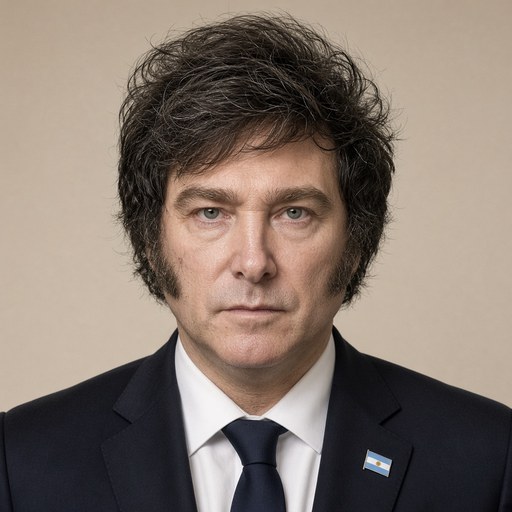
Speech by the President of the Nation, Javier Milei, at CPAC Paraguay 2025
 Javier Milei · President of Argentina
- Context
- Milei addressed CPAC Paraguay 2025 on September 16, 2025, promoting libertarian economic ideas and comparing Argentina's reforms to Paraguay's free-market success.
- Main themes
- Libertarian economic reform in Argentina, free market advocacy, Paraguay as economic model, inflation reduction, fiscal consolidation, CPAC and battle of ideas, South American right-wing politics, legacy of Charlie Kirk, structural reforms, free trade, poverty reduction, monetary policy
- Duration
- ~31 min
- Words
- 3,758
- Sentences
- 132
- Readability
- 49
- Grade
- 13.3
- Syntax
- 3.36
- Vocabulary
- 2.16
Translated from Spanish
The broad sphere of national life a sentence belongs to. Every sentence has an Arena, so it is the denominator the other indices are read against.
Other132 sentences in 27 paragraphs
Hello everyone! And if not, it’s not me. First of all, I want to start by remembering Charlie Kirk, one of the best communicators of the ideas of freedom, a reference who never turned his back on open debate. His death should not paralyze us. We have the obligation to stay at the forefront and not give up in the battle for ideas. Sooner or later, good and truth will triumph. That said, I am very happy to be here today with all of you. I am very glad that CPAC — the most important right-wing summit on the planet — has come to Paraguay, and I hope it will soon be present throughout South America, fighting the cultural battle across the continent.
In Argentina, we began celebrating the CPAC Summit last year, on a truly historic day for the ideas of freedom in our country, and we eagerly hope to repeat or even surpass it. Thanks to Soledad Cedro, regional CEO of CPAC, for inviting me, and also thanks to everyone who has come to listen to me; it is always a privilege for me to take every opportunity to bring the ideas of freedom to every corner of the planet.
I want to start by saying that Paraguay is an example of what needs to be done in economic matters for both my country and the rest of South America. Decades ago, they chose to embrace the ideas of freedom, and as a result, they have managed to make inflation a thing of the past while continuing to grow over the last 20 years; and thanks to the maquila regime, they have been able to explore their local industry to the fullest, increasing exports and generating genuine jobs. Their experience is clear evidence that when regulations support rather than hinder, when taxes are low and do not stifle a country's ability to trade, it grows, creating more goods and services of better quality at a better price.
In contrast, we, in Argentina, who are just a border away, have done everything in a diametrically opposite manner over the last 20 years. We set up an elephantine state with enormous public spending, borrowing from all existing market agents whom we would later end up defaulting on. Once we lost our creditworthiness, we issued pesos uncontrollably to finance such spending, compounded by senseless expropriations, corruption in public works, and a myriad of calamities that made it literally impossible to grow as a country.
In fact, there is a very forceful phrase that Milton Friedman used to say, which he always posed to his foreign students when he asked them about something and said: first, the data, first the data. What do the data say? And in this case, the data are categorical. The results are evident: between 2012 and 2024, Paraguay grew at a compound annual rate of 3.1%, while Argentina shrank at a rate of 0.1% annually in the same period. That is to say, in per capita terms, I would tell you that we are almost 15% behind; a truly terrifying setback.
In fact, when we came to power, poverty… when adjusted for price controls and the clarification of variables, was at 57%, inflation was running at one and a half daily, and, obviously, we also had major financial problems in the Central Bank and in the Treasury, and the consolidated fiscal deficit was 15 points of GDP.
But beyond the calamity in which the Argentine economy found itself at the time we came to power, we had also been making many mistakes for a long time. Moreover, Argentines even squandered the opportunity of our lives when we opposed the FTAA in 2005, which would have been the largest and most beneficial free trade agreement in our history; a tremendous mistake that we ended up paying dearly for later, but that not only harmed Argentina but also the rest of the region by preventing the agreement from prospering among other nations. Thank God, two years ago, Argentines chose to change. They decided to say enough to misery, and in December 2023, they elected a liberal-libertarian as president to implement a process of deep reform that was already being loudly demanded. And thanks to that mandate, which we committed to fulfilling rigorously, we launched a plan for fiscal, monetary, and exchange order that began to yield significant results.
Basically, we put the accounts of the National Treasury in order in the first month of management, by mid-year we put the accounts of the Central Bank in order, and from that moment on, we stopped monetary issuance. And not only that, but we also made nearly 9,000 structural reforms. For example, the reduction of inflation, where we went from being on the brink of a new hyperinflationary process… inflation was running at 1.5% daily. Today it is 1.5% inflation, but in monthly terms. And this allowed it to cease being a scourge for Argentina; it should be noted that the inflation tax is one of the most regressive taxes that exist. And that, for example, allowed for the reduction of inflation, the social containment mechanisms of the Ministry of Human Capital, and the recovery of the economy, with what it entailed in terms of improvement in real wages. In this period that we have been in government, poverty has dropped from 57% to 30%, meaning 12 million Argentines have risen out of poverty. And in terms of indigence, today 6 million Argentines who previously did not eat now do eat because they have risen out of indigence.
At the same time, we are the first government in the last 123 years of history to have zero deficit after interest payments. We understood that the root of all the evils of the Argentine economy was the fiscal deficit, a product of the addiction to public spending. Like Paraguay, we understood that balancing the accounts and keeping them in order should be the backbone of any genuine process of change. After all, no project, whatever its type, can be built on the basis of spending more than is collected. The times it has been attempted have inevitably ended in catastrophe, as the sad history of our country over the last century has recorded.
In fact, Argentina has tried that recipe… which is known as the Keynesian recipe, which is nothing more than saying that fiscal deficit is good, that manipulating the interest rate through monetary policy, regulations, and curtailing freedoms and controls is good. And the truth is that Argentina has probably been the country that applied it the most in history, and the consequence is clear: from being a developed country, after almost a century of applying these crazy measures, Argentina became an underdeveloped country; an unprecedented situation in history.
That is why the model we propose is inspired by the ideas of freedom that made the West great, and which constitute the foundations of our national Constitution and led us to our golden age in the early 20th century. We frequently work with the definition of liberalism from our greatest exponent in the history of Argentine liberalism, which is Professor Alberto Benegas Lynch (h), and we have the privilege that one of his sons, Bertie, is a national deputy for the province of Buenos Aires, and now we have managed to get his brother, Joaquín, to decide to enter the political arena to be a candidate for senator for the Province of Entre Ríos, national senator. Thus, we are filling Congress with pure liberals.
And that is why, in that context, the definition of liberalism from our greatest hero of the ideas of freedom makes even more sense, which says: “Liberalism is the unrestricted respect for the life project of others, based on the principle of non-aggression and in defense of the right to life, liberty, and property”; whose institutions are private property, because without private property there is no price mechanism and, therefore, no economic calculation, and that leads to misery; free markets free from state intervention, because state intervention contaminates the price signal; competitive markets, but understood not in the neoclassical interpretation of perfect competition, but competitive markets understood under the logic of Baumol, Panzar, and Willig, which is the idea of contestable markets, and that maps very well with the Austrian idea in terms of competition.
At the same time, as we acknowledge that human beings, thank God, are all different, this favors the division of labor, and the division of labor leads to social cooperation and prosperity because, in addition, this, beyond the fact that these principles made us rub shoulders with the world powers and transformed the Argentine Republic into the promised land for those seeking a better future, is very important as a criterion when defining not only the direction of a policy but also how to structure the policy.
Our policy is based on moral criteria, that is to say, our north is for Argentina to be the freest country in the world, and we know that this will bring us prosperity, but up to that point it may seem very abstract, and in reality, what matters when making decisions is to work with a moral framework, because when you frame issues in moral terms, there is no room for gray areas. The things that are right are right, and the things that are wrong are wrong. I will do it with… sorry for being self-referential, but it is to show how we make decisions with moral criteria.
When we took office, the Central Bank was generating a quasi-fiscal deficit of 10 points of GDP, which generated inflation, which generated macroeconomic instability, and Argentina, as a consequence, had a currency control, meaning it was not possible to make transactions in foreign currency freely without being brutally pursued by the repressive apparatus of the State. In fact, there are images from 2023 of people called “arbolitos” who buy and sell currencies on the street and were pursued by the police. And the reality is that these currency controls are truly sinister because, first of all, if one earns their money honestly, what power or authority does a public official have to say how one can spend it? I mean, one could spend the fruit of their labor on whatever they want as long as it is legal. That is the first point.
The second point is that given the systematic depreciation of the currency, it was a fierce destruction of wealth because if someone in 2001 had a thousand dollars… if you want to do it at today’s price, if they had 1,400 dollars and 1,400 pesos, if they kept the 1,400 dollars, they have 1,400 dollars, but if they kept the pesos, today they would have one dollar. Consequently, that means it would also imply a huge loss of wealth and, therefore, a huge loss of well-being. Moreover, the controls are put in place to artificially set a low price, and that basically generates an excess demand for foreign currency. And the flip side of that excess demand for foreign currency is an excess supply in the rest of the economy, whether it is an excess supply in the bond market, which results in the price of bonds being very low and, therefore, the interest rate very high and, consequently, the Country Risk very high; in fact, when we won the elections, the Country Risk was at 3,000 basis points. Now, those high-interest rates generate discoordination. That is to say, Country Risk generates intertemporal discoordination between saving/investment, and that causes both consumption and investment to fall, and therefore sinks economic activity. As economic activity sinks, the demand for labor retracts. As the demand for labor retracts, wages are either eroded by inflation or attacked by unemployment or some combination of both. In fact, wages in Argentina, when we arrived, were around 300 dollars; today they are around 1,100, 1,200 dollars.
On the other hand, that situation generates poverty, and in fact, when the variables were made transparent... the frequency changed from semiannual to monthly, and if, in addition, prices were made transparent because there were price controls, the true poverty that we inherited was 57%, that is, a true catastrophe. Therefore, for us, it was essential to clean up the balance of the Central Bank and liberalize the foreign exchange market. So, we stopped monetary issuance in the middle of 2024, and then, in an unprecedented program with the International Monetary Fund, we proceeded to clean up the assets of the Central Bank because basically what was happening in Argentina was that different governments placed non-transferable notes in the Central Bank, securities that had no market value, and took the dollars, thus leaving the pesos circulating without backing, that is, a sort of default on the pesos. And that, basically, technically, is resolved through higher inflation, that is, and that was what was happening in Argentina. Therefore, it was not only necessary to cut the problem in issuance, but also it was not just a flow problem, but also a stock problem that needed to be corrected. And we did that with the agreement we celebrated with the International Monetary Fund, which we signed in mid-April of this year; where we basically received a support package where the Treasury used the dollars it received to pay off debt with the Central Bank. In such a way as to put an end to the inflationary scam. That is to say, the gross debt does not change, but the creditor does. But the most important thing is to stop scamming the good Argentines who had pesos or who have pesos.
When we proposed this, they said we wouldn't do it because it was basically an election year, and that there was no reason to take this risk. So, you see, you are faced with an economic policy decision, where you have to think either in utilitarian terms, with an electoral counterpart; and, on the other hand, to do what is right, which is to embrace the ideas of freedom and advance in liberalization. And so, against all odds, when they said we wouldn't lift the restrictions because it was an election year, when we secured the financing that gave us peace of mind about the balance of the Central Bank, we basically decided to lift the restrictions because one does not negotiate with evil. When you know what is right and what is wrong.
I apologize for straying from the core of what I brought as a speech, but there is a work that I emphatically recommend, a work by Professor Jesús Huerta de Soto, called The Theory of Dynamic Efficiency. I recommend it very, very emphatically. In fact, when I honored him during his visit to Argentina, I specifically spoke about the importance of this work by Professor Huerta de Soto. Because what Professor Huerta de Soto says is: the theory of dynamic efficiency has to do with finding that path that maximizes economic growth. But what he also points out is that something that is efficient cannot be unjust. That is to say, you cannot commit injustices and aberrations in the name of Pareto Optimality because supposedly that will utilitarianly give you something better. And that makes no sense.
In fact, there is a wonderful book by Israel Kirzner called Creativity, Capitalism, and Distributive Justice, which when it starts the discussion says: we know that the capitalist system of free enterprise is more productive, but we are accused of the system being unjust, and what Israel Kirzner says is: it is true that we are more productive, we are more efficient, but if the system is not just, it is not worth defending. And what Israel Kirzner does in that book is to show that the combination of Locke's principle of appropriation, combined with Hayek's idea of markets as a process of discovery, that is, free enterprise capitalism is not only more efficient, but also the only system that is just. And what emerges from Huerta de Soto's work is that if you go and embrace just values, ethical values, the Judeo-Christian ethics that is the... or the ethics of the West, which is what underlies free enterprise capitalism, that will be efficient. That is to say, the most interesting thing about Huerta de Soto's work is that you could put an economy on a dynamically efficient path, that is, one that maximizes economic growth, and you do not need to know about economics; all you need to do is embrace the correct moral values, that is, govern with ethical and moral criteria, in accordance with the values of the West, that is, the Judeo-Christian culture that is what underlies the foundations of liberalism and that is why it brings so much prosperity.
And, in fact, in the Argentine case, in this aspect, it is worth noting that over the last few decades we have lived the reverse process. Argentine talent has been forced to seek in other lands what its own country has stopped providing: the possibility of fulfilling its dreams, of carrying out a life project. Look... not to go further, the idea of social justice, which is our antagonistic model, so to speak. And social justice, in reality, is unjust because... is there anyone here in favor of theft? No one is in favor of theft. In fact, one of the commandments says "you shall not steal." And not only that... well, let's also say in light of Charlie Kirk and in light of the principle of non-aggression, it is also "you shall not kill," right? I say this so you can see what is on the other side. But not only that, but also, who would stand for unequal treatment under the law? One of the great achievements of liberalism is to have proposed equality before the law, and that stealing from one to give to another, the truth is that that is wrong. That is why it is very interesting a couple of reflections made by Thomas Sowell on this matter, he says: social justice is envy plus rhetoric. And the question Thomas Sowell asks is: since when did envy stop being a capital sin to become a virtue? Because one of the characteristics that social justice carries, which is the politics of envy, leads to the destruction of a society. Therefore, these types of issues are fundamental when making decisions. Because one brings it to a plane that is ethical and moral, and there it is clear what is right and what is wrong. I don't know, I can give you another example, regarding our security policy. And look, those who do the crime pay for it, that is to say... and it works well.
So if you look at each of our policies, fundamentally, they all have an ethical and moral background, and that is what has allowed us to make the largest fiscal cut in history. And when everyone predicted a brutal recession, GDP, at its peaks, grew by 6%. In the first half, on average, it grew by 7%. Not only did inflation drop from one and a half daily to one monthly, that is, coming from levels that seemed to indicate Argentina was going to enter a spiral that could have reached 17,000, 18,000 percent, today it hovers around 20%; and we expect that by next year, by mid-year, inflation will have disappeared. And in all that process, 12 million Argentines came out of poverty; 6 million Argentines started to eat when they previously did not. So it is not that we have completed everything, we still have a long way to go, but we are clear that by following the correct ethical and moral values, Argentina will be great again.
Moreover, it is important to understand that there are no third ways on this path. Any moderate option, in many quotes, is functional to the decadent system that we are so diligently leaving behind. This is in a wonderful work by Ludwig von Mises, called Interventionism, and the subtitle is the myth of the third way. Mises says: there is free enterprise capitalism and there is real socialism; any intermediate solution tends toward socialism and that is poverty. That is to say, this means that there is simply no moderate option between, for example, surplus and deficit. There is no third way between a state focused on its essential functions and one with an increasing number of attributions, which does a lot of things and does them all wrong. Argentines have already tried in the past to change gradually, making concessions and leaving unaddressed aspects of the past that were wrong. That experience failed, and we must take away a lesson from it: there is no half change. Either we make the deep reforms that are needed or we stay halfway and become disillusioned again. That is why I say that third ways are inconclusive. Any intermediate option, no matter how rational it seems, leaves the door open to the worst of the past.
Fortunately, if Argentina grows and our people support us in the elections, we will be able to do great things with the Paraguayan people, from whose example we have much to learn. In fact, as faithful adherents to market freedom, we believe that each of our nations has much to contribute to the other, as it is through cooperation and voluntary exchange that peoples grow and prosper.
That is precisely why it is vital that there are spaces like CPAC that contribute to the propagation and defense of the ideas that have made the West great. Thank you very much, dear for the enormous and impressive task you carry out. Also, how many nice compliments your wife gave you, Matt, applause for them. In this sense, in a context of growing uncertainty in the free world, nothing better than betting on the peaceful exchange of ideas as a way to reconnect with the legacy of our ancestors. Giants on whose shoulders we stand and from whose sacrifice in the name of humanity we now enjoy countless benefits.
May your courage and ingenuity serve as a guide to those of us who want, in the midst of this cultural battle between good and evil, to exalt the values that made us prosperous.
I want to once again express my remembrance of Charlie Kirk. Thank you all for being present, may God bless you all, may the forces of heaven accompany us, and long live freedom, damn it!
The original Spanish. The tags above are read on the English translation's sentences.
¡Hola a todos! Y si no, no soy yo. En primer lugar, quiero comenzar recordando a Charlie Kirk, uno de los mejores divulgadores de las ideas de la libertad, un referente que nunca le dio la espalda al debate abierto. Su muerte no debe paralizarnos. Tenemos la obligación de seguir al frente y no claudicar en la batalla por las ideas. Tarde o temprano, el bien y la verdad triunfarán. Dicho esto, me pone muy contento estar hoy aquí junto a todos ustedes. Me alegro mucho de que CPAC —la Cumbre derechista más importante del planeta— haya llegado a Paraguay, y espero que pronto esté presente en toda Sudamérica, dando la batalla cultural a lo largo y a lo ancho del continente.
En Argentina comenzamos a celebrar la Cumbre de CPAC desde el año pasado, en una jornada verdaderamente histórica para las ideas de la libertad de nuestro país y que esperamos con ansias poder repetir o incluso superar. Gracias a Soledad Cedro, CEO regional de CPAC, por haberme invitado, y también gracias a todos los que han venido a escucharme, es siempre un privilegio para mí aprovechar cada ocasión para llevar las ideas de la libertad a todos los rincones del planeta.
Quiero comenzar diciendo que Paraguay es un ejemplo de lo que hay que hacer en materia económica tanto para mi país como para el resto de Sudamérica. Hace décadas eligieron abrazar las ideas de la libertad, y como consecuencia, han logrado que la inflación sea cosa del pasado sumado que no han dejado de crecer en los últimos 20 años; y gracias al régimen de maquila, han sabido explorar su industria local al máximo, incrementando las exportaciones y generando puestos de trabajo genuinos. Su experiencia es prueba fehaciente de que cuando las regulaciones acompañan y no estorban, cuando los impuestos son bajos y no ahogan la capacidad de los países para comercializar crece, creando más bienes y servicios de mejor calidad a un mejor precio.
En cambio, nosotros, en Argentina, que tan solo estamos a una frontera distancia, durante los últimos 20 años hemos hecho todo de manera diametralmente opuesta. Montamos un Estado elefantiásico con un gasto público enorme, tomábamos deuda con todos los agentes del mercado existentes a los que luego terminaríamos defaulteando. Una vez perdida la capacidad crediticia emitimos peso de forma descontrolada para financiar tanto gasto y sumado a expropiaciones sin sentido, corrupción con la obra pública y un sinfín de calamidades crecer como país se volvió algo literalmente imposible.
De hecho, hay una frase muy contundente que solía utilizar Milton Friedman, y que se lo planteaba siempre a sus alumnos extranjeros, cuando les preguntaba sobre algo y les decía: primero, los datos, primero los datos. ¿Qué dicen los datos? Y en esto los datos son categóricos. Los resultados están a la vista: entre el año 2012 y el 2024, Paraguay creció a una tasa anual compuesta del 3,1%, mientras que Argentina decreció al ritmo del 0,1% anual en el mismo periodo. Es decir que en términos per cápita, les diría que estamos casi un 15% abajo; un retroceso verdaderamente aterrador.
De hecho, cuando nosotros llegamos al Gobierno, la pobreza… cuando se corregía por lo que tiene que ver con los controles de precios y el sinceramiento de las variables, era del 57%, la inflación corría al uno y medio diario y, obviamente, teníamos, además, grandes problemas financieros en el Banco Central y en el Tesoro y el déficit fiscal consolidado era de 15 puntos del PBI.
Pero más allá de la calamidad en que se encontraba la economía argentina al momento en el cual nosotros llegamos al poder, ya veníamos también cometiendo muchísimos errores desde tiempo atrás. Es más, los argentinos incluso desperdiciamos la oportunidad de nuestras vidas cuando nos opusimos al ALCA en el año 2005, en lo que hubiese sido el acuerdo de libre comercio más grande y beneficioso de nuestra historia; un tremendo error que terminamos pagando muy caro más tarde, pero que solo no perjudicó a Argentina, sino que también al resto de la región, al impedir que el acuerdo prosperara entre las demás naciones. Gracias a Dios, hace dos años los argentinos eligieron cambiar. Decidieron decirle basta a la miseria y en diciembre de 2023 eligieron como presidente a un liberal-libertario para poner en práctica un proceso de profunda reforma que a esta altura ya se pedía a gritos. Y gracias a ese mandato que nos comprometimos a cumplir a rajatabla, pusimos en marcha un plan de orden fiscal, monetario y cambiario que empezó a rendir importantes frutos.
Básicamente, pusimos en orden las cuentas del Tesoro Nacional en el primer mes de gestión, a mitad de año pusimos en orden las cuentas del Banco Central, y desde ese momento frenamos la emisión monetaria. Y no solo eso, sino que, además, hicimos cerca de 9000 reformas estructurales. Por ejemplo, la baja de la inflación, donde pasamos de estar al borde de un nuevo proceso hiperinflacionario… la inflación viajaba al 1,5% diario. Hoy es 1,5% la inflación, pero en términos mensuales. Y esto permitió que deje de ser un flagelo para la Argentina, hay que tener en cuenta que el impuesto inflacionario es uno de los impuestos más regresivos que existen. Y eso, por ejemplo, nos permitió la baja de la inflación, los mecanismos de contención social del Ministerio de Capital Humano y la recuperación de la economía, con lo que tuvo aparejado en términos de mejora de salarios reales. En este lapso que nosotros llevamos, en el gobierno, la pobreza pasó del 57% al 30%, es decir, 12 millones de argentinos salieron de la pobreza. Y en materia de indigencia, hoy 6 millones de argentinos que antes no comían, hoy sí comen porque salieron de la indigencia.
A su vez, en paralelo, somos el primer Gobierno, en los últimos 123 años de historia, que tiene déficit cero después del pago de intereses. Entendimos que la raíz de todos los males de la economía argentina era el déficit fiscal, producto de la adicción al gasto público. Al igual que Paraguay, entendimos que equilibrar las cuentas y mantenerlas en orden debería ser la columna vertebral de cualquier proceso de cambio genuino. Al fin y al cabo, ningún proyecto, cualquiera sea su tipo, puede construirse sobre la base de gastar más de lo que se recauda. Las veces que se ha intentado ha terminado indefectiblemente en catástrofe, tal cual ha quedado registrado la triste historia de nuestro país durante el último siglo.
De hecho, Argentina ha probado esa receta… que tiene el nombre de la receta keynesiana, que no es ni más ni menos que decir que es bueno el déficit fiscal, que es buena la manipulación de la tasa de interés vía política monetaria, regulaciones y cercenamientos de libertades y controles. Y la verdad es que Argentina probablemente haya sido el país que más lo aplicó en la historia, y la consecuencia es clara: de ser un país desarrollado, después de casi un siglo estar aplicando estas medidas descabelladas, Argentina se convirtió en un país subdesarrollado; una cosa nunca vista en la historia.
Por eso, el modelo que proponemos nosotros está inspirado en las ideas de la libertad que hicieron grande a Occidente, y que constituyen los cimientos de nuestra Constitución nacional y que nos condujeron a nuestra era dorada a principios del siglo XX. Nosotros, recurrentemente, al momento de presentar nuestras ideas, frecuentemente trabajamos con la definición de liberalismo de quien es nuestro máximo exponente de la historia del liberalismo argentino, que es el profesor Alberto Benegas Lynch (h) que, además, tenemos el privilegio de que uno de sus hijos, Bertie, sea diputado nacional por la provincia de Buenos Aires y, ahora hemos logrado que su hermano, Joaquín, decida meterse en el barrio de la política para ser candidato a senador por la Provincia de Entre Ríos, senador nacional. Así es que estamos llenando el Congreso de liberales puros.
Y es por eso que, en ese contexto, es que toma aún mayor sentido la definición del liberalismo de nuestro máximo prócer de las ideas de la libertad, que dice: “El liberalismo es el respeto irrestricto del proyecto de vida del prójimo, basado en el principio de no agresión y en defensa del derecho a la vida, a la libertad y a la propiedad”; cuyas instituciones son la propiedad privada, porque sin propiedad privada no hay mecanismo de precio y, por ende, no hay cálculo económico, y eso conduce a la miseria; mercados libres de intervención estatal, porque la intervención estatal lo que hace es contaminar la señal de precios; mercados competitivos, pero entendido no en la interpretación neoclásica de la competencia perfecta, sino mercados competitivos entendidos bajo la lógica de Baumol, Panzar y Willig, que es la idea de los mercados disputables o mercados desafiables, en inglés es contestable market y que mapea muy bien con la idea de los austríacos en términos de competencia.
A su vez, como admitimos que los seres humanos, gracias a Dios, somos todos distintos, esto favorece la división del trabajo y la división del trabajo conduce a la cooperación social y a la prosperidad porque, además, esto, más allá de que estos principios que nos hicieron codearnos con las potencias del mundo y transformar la República Argentina en la tierra prometida de quienes buscaban un mejor porvenir, es muy importante como criterio al momento de definir no solo el norte de una política, sino cómo estructurar la política.
Nuestra política está basada en criterios morales, es decir, nuestro norte es que Argentina sea el país más libre del mundo y sabemos que eso nos va a traer prosperidad, pero hasta ahí es como pareciera muy abstracto y, en realidad, lo que cuenta al momento de tomar las decisiones es trabajar con un marco moral, porque cuando ustedes plantean las cuestiones en términos morales, no hay lugares para grises. Las cosas que están bien están bien y las cosas que están mal están mal. Lo voy a hacer con… perdón que se autorreferencial, pero es para mostrar cómo nosotros tomamos decisiones con criterios morales.
Nosotros cuando recibimos el gobierno, el Banco Central generaba un déficit cuasi fiscal de 10 puntos del PBI, eso generaba inflación, eso generaba inestabilidad macroeconómica y Argentina, como consecuencia de ello, tenía un cepo cambiario, es decir, no era posible hacer transacciones en moneda extranjera libremente, sin que fuera perseguido brutalmente por el aparato represivo del Estado. De hecho, están las imágenes del año 2023, gente que se le llama “arbolitos” que hacen compra y venta de divisas en la calle y eran perseguidos por la policía. Y la realidad es que esos controles de cambio son verdaderamente siniestros porque, en primer lugar, si uno se gana su dinero de manera honesta ¿qué potestad o qué facultad tiene un funcionario en decir en qué lo puede gastar o no uno? O sea, uno podría gastar el fruto de su trabajo en lo que le dé la gana mientras que sea la legal. Ese es el primer punto.
El segundo punto es que dada la depreciación que se llevaba sistemáticamente la moneda era una destrucción de riqueza feroz porque fíjense que si alguien en el año 2001 tenía mil dólares… si quieren hacerlo al precio de hoy, si tenía 1400 dólares y 1400 pesos, si se quedó con los 1400 dólares, tiene 1400 dólares, ahora si se quedó con los pesos, hoy tendría un dólar. Consecuentemente, eso significa que implicaría también una pérdida de riqueza enorme y, por ende, una pérdida de bienestar enorme. Además, los controles se ponen para fijar un precio artificialmente bajo y eso básicamente lo que genera es un exceso de demanda de divisas. Y la contracara de ese exceso de demanda de divisas es un exceso de oferta en el resto de la economía, ya sea un exceso de oferta en el mercado de bonos, que deriva en que el precio de los bonos sea muy bajo y, por ende, la tasa interés muy alta y, por ende, el Riesgo País muy alto, de hecho, cuando nosotros ganamos las elecciones el Riesgo País estaba en los 3000 puntos básicos. Ahora, esas altas tasas de interés generan descoordinación. Es decir, el Riesgo País genera descoordinación intertemporal entre ahorro/inversión, y eso hace que caiga tanto el consumo como la inversión y, por ende, hunde la actividad económica. Al hundirse a la actividad económica, se retrae la demanda de trabajo. Al retraerse la demanda de trabajo, los salarios o son licuados por la inflación o son atacados por el desempleo o alguna combinación de ambos. De hecho, los salarios, en Argentina, cuando nosotros llegamos estaban en torno a los 300 dólares, hoy están en torno a los 1.100, 1.200 dólares.
Por otra parte, esa situación lo que hace es que se genere pobreza y, de hecho, cuando se sinceraban las variables de las… se pasaba de la frecuencia semestral a mensual y si, además, se sinceraban los precios porque había controles de precios, la verdadera pobreza, que nosotros heredamos era del 57%, es decir, una verdadera catástrofe. Por lo tanto, para nosotros, era fundamental sanear el balance del Banco Central y liberalizar el mercado de cambios. Entonces, frenamos con la emisión monetaria a mitad del año 2024 y después, en un programa inédito con el Fondo Monetario Internacional, procedimos a sanear el activo del Banco Central porque básicamente lo que se hacía, en Argentina, es que los distintos gobiernos colocaban letras intransferibles en el Banco Central, títulos que no tenían valor de mercado y se llevaban los dólares y, por lo tanto, dejaban sin respaldo básicamente los pesos que andaban dando vuelta, es decir, una suerte de default sobre los pesos. Y eso, básicamente, técnicamente, se resuelve vía mayor inflación, es decir, y eso era lo que pasaba en Argentina. Por lo tanto, no solo que había que cortar con el problema en la emisión, sino que además también no era solo el problema de flujo, sino que también que había que corregir el problema del stock. Y eso nosotros lo hicimos con el acuerdo que celebramos con el Fondo Monetario Internacional, y que lo firmamos a mitad de abril de este año; donde básicamente recibimos un paquete de apoyo donde el Tesoro esos dólares que recibió lo utilizó para cancelar deuda con el Banco Central. De modo tal de terminar con la estafa inflacionaria. Es decir, la deuda bruta no varía, pero cambia el acreedor. Pero lo más importante es dejar de estafar a los argentinos de bien que tenían pesos o que tienen pesos.
Cuando nosotros propusimos esto, decían que no lo íbamos a hacer porque básicamente era un año electoral, y que no había porqué correr este riesgo. Entonces, fíjense que ustedes ahí se enfrentan a una decisión de política económica, donde tienen que pensar o en términos utilitaristas, con una contraparte electoral; y, por otro lado, en hacer lo que es correcto, que es abrazar las ideas de la libertad y avanzar en la liberalización. Y así es que, contra todo pronóstico, que decían que nosotros no íbamos a levantar el cepo porque se trataba de un año electoral, cuando nosotros conseguimos el financiamiento que nos daba tranquilidad sobre el balance del Banco Central, básicamente nosotros decidimos quitar el cepo porque no se negocia con el mal. Cuando ustedes saben lo que es correcto y lo que está mal.
Perdón que estoy desviándome de la base de lo que traía como discurso, pero hay un trabajo que lo recomiendo enfáticamente, un trabajo del Profesor Jesús Huerta de Soto, que se llama La teoría de la eficiencia dinámica. Lo recomiendo, pero muy, pero muy enfáticamente. De hecho, cuando lo condecoré en su visita a la Argentina, justamente hablé de la importancia de este trabajo del Profesor Huerta de Soto. Porque el profesor Huerta de Soto lo que dice es: la teoría de la eficiencia dinámica tiene que ver con hallar aquel sendero que maximiza el crecimiento económico vendría a ser. Pero lo que señala también es que algo que es eficiente no puede ser que sea injusto. Es decir, ustedes por el Óptimo de Pareto o en nombre del Óptimo de Pareto no pueden estar cometiendo injusticias y aberraciones porque supuestamente eso utilitaristamente les va a dar algo mejor. Y eso no tiene sentido.
De hecho, hay un libro maravilloso de Israel Kirzner es Creatividad, capitalismo y justicia distributiva, que cuando arranca la discusión dice: sabemos que el sistema capitalista de libre empresa es más productivo, pero nos acusan de que el sistema es injusto y lo que dice Israel Kirzner es: es cierto que somos más productivos, somos más eficientes, pero si el sistema no es justo no vale la pena defenderlo. Y lo que hace justamente en ese libro, Israel Kirzner, es mostrar que la combinación del principio de apropiación de Locke, sumado a la idea de Hayek de los mercados como proceso de descubrimiento, es decir, el capitalismo de libre empresa no solo es más eficiente, sino que además es el único sistema que es justo. Y lo que deviene del trabajo de Huerta de Soto, es que si ustedes van y abrazan los valores justos, los valores éticos, la ética judeocristiana que es la… o la ética de occidente, que es lo que está detrás del capitalismo de libre empresa, eso va a ser eficiente. Es decir, lo más interesante del trabajo de Huerta de Soto, es que ustedes podrían meter a una economía en un sendero dinámicamente eficiente, es decir, que maximice el crecimiento económico y no necesitan saber de economía, lo único que necesitan es abrazarlos los valores morales correctos, es decir, gobernar con criterios éticos y morales, acorde a los valores de Occidente, es decir, la cultura judeocristiana que es lo que está detrás de la base de los fundamentos del liberalismo y es por eso que trae tanta prosperidad.
Y, de hecho, en el caso argentino, en este aspecto, vale destacar que durante las últimas décadas hemos vivido el proceso inverso. El talento argentino se vio obligado a buscar en otras tierras aquello que su propio país dejó de darle: la posibilidad de cumplir sus sueños, de llevar a cabo un proyecto de vida. Miren… sin ir más lejos, la idea de la justicia social, que es nuestro modelo antagónico, por decirlo de alguna manera. Y la justicia social, en realidad, es injusta porque… ¿acaso alguien, aquí adentro, está a favor del robo? Nadie está a favor del robo. De hecho, uno de los mandamientos dice «no robarás». Y no solo eso…, bueno, también digamos a la luz de Charlie Kirk y a la luz del principio de no agresión también es no matarás antes ¿no? Digo para que vean qué es lo que está del otro lado. Pero no solo eso, sino que, además, ¿quién estaría frente a un trato desigual frente a la ley? Uno de los grandes logros del liberalismo es haber planteado la igualdad ante la ley, y eso de robarle a uno para darle a otro, la verdad es que eso está mal. Por eso es muy interesante un par de reflexiones que hizo Thomas Sowell al respecto, dice: la justicia social es envidia más retórica. Y la pregunta que se hace Thomas Sowell es ¿desde cuándo la envidia dejó de ser un pecado capital para convertirse en una virtud? Porque una de las características que lleva la justicia social, que es la política de la envidia, es a la destrucción de una sociedad. Por lo tanto, este tipo de cuestiones son fundamentales al momento de tomar decisiones. Porque uno lo lleva a un plano que es ético y moral y ahí está claro lo que está bien y lo que está mal. No sé, le puedo hacer otro ejemplo, lo que tiene que ver con nuestra política de seguridad. Y miren, el que las hace las paga, es decir… y bien que funciona.
Entonces si ustedes se fijan en cada una de nuestras políticas, en el fondo, todas tienen un trasfondo ético y moral y eso es lo que hace que de la economía hayamos hecho el recorte fiscal más grande de la historia. Y cuando todos pronosticaban una brutal recesión, el PBI, entre puntas, en la frecuencia mensual creció 6%. En el primer semestre, en promedio, creció 7%. No solo que la inflación bajó del uno y medio diario, al uno mensual, es decir, de venir de niveles que parecía que Argentina iba a entrar en una escalada que podría haber llegado al 17.000, 18.000 por ciento, hoy viaja en torno al 20%; y esperamos que, para el año que viene, a mitad de año, la inflación haya desaparecido. Y en todo ese proceso, 12 millones de argentinos salieron de la pobreza; 6 millones de argentinos empezaron a comer, cuando antes no comía. Así es que no es que hemos completado todo, todavía nos falta muchísimo, pero estamos claros que siguiendo los valores éticos y morales correctos, Argentina va a ser grande nuevamente.
Además, es importante entender que no hay terceras vías en este camino. Cualquier opción moderada, entre muchas comillas, es funcional al sistema decadente que con tanto esfuerzo estamos dejando atrás. Esto está en un trabajo maravilloso de Ludwig von Mises, que se llama Intervencionismo, y el subtítulo es el mito de la tercera vía. Mises dice: hay capitalismo de libre empresa y hay socialismo real, cualquier solución intermedia tiende a socialismo y eso es pobreza. Es decir, esto quiere decir que simplemente que no hay opción moderada entre, por ejemplo, entre el superávit y el déficit. No hay tercera vía entre un Estado abocado a sus funciones esenciales y uno con un número creciente de atribuciones, que hace un montón de cosas y las hace todo mal. Los argentinos ya ensayamos en el pasado cambiar de forma gradual, haciendo concesiones y dejando sin abordar aspectos del pasado que estaban mal. Esa experiencia fracasó, y de ello nos tenemos que llevar un aprendizaje: no hay cambio a medias. O hacemos las reformas profundas que se necesitan o nos quedamos a medio camino y nos volvemos a desilusionar. Por eso es que digo que las terceras vías son inconducentes. Cualquier intermedio, por más racional que parezca, deja abierta la puerta a lo peor del pasado.
Afortunadamente, si Argentina crece y nuestro pueblo nos acompaña en las elecciones, seremos capaces de hacer grandes cosas con el pueblo paraguayo, de cuyo ejemplo tenemos mucho que aprender. De hecho, como fieles adeptos a la libertad de mercado, creemos que cada una de nuestras naciones tiene mucho que aportarle a la otra, ya que es mediante la cooperación y el intercambio voluntario que los pueblos crecen y prosperan.
Justamente, por eso es vital que existan espacios como CPAC que contribuyen a la propagación y defensa de las ideas que han hecho grandes a Occidente. Muchísimas gracias, estimado por la tarea tan enorme e impresionante que llevan. Además, cuántos lindos elogios te dio tu mujer, Matt, aplauso para ellos. En este sentido, en un contexto de creciente incertidumbre en el mundo libre nada mejor que apostar al intercambio pacífico de ideas como forma de reconectarnos con el legado de nuestros antepasados. Gigantes sobre cuyos hombros estamos parados y de cuyo sacrificio en nombre de la humanidad hoy gozamos innumerables beneficios.
Que su coraje Ingenio no sirvan de guía quienes queremos en medio de esta batalla cultural entre el bien y el mal, exaltar los valores que nos hicieron prósperos.
Quiero volver a dejar mi recuerdo por Charlie Kirk. Darles gracias a todos por estar presente, que Dios los bendiga a todos, que las fuerzas del cielo nos acompañen y ¡viva la libertad, carajo!