




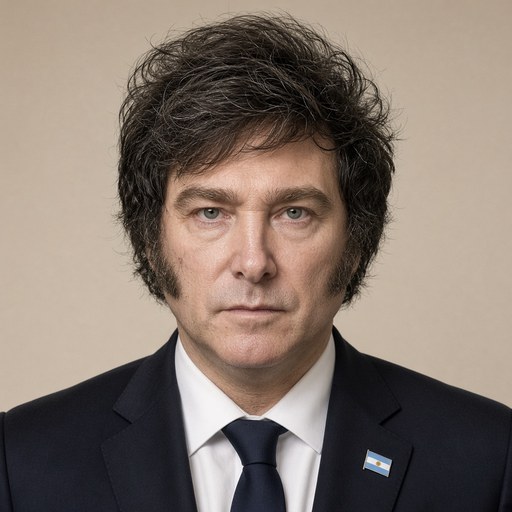
Words of the President of the Nation, Javier Milei, after the swearing-in and presidential assumption ceremony, from the steps of the Honorable Congress of the Nation.
 Javier Milei · President of Argentina
- Context
- Milei addressed the Argentine nation and foreign dignitaries on the steps of Congress on December 10, 2023, following his presidential inauguration ceremony.
- Main themes
- Economic crisis and inheritance, fiscal deficit reduction, end of collectivism, libertarian economic reform, inflation and monetary policy, Argentina's decline and renewal, liberal constitution and history, currency controls, state restructuring, era of freedom and prosperity
- Duration
- ~28 min
- Words
- 3,357
- Sentences
- 116
- Readability
- 44
- Grade
- 14.0
- Syntax
- 3.20
- Vocabulary
- 2.16
Inaugural Addresses Translated from Spanish
The broad sphere of national life a sentence belongs to. Every sentence has an Arena, so it is the denominator the other indices are read against.
Other116 sentences in 46 paragraphs
Hello everyone. Ministers of the Court, governors, national deputies and senators, foreign presidents and dignitaries, Argentinians, today marks the beginning of a new era in Argentina, today we put an end to a long and sad history of decay and decline, and we begin the path of rebuilding our country.
The Argentinians have emphatically expressed a will for change that is irreversible, there is no turning back, today we bury decades of failure, internal strife, and senseless disputes; fights that have only managed to destroy our beloved country and leave us in ruin. Today a new era begins in Argentina, an era of peace and prosperity, an era of growth and development, an era of freedom and progress.
Two hundred years ago, a group of Argentine citizens, gathered in San Miguel de Tucumán, told the world that the United Provinces of the Río de la Plata were no longer a Spanish colony, and that from that historic moment we would be a free and sovereign nation. For decades, we faced internal disputes about what the institutional form our country needed should be.
In 1853, after 40 years of declaring Independence, under the auspices of a small group of young idealists, whom we now know as the generation of '37, we decided as a people to embrace the ideas of Freedom. Thus, a Liberal Constitution was enacted, with the aim of securing the benefits of Freedom, for us, for our posterity, and for all men of the world who wish to inhabit Argentine soil. What followed after the enactment of that Constitution, with strong liberal roots, was the most impressive economic expansion in our history. From being a country of barbarians embroiled in a relentless war, we became the world's leading power. By the early 20th century, we were the beacon of light of the West.
Our coasts welcomed millions of immigrants escaping a devastated Europe in search of a horizon of progress. Unfortunately, our leadership decided to abandon the model that had made us rich, and embraced the impoverishing ideas of collectivism.
For more than 100 years, politicians have insisted on defending a model that generates only poverty, stagnation, and misery. A model that considers that citizens exist to serve politics and not that politics exists to serve citizens; a model that considers that the task of a politician is to direct the lives of individuals in all possible areas and spheres; a model that sees the State as a spoils of war to be distributed among friends. Ladies and gentlemen, that model has failed, it has failed all over the world, but especially it has failed in our country.
Just as the fall of the Berlin Wall marked the end of a tragic era for the world, these elections have marked the turning point in our history.
In recent days, much has been said about the inheritance we are going to receive. Let me be very clear on this: no government has received a worse inheritance than the one we are receiving. Kirchnerism, which in its early days boasted of having twin surpluses, that is: fiscal and external surpluses, today leaves us with twin deficits of 17 percent of GDP.
Of those 17 points of GDP, 15 correspond to the consolidated deficit between the Treasury and the Central Bank. Therefore, there is no viable solution that avoids addressing the fiscal deficit. At the same time, of those 15 points of fiscal deficit, 5 correspond to the National Treasury and 10 to the Central Bank, so the solution involves, on one hand, a fiscal adjustment in the national public sector of 5 points of GDP, which, unlike the past, will fall almost entirely on the State and not on the private sector.
On the other hand, it is necessary to clean up the remunerated liabilities of the Central Bank, which are responsible for the 10 points of its deficit. In this way, we would put an end to the issuance of money, and with it, to the only empirically certain and theoretically valid cause of inflation. However, since monetary policy acts with a lag, which ranges from 18 to 24 months, even if we stop issuing money today, we will continue to pay the costs of the monetary mismanagement of the outgoing government. Having issued 20 points of GDP as was done in the outgoing government is not free; we will pay for it in inflation.
Moreover, the currency controls, another legacy of this government, not only constitute a social and productive nightmare, because they imply high interest rates, low levels of activity, scarce levels of formal employment, and miserable real wages, which drive the increase of the poor and indigent, but also, the surplus of money in the economy today is double what it was before the "Rodrigazo."
To have an idea of what that implies, let us remember that the "Rodrigazo" multiplied the inflation rate six times. Therefore, a similar event would mean multiplying the inflation rate by 12 times, and given that it is currently traveling at a rate of 300 percent, we could see an annual rate of 3,600.
Furthermore (don’t worry, it doesn’t end here, the inheritance continues) given the situation of the remunerated liabilities of the Central Bank, which is worse than what it was before the hyperinflation of Alfonsín, in a very short time, the amount of money could quadruple and with it bring inflation to levels of 15,000 percent annually.
This is the inheritance they leave us, an inflation planted at 15,000 percent annually, which we will fight tooth and nail to eradicate.
Moreover, this number that seems absurd, I want you to know implies an inflation of 52 percent monthly. While today it is already traveling at a rate, according to private estimates that range between 20 and 40 percent monthly, for the months between December and February.
That is, the outgoing government has left us with hyperinflation, and it is our top priority to make every possible effort to avoid such a catastrophe, which would push poverty above 90 percent and indigence above 50.
Consequently, there is no alternative solution to the adjustment. On the other hand, the inheritance does not end there; as the imbalances in tariffs are only comparable to the disaster left by Kirchnerism in 2015. In the exchange rate, the gap ranges between 150 and 200 percent, levels also similar to those we had during the "Rodrigazo." Additionally, the debt with importers exceeds 30 billion dollars; and the retained earnings of foreign companies amount to 10 billion dollars. The debt of the Central Bank and YPF totals 25 billion dollars, and the pending debt of the treasury adds about 35 billion dollars more. This is the bomb - in terms of debt - it amounts to 100 billion dollars that will have to be added to the nearly 420 billion dollars of existing debt.
Naturally, these problems must also be added to the debt maturities of this year, where the maturities of debt in pesos are equivalent to 90 billion dollars and 25 billion dollars in foreign currency with multilateral credit organizations. However, with financial markets closed and the agreement with the IMF fallen due to the brutal defaults of the outgoing government, the rollover of debt is extremely challenging even for the mythical cyclops.
As if all this were not enough, this occurs in an economy that has not grown since 2011; and in line with the above, formal employment in the private sector remains stagnant at 6 million jobs reaching the madness that it is surpassed by 33 percent by informal employment; therefore, it should not surprise anyone that real wages have been destroyed; located around 300 dollars monthly, which are not only six times lower than those of convertibility, but if the trend of those years had been maintained - or as they said: "the damned liberalism" - today it would range between 3,000 and 3,500 dollars per month. They have ruined our lives, they have made our salaries fall by ten times. Therefore, it should not surprise us that populism is leaving us with 45 percent of the population in poverty and 10 percent in indigence.
After this situation that clearly seems insurmountable, it must be clear that there is no possible alternative to the adjustment. There is also no room for discussion between shock and gradualism; firstly, because from an empirical point of view all gradualist programs have ended badly; while all shock programs - except for the one in 1959 - have been successful. Secondly, because from a theoretical point of view if a country lacks reputation - as is unfortunately the case of Argentina - entrepreneurs will not invest until they see the fiscal adjustment making it recessionary. Thirdly, and no less importantly, to make gradualism it is necessary to have financing; and unfortunately, I have to tell you again, there is no money. Therefore, the conclusion is that there is no alternative to the adjustment and there is no alternative to the shock. Naturally, this will negatively impact the level of activity, employment, real wages, the number of poor and indigent. There will be stagflation, it is true, but it is not very different from what has happened in the last twelve years; let us remember that in the last twelve years per capita GDP has fallen by 15 percent, in a context where we have accumulated 5,000 percent inflation; therefore, we have been living in stagflation for more than a decade, so this is the last bitter pill to begin the reconstruction of Argentina.
Furthermore, after the macro readjustment that we will promote, which will be less painful the greater the fall of country risk and the better our containment from the Ministry of Human Capital, the situation will begin to improve; that is: there will be light at the end of the tunnel. In the alternative case, the sensibler progressive proposal whose only source of financing is the issuance of money will lead to hyperinflation that will take the country to the worst crisis in its history, plus it will put us in a downward spiral that will equate us with the darkness of Venezuela under Chávez and Maduro; therefore, after such a situation, there should be no doubt that the only possible opposition is to the adjustment. An orderly adjustment that falls with all its force on the State and not on the private sector.
We know it will be hard, which is why I also want to bring you a remarkable quote from one of the best presidents in Argentine history, Julio Argentino Roca; "Nothing great, nothing stable and lasting is conquered in the world when it comes to the freedom of men, and the greatness of peoples if it is not at the cost of supreme efforts and painful sacrifices"; but our challenges do not end only in the economic sphere. The level of deterioration of our country is such that it encompasses all spheres of community life.
In terms of security, Argentina has become a bloodbath; criminals walk free, while good Argentinians lock themselves behind bars. Drug trafficking has slowly taken over our streets, to the point that one of the most important cities in our country has been kidnapped by drug traffickers and the level of deterioration of our country is such that it encompasses all spheres of community life.
In terms of security, Argentina has become a bloodbath; criminals walk free, while good Argentinians lock themselves behind bars. Drug trafficking has slowly taken over our streets, to the point that one of the most important cities in our country has been kidnapped by drug traffickers and our security forces have been humiliated and mistreated for decades; they have been abandoned by a political class that has turned its back on those who protect us.
The anomie is such that only 3 percent of crimes are convicted; the "go on, go on" of criminals is over.
In social matters, we are receiving a country where half is poor, with the social fabric completely torn. Thus, more than 20 million Argentinians cannot live a dignified life because they are prisoners of a system that generates only more poverty. As the great Jesús Huerta de Soto says: "anti-poverty plans generate more poverty." The only way out of poverty is with more freedom. At the same time, 6 million children – tonight – will go to bed hungry; some walk barefoot on the street and others have fallen into drugs.
The same happens in education; to give you an idea of the deterioration we are living, only 16 percent of our children graduate – on time and in order – from school. Only 16 percent, I repeat, only 16 out of every 100. That is, 84 percent of our children do not finish school on time and in order. Additionally, 60 percent of the children - who do finish school - cannot solve a basic math problem or understand a text.
In fact, in the latest PISA evaluation, Argentina ranks 66th out of 81 and seventh in Latin America, given that Argentina was the first country to eradicate illiteracy in the world. If Sarmiento were to rise and see what they have done to education.
In terms of health, the system is completely collapsed, as hospitals are destroyed; doctors earn a pittance and Argentinians do not have access to basic health care. So much so that - during the pandemic - if Argentinians had done things like the average of other countries, we would not have had 30,000 deaths, but thanks to "the State takes care of you" and its inefficiency, 130,000 Argentinians lost their lives.
This is the present State that politicians talk so much about, an argument they use to justify the enormous increase in public spending that only benefits them. In all areas – look wherever you look – the situation in Argentina is one of emergency.
If we look at the infrastructure of our country, the situation is the same, as only 16 percent of our roads are paved and only 11 percent are in good condition. Therefore, it is no coincidence that 15,000 Argentinians die each year in traffic accidents.
What I want to illustrate with all this is that the situation in Argentina is critical and urgent. We have no alternatives and we also have no time; we have no margins for sterile discussions, as our country demands action and immediate action.
The political class leaves a country on the brink of the deepest crisis in our history; each of them will have to take responsibility for their own actions. It is not my job to point them out.
We do not seek or desire the tough decisions that will have to be made in the coming weeks, but – unfortunately – we have been left with no choice. However, our commitment to the Argentinians is unwavering. We will make all the necessary decisions to fix the problem caused by 100 years of waste by the political class, even if it is hard at first.
We know that – in the short term – the situation will worsen, but then we will see the fruits of our efforts having created the foundations for solid and sustainable growth over time. We also know that not everything is lost; the challenges we face are enormous but so is our capacity to overcome them. It will not be easy, as 100 years of failure cannot be undone in a day, but a day begins. And today is that day.
Today we begin to retrace the path of decline and start to walk the path of prosperity. We have everything to be the country we have always dreamed of: we have the resources, we have the people, we have the creativity, and most importantly, we have the resilience to move forward.
Today we embrace the ideas of freedom again, those ideas that are summarized in the definition of liberalism by our greatest proponent of the ideas of freedom, Professor Alberto Benegas Lynch, Jr., who says: “liberalism is the unrestricted respect for the life project of others, based on the principle of non-aggression, in defense of the right to life, liberty, and property, whose fundamental institutions are: private property, free markets without state intervention, free competition, the division of labor, and social cooperation.” In that phrase – of 57 words – the essence of the new social contract chosen by Argentinians is summarized.
This new social contract proposes a different country, a country in which the State does not direct our lives, but rather protects our rights; a country in which those who break the law – violating the rights of their fellow citizens – do not receive assistance from society. Put in other terms: those who break the law do not get paid; a country that allows everything within the law, but allows nothing outside the law; a country that supports those in need, but does not allow itself to be extorted by those who use the less fortunate to enrich themselves.
Regarding the Argentine political class, I want to say that we do not come to persecute anyone, we do not come to settle old vendettas, nor to discuss power spaces. Our project is not a project of power; our project is a project for the country; we do not ask for blind support, but we will not tolerate hypocrisy, dishonesty, or the ambition for power interfering with the change that Argentinians have chosen.
To all those political, union, and business leaders who want to join the new Argentina, we welcome you with open arms. It does not matter where you come from, it does not matter what you have done before, the only thing that matters is where you want to go.
To those who want to use violence or extortion to obstruct change, we say that they will find a president of unyielding convictions, who will use all the levers of the State to advance the changes our country needs. We will not give in, we will not retreat, we will not surrender. We will move forward with the changes that the country needs because we are sure that embracing the ideas of freedom is the only way we can get out of the pit we have been put in.
Therefore, and to conclude, let it be clear: today begins a new era in Argentina. The challenge we have ahead is titanic, but the true strength of a people is measured by how they face challenges when they arise. And every time we believe that our capacity to overcome those challenges has been reached, we look to the sky and remember that this capacity could well be unlimited. The challenge is enormous but we will face it with conviction, we will work tirelessly, and we will reach our destination.
It is no coincidence that this presidential inauguration occurs during the Hanukkah festivities, the festival of light, as it celebrates the true essence of freedom. The war of the Maccabees is the symbol of the triumph of the weak over the powerful; of the few over the many, of light over darkness, and above all things, of truth over lies. Because you know that I prefer to tell you an uncomfortable truth rather than a comfortable lie. I am convinced that we will move forward.
I remember when two years ago, together with Dr. Villarruel, now Vice President of the Nation, we entered this house as deputies, I remember that in an interview they told me: “but you are two, in a chamber of 257, you will not be able to do anything” and I also remember that that day the response was a quote from the Book of Maccabees 3:19, which says that “victory in battle does not depend on the number of soldiers, but on the Forces that come from Heaven.”
Therefore, God bless the Argentinians and may the Forces of Heaven accompany us in this challenge. Thank you very much, it will be difficult, but we will achieve it.
Long live freedom, damn it!
The original Spanish. The tags above are read on the English translation's sentences.
Hola a todos. Señores ministros de la Corte, señores gobernadores, señores diputados y senadores nacionales, presidentes y dignatarios extranjeros, argentinos, hoy comienza una nueva era en la Argentina, hoy damos por terminada una larga y triste historia de decadencia y declive, y comenzamos el caminos de la reconstrucción de nuestro país.
Los argentinos de manera contundente han expresado una voluntad de cambio que ya no tiene retorno, no hay vuelta atrás, hoy enterramos décadas de fracaso, peleas intestinas y disputas sin sentido; peleas que lo único que han logrado es destruir nuestro querido país y dejarnos en la ruina. Hoy comienza una nueva era en Argentina, una era de paz y prosperidad, una era de crecimiento y desarrollo, una era de libertad y progreso.
Hace 200 años un grupo de ciudadanos argentinos, reunidos en San Miguel de Tucumán, le dijeron al mundo que las provincias unidas del Río de la Plata no eran más una colonia española, y que a partir de ese histórico momento seríamos una nación libre y soberana. Durante décadas, nos enfrentamos en disputas internas acerca de cuál debía ser la forma institucional que nuestro país necesitaba.
En 1853, luego de 40 años de haber declarado la Independencia, bajo el auspicio de un pequeño grupo de jóvenes idealistas, que hoy conocemos como la generación del 37, decidimos como pueblo abrazar las ideas de la Libertad. Así se sancionó una Constitución Liberal, con el objetivo de asegurar los beneficios de la Libertad, para nosotros, para nuestra posteridad y para todos los hombres del mundo que quieran habitar el suelo argentino. Lo que vino después de la sanción de esa Constitución, de fuerte raigambre liberal, fue la expansión económica más impresionante de nuestra historia. De ser un país de bárbaros enfrascados en una guerra sin cuartel, pasamos a ser la primera potencia mundial. Para principios del siglo XX éramos el faro de luz de Occidente.
Nuestras costas recibían con brazos abiertos a millones de inmigrantes que se escapaban de una Europa desbastada en búsqueda de un horizonte de progreso. Lamentablemente nuestra dirigencia decidió abandonar el modelo que nos había hecho ricos, y abrazaron las ideas empobrecedoras del colectivismo.
Durante más de 100 años los políticos han insistido en defender un modelo que lo único que genera es pobreza, estancamiento y miseria. Un modelo que considera que los ciudadanos estamos para servir a la política y no que la política existe para servir a los ciudadanos; un modelo que considera que la tarea de un político es dirigir la vida de los individuos en todos los ámbitos y esferas posibles; un modelo que considera el Estado como un botín de guerra que hay que repartir entre los amigos. Señores, ese modelo ha fracasado, ha fracasado en todo el mundo, pero en especial ha fracasado en nuestro país.
Así como la caída del Muro de Berlín marcó el final de una época trágica para el mundo, estas elecciones han marcado el punto de quiebre de nuestra historia.
En estos días mucho se ha hablado de la herencia que vamos a recibir. Dejen que sea muy claro en esto: ningún gobierno ha recibido una herencia peor que la que estamos recibiendo nosotros. El kirchnerismo, que en sus inicios se jactaba de tener superávit gemelos, esto es: superávit fiscal y externo, hoy nos deja déficit gemelos por 17 por ciento del PBI.
A su vez de esos 17 puntos del PBI, 15 corresponden al déficit consolidado entre el Tesoro y el Banco Central. Por lo tanto, no existe solución viable en la que se evite atacar al déficit fiscal. Al mismo tiempo, de esos 15 puntos de déficit fiscal, 5 corresponden al Tesoro Nacional y 10 al Banco Central, por lo que la solución implica, por un lado, un ajuste fiscal en el sector público nacional de 5 puntos del PBI, que a diferencia del pasado, caerá casi totalmente sobre el Estado y no sobre el sector privado.
Por el otro, es necesario limpiar los pasivos remunerados del Banco Central, los cuales son responsables de los 10 puntos de déficit del mismo. De esta manera se pondría fin a la emisión de dinero, y con ello, a la única causa de la inflación empíricamente cierta y válida en términos teóricos. Sin embargo, dado que la política monetaria actúa con un rezago, que oscila entre 18 y 24 meses, aún cuando hoy dejemos de emitir dinero, seguiremos pagando los costos del desmadre monetario del gobierno saliente. Haber emitido por 20 puntos del PBI como se hizo en el gobierno saliente, no es gratis, lo vamos a pagar en inflación.
A su vez, el cepo cambiario, otra herencia de este gobierno, no solo constituye una pesadilla social y productiva, porque implica alta tasas de interés, bajo nivel de actividad, escaso nivel de empleo formal y salarios reales miserables, que impulsan el aumento de pobres e indigentes, sino que, además, el sobrante de dinero en la economía, hoy es el doble que había en la previa del “Rodrigazo”.
Para tener una idea de lo que eso implica, recordemos que el “Rodrigazo” multiplicó por seis veces la tasa de inflación. Por lo que un evento similar significaría multiplicar la tasa de inflación por 12 veces, y dado que la misma viene viajando a un ritmo del 300 por ciento, podríamos pasar a una tasa anual del 3.600.
A su vez (tranquilos que no termina acá, la herencia sigue) dada la situación de los pasivos remunerados del Banco Central, la cual es peor que la que había en la previa de la hiperinflación de Alfonsín, en muy poco tiempo, se podría cuadruplicar la cantidad de dinero y con ello llevar a la inflación a niveles del 15 mil por ciento anual.
Esta es la herencia que nos dejan, una inflación plantada del 15 mil por ciento anual, la cual vamos a luchar con uñas y dientes para erradicarla.
Es más, este número que parece un disparate, quiero que sepan que implica una inflación del 52 por ciento mensual. Mientras que hoy mismo ya viaja a un ritmo, de acuerdo a estimaciones privadas que oscilan entre el 20 y el 40 por ciento mensual, para los meses entre diciembre y febrero.
Esto es, el gobierno saliente nos ha dejado plantada una hiperinflación, y es nuestra máxima prioridad hacer todos los esfuerzos posibles para evitar semejante catástrofe, que llevaría a la pobreza por encima del 90 por ciento y la indigencia por encima del 50.
En consecuencia, no hay solución alternativa al ajuste. Por otra parte, la herencia no termina ahí; ya que los desequilibrios en tarifas son solo equiparables al desastre que dejó el kirchnerismo en el año 2015. En el plano cambiario la brecha oscila entre 150 y 200 por ciento, niveles también similares a los que teníamos en el “Rodrigazo”. A su vez, la deuda con importadores supera los 30 mil millones de dólares; y las utilidades retenidas a las empresas extranjeras alcanza los 10 mil millones de dólares. La deuda del Banco Central e YPF suman 25 mil millones de dólares, y la deuda del tesoro pendiente suma unos 35 mil millones de dólares adicionales. Esto es la bomba -en términos de deuda- asciende a 100 mil millones de dólares que habrá que sumar a los cerca de 420 mil millones de dólares de deuda ya existente.
Naturalmente a estos problemas hay que sumarle también los vencimientos de deuda de este año, donde los vencimientos de deuda en pesos son equivalentes a 90 mil millones de dólares y 25 mil millones de dólares en moneda extranjera con organismos multilaterales de crédito. Sin embargo, con mercados financieros cerrados y el acuerdo con el FMI caído por los brutales incumplimientos del Gobierno saliente el roll over de deuda es por demás desafiante aún para el mítico cíclope.
Como si todo esto fuera poco, esto transcurre en una economía que no crece desde el año 2011; y en línea a lo anterior, el empleo formal en el sector privado se mantiene estancado en 6 millones de puestos de trabajo llegando a la locura que al mismo es superado en un 33 por ciento por el empleo informal; por ello, no debería sorprender a nadie que los salarios reales se hayan destruido; ubicado en torno a los 300 dólares mensuales, los cuales, no solo son seis veces inferiores a los de la convertibilidad, sino que de haberse mantenido la tendencia de aquellos años -o como los decían ellos: “el maldito liberalismo”- hoy oscilaría entre 3 mil y 3.500 dólares por mes. Nos han arruinado la vida, nos han hecho caer por diez veces nuestros salarios. Por lo tanto, tampoco nos debería sorprender que el populismo nos esté dejando 45 por ciento de pobres y 10 por ciento de indigentes.
Luego de dicho cuadro de situación que a todas luces parece irremontable, debe quedar claro que no hay alternativa posible al ajuste. Tampoco hay lugar a la discusión entre shock y gradualismo; en primer lugar, porque desde el punto de vista empírico todos los programas gradualistas terminaron mal; mientras que todos los programas de shock -salvo el de 1959- fueron exitosos. En segundo lugar, porque desde el punto de vista teórico si un país carece de reputación -como lamentablemente es el caso de Argentina- los empresarios no invertirán hasta que vean el ajuste fiscal haciendo que el mismo sea recesivo. En tercer lugar, y no por ello menos importante, para hacer gradualismo es necesario que haya financiamiento; y lamentablemente tengo que decírselos de nuevo, no hay plata. Por ende, la conclusión es que no hay alternativa al ajuste y no hay alternativa al shock. Naturalmente eso impactará de modo negativo sobre el nivel de actividad, el empleo, los salarios reales, la cantidad de pobres e indigentes. Habrá estanflación, es cierto, pero no es algo muy distinto de lo que ha pasado en los últimos doce años; recordemos que los últimos doce años el PBI per cápita ha caído 15 por ciento, en un contexto donde acumulamos 5 mil por ciento de inflación; por lo tanto, hace más de una década que vivimos en estanflación, por lo tanto, este es el último mal trago para comenzar la reconstrucción de Argentina.
A su vez, luego del reacomodamiento del macro que vamos a impulsar, el cual será menos doloroso cuanto mayor sea la caída del riego país y cuanto mejor sea nuestra contención desde el Ministerio de Capital Humano, la situación comenzará a mejorar; esto es: habrá luz al final del camino. En el caso alternativo la propuesta sensiblera progresista cuya única fuente de financiamiento es la emisión de dinero derivará en una hiperinflación que llevará al país a la peor crisis de su historia, sumado a que nos meterá en un espiral decadente que nos equiparará con la oscuridad de la Venezuela de Chávez y Maduro; por lo tanto, luego de semejante cuadro de situación no deben quedar dudas de que la única oposición posible es al ajuste. Un ajuste ordenado y que caiga con toda su fuerza sobre el Estado y no sobre el sector privado.
Sabemos que será duro, por eso quiero también traerles una frase sobresaliente de uno de los mejores presidentes de la historia argentina, que fue Julio Argentino Roca; "Nada grande, nada estable y duradero se conquista en el mundo cuando se trata de la libertad de los hombres, y de engrandecimiento de los pueblos si no es a costa de supremos esfuerzos y dolorosos sacrificios"; pero nuestros desafíos no terminan solamente en el plano económico. El nivel de deterioro de nuestro país es tal que abarca todas las esferas de la vida en comunidad.
En materia de seguridad, Argentina se ha convertido en un baño de sangre; los delincuentes caminan libres, mientras los argentinos de bien se encierran tras las rejas. El narcotráfico se apoderó lentamente de nuestras calles, a punto tal que una de las ciudades más importante de nuestro país ha sido secuestrada por los narcos y el nivel de deterioro de nuestro país es tal que abarca todas las esferas de la vida en comunidad.
En materia de seguridad, Argentina, se ha convertido en un baño de sangre; los delincuentes caminan libres, mientras los argentinos de bien se encierran tras las rejas. El narcotráfico se apoderó lentamente, de nuestras calles, a punto tal que una de las ciudades más importante, de nuestro país, ha sido secuestrada por los narcos y nuestras fuerzas de seguridad han sido humilladas y maltratadas, durante décadas; han sido abandonados por una clase política que le ha dado la espalda a quienes nos cuidan.
La anomia es tal, que sólo el 3 por ciento de los delitos son condenados; se acabó con el “siga, siga” de los delincuentes.
En materia social estamos recibiendo un país, donde la mitad es pobre, con el tejido social completamente roto. Así, más de 20 millones de argentinos no pueden vivir una vida digna porque son presos de un sistema, que lo único que genera es más pobreza. Como dice el gran Jesús Huerta de Soto: “los planes contra la pobreza generan más pobreza”. La única forma de salir de la pobreza es con más libertad. Al mismo tiempo, 6 millones de chicos – hoy a la noche – se irán a dormir con hambre; algunos caminan descalzos por la calle y otros cayeron en la droga.
Lo mismo ocurre, en materia educativa para que tengan idea del deterioro, que vivimos, sólo el 16 por ciento de nuestros chicos se reciben – en tiempo y forma – en la escuela. Sólo el 16 por ciento, repito, sólo 16 de cada 100. Es decir que el 84 por ciento de nuestros chicos no termina la escuela en tiempo y forma. A su vez el 60 por ciento de los chicos - que sí terminan la escuela - no pueden resolver un problema de Matemática básica o comprender un texto.
De hecho, en la última evaluación PISA, la Argentina se encuentra en el puesto 66 de 81 y séptima en América Latina, siendo que Argentina fue el primer país en terminar con el analfabetismo en el mundo. Si se levantara Sarmiento y viera lo qué hicieron de la educación.
En materia de salud, el sistema se encuentra completamente colapsado, pues los hospitales están destruidos; los médicos cobran una miseria y los argentinos no tienen acceso a salud básica. Tan es así, que - durante la pandemia - si los argentinos hubiéramos hecho las cosas como la media de los países, no hubiéramos tenido 30 mil muertos, pero gracias al “Estado te cuida” y su ineficiencia 130.000 argentinos perdieron la vida.
Ese es el Estado presente del que los políticos tanto hablan, argumento que utilizan para justificar el aumento descomunal del gasto público que sólo los beneficia a ellos. En todas las esferas – miren dónde miren – la situación de la Argentina es de emergencia.
Si miramos la infraestructura de nuestro país, la situación es la misma, pues sólo el 16 por ciento de nuestras rutas se encuentran asfaltadas y sólo el 11 por ciento se encuentra en buen estado. Por eso, no es casualidad que mueran 15.000 argentinos, por año, en accidentes de tránsito.
Lo que quiero graficar con todo esto es que la situación, de la Argentina, es crítica y de emergencia. No tenemos alternativas ni tampoco tenemos tiempo; no tenemos márgenes para discusiones estériles, pues nuestro país exige acción y una acción inmediata.
La clase política deja un país al borde de la crisis más profunda de nuestra historia; cada uno de ellos tendrá que hacerse cargo de su propia responsabilidad. No es tarea mía señalarlos.
No buscamos ni deseamos las duras decisiones que habrá que tomar en las próximas semanas, pero – lamentablemente – no nos han dejado opción. Sin embargo, nuestro compromiso con los argentinos es inalterable. Vamos a tomar todas las decisiones necesarias para arreglar el problema, que causaron 100 años de despilfarro de la clase política, aún cuando al principio sea duro.
Sabemos que – en el corto plazo – la situación empeorará, pero luego veremos los frutos de nuestro esfuerzo habiendo creado las bases de un crecimiento sólido y sostenible en el tiempo. También sabemos que no todo está perdido; los desafíos que tenemos son enormes pero también lo es nuestra capacidad para superarlos. No va a ser fácil, ya que 100 años de fracaso no se deshacen en un día, pero un día empieza. Y hoy es ese día.
Hoy empezamos a desandar el camino de la decadencia y comenzamos a transitar el camino de la prosperidad. Tenemos todo para ser el país que siempre soñamos: tenemos los recursos, tenemos la gente, tenemos la creatividad y mucho más importante tenemos la resiliencia para salir adelante.
Hoy volvemos a abrazar las ideas de la libertad, esas ideas que se resumen en la definición de liberalismo de nuestro máximo prócer de las ideas de la libertad, el profesor Alberto Benegas Lynch, hijo, que dice: “el liberalismo es el respeto irrestricto del proyecto de vida del prójimo, basado en el principio de no agresión, en defensa del derecho a la vida, a la libertad y a la propiedad, cuyas instituciones fundamentales son: la propiedad privada, los mercados libres de intervención estatal, la libre competencia, la división del trabajo y la cooperación social”. En esa frase - de 57 palabras – está resumida la esencia del nuevo contrato social, que eligieron los argentinos.
Este nuevo contrato social nos propone un país distinto, un país en el que el Estado no dirija nuestras vidas, sino que vele por nuestros derechos; un país en el que las hace… las paga. Además, un país, en el que corta la calle – violando los derechos de sus conciudadanos – no recibe la asistencia de la sociedad. Puesto en otros términos: el que corta, no cobra; un país, que dentro de la ley, permite todo, pero fuera de la ley no permite nada; un país que contiene a quienes lo necesitan, pero no se deja extorsionar por aquellos que utilizan a quienes menos tienen para enriquecerse a ellos mismos.
En cuanto a la clase política argentina quiero decirles que no venimos a perseguir a nadie, no venimos a saldar viejas vendettas, ni a discutir espacios de poder. Nuestro proyecto no es un proyecto de poder, nuestro proyecto es un proyecto de país; no pedimos acompañamiento ciego, pero no vamos a tolerar que la hipocresía, la deshonestidad, o la ambición de poder interfieran con el cambio que los argentinos elegimos.
A todos aquellos dirigentes políticos, sindicales y empresariales que quieran sumarse a la nueva Argentina, los recibimos con los brazos abiertos. Así no importa de dónde vengan, no importa que hayan hecho antes, lo único que importa es hacía dónde quieren ir.
Aquellos que quieren utilizar la violencia o la extorsión para obstaculizar el cambio les decimos que se van a encontrar con un presidente de convicciones inamovibles, que utilizará todos los resortes del Estado para avanzar en los cambios que nuestro país necesita. No vamos a claudicar, no vamos a retroceder, no nos vamos a rendir. Vamos a avanzar con los cambios que el país necesita porque estamos seguros que abrazar las ideas de la libertad es la única manera en la que podremos salir del pozo en el que nos han metido.
Por lo tanto, y para ir terminando, que quede claro: hoy comienza una nueva era en la Argentina. El desafío que tenemos por delante es titánico, pero la verdadera fortaleza de un pueblo se mide en cómo enfrenta los desafíos cuando se presentan. Y cada vez que creemos que nuestra capacidad para superar esos desafíos ha sido alcanzada, miramos al cielo y recordamos que esa capacidad bien podría ser ilimitada. El desafío es enorme pero lo afrontaremos con convicción, trabajaremos sin descanso y llegaremos a destino.
No es casualidad, que esta inauguración presidencial ocurra, durante las fiestas de Hanukkah, la fiesta de la luz, ya que la misma celebra la verdadera esencia de la libertad. La guerra de los macabeos es el símbolo del triunfo de los débiles por sobre los poderosos; de los pocos por sobre los muchos, de la luz por sobre la oscuridad y, sobre todas las cosas, de la verdad por sobre la mentira. Porque ustedes saben que prefiero decirles una verdad incómoda, antes que una mentira confortable. Estoy convencido de que vamos a salir adelante.
Recuerdo cuando hace dos años junto a la Doctora Villarruel, hoy vicepresidente de la Nación, ingresamos a esta casa como diputados, recuerdo que, en una entrevista me habían dicho: “pero si ustedes son dos, en 257, no van a poder hacer nada” y también recuerdo que ese día la respuesta fue una cita del Libro de Macabeos 319, que dice que “la victoria, en la batalla, no depende de la cantidad de soldados, sino de las Fuerzas que viene del Cielo”.
Por lo tanto, Dios bendiga a los argentinos y que las Fuerzas del Cielo nos acompañen en este desafío. Muchas gracias, será difícil, pero lo vamos a lograr.
¡Viva la libertad, carajo!