




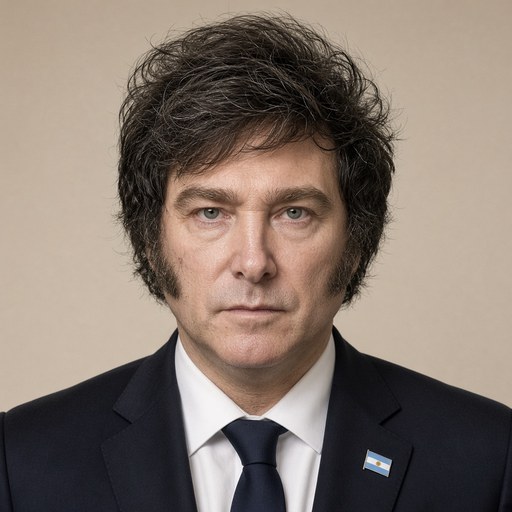
Words of the President of the Nation, Javier Milei, at Meta Day Argentina, from the Palace of Liberty Domingo Faustino Sarmiento.
 Javier Milei · President of Argentina
- Context
- Milei addressed Meta's Argentina Day event at the Palace of Liberty, speaking on technology, human progress, and economic freedom on November 12, 2024.
- Main themes
- Human creativity and technological progress, economic growth history, libertarian free markets, cryptocurrency and monetary decentralization, democratization of knowledge, social media and free speech, Argentina's political transformation, opposition to state monopolies, optimism about human potential
- Duration
- ~15 min
- Words
- 1,811
- Sentences
- 70
- Readability
- 52
- Grade
- 12.4
- Syntax
- 3.35
- Vocabulary
- 2.15
Translated from Spanish
The broad sphere of national life a sentence belongs to. Every sentence has an Arena, so it is the denominator the other indices are read against.
Other70 sentences in 17 paragraphs
Good morning everyone; to begin, I want to greet and thank the Meta team for organizing this event and for the invitation; it is a pride for me - as a fervent optimist of human creativity - to address an audience that wakes up every day thinking about tomorrow and seeking new solutions, knowing that improving the lives of their users improves all our lives. I wish you all much success in all your projects.
Today I am here because I also want to talk about our future. But to focus on it, it is necessary - first - to understand how we got here. It is estimated that humans have been on this earth for approximately 300,000 years, of which 290,000 we were hunter-gatherers, living in rags, without engineering, agriculture, much less writing. It was a life based on the most basic survival instinct of the animal kingdom, if I hunt I survive, if I don’t hunt I die of hunger.
About 10,000 years ago we discovered how to cultivate the land and this allowed us to feed between 10 and 100 times more people per hectare, which led us to reorganize into more complex societies. This brought an exponential flood of development, with which we ended up conquering the entire planet. We came out of the caves to gather in towns and cities; we navigated all waters; we built unimaginable monuments; we conquered jungles, forests, and mountains; we developed Mathematics and writing, and - in 1450 - a man named Gutenberg discovered the modern printing press.
For those interested in economic growth models and how to explain history, of GDP per capita, in the history of humanity, I emphatically suggest reading a book called: “The Unified Growth Theory” by Oded Galor. It is an endogenous economic growth model, which has a tipping point of 1 billion human beings and, prior to that equilibrium, it is a Malthusian equilibrium; afterwards, it is an accelerated endogenous growth equilibrium. I say this for those who are interested, as I find this type of thing amusing, I understand it is not a widespread preference. But also, Oded Galor follows me on Twitter. So I am thrilled about that.
That invention accelerated our development exponentially, to the point that - approximately - 95% of humanity's inventions occurred in the last 0.2% of its history, that is, in the last 575 years. The consequence of this is that - today - an average citizen has a better quality of life than a Roman emperor.
Imagine that, in 250 years, we went from 95% of humanity suffering from hunger to today having a widespread problem of obesity, worldwide. In other words, technology is the greatest demonstration of the capabilities that human beings have, both individually and collectively. Each technological innovation is one more step that humanity has taken to solve a problem, allowing itself to have leisure time to address the next one. At the same time, the great inventions of humanity feel like miracles in life. If we told an Egyptian pharaoh that humans can fly, that we reached the Moon, or even that we can communicate thousands of kilometers away in fractions of a second, thanks to the internet, he would believe we are gods. If we told Aristotle that we have all the books in history in our pockets, he would believe the same. Each of these miracles elevates men, in the eyes of the past, to the place of gods; and there has never been a better time for humanity than today, no matter how much the doomsayers want to scare us with the idea that the world is going to hell. The same happens with the internet and the democratization of knowledge, which allows us to break historical monopolies such as, for example, the monopoly on truth, call it the enveloped microphones, I pass the subtitle.
Today, anyone with a cellphone is a bearer of a public voice that can be published to infinity and is also a bearer of an immense collective memory archive. This makes it easier to unravel the perverse lies of those who - until a few years ago - were the only authorized voice sustained by state funding. It seems that when they were cut off, they also became quite violent, that is, as someone says, the most sensitive organ of human beings is the pocket, and it seems that of journalists a little more. I myself experienced it during the presidential campaign, as I was accused of all kinds of nonsense and it was thanks to the voice of the people - on social media - that I became the most voted president in Argentine history, despite not having governorships, nor mayorships, nor media in my favor, and despite having run the most austere electoral campaign in history. But, as the Maccabees say: “victory in battle does not depend on the number of soldiers, but on the forces that come from heaven,” and boy, they are right.
Another historical monopoly that technology is breaking is the monopoly on currency, because individuals around the world have grown tired of the seigniorage - imposed by bureaucrats - and are beginning to use means of exchange autonomous from central power, but still reliable, such as cryptocurrencies. However, do not let the States take charge and run cryptocurrencies; let them remain in the private sector. They have already appropriated paper money and are scamming us with the greatest scam in the history of humanity, which are central banks. In other words, go for cryptocurrencies, but do not allow the State to get involved there, because from then on they will turn us into slaves. Be very careful with that issue.
And a third is the fiscal monopoly, given that today - for example - an Argentine citizen can choose to pay taxes in the United States, Paraguay, Uruguay, without any problem; escaping the kleptomaniac jaws of an Insatiable State. Ultimately, technology is an ally for the citizen in their daily quest for freedom. It helps us to be more masters of our time and the fruits of our labor. Paradoxically, for us Argentines to move towards the future we must reconnect with truths that are in the deep past of our Nation; truths that our patriotic heroes at the dawn of Argentina knew well. It is no coincidence that Roca famously said: “commerce knows better than the Government what is good for it.”
True politics thus consists of granting the broadest freedom. True politics is for them to do nothing, to step aside. Not the high politics of members of the caste negotiating behind the backs of citizens and ruining their lives to remain and have privileges. That is not high politics, that is rot that impoverishes good people. I choose to echo this ancient yet true demand, because I understand that it is by attracting capital and not fighting it that we prosper. Because I understand that it is - through lowering taxes - and not through spurious devaluations, which impoverish the population, that competitiveness is achieved. Because I understand that today the fiscal race is as important as the space race or the arms race. The United States has already realized this and is copying our model; in fact, Elon Musk is having conversations with Federico Sturzenegger to see how to deregulate the American economy. And, obviously, the “Out” and the Chainsaw are export products, so it is part of the country brand: “Boss, take charge.”
We must be at the forefront, as Ireland once was. In 1874, it experienced one of the most severe famines in history, decimating approximately 25% of its population. Forty years ago, it was still the poorest country in Western Europe, and in the 1990s, it decided to embrace the ideas of freedom, cutting spending and lowering taxes, which led it to have today a GDP per capita 50% higher than that of the United States. In other words, it is possible. In fact, it is the freest country in the world. And we - at this moment - after having passed the Base Law and the DNU, have made the largest structural reform in Argentine history, even 8 times larger than Menem's, and that allows us to climb 90 places in terms of economic freedom.
However, for us that is not enough. We still have 3,200 more structural reforms pending, and surely, if the Argentines accompany us at the polls, we will make Argentina the freest country in the world. Therefore, within 20, 30, or 40 years at the latest, Argentina will be the greatest world power.
Argentina is facing its own turning point because, for the first time, the foundations are being laid for sustainable growth. Little by little we are emerging from the septic tank in which we were sunk, and we will all have to get used to this new paradigm. Changing paradigms means stopping thinking in a week and starting to think in 5 or 10, 20 or 40 years. Stopping the idea of constantly emigrating because there is a draconian state biting our necks and being able to project a personal project here, in our lands. It is no coincidence that, in less than a year, we have managed to reinstall mortgage loans. It is because we seek for them to be owners of their own destinies again, without having to run after a crisis that gnaws at their pockets - every second - with inflation.
That is why we will guarantee that property will be sacred for all and protected with all the weight of the law, to restore to Argentines the certainty that if you do not bother anyone, no one will come to bother you, and that if you take the risk of going out to solve the life of your neighbor, the market will reward you with a personal benefit. As Warren Buffett said: "the best time to plant a tree was 20 years ago; the second best time is today."
Ultimately, it is by embracing the same ideas of freedom that once made us great, that Argentina will be prosperous; and do not doubt that the future will be better than the present because we have history as our best witness.
I remember that - in my previous life - when I used to give talks on economic growth and that kind of thing, I had a presentation on technological progress and economic growth, and the presentation started by saying: “We do not know what the future will be like, the only thing we know is that it will be much better.” Do not doubt that if we embrace the ideas of freedom, that future will be much better.
May God bless the Argentines, may the forces of heaven accompany us, and long live freedom, damn it! Thank you very much.
The original Spanish. The tags above are read on the English translation's sentences.
Buenos días a todos; para comenzar quiero saludar y agradecer al equipo de Meta por la organización de este evento y por la invitación; es un orgullo para mí - como optimista ferviente de la creatividad humana - poder dirigirme a un público, que se desvela, todos los días, pensando en el mañana y buscando nuevas soluciones, a sabiendas de que mejorarles la vida a sus usuarios nos mejora la vida a todos. Les deseo a todos ustedes mucho éxito en todos sus proyectos.
Hoy estoy aquí porque yo también quiero hablar de nuestro futuro. Pero para enfocarme en él, es menester – primero - entender cómo llegamos hasta acá. Se estima que los humanos llevamos aproximadamente 300,000 años en esta tierra, de los cuales 290,000 fuimos cazadores recolectores, viviendo en harapos, sin ingeniería, ni agricultura, mucho menos escritura. Era una vida basada en el instinto de supervivencia más básica del reino animal, si cazo sobrevivo, si no cazo me muero de hambre.
Hace cerca de 10,000 años descubrimos la forma de cultivar la tierra y esto nos permitió alimentar, entre 10 y 100 veces más personas, por hectárea, lo que nos llevó a reorganizarnos en sociedades más complejas. Este trajo un aluvión exponencial de desarrollo, con el que terminamos conquistando el planeta entero. Salimos de las cuevas para reunirnos en poblados y ciudades; navegamos todas las aguas; construimos monumentos impensados; conquistamos selvas, bosques y montañas; desarrollamos la Matemática y la escritura, y - en 1450 - un señor llamado Gutenberg descubrió la imprenta moderna.
Para aquellos que estén interesados en los modelos de crecimiento económico y en cómo se puede explicar la historia, del PBI per cápita, en la historia de la humanidad, y sugiero - enfáticamente - leer un libro, que se llama: “La teoría unificada del crecimiento”, de Oded Galor. Es un modelo de crecimiento económico endógeno, que tiene un punto de quiebre de 1.000 millones de seres humanos y, previo a ese equilibrio, es un equilibrio malthusiano; después, es un equilibrio de crecimiento endógeno acelerado. Digo, para los que les interesa, como a mí me divierten este tipo de cosas, entiendo que no es una preferencia generalizada. Pero, además, Oded Galor me sigue a mí en Twitter. Así que estoy chocho con eso.
Dicho invento aceleró nuestro desarrollo exponencialmente, al punto de que – aproximadamente - el 95% de los inventos de la humanidad se dieron en los últimos 0,2% de su historia, o sea, en los últimos 575 años. La consecuencia de esto es que – hoy - un ciudadano promedio tiene mejor calidad de vida que un emperador romano.
Imagínense que, en 250 años, pasamos de que el 95% de la humanidad pasara hambre a que hoy existe un problema generalizado de obesidad, a nivel mundial. O sea, la tecnología es la mayor muestra de las capacidades que tiene el ser humano, tanto a nivel individual, como a nivel colectivo. Cada innovación tecnológica es un paso más que ha dado el hombre para solucionar un problema, permitiéndose tener tiempo ocioso para resolver el siguiente. A su vez, los grandes inventos de la humanidad se sienten como milagros en vida. Si le dijéramos a un faraón egipcio que el humano puede volar, que llegó a la Luna o, incluso, que puede comunicarse a miles de kilómetros en fracciones de segundo, gracias internet, creería que somos dioses. Si le dijéramos, a Aristóteles, que tenemos todos los libros de la historia en el bolsillo, creería lo mismo. Cada uno de estos milagros eleva a los hombres, a los ojos del pasado, al lugar de dioses; y nunca hubo mejor momento para el ser humano que hoy, por más que los agoreros de turno nos quieran asustar con que el mundo se va al demonio. Lo mismo sucede con la internet y la democratización del conocimiento, que nos permite romper monopolios históricos como, por ejemplo, el monopolio de la verdad, llámese los micrófonos ensobrados, le paso el subtítulo.
Hoy cualquier persona con un celular es portadora de una voz pública que puede publicarse hasta el infinito y también es portador de un archivo de memoria colectivo inmenso. Así se vuelve más fácil desentrañar las mentiras perversas, de quienes - hasta hace pocos años - eran la única voz autorizada sostenidos a base de pauta estatal. Parece que al cortárselas también se pusieron bastante violentos, es decir, como dice alguien, el órgano más sensible del ser humano es el bolsillo, y parece que el de los periodistas un poquito más. Yo mismo lo viví, durante la campaña presidencial, pues se me acusó de cualquier tipo de barbaridad y fue gracias a la voz de la gente - en las redes - que fui el presidente más votado en la historia argentina, a pesar de no tener gobernaciones, ni intendencias, ni medios a mi favor, y a pesar de haber llevado la campaña electoral más austera de la historia. Pero, como dice la frase de los Macabeos: “la victoria en la batalla no depende de la cantidad de soldados, sino de las fuerzas, que vienen del cielo”, y vaya que tiene razón.
Otro monopolio histórico que la tecnología está resquebrajando es el monopolio de la moneda, porque los individuos del mundo se cansaron del señoreaje - impuesto a dedo - por burócratas de turno y comienzan a usar medios de cambio autónomos del poder central, pero aun así confiables, como son las criptomonedas. Igual, de todas maneras, no dejen que los Estados se hagan cargo y lleven adelante las criptomonedas los Estados; que se mantengan en el sector privado. Ya se apropiaron del papel moneda y nos estafan con la mayor estafa de la historia de la humanidad, que son los bancos centrales. O sea, vayan por las criptomonedas, pero que no permitan que el Estado meta la mano ahí, porque - a partir de ahí - nos van a convertir en esclavos. Sean muy cuidadosos con ese tema.
Y un tercero es el monopolio fiscal, dado que hoy - por poner un ejemplo - un ciudadano argentino puede decidir tributar en Estados Unidos, Paraguay, Uruguay, sin ningún problema; escapando de las fauces cleptómanas de un Estado Insaciable. En definitiva, la tecnología es una aliada para el ciudadano en su búsqueda cotidiana de libertad. Nos ayuda a ser más dueño, de nuestro tiempo y del fruto de nuestro trabajo. Paradójicamente, los argentinos para ir hacia el futuro tenemos que reencontrarnos con verdades, que están en el pasado profundo de nuestra Nación; verdades que nuestros héroes patrios en los albores de la Argentina conocían bien. No por nada Roca famosamente dijo: “el comercio sabe mejor que el Gobierno lo que a él le conviene”.
La verdadera política consiste pues en dejarle la más amplia libertad. La verdadera política es que no hagan nada, que se corran del medio. No la alta política de miembros de la casta negociando, a espaldas de los ciudadanos y arruinándole la vida para permanecer y tener privilegios. Eso no es alta política, eso es podredumbre que empobrece a la gente de bien. Yo elijo hacer eco de este reclamo tan antiguo como cierto, porque entiendo que es atrayendo el capital y no combatiéndolo que se prospera. Porque entiendo que es - a través de la baja de impuestos - y no de devaluaciones espurias, que empobrecen a la población, que se logra competitividad. Porque entiendo que hoy la carrera fiscal es igual de importante que la carrera aeroespacial o la carrera armamentística. Estados Unidos ya se dio cuenta y nos está copiando el modelo; de hecho, Elon Musk tiene conversaciones con Federico Sturzenegger para ver cómo desregular la economía estadounidense. Y, obviamente, el “Afuera” y la Motosierra son productos de exportación, así que es parte de la marca país: “Jefe, hacete cargo”.
Tenemos que ser punta de lanza, como lo supo ser Irlanda. En 1874, tuvo una de las hambrunas, más severas de la historia, diezmando aproximadamente un 25% de su población. Hace 40 años seguían siendo el país más pobre, de Europa Occidental, y - en la década del 90 - decidió abrazar las ideas de la libertad, recortando el gasto y bajando impuestos, lo que lo llevó a tener hoy un PBI per cápita 50% mayor que el de Estados Unidos. Es decir, se puede. De hecho, es el país más libre del mundo. Y nosotros - en este momento - luego de haber pasado la Ley Bases y el DNU, hicimos la reforma estructural más grande, de la historia argentina, aún 8 veces más grande que la de Menem, y eso nos permite escalar 90 puestos, en términos de libertad económica.
Sin embargo, para nosotros eso no es suficiente. Nos quedan todavía pendientes 3.200 reformas estructurales más, y seguramente, si los argentinos nos acompañan, en las urnas, vamos a hacer, de Argentina, el país más libre del mundo. Por lo que, dentro de 20, 30 o 40 años a más tardar, Argentina va a ser la máxima potencia mundial.
Argentina está frente a su propio momento bisagra porque, por primera vez, se están sentando las bases para que el crecimiento sea duradero. Poco a poco estamos saliendo del pozo séptico, en el que nos hundieron, y tendremos que acostumbrarnos todos a este nuevo paradigma. Cambiar de paradigma implica dejar de pensar a una semana y empezar a pensar a 5 o 10, 20 o 40 años. Dejar de tener la idea de emigrar constantemente porque hay un estado draculino mordiéndonos el cuello y poder proyectar un proyecto personal, aquí, en nuestras tierras. No es casualidad que, en menos de un año, hayamos logrado reinstalar los créditos hipotecarios. Es porque buscamos que vuelvan a ser dueños de sus propios destinos, sin estar corriendo detrás de una crisis, que les carcome el bolsillo - a cada segundo - con la inflación.
Por eso, vamos a garantizar que la propiedad será sagrada para todos y protegida con todo el peso de la ley, para devolverles a los argentinos la certeza de que, si no molestás a nadie, nadie va a venir a molestarte a vos, y de que, si asumís el riesgo de salir a solucionarle la vida al prójimo, el mercado te recompensará con un beneficio personal. Tal como dijo Warren Buffett: "el mejor momento para sembrar un árbol fue hace 20 años; el segundo mejor momento es hoy".
En definitiva, es abrazando las mismas ideas de la libertad, que alguna vez nos hicieron grandes, que Argentina será próspera; y no tenga ninguna duda que el futuro será mejor que el presente porque tenemos a la historia como nuestro mejor testigo.
Yo recuerdo que - en mi anterior vida - cuando me dedicaba a dar charlas de crecimiento económico y ese tipo de cosas, yo tenía una presentación sobre el progreso tecnológico y el crecimiento económico, y la presentación arrancaba diciendo: “No sabemos cómo será el futuro, lo único que sabemos es que será mucho mejor”. No tengan dudas que, si abrazamos las ideas de la libertad, ese futuro será muchísimo mejor.
Que Dios bendiga a los argentinos, que las fuerzas del cielo nos acompañen y ¡Viva la libertad, carajo! Muchas gracias.