




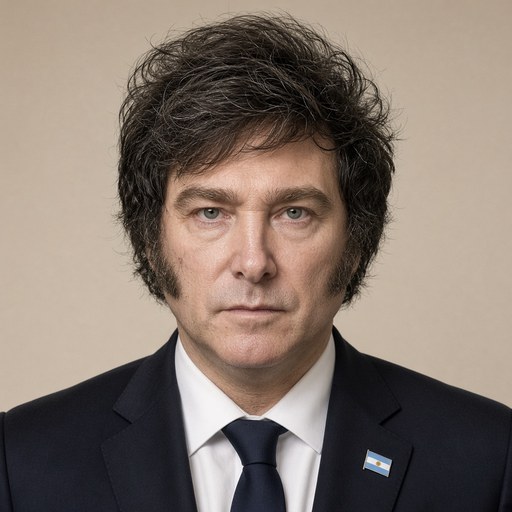
Words of the President of the Nation Javier Milei at the LXV Summit of Mercosur, in Montevideo, Uruguay.
 Javier Milei · President of Argentina
- Context
- Milei addressed the LXV Mercosur Summit in Montevideo on December 6, 2024, advocating for free trade reforms and criticizing protectionist policies within the bloc.
- Main themes
- Free trade advocacy, Mercosur reform, common external tariff critique, intra-regional trade decline, economic liberalism, protectionism failures, Argentina's economic history, trade agreements, market integration, prosperity through trade
- Duration
- ~9 min
- Words
- 1,134
- Sentences
- 39
- Readability
- 42
- Grade
- 14.6
- Syntax
- 3.39
- Vocabulary
- 2.25
Translated from Spanish
The broad sphere of national life a sentence belongs to. Every sentence has an Arena, so it is the denominator the other indices are read against.
Other39 sentences in 10 paragraphs
Good morning to everyone, to my fellow presidents, to the chancellors of our brother countries, and to all the authorities of the member countries of Mercosur. I hope we can have a fruitful conversation about our common bloc and move forward on the right path, which is none other than deepening our ties to promote trade and, with it, bring prosperity to our peoples.
While I come here today in my capacity as president, I would like to speak mainly as an economist and take advantage of this day, having already passed more than 30 years since its founding, to recall the original mission of Mercosur and jointly assess whether it has lived up to its original forecast. Because institutions should not be evaluated by their intentions, but by their results.
In the late 1980s, with a completely fractured world, after decades of the Cold War and ideological politicization, Mercosur emerged as a way to seek to integrate the markets of our countries, eliminating tariffs, bureaucracies, and double taxation, with the ultimate goal of establishing a common free trade area. Unfortunately, simultaneously and as a result of the prevailing ideas of the time, which we believe were misguided, a system of common external tariffs was proposed to try to protect the industry of our countries, believing that this would bring benefits to our citizens. Unfortunately, the road to hell is paved with good intentions and, as Professor Huerta de Soto has pointed out, “whenever the State intervenes, it generates a worse outcome than what existed before it intervened.” Therefore, it is no surprise to a liberal like me that the result of these measures has been the opposite of what was intended. The common external tariff not only made the importation of productive goods more expensive, making our local industries more costly and, consequently, less competitive, but it also closed off countless trade avenues. What happens with trade is that it functions like a two-way highway; to sell freely, one must also be willing to buy freely.
However, both due to the rigidity of the common external tariff and the countless non-tariff barriers that we have invented over the years, both Mercosur's trade with the world and intra-Mercosur trade have deteriorated. From 1995 to the present, the participation in intra-zone trade of all countries, except Paraguay, has significantly decreased, with Argentina and Uruguay being the most notable cases. Having such high tariffs increases the cost of living for all our citizens and denies them the opportunity to acquire better goods at better prices, that is, it denies them the possibility of improving their quality of life. It is no coincidence that from the mid-1990s to the present, Mercosur's share in world trade has decreased from 1.8% to 1.6%. Consolidating ourselves into a common bloc not only made us grow, but it has also harmed us, while neighbors like Chile and Peru opened up to the world and established trade agreements with the key players in global trade, we locked ourselves in our own fishbowl, taking more than 20 years to close an agreement that we are now celebrating, which is still far from being a reality.
It cannot be surprising, then, that the economies of our neighbors have grown so much more than ours, while they have free trade agreements with more than 20 countries; we have similar treaties only with the rest of South America, Egypt, and Israel. While the responsibility for Argentina's failure largely falls on decades of destructive economic policy, Mercosur and its restrictions have also been an obstacle to the progress of Argentines. Chile exports 50 times more cherries than we do; it exports 50 billion dollars a year in copper, while we export zero. How many new markets could we have developed if we had been open to the world? My point is that the last 20 years of economic policy have left Argentina in a deep hole, and today the entire society is making an immense effort to move forward. We cannot afford to let commercial opportunities pass us by; we need them like water in the desert.
Just as we have learned from the mistakes of the past in fiscal and monetary matters, we must also learn from the mistakes of the past in trade. Over the last 20 years, we have missed the opportunity of our lives; we went against the grain of the world during the cycle of greatest commercial integration in global history, which resulted in the greatest development of emerging countries ever seen. While the rest of the planet expanded—thanks to trade—we said no to the United States, which offered a free trade agreement across the continent. But that rhetoric disguised as nationalism has cost our citizens dearly. Do you know what the only way to defend the interests of our nations is? By promoting free trade, because free trade generates prosperity. Because as Julio Argentino Roca, the greatest nationalist in our history, said, “trade knows better than the Government what is good for it. True policy consists, therefore, in giving the hands the widest freedom.”
In summary, Mercosur—which was born with the idea of deepening our commercial ties—has ended up becoming a prison that prevents its member countries from taking advantage of either their comparative advantages or their export potential. This problem is not new, but if we continue to pretend to cover the sun with our hands, it will become increasingly difficult to solve.
I would like to invite you, as brothers we are, to open our eyes and be intellectually honest; let us accept that this model is exhausted and seek a new formula that benefits us all, so that we can all trade more and better, because it is trade that generates prosperity and will end the great scourge of Latin America, which is the abject poverty of our peoples. Let us gain autonomy, without failing to respect the agreements that unite us, and if what unites us is to trade freely among ourselves, I propose that we loosen the ties that today suffocate us instead of strengthening us.
This bloc cannot continue to be a straitjacket that limits our countries. We must leave behind this stage, characterized by mere administration of agreements; the excess of regulations and the implementation of norms that hinder both internal trade and trade with the rest of the world. Because if the bloc is not a dynamic engine that facilitates trade, that drives investment, and improves the quality of life for all citizens in our region, what is its purpose? I hope that, without ideological blinders, we have the intellectual honesty to ask ourselves the difficult questions and the courage to make the necessary decisions.
May God bless you all and may the forces of heaven be with us. Thank you very much.
The original Spanish. The tags above are read on the English translation's sentences.
Buenos días a todos, a mis colegas presidentes, a los cancilleres de nuestros países hermanos y a todas las autoridades de los países integrantes del Mercosur. Espero que podamos tener una conversación fructífera, acerca de nuestro bloque común, y avanzar en el camino correcto, que no es otro que profundizar nuestros lazos para promover el comercio y - con ello - traerles prosperidad, a nuestros pueblos.
Si bien vengo hoy, aquí, en carácter de presidente, quisiera hablar principalmente como economista y aprovechar - el día de la fecha - habiéndose cumplido ya más de 30 años, desde su fundación, para recordar la misión de origen del Mercosur y evaluar en conjunto si el mismo ha estado o no a la altura de su pronóstico originario. Porque a las instituciones no hay que evaluarlas por sus intenciones, sino por sus resultados.
A fines de los 80, con un mundo completamente fracturado, tras décadas de Guerra Fría y politización ideológica, el Mercosur surgió como una forma de buscar integrar los mercados, de nuestros países, eliminando aranceles, burocracias y dobles imposiciones fiscales y con el fin último de establecer una zona común de libre comercio. Lamentablemente - en simultáneo y producto de las ideas imperantes en la época, a nuestro juicio equivocadas, se propuso un sistema, de arancel externo común, para intentar proteger la industria de nuestros países, creyendo que eso traería un beneficio para nuestros ciudadanos. Lamentablemente, el camino al infierno está pavimentado de buenas intenciones y - como alguna vez ha señalado el profesor Huerta de Soto – “siempre que el Estado interviene, genera un resultado peor al que había, antes de que se entrometiera”. Por lo cual no es una sorpresa para un liberal - como yo - que el resultado de estas medidas haya sido el contrario al pretendido. El arancel externo común no sólo encareció la importación de bienes productivos, volviendo a nuestras industrias locales más caras y - en consecuencia - menos competitivas, sino que nos cerró innumerables vías comerciales. Por lo que sucede con el comercio es que funciona como una autopista de doble vía, para uno poder vender libremente debe estar dispuesto a comprar libremente también.
Sin embargo, tanto por la rigidez del arancel externo común, como por las innumerables barreras para-arancelarias, que hemos inventado a lo largo de los años - tanto el comercio del Mercosur con el mundo, como el comercio inter-Mercosur - se han visto deteriorados. Desde 1995, hasta el presente, la participación en el comercio intrazona de todos los países, exceptuando Paraguay, se redujo significativamente, siendo Argentina y Uruguay los casos más notorios. Tener aranceles tan altos encarece la vida de todos nuestros ciudadanos y les niega la oportunidad de adquirir mejores bienes, a mejores precios, es decir, les niega la posibilidad de mejorar su calidad de vida. No es casualidad que - desde mediados de los 90 hasta el presente - la incidencia del Mercosur, en el comercio mundial, se ha reducido del 1,8% al 1,6%. Consolidarnos en un bloque común no sólo nos hizo crecer, sino que nos ha perjudicado, mientras vecinos - como Chile y Perú - se abrieron al mundo y entablaron acuerdos comerciales con los protagonistas del comercio global, nosotros nos encerramos en nuestra propia pecera tardando - más de 20 años - de cerrar un acuerdo con el que – hoy - festejamos, que aún dista de ser una realidad.
No puede llamar la atención, entonces, que la economía de nuestros vecinos hayan crecido tanto más que las nuestras, mientras que ellos tienen acuerdo de libre comercio, con más de 20 países; nosotros tenemos tratados similares únicamente con el resto de Sudamérica, Egipto e Israel. Si bien la responsabilidad del fracaso argentino cae – mayormente - en décadas de una política económica destructiva, el Mercosur y sus restricciones también han sido un escollo para el progreso de los argentinos. Chile exporta 50 veces más de cereza que lo que exportamos nosotros; exporta 50,000 millones de dólares por año en cobre, mientras nosotros cero. ¿Cuántos mercados nuevos podríamos haber desarrollado, si estuviéramos abiertos al mundo? Mi punto es que - los últimos 20 años de política económica - dejaron a Argentina en un pozo profundo y – hoy - la sociedad entera está haciendo un esfuerzo inmenso para salir adelante. No podemos darnos el lujo de dejar pasar oportunidades comerciales, las necesitamos como agua en el desierto.
Así como hemos aprendido de los errores del pasado - en materia fiscal y monetaria - tenemos que aprender de los errores del pasado en materia comercial también. Durante los últimos 20 años, nos hemos perdido la oportunidad de nuestras vidas, fuimos a contramano del mundo, durante el ciclo de mayor integración comercial de la historia global, que redundó en el mayor desarrollo de países emergentes jamás visto. Mientras el resto de planetas se expandía - gracias al comercio - nosotros le dijimos que no, a Estados Unidos, que ofrecía un acuerdo de libre comercio en todo el continente. Pero esa perorata disfrazada de nacionalismo le costó carísimo a nuestros ciudadanos. ¿Saben cuál es la única manera de defender el interés de nuestras naciones? Promoviendo el libre comercio, porque el libre comercio genera prosperidad. Porque como dijo Julio Argentino Roca, el más grande nacionalista de nuestra historia “el comercio sabe mejor que el Gobierno lo que a él le conviene. La verdadera política consiste, pues, en dejarle a las manos la más amplia libertad”.
En resumen, el Mercosur - que nació con la idea de profundizar nuestros lazos comerciales - terminó convirtiéndose en una prisión que no permite que sus países miembros puedan aprovechar ni sus ventajas comparativas, ni su potencial exportador. Este problema no es nuevo, pero si seguimos pretendiendo tratar de tapar el sol con las manos se volverá cada vez más difícil de solucionar.
Me gustaría invitarlos, como hermanos que somos, a que abramos los ojos y seamos honestos intelectualmente; aceptemos que este modelo está agotado y busquemos una nueva fórmula que nos beneficia a todos, para que todos podamos comercializar más y mejor, porque es el comercio lo que genera prosperidad y lo que va a terminar con el gran flagelo latinoamericano, que es la pobreza abyecta, de nuestros pueblos. Ganemos autonomía, sin dejar de respetar los acuerdos que nos hermanan, y si los que nos hermanan es comercial libremente entre nosotros, propongo que aflojemos las ataduras que – hoy- nos ahogan en vez de fortalecernos.
Este bloque no puede seguir siendo un cepo que limite a nuestros países. Debemos dejar atrás esta etapa, caracterizada por la mera administración de acuerdos; el exceso de regulaciones y la implementación de normas que frenan, tanto el comercio interno, como el resto del mundo. Porque si el bloque no es un motor dinámico que facilite el comercio, que impulse la inversión y mejore la calidad de vida de todos los ciudadanos de nuestra región, ¿cuál es el sentido que tiene? Espero que - sin anteojeras ideológicas - tengamos la honestidad intelectual suficiente para poder hacernos las preguntas difíciles y el coraje para tomar las decisiones necesarias.
Que Dios los bendiga a todos y que las fuerzas del cielo nos acompañen. Muchas gracias.