




Speech delivered in Parliament to inform MPs of the extraordinary Eurogroup meeting on the rescue plan for Greece and the situation of the financial markets
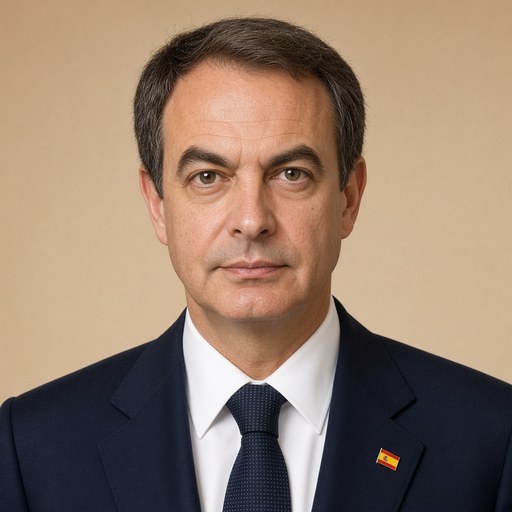
 José Luis Rodríguez Zapatero · Prime Minister of Spain
- Context
- Zapatero addressed the Spanish Parliament on May 11, 2010, to brief MPs on the Eurogroup's €750 billion stabilization mechanism and Greece's rescue plan.
- Main themes
- European Stabilization Mechanism, Greek rescue plan, eurozone financial crisis, public deficit reduction, financial market regulation, euro stability, Spain's fiscal response, speculative market behavior, ECB intervention, G-20 financial governance, rating agencies, social cohesion
- Duration
- ~23 min
- Words
- 2,787
- Sentences
- 113
- Readability
- 44
- Grade
- 13.1
- Syntax
- 3.00
- Vocabulary
- 2.15
The broad sphere of national life a sentence belongs to. Every sentence has an Arena, so it is the denominator the other indices are read against.
Other113 sentences in 54 paragraphs
Honourable members,
These days have been the latest significant and serious episode of this tough and complex crisis that we have been living through since the summer of 2008. First it was the collapse of the major American banks and some European banks in the autumn of that year and the gigantic government rescue operation that was undertaken as a result. Then it was the extraordinary fiscal stimulus packages implemented to sustain economic activity and mitigate the effects of the recession that followed in the wake of the financial crash. Now it is this equally unique initiative of creating a European Stabilization Mechanism to back the Monetary Union and the euro.
The Spanish government has reacted to each one of these unexpected challenges. In general it has done so in the same way as other governments, according to its own circumstances, and it has done so adapting its decisions to the nature of the problem it has faced in each of the phases of the crisis.
We did not need to inject money into our financial system in the first phase. It was enough to back it through the acquisition of financial assets or by guaranteeing its debt. But we did have to implement a vigorous anti-cyclical plan to compensate for the major fall in economic activity that led to the collapse of the construction sector and its worst consequence: mass unemployment.
Now as a result of this and other compensatory measures adopted, we must also make a special, singular and extraordinary effort to reduce our public deficit, and we must do so now, precisely when there are signs that show that the economic recovery is starting.
Throughout these twenty months the Government's behaviour has been coherent: it adapted its decisions according to the characteristics of each moment, it has not always strived to apply the same resources, but rather those that it understood to be most beneficial for the general interest in each case and in the face of each problem. It continued, therefore, to do what it considered had to be done at each moment and it did so with unchanging criteria: to prevent economic activity from falling further; and, of course, to ensure social cohesion.
Honourable members,
Spain, as rotating President of the Union, has contributed to the creation of this special Fund and the other ECOFIN agreements. Since the rescue of Greece was first planned, we have maintained a clear and active position in favour of a strong European response.
As you are well aware, the European Stabilisation Mechanism approved by ECOFIN at the proposal by the Heads of State and Government of the Eurogroup, includes a mobilisation of 750 billion euros, of which 250 billion will be contributed by the International Monetary Fund, 60 billion by the Commission and the rest through a financial product with guarantees from all the members of the Eurogroup.
The implementation of this mechanism has also been accompanied by unprecedented interventions in the debt markets and other extraordinary liquidity measures by the European Central Bank that have never been seen before.
But this agreement, although of transcendental importance, is not the only one to have been adopted. In the wake of the absolutely unpredicted banking collapses in the autumn of 2008, the international community, the G-20 and the various regional institutions began to reflect on the introduction of new rules into the financial markets. This process continues underway, and has been moved forward, although it still has to complete its task and the G-20 in Toronto will work on it next month.
These days a conviction has taken root in the Eurozone that we have to continue along this path, which is complex but inescapable. The regulation of the markets as an alternative to their often irrational logic being imposed on the governments themselves is a challenge that the international community in general is committed to, and the European Union in particular. We are committed to it, we are working on it, but we have not achieved it yet.
In fact, these days we have once more suffered the consequences of a global economy, particularly a global financial system, that is insufficiently governed and regulated. As proof of the fragility of this financial system, just consider how the dissemination, whether for ulterior purposes or not, of a false rumour may shatter stock market prices and the sovereign Treasury debt spreads - to say nothing in general of the speculative movements that short sell the credit of a currency or a country's solvency.
There will be some who think that these phenomena can only affect states or financial institutions. It must be explained that in fact they affect everyone: those who save and those who invest. They affect the national economy and also the economy of each individual.
This is why the Eurogroup, in view of what has occurred in recent days, has manifested its will to intensify supervision of the derivatives market and review the role of rating agencies. We have decided on this with the aim of making progress towards efficient and transparent financial markets, where there is no room for abuse of information, dissemination of unfounded rumours or destabilising exercises in unbounded speculation.
But this is not enough. It is also obvious that the fragility and instability of the markets has been aggravated by the accumulated imbalances resulting from the recession; that we therefore have to act with greater energy and speed on these imbalances; and that this has to be done in all the countries affected. In our case, to make it clear, these imbalances are the 11.2 percent deficit and the 20 percent unemployment.
So it is a case of complementary actions geared towards the same aim: to re-establish stability as soon as possible in order to provide a framework in which the recovery can be strengthened.
For this purpose, we have also reached an agreement to reinforce the economic governance of the European Union, coordinate policies better and reinforce the Stability and Growth Pact. This will be done within the context of the commitment undertaken by the Member States to speed up or intensify their respective fiscal consolidation plans.
Honourable members,
The Stability Programme was approved in January 2010 with the target of lowering the deficit to 3 percent by 2013. This target represented a firm commitment from the start. It defined a requirement and a demand that had to be fulfilled, a target which in these months we have repeated we will achieve fully, and for which if necessary we will incorporate additional measures. This will is the clearest expression that we feel fully linked to the European Stability and Growth Pact, and that we do not conceive of a sustained and sustainable economic recovery in our country that is not based on or accompanied by healthy public accounts.
The programme sets out a reduction in the deficit over four budget years from 2010 to 2013. It is conceived as a gradual plan with the express aim of not limiting the possibilities of economic recovery, above all at a time that our forecasts suggest should see our economy begin to recover.
In short, this program represents an effort, a major effort, of austerity. We began with a budget for 2010 that included a 4 percent or 7.5-billion euro reduction in public spending. But I have to remind you that since January we have approved a series of complementary measures, among which the following should be highlighted:
We have thus reduced public spending, but we have also reinforced revenues. The 2010 budget includes an increase in capital income tax, which entered into force in January, and a rise in value added tax from July. In addition, in February a new plan to combat tax and employment fraud was introduced.
This package of measures on income and spending were chosen so as not to affect the economic recovery and employment. They already include a forecast of a reduction in the public deficit of 1.4 points in 2010 from 11.2 to 9.8 percent of GDP.
The Spanish fiscal consolidation programme received a positive overall valuation from the European Commission in March 2010. The IMF classified it as rigorous and the investors trusted it. It is true that some called for greater specification in terms of the instruments applied, although we pointed out that we would do so with the approval of the spending cap for 2011, planned for June. In any event, it received an overall positive valuation.
Honourable members,
The financial situation and the assessment of confidence in the debt of various countries in the Eurogroup began to notably deteriorate in April. The lack of confidence in the solution adopted for the Greek crisis led to contagion to other sovereign debt markets in the Eurozone, and finally put at risk its whole stability and thus that of the international financial order. This happened in barely a week.
This is why on Sunday, the Eurogroup decided to link the joint action of the European Stabilisation Mechanism and the European Central Bank with individual actions of countries aimed to reinforce the fiscal sustainability of the Eurozone and each of the countries. These actions are particularly essential in those countries that for various specific circumstances are being subjected to pressure from the financial markets. Spain is one of these.
In line with the changes in the real situation and these decisions, the Government has adopted a commitment to speed up and anticipate the initially planned reduction and implement an additional cut to that initially planned, equivalent to half a point of GDP this year - just over 5 billion euros - and a further point in 2011, for 10 billion euros.
This is a considerable effort: it means moving in only two years from a deficit of 11.2 percent to one of 6 percent of GDP, thus reducing the deficit by 5.2 points in only two years; and it means complying with two-thirds of our commitment for the next four years in only two years.
Honourable members,
This decision, I repeat, was taken within the framework of the joint commitment of countries in the European Union to stabilise markets, reduce the cost of debt and guarantee its payment, and in short to re-establish confidence in the euro and the economic expectations in our economic zone.
It is not easy for the Government to approve the new measures I will announce to you today. The difficulty is not lessened by the fact that we are convinced of their necessity. We are not approving a new Plan; we are maintaining the austerity effort we approved in January. Our goal has not varied. It continues to be to ensure that the Spanish economy reaches a budget deficit of 3 percent of its gross domestic product in 2013; but another goal has now joined this one, and a goal that is no less necessary at the present time: to contribute with our financial stability towards the financial stability of the Eurozone. We need to do so to continue with the recovery and to achieve it we have to reduce the deficit at a faster rate. This implies additional cuts in areas that have already been reduced and in other new areas whose social impact is obvious.
We are going to appeal to everyone to make an effort: first of all, Spanish society, its citizens, and also the public authorities. It must be a national, collective effort that is fair and justified: justified by its sharing of responsibilities and by the aim we are trying to achieve with it.
For all these reasons, the Government has decided to do the following:
The Council of Ministers will approve a Royal Decree-Law next week including these measures to ensure they enter into force immediately. At the same time, the Council of Ministers will examine the spending cap for the national budget for 2011 and the Austerity Plan 2011-2013, which will include the results of these decisions.
Honourable members,
These are measures that in the opinion of the Government are essential and that try to be as fair as possible.
They are essential, I repeat, to achieve the commitment to reduce the deficit, to bolster confidence in the Spanish economy and to contribute to the financial stability of the Eurozone. They represent a volume of spending cuts that complies with the commitment we have agreed to: 15 billion euros less for the rest of this year and 2011.
They try to be fair, as they share this national effort that today, as President of the Government, I ask from all the citizens.
Until now, people who have lost their jobs and employers who have seen their aspirations frustrated or reduced have paid far and above their share of this crisis. It is not from them that we have to ask for solidarity, but rather offer it to them.
These measures also try to be efficient, because they will undoubtedly contribute towards improving the situation of the public coffers while affecting investment as little as possible. In this way, it will be possible to continue to combine a reduction in the deficit with recovery.
We are nevertheless aware that the reduction in demand will temporarily affect growth. This is why the Government estimates that growth next year will be a few tenths of a percentage point lower than forecast, and for the same reason, I can assure you that the actions already underway to boost recovery will remain in place and will not be affected by the effort to reduce spending.
The measures I mean are those agreed in the "Zurbano" process, the initiatives in the Sustainable Economy Act, the Public-Private Participation Plan for investment in infrastructures, the new ICO credit lines and the structural reforms already underway. And it is these measures I want to mention now.
Honourable members,
As I conclude my speech, I am aware that many people will not understand that, precisely when the Government is announcing that our economic recovery has already started and we are beginning to emerge from the crisis, according to figures for the first quarter, precisely now I am asking them for more effort, for more commitment and I am announcing that a considerable effort is required from some sectors.
But it is above all now that we most need such an effort. We need it to comply with our European commitments; we need it to strengthen trust in our economy, to maintain investors with us, to transmit an image of stability; and we need it above all to be able to continue strengthening our productive system and preserve our Welfare State.
It is not easy for a government, for any government, to address the House and its citizens in these terms.
Still less so for a government that has during the boom years attempted to direct its best efforts at improving the situation of the majority of citizens, particularly the most disadvantaged. These have had nothing to do with the origin of the crisis, its development and various stages. On the contrary, they have suffered its consequences most, but they are mostly those who must now once more contribute to the efforts required to correct the effects of the crisis.
They are, and there is no doubt about it, the backbone of the country; those who bear its weight; those who guarantee the present and the future of our society, its potential for growth, for welfare and for success; and those who depend on their own work, on their entrepreneurial spirit or on the public income they have earned over the years.
I also want to refer to the political groups represented in this House, to their responsibility, to their effort and commitment. This is a task in which we all have to be involved. The future welfare of our society demands it. I ask all of you to work together in a national response that affects us all. There is no justification for anyone to feel they are not part of this collective effort in a difficult situation.
We are obliged to do whatever we can to be successful in this effort. The obligation is, above all, for the whole Government, and in particular for the person who presides over it. I assume this responsibility and I commit myself fully to it.
The situation is difficult and it would be senseless to try to deny it. But I can assure all of you that the Government will not weaken. We are sure, we are convinced, that we will manage to move forward, to return to economic recovery, to stability and to job creation; to what we have achieved in Spanish society with so much effort over the last thirty years.
Thank you very much.