




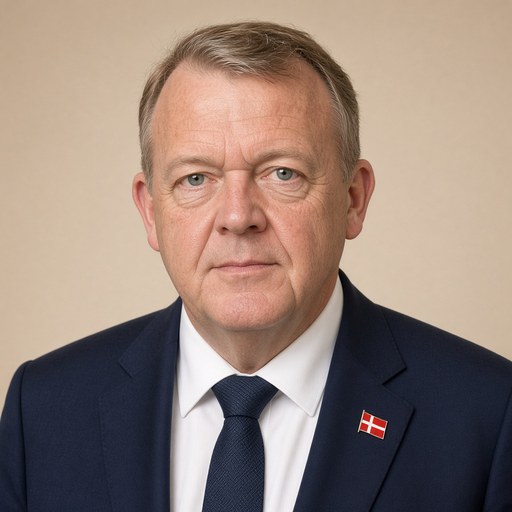
Constitution Day Speech by Prime Minister Lars Løkke Rasmussen, Terndruplund, Friday, June 5, 2009
 Lars Løkke Rasmussen · Prime Minister of Denmark
- Context
- Rasmussen addressed a Constitution Day celebration at Terndruplund on June 5, 2009, marking the Danish Constitution's 160th anniversary and urging a yes vote in the upcoming succession referendum.
- Main themes
- Danish Constitution anniversary, constitutional history, Act of Succession reform, gender equality in succession, parliamentary democracy, rule of law, referendum on succession, Danish royal family, local tradition
- Duration
- ~24 min
- Words
- 2,929
- Sentences
- 217
- Readability
- 61
- Grade
- 8.0
- Syntax
- 2.60
- Vocabulary
- 2.07
Translated from Danish
The broad sphere of national life a sentence belongs to. Every sentence has an Arena, so it is the denominator the other indices are read against.
Other217 sentences in 101 paragraphs
Today, the Danish Constitution is celebrated on its 160th anniversary across the country. It is a proud and beautiful tradition, which I am particularly happy to celebrate with you here in Terndruplund, where one can take pride in having celebrated the Constitution throughout all these years. In fact, the festivities here in 1849 had long since begun even before Her Majesty had signed the new Constitution.
It was the local schoolteacher Anders Jungersen from Store Brøndum who was the driving force behind the celebration of the new Constitution. And as a representative of the local Bælum constituency, he participated in the adoption of the Constitution in the Folketing in 1849.
Since then, many others from this area have followed suit. Regardless of wars and bans on larger gatherings, the Constitution celebration has been held here every single year since.
This testifies to a very strong local commitment. It shows that the Constitution still enjoys great popular support. And it shows that our common Constitution – despite its advanced age – is still modern and certainly relevant to the modern individual.
It is indeed impressive.
Not least when one considers that the Constitution has only been amended four times since 1849. The last time was in 1953, when both the Constitution and the Act of Succession were amended.
In 1953, we also abolished the Landsting, expanded the right to vote, enshrined parliamentary democracy in the Constitution, equated Greenland with the rest of the realm, and introduced the institution of the Ombudsman – just to mention some of the changes that followed in the wake of our latest constitutional amendment.
It is indeed a serious matter to change the very legal backbone of a society. For that is what the Constitution is.
The Constitution is the foundation upon which we have built our free society, and it is the foundation upon which we must expand our free society. While the language of the Constitution may not be the most modern, the principles – they are! They stand just as clearly today as they did 56 years ago.
The Constitution is what remains when the whims of time and political whims are stripped away.
The Constitution works, and therefore we should not tamper with it.
--- ooo ---
In 1953, there was much on the minds of the Danes.
It was the year when Elvis Presley recorded his first gramophone record.
Stalin died after having held the then Soviet Union in an iron grip for 25 years.
The Korean War ended after three years of conflict and more than three million dead.
Mount Everest was climbed for the first time by Sir Edmund Hillary.
NATO's new Secretary-General was born.
The first color television came onto the market.
The original "Far til Fire" premiered in cinemas.
This illustrates quite well that a lot has happened since 1953. And good for that.
We often associate the constitutional amendment in 1953 with the change in the line of succession so that women could also become regents. The amended Act of Succession meant that the then Princess Margrethe could be crowned as Queen Margrethe II of Denmark in 1972.
Here, 56 years later, the position of a united Folketing is that the time has come for a further, but equally principled modernization of the Act of Succession.
The Act of Succession today allows a daughter to inherit the throne, but only if there is no son in the sibling group. The announcement of a family increase in the royal family in 2005 was therefore a natural starting point for granting the same right to women as to men to inherit the throne.
This happened at a time when we did not know whether the Crown Prince couple's firstborn would be a boy or a girl. And good for that. For our stance on this principled question should not be a vote on named princes or princesses. Therefore, we stuck to the schedule, even though Christian became the big brother and Isabella the little sister – and not the other way around.
Two parliaments have now – on June 2, 2006, and February 24, 2009 – passed the law with virtually all votes in favor and none against. In the meantime, we have had the parliamentary election that the constitutional procedure requires. We now only lack the referendum, which must take place no later than six months after the last adoption. That will take place the day after tomorrow.
Here, we do not just need a majority. It must be large – very large. It must constitute at least 40% of all eligible voters. And that is how it should be. For it should not be a trivial matter to change either the Constitution or the Act of Succession. But it also means that the question cannot easily be raised again if the majority is not manifest enough.
I would therefore like to take this opportunity to urge everyone to vote – and vote yes – on Sunday. So that we achieve full gender equality in the right to inherit the Danish throne. So that we are not still the only Scandinavian country that does not have it. So that we also, in this respect, show that we are a country where gender equality is something we cherish and regard as inviolable and natural.
I have a daughter who is both beautiful and talented. And she should grow up in the secure knowledge that she is just as valuable as her brothers. Both in my heart and under Danish law. The same should apply to the princesses of the royal family!
I am convinced that there is a massive majority in the Danish population for equal access to inherit the throne. The current law – that from 1953 – is an expression of a view that time has simply outgrown.
My call must therefore be: Remember to vote on Sunday. For equality in the right to inherit the throne. For equality as an important principle in Danish society. For future princesses. For all Danish women.
--- ooo ---
In general, the fight for equality between women and men has a long history in Denmark.
One of the first breakthroughs for equality came when the then Liberal governments in the early 1900s introduced new local, democratically elected bodies to which women were granted voting and candidacy rights:
In 1903, it was the Parish Councils.
In 1905, it was the Guardianship Councils.
In 1907, women gained voting and candidacy rights to the Assistance Funds.
In 1908, it was voting and candidacy rights for municipal elections.
And finally, with the constitutional amendment in 1915, women gained voting and candidacy rights to the Folketing and the Landsting. One of the great women's rights advocates of the time, Jutta Bojsen-Møller, broke the etiquette of the Folketing when she celebrated the adoption of the law with a loud "hurrah" from the audience seats in the Folketing.
Otherwise, women had little to cheer for in the early years of the Constitution. It took more than 50 years from the adoption of Denmark's first free constitution in 1849 for women to gain the same basic civil rights as men in 1915.
Seen through the lens of today, it is hard to understand.
Today, it is a fundamental legal principle in our society that everyone – regardless of gender – has equal rights and equal opportunities.
We are continuously removing the formal barriers we encounter that previously hindered women from achieving the same opportunities as men in terms of education, jobs, and careers.
And we have indeed come quite far in Denmark.
Take the labor market.
In 1960, one in three women was active in the labor market. Today, it is three out of four women – which is almost on par with men. No other country in Europe has such a high employment rate for women.
Take education.
Women are educating themselves like never before. Where women previously had a much lower educational level than men, women now dominate higher education. In fact, to such an extent that our perceptions of male-dominated fields are undergoing significant change.
The future lawyer is likely to be a woman.
Just like the chief physician.
Or the office manager.
For me, equality is not a rigid goal of having equal numbers of women and men in all functions in society.
I also do not believe that we can create equal opportunities for men and women simply by enacting quotas in the Folketing. I do not believe in quotas; I believe in attitudes. And only by changing attitudes can we shift the decisive barriers and divides in society.
And even though we have come a long way on the path to equality in Denmark, there is still a long way ahead of us.
Take the Danish executive offices, where the cigar smoke may have lifted. But that can only be attributed to the new smoking regulations, for there is not exactly a plethora of women in the executive corridors of Danish companies.
Only just over five percent of top executives in Danish publicly traded companies are women. Five percent. That is not impressive.
Only nine percent of board positions in publicly traded companies are held by women. That is not impressive.
Only 12 percent of lecturers and professors in higher education are women. That is also not impressive.
Fortunately, it does not look quite as bad in the public sector. In municipalities and the state, just over 20 percent of top leaders are women. But we can do better than that. Not just a little, but a lot.
A number of companies have committed to working for women in leadership under the government's "Charter for More Women in Leadership."
Here, companies should work to:
- Ensure that women and men have equal opportunities to pursue leadership careers.
- Make an effort to increase the proportion of women in leadership at all levels.
- Utilize all talents.
It is not just a matter of common decency to have both women and men in leadership. It is also common sense. Studies have shown that women in leadership yield positive results on the bottom line. Companies lose both earnings and development if they only draw on half of the talent pool.
I would therefore strongly encourage companies to put more energy into bringing more women into boardrooms and into leadership.
It is honestly about time that Danish companies give women the opportunities they have long been given elsewhere in society.
--- ooo ---
On Sunday, June 7, there will also be elections to the European Parliament.
It is an important election. The European Parliament has come to play an increasingly significant role in recent years.
Denmark is not an island that can isolate itself and handle all challenges alone. This is clearly demonstrated by both the financial crisis and the climate challenge. We are woven into a close international cooperation – because it is absolutely necessary.
The election to the European Parliament is a unique opportunity to influence the direction Europe should take in the coming years.
It is important to use your vote in the election to the European Parliament on June 7. And it is important to elect Danes who can raise their voices in Europe and shape it with Danish values.
We are a small country, but we have big ideas. We are just over five million Danes in a world of more than six billion people. But with the EU, we can still make a difference. When Denmark succeeds in convincing Europe – and it does succeed – we suddenly become 500 million pulling in the right direction. And whether we like it or not, there is strength in numbers.
In November, it will be 20 years since the wall fell.
20 years since Europe was reunited.
20 years since the most hideous symbol of Europe's division fell.
The wall did not only fall in Germany, but fell like dominoes all the way down through Europe. Maps, ideologies, and ways of life were changed for millions of Europeans.
That is what Europe is about. That is what European cooperation achieves.
It is worth fighting for – even on days when cooperation feels constraining and cumbersome.
Although Europe and the EU have come a long way in the last 20 years, there is still much to fight for. The struggle for freedom in life and belief is never-ending. It must be fought by each generation. And there is still a freedom struggle to be fought in Europe.
We see examples of people who do not dare to use their freedom of expression for fear of extreme groups. Their freedom is what we must fight for.
We see persecution of minorities based on their sexuality and religion. Their freedom is what we must fight for.
We see examples of religious courts that judge according to medieval principles to the detriment of women's rights and equality. The freedom of those women is what we must fight for.
Here, the EU must make a difference in the coming years. The EU is much more than a trade cooperation that finds practical solutions to common problems. The EU is also a community of values. And here we must ensure that the fight for freedom and equality remains central in the coming years.
--- ooo ---
Also outside the borders of Europe, we must fight for freedom. The freedoms we enjoy in Denmark do not stem from a natural law, but from our Constitution. From our conscious choice to stand guard over democratic values. But unfortunately, those freedoms cannot be taken for granted in the rest of the world.
We see this most clearly in Afghanistan, where more than 700 Danish soldiers are daily making an extraordinary effort on a difficult but important mission.
Every day, when the Danish soldiers drive out of the Danish camps and into the Green Zone, they have a specific mission. It may be that they are to engage in direct combat with the Taliban. It may be that they are to help build a bridge, a school, or a well for the local residents. But the overarching and ultimate goal of each mission is the fight for our security. For your and my security. For Denmark's security. For our democracy.
For our popular government.
Afghanistan will never be like Denmark. But every small step is progress. Towards more stability and more freedom. Towards better conditions for Afghan girls and women. Towards more democracy and more freedoms. Towards greater security in Denmark and the world around us.
It is a huge task. It may seem overwhelming. But that is precisely why it is crucial that we support the Danish soldiers. Those who are in Afghanistan. Those who step out of Danish camps every day and take the steps that we at home have asked them to take. Those who return wounded with lifelong disabilities. And the relatives of those who gave their lives in service.
Therefore, this day should not least be used to honor the efforts of the Danish soldiers. I would like to extend a warm thank you to all Danish deployed personnel. You deserve our greatest recognition and respect.
This year's Constitution Day is celebrated in the shadow of the international economic crisis. It has also affected Denmark. Year after year, unemployment has fallen towards a historic record set in June 2008, when we reached 46,600 unemployed. That corresponds to 1.6 percent. It is more than just statistics. It has been our generation's greatest social policy achievement that groups that were previously outside or on the edge of the labor market have now gained a foothold.
The crisis challenges that progress. There is no miracle recipe that can make the harsh international winds blow past Denmark. We have created our prosperity in interaction with the countries of the world. When they slow down and come to a standstill, things also slow down in Denmark. But I see it as my most important task here and now to limit the human costs of the crisis. And I empathize with those who have been directly affected and have lost their jobs. But I also have my focus directed towards ensuring that we as a people and a nation stand strong when we once again have the wind at our backs. Then we must maintain our competitiveness. We must continue to have a solid economy.
This requires daily vigilance. It requires that we economize with our possibilities. It requires that we openly say that it will get worse before it gets better.
But we have a strong starting point. Therefore, we are also among the countries in the world that can do – and are doing – the most to get the economy back on track. And in the midst of the darkness, we can take joy in the fact that Denmark has just been named the world champion in crisis preparedness in a major Swiss study.
Another major international study has just named Denmark as the third most optimistic country in the world.
So while these are serious times. Denmark is in an economic storm. But we still retain our good spirits and faith in the future. We must hold on to that as we together tackle the greatest economic challenge we have truly faced since the Second World War.
It is this worldview, this community, this enterprise that has made Denmark one of the best societies in the world. And it is what will carry us through the crisis.
I wish you all a continued happy Constitution Day.
The original Danish. The tags above are read on the English translation's sentences.
I dag fejres den danske grundlovs 160 års dag over hele landet. Det er en stolt og flot tradition, som jeg er særligt glad for at kunne fejre med Jer her i Terndruplund, hvor man kan bryste sig af, at man gennem alle årene har festligholdt grundloven. Faktisk var festlighederne her i 1849 for længst gået i gang endnu før majestæten havde underskrevet den nye grundlov.
Det var den lokale skolelærer Anders Jungersen fra Store Brøndum, som var den store drivkraft i fejringen af den nye grundlov. Og som repræsentant for den lokale Bælumkreds var han med til at vedtage grundloven i Folketinget i 1849.
Siden har mange andre fra dette område fulgt op. Uanset krige og mødeforbud i større forsamlinger, så er grundlovsfesten afholdt her hvert eneste år lige siden.
Det vidner om et meget stort lokalt engagement. Det vidner om, at grundloven stadig nyder stor folkelig opbakning. Og det vidner om, at vores fælles grundlov – trods dens fremskredne alder – stadig er moderne og i hvert fald vedkommende for det moderne menneske.
Det er faktisk flot.
Ikke mindst når man tænker på, at Grundloven kun er blevet ændret fire gange siden 1849. Sidste gang var i 1953, hvor både grundloven og tronfølgeloven blev ændret.
I 1953 afskaffede vi samtidig Landstinget, udvidede stemmeretten, grundlovsfæstede parlamentarismen, ligestillede Grønland med resten af riget og indførte Ombudsmandsinstitutionen – for bare at nævne nogle af de ændringer, der fulgte i kølvandet på vores seneste grundlovsændring.
Det er da også en alvorlig ting at ændre ved selve den juridiske rygrad i et samfund. For det er det, Grundloven er.
Grundloven er det fundament, som vi har bygget vores frie samfund på, og det fundament, vi skal udbygge vores frie samfund, på. Vel er sproget i Grundloven ikke det mest moderne, men principperne – de er! De står lige så klare i dag, som de gjorde for 56 år siden.
Grundloven er det, der står tilbage, når tidens luner og politiske indfald skæres bort.
Grundloven virker, og derfor skal vi ikke pille ved den.
--- ooo ---
I 1953 var der meget, der optog danskerne.
Det var dengang, Elvis Presley indspillede sin første grammofonplade.
Stalin døde efter at have holdt det daværende Sovjet i et jerngreb i 25 år.
Korea-krigen sluttede efter tre års krig og mere end tre millioner døde.
Mount Everest blev besteget for første gang af Sir Edmund Hillary.
NATO’s nye generalsekretær blev født.
Det første farve-tv kom på markedet.
Den originale ”Far til Fire” gik i biograferne.
Det illustrerer måske meget godt, at der er sket meget siden 1953. Og godt for det.
Vi forbinder ofte grundlovsændringen i 1953 med, at tronfølgen blev ændret så kvinder også kunne blive regent. Den ændrede tronfølgelov betød nemlig, at den daværende prinsesse Margrethe i 1972 kunne lade sig krone som Dronning Margrethe den anden af Danmark.
Her 56 år senere er det holdningen i et samlet Folketing, at tiden er inde til en yderligere, men lige så principiel modernisering af Tronfølgeloven.
Tronfølgeloven tillader i dag en datter at arve tronen, men kun hvis der ikke er en søn i søskendeflokken. Meddelelsen om en familieforøgelse i den kongelige familie i 2005 var derfor et naturligt afsæt til at indføre samme ret for kvinder som for mænd til at ave tronen.
Det skete på et tidspunkt, hvor vi ikke viste, om kronprinseparrets førstefødte blev en dreng eller pige. Og godt for det. For vores stillingstagen til dette principielle spørgsmål skal ikke være en afstemning om navngivne prinser eller prinsesser. Derfor holdt vi fast i køreplanen, selvom Christian blev storebror og Isabella lillesøster – og ikke omvendt.
To folketing har nu – den 2. juni 2006 og den 24. februar 2009 – vedtaget loven med stort set alle stemmer for og ingen imod. I mellemtiden har vi haft det folketingsvalg, som grundlovsproceduren kræver. Vi mangler nu kun den folkeafstemning, der skal finde sted senest seks måneder efter den sidste vedtagelse. Den finder sted i overmorgen.
Her er der ikke bare brug for et flertal. Det skal være stort – meget stort. Det skal udgøre mindst 40 % af alle stemmeberettigede vælgere. Og sådan skal det være. For det skal ikke være en enkelt sag at ændre hverken grundlov eller tronfølgelov. Men det betyder også, at spørgsmålet ikke let kan rejses igen, hvis flertallet ikke er manifest nok.
Jeg vil derfor gerne benytte denne lejlighed til at opfordrer alle til at stemme – og stemme ja – på søndag. Så vi får fuld kønsmæssig ligestilling til arveretten til den danske trone. Så vi ikke fortsat er det eneste skandinaviske land, der ikke har det. Så vi også på det punkt viser, at vi er et land, hvor kønnenes ligestilling er noget vi skatter og opfatter som ukrænkeligt og naturligt.
Jeg har selv en datter, som er både smuk og dygtig. Og hun skal vokse op i en sikker viden om, at hun er ligeså meget værd som sine brødre. Både i mit hjerte og under dansk lov. Det samme bør gælde kongehusets prinsesser!
Jeg er overbevist om, at der i den danske befolkning er et massivt flertal for lige adgang til at arve tronen. Den gældende lov – altså den fra 1953 – er udtryk for en holdning som tiden simpelthen er løbet fra.
Min opfordring skal derfor være: Husk at stemme på søndag. For ligestilling i retten til at arve tronen. For ligestilling som et vigtigt princip i det danske samfund. For fremtidige prinsesser. For alle danske kvinder.
--- ooo ---
I det hele taget har kampen for ligestilling mellem kvinder og mænd mange år på bagen i Danmark.
Et af de første gennembrud for ligestillingen kom, da de daværende Venstreregeringer i starten af 1900-tallet indførte nye lokale, demokratisk valgte organer, som kvinder fik stemme- og valgret til:
I 1903 var det Menighedsråd.
I 1905 var det Værgeråd.
I 1907 fik kvinder stemme – og valgret til Hjælpekasserne.
I 1908 gjaldt det stemme- og valgret til kommunalvalg.
Og endelig. Med grundlovsændringen i 1915 fik kvinderne stemme- og valgret til Folketinget og Landstinget. Én af datidens store kvindesagskæmpere, Jutta Bojsen-Møller, brød Folketingets etikette, da hun fejrede vedtagelsen af loven med et højlydt ”hurra” fra tilhørerpladserne i Folketinget.
Ellers havde kvinderne ikke meget at råbe hurra for i grundlovens første år. Der skulle gå mere end 50 år fra vedtagelsen af Danmarks første frie forfatning i 1849 til kvinderne i 1915 fik de samme basale borgerrettigheder som mændene.
Set med nutidens briller er det svært at forstå.
I dag er det et fundamentalt retsprincip i vort samfund, at alle - uanset køn - har lige rettigheder og lige muligheder.
Vi fjerner løbende de formelle barrierer, vi støder på, som tidligere bremsede kvinder i at opnå samme muligheder som mænd i forhold til uddannelse, job og karriere.
Og vi er da også nået ganske langt i Danmark.
Tag arbejdsmarkedet.
I 1960 var hver tredje kvinde aktiv på arbejdsmarkedet. I dag er det tre ud af fire kvinder – det er næsten på niveau med mændene. Ingen andre lande i Europa har en så høj erhvervsfrekvens for kvinder.
Tag uddannelserne.
Kvinder uddanner sig som aldrig før. Hvor kvinder førhen havde en langt lavere uddannelsesgrad end mænd, så dominerer kvinderne i dag de videregående uddannelser. Faktisk i en sådan grad, at vores opfattelser af mandefag er under stærk forandring.
Fremtiden advokat er sandsynligvis en kvinde.
Ligesom overlægen.
Eller kontorchefen.
Ligestilling er for mig ikke en firkantet målsætning om, at lige mange kvinder og mænd skal bestride alle funktioner her i samfundet.
Jeg tror heller ikke på, at vi kan skabe lige muligheder for mænd og kvinder blot ved at vedtage kvoter i Folketinget. Jeg tror ikke på kvoter, jeg tror på holdninger. Og kun ved at flytte holdninger, flytter vi de afgørende barrierer og skel i samfundet.
Og selvom vi er nået langt ad ligestillingens vej i Danmark, så er der endnu lang vej foran os.
Tag de danske direktionslokaler, hvor cigarrøgen nok er lettet. Men det må alene tilskrives de nye rygeregler, for det vrimler ikke lige frem med kvinder på direktionsgangene i de danske virksomheder.
Kun godt fem procent af toplederne i de danske børsnoterede selskaber er kvinder. Fem procent. Det er ikke imponerende.
Kun ni procent af bestyrelsespladserne i de børsnoterede selskaber er besat af kvinder. Det er ikke imponerende.
Kun 12 procent af lektorer og professorer på de videregående uddannelser er kvinder. Det er heller ikke imponerende.
Helt så slemt ser det heldigvis ikke ud i det offentlige. I kommunerne og staten er godt 20 procent af topledere kvinder. Men også det kan vi gøre bedre. Ikke bare lidt, men meget.
En stribe virksomheder har forpligtet sig til arbejde for kvinder i ledelse under regeringens ”Charter for flere kvinder i ledelse”.
Her skal virksomhederne arbejde for:
- At sikre, at kvinder og mænd har lige muligheder for at gøre lederkarriere.
- At gøre en indsats for at øge andelen af kvinder i ledelse på alle niveauer.
- At bruge alle talenter.
Det er ikke udtryk for almindelig rimelighed at have både kvinder og mænd i ledelsen. Det er også sund fornuft. Undersøgelser har vist, at kvinder i ledelsen giver positive resultater på bundlinjen. Virksomheder mister både indtjening og udvikling, hvis de kun trækker på halvdelen af talentmassen.
Jeg vil derfor stærkt opfordre virksomhederne til at bruge mere energi på at få flere kvinder med ind i bestyrelseslokalerne og ind i ledelsen.
Det er ærligt talt på tide, at de danske virksomheder giver kvinderne de muligheder, som de for længst har fået andre steder i samfundet.
--- ooo ---
På søndag den 7. juni, er der også valg til Europa-Parlamentet.
Det er et vigtigt valg. Europa-Parlamentet er gennem de senere år kommet til at spille en stadig større rolle.
Danmark er ikke en ø, der kan isolere sig og håndtere alle udfordringer selv. Det viser både finanskrisen og klimaudfordringen med al ønskelig tydelighed. Vi er vævet ind i et tæt internationalt samarbejde – fordi det er tvingende nødvendigt.
Valget til Europa-Parlamentet er en helt enestående chance for at påvirke, hvilken retning Europa skal bevæge sig i de kommende år.
Det er vigtigt at bruge sin stemme til valget til Europa-Parlamentet den 7. juni. Og det er vigtigt at stemme danskere ind, som kan råbe Europa op og præge det med danske værdier.
Vi er et lille land, men vi har store ideer. Vi er godt fem millioner danskere i en verden af mere end seks milliarder mennesker. Men med EU kan vi alligevel gøre en forskel. Når det lykkes Danmark at overbevise Europa – og det lykkes – så er vi pludseligt 500 millioner, der trækker i den rigtige retning. Og hvad enten vi vil være ved det eller ej, så er der styrke i antal.
Til november er det 20 år siden, muren faldt.
20 år siden Europa blev forenet igen.
20 år siden at det mest hæslige symbol på Europas deling faldt.
Muren faldt ikke kun i Tyskland, men faldt som dominobrikker hele vejen ned gennem Europa. Landkort, ideologier og levemåder blev forandret for millioner af europæere.
Det er det Europa handler om. Det er det, det europæiske samarbejde formår.
Det er da værd at kæmpe for – også på dage, hvor samarbejdet føles snærende og besværligt.
Selvom Europa og EU er kommet langt i de sidste 20 år, så er der stadig meget at kæmpe for. Kampen for frihed i liv og tro er aldrig slut. Den skal kæmpes af hver generation. Og der er stadig en frihedskamp at kæmpe i Europa.
Vi ser eksempler på mennesker, der ikke tør bruge deres ytringsfrihed af frygt for ekstreme grupper. Deres frihed skal vi kæmpe for.
Vi ser forfølgelse af mindretal på baggrund af deres seksualitet og religion. Deres frihed skal vi kæmpe for.
Vi ser eksempler på religiøse domstole, der dømmer efter middelalderlige principper til skade for kvinders rettigheder og ligestilling. De kvinders frihed skal vi kæmpe for.
Her skal EU gøre en forskel i de kommende år. EU er langt mere end et
handelssamarbejde, der finder praktiske løsninger på fælles problemer. EU er også et værdifællesskab. Og her skal vi sikre, at kampen for frihed og ligestilling kommer til at stå centralt i de kommende år.
--- ooo ---
Også uden for Europas grænser skal vi kæmpe for friheden. De frihedsrettigheder, vi nyder i Danmark udspringer ikke af en naturlov, men af vores Grundlov. Af vores bevidste valg om at stå vagt om de demokratiske værdier. Men de frihedsrettigheder kan desværre ikke tages for givet i resten af verden.
Det ser vi ikke mindst i Afghanistan, hvor mere end 700 danske soldater dagligt yder en enestående indsats på en vanskelig, men vigtig, mission.
Hver dag, når de danske soldater kører ud af de danske lejre og ind i den Grønne Zone, så har de en specifik mission. Det kan være, at de skal ud i direkte kamp med Taleban. Det kan være, at de skal være med til at bygge en bro, en skole eller en brønd til de lokale beboere. Men det overordnede og endelige mål for hver enkelt mission er kampen for vores sikkerhed. For din og min sikkerhed. For Danmarks sikkerhed. For vores demokrati.
For vores folkestyre.
Afghanistan bliver aldrig som Danmark. Men hvert lille skridt er fremskridt. Mod mere stabilitet og mere frihed. Mod bedre forhold for afghanske piger og kvinder. Mod mere demokrati og flere frihedsrettigheder. Mod større sikkerhed i Danmark og verden omkring os.
Det er en kæmpe opgave. Den kan syntes uoverskuelig. Men netop derfor er det afgørende, at vi støtter op om de danske soldater. Dem som er i Afghanistan. Dem som hver dag træder ud af danske lejre, og tager de skridt, som vi herhjemme har bedt dem tage. Dem som vender sårede hjem med livslangt tab af førlighed. Og de pårørende til dem, der gav livet som indsats.
Derfor skal denne dag ikke mindst bruges til at hylde de danske soldaters indsats. Jeg vil gerne rette en varm tak til alle danske udsendte. I fortjener vores største anerkendelse og respekt.
--- ooo ---
Årets grundlovsdag fejres i skyggen af den internationale økonomiske krise. Den har også ramt Danmark. År for år er arbejdsløsheden faldet mod en historisk rekord, der blev sat i juni 2008, hvor vi nåede ned på 46.600 ledige. Det svarer til 1,6 pct. Det er mere end statistik. Det har været vores generations største socialpolitiske fremskridt, at grupper, der før var uden for eller på kanten af arbejdsmarkedet, nu fik fodfæste.
Krisen udfordrer den landvinding. Der findes ikke en mirakelopskrift, der kan få de hårde, internationale vinde til at blæse uden om Danmark. Vi har skabt vores velstand i samspil med verdens lande. Når de bremser op og går i stå, bremser ting også op i Danmark. Men jeg ser det som min vigtigste opgave her og nu at begrænse de menneskelige omkostninger ved krisen. Og jeg føler med de mennesker, der er blevet direkte berørt og har mistet deres arbejde. Men jeg har også blikket fokuseret rettet mod, at vi som folk og nation skal stå stærkt, når vi på ny får vinden i ryggen. Så skal vi have vores konkurrenceevne i fuld behold. Så skal vi fortsat have en solid samfundsøkonomi.
Det kræver daglig overvågenhed. Det kræver at vi økonomiserer med vores muligheder. Det kræver, at vi åbent siger, at det skal blive værre før det bliver bedre.
Men vi har et stærkt udgangspunkt. Derfor er vi også blandt de lande i hele verden, der kan gøre – og som gør – allermest for at få økonomien på ret kurs. Og midt i mørket kan vi glæde os over, at Danmark netop er blevet kåret som verdensmester i kriseparathed i en stor schweizisk undersøgelse.
En anden stor international undersøgelse har netop udnævnt Danmark som verdens tredje mest optimistiske land.
Så nok er det alvorlige tider. Danmark er i et økonomisk uvejr. Men det gode humør og troen på fremtiden har vi stadig i behold. Det skal vi holde fast i, når vi sammen tager livtag med den største økonomiske udfordring, vi reelt har mødt siden anden verdenskrig.
Det er det livssyn, det fællesskab, den foretagsomhed, der har gjort Danmark til et af verdens bedste samfund. Og det er det, der skal bringes os stærke gennem krisen.
Jeg ønsker Jer alle en fortsat god grundlovsdag.