




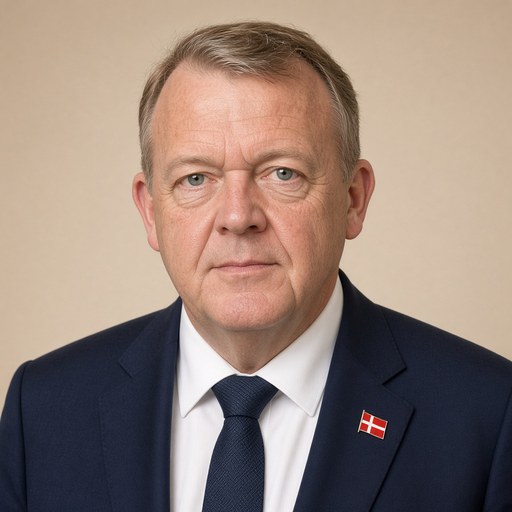
The Prime Minister's speech at the conference "Together for Growth" on February 22, 2011.
 Lars Løkke Rasmussen · Prime Minister of Denmark
- Context
- Rasmussen addressed Danish business leaders at the 'Together for Growth' conference on February 22, 2011, to discuss Denmark's post-crisis economic strategy.
- Main themes
- Economic growth and job creation, global competitiveness, welfare state reform, post-crisis economic challenges, demographic change, business community engagement, labor productivity, fiscal responsibility, redistribution vs. wealth creation, early retirement and pension reform
- Duration
- ~22 min
- Words
- 2,667
- Sentences
- 205
- Readability
- 57
- Grade
- 8.4
- Syntax
- 2.56
- Vocabulary
- 2.07
Translated from Danish
The broad sphere of national life a sentence belongs to. Every sentence has an Arena, so it is the denominator the other indices are read against.
Other205 sentences in 70 paragraphs
"Growth is a matter for the people – we can, if we want!" This is what you write in your proposal. Let me add: We can, if you want. For the challenge applies to every single Dane.
I was born into this society of opportunities. From my early years in the Workers' Cooperative Housing Association in Vejle. Until we moved to Græsted, where I attended primary school and became the first student in my family after school. Like so many other young people, I seized the opportunities that were offered to me.
And for all of us who have grown up with the welfare state, our rich and secure Denmark can feel almost like a given.
For many years, we have focused on how we distribute wealth. But now we need to focus on how we create wealth, so there is something to distribute.
Thank you for organizing today's conference with precisely this focus.
You business leaders have navigated through the crisis, streamlined your companies, and laid new strategies. You know what it takes. You have shown what you can do. We need your input as we lay the strategy for Denmark's growth and job creation.
When the government announces significant reforms – for example, of early retirement, disability pensions, and student grants – we need the voice of the business community in the debate. We need a clear statement about what you companies want – and what you do not want. A clear statement about what works for you – and what does not work. We need your voice to be clear and unambiguous in the public debate. After all, it is you who will create the jobs.
* * *
Denmark has come through the international economic crisis better than many other countries. We have fewer unemployed. We have fewer youth unemployed. We have a healthier economy.
But after the crisis, we find ourselves in a new situation where much is at stake: Whether new jobs are created in Denmark or in other countries. Whether Danish companies gain a foothold in new markets, or others take the customers. Whether our spot on the globe will continue to be among the richest, or whether others will not only catch up with us but will overtake us.
Much is at stake. And the rules of the game are significantly different from what we have been used to. At least three significant factors distinguish the post-crisis period from the pre-crisis period:
First, the international economic crisis has further tipped the global balance. While Denmark and Europe became poorer during the crisis, China and India became richer. And now that we have regained growth, China and India are growing even faster.
Three out of the ten largest companies are now Chinese. And China has overtaken Japan as the world's second-largest economy.
We must be realistic about our starting point.
In many places, people work harder than we do. In Denmark, we typically have a 37-hour workweek and six weeks of vacation. This makes us one of the countries where each employed person works the fewest hours.
In many places, they are better than us at creating value when they go to work. A Dutch person creates 22 percent more value per working hour than a Dane. We need to be realistic about this.
Our second major challenge is that we face a demand for greater economic responsibility after the crisis than we did before the crisis. Today, there is great confidence in the Danish economy – as evidenced by the incredibly low interest margin. There is great confidence because we have pursued the necessary policies in Denmark.
But confidence will be weakened if we continue to avoid the necessary reforms. We must not end up in a situation like in several European countries, where drastic cuts to core welfare have had to be made overnight, taxes have been raised, and public employees' salaries have been significantly reduced. All of this on short notice to regain confidence in the financial markets.
Thirdly, there is the well-known challenge, which is also becoming stronger after the crisis: That we are fewer to carry the load. Demographics are changing right now. We have talked about this as something theoretical. Now it is becoming very concrete. We have fewer young people and more elderly. Every time five leave the labor market to retire, only four are ready to take over. Already today, only half of Danes are working.
It is against this difficult backdrop – with three new conditions – that we must create new jobs, new development, and new dynamics. The conditions have fundamentally changed. The rules of the game are new. And they apply because we are participating in a global game. We cannot invent special Danish rules of the game. We are subject to the global rules of the game.
* * *
There is no miracle cure that can create more jobs. But two things are certain:
We cannot create jobs and new growth through higher taxes – no matter how many or how few millionaires one finds to impose them on. For higher taxes place more burdens on businesses. And that will move jobs to other countries. It will create a negative spiral.
We also cannot create jobs by doing nothing. For that will steadily pull Denmark towards an unhealthy economy, growing debt, and loss of jobs.
My message is clear: When we need to ensure high prosperity, lasting welfare, and healthy jobs, there is only one viable path. Active political action, concrete solutions to concrete problems, and a willingness to tackle issues – even in areas where it is not popular.
Fundamentally, Denmark can only live off one thing: The earnings created by you in businesses.
And here the division of labor should be crystal clear: It is you business leaders who know how to create growth and jobs. And we politicians must provide the framework for you to do so.
Private jobs and earnings are the prerequisites for prosperity. And prosperity is the prerequisite for welfare.
I will outline five guiding principles for a sustainable growth policy:
First, we must maintain healthy public finances. A sound economy does not come by itself. A sound economy requires persistent focus, tough priorities, and the right decisions, which are not always popular.
But they are necessary, for it would have catastrophic consequences for growth in Denmark if the confidence in the Danish economy falters. We would see higher interest rates, which would burden all parts of Danish society. Homeowners would be affected. Companies that want to invest would not be able to afford to pay the interest. Public finances would be burdened by increased interest expenses. The connection is that if interest rates rise by one, it could lead to up to 30,000 more unemployed.
Healthy public finances – however boring it may sound, however hard it may be to manage – must be the foundation for sustainable growth.
Second, we must ensure sufficient labor for businesses. This is my second guiding principle.
And it does not come by itself by announcing a lofty headline or a clever slogan. It requires concrete political action.
That is why the government has reduced the tax on work three times, fully financed each time, so that more people have a greater interest in getting to work. That is why we have implemented an unemployment benefit reform, so you can better get the labor you need.
That is why we have made it easier for skilled foreigners to come to Denmark. We have opened Denmark up. Ten years ago, nearly 12,000 foreigners came to Denmark to work and study. Now about 45,000 come each year. That is almost four times as many.
And most recently, we have improved the researcher tax scheme, making it more attractive.
And we will continue to present concrete solutions to concrete societal problems:
We have presented ambitious proposals for reforming both disability pensions, flexible jobs, and student grants, which improve public finances and increase employment.
We have presented a retirement reform, where a central element, as you know, is that we will gradually phase out early retirement. This will free up 18 billion kroner a year to ensure healthy public finances and to secure core welfare. And it will mean that we will have 70,000 more to carry the load and earn the money.
We must not only have sufficient labor. We must also have highly qualified labor. This is my third guiding principle: Our education.
The government has implemented reforms throughout the education system. Most recently, we have presented a proposal for reforming primary school.
A good primary school must lay the foundation for a well-educated population and thus for growth and jobs. The academic standards must be high. We must also work on the mentality. All children must be challenged as far as their abilities can reach. And we will give municipalities and schools increased freedom to organize teaching so that each child can be placed at the center.
We will also invest in new IT in schools. A total of 500 million kroner for, for example, wireless networks, digital learning materials, and interactive smartboards. Financed concretely, not by birds in the sky, but by some that have been caught.
Throughout Denmark, we must encourage setting high goals and exploring new paths. Here, competition is a strong force. This is my fourth guiding principle. More competition.
The government has presented a series of proposals for better competition.
For we must ensure strong competition and more dynamism in all sectors. Also in the industries that operate in the domestic market and are thus shielded from tough international competition. Also in the public sector. Five-sixths of all Danish jobs are not subject to international competition, which encourages doing things better.
My fifth guiding principle is an efficient public sector. The condition after the international economic crisis is first and foremost healthy public finances. This increases the pressure to find new solutions, new workflows, and new ways so that citizens can receive better service. One could hold a two-hour lecture on this, but in relation to growth, the important thing is:
We must invite private companies in so that you can help ensure renewal. Not for ideological reasons. But because it is common sense.
More competition, more peaceful rivalry, more equitable collaboration on public tasks will contribute to new ideas. It will provide better services. It will give greater freedom of choice to modern citizens who expect individual services of high quality. It will put people before the system. It will also provide more efficiency and thus the opportunity to free up resources for other important areas.
The public sector puts out tasks for competition worth about 90 billion kroner out of tasks totaling about 375 billion kroner, which could generally be put out to tender. That is under a quarter. We need to raise that number.
The municipalities are responsible for most of the tasks. But there is a very large difference in how much each municipality puts tasks out to competition. This indicates untapped opportunities.
We need to develop a more dynamic and open-minded collaboration between the public sector and private companies and build a new private platform. Both to create dynamism at home so that we can make tax kroner stretch further. But also so that we can export welfare technology and welfare services. If we are to meet the demand from new countries, we need to move knowledge out to export markets.
This is a development that the government is pushing with the 3 billion kroner we have allocated for investments in applied citizen-centered technology.
Healthy public finances. An increased labor supply. Reform of education. Sharp competition in all sectors, both public and private. And an efficient public sector. These are my five guiding principles for a reform policy that ensures good frameworks for all of Denmark's businesses.
And I repeat and emphasize: All of Denmark's businesses. For Danish successes are built on broad competencies. There is no single sector that can drive development. And there is no politician who can point to the growth companies. Pandora was not invented in Christiansborg. Lego was not invented in Christiansborg. Jysk was not invented in Christiansborg. I cannot think of a single Danish company that has sprung from the parliamentary chamber.
We need all of Denmark's businesses.
But that said, there are also areas where the public sector has a special role. And where Denmark historically stands stronger than other countries. This is also my message today: We must take advantage of the fact that the countries that now have an appetite for prosperity like ours will demand precisely what we are best at – food, elder care, health, and green technology. Of course, we must exploit that.
In my opening speech in October, I set the goal that Denmark should be independent of fossil fuels by 2050. On Thursday, the government will present the world's first strategy for how this can be achieved. It will be concrete. It will be financed.
With the government's new energy policy proposal – Energy Strategy 2050 – we will significantly expand renewable energy towards 2020. We must also do more to save energy throughout Danish society. And we will do it in a way that protects both public finances and takes into account the energy bills of ordinary Danes and, not least, businesses. So that we do not weaken competitiveness.
At the same time, the focus on green energy and energy savings will make Denmark an international green technology laboratory in wind power, biomass, and other forms of green energy.
We will build a completely new offshore wind farm, Kriegers Flak, which is three times the size of Horns Rev II, which at its inauguration in 2009 was the world's largest offshore wind farm. Kriegers Flak will be able to supply 600,000 households with electricity and strengthen the exchange of energy with our neighboring countries.
We will increase the use of biomass in our power plants, so far more Danes receive a green heating supply. And so we also contribute to sustainable agriculture and the 150,000 jobs that Danish agriculture generates in the food sector, etc.
These are areas where Danish companies are already strong, and where global demand for technological solutions will increase. Therefore, Energy Strategy 2050 is also one of the answers to how we can ensure new growth and new jobs in Denmark.
Denmark shares its challenges with the rest of the wealthy world. Everywhere in Europe – without exception – the focus is on the recovery of public finances and reforms as a prerequisite for jobs and growth. The same applies in the United States, where President Obama, in connection with his State of the Union address, clearly stated that the focus must now be on aligning revenues and expenditures. And he announced five years of zero growth. We are not going that far. But the direction is the same.
This corresponds exactly to the agenda of the Danish government.
It is the agenda that we are also discussing in the government's Growth Forum. Over the past year and a half, we have discussed all important issues relevant to growth and job creation in a closed forum. From primary schools to universities. From green growth to the recruitment of foreign labor.
Areas where the division of labor must again be the same: The government provides the responsible framework so that you businesses have a solid foundation to create jobs and earnings. The Growth Forum will hold its final meeting on March 17-18. And will present its recommendations to the government here.
I will not preempt the final strategy from the Growth Forum. But I want to emphasize that there is no miracle cure, no snap of the fingers, no slogan that can create new growth and new jobs. There is only the hard work through continuous reforms and a steady focus on sound public finances.
Thank you for the word! And thank you for organizing this conference.
The original Danish. The tags above are read on the English translation's sentences.
”Vækst er en folkesag – vi kan, hvis vi vil!” Sådan skriver I i jeres oplæg. Lad mig tilføje: Vi kan, hvis du vil. For udfordringen gælder hver enkelt dansker.
Jeg er født ind i dette mulighedernes samfund. Fra mine første år i Arbejdernes Andelsboligforening i Vejle. Til vi flyttede til Græsted, hvor jeg gik i folkeskole og efter skolen blev familiens første student. Som så mange andre unge greb jeg de muligheder, jeg blev tilbudt.
Og for alle os, der er vokset op med velfærdsamfundet, kan vores rige og trygge Danmark føles nærmest som en selvfølge.
I mange år har vi haft fokus på, hvordan vi fordeler velstanden. Men nu skal vi have fokus på, hvordan vi skaber velstand, så der er noget at fordele.
Tak, fordi I har arrangeret dagens konference med netop dette fokus.
I erhvervsledere har klaret jer gennem krisen, trimmet jeres virksomheder og lagt nye strategier. I ved, hvad der skal til. I har vist, hvad I kan. Vi har brug for jeres input, når vi lægger strategien for Danmarks vækst og jobskabelse.
Når regeringen melder ud med markante reformer - fx af efterløn, førtidspension og SU, så har vi brug for erhvervslivets stemme i debatten. Vi har brug for en klar udmelding om, hvad I virksomheder vil have – og hvad I ikke vil have. En klar udmelding om, hvad der virker for jer – og hvad der ikke virker. Vi har brug for jeres stemme klar og entydig i den offentlige debat. Det er jo jer, der skal skabe jobbene.
* * *
Danmark er kommet bedre gennem den internationale økonomiske krise end mange andre lande. Vi har færre arbejdsløse. Vi har færre ungdomsarbejdsløse. Vi har en sundere økonomi.
Men efter krisen befinder vi os i en ny situation, hvor der står meget på spil: Om nye jobs skabes i Danmark eller i andre lande. Om danske virksomheder får fodfæste på nye markeder, eller andre løber med kunderne. Om vores plet på kloden fortsat skal være blandt de rigeste, eller om andre ikke bare vil hale ind på os, men vil overhale os.
Der står meget på spil. Og spillereglerne er markant anderledes, end vi har været vant til. Mindst tre markante forhold skiller tiden efter krisen fra tiden før krisen:
For det første har den internationale økonomiske krise fået verdensbilledet til at tippe yderligere. Mens Danmark og Europa blev fattigere under krisen, blev Kina og Indien rigere. Og nu hvor vi har fået væksten tilbage, vokser Kina og Indien bare endnu hurtigere.
Tre ud af de ti største virksomheder er i dag kinesiske. Og Kina har overhalet Japan som verdens næststørste økonomi.
Vi må være realistiske om vores udgangspunkt.
Mange steder er man flittigere, end vi er. I Danmark har vi typisk en 37 timers arbejdsuge og 6 ugers ferie. Det gør os til et af de lande, hvor hver beskæftiget arbejder færrest timer.
Mange steder er de dygtigere end os til at skabe værdi, når de går på arbejde. En hollænder skaber hver arbejdstime 22 procent mere værdi end en dansker. Det er vi nødt til at være realistiske om.
Vores anden store udfordring er, at vi står med et krav om større økonomisk ansvarlighed efter krisen, end vi så det før krisen. I dag er der stor tillid til dansk økonomi – det viser den ufatteligt lave rentemarginal. Der er stor tillid, fordi vi har ført den nødvendige politik i Danmark.
Men tilliden vil blive svækket, hvis vi fremover går uden om de nødvendige reformer. Vi må ikke havne i en situation som i flere europæiske lande, hvor man over en nat har måttet skære drastisk i kernevelfærden, hæve skatterne og sænke de offentligt ansattes lønninger markant. Alt sammen med kort varsel for at genvinde tilliden på finansmarkederne.
For det tredje er der den kendte udfordring, som også bliver stærkere efter krisen: At vi bliver færre om at trække læsset. Netop i disse år vender demografien. Det har vi talt om som noget teoretisk. Nu bliver det meget konkret. Vi bliver færre unge og flere ældre. Hver gang fem forlader arbejdsmarkedet for at gå på pension, står der kun fire klar til at tage over. Allerede i dag er det kun halvdelen af danskerne, der arbejder.
Det er på den svære baggrund – med tre nye vilkår – at vi skal skabe nye job, ny udvikling og ny dynamik. Vilkårene er grundlæggende ændret. Spillereglerne er nye. Og de gælder, fordi vi deltager i et globalt spil. Vi kan ikke opfinde særlige danske spilleregler. Vi er underlagt de globale spilleregler.
* * *
Der findes ikke én mirakelkur, der kan skabe flere arbejdspladser. Men to ting er helt sikre:
Vi kan ikke skabe jobs og ny vækst gennem højere skatter – uanset hvor mange eller få millionærer, man finder at lægge dem på. For højere skatter lægger flere byrder på virksomhederne. Og det vil flytte arbejdspladser til andre lande. Det vil skabe en negativ spiral.
Vi kan heller ikke skabe jobs ved intet at gøre. For det vil støt og roligt trække Danmark i retning af usund økonomi, voksende gæld og tab af arbejdspladser.
Mit budskab er klart: Når vi skal sikre høj velstand, varig velfærd og sunde arbejdspladser, så er der kun én farbar vej. Aktiv politisk handling, konkrete løsninger på konkrete problemer og en vilje til at tage fat – også på de områder, hvor det ikke er populært.
Grundlæggende kan Danmark kun leve af én eneste ting: Af den indtjening, der bliver skabt af jer i virksomhederne.
Og her bør arbejdsdelingen være krystalklar: Det er jo jer erhvervsledere, der har forstand på at skabe vækst og arbejdspladser. Og vi politikere skal levere rammerne for, at I kan gøre det.
Private jobs og indtjening er forudsætningen for velstand. Og velstand er forudsætningen for velfærd.
Jeg vil opstille fem pejlemærker for en holdbar vækstpolitik:
For det første skal vi fastholde sunde offentlige finanser. Sund økonomi kommer ikke af sig selv. Sund økonomi kræver et vedholdende fokus, hårde prioriteringer og rigtige beslutninger, som ikke altid er populære.
Men som er nødvendige, for det vil få helt katastrofale konsekvenser for væksten i Danmark, hvis den tillid, der er til dansk økonomi, svigter. Vi vil se højere renter, som vil belaste alle dele af det danske samfund. Boligejerne vil blive ramt. Virksomheder, som gerne vil investere, vil ikke have råd til at betale renterne. De offentlige finanser vil blive tynget af øgede renteudgifter. Sammenhængen er den, at hvis renten stiger med én, så slår det ud i op til 30.000 flere arbejdsløse.
Sunde offentlige finanser – hvor kedeligt det end lyder, hvor hårdt det end er at administrere – skal være fundamentet under en holdbar vækst.
For det andet skal vi sikre tilstrækkelig arbejdskraft til virksomhederne. Det er mit andet pejlemærke.
Og det kommer heller ikke af sig selv ved at annoncere en luftig overskrift eller et smart slogan. Det kræver konkret politisk handling.
Derfor har regeringen sat skatten på arbejde ned ad tre omgange, fuldt finansieret hver gang, så flere har en større interesse i at tage fat. Derfor har vi gennemført en dagpengereform, så I bedre kan få den arbejdskraft, I har brug for.
Derfor har vi gjort det lettere for dygtige udlændinge at komme til Danmark. Vi har åbnet Danmark op. For 10 år siden kom der knap 12.000 udlændinge til Danmark for at arbejde og studere. Nu kommer der omkring 45.000 hvert år. Det er næsten fire gange så mange.
Og senest har vi forbedret forskerskatteordningen, så den er blevet mere attraktiv.
Og vi fortsætter med at fremlægge konkrete løsninger på konkrete samfundsproblemer:
Vi har fremlagt ambitiøse udspil til reform af både førtidspension, fleksjob og SU, som forbedrer de offentlige finanser og øger beskæftigelsen.
Vi har fremlagt en tilbagetrækningsreform, hvor et centralt element, som bekendt, er, at vi gradvist udfaser efterlønnen. Det vil frigøre 18 milliarder kroner om året til at sikre sunde offentlige finanser og til at sikre kernevelfærden. Og det vil betyde, at vi bliver 70.000 flere til at trække læsset og tjene pengene.
Vi skal ikke alene have tilstrækkelig arbejdskraft. Vi skal også have højt kvalificeret arbejdskraft. Det er mit tredje pejlemærke: Vores uddannelser.
Regeringen har gennemført reformer gennem hele uddannelsessystemet. Senest har vi fremlagt et udspil til reform af folkeskolen.
En god folkeskole skal lægge fundamentet til en veluddannet befolkning og dermed til vækst og arbejdspladser. Fagligheden skal være høj. Vi skal også arbejde med mentaliteten. Alle børn skal udfordres så langt, som deres evner overhovedet rækker. Og vi vil give kommunerne og skolerne øget frihed til at tilrettelægge undervisningen, så det enkelte barn kan sættes i centrum.
Vi vil også investere i ny it i skolerne. I alt 500 millioner kroner til fx trådløse netværk, digitale læremidler og interaktive smartboards. Finansieret konkret, ikke af fugle på taget, men af nogle, der er fanget ind.
I hele Danmark skal vi anspore til at sætte høje mål og gå nye veje. Her er konkurrence en stærk kraft. Det er mit fjerde pejlemærke. Mere konkurrence.
Regeringen har fremlagt en stribe af forslag til bedre konkurrence.
For vi skal sikre stærk konkurrence og mere dynamik i alle erhverv. Også i de brancher, der opererer på hjemmemarkedet og dermed er skærmet fra den hårde internationale konkurrence. Også i den offentlige sektor. Fem sjettedele af alle danske arbejdspladser er ikke underlagt den internationale konkurrence, der tilskynder til at gøre tingene bedre.
Mit femte pejlemærke er en effektiv offentlig sektor. Vilkåret efter den internationale økonomiske krise er først og sidst sunde offentlige finanser. Det øger presset for at finde nye løsninger, nye arbejdsgange og nye veje, så borgerne kan få en bedre service. Det kunne man holde et to-timers foredrag om, men i forhold til vækst er det vigtige:
Vi skal invitere private virksomheder indenfor, så I kan hjælpe med at sikre fornyelsen. Ikke af ideologiske grunde. Men fordi det er sund fornuft.
Mere konkurrence, mere fredelig kappestrid, mere jævnbyrdigt samarbejde om de offentlige opgaver vil bidrage til nye idéer. Det vil give bedre ydelser. Det vil give større valgfrihed til moderne borgere, der forventer individuelle ydelser af høj kvalitet. Det vil sætte mennesket foran systemet. Det vil også give mere effektivitet og dermed mulighed for at frigøre ressourcer til andre vigtige områder.
Den offentlige sektor konkurrenceudsætter årligt opgaver for omkring 90 milliarder kroner ud af opgaver for i alt omkring 375 milliarder kroner, der som udgangspunkt godt kunne udbydes. Det er under en fjerdedel. Det tal skal vi have bragt højere op.
Kommunerne har ansvaret for langt de fleste af opgaverne. Men der er meget stor forskel på, hvor meget kommunerne hver især konkurrenceudsætter. Det vidner om uudnyttede muligheder.
Vi skal udvikle et mere dynamisk og fordomsfrit samarbejde mellem det offentlige og de private virksomheder og bygge en ny privat platform. Både for at skabe dynamik herhjemme, så vi kan få skattekronerne til at række videre. Men også så vi kan eksportere velfærdsteknologi og velfærdsservice. Hvis vi skal imødekomme de nye landes efterspørgsel, har vi brug for at flytte viden ud på eksportmarkederne.
Det er en udvikling, som regeringen skubber på med de 3 milliarder kroner, vi har afsat til investeringer i anvendt borgernær teknologi.
Sunde offentlige finanser. Et øget arbejdsudbud. Reform af uddannelserne. Skarp konkurrence i alle erhverv, offentlige som private. Og en effektiv offentlig sektor. Det er mine fem pejlemærker for en reformpolitik, der sikrer gode rammer for alle Danmarks virksomheder.
Og jeg gentager og understreger: Alle Danmarks virksomheder. For danske succeser bygger på brede kompetencer. Der findes ikke én enkelt sektor, der kan trække udviklingen. Og der findes ikke den politiker, der kan pege på vækstvirksomhederne. Pandora blev ikke opfundet på Christiansborg. Lego blev ikke opfundet på Christiansborg. Jysk blev ikke opfundet på Christiansborg. Jeg kan ikke komme i tanke om den danske virksomhed, der er udsprunget af folketingssalen.
Vi har brug for alle Danmarks virksomheder.
Men når det er sagt, så er der også områder, hvor det offentlige har en særlig rolle. Og hvor Danmark historisk står stærkere end andre lande. Det er også mit budskab i dag: Vi skal udnytte, at de lande, der nu har appetit på en velstand som vores, vil efterspørge netop det, som vi er de bedste til – fødevarer, ældrepleje, sundhed og grøn teknologi. Selvfølgelig skal vi udnytte det.
I min åbningstale i oktober satte jeg det mål, at Danmark skal være uafhængigt af fossile brændsler i 2050. På torsdag præsenterer regeringen verdens første strategi for, hvordan det kan lade sig gøre. Den vil være konkret. Den vil være finansieret.
Med regeringens nye energipolitiske udspil – energistrategi 2050 – vil vi udbygge den vedvarende energi markant frem mod 2020. Vi skal også gøre mere for at spare på energien overalt i det danske samfund. Og vi vil gøre det på en måde, som beskytter både de offentlige finanser og tager hensyn til energiregningen hos almindelige danskere og ikke mindst virksomhederne. Så vi ikke svækker konkurrenceevnen.
Samtidig vil satsningen på grøn energi og energibesparelser gøre Danmark til et internationalt grønt teknologilaboratorium inden for vindkraft, biomasse og andre former for grøn energi.
Vi vil bygge en helt ny havvindmøllepark, Kriegers Flak, som er tre gange så stor som Horns Rev II, der ved indvielsen i 2009 var verdens største havvindmøllepark. Kriegers Flak vil kunne forsyne 600.000 husstande med elektricitet og styrke udvekslingen af energi med vore nabolande.
Vi vil øge brugen af biomasse på vores kraftværker, så langt flere danskere får en grøn varmeforsyning. Og så vi også giver et bidrag til et bæredygtigt landbrug og de 150.000 arbejdspladser, som dansk landbrug genererer i fødevaresektoren mv.
Det er områder, hvor danske virksomheder i forvejen står stærkt, og hvor den globale efterspørgsel efter teknologiske løsninger vil stige. Derfor er energistrategi 2050 også et af svarene på, hvordan vi kan sikre ny vækst og nye jobs i Danmark.
* * *
Danmark deler sine udfordringer med resten af den rige verden. Overalt i Europa – uden undtagelse – er blikket rettet mod genopretning af de offentlige finanser og reformer som forudsætning for job og vækst. Det samme gælder i USA, hvor præsident Obama i forbindelse med sin State of the Union-tale meget klart sagde, at der nu skulle fokus på at få indtægter og udgifter til passe sammen. Og så bebudede han fem år med nulvækst. Så vidt går vi ikke. Men retningen er den samme.
Det svarer præcis til den danske regerings dagsorden.
Det er den dagsorden, vi også diskuterer i regeringens Vækstforum. Gennem de sidste halvandet år har vi i et lukket forum drøftet alle vigtige emner af betydning for vækst og jobskabelse. Fra folkeskole til universiteter. Fra grøn vækst til rekruttering af udenlandsk arbejdskraft.
Områder, hvor arbejdsdelingen igen må være den samme: Regeringen leverer det ansvarlige grundlag, så I virksomheder har et solidt fundament for at skabe jobs og indtjening. Vækstforum holder sit afsluttende møde den 17.-18. marts. Og vil her fremlægge sine anbefalinger til regeringen.
Jeg skal ikke foregribe den endelige strategi fra Vækstforum. Men jeg vil understrege, at der findes ikke én mirakelkur, ikke ét fingerknips, ikke ét slogan, der kan skabe ny vækst og nye arbejdspladser. Der findes kun det seje træk gennem stadige reformer og et fast blik på sunde offentlige finanser.
Tak for ordet! Og tak, fordi I arrangerer denne konference.