




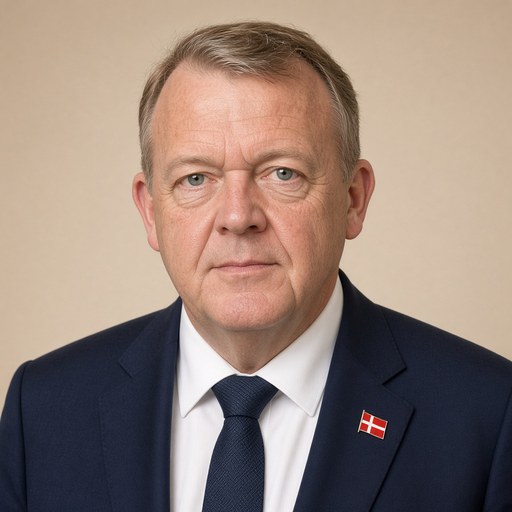
Prime Minister Lars Løkke Rasmussen's speech at KL's top meeting on March 8, 2018.
 Lars Løkke Rasmussen · Prime Minister of Denmark
- Context
- Rasmussen addressed the KL top meeting of Danish municipal leaders on March 8, 2018, discussing welfare funding, economic progress, and municipal governance challenges.
- Main themes
- Municipal governance, welfare services funding, economic recovery, elderly care, gender representation, public sector reform, financial equalization, labor disputes, Denmark's fiscal policy, democratic participation
- Duration
- ~21 min
- Words
- 2,471
- Sentences
- 241
- Readability
- 63
- Grade
- 6.7
- Syntax
- 2.37
- Vocabulary
- 2.01
Translated from Danish
The broad sphere of national life a sentence belongs to. Every sentence has an Arena, so it is the denominator the other indices are read against.
Other241 sentences in 118 paragraphs
Thank you, Mr. Chairman.
Thank you for allowing me to be here today.
The KL summit is a highlight in my calendar. So I am happy to be here, even though it is on short notice.
I was asked to send greetings from the Minister of Finance and Interior and to express regret that he could not attend. Unfortunately, he has fallen ill. But he was pleased to send a substitute. So am I.
I almost feel at home.
I am being sent down memory lane. To the Græsted-Gilleleje municipal council, where I took my first steps. And my youth steps.
A privilege – and a time – when I remember the feeling of making a difference in people's everyday lives.
Therefore, I would like to congratulate those of you who have been elected.
I have deep respect for your commitment, regardless of political stance.
You have the courage and will to make your municipality a better place to live and grow up. Thank you for your efforts.
There is much to fight for.
We are reminded of that today, on March 8th. International Women's Day.
In the municipal elections, 33 percent of those elected to the municipal councils were women. 14 female mayors. An improvement – but far from enough.
The municipal elections also had a strong voter turnout of nearly 71 percent.
So you enter this term with a strong mandate behind you.
* * *
At the same time, you can look into a future that looks bright. Things are actually going quite well. For the whole country. Denmark is back on track after the financial crisis.
The economy is strong. Employment is close to setting a record. There is progress across the country.
The world and Europe have broken free from the crisis. That certainly matters.
But we have also lifted Denmark ourselves. The government's policies have worked. The tough decisions we made from 2009 to 2011 – unemployment benefits, retirement – have worked. What you have done in your municipalities – moderation, budget discipline. And the Danes, as they are most, have worked hard for progress.
* * *
We stand, and you stand, with an economic upswing and, in many ways, with an open door to look at things with fresh eyes.
This also applies to the ongoing challenge of making one of the world's best welfare societies even better.
Let’s get the financial matters in order:
Under the previous Social Democratic government, the agreed service expenditures were reduced by more than 3 billion kroner.
Since the parliamentary elections, we have increased service expenditures by more than 1.5 billion kroner.
A dignity billion for a more dignified elderly care. A voucher for about half an hour more help per week for the elderly in nursing homes.
Over half a billion kroner over four years for better daycare services for children. So you have the opportunity to raise the quality. And ensure that all children get the best possible start in life.
And with the finance bill for 2018, we allocate an additional – additional – 2.5 billion kroner to strengthen elderly care towards 2021. For, among other things, more hands in our nursing homes and home care.
You don’t hear much about that. Neither when you listen to the opposition nor the debate as a whole. But the fact is that today there is more money for services in the municipalities than when we took over the government.
At the same time, we must ensure that the many employees who work hard every day in schools, job centers, and nursing homes – the core troops of welfare – have more time for their core tasks.
Therefore, the government will soon present a coherence reform.
Which will give more space for professionalism. Freedom for professionalism. More focus on results. More opportunities to utilize technology. And better opportunities to create good leaders.
If this is to succeed – and it must – we must dare to think anew.
That is also why we have established 44 free municipalities. Which come with a steady stream of ideas on how to do things better. Create more coherence. Thank you for that.
We need that renewal. Flowers grow from the ground up.
We also need to solve some binding tasks regarding the financial equalization between municipalities.
It is not simple, but it is unavoidable. This is partly due to the employment reform and the agreement on housing tax.
It could be tempting to leave it be. But that won’t work.
Here is an offer to you: If the municipalities come up with one solution, we will take it!
And if not – and I know it is difficult, it is the seed of dissatisfaction, "that’s just how it is" – then the Financing Committee has come up with possible solutions. And now it is up to us politicians in Christiansborg to finish the job. And find a solution that can bring peace and respect.
It is a big task.
* * *
Another big task is the public agreements. Here we find ourselves in what I believe is a historic situation.
I cannot recall that there have previously been warnings of strikes and lockouts at the same time in both municipalities, regions, and the state.
I do not want a conflict. The government does not want a conflict. I do not believe anyone wants a conflict. The purpose of the warning of lockout from the Minister of Innovation is precisely to avoid conflict.
Honestly, I do not understand how we have ended up in the situation we are in.
In my view, it should be possible to reach an agreement on the wage issue, where the Minister of Innovation in the state sector has offered a wage development that overall corresponds to the agreement in the private labor market last year.
It has also been clearly stated that the Ministry of Finance can neither abolish nor will abolish the paid meal break in the state.
I would like to express the hope that, with the prospect of a severe labor conflict, we do not let it come to that, but that the parties in the mediation institution can negotiate constructively and reach a collective agreement result. And that an agreement can be reached before the labor conflict becomes a reality.
No one, no one benefits from a severe conflict.
* * *
The Denmark we know today rests on a common understanding of what binds us together. Strong values of freedom, open-mindedness, equality. A safe welfare society. The individual’s responsibility.
It is an understanding or an unwritten social contract that has been built up over generations. But in just one generation, some things have changed.
I still remember the day after the summer holidays when I was a little schoolboy, and Ibrahim started at Græsted School. He was the only Turkish boy in my class. At my school.
When I started high school, there were about 50,000 people with a non-Western background in all of Denmark.
Today, that number has nearly tenfold. There are close to half a million. Denmark has changed.
When I spoke here at the KL summit two years ago, the major challenge was the migration and refugee crisis.
I called it then perhaps the largest and most complicated crisis we have seen in this century. Those were big words. But that was our common concern at the time.
The government put all its efforts into limiting the influx of refugees and migrants. It has worked.
The government's tightening measures, along with a strengthened effort in the EU, have brought the number of asylum seekers down. We now have the lowest number of asylum seekers in nine years.
This has freed up a significant amount of money that can be used for services instead of on refugees.
When I stood here at the KL summit a year ago, I was pleased that we were collectively working to shift the approach to newcomers. Away from passivity towards demands to work and contribute.
Bipartisan and tripartite agreements on integration. Basic integration education. Together we have moved the goalposts. It is worth remembering.
And the results speak for themselves. The proportion of refugees who are employed after three years in Denmark has increased from one in five to more than one in three.
This year, I want to talk about the problem that the government is now fully focusing on, and where you – the municipalities – have a key role in ensuring our success.
And where we can succeed because we have replaced naivety with realism in the other areas I have mentioned. Passivity with demands.
This effort means that the problems are no longer growing. Now it is time to solve them.
In my New Year’s speech, I set an ambitious goal: We must completely eliminate the ghettos.
A week ago, the government presented a new, significant, and targeted strategy for One Denmark without parallel societies. No ghettos by 2030.
It is important for me to emphasize that many with a non-Western background are doing well. Contributing. Working. Our society would go into reverse if they were not here.
But I have also said that I see holes in the map of Denmark, and I will acknowledge that picture because there are places where I cannot recognize what I see.
Areas where far too many with a non-Western background isolate themselves.
Far too few have a job.
Far too few have an education.
But where far too many commit crimes.
Far too many cannot speak Danish, despite 10, 20, or 30 years in Denmark.
And where far – far – too many children grow up in a counterculture. With a questionable childhood. That stands in the way of their opportunities.
You know where these areas are located. Because you have been responsible for them for nearly a generation.
Many years ago, there were mayors – not least in the western suburbs of Copenhagen – who warned about the development. They were not listened to closely enough.
There have been ghetto plans before. I was myself responsible for one in the series. They have worked – but not well enough. It is a collective failure. And it just cannot go on. Not at all.
That is why we have presented a comprehensive strategy. With a clear goal. Of a Denmark without ghettos by 2030.
A strategy where we take much more targeted and firm action. Set new and unambiguous demands on parents, schools, and housing associations.
Thus, we also set demands on you in the municipalities.
For example, I do not understand if municipal job centers refrain from sending people to work on the grounds that they cannot speak Danish. I believe there are functions that can be managed with limited Danish. And there is also the effect the other way: That you learn Danish by having a job among Danish-speaking colleagues.
Today, I want to make it very clear. The government expects something to happen. That the opportunities we provide are utilized. Otherwise, we will take over.
This applies in the housing sector, where we now give the 16 hardest ghetto areas a deadline to develop a development plan that leads to the proportion of public family housing in the area being brought down below 40 percent by 2030.
A very concrete demand, for a very concrete plan. Which must be made in collaboration with the municipality. If that is not possible, we will take over ourselves. Because we cannot just watch things come to a standstill.
The same approach applies in the school sector.
For example, it has long been possible to deduct child benefits from parents if their children do not attend daycare. The so-called parental deductions.
But that tool is hardly used. Even though the problems are growing.
Now patience has run out. Therefore, we are expanding the scheme to also apply to schools. We are simplifying it. And we are making it mandatory.
From now on, it will be the case that if children do not attend school enough. And if there is not a good explanation. Then the child benefit will be cut. Period. Because we cannot continue to fail the children.
Some believe that it is un-liberal. Others believe that we are interfering in the municipalities' tasks.
I actually agree with both.
My party is rooted in Grundtvig and Kold. I myself have been shaped by many years as a municipal and county politician.
I find it – quite honestly – difficult that the state takes over municipal tasks. Imposes on parents that their children must attend institutions. Or interferes in where people should live.
I advocate for freedom.
But I also have the clear analysis that freedom rests on conditions in our society, built up over generations, that are crumbling and need to be rebuilt.
If the choice is between swallowing some principled camels – on the one hand.
And failing the children and women who live in the ghettos on the other. Then I am on the side of the children and women.
I hope you are too. I expect that. I know that deep down you are.
I heard what the chairman said about "three wise men." And about the state interfering at the institutional level in the municipalities. I heard it well.
But I will repeat:
The government is ready to go far. We are prepared to introduce special rules for special areas. Because it is necessary. And we will closely follow the results.
We will appoint three special representatives, and they may as well be "wise." Because they will, on behalf of the government, follow the strategy through – maintain focus on achieving the goals we have set.
Even when the media shifts focus. Even when we politicians start discussing other things. Because that is how it is too.
It requires persistent work. The strategy must be followed through. It will be followed through.
Therefore, I hope that the government's strategy against parallel societies can serve as a springboard to strengthen our common efforts for integration.
The problems were not created overnight. Far from it. They cannot be solved in a day. But they must be solved. We all have a responsibility for that. We have a shared responsibility for that.
* * *
Denmark is a good country. Not a perfect country, but one of the best there is.
For generations, the Danes have fought for progress, security, and togetherness.
We have had the courage and ability to face challenges head-on.
That must continue. We must make Denmark even better. Solve the concrete problems we face. And solve them together.
Because common solutions are stronger.
That is what the Danes expect. That is what our children expect. And that is what we must expect of ourselves.
Thank you for your attention and have a great summit.
The original Danish. The tags above are read on the English translation's sentences.
Tak til formanden.
Tak, fordi jeg må være med i dag.
KL’s topmøde er et højdepunkt i min kalender. Så jeg glad for at være her. Selvom det er på et afbud.
Jeg skulle hilse fra økonomi- og Indenrigsministeren og beklage, at han ikke kunne komme. Han er desværre blevet syg. Men han var glad for at kunne sende en afløser. Det er jeg også.
Jeg føler mig næsten hjemme.
Jeg bliver sendt en tur ned ad mindernes allé. Til Græsted-Gilleleje kommunalbestyrelse, hvor jeg trådte mine barnesko. Og ungdomssko.
Et privilegium – og en tid – hvor jeg husker følelsen af at flytte noget i menneskers hverdag og liv.
Derfor vil jeg ønske til lykke til jer, der er blevet valgt.
Jeg har en dyb respekt for jeres engagement uanset politisk ståsted.
I har mod og vilje til at gøre jeres kommune til et bedre sted at bo og vokse op. Tak for indsatsen.
Der er masser at kæmpe for.
Det bliver vi mindet om i dag den 8. marts. Kvindernes internationale kampdag.
Ved kommunalvalget blev der valgt 33 pct. kvinder til kommunalbestyrelserne. 14 kvindelige borgmestre. En fremgang – men langt fra nok.
Kommunalvalget havde også en flot stemmedeltagelse på knapt 71 pct.
Så I går ind i denne valgperiode med et stærkt mandat i ryggen.
* * *
Samtidig kan I se ind i en fremtid, som tegner lys. Det går sådan set ret godt. For hele landet. Danmark er tilbage på sporet efter finanskrisen.
Økonomien er stærk. Beskæftigelsen er tæt på at sætte rekord. Der er fremgang i hele landet.
Verden og Europa har revet sig løs af krisen. Det har selvfølgelig betydning.
Men vi har også selv løftet Danmark. Regeringens politik har virket. De tunge beslutninger, vi traf fra 2009 til 2011 – dagpenge, tilbagetrækning – har virket. Det, I har gjort jeres i kommunerne – mådehold, budgetdisciplin. Og danskerne, som de er flest, har knoklet for fremgangen.
* * *
Vi står og I står med et økonomisk opsving og på mange måder med en åben dør for at se på tingene med friske øjne.
Det gælder også den stadige udfordring med at gøre et af verdens bedste velfærdssamfund endnu bedre.
Lad os lige få det med pengene på plads:
Under den tidligere socialdemokratiske regering blev de aftalte serviceudgifter sat ned med godt 3 mia. kr.
Vi har – siden folketingsvalget – løftet serviceudgifterne med mere end 11⁄2 mia. kr.
En værdighedsmilliard til en mere værdig ældrepleje. Klippekort til ca. 1/2 times mere hjælp om ugen til ældre på plejehjem.
Over en halv milliard kroner over fire år til bedre dagtilbud for børnene. Så I har mulighed for løfte kvaliteten. Og sørge for at alle børn får den bedst mulige start på livet.
Og med finansloven for 2018 afsætter vi yderligere – yderligere – 2,5 milliarder kroner til at styrke ældreplejen frem mod 2021. Til blandt andet flere hænder på vores plejehjem og i hjemmeplejen.
Det hører man ikke meget til. Hverken når man lytter til oppositionen eller debatten som helhed. Men fakta er, at der i dag er flere penge til service i kommunerne, end da vi overtog regeringsmagten.
Samtidig skal vi sørge for, at de mange medarbejdere, som hver dag knokler på skolerne, i jobcentrene og på plejehjemmene – velfærdens kernetropper – får mere tid til deres kerneopgaver.
Derfor vil regeringen inden længe fremlægge en sammenhængsreform.
Som skal give mere plads til faglighed. Frihed til faglighed. Mere fokus på resultaterne. Flere muligheder for at udnytte teknologien. Og bedre muligheder for at skabe gode ledere.
Hvis det skal lykkes – og det skal det – så skal vi turde tænke nyt.
Det er også grunden til, at vi har oprettet 44 frikommuner. Som kommer med en jævn strøm af ideer til, hvordan man kan gøre tingene bedre. Skabe mere sammenhæng. Tak for det.
Vi har brug for den fornyelse. Blomster gror nedefra.
Vi skal desuden løse nogle bundne opgaver i forhold til den økonomiske udligning mellem kommunerne.
Det er ikke enkelt, men det er uomgåeligt. Det skyldes blandt andet beskæftigelsesreformen og aftalen om boligskatten.
Det kunne være fristende at lade det ligge. Men den går ikke.
Her er et tilbud til jer: Hvis kommunerne kommer med én løsning, så tager vi den!
Og hvis ikke – og jeg ved, det er svært, det er kimen til utilfredshed, ”sådan er det jo” – så er Finansieringsudvalget kommet med mulige løsninger. Og nu er det op til os politikere på Christiansborg at gøre arbejdet færdigt. Og finde en løsning, der kan være ro og respekt om.
Det er en stor opgave.
* * *
En anden stor opgave er de offentlige overenskomster. Her står vi i, hvad jeg tror, er en historisk situation.
Jeg kan ikke mindes, at der tidligere er udsendt varsler om strejker og lockout på én gang i både kommuner, regioner og staten.
Jeg ønsker ikke en konflikt. Regeringen ønsker ikke en konflikt. Jeg tror ikke, at nogen ønsker en konflikt. Formålet med varslet om lockout fra innovationsministeren er netop at undgå konflikt.
Jeg forstår helt ærligt ikke, at vi er endt i den situation, vi er endt i.
For mig at se bør det være muligt at nå til enighed om lønspørgsmålet, hvor innovationsministeren på statens område har tilbudt en lønudvikling, der overordnet set svarer til forliget på det private arbejdsmarked sidste år.
Det er også klart meldt ud, at Finansministeriet hverken kan eller vil afskaffe den betalte spisepause i staten.
Jeg vil udtrykke det håb, at man med udsigt til en voldsom arbejdskonflikt, ikke lader det komme så vidt, men at parterne i forligsinstitutionen kan forhandle konstruktivt og nå et overenskomstresultat. Og at der kan opnås enighed og indgås en aftale, før arbejdskonflikten bliver en realitet.
Ingen, ingen er tjent med en voldsom konflikt.
* * *
Det Danmark, vi kender i dag, hviler på en fælles forståelse af, hvad der binder os sammen. Stærke værdier om frihed, frisind, ligeværd. Et trygt velfærdssamfund. Den enkeltes ansvar.
Det er en forståelse eller ikke nedskrevet samfundskontrakt, som er bygget op gennem generationer. Men på bare én generation er der nogle ting, der har ændret sig.
Jeg kan stadig huske den dag, efter sommerferien, da jeg var en lille skoledreng, og Ibrahim startede på Græsted Skole. Han var den eneste tyrkiske dreng i min klasse. På min skole.
Da jeg startede i gymnasiet, var der i hele Danmark omkring 50.000 mennesker med ikke-vestlig baggrund.
I dag er det tal næsten tidoblet. Der er tæt på 1⁄2 million. Danmark er forandret.
Da jeg talte her på KL’s topmøde for to år siden var den helt store udfordring migrations- og flygtningekrisen.
Jeg kaldte den dengang for den måske største og mest komplicerede krise, vi endnu har set i dette århundrede. Det var store ord. Men det var dengang vores fælles bekymring.
Regeringen lagde alle kræfter i at begrænse tilstrømningen af flygtninge og migranter. Det har virket.
Regeringens stramninger har sammen med en styrket indsats i EU bragt asyltallet ned. Vi har nu det laveste antal asylansøgere i ni år.
Det har frigjort et betydeligt beløb, som kan anvendes til service i stedet for på flygtninge.
Da jeg stod her på KL’s topmøde for ét år siden kunne jeg glæde mig over, at vi i fællesskab var i gang med at dreje indsatsen for nytilkomne. Væk fra passivitet over mod krav om at arbejde og bidrage.
Toparts- og trepartsaftaler om integration. Integrationsgrunduddannelse. Sammen har vi har rykket hegnspælene. Det er værd at huske
Og resultaterne taler for sig selv. Andelen af flygtninge, som er i job efter tre år i Danmark, er steget fra hver femte til mere end hver tredje.
I år vil jeg tale om det problem, som regeringen nu har sat fuldt fokus på, og hvor I – kommunerne – har en nøglerolle for, at vi lykkes.
Og hvor vi kan lykkes, fordi vi på de andre områder, jeg har nævnt, har erstattet naivitet med realisme. Passivitet med krav.
Den indsats betyder, at problemerne ikke længere vokser. Nu er det på tide at løse dem.
I min nytårstale satte jeg et ambitiøst mål: Vi skal afvikle ghettoerne helt.
For en uge siden fremlagde regeringen en ny, markant og målrettet strategi for Ét Danmark uden parallelsamfund. Ingen ghettoer i 2030.
Det er vigtig for mig at understrege, at mange med ikke-vestlig baggrund gør det godt. Bidrager. Arbejder. Vores samfund ville gå i bakgear, hvis de ikke var her.
Men jeg har også sagt, at jeg ser huller i danmarkskortet, og jeg vil vedkende mig det billede, fordi der er steder, hvor jeg ikke kan genkende dét, jeg ser.
Områder, hvor alt for mange med ikke-vestlig baggrund isolerer sig.
Alt for få har et arbejde.
Alt for få har en uddannelse.
Men hvor alt for mange begår kriminalitet.
Alt for mange kan ikke tale dansk, trods 10, 20 eller 30 år i Danmark.
Og hvor alt – alt – for mange børn vokser op i en modkultur. Med en tvivlsom barndom. Som står i vejen for deres muligheder.
I ved selv, hvor de her områder ligger. For I har selv haft ansvaret for dem i snart en generation.
Allerede for mange år tilbage var der borgmestre – ikke mindst på Københavns vestegn – som advarede om udviklingen. Der blev ikke lyttet godt nok efter.
Der har været ghettoplaner før. Jeg var selv ansvarlig for én i rækken. De har virket – men ikke godt nok. Det er et kollektivt svigt. Og det går bare ikke længere. Som i slet ikke.
Derfor har vi fremlagt en omfattende strategi. Med et klart mål. Om et Danmark uden ghettoer i 2030.
En strategi, hvor vi sætter meget mere målrettet og håndfast ind. Stiller nye og entydige krav til forældre, skoler og boligselskaber.
Dermed stiller vi også krav til jer i kommunerne.
Jeg forstår for eksempel ikke, hvis kommunale jobcentre undlader at sende folk i arbejde med den begrundelse, at de ikke kan tale dansk. Jeg er af den opfattelse, at der findes funktioner, som man godt kan klare med et begrænset dansk. Og så er der også effekten den anden vej: At man lærer dansk ved at have et arbejde blandt dansktalende kolleger.
I dag vil jeg gerne sige det meget klart. Regeringen forventer, at der sker noget. At mulighederne vi stiller til rådighed, bliver brugt. Ellers tager vi over.
Det gælder på boligområdet, hvor vi nu giver de 16 hårdeste ghettoområder en frist for at udarbejde en udviklingsplan, der fører til, at andelen af almene familieboliger i området bliver bragt ned under 40 procent i 2030.
Et helt konkret krav, om en helt konkret plan. Som skal laves i samarbejde med kommunen. Hvis det ikke er muligt, tager vi selv over. For vi kan ikke bare se på, at tingene går i stå.
Samme tilgang har vi på skoleområdet.
For eksempel har det længe været muligt at trække forældre i børnepenge, hvis deres børn ikke kom i daginstitution. De såkaldte forældrepålæg.
Men det værktøj bliver næsten ikke brugt. Selvom problemerne vokser.
Nu er tålmodigheden brugt op. Derfor udbreder vi ordningen til også at gælde for skolerne. Vi forenkler den. Og vi gør den obligatorisk.
Fremover bliver det sådan, at hvis børnene ikke kommer nok i skole. Og hvis ikke der er en god forklaring. Så ryger børnechecken. Punktum. For vi kan ikke blive ved med at svigte børnene.
Nogle mener, at det er u-liberalt. Andre mener, at vi blander os i kommunernes opgave.
Jeg er sådan set enig i begge dele.
Mit parti er rundet af Grundtvig og Kold. Jeg selv er formet af mange år som kommunal- og amtspolitiker.
Jeg har det – helt ærligt – svært med, at staten overtager kommunale opgaver. Pålægger forældre at deres børn skal i institution. Eller blander sig i, hvor folk skal bo.
Jeg går ind for frihed.
Men jeg har også den klare analyse, at friheden hviler på forudsætninger i vores samfund, bygget op gennem generationer, som er ved at smuldre, og som skal bygges op igen.
Hvis valget står mellem at sluge nogle principielle kameler – på den ene side.
Og svigte de børn og kvinder, som lever i ghettoerne på den anden side. Så er jeg på børnenes og kvindernes side.
Det håber jeg også, at I er. Det forventer jeg også. Det ved jeg, at I inderst inde er.
Jeg hørte godt, hvad formanden sagde om ”tre vise mænd.” Og om at staten blander sig på institutionsniveau i kommunerne. Jeg hørte det godt.
Men jeg vil gentage:
Regeringen er klar til at gå langt. Vi er parate til at indføre særlige regler for særlige områder. For det er nødvendigt. Og vi vil følge resultaterne tæt.
Vi udnævner tre særlige repræsentanter og de må gerne være ”vise.” For de skal på regeringens vegne følge strategien til dørs – fastholde fokus på at nå de mål, vi har sat.
Også når medierne skifter fokus. Også når vi politikere begynder at diskutere andre ting. For sådan er det jo også.
Det kræver vedholdende arbejde. Strategien skal følges til dørs. Den vil blive fulgt til dørs.
Derfor håber jeg, at regeringens strategi mod parallelsamfund kan blive afsæt til at styrke vores fælles indsats for integration.
Problemerne blev ikke skabt over en nat. Så langt fra. De kan ikke løses på en dag. Men de skal løses. Det har vi alle et ansvar for. Det har vi et fælles ansvar for.
* * *
Danmark er et godt land. Ikke et perfekt land, men et af de bedste, der findes.
I generationer har danskerne kæmpet for fremgang, tryghed og sammenhold.
Vi har haft modet og evnen til at se udfordringerne i øjnene.
Sådan skal det fortsætte. Vi skal gøre Danmark endnu bedre. Løse de konkrete problemer, vi står med. Og løse dem i fællesskab.
Fordi de fælles løsninger står stærkere.
Det forventer danskerne. Det forventer vores børn. Og det skal vi forvente af os selv.
Tak for ordet og rigtig godt topmøde.