




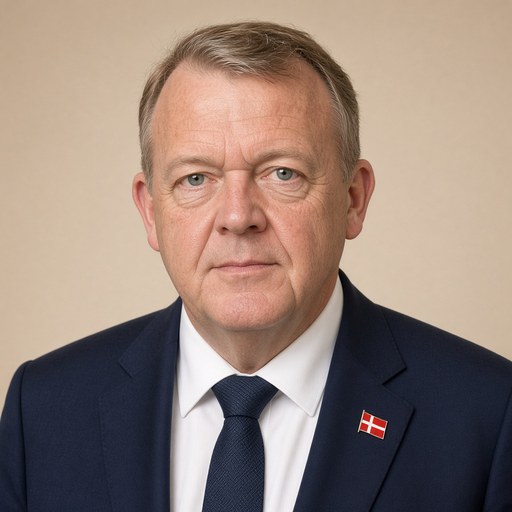
Prime Minister Lars Løkke Rasmussen's speech at the Danish Business Annual Day on April 16, 2018.
 Lars Løkke Rasmussen · Prime Minister of Denmark
- Context
- Rasmussen addressed Danish Business's Annual Day on April 16, 2018, outlining his government's economic achievements and vision for Denmark's future competitiveness.
- Main themes
- Danish business competitiveness, digitalization and technological change, private job creation, globalization and free trade, economic reforms and tax reduction, workforce upskilling, entrepreneurship, immigration policy, welfare state balance, Denmark's international position
- Duration
- ~16 min
- Words
- 1,951
- Sentences
- 211
- Readability
- 61
- Grade
- 6.7
- Syntax
- 2.25
- Vocabulary
- 2.05
Translated from Danish
The broad sphere of national life a sentence belongs to. Every sentence has an Arena, so it is the denominator the other indices are read against.
Other211 sentences in 118 paragraphs
Thank you for the invitation.
Danish Business's Annual Day is a tradition I look forward to.
A harbinger of spring. This year, summer has even arrived here in the middle of May.
And an opportunity to thank Jens Klarskov and Jens Mathiesen for a good collaboration. In the Disruption Council. And many other places. Always in constructive dialogue.
Danish Business is not stuck in the past. You are preparing for the future. Today under the heading "Vision and Reality."
We live in a time where technological possibilities are not just growing. But in some places, they are racing ahead at a high pace.
Just one example is the advanced computer that we all have in our pockets. It also functions as a phone.
I am old enough to remember when you could rent a mobile phone. We did that when I ran for my first national election – for the European Parliament election in 1989.
Or rather, a car phone. Because it was so big and heavy that it permanently lay in the trunk of the car we drove around in during the campaign. A lot has happened since then.
We live in a world in upheaval.
Countries that were poor before are rich now. We see a China that is increasingly prominent – economically and politically. A USA that is withdrawing – from free trade and commitments.
In that world, Denmark must find our way. What are our opportunities?
I am fundamentally an optimist. By nature. By heart. And with my head.
I am because of you.
Danish companies are at the forefront of digitalization. With vision. With responsibility.
That is one of the reasons why we, as a country, stand strong.
Another reason is that we in Denmark have managed to distribute the benefits of globalization widely. And therefore, the Danes are not as globalization-anxious as we see in other parts of the world.
We have a safe society. The Danes have an open mind. Courage for the world. Courage for change.
Jens mentioned that 800,000 change jobs every year. Seeking new challenges. But those who stay in their jobs also experience that they must move. Because functions and job content are changing.
When we lay the track for the future, we must maintain the balance between security and openness.
When I became Prime Minister – for the second time. I took some experiences with me – from the first time I was Prime Minister.
The necessity of setting markers for your work. Not precise goals cast in concrete. But a clear direction.
The government has from the start followed a plan with four concrete goals.
1) More private jobs.
2) A stronger core welfare.
3) More included in the labor community.
4) A new balance in immigration policy.
I know that the media landscape can be a bit murky. It has not always been a straight path. In the political reality, you need to gather 90 mandates to turn vision into reality.
But when I now take the four markers one by one, I believe you will agree with me that it is not so bad after all.
Things are going well in Denmark. Things are actually going quite well.
* * *
First, more private jobs.
Since the change of government in 2015, 129,000 more private wage-earner jobs have been created. That is more people than live in all of inner Copenhagen and here in Vesterbro combined.
Many of the new jobs have been created in your companies.
And that means that when we look at how many wage earners get up every day and go to work and create value, we have set a historic record for Denmark.
I will not take credit for that. All alone. The world and Europe have pulled themselves out of the crisis. That certainly matters. I acknowledge that.
But I will not shirk all responsibility.
Politics makes a difference.
There is a straight line from the rather heavy decisions we made the last time I was Prime Minister. Responsible reforms. Sound economy.
Through the agreements we managed to pressure the social democratic-led government into. Well assisted by the Radical Left.
And to the policy we have decided after the parliamentary election.
A policy where reforms and good business conditions lay the foundation for us to develop our society.
Since the change of government in 2015, we have lowered taxes and duties by 19 billion kroner.
Now we must have high ambitions for the future.
A strong Denmark, where we educate ourselves throughout our working lives. To be able to seize the winds of change. We have entered into tripartite agreements to upskill and educate for the demands of the future.
A Denmark where we are at the forefront of digitalization and robotics. We are collaborating on that in Digital Hub Denmark. And in the Technology Pact.
A Denmark where we seize the opportunities in e-commerce. Last month, we established a new growth team for trade and logistics.
And a Denmark where we reduce duties and make it easier to start your own business. Therefore, we have implemented a large business and entrepreneurship package.
Danish Business participates actively and constructively in all these areas. Thank you for that.
We must give flight length to the recovery that is taking hold.
I am particularly pleased that optimism has taken hold across Denmark. 95 out of 98 municipalities have employment growth. This also applies to the small islands.
You are also an important part of that. Danish Business's companies are present in all parts of the country.
Things are going well in Denmark. Things are actually going quite well.
If I absolutely have to find something to complain about, it might be that when things are going well, people become optimistic.
Perhaps even too optimistic.
Jens pointed it out in his introduction. There is a danger that some "settle too comfortably."
And without a certain nagging concern in the back of their minds, it is difficult to gather support for difficult reforms.
We see that.
It could be reforms that increase the labor supply. And the recruitment of foreign labor.
But objectively speaking, things are going well with the government's first goal: To create more private jobs.
* * *
Without jobs, no prosperity.
Without prosperity, no welfare.
My second goal is to improve core welfare.
Some talk about the American dream. That the newspaper delivery person can become a billionaire. I have always believed that it is Denmark that is the land of opportunities.
Free education. Safe welfare. Gender equality. This is where you can have your dreams fulfilled! In Denmark, people can move up.
That gives us a special drive. Out of social security grows dynamism and faith in the future.
Denmark has one of the best welfare societies in the world.
We must strengthen that. Not only by spending more money. But also by spending it better.
We must develop a dynamic and unbiased collaboration between the public and private sectors.
Last month, we entered into a political partial agreement on fair and equal competition between public and private actors. An agreement that we now need to follow up on.
Danish Business has a central task in that work.
* * *
Thirdly, we want to move thousands out of passive public assistance and into an active life where individuals can support themselves.
I would much rather spend taxpayers' money on investing in good business conditions, infrastructure, better health, better research. Than on social assistance and support.
But first and foremost, I believe in the value of taking responsibility. Growing with the task. Determining your own life.
Therefore, it should pay to work.
Since the government introduced the cash assistance ceiling and the 225-hour rule, about 34 people have left the cash assistance system every day.
We now have the lowest number of publicly supported individuals in the 11 years that Statistics Denmark has recorded it.
That is not so bad at all.
* * *
Fourth, we need a better balance in immigration policy.
I ran for election on the premise that Denmark should be closed to those who do not want to be here.
But open to those who can and want to be.
I do not see immigration policy as just a choice between tightening or loosening. That is too simplistic.
The effort to curb asylum applications. The strategy against parallel societies. I am pleased with the agreement we reached last week. Better integration.
It is absolutely crucial when we want to maintain Denmark as a harmonious country. And retain the population's support for Denmark to continue being an open country.
Open to the talents that you companies need.
Open to the many who solve tasks that otherwise would not be solved.
Open to the foreigners who work in retail, the transport sector, the tourism industry, and IT companies.
What would you, who are here today, do without foreign employees?
A majority outside the government has chosen to raise the threshold in the salary scheme and in other ways made it as cumbersome as possible for companies to use it.
That frustrates me immensely.
I know it also frustrates you.
Danish Business has raised its voice. Keep doing that. It is necessary that we constantly point out that the immigration area is more and other than asylum tightening.
* * *
That brings me back to today's theme – vision and reality.
As I see it, the great global divide right now is between the countries, the populations, the businesses, and the politicians who want to close off from the world.
And those who are open to the opportunities of globalization and technology.
Between building a wall.
Or moving forward into the future.
Those who believe that the wall will hold have a problem with their perception of reality. You cannot close off from the future.
One who has an eye on the future is Børge Brende. Who will come to the podium shortly. Therefore, I will also soon conclude my own speech. So there will be time for Børge to speak.
But first, I want to mention that I am pleased to have Børge Brende and the World Economic Forum as partners in our global initiative P4G - where the four G's stand for Green Growth and the Global Goals.
An initiative we have launched from the Danish side. To deliver on the Sustainable Development Goals and the Paris Climate Agreement.
I see it as an example that Denmark benefits from an open world. We can sell our green solutions.
And we can influence others according to our values and interests. Push the world in a greener direction. But we cannot do it alone.
I sometimes get the feeling that the Danish debate is in a crossroads between megalomania and an inferiority complex.
Megalomania because we are convinced that Denmark is one of the best countries in the world. I actually believe that myself.
Inferiority complex because there is also a tendency to think that we are too small to have any influence whatsoever.
We are not. We can influence others. We can pave the way.
The vision we have in Denmark. Strong welfare. Openness. Willingness to cooperate. A business community that takes responsibility for the future.
That vision fits well with the global reality.
On that basis, I am optimistic.
In my lifetime, Denmark has become twice as open. Measured by our trade with the outside world. And in the same period, we have become more than twice as rich. The two things are connected.
A richer, freer, and safer Denmark is an open country.
That is my vision. That is our shared reality.
Thank you for your attention. And have a great annual meeting!
The original Danish. The tags above are read on the English translation's sentences.
Tak for invitationen.
Dansk Erhvervs Årsdags er en tradition, jeg ser frem til.
En forårsbebuder. I år er sommeren ligefrem faldet her i midten af maj måned.
Og en lejlighed til at sige tak til Jens Klarskov og til Jens Mathiesen for et godt samarbejde. I Disruptionrådet. Og mange andre steder. Altid i konstruktiv dialog.
Dansk Erhverv sidder ikke fast i fortiden. I gør klar til fremtiden. I dag under overskriften ”Vision og virkelighed.”
Vi lever i en tid, hvor de teknologiske muligheder ikke bare vokser. Men nogle steder stryger afsted i højt tempo.
Bare ét eksempel er den avancerede computer, som vi alle har i lommen. Den fungerer også som telefon.
Jeg er gammel nok til at huske, dengang man kunne leje en mobiltelefon. Det gjorde vi, da jeg stillede op til mit første nationale valg – til Europa-parlamentsvalget i 1989.
Eller rettere en bil-telefon. For den var så stor og tung, at den lå permanent i bagagerummet i den bil, vi kørte rundt og førte valgkamp i. Der er sket en del siden.
Vi lever i en verden i opbrud.
Lande, der var fattige før, er rige nu. Vi ser et Kina, der fylder stadig mere – økonomisk og politisk. Et USA, der trækker sig – fra frihandel og forpligtelser.
I den verden skal Danmark finde vores vej. Hvad er vores muligheder?
Jeg er grundlæggende optimist. Af natur. Af hjertet. Og med hovedet.
Det er jeg på grund af jer.
Danske virksomheder er helt fremme med digitalisering. Med udsyn. Med ansvarlighed.
Det er en af grundene til, at vi som land står stærkt.
En anden grund er, at vi i Danmark har vi formået at fordele goderne ved globalisering bredt. Og danskerne derfor ikke er så globaliseringsangste, som man ser det andre steder i verden.
Vi har et trygt samfund. Danskerne har et åbent sind. Mod på verden. Mod til forandring.
Jens nævnte, at 800.000 hvert år skifter job. Søger nye udfordringer. Men de, der bliver i deres job, oplever også, at de må flytte sig. Fordi funktioner og jobindhold ændrer sig.
Når vi lægger sporet ud for fremtiden. Skal vi holde balancen mellem tryghed og åbenhed.
Da jeg blev statsminister – for anden gang. Tog jeg nogle erfaringer med mig – fra første gang jeg var statsminister.
Nødvendigheden af at sætte pejlemærker for sit arbejde. Ikke præcise mål støbt i beton. Men en klar retning.
Regeringen har fra start fulgt en plan med fire konkrete mål.
1) Flere private arbejdspladser.
2) En stærkere kernevelfærd.
3) Flere med i arbejdsfællesskabet.
4) En ny balance i udlændingepolitikken
Jeg ved godt, at mediebilledet kan være lidt mudret. Det har ikke altid været den lige vej. I den politiske virkelighed skal man samle 90 mandater for at gøre vision til virkelighed.
Men når jeg nu tager de fire pejlemærker ét for ét. Så tror jeg, I vil give mig ret i, at det ikke er så ringe endda.
Det går godt i Danmark. Det går sådan set ret godt.
* * *
For det første flere private arbejdspladser.
Siden regeringsskiftet i 2015 er der skabt 129.000 flere private lønmodtagerjob. Det er flere mennesker, end der bor i hele det indre København og her på Vesterbro tilsammen.
Mange af de ny job er skabt i jeres virksomheder.
Og det betyder, at når vi ser på, hvor mange lønmodtagere, der hver dag står op og går på arbejde og skaber værdi, så har vi sat danmarkshistorisk rekord.
Det vil jeg ikke tage æren for. Helt alene. Verden og Europa har revet sig løs af krisen. Det har selvfølgelig betydning. Det medgiver jeg.
Men jeg vil heller ikke fralægge mig hele ansvaret.
Politik gør en forskel.
Der går en lige linje fra de ret tunge beslutninger, vi traf, sidst jeg var statsminister. Ansvarlige reformer. Sund økonomi.
Over de aftaler, vi fik presset den socialdemokratisk ledede regering til. Godt hjulpet af Det Radikale Venstre.
Og til den politik, vi har besluttet efter folketingsvalget.
En politik, hvor reformer og gode erhvervsvilkår lægger grunden til, at vi kan udvikle vores samfund.
Siden regeringsskiftet i 2015 har vi sænket skatter og afgifter med 19 mia. kr.
Nu skal vi have høje ambitioner for fremtiden.
Et stærkt Danmark, hvor vi uddanner os hele arbejdslivet. For at kunne gribe forandringens vinde. Vi har indgået trepartsaftaler om at opkvalificere og uddanne til fremtidens krav.
Et Danmark, hvor vi er helt fremme med digitalisering og robotteknologi. Det samarbejder vi om i Digital Hub Denmark. Og i Teknologipagten.
Et Danmark, hvor vi griber mulighederne i e-handel. I sidste måned nedsatte vi et nyt vækstteam for handel og logistik.
Og et Danmark, hvor vi letter afgifterne og gør det nemmere at starte egen virksomhed. Derfor har vi gennemført en stor erhvervs- og iværksætterpakke.
Dansk Erhverv deltager aktivt og konstruktivt på alle de områder. Tak for det.
Vi skal give flyvelængde til det opsving, som har godt fat.
Det glæder mig særligt, at optimismen har fat i hele Danmark. 95 ud af 98 kommuner har beskæftigelsesfremgang. Det gælder også på de små øer.
Det er I også en vigtig del af. Dansk Erhvervs virksomheder er til stede i alle dele af landet.
Det går godt i Danmark. Det går sådan set ret godt.
Hvis jeg absolut skal finde noget at brokke mig over. Så er det måske, at når det går godt, så bliver folk optimistiske.
Måske også for optimistiske.
Jens pegede på det i sin indledning. Der er en fare for, at nogen ”sætter sig for mageligt til rette. ”
Og uden en vis nagende bekymring i baghovedet, er det svært at samle opbakning til vanskelige reformer.
Det ser vi.
Det kunne være reformer, som øger arbejdsudbuddet. Og rekrutteringen af udenlandsk arbejdskraft.
Men helt objektivt set, så går det godt med regeringens første mål: At skabe flere private arbejdspladser.
* * *
Uden job. Ingen velstand.
Uden velstand. Ingen velfærd.
Mit andet mål er at forbedre kernevelfærden.
Nogle taler om den amerikanske drøm. At avisbuddet kan blive milliardær. Jeg har nu altid ment, at det er Danmark, der er mulighedernes land.
Gratis uddannelse. Tryg velfærd. Ligestilling mellem kønnene. Det er her, du kan få dine drømme opfyldt! I Danmark kan mennesker flytte sig.
Det giver os en særlig drivkraft. Ud af social tryghed vokser dynamik og fremtidstro.
Danmark har et af verdens bedste velfærdssamfund.
Det skal vi styrke. Ikke kun ved at bruge flere penge. Men også ved at bruge dem bedre.
Vi skal udvikle et dynamisk og fordomsfrit samarbejde mellem det offentlige og de private virksomheder.
I sidste måned indgik vi en politisk delaftale om fair og lige konkurrence mellem offentlige og private aktører. En aftale som vi nu skal følge op på.
Dansk Erhverv har en central opgave i det arbejde.
* * *
For det tredje vil vi flytte tusinder ud af passiv offentlig forsørgelse og ind i et aktivt liv, hvor den enkelte kan forsørge sig selv.
Jeg vil langt hellere bruge skatteydernes penge på at investere i gode erhvervsvilkår, infrastruktur, bedre sundhed, bedre forskning. End på kontanthjælp og understøttelse.
Men først og fremmest tror jeg på værdien af at tage ansvar. Vokse med opgaven. Bestemme over sit eget liv.
Derfor skal det betale sig at arbejde.
Siden regeringen indførte kontanthjælpsloftet og 225-timers-reglen har omkring 34 personer hver dag forladt kontanthjælpssystemet,
Vi har nu det laveste antal offentligt forsørgede i de 11 år, Danmarks Statistik har opgjort det.
Det er ikke så ringe endda.
* * *
For det fjerde skal vi have en bedre balance i udlændingepolitikken.
Jeg gik til valg på, at Danmark skal være lukket for dem, der ikke vil.
Men åbent for dem, der kan og vil.
Jeg ser ikke udlændingepolitik som kun et valg mellem at stramme eller lempe. Det er for unuanceret.
Indsatsen for at bremse asyltilgangen. Strategien mod parallelsamfund. Jeg er glad for den aftale, vi indgik i sidste uge. En bedre integration.
Det er helt afgørende, når vi skal bevare Danmark som et harmonisk land. Og fastholde befolkningens opbakning til, at Danmark også fremover skal være et åbent land.
Åbent for de talenter, som I virksomheder har brug for.
Åbent for de mange, som løser opgaver, der ellers ikke ville blive løst.
Åbent for de udlændinge, der arbejder i detailhandelen, transportsektoren, turismeerhvervet og it-virksomhederne.
Hvad skulle I, der er her i dag, stille op uden udenlandske medarbejdere?
Et flertal udenom regeringen har valgt at hæve grænsen i beløbsordningen og på andre måder gjort det så bøvlet som muligt for virksomhederne at bruge den.
Det ærgrer mig kolossalt.
Jeg ved, at det også ærgrer jer.
Dansk Erhverv har råbt op. Bliv ved med det. Det er nødvendigt, at vi hele tiden gør opmærksom på, at udlændingeområdet er mere og andet end asylstramninger.
* * *
Det leder mig tilbage til dagens tema – vision og virkelighed.
Som jeg ser det, går det store globale skel lige nu mellem de lande, de befolkninger, det erhvervsliv og de politikere, der vil lukke af for verden.
Og dem, der er åbne overfor globaliseringens og teknologiens muligheder.
Mellem at bygge en mur.
Eller gå forlæns ind i fremtiden.
De, der tror, at muren holder, har et problem med virkelighedsopfattelsen. Man kan ikke lukke af for fremtiden.
En, der har blik for fremtiden, er Børge Brende. Som kommer på talerstolen om lidt. Derfor vil jeg også snart slutte min egen talestrøm. Så der bliver taletid til Børge.
Men først vil jeg nævne, at jeg er glad for at have Børge Brende og World Economic Forum med som partner i vores globale initiativ P4G - hvor de fire G’er står for Green Growth and the Global Goals.
Et initiativ, vi har sat i søen fra dansk side. For at levere på verdensmålene og klimaaftalen fra Paris.
Jeg ser det som et eksempel på, at Danmark både selv har fordel af en åben verden. Vi kan sælge vores grønne løsninger.
Og vi kan påvirke andre efter vores værdier og interesser. Skubbe verden i en grønnere retning. Men vi kan ikke klare det alene.
Jeg kan indimellem få den følelse – at den danske debat befinder sig i et krydsfelt mellem storhedsvanvid og mindreværdskompleks.
Storhedsvanvid, fordi vi er overbeviste om, at Danmark er et af de bedste lande i verden. Det mener jeg sådan set også selv.
Mindreværdskompleks, fordi der samtidig er en tendens til at synes, at vi er for små til at have nogen som helst indflydelse.
Vel er vi ej. Vi kan påvirke andre. Vi kan træde stien.
Den vision, vi har i Danmark. Stærk velfærd. Åbenhed. Vilje til samarbejde. Et erhvervsliv, der tager ansvar for fremtiden.
Den vision passer godt med den globale virkelighed.
På den baggrund er jeg optimistisk.
I min levetid er Danmark blevet dobbelt så åben. Målt på vores handel med udlandet. Og i samme periode er vi blevet mere end dobbelt så rige. De to ting hænger sammen.
Et rigere, friere og tryggere Danmark er et åbent land.
Det er min vision. Det er vores fælles virkelighed.
Tak for ordet. Og godt årsmøde!