




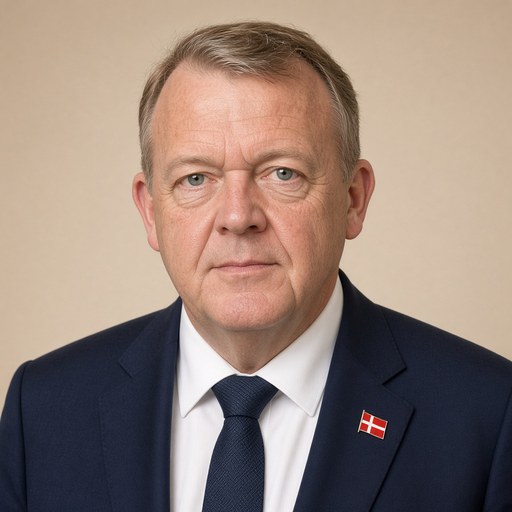
The Prime Minister's speech to Danish Construction's anniversary on April 24, 2018.
 Lars Løkke Rasmussen · Prime Minister of Denmark
- Context
- Rasmussen addressed Danish Construction's anniversary celebration on April 24, 2018, reflecting on global progress, economic growth, and challenges facing Denmark.
- Main themes
- Construction industry partnership, Danish economic progress, global development and progress, technological change, geopolitical challenges, job creation and employment, welfare and healthcare, immigration and asylum policy, climate change, balancing opportunities and challenges, optimism and national direction
- Duration
- ~19 min
- Words
- 2,329
- Sentences
- 193
- Readability
- 63
- Grade
- 7.2
- Syntax
- 2.48
- Vocabulary
- 1.95
Translated from Danish
The broad sphere of national life a sentence belongs to. Every sentence has an Arena, so it is the denominator the other indices are read against.
Other193 sentences in 105 paragraphs
Thank you for the invitation to come by. Once again. It is a good tradition.
Thank you – also for the good cooperation throughout the year. I would like to acknowledge your interest in Denmark moving in the right direction. And that we are building a strong country – one that is in balance. Economically, socially, geographically, environmentally.
We need to find that balance – in a world in change.
Since my eldest son was born, global infant mortality has fallen by more than 40 percent.
Since my daughter was born, the proportion of the world's population living in extreme poverty has nearly halved.
80% of all one-year-old children in the world are vaccinated against one or more diseases.
Fewer children are being married off. Life expectancy is increasing. The number of people in the world who can read has never been higher.
And the majority of the world's population lives in middle-income countries. Where people have a couple of children, go on holiday, and go to work.
The progress we have seen in just one generation is not only fantastic. When you look closer, the development is almost surreal.
This also applies to technological development. When I ran for my first national election – for the European Parliament in 1989, I remember how we rented a mobile phone. Or rather, a car phone.
Because it was so big and heavy that it permanently lay in the trunk of the car we drove around in during the campaign. Except when we took it into a café to show it off.
We hardly used it. Because it cost a fortune to make a call. And there was no one to call.
Today, we all have a smartphone. And thus access to knowledge, services, and interaction that fundamentally enriches us. We are close to the whole world.
The world has fundamentally become a better place. For far, far most people than before. Not least in the small spot we call Denmark.
Does that mean everything is perfect? No.
And if there is any doubt, you can just open the newspaper or turn on the news on any day of the week.
To the east – a Russia that is becoming increasingly aggressive. With a Cold War rhetoric and behavior that evokes dark memories and worried expressions.
To the west – an administration that risks dampening development. With a trade policy that – in my view – belongs neither to the present nor the future.
To the south – conflicts and poverty that create large refugee and migration flows.
And at the same time, a climate challenge that risks changing the conditions here on the planet if we do not manage it – find sustainable and long-term solutions.
The world is a better place. But there are also challenges. It is in these waters that we as a nation must navigate.
A global progress and new opportunities that Denmark must be ready to seize. But also global challenges that Denmark must help to solve.
***
The good news is that if we find the right balances, we can do both.
I am fundamentally an optimist. From the heart. And with my head.
And the development – also here at home – gives us something to hold our optimism in.
Since the parliamentary election in 2015, nearly 120,000 new private jobs have been created.
Many of them in your companies. The number of employed in construction and civil engineering is the highest in nine years.
If you look at how many wage earners get up every morning and go to work and create value for themselves and for society, we have set a historic record for Denmark.
Just yesterday, the record was actually broken again.
And growth has spread to all of Denmark's regions.
Foreign economic conditions are doing their part. The world and Europe have pulled themselves out of the crisis. That certainly matters.
I will not take all the credit – but I will also not shirk responsibility. We have also lifted the progress ourselves.
The government – by setting the framework with better business conditions. The companies – by seizing the new opportunities. The population – by keeping their heads high and pushing on.
Since the election, we have lowered taxes and duties by 19 billion kroner.
At the same time, we have strengthened core welfare.
Since I became Minister of Health in 2001, an average of one extra doctor and one extra nurse have been employed in public hospitals every day – except on Sundays.
The waiting time for operations has been halved. Cancer treatment has improved. And a Swedish think tank recently assessed that we have the third-best healthcare system in Europe.
Are we there yet? No. And I can guarantee that we will never be. We must always do better tomorrow than we did well yesterday. But we have come a long way in a short time.
The same applies to the refugee area.
When we took over the government, the number of asylum seekers had been steadily increasing year by year. And then Europe broke open. Refugees and migrants were walking on the highways. You can remember the images.
Therefore, we immediately implemented a series of tightening measures, which, together with a strengthened effort in the EU, have brought the number of asylum seekers down.
In 2017, the number of asylum seekers was the lowest in nine years.
We also have fewer than other EU countries. Our relative position on the list of the number of asylum seekers per inhabitant has fallen from 5th place in 2014 to 16th place last year.
At the same time, the agreements on integration that we have made with labor market partners and municipalities have pushed to get more refugees into jobs.
***
Things are going well – they are actually going quite well.
The exercise now is to use the good times to restore the balances that have been skewed. Both abroad and at home.
This applies to the educational balance. For many, many years, the number of young people taking vocational education has been declining. We need to do something about that.
You have made a great effort. Among other things, by showing school students what they can use a vocational education for.
You are also further ahead than others when it comes to taking apprentices out to companies. That commands respect. Others could take inspiration from that.
That – along with our tripartite agreement on more internships, the establishment of preferential education programs, and a number of other initiatives – is starting to work. The balance has improved.
This year, more young people have again begun to apply for vocational education. That is super good! And we must ensure that it continues.
This also applies to the balances in immigration policy.
Here I would like to say – at the risk of sounding nuanced. Because it is not popular in my field – but I will try anyway.
I do not subscribe to the viewpoint that immigration policy is only a choice between tightening or loosening. It is too simplistic.
We need to close the door to those who are difficult to integrate and who take up far too much space in police records. But at the same time, we should attract those who enrich Denmark with knowledge, growth, and a willingness to join the community.
That is why I am enormously frustrated that a majority outside the government has chosen to raise the threshold in the salary scheme and in other ways deliberately made it as cumbersome as possible for companies to use it.
We do not need that. We need to keep the labor market open for those who can and want to.
In return, we need a better social balance in our vulnerable housing areas.
When I was young, there were 50,000 people with a foreign background in Denmark.
Today, we have close to half a million people with a non-Western background in Denmark.
Many of them are doing well. Our society would go into reverse if they were not here.
But there are also housing areas where there are problems. Where far too few are working, speaking Danish, and have an education.
That is why we have presented a comprehensive strategy aimed at making Denmark free of ghettos by 2030 – which will be negotiated in six ministries at the same time. This illustrates how many balances need to be achieved.
Part of the solution is that we look at the buildings and the composition of residents in the vulnerable areas.
For example, we will require that housing organizations in the hardest ghetto areas create a development plan for how the proportion of public family housing in their area can fall below 40 percent.
Many housing areas are already well underway. It is possible. With demolition, sales, new construction. Soon, the government will also appoint three representatives to follow the development.
The same applies when it comes to geographical balances. Here we also face a bill that needs to be paid. Growth did not take hold everywhere at the same time.
One of the prerequisites for a better geographical balance is that we can all move quickly and safely around the country. And to work in the morning.
That is why we are allocating – together with the Danish People's Party – millions to expand the highway in West Funen and reduce the toll for crossing the Great Belt.
At the same time, we are spending billions on electrifying the railway network, the new Great Belt Bridge, and expanding the highway network around the country. Speed upgrades.
And furthermore, funds have been allocated in the finance bill for environmental assessments of a new mid-Jutland highway and expansions of the E45 in East Jutland, as well as for a preliminary study of a harbor tunnel in Copenhagen.
In general, the government is proposing to raise the framework for public investments in 2021-2025 by a total of 19.5 billion kroner. That is 19.5 billion kroner more than what the Social Democrats propose in their 2025 plan. They have not counted on a single extra krone.
The last balance I want to mention today is in the energy sector.
We are a green frontrunner. We have become that through a long, tough, and politically broad effort.
Since the election in 2001, the Liberal Party has held the responsibility of government for 13 out of 17 years. And during the same period, the share of green electricity in Denmark has more than tripled.
That does not give us a patent on the green transition. Because fortunately, we have made broad agreements.
But it shows that it is not true when others try to take credit for it. Or downplay Denmark's efforts. It is pitch black when the left claims that we on the right are not green.
On good days, all of our electricity consumption is produced by wind.
Since 2015, an average of more than one wind turbine has been erected every day in Denmark. Household wind turbines. Offshore wind turbines. Onshore wind turbines.
We have the world's best energy system. The world's best conditions for green investments. We are the best in the world at green entrepreneurship. And we are European champions in the export of energy technology.
The government has set the goal that at least 50 percent of energy consumption in 2030 must come from renewable energy. And that we must be completely independent of fossil fuels by 2050.
How do we best achieve that goal?
We do it by making it both greener and cheaper to be Danish.
The current tax structure in the energy sector is from a time when there were barriers to the green transition. And when we had to support it with a lot of money.
Now the green solutions are strong enough to stand on the market.
Therefore, the government will present an energy proposal on Thursday, so that the green solutions become even more attractive for the benefit of both the climate, citizens, and businesses.
At the same time, we propose to establish the largest offshore wind farm in Danish history. Twice as large as the largest we have today.
– and that a decision on more offshore wind must be made by 2022 for 2030.
In this way, we will create an even closer connection between green solutions and good business – which can also be an inspiration for the few world leaders who apparently still doubt that we have a challenge.
For that is, in my view, true sustainability.
Regardless of which goals we are talking about, the point is that progress must become self-sustaining – so that countries, regions, or sectors do not become permanent clients.
This also applies to our green transition.
***
I have covered a lot today. From the phones of the past – to the energy policy of the future.
And I believe that you will cover even more topics before the day is over.
It is not a coincidence. For as you show with today's theme, everything is ultimately connected. The social, geographical, economic, and environmental balances.
If there is one country that has understood this, it is Denmark – and it has made us one of the best countries in the world.
But we have also understood that we have a shared responsibility to restore the balances that have been skewed.
The time is over when a business, organization, or country could shift the responsibility and say: Others must handle this.
The time is over when one could say, only oneself, one's business, or one's country first. Everyone has a responsibility.
When you recycle concrete. When you train apprentices. When you put sustainability on the agenda – you are helping to make Denmark better and stronger.
And when Denmark becomes stronger, we can pull the world in a freer, richer, and greener direction.
With those words. Thank you for your attention. And have a great annual meeting.
The original Danish. The tags above are read on the English translation's sentences.
Tak for invitationen til at komme forbi. Endnu engang. Det er en god tradition.
Tak – også for det gode samarbejde i årets løb. Jeg vil gerne kvittere for jeres interesse for, at Danmark bevæger sig i den rigtige retning. Og at vi får bygget et stærkt land – som er i balance. Økonomisk, socialt, geografisk, miljømæssigt.
Den balance skal vi finde – i en verden i forandring.
Siden min ældste søn blev født, er spædbørnsdødeligheden i verden faldet med mere end 40 procent.
Siden min datter blev født, er andelen af verdens befolkning, som lever i ekstrem fattigdom næsten halveret.
80 % af alle verdens et-årige børn er vaccineret mod en eller flere sygdomme.
Færre børn bliver giftet bort. Den forventede levealder vokser. Antallet af mennesker i verden, som kan læse har aldrig været højere.
Og størstedelen af verdens befolkning lever i mellemindkomst-lande. Hvor man har et par børn, rejser på ferie og går på arbejde.
De fremskridt vi har set i løbet af blot en generation er ikke blot fantastiske. Når man ser nærmere på det, er udviklingen næsten surrealistisk.
Det gælder også den teknologiske udvikling. Da jeg stillede op til mit første nationale valg – til Europa-parlamentsvalget i 1989, kan jeg huske, hvordan vi lejede en mobiltelefon. Eller rettere en bil-telefon.
For den var så stor og tung, at den lå permanent i bagagerummet i den bil, vi kørte rundt og førte valgkamp i. Undtagen, når vi tog den med ind på en cafe for at vise den frem.
Vi brugte den stort set ikke. For det kostede en formue at ringe op. Og der var ikke nogen at ringe til.
I dag har vi alle sammen en smart phone. Og dermed en adgang til viden, service og interaktion, som grundlæggende beriger os. Vi er tæt på hele verden.
Verden er grundlæggende blevet et bedre sted. For langt, langt de fleste mennesker end tidligere. Ikke mindst på den lille plet, vi kalder Danmark.
Betyder det, at alt er perfekt? Nej.
Og hvis man er i tvivl, kan man bare slå op i avisen eller tænde for nyhederne på en hvilken som helst dag i ugen.
Mod øst – et Rusland, som optræder mere og mere aggressivt. Med en koldkrigs-retorik og fremfærd, som vækker dystre minder og bekymrede miner.
Mod vest – en administration, som risikerer at lægge en dæmper på udviklingen. Med en handelspolitik, som – i min optik – ikke hører hverken nutiden eller fremtiden til.
Mod syd – konflikter og fattigdom, som skaber store flygtninge- og migrationsstrømme.
Og samtidig en klimaudfordring, som risikerer at ændre betingelserne her på planeten, hvis vi ikke håndterer den – finder bæredygtige og langsigtede løsninger.
Verden er et bedre sted. Men der er også udfordringer. Det er i det farvand, vi som nation skal navigere.
En global fremgang og nye muligheder, som Danmark skal være klar til at gribe. Men også globale udfordringer, som Danmark skal være med til at løse.
***
Den gode nyhed er, at hvis vi finder de rette balancer, kan vi gøre begge dele.
Jeg er grundlæggende optimist. Af hjertet. Og med hovedet.
Og udviklingen – også herhjemme – giver os noget at have optimismen i.
Siden folketingsvalget i 2015 er der skabt næsten 120.000 nye private job.
Mange af dem i jeres virksomheder. Antallet af beskæftigede i bygge og anlæg er det højeste i ni år
Ser man på, hvor mange lønmodtagere, der hver morgen står op og går på arbejde og skaber værdi for sig selv og for samfundet, så har vi sat en danmarkshistorisk rekord.
Så sent som i går blev rekorden faktisk slået på ny.
Og væksten har bredt sig til alle Danmarks regioner.
De udenlandske konjunkturer gør deres. Verden og Europa har revet sig løs af krisen. Det har selvfølgelig betydning.
Jeg vil ikke tage hele æren – men jeg vil heller ikke fralægge mig ansvaret. Vi har også selv løftet fremgangen.
Regeringen – ved at sætte rammerne med bedre erhvervsvilkår. Virksomhederne – ved at gribe de ny muligheder. Befolkningen – ved at holde hovedet højt og klø på.
Siden valget har vi sænket skatter og afgifter med 19 mia. kr.
Samtidig har vi styrket kernevelfærden.
Siden jeg blev sundhedsminister i 2001 er der på de offentlige sygehuse i gennemsnit ansat én ekstra læge og én ekstra sygeplejerske hver dag – undtagen om søndagen.
Ventetiden til operationer er halveret. Kræftbehandlingen er forbedret. Og en svensk tænketank for nylig vurderet, at vi har Europas tredje bedste sundhedsvæsen.
Er vi i mål? Nej. Og jeg kan garantere, at det kommer vi aldrig. Vi skal altid gøre bedre i morgen, hvad vi gjorde godt i går. Men vi er kommet langt på kort tid.
Det samme gælder flygtningeområdet.
Da vi overtog regeringsmagten, var antallet af asylansøgere steget støt år for år. Og så gik der hul på Europa. Flygtninge og migranter vandrede på motorvejene. I kan huske billederne.
Derfor satte vi straks ind med en række stramninger, som sammen med en forstærket indsats i EU har bragt asyltallet ned.
I 2017 var antallet af asylansøgere det laveste i ni år.
Vi har også færre end andre EU-lande. Vores relative placering på listen over antal asylansøgere pr. indbygger faldet fra en 5. plads i 2014 til en 16. plads sidste år.
Samtidig har de aftaler om integration, som vi har indgået med arbejdsmarkedets parter og kommunerne har skubbet på for at få flere flygtninge i job.
***
Det går godt – det går sådan set ret godt.
Øvelsen er nu at bruge de gode tider til at genoprette de balancer, som er trukket skævt. Både ude og hjemme.
Det gælder den uddannelsesmæssige balance. I de sidste mange, mange år har antallet af unge, som tager en erhvervsuddannelse, været dalende. Det skal vi gøre noget ved.
I har gjort en stor indsats. Blandt andet ved at vise folkeskoleelever, hvad de kan bruge en erhvervsuddannelse til.
I er også længere fremme end andre, når det gælder at tage lærlinge ude på virksomhederne. Det aftvinger respekt. Det kunne andre lade sig inspirere af.
Dét – sammen med vores treparts-aftale om flere praktikpladser, oprettelsen af fordelsuddannelser og en række andre tiltag – begynder at virke. Balancen er blevet bedre.
I år er flere unge igen begyndt at søge en erhvervsuddannelse. Det er super godt! Og det skal vi sørge for fortsætter.
Det gælder også balancerne i udlændingepolitikken.
Her vil jeg gerne sige – med fare for at lyde nuanceret. For det er ikke populært i min branche – men jeg prøver alligevel.
Jeg abonnerer ikke på det synspunkt, at udlændingepolitik kun er et valg mellem at stramme eller lempe. Det er for unuanceret.
Vi skal lukke for dem, som er svære at integrere, og som fylder alt for meget i politiets registre. Men samtidig kunne tiltrække dem, som beriger Danmark med viden, vækst og vilje til at indgå i fællesskabet.
Derfor ærgrer det mig kolossalt, at et flertal udenom regeringen har valgt at hæve grænsen i beløbsordningen og på andre måder bevidst gjort det så bøvlet som muligt for virksomhederne at bruge den.
Det har vi ikke brug for. Vi har brug for at holde arbejdsmarkedet åbent for dem, der kan og vil.
Til gengæld har vi brug for en bedre social balance i vores udsatte boligområder.
Da jeg var ung, var der 50.000 mennesker med udenlandsk baggrund i Danmark.
I dag har vi i Danmark tæt på en halv million mennesker med ikke-vestlig baggrund.
Mange af dem gør det godt. Vores samfund ville gå i bakgear, hvis de ikke var her.
Men der er også boligområder, hvor der er problemer. Hvor alt for få går på arbejde, taler dansk og har en uddannelse.
Derfor har vi fremlagt en omfattende strategi, der har som mål, at Danmark er fri for ghettoer i 2030 – og som bliver forhandlet i 6 ministerier på samme tid. Det illustrerer, hvor mange balancer, der skal gå op.
En del af løsningen er, at vi ser på bygningerne og beboersammensætningen i de udsatte områder.
For eksempel vil vi stille krav om, at boligorganisationerne i de hårdeste ghettoområder, laver en udviklingsplan for, hvordan andelen af almene familieboliger i deres område kan komme under 40 procent.
Mange boligområder er allerede godt i gang. Det kan lade sig gøre. Med nedrivning, salg, nybyggeri. Om kort tid udnævner regeringen også tre repræsentanter, som skal følge udviklingen.
Det kan det også, når vi det gælder de geografiske balancer. Her står vi også med en regning, som skal betales. Væksten fik ikke fat alle steder samtidig.
En af forudsætningerne for en bedre geografisk balance er, at vi alle sammen kan komme hurtigt og sikkert rundt i landet. Og på arbejde om morgenen.
Derfor afsætter vi – sammen med Dansk Folkeparti – millioner til at udbygge motorvejen på Vestfyn og nedsætte taksten for at passere Storebælt.
Samtidig bruger vi milliarder af kroner på elektrificering af jernbanenettet, den nye Storstrømsbro og udbygning af motorvejsnettet rundt om i landet. Hastighedsopgraderinger.
Og i øvrigt afsat penge på finansloven til VVM-undersøgelser af en ny midtjysk motorvej og af udvidelser af E45 i Østjylland samt til en forundersøgelse af en havnetunnel i København.
I det hele taget lægger regeringen op til at løfte rammen til offentlige investeringer i 2021-2025 med samlet 191⁄2 mia. kr. Det er 191⁄2 mia. kr. mere, end hvad Socialdemokratiet lægger op til i deres 2025-oplæg. De har ikke regnet med én krone ekstra.
Den sidste balance, jeg vil nævne i dag, er på energiområdet.
Vi er et grønt foregangsland. Det er vi blevet gennem en lang, sej og politisk bred indsats.
Siden valget i 2001 har Venstre haft regeringsansvaret i 13 ud af 17 år. Og i den samme periode er andelen af grøn strøm i Danmark mere end tredoblet.
Det giver ikke os patent på den grønne omstilling. For heldigvis har vi lavet brede forlig.
Men det viser, at det ikke passer, når andre forsøger at tage det. Eller tale Danmarks indsats ned. Det er kulsort, når de røde påstår, at vi blå ikke er grønne.
På gode dage bliver hele vores elforbrug produceret af vind.
Siden 2015 er der i gennemsnit opført mere end én vindmølle om dagen i Danmark. Husstandsvindmøller. Havvindmøller. Landvindmøller.
Vi har verdens bedste energisystem. Verdens bedste vilkår for grønne investeringer. Vi er verdens bedste til grøn iværksætteri. Og vi er europamestre i eksport af energiteknologi.
Regeringen har sat det mål, at mindst 50 pct. af energiforbruget i 2030 skal være fra vedvarende energi. Og at vi skal være helt uafhængige af fossile brændsler i 2050.
Hvordan når vi bedst det mål?
Det gør vi ved både at gøre det grønnere og billigere at være dansker.
Den nuværende afgiftsstruktur på energiområdet er fra en tid, hvor der var barrierer for den grønne omstilling. Og hvor vi var nødt til at støtte den med mange penge.
Nu er de grønne løsninger er stærke nok til at klare sig på markedet.
Derfor vil regeringen på torsdag fremlægge et energiudspil, så de grønne løsninger bliver endnu mere attraktive til gavn for både klimaet, borgere og virksomheder.
Samtidig foreslår vi at opstille Danmarkshistoriens største havvindmøllepark. Dobbelt så stor som den største, vi har i dag.
– og at der inden 2022 skal træffes beslutning om mere havvind inden 2030.
På den måde vil vi skabe en endnu tættere sammenhæng mellem grønne løsninger og god forretning – som også kan være en inspiration for de få verdensledere, der åbenbart stadig tvivler på, at vi har en udfordring.
For det er i min optik ægte bæredygtighed.
Uanset hvilke mål vi taler om, så er pointen, at fremgangen skal blive selvbærende – så lande, områder eller sektorer ikke bliver til permanente klienter.
Det gælder også for vores grønne omstilling.
***
Jeg har været vidt omkring i dag. Fra fortidens telefoner – til fremtidens energipolitik.
Og jeg vil tro, at I kommer omkring endnu flere emner inden dagen er slut.
Det er ikke tilfældigt. For som I viser med dagens tema, hænger det hele i sidste ende sammen. De sociale, geografiske, økonomiske og miljømæssige balancer.
Hvis der er et land, der har forstået det, så er det Danmark – og det har gjort os til et af verdens bedste lande.
Men vi har også forstået, at vi har et fælles ansvar for at genoprette de balancer, som er slået skævt.
Den tid er forbi, hvor man som virksomhed, organisation eller land – kan lægge ansvaret fra sig og sige: Det her må andre klare.
Den tid er forbi, hvor man kunne sige, kun sig selv, sin virksomhed eller sit land først. Alle har et ansvar.
Når I genanvender beton. Når I uddanner lærlinge. Når I sætter bæredygtighed på dagsordenen – så er I med til at gøre Danmark bedre og stærkere.
Og når Danmark bliver stærkere, kan vi trække verden i en friere, rigere og grønnere retning større.
Med de ord. Tak for opmærksomheden. Og rigtig godt årsmøde.