




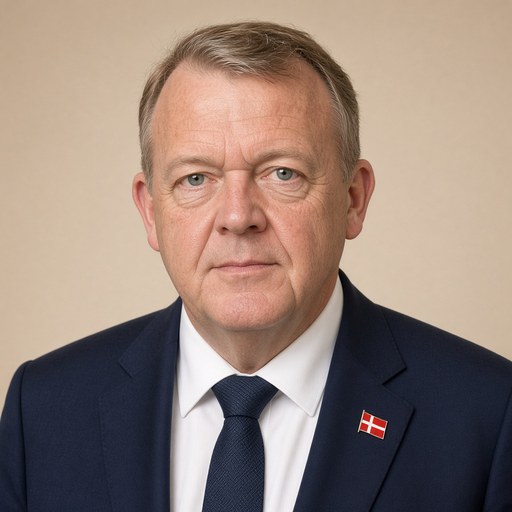
Prime Minister Lars Løkke Rasmussen's speech on Europe Day, May 9, 2018.
 Lars Løkke Rasmussen · Prime Minister of Denmark
- Context
- Rasmussen addressed a Europe Day conference on May 9, 2018, organized by Think Tank Europe, Danish Metal, and DI, speaking on Denmark's role in the EU's future.
- Main themes
- European integration, Danish EU membership, EU opt-outs and Danish influence, Brexit consequences, US withdrawal from Iran nuclear deal, international security challenges, free trade, Russia and geopolitical threats, eurozone and banking union, labor-business cooperation, European identity
- Duration
- ~21 min
- Words
- 2,517
- Sentences
- 244
- Readability
- 61
- Grade
- 7.0
- Syntax
- 2.36
- Vocabulary
- 2.06
Translated from Danish
The broad sphere of national life a sentence belongs to. Every sentence has an Arena, so it is the denominator the other indices are read against.
Other244 sentences in 126 paragraphs
Thank you for the floor.
I am honored to speak after none other than – European of the Year 2018.
Congratulations on the award, Claus. You deserve it.
I am proud to live in a country where the top of the labor movement – and that is Claus – has stated:
“Danish Metal is pro-EU. And that is not something we keep to ourselves.”
I am happy to live in this very spot on earth, where labor and business, as something completely natural, come together for a conference on Denmark in the Europe of the future. Thank you to the Think Tank Europe, to Danish Metal, and to DI.
This confirms to me that we can achieve something special in Denmark. Something that the rest of Europe rightly looks towards.
A willingness to cooperate. Openness to the world.
In a time when new solutions must be found in a challenged world, we need both.
We see a Russia that is becoming increasingly aggressive.
A China that is growing ever more influential – economically and politically.
A Turkey nearby that is turning its back on European values.
A Middle East where conflicts and poverty are driving people to flee. In pursuit of the dream of a better life.
And we see a USA – the land of dreams – dreaming of less free trade. Fewer international obligations. And more isolation.
Just last night, the USA announced that it is withdrawing from the nuclear agreement with Iran.
An agreement that the EU was at the forefront of negotiating.
An agreement that is not perfect. But which is the best way to prevent the development of nuclear weapons and pave the way for more stability and more security in an already very troubled region.
It also means a lot for Europe’s security. We must resolve conflicts, not escalate them.
That is why I fully support the European leaders' distancing from the American step and continued EU support for the agreement.
Overall, it is an international development where the arrow points to Europe.
The world needs Europe. A strong Europe. That has both the will and the weight to lead and show the way.
And Denmark certainly needs Europe. We are a small open economy. More than 60% of our goods exports go to Europe.
Where is the focal point for our economy, prosperity, and security? Where do we best safeguard our interests?
In Europe!
Yet we have a tendency at home – we all have a bit of it, I have had it too – to push the European aspect aside. And only bring it out and dust it off when we have to vote yes or no on something. It is thought-provoking that we hide it like that.
On a day like today – Europe Day on May 9th – we should raise the European flag and with conviction and pride say: We are Danes, but we are also Europeans.
For 45 years we have benefited from the community. We are approaching a golden wedding anniversary. We celebrate the silver wedding anniversary of the Single Market. For me, that is something we should look forward to celebrating.
* * *
A lot has happened in 45 years. And precisely in these years, even more is happening.
The British have unfortunately chosen to step out of the cooperation.
It is sad – also for us. A great loss. It is cumbersome for them.
The last point is becoming very concrete. For example, the British need to hire 3,000 customs officers.
And that is just one of many tasks they will have to handle on their own. I understand that the United Kingdom has allocated £3.7 billion – that is more than 30 billion Danish kroner – in their budgets up to 2020 for the new tasks resulting from Brexit.
Shortly after the British referendum, the EU was naturally marked by pessimism. But there was also a new reflection. It was also an eye-opener that the EU must be active in the areas that matter to citizens.
We now see a Europe that is taking greater responsibility for its own security.
Where economic cooperation has become closer – after the financial crisis.
Where cooperation on legal matters and police has been strengthened – in light of terrorism and migration.
Europe is in motion.
What does this mean for Denmark?
Yes, we are not only pressured from outside by the world around us. But also from within by a new dynamic in the EU.
If we do not keep up, we will lose influence. Perhaps not sharply day by day. But over time it will be evident.
The development is particularly rapid in areas where we have opt-outs. Where we therefore do not participate fully.
And that is why we need to start a conversation in Denmark about what this means for us. If we stand outside influence, we let others decide for us.
Is that what we want?
The Euro. Denmark has had a fixed exchange rate policy for 35 years, which since 1999 has been linked to the euro. There is broad agreement that the fixed exchange rate policy is correct.
The Fiscal Compact. Also a euro cooperation that helps ensure balance in public budgets.
The Banking Union. Where my government has stated that we are positive about participation. Because we are best served by not standing alone in financial crises.
So one could say that we benefit from and behave like a euro country without demanding influence. We can continue to do that. But I also think we should talk about the part of the weight that is influence and not just obligation.
The Justice Opt-Out. The Danes voted no. The government respects that, of course. We got an agreement on Europol. But we now leave the rules to others to decide.
Security. The EU is already today an important actor contributing to European security with military and civilian efforts in troubled neighboring areas. This cooperation is now being expanded to also include the development of expensive but necessary defense material. Something NATO is also requesting.
And something we have an interest in being part of. But where we largely have to watch from the sidelines due to the opt-out.
45 years and still in doubt about whether we can be closely aligned with our European partners. One might ask – somewhat therapistically – why actually?
Should we not look our partners in the eye – and also ask ourselves: Do we have enough confidence to be fully involved?
And now you might think – he wants to get rid of the opt-outs. He wants to twist the arm of the Danes.
No, I do not. Not the latter.
Let me be clear: There will not be a referendum on the Danish opt-outs on this side of an election.
The debate is so important that we should not have a deadline hanging over our heads. I want a debate where it is not about a yes or a no. Not about black or white. But where all the nuances in between are included.
I want a free debate.
I think, for example, that we should be ready to talk about what sovereignty means in the world we live in. Are we most sovereign when we build walls, shut the world out, and ourselves in?
Or are we actually more sovereign when we are open to the world and actively seek influence on the decisions that affect us?
I have no doubt: If we want the community in the EU, we must be engaged everywhere we can. Throw ourselves constructively into the cooperation.
And dare to admit that in a world where there is much we cannot determine ourselves, the EU community gives us an opportunity to achieve more than we can bear alone.
* * *
There are important areas where we have already fought our viewpoints through. Where we have had influence.
The refugee and migration agenda.
In 2015, more than 885,000 migrants arrived in Europe via Turkey and Greece. In 2017, the number had fallen to just 42,000.
This decline can be unequivocally explained by the fact that the EU came together to close the route over the Western Balkans. Denmark was one of the countries that repeatedly pushed for a solution.
Denmark has influence.
The digital realm. Denmark is the most digitized society in Europe. We are a pioneer country. We have pushed for better data protection.
Now Europe is a pioneering region. With the data regulation that comes into effect this month. Which shows an example. Not without problems. Not the final version. But a proposal that even Marc Zuckerberg can see the vision in.
Denmark has influence.
The climate area. Denmark has been at the forefront for decades. We have helped to pull the EU forward in the field.
And the EU has pulled the great powers to the trough. That was also the case in Paris in 2015, where we entered into a historic climate agreement. From which the USA now wants to withdraw.
The government has just announced a new energy proposal. After the summer, we will present a climate proposal. We continue a visionary green policy. At home in Denmark. Out in Europe.
For it is only together in the EU that we can make Europe and the world greener.
Denmark has influence.
Migration, the digital, climate.
The EU must focus on the big problems. And not get caught up in the small details.
Greater visions for a green future. Fewer opinions on whether hairdressers should be allowed to wear high heels at work.
That has long been the Danish approach. In recent years, other member states have also moved in that direction. Under Juncker, the scope of new EU legislation, according to the Think Tank Europe, has halved.
* * *
I do not wear EU socks. But to use Claus’s expression, I will not hide the fact that I am a European.
And precisely because I am Danish and European, I will also reserve the right to be critical when there is reason to do so.
That is why I have talked about fairness in the EU.
The vast majority of EU citizens in Denmark work, pay taxes, and contribute to society.
But when free movement is abused to gain access to welfare benefits instead of work. When one can take a full Danish child benefit back to a country where it is worth three times as much. Then it is not fair.
It is about reason, fairness, and public support.
It is an agenda that divides opinions. But we have shifted the debate and gained more on our side. Denmark is no longer alone.
And we continue to demand that access to Danish welfare benefits is not just a right, but something one must earn.
The previous S-led government completely gave up on that agenda. In return, the Social Democrats want a social protocol.
I completely agree that we must avoid wage dumping. That there must be orderly conditions in the labor market. That is why the EU has confirmed the principle of equal pay for equal work at the same place.
I am very pleased that the vast majority of foreign employees in Danish companies and with Danish employers are covered by Danish collective agreements.
But social policy and employment policy are a national responsibility. It is not the EU’s task.
We have developed the Danish model and the Danish welfare state over generations. We are proud of it. It should not be subjected to the EU.
Here, each country must take responsibility. Just as Macron is now doing in France, inspired by the Danish model in many areas. We need a socially just Europe, but not a social union.
That is where I stand.
I must honestly say that I am in doubt about where the Social Democrats stand now? Are they Europeans? Do they dare to wave the flag today?
Or does the EU for the Social Democrats only concern the problems of free movement?
In 1986, a majority of voters had to convince the Social Democrats that Denmark should join the Single Market. Are we really heading back to that?
Denmark has enormous advantages from free movement. Not least right now, where we have low unemployment and historically high employment.
Honestly: What would the service sector in Copenhagen do without the many Swedes crossing the strait? And what about agriculture and the slaughterhouses that heavily rely on foreign labor because there are no Danish hands to be found?
Free movement is also of great benefit to Danish citizens who travel abroad to work or study. They become more skilled – and return home to benefit Denmark.
A LO couple in home ownership has a direct economic gain from the Single Market in the form of an annual additional income of 65,000 kroner.
And Dansk Industri estimates that half a million Danish jobs depend on the Single Market.
Let us stop blaming the EU when something does not go our way. In a cooperation between 28 countries, it is a shared responsibility to reach compromises and make difficult decisions. Also in areas where we do not see eye to eye.
* * *
I firmly believe that Denmark should actively participate and influence the European cooperation in our direction.
That is also my approach to the budget proposal that the Commission presented a week ago.
It is a large proposal. With a lot of money. Also too much money.
When the EU becomes smaller, the budget must also become smaller.
The budget should focus on the areas where cooperation really matters. Migration. Research. Infrastructure across borders. Fortunately, there are many good ideas in the Commission’s proposal.
In return, we must cut significantly and modernize in the outdated areas. Agriculture. Structural funds.
I believe that is absolutely necessary. We need a modern budget that lays tracks into the future.
There will be ample opportunity to discuss that in the coming time.
The Folketing is central when we set our course in EU policy. We have a long tradition and a good Danish tradition of coordinating closely when we need to safeguard Danish interests.
That is why I am glad that the Folketing will hold a large public hearing in Odense in November. I can only encourage more hearings out in the country on the themes that concern the Danes.
The government is very happy to participate in that.
* * *
Things are going well in Denmark. Things are actually going quite well. They should continue to do so in the future.
What is a good future? It is a Denmark that becomes richer. Safer. Freer.
What does it require? It requires prosperity and development.
And what ensures prosperity and development? It is dynamism and vision.
Denmark must be an active part of the world and of Europe. In a cooperation that we have influence over. And feel secure in.
Which is more important now than ever.
I look forward to a good debate without a tight deadline. We can start here today.
Happy Europe Day!
The original Danish. The tags above are read on the English translation's sentences.
Tak for ordet.
Jeg er beæret over at tale efter ingen mindre end – Årets Europæer 2018.
Til lykke med prisen, Claus. Den har du fortjent.
Jeg er stolt over at bo i et land, hvor fagbevægelsens top – og det er så Claus – har udtalt:
”Dansk Metal er EU-tilhænger. Og det er ikke noget, vi går og putter med.”
Jeg er glad for at leve på netop denne plet på jorden, hvor fagbevægelse og erhvervsliv, som noget helt naturligt, går sammen om en konference om Danmark i fremtidens Europa. Tak til Tænketanken Europa, til Dansk Metal og til DI.
Det bekræfter mig i, at vi kan noget særligt i Danmark. Noget som resten af Europa med rette ser hen imod.
Vilje til samarbejde. Åbenhed mod verden.
I en tid, hvor der skal findes nye løsninger i en udfordret verden, har vi brug for begge dele.
Vi ser et Rusland, som optræder mere og mere aggressivt.
Et Kina, der fylder stadig mere – økonomisk og politisk.
Et Tyrkiet tæt på, som vender ryggen til europæiske værdier.
Et Mellemøsten, hvor konflikter og fattigdom sender mennesker på flugt. Mod drømmen om et bedre liv.
Og vi ser et USA – drømmenes land – drømmer man om mindre frihandel. Færre internationale forpligtelser. Og mere bare sig selv.
Så sent som i går aftes meddelteUSA, at man trækker sig fra atomaftalen med Iran.
En aftale, som EU stod i spidsen for at få indgået.
En aftale, som ikke er perfekt. Men som er den bedste vej til at forhindre udviklingen af atomvåben og bane vejen for mere stabilitet og mere sikkerhed i en i forvejen meget urolig region.
Det betyder også meget for Europas sikkerhed. Vi skal løse konflikter, ikke eskalere dem.
Derfor bakker jeg fuldt op om de europæiske lederes afstandtagen fra det amerikanske skridt og om fortsat EU støtte til aftalen.
Samlet er det en international udvikling, hvor pilen peger på Europa.
Verden har brug for Europa. Et stærkt Europa. Som både har vilje og tyngde til at gå forrest og vise vejen.
Og Danmark har bestemt brug for Europa. Vi er en lille åben økonomi. Mere end 60% af vores vareeksport går til Europa.
Hvor ligger omdrejningspunktet for vores økonomi, velstand og sikkerhed? Hvor varetager vi bedst vores interesser?
I Europa!
Alligevel har vi herhjemme en tendens – vi har alle sammen en flig af det, det har jeg også haft – til at gemme det europæiske af vejen. Og kun tage det frem og støve det af, når vi skal stemme ja eller nej til noget. Det er da tankevækkende, at vi putter sådan med det.
På en dag som i dag – Europadagen den 9. maj – skal vi da hejse Europa-flaget og med overbevisning og stolthed sige: Vi danskere, men vi er også europæere.
I 45 år har vi nydt godt af fællesskabet. Vi nærmer os et guldbryllup. Vi fejrer sølvbryllup for Det Indre Marked. For mig er det noget, vi skal se frem til at fejre.
* * *
Der er sket meget på 45 år. Og netop i disse år sker der endnu mere.
Briterne har desværre valgt at træde ud af samarbejdet.
Det er trist – også for os. Et stort savn. Det er besværligt for dem.
Det sidste viser sig meget konkret. For eksempel skal briterne ansætte 3.000 toldere.
Og det er bare én af mange opgaver, de skal til at klare selv. Jeg forstår, at Storbritannien har afsat 3,7 milliarder pund – det er mere end 30 milliarder danske kroner – på finanslovene frem til 2020 til de nye opgaver som følge af Brexit.
Kort efter briternes folkeafstemning var EU naturligt nok præget af pessimisme. Men der kom også en ny eftertænksomhed. Det var også en øjenåbner om, at EU skal være aktiv på de områder, der betyder noget for borgerne.
Vi ser nu et Europa, der tager større ansvar for egen sikkerhed.
Hvor det økonomiske samarbejde er blevet tættere – efter finanskrisen.
Hvor samarbejder om retsforhold og politi er styrket – i lyset af terror og migration.
Europa er i bevægelse.
Hvad betyder det for Danmark?
Ja, vi er ikke alene presset udefra af verden omkring os. Men også indefra af en ny dynamik i EU.
Hvis vi ikke følger med, så kommer vi til at miste indflydelse. Måske ikke skarpt dag for dag. Men over tid vil det ses.
Udviklingen går særligt stærkt på områder, hvor vi har forbehold. Hvor vi derfor ikke deltager fuldt ud.
Og derfor er vi nødt til at starte en samtale i Danmark, om hvad det betyder for os. Hvis vi stiller os udenfor indflydelse, lader vi andre bestemme over os.
Er det det, vi vil?
Euroen. Danmark har i 35 år haft en fastkurspolitik, som siden 1999 har været knyttet til euroen. Der er bred enighed om, at fastkurspolitikken er rigtig.
Finanspagten. Også et eurosamarbejde, som hjælper med at sørge for balance i de offentlige budgetter.
Bankunionen. Hvor min regering har sagt, at vi er positive overfor deltagelse. Fordi vi er bedst tjent med ikke at stå alene med finanskriser.
Så man kan sige, at vi nyder godt af og opfører os som et euroland uden at kræve indflydelse. Det kan vi godt blive ved med. Men jeg synes også, vi skal tale om den del af vægten, der er indflydelse og ikke bare forpligtelse.
Retsforbeholdet. Danskerne stemte nej. Det respekterer regeringen selvfølgelig. Vi fik en aftale om europol. Men reglerne lader vi nu de andre om at beslutte.
Sikkerhed. EU er allerede i dag en vigtig aktør, der bidrager til europæisk sikkerhed med militære og civile indsatser i urolige nærområder Dette samarbejde bliver nu udvidet til også at handle om at udvikle dyrt, men nødvendigt forsvarsmateriel. Noget NATO også efterspørger.
Og noget, vi har interesse i at være med i. Men hvor vi i stor grad må se til fra sidelinjen på grund af forbeholdet.
45 år og stadig i tvivl, om vi kan være helt tæt på vores europæiske partnere. Sådan lidt par-terapeutisk må man da spørge – hvorfor egentlig?
Burde vi ikke se vores partnere i øjnene – og også spørge os selv: Har vi så meget selvtillid, at vi er fuldt med?
Og nu tænker I så – han vil af med forbeholdene. Han vil vride armen rundt på danskerne.
Nej, det vil jeg ikke. Ikke det sidste.
Lad mig sige helt klart: Der kommer ikke en folkeafstemning om de danske forbehold på denne side af et valg.
Debatten er så vigtig, at vi ikke skal have en deadline hængende over hovedet. Jeg ønsker en debat, hvor det ikke handler om et ja eller et nej. Ikke om sort eller hvidt. Men hvor alle nuancerne derimellem kommer med.
Jeg ønsker en fri debat.
Jeg synes for eksempel, at vi skal være klar til at tale om, hvad suverænitet betyder i den verden, vi lever i. Er vi mest suveræne, når vi bygger mure, lukker verden ude og os selv inde?
Eller er vi i virkeligheden mere suveræne, når vi er åbne over for verden og aktivt søger indflydelse på de beslutninger, som berører os selv?
Jeg er ikke i tvivl: Hvis vi vil fællesskabet i EU, må vi være engagerede alle steder, hvor vi kan. Kaste os konstruktivt ind i samarbejdet.
Og turde indrømme, at i en verden, hvor der er meget, vi ikke kan bestemme selv, dér giver EU-fællesskabet os en mulighed for at løfte mere, end vi selv kan bære.
* * *
Der er vigtige områder, hvor vi allerede har kæmpet vores synspunkter igennem. Hvor vi har haft indflydelse.
Flygtninge- og migrationsdagsordenen.
I 2015 ankom mere end 885.000 migranter til Europa via Tyrkiet og Grækenland. I 2017 var tallet faldet til bare 42.000.
Det fald kan entydigt forklares med, at EU gik sammen om at lukke ruten over Vestbalkan. Danmark var et af de lande, der gang på gang pressede på for en løsning.
Danmark har indflydelse.
Det digitale. Danmark er det mest digitaliserede samfund i Europa. Vi er foregangsland. Vi har presset på for bedre databeskyttelse.
Nu er Europa foregangsregion. Med den dataforordning, der træder i kraft i denne måned. Som viser et eksempel. Ikke uden problemer. Ikke the final version. Men et bud, som selv Marc Zuckerberg kan se det visionære i.
Danmark har indflydelse.
Klimaområdet. Danmark er i årtier gået forrest. Vi har været med til at trække EU frem i feltet.
Og EU har trukket stormagterne til truget. Det var også tilfældet i Paris i 2015, hvor vi indgik en historisk klimaaftale. Som USA nu vil trække sig fra.
Regeringen har netop offentliggjort et nyt energiudspil. Efter sommeren kommer vi med et klimaudspil. Vi fortsætter en visionær, grøn politik. Hjemme i Danmark. Ude i Europa.
For det er kun sammen i EU, at kan vi gøre Europa og verden grønnere.
Danmark har indflydelse.
Migration, det digitale, klima.
EU skal fokusere på de store problemer. Og ikke gå op i de små detaljer.
Større visioner for en grøn fremtid. Færre meninger om, hvorvidt damefrisører må gå i høje hæle på arbejdspladsen.
Det har længe været den danske tilgang. I de seneste år har de andre medlemslande også bevæget sig i den retning. Under Juncker er omfanget af ny EU-lovgivning, ifølge Tænketanken Europa, halveret.
* * *
Jeg går ikke med EU-sokker. Men for at bruge Claus’s udtryk vil jeg heller ikke putte med, at jeg er europæer.
Og netop fordi jeg er dansker og europæer, vil jeg også forbeholde mig retten til at være kritisk, når der er grund til det.
Derfor har jeg talt om rimelighed i EU.
Langt de fleste EU-borgere i Danmark arbejder, betaler skat og bidrager til samfundet.
Men når den fri bevægelighed misbruges for at få adgang til velfærdsydelser frem for arbejde. Når man kan tage en fuldfed dansk børnecheck med tilbage til et land, hvor den er tre gange så meget værd. Så er det ikke rimeligt.
Det handler om fornuft, fairness og folkelig opbakning.
Det er en dagsorden, der deler vandene. Men vi har flyttet debatten og fået flere på vores side. Danmark står ikke alene længere.
Og vi bliver ved med at kræve, at adgangen til danske velfærdsydelser ikke bare er en ret, men noget man skal gøre sig fortjent til.
Den dagsorden gav den tidligere S-ledede regering helt op overfor. Til gengæld vil Socialdemokratiet gerne en social protokol.
Jeg er helt enig i, at vi skal undgå løndumping. At der skal være ordnede forhold på arbejdsmarkedet. Derfor har EU bekræftet princippet om samme løn for samme arbejde på samme sted.
Jeg glæder mig i den grad over, at det helt store flertal af udenlandske lønmodtagere på danske virksomheder og hos danske arbejdsgivere er dækket af danske overenskomster.
Men socialpolitik og beskæftigelsespolitik er et nationalt ansvar. Det er ikke EU’s opgave.
Vi har gennem generationer udviklet den danske model og den danske velfærdsstat. Den er vi stolte af. Den skal ikke underlægges EU.
Her må hvert land påtage sig ansvaret. Ligesom Macron nu gør det i Frankrig, på mange felter inspireret af den danske model. Vi skal have et socialt retfærdigt Europa, men ikke en social union.
Dér står jeg.
Jeg må ærligt sige, at jeg er i tvivl om, hvor Socialdemokraterne står nu? Er de europæere? Tør de også kippe med flaget i dag?
Eller handler EU for Socialdemokraterne kun om problemerne ved den frie bevægelighed?
I 1986 måtte et flertal af vælgerne overbevise Socialdemokraterne om, at Danmark skulle med i Det Indre Marked. Er vi virkelig på vej tilbage dertil?
Danmark har enorme fordele af den fri bevægelighed. Ikke mindst lige nu, hvor vi har en lav ledighed og historisk mange i arbejde.
Helt ærligt: Hvad skulle servicesektoren i København gøre uden de mange svenskere, der krydser sundet? Og hvad med landbruget og slagterierne, der i stor stil trækker på udenlandsk arbejdskraft, fordi der ikke er danske hænder at finde?
Den fri bevægelighed er også til stor gavn for danske borgere, der rejser ud for at arbejde eller studere. Bliver dygtigere – og kommer hjem igen til gavn for Danmark.
Et LO-ægtepar i ejerbolig har en direkte økonomisk gevinst af det indre marked i form af en årlig merindtægt på 65.000 kr.
Og Dansk Industri skønner, at en halv million danske arbejdspladser er afhængige af det indre marked.
Lad os holde op med at give EU skylden, når noget ikke går vores vej. I et samarbejde mellem 28 lande, er det et fælles ansvar at nå til kompromisser og svære beslutninger. Også på områder, hvor vi ikke ser ens på tingene.
* * *
Jeg mener entydigt, at Danmark skal deltage aktivt og påvirke det europæiske samarbejde i vores retning.
Det er også min indgang til det budgetforslag, som Kommissionen kom med for en uge siden.
Det er et stort forslag. Med mange penge. Også for mange penge.
Når EU bliver mindre, må budgettet også blive mindre.
Budgettet skal fokusere på de områder, hvor samarbejdet virkelig batter. Migration. Forskning. Infrastruktur på tværs af landegrænser. Her er der heldigvis mange gode tanker i Kommissionens forslag.
Til gengæld skal vi skære markant og modernisere i de gammeldags områder. Landbrug. Strukturfonde.
Det, mener jeg, er helt nødvendigt. Vi skal have et moderne budget, der lægger spor ind i fremtiden.
Det bliver der rig lejlighed til at diskutere i den kommende tid.
Folketinget er helt centralt, når vi fastlægger vores kurs i EU-politikken. Vi har en lang tradition og en god dansk tradition for at koordinere tæt, når vi skal varetage danske interesser.
Derfor er jeg glad for, at Folketinget i november vil lave en stor folkehøring i Odense. Jeg kan kun opfordre til flere høringer ude i landet om de temaer, der optager danskerne.
Det deltager regeringen meget gerne i.
* * *
Det går godt i Danmark. Det går sådan set ret godt. Det skal det også gøre i fremtiden.
Hvad er en god fremtid? Det er et Danmark, der bliver rigere. Tryggere. Friere.
Hvad kræver det? Det kræver velstand og udvikling.
Og hvad sikrer velstand og udvikling? Det gør dynamik og udsyn.
Danmark skal være en aktiv del af verden og af Europa. I et samarbejde, som vi har indflydelse på. Og føler os trygge i.
Som lige nu er vigtigere end nogensinde.
Jeg glæder mig til en god debat uden en snærende deadline. Vi kan starte her i dag.
God Europadag!