




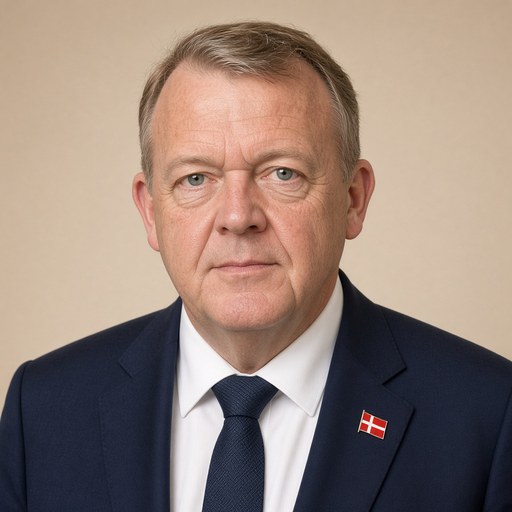
Prime Minister Lars Løkke Rasmussen's speech on Disability Day, December 3, 2018.
 Lars Løkke Rasmussen · Prime Minister of Denmark
- Context
- Rasmussen addressed a gathering on the UN's International Day of Persons with Disabilities on December 3, 2018, celebrating Denmark's new anti-discrimination law.
- Main themes
- Rights of persons with disabilities, anti-discrimination legislation, UN Convention on the Rights of Persons with Disabilities, inclusion in education and employment, human dignity, equal opportunities, Danish disability policy, welfare society, diversity and normalization, disability organizations
- Duration
- ~11 min
- Words
- 1,334
- Sentences
- 116
- Readability
- 54
- Grade
- 8.4
- Syntax
- 2.41
- Vocabulary
- 1.96
Translated from Danish
The broad sphere of national life a sentence belongs to. Every sentence has an Arena, so it is the denominator the other indices are read against.
Other116 sentences in 67 paragraphs
Your Royal Highness,
Dear everyone,
Almost 10 years ago, the Danish Parliament decided that Denmark would join the UN Convention on the Rights of Persons with Disabilities. I am glad that all parties supported that decision.
Just as I am very pleased that the government this year has received the unanimous backing of the Parliament for a new law that prohibits discrimination on the grounds of disability.
We now have a broad ban on discrimination – not just as before in the labor market – but everywhere in society. That is how it should be.
And if a citizen believes that the ban has been violated, they can complain to the Equal Treatment Board. That should also be the case.
These are important advances. The law is a quantum leap for Danish disability policy.
It is worth celebrating today on the UN's International Day of Persons with Disabilities.
The new law is an example that the Convention on the Rights of Persons with Disabilities is not just a piece of paper that one signs and then that’s it.
No, it is a tool to constantly hold lawmakers accountable. To keep everyone in society on their toes. So that we gradually improve opportunities for people with disabilities.
And if we were to lose focus – if that were to happen – we have you in the Danish Disability Organizations to keep us on track.
You deserve thanks for that.
I have great respect for the work you do based here in the House of Disability Organizations. The most accessible house in the whole world.
You stand guard over the Convention.
And thus over its purpose, which is – I quote: "to promote, protect and ensure the full enjoyment of all human rights and fundamental freedoms by all persons with disabilities on an equal basis with others and to promote respect for their inherent dignity."
That is stated in Article 1 of the Convention.
"Respect for their inherent dignity."
That is what I thought of when Jakob just before told us about the Asperger line at Høje Taastrup Gymnasium.
Jakob: You spoke wisely and with dignity about how you have been given the opportunity, and seized the opportunity, to develop your obviously rich abilities.
That is how it should be in Denmark. That is how it should be for everyone in our welfare society.
Denmark is the land of opportunities.
Everyone should have the opportunity to develop, as far as their talent allows.
And regardless of whether one has a disability or not.
There should be freedom for diversity.
We should not see limitations – but opportunities.
Our society should be inclusive, so there is room for everyone in the community.
I will allow myself to be so inclusive as to quote a man who was called "the red poet" – but whose civil name was Carl Scharnberg. He has said it very clearly:
"We know that everyone can do something. We know that no one can do everything."
I personally cannot recall ever meeting a person where I thought, here there are no opportunities. Here there are only limitations.
And I do not believe I stand alone in this fundamentally positive outlook on life. That everyone can do something. That there are always opportunities.
But I also believe that others share my concern that in our time, in our present, there is a striving for perfection. Which means that the boundaries of what is considered normal are narrowing.
This only increases my respect for those who prove their worth. From a difficult starting point.
Last autumn, I visited Silkeborg. I visited a company that specializes in tailored cable assembly. I will not pretend to be knowledgeable about the technical details of that business area.
But the company is also specialists in another thing: In accommodating people who, for various reasons, are on the edge of the labor market.
I met and spoke with one of the employees. A young man. His name is Ferdinand.
He had dropped out of his studies to become a mechanical engineer. Because he suffers from childhood autism. And that was not compatible with the exam culture at the school. The challenge became too great.
But at the company in Silkeborg, they were not at all interested in what Ferdinand could not do. Here, they saw what he could do.
As Ferdinand said to me that autumn day: "It is great that I can prove my worth."
It is great. It commands respect. It was wonderful to experience.
* * *
Denmark is the land of opportunities. The UN's Day of Persons with Disabilities is a day of opportunities.
I have no doubt that one of the best things we can do in our ongoing efforts to fulfill the Convention is to get more people into education – like Jakob. More into work – like Ferdinand.
Education and work are the pathways into the community. They increase self-confidence. The natural dignity.
And we must start with the children and the young.
Unfortunately, we see today that young people with disabilities are less likely to be engaged in or have completed a regular education than other young people.
Only about 10 percent of those aged 18 to 24 who receive a disability support under the Social Services Act are either engaged in or have completed a regular youth education.
That is too few. And far too many of the young people who start must interrupt their education.
At the same time, we are currently in a situation where companies are struggling to find labor – even though they need it.
Where many people with disabilities have difficulty finding work – even though they want to.
There should be a match here. And thus an incentive to get more involved in both education and jobs.
That is why the government presented an employment proposal in the area of disability. That is why we allocated funds from the welfare pool for, among other things, education.
For two additional high school classes for young people with autism spectrum disorders. After hearing Jakob today, I am even more convinced of the importance of that.
For easier access to vocational education.
To begin strengthening the conditions for children and young people with disabilities all the way through primary school, youth education, higher education, and all the way into the labor market.
We need to start a comprehensive action plan, where we begin with the children. The Danish Disability Organizations will certainly be able to contribute to that work.
We are allocating funds to ensure that people with disabilities who need assistive devices can more easily take them with them when they, for example, after completing their education, enter the labor market.
And for something that may sound trivial, but is important: A competence card that will show what the individual can do. And what support options are available for a company that hires a person with a disability. Because very few know that today.
The competence card will also be developed together with you in the Danish Disability Organizations. I am sure you have good input.
Just as you have had good ideas and relevant criticism all along the way.
The Danish Disability Organizations do a great and important job. Both locally in the municipalities. Nationally in collaboration with the government. And on the international stage.
You set the bar high. You criticize and protest when you believe that is what is needed. And you continuously remind us – not only on a festive day like today – of what the UN Convention on the Rights of Persons with Disabilities is about and what it obliges us to.
Room for diversity. Respect between people. Natural dignity.
Opportunities for all. Inclusiveness.
For there will not be less room because we have more inside. And fewer outside.
On the contrary. When there is more headroom, there is more space.
No one can do everything. Everyone can do something. Together we can do even more.
Thank you for your attention.
The original Danish. The tags above are read on the English translation's sentences.
Deres Kongelige Højhed
Kære alle sammen
For snart 10 år siden besluttede Folketinget, at Danmark skulle tilslutte sig FN’s handicap konvention. Jeg er glad for, at alle partier stod bag den beslutning.
Ligesom jeg er meget tilfreds med, at regeringen i år har fået Folketingets enstemmige opbakning til en ny lov, der forbyder forskelsbehandling på grund af handicap.
Vi har nu fået et bredt forbud mod diskrimination – ikke kun som hidtil på arbejdsmarkedet – men alle steder i samfundet. Sådan skal det være.
Og hvis man som borger mener, at forbuddet er overtrådt, så kan man klage til Ligebehandlingsnævnet. Sådan skal det også være.
Det er vigtige fremskridt. Loven er et kvantespring for dansk handicappolitik.
Det er værd at fejre i dag på FN’s internationale handicapdag.
Den nye lov er et eksempel på, at handicapkonventionen ikke er et papir, man skriver under på, og så var det dét.
Nej, den er et redskab til hele tiden at holde lovgiverne fast. Holde alle i samfundet til ilden. Så vi skridt for skridt forbedrer mulighederne for mennesker med handicap.
Og hvis vi skulle miste fokus – hvis det skulle ske – så har vi jer i de Danske Handicaporganisationer til at holde os på sporet.
Det skal I have tak for.
Jeg har stor respekt for det arbejde, I udfører med base her i Handicaporganisationernes Hus. Det nok mest tilgængelige hus i hele verden.
I står vagt om Konventionen.
Og dermed om dens formål, som er – jeg citerer: "at fremme, beskytte og sikre muligheden for, at alle personer med handicap fuldt ud kan nyde alle menneskerettigheder og grundlæggende frihedsrettigheder på lige fod med andre samt at fremme respekten for deres naturlige værdighed."
Sådan står der i artikel 1 i konventionen.
”Respekten for deres naturlige værdighed.”
Dét kom jeg til at tænke på, da Jakob lige før fortalte om asperger-linjen på Høje Taastrup Gymnasium.
Jakob: Du fortalte klogt og værdigt om, hvordan du har fået muligheden, og grebet muligheden, for at udvikle dine åbenlyst rige evner.
Sådan skal det være i Danmark. Sådan bør det være for alle i vores velfærdssamfund.
Danmark er mulighedernes land.
Alle skal have muligheder for at udvikle sig, så langt talentet rækker.
Og uanset om man har et handicap eller ej.
Der skal være frihed til forskellighed.
Vi skal ikke se begrænsninger – men muligheder.
Vores samfund skal være rummeligt, så der er plads til alle i fællesskabet.
Jeg vil tillade mig at være så rummelig, at jeg citerer en mand, der blev kaldt ”den røde digter” – men lød det borgerlige navn Carl Scharnberg. Han har sagt det meget klart:
"Vi ved, at alle kan noget. Vi ved, at ingen kan alt.”
Selv kan jeg ikke erindre på noget tidspunkt at have mødt et menneske, hvor jeg har tænkt, at her er der ikke muligheder. Her er der kun begrænsninger.
Og jeg tror ikke, at jeg står alene med det grundlæggende positive livssyn. At alle kan noget. At der altid er muligheder.
Men jeg tror også, at andre deler min bekymring for, at der i tiden, i vores nutid, ligger en stræben efter det perfekte. Som betyder, at grænserne for det normale snævres ind.
Det forstørrer kun min respekt for de mennesker, der beviser deres værd. Fra et vanskeligt udgangspunkt.
Sidste efterår var jeg en tur i Silkeborg. Jeg besøgte en virksomhed, der er specialister i skræddersyet ledningskonfektion. Jeg skal ikke gøre mig klog på de tekniske detaljer i det forretningsområde.
Men virksomheden er også specialister i en anden ting: I at rumme mennesker, der af forskellige grunde er på kanten af arbejdsmarkedet.
Jeg mødte og talte med en af medarbejderne. En ung mand. Ferdinand hedder han.
Han var droppet ud af studiet til maskiningeniør. Fordi han lider af infantil autisme. Og det var ikke foreneligt med eksamenskulturen på skolen. Udfordringen blev for stor.
Men i virksomheden i Silkeborg var man slet ikke interesserede i, hvad Ferdinand ikke kunne. Her så man det, han kunne.
Som Ferdinand sagde til mig den efterårsdag: ”Det er fedt, at jeg kan få lov til at bevise mit værd.”
Det er fedt. Det aftvinger respekt. Det var dejligt at opleve.
* * *
Danmark er mulighedernes land. FN’s handicapdag er mulighedernes dag.
Jeg er ikke i tvivl om, at noget af det bedste vi kan gøre i vores stadige stræben efter at opfylde konventionen, det er at få flere i uddannelse – som Jakob. Flere i arbejde – som Ferdinand.
Uddannelse og arbejde er vejen ind i fællesskabet. Øge selvtilliden. Den naturlige værdighed.
Og vi skal starte med børnene og de unge.
Desværre ser vi i dag, at unge med et handicap i mindre grad er i gang med eller har gennemført en ordinær uddannelse end andre unge.
Kun omkring 10 procent i alderen 18 til 24 år, der modtager en handicapindsats efter serviceloven, er enten i gang med eller har gennemført en almindelig ungdomsuddannelse.
Det er for få. Og alt for mange af de unge, der går i gang, må afbryde uddannelsen.
Samtidig står vi i disse år i en situation, hvor virksomhederne har svært ved at finde arbejdskraft – selvom de har brug for den.
Hvor mange mennesker med handicap har svært ved at få arbejde – selvom de gerne vil.
Der burde være et match her. Og dermed en ansporing til at få flere med både i uddannelse og i job.
Derfor fremlagde regeringen et beskæftigelsesudspil på handicapområdet. Derfor satte vi penge af fra satspuljen til blandt andet uddannelse.
Til to ekstra gymnasieklasser for unge med autisme spektrum forstyrrelser. Efter at have hørt Jakob i dag er jeg endnu mere overbevist om vigtigheden af det.
Til en lettere adgang til erhvervsuddannelser.
Til at tage fat på at styrke forholdene for børn og unge med handicap hele vejen gennem grundskolen, ungdomsuddannelser, de videregående uddannelser og helt ud på arbejdsmarkedet.
Vi skal i gang med en samlet handlingsplan, hvor vi starter med børnene. Det arbejde vil Danske Handicaporganisationer helt sikkert kunne bidrage til.
Vi sætter penge af til at mennesker med handicap, der har brug for hjælpemidler, lettere skal kunne tage dem med sig videre, når de for eksempel efter endt uddannelse skal ud på arbejdsmarkedet.
Og til en ting, der kan lyde banal, men som er vigtig: Et kompetencekort, der skal vise, hvad den enkelte kan. Og hvilke støttemuligheder, der er for en virksomhed, der ansætter et menneske med handicap. For det ved de færreste i dag.
Kompetencekortet skal også udvikles sammen med jer i Danske Handicaporganisationer. Jeg er sikker på, at I har gode input.
Ligesom I har haft gode idéer og relevant kritik hele vejen.
Danske Handicaporganisationer gør et stort og vigtigt stykke arbejde. Både lokalt i kommunerne. Nationalt i samarbejdet med regeringen. Og på den internationale scene.
I sætter barren højt. I kritiserer og protesterer, når I mener, det er det, der skal til. Og I minder os løbende - ikke kun på en festdag som i dag – om, hvad FN’s handicapkonvention handler om og forpligter os på.
Plads til forskellighed. Respekt mellem mennesker. Naturlig værdighed.
Muligheder til alle. Rummelighed.
For der bliver ikke mindre plads af, at vi er flere indenfor. Og færre udenfor.
Tværtimod. Når der er højere til loftet, bliver der mere plads.
Ingen kan alt. Alle kan noget. Sammen kan vi endnu mere.
Tak for ordet.