




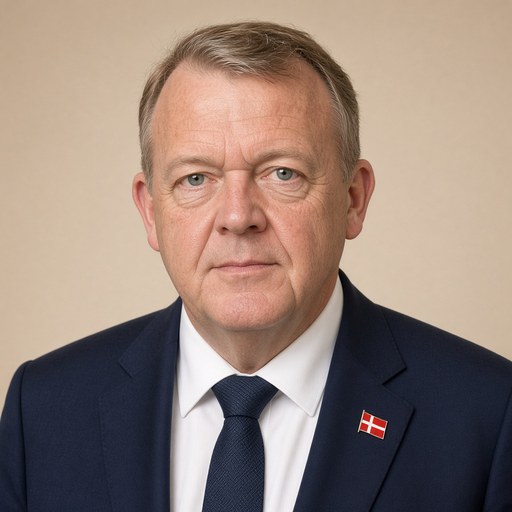
Prime Minister Lars Løkke Rasmussen's speech at the Digital Summit on March 14, 2019.
 Lars Løkke Rasmussen · Prime Minister of Denmark
- Context
- Rasmussen addressed the inaugural Digital Summit in Denmark on March 14, 2019, outlining a vision for a responsible and inclusive digital future.
- Main themes
- Digital transformation, responsible technology use, data ethics, artificial intelligence strategy, Danish competitiveness, inclusion and social cohesion, privacy and regulation, future of work, human-technology balance, sustainability and climate, public-private collaboration
- Duration
- ~10 min
- Words
- 1,144
- Sentences
- 131
- Readability
- 48
- Grade
- 8.7
- Syntax
- 2.18
- Vocabulary
- 2.01
Translated from Danish
The broad sphere of national life a sentence belongs to. Every sentence has an Arena, so it is the denominator the other indices are read against.
Other131 sentences in 70 paragraphs
Welcome to the Digital Summit. As we hold it for the first time today.
If it were up to me, it would not be the last time.
For even though the Danes are European champions in using the internet. Our public sector is a role model. Our companies are the most digitized in Europe – together with the Finns, but still.
Even though Denmark is at the forefront of digital development.
It is not a natural law that we remain there. At the front of the field.
In a world that is moving forward, stagnation is equivalent to regression.
The Disruption Council once had a visit from Thomas Friedman, the American journalist and author who has dealt with technological changes. And he said the following: "If Denmark were a stock, I would buy it."
To that, I would say: We must continue to be in high demand.
That requires focus. Day after day. Month after month. Year after year.
And maintaining focus in a world of rapid changes – that requires extra effort.
It is easy to get consumed by the current events. Or just the tasks of the coming months. Perhaps by the time leading up to summer.
One could be satisfied with the fact that things are going well in Denmark. They are actually going quite well.
We are not just digital masters. We have also set our own record in employment. We set a new record every month. Thousands have moved from passive welfare to an active life with jobs, income, and self-confidence. The economy is booming.
That is the snapshot. And it is good. But it is not good enough.
We must also secure the future.
We must dare to dream big – and we must be able to realize our dreams.
Not through easy solutions – but through collective solutions.
My dream of digitization is not the technology itself – not some smart gadget – but what we choose to use it for.
Fewer degrading jobs.
More good jobs.
Better health.
Safer welfare.
More climate solutions.
More sustainability.
Technology must benefit all Danes.
A common and responsible digital future is a high priority for the government.
Thank you to all of you who have contributed to the work in councils, working groups, and other contexts.
A special thank you to you, Mariya Gabriel, for being with us today. As European Commissioner for the Digital Economy and Society, you will present the European Strategy on Artificial Intelligence, Investments, Skills, and Ethics.
I am looking very much forward to your speech on this important topic.
Thank you for coming.
We must – and that is the headline we have given the summit today – we must be "together for a responsible digital future for Denmark."
We must be wise enough not to let technology use us. But to use technology wisely ourselves.
We are facing heavy and important ethical questions.
Just one example. How many of you read the long reports we get every time we install a new app on our phones? No, right...
An American computer science student has calculated that it takes 244 hours – that is equivalent to one and a half months of work – if one were to read all the "terms and conditions" on websites visited in the past year.
Companies need to make money. Citizens need to have privacy. There is law. And there is fairness. We must find the balance.
Or take a current discussion – the weighing of the consideration for students' privacy and the reasonable ambition that cheating in exams should be prevented.
Or take a self-driving car. Who should it save if there is a risk of an accident? What should it be programmed to do?
There are some fundamental questions that we must address as humans – and as a society. It is us who control technology. We must remember that balance.
I believe that the more technology can take over, the more important everything it cannot handle becomes – the human factor.
The ability to collaborate. Dialogue. Community. Democracy. Freedom. Equality.
Values that characterize Denmark. Scandinavia. We have a good starting point.
Our countries are both safe and agile. We have both freedom and community.
Danish companies are generally good at working responsibly. In Denmark, we have great success with the CSR agenda. We have a strong tradition of taking responsibility for the environment and climate.
I can well imagine that data ethics will similarly become a competitive advantage for Danish businesses.
Just as it is our strength that we include everyone in the development. That we collaborate with a common goal.
As we have done in the tripartite agreements. Adult and continuing education. The Technology Pact.
A responsible digital future is a common future, where everyone is included.
We must include everyone for the sake of the individual. But also from an overarching consideration of preserving our harmonious society.
Our trusting society. Cohesion. Courage for the future.
The Danes are ready for change.
Positive towards new technology. And open to the world.
The government has combined the two things. Technology. Globalization.
It is a fusion. A whole new area of focus in Danish foreign policy:
Technological diplomacy – or TechPlomacy.
We have appointed Denmark's – and as far as I know, the world's – first tech ambassador and established a global tech representation.
Digitalization is international in nature. Therefore, we need a direct Danish interest representation towards the tech giants.
Out in the world, there are two extremes. A USA with no or very little regulation and limited state intervention. And a China, where things are also moving fast. But where the state plays a major role, and technology is used for control and surveillance.
Denmark can – together with other European countries – offer a third way.
A balance where we are not the Wild West. But where we also do not stifle innovation.
A balance where we protect our democracy.
A balance where we stand firm on individual rights.
Therefore, we must build new foreign policy alliances – with like-minded countries and through dialogue with the tech industry. Here, Denmark is leading the way with technological diplomacy.
Denmark is a country where we dare to look out into the world. Because our prosperity depends on cooperation with others.
We dare to use new technology. Because it has always increased our opportunities.
We believe that the future is better than the past. For we have a safe starting point.
It is us who create the future. We must create it in our own image – not in Google's or Facebook's image.
Thomas Friedman said to the Disruption Council: "If Denmark were a stock, I would buy it."
But perhaps the point is precisely that we are not for sale. We stand firm on our values. We stand together for a responsible digital future.
Good summit!
The original Danish. The tags above are read on the English translation's sentences.
Velkommen til Digitalt Topmøde. Som vi i dag holder for første gang.
Hvis det står til mig, bliver det ikke sidste gang.
For selvom danskerne er europamestre i at bruge internettet. Vores offentlige sektor er et forbillede. Vores virksomheder er de mest digitaliserede i Europa – sammen med finnerne, men godt nok.
Selvom Danmark er med helt fremme i den digitale udvikling.
Så er det ikke en naturlov, at vi forbliver dér. Forrest i feltet.
I en verden, der bevæger sig fremad, er stilstand lig tilbagegang.
Disruptionrådet havde på et tidspunkt besøg af Thomas Friedman, den amerikanske journalist og forfatter, der har beskæftiget sig med teknologiske forandringer. Og han sagde følgende: ”Hvis Danmark var en aktie, ville jeg købe den.”
Til det vil jeg sige: Vi skal blive ved med at være i høj kurs.
Det kræver fokus. Dag efter dag. Måned efter måned. År efter år.
Og at fastholde fokus i en verden med hurtige forandringer – det kræver en ekstra indsats.
Man kan nemt lade sig opsluge af det dagsaktuelle. Eller bare de næste måneders opgaver. Måske af tiden frem til sommer.
Man kunne stille sig tilfreds med, at det går godt i Danmark. Det går faktisk ret godt.
Vi er ikke alene digitale mestre. Vi har også slået vores egen rekord i beskæftigelse. Vi sætter en ny rekord hver måned. Tusinder har flyttet sig fra passiv forsørgelse til et aktivt liv med job, lønindtægt og selvsikkerhed. Økonomien er bomstærk.
Det er øjebliksbilledet. Og det er godt. Men det er ikke godt nok.
Vi skal også sikre fremtiden.
Vi skal turde drømme stort – og vi skal kunne realisere vores drømme.
Ikke ved lette løsninger – men ved fælles løsninger.
Min drøm om digitalisering er ikke teknologien i sig selv – ikke en eller anden smart tingest – men det, vi vælger at bruge den til.
Færre nedslidende job.
Flere gode job.
Bedre sundhed.
Tryggere velfærd.
Flere klimaløsninger.
Mere bæredygtighed.
Teknologien skal komme alle danskere til gavn.
En fælles og ansvarlige digital fremtid har høj prioritet i regeringen.
Tak til alle jer, der i råd, arbejdsgrupper og andre sammenhænge har bidraget til arbejdet.
A special thank to you, Mariya Gabriel for being with us today. As European Commissioner of the Digital Economy and Society you will present the European Strategy on Artificial Intelligence, Investments, Skills and Ethics.
I am looking very much forward to your speech on this important topic.
Tak, fordi I alle er kommet.
Vi skal – og det er den overskrift, vi har givet topmødet i dag – vi skal være ”sammen om en ansvarlig, digital fremtid for Danmark.”
Vi skal være kloge nok til ikke at lade os bruge af teknologien. Men selv bruge teknologien klogt.
Vi står over for tunge og vigtige etiske spørgsmål.
Bare ét eksempel. Hvor mange af jer læser de lange udredninger, vi får, hver gang vi installerer en ny app på telefonen? Nej vel...
En amerikansk datalogistuderende har regnet ud, at det tager 244 timer – det svarer til halvanden måneds arbejde – hvis man skal læse alle ”terms and conditions” på hjemmesider besøgt det seneste år.
Virksomhederne skal tjene penge. Borgerne skal have et privatliv. Der er jura. Og der er rimelighed. Vi skal finde balancen.
Eller tag en aktuel diskussion – afvejningen af hensynet til elevernes privatliv og den rimelige ambition, at snyderi til eksamen skal forhindres.
Eller tag en selvkørende bil. Hvem skal den redde, hvis der er fare for en ulykke? Hvad skal den programmeres til?
Der er nogle helt grundlæggende spørgsmål, som vi skal tage stilling til som mennesker – og som samfund. Det er os, der styrer teknologien. Den balance skal vi huske.
Jeg tror, at jo mere teknologien kan overtage, jo vigtigere bliver alt det, den ikke kan klare – den menneskelige faktor.
Evnen til samarbejde. Dialog. Fællesskab. Demokrati. Frihed. Ligeværd.
Værdier, der kendetegner Danmark. Skandinavien. Vi har et godt udgangspunkt.
Vores lande er på én gang trygge og agile. Vi har både frihed og fællesskab.
Danske virksomheder er generelt gode til at arbejde ansvarligt. I Danmark har vi stor succes med CSR-dagsordenen. Vi har en stærk tradition for at tage ansvar for miljø og klima.
Jeg kan godt se for mig, at dataetik på samme måde bliver en konkurrencefordel for dansk erhvervsliv.
Ligesom det er vores styrke, at vi får alle med i udviklingen. At vi samarbejder med det fælles mål.
Som vi har gjort det i trepartsaftalerne. Voksen- og efteruddannelse. Teknologipagten.
En ansvarlig digital fremtid er en fælles fremtid, hvor alle er med.
Vi skal have alle med for den enkeltes skyld. Men også ud fra et overordnet hensyn om at bevare vores harmoniske samfund.
Vores tillidsfulde samfund. Samhørighed. Mod på fremtiden.
Danskerne er klar til forandring.
Positive over for ny teknologi. Og åbne over for verden.
Regeringen har kombineret de to ting. Teknologi. Globalisering.
Det er en fusion. Et helt nyt satsningsområde i dansk udenrigspolitik:
Teknologisk diplomati - eller TechPlomacy.
Vi har udnævnt Danmarks – og så vidt jeg ved verdens – første tech-ambassadør og etableret en global tech-repræsentation.
Digitaliseringen er international i sin natur. Derfor har vi brug for en direkte dansk interessevaretagelse overfor tech-giganterne.
Ude i verden er der to yderpunkter. Et USA med ingen eller meget lidt regulering og begrænset statslig indgriben. Og et Kina, hvor det også går stærkt. Men hvor staten spiller en hovedrolle, og teknologien udnyttes til kontrol og overvågning.
Danmark kan – sammen med de andre europæiske lande – tilbyde en tredje vej.
En balance, hvor vi ikke er det vilde vesten. Men hvor vi heller ikke kvæler innovationen.
En balance, hvor vi beskytter vores demokrati.
En balance, hvor vi står fast på den enkeltes rettigheder.
Derfor skal vi opbygge nye udenrigspolitiske alliancer – med ligesindede lande og via dialog med tech-industrien. Her går Danmark foran med det teknologiske diplomati.
Danmark er et land, hvor vi tør se ud i verden. Fordi vores velstand afhænger af samarbejde med andre.
Vi tør bruge ny teknologi. Fordi det altid har øget vores muligheder.
Vi tror på, at fremtiden er bedre end fortiden. For vi har et trygt udgangspunkt.
Det er os der skaber fremtiden. Vi skal skabe den i vores eget billede – ikke i Googles eller Facebooks billede.
Thomas Fridman sagde til Disruptionrådet: ”Hvis Danmark var en aktie, ville jeg købe den.”
Men måske er pointen netop, at vi ikke er til salg. Vi står fast om vores værdier. Vi står sammen om en ansvarlig digital fremtid.
Godt topmøde!