




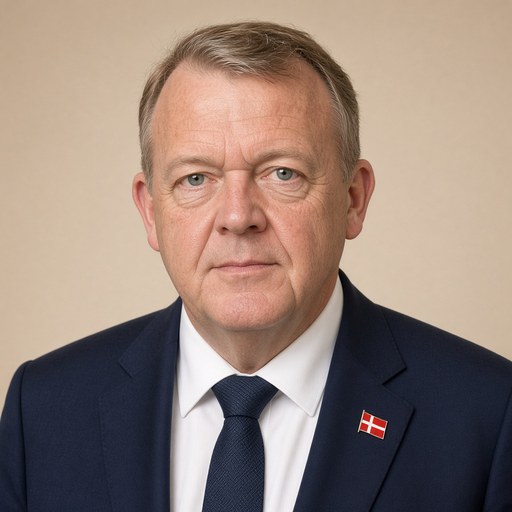
Prime Minister Lars Løkke Rasmussen's speech on Midsummer's Eve at Marienborg on June 23, 2018.
 Lars Løkke Rasmussen · Prime Minister of Denmark
- Context
- Rasmussen addressed guests at Marienborg on Midsummer's Eve 2018, delivering a traditional bonfire speech without a bonfire at the Prime Minister's official residence.
- Main themes
- Midsummer celebration, Danish coziness (hygge), technology and digital disconnection, childhood literacy and education, social vulnerability, Marienborg estate, political nostalgia, community and togetherness
- Duration
- ~9 min
- Words
- 1,104
- Sentences
- 100
- Readability
- 71
- Grade
- 6.0
- Syntax
- 2.41
- Vocabulary
- 2.07
Translated from Danish
The broad sphere of national life a sentence belongs to. Every sentence has an Arena, so it is the denominator the other indices are read against.
Other100 sentences in 53 paragraphs
You are never too old to try something new.
Tonight, I will attempt a bonfire speech without a bonfire.
I had no doubt for a second that we should, of course, stick to opening Marienborg tonight. Bonfire or not.
Midsummer is actually a celebration of the birthday of John the Baptist. Half a year before we celebrate the birthday of his more famous cousin, Jesus, at Christmas.
We don’t cancel Christmas just because there’s no snow and a white Christmas?
I can just ask the children who are here tonight. Would you cancel Christmas?
No, right?
Midsummer is fundamentally a cozy evening for adults and children. Young and old. Family and friends. Here we are gathered across the divides that separate us in everyday life.
And in our fast-paced daily lives, we need to lower our shoulders. Take a breather. Enjoy some coziness.
Talk to each other in the real, analog world – which reminds me of:
How many of you have sent text messages or taken pictures here tonight? That can be fine, but now we are in the analog world.
Or have you had your phone turned off?
Those questions made no sense in my childhood. Or even when my own children were children.
I remember when we got a real phone – a landline at home. My brother and I took turns cycling up to the bus station to call home.
Today, the question – have you had your phone turned off – makes far too much sense.
We must remember that coziness is about taking time. Without being disturbed.
Time to enjoy life. Without having to perform.
Just being yourself. Together with others.
Coziness is fantastic – the concept is gaining popularity all over the world. A Danish brand.
We all need to unwind from time to time. And some need it more than others.
In a society without breaks, without spaces, without coziness, it becomes even harder for those who are vulnerable.
Last week in Bornholm, I participated in celebrating a 75th birthday for a man who spends his later career on vulnerable children and young people. Driven by a great personal sorrow and a deep empathy.
A man who extends a warm hand to those who need a hand the most.
Poul Nyrup Rasmussen.
I mention Poul because I have great respect for his social engagement. And because during his next nine years as Prime Minister, he became more and more fond of Marienborg – both as a residence and as an office – which is understandable.
Marienborg is a special place where many special people have gathered. I think it is important to open Marienborg up for even more.
I am doing that tonight. I do that on many occasions.
I have mentioned a man who is a bit older. I will also tell you about some very young people. Who have found the balance between performance and coziness. They had achieved something special and therefore felt they deserved a cozy moment.
I received a letter from their teacher. She wrote: “Dear Lars Løkke Rasmussen. Will you give a trip to BonBon-land?”
The matter was that she had promised her 5th grade that if they made a proper effort with their reading, she would ask me about it. Which she completely forgot about. But the students did not. And then she had to sit down and write to me.
No, I did not give 5th A from Fjordland School in Frederikssund a trip to BonBon-land. But I invited them here to Marienborg.
It was one of the more fun days at the office. With sausage rolls, rounders, and curious students.
My guests eagerly took the opportunity to ask the questions to the Prime Minister – me – that they had prepared at home. There was a great curiosity about – my favorite football team!
And even though I dutifully answered “Vejle” – one supports one’s hometown – the question was repeated in many variations, including an attempt to get me to choose sides between Brøndby and FCK. Which is not wise for a man in my situation – who is up for election next year. I only avoided getting on thin ice because I am in sharp training from political interviews.
On a more serious note, 5th A confirmed to me that good Danish skills are a prerequisite for everything else one must learn. Not just about football.
It was one of those experiences that always fills me with two conflicting emotions.
The joy of those who succeed. And a sadness that not everyone gets the same chance.
It is becoming increasingly important to master the basic skills. Like being able to read. In a world where everything moves incredibly fast.
The technological development is almost surreal.
When I ran for one of my first elections – to the European Parliament in 1989 – I remember how we rented a mobile phone.
It was expensive. In return, it was so big and heavy that it permanently lay in the trunk of the car we drove around in for the campaign. Except when we took it into a cafeteria to show it off.
We hardly used it. Because it cost a fortune to make a call. And there was no one to call.
I have no doubt that the development makes many things easier. For example, fortunately, a lot has happened in telecommunications.
But we must hold on to – and this should be my message here tonight - that it is us – we humans – who control technology. And it is okay to turn our backs on it for a while, to turn it off for a while, and focus on our loved ones.
We humans need spaces and breaks – but precisely for a while. Because if there are only breaks, then they are no longer breaks.
And coziness is not about shutting oneself in to be enough by oneself. All alone. Coziness is about reaching out to others.
It is so clever that there is no less coziness in sharing it.
On the contrary.
Thank you for coming to Marienborg, so we can share the long summer evening, where we actually do not need a bonfire to light up.
I will now lightly and elegantly skip over the point in the program that usually says “the bonfire is lit” – and go directly to a point that I also cherish:
Let us gather around, “We love our country, but at midsummer most.”
It is time to sing the midsummer song.
Happy Midsummer. I look forward to seeing you all up here again next year.
The original Danish. The tags above are read on the English translation's sentences.
Man bliver aldrig for gammel til at prøve noget nyt.
I aften skal jeg forsøge mig med en båltale uden bål.
Jeg var ikke et sekund i tvivl om, at vi selvfølgelig skulle holde fast i at åbne Marienborg i aften. Bål eller ej.
Sankthans er jo egentlig en fejring af Johannes Døberens fødselsdag. Et halvt år før vi fejrer, at hans mere berømte fætter Jesus holder fødselsdag til jul.
Vi aflyser da heller ikke julen, fordi der ikke er sne og hvid jul?
Jeg kan jo bare spørge de børn, der er her i aften. Ville I aflyse julen?
Nej vel?
Sankthans er dybest set en hyggeaften for voksne og børn. Unge og gamle. Familie og venner. Her er vi samlet på tværs af de skel, der deler os i dagligdagen.
Og i vores hurtigtløbende hverdag har vi brug for at sænke skuldrene. Tage et pusterum. Hygge igennem.
Tale med hinanden i den virkelige, analoge verden – hvilket minder mig om:
Hvor mange af jer har sendt sms’er eller taget billeder her i aften? Det kan være fint nok, men nu er vi i den analoge verden.
Eller har I haft telefonen slukket?
De spørgsmål gav ingen mening i min barndom. Eller bare, da mine egne børn var børn.
Jeg kan huske, da vi fik en rigtig telefon – en fastnettelefon derhjemme. Min bror og jeg skiftedes til at cykle op til rutebilstationen for at ringe hjem.
I dag giver spørgsmålet – har I haft telefonen slukket - alt for god mening.
Vi skal huske på, at hygge er at tage sig tid. Uden at blive forstyrret.
Tid til at nyde livet. Uden at skulle præstere.
Bare at være sig selv. Sammen med andre.
Hygge er fantastisk – begrebet går sin sejrsgang verden over. Et dansk brand.
Vi har alle sammen behov for at koble af indimellem. Og nogle har mere brug for det end andre.
I et samfund uden pauser, uden mellemrum, uden hygge bliver det endnu sværere for dem, der er sårbare.
I sidste uge på Bornholm var jeg med til at fejre en 75 års-fødselsdag for en mand, som bruger sine sene karriere på sårbare børn og unge. Drevet af en stor personlig sorg og af en dyb empati.
En mand, der rækker en varm hånd til de mennesker, der har allermest brug for en hånd.
Poul Nyrup Rasmussen.
Jeg nævner Poul, fordi jeg har stor respekt for hans sociale engagement. Og fordi han gennem næste ni år som statsminister blev mere og mere glad for Marienborg – både som bolig og som kontor – det kan man ikke fortænke ham i.
Marienborg er et særligt sted, hvor mange særlige mennesker har færdedes. Jeg synes, det er vigtigt at åbne Marienborg op for endnu flere.
Det gør jeg i aften. Det gør jeg ved mange lejligheder.
Jeg har nævnt en mand, der er lidt oppe i årene. Jeg vil også fortælle om nogle helt unge mennesker. Som har fundet balancen mellem præstation og hygge. De havde præsteret noget særligt og mente derfor, at de havde gjort sig fortjent til en hyggestund.
Jeg fik et brev fra deres lærer. Hun skrev: ”Kære Lars Løkke Rasmussen. Giver du en tur til BonBon-land?”
Sagen var den, at hun havde lovet sin 5. klasse, at hvis de tog et ordentligt ryk med læsningen, så ville hun spørge mig om det. Hvilket hun selv glemte alt om. Men det gjorde eleverne ikke. Og så måtte hun til tasterne og skrive til mig.
Nej, jeg gav ikke 5. A fra Fjordlandsskolen i Frederikssund en tur til BonBon-land. Men jeg inviterede dem her til Marienborg.
Det var en af de sjovere dage på kontoret. Med pølsehorn, rundbold og spørgelystne elever.
Mine gæster benyttede sig ivrigt af chancen for at stille de spørgsmål til statsministeren – mig – som de havde forberedt hjemmefra. Der var en stor nysgerrighed efter – mit favoritfodboldhold!
Og selvom jeg troligt svarede ”Vejle” – man holder vel med sin fødeby – så blev spørgsmålet gentaget i mange variationer, blandt andet i et forsøg på at få mig til at vælge side mellem Brøndby og FCK. Hvilket ikke er klogt for en mand i min situation – der skal på valg til næste år. Jeg undgik kun at komme på glatis, fordi jeg er i skarp træning fra politiske interviews.
I den mere seriøse ende bekræftede 5. A mig i, at gode danskkundskaber er en forudsætning for alt det andet, man skal lære. Ikke kun om fodbold.
Det var en af de oplevelser, der altid fylder mig med to modstridende følelser.
Glæden over dem, der lykkes. Og en tristhed over, at alle ikke får den samme chance.
Det bliver stadig vigtigere at have styr på de basale færdigheder. Som at kunne læse. I en verden, hvor alting går vildt hurtigt.
Den teknologiske udvikling er næsten surrealistisk.
Da jeg stillede op til et af mine første valg – til Europa-parlamentet i 1989 – kan jeg huske, hvordan vi lejede en mobiltelefon.
Det var dyrt. Til gengæld var den så stor og tung, at den lå permanent i bagagerummet på den bil, vi kørte rundt og førte valgkamp i. Undtagen, når vi tog den med ind på et cafeteria for at vise den frem.
Vi brugte den stort set ikke. For det kostede en formue at ringe op. Og der var ikke nogen at ringe til.
Jeg er ikke i tvivl om, at udviklingen gør mange ting nemmere. For eksempel er der heldigvis sket en del inden for telefoni.
Men vi skal holde fast i – og det skal være mit budskab her i aften - at det er os – vi mennesker – der bestemmer over teknologien. Og det er ok at vende ryggen til den for en stund, at slukke for en stund og koncentrere sig om sine nære.
Vi mennesker har brug for mellemrum og pauser – men netop for en stund. For hvis der kun er pauser, så er de jo ikke pauser mere.
Og hygge er heller ikke at lukke sig inde for at være sig selv nok. Helt alene. Hygge er at række hånden ud til andre.
Det er jo så smart, at der ikke bliver mindre hygge af at dele den.
Tværtimod.
Tak fordi I er kommet til Marienborg, så vi kan dele den lange sommeraften, hvor vi jo faktisk ikke behøver et bål til at lyse op.
Jeg vil nu let og elegant springe henover det punkt i programmet, som plejer at hedde ”bålet tændes” – og gå direkte videre til et punkt, jeg også holder meget af:
Lad os samles om, at ”Vi elsker vort land, men ved midsommer mest. ”
Det er blevet tid at synge midsommervisen.
Rigtig god sankthans. Jeg glæder mig til at se jer alle sammen heroppe igen til næste år.