




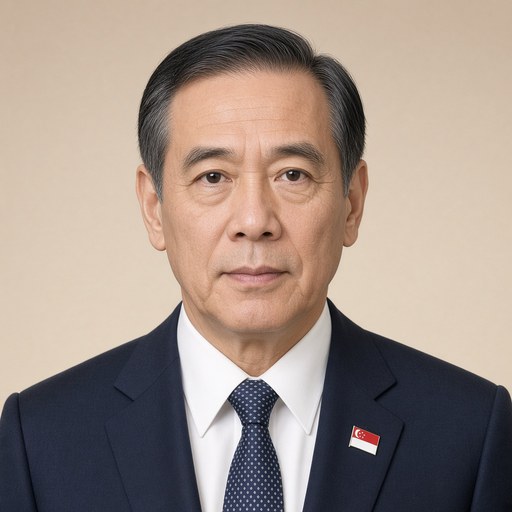
PM Lee Hsien Loong at Singapo(ren) Exhibition at Singapore Chinese Cultural Centre
 Lee Hsien Loong · Prime Minister of Singapore
- Context
- Lee addressed guests at the opening of the Singapo(ren) permanent exhibition at the Singapore Chinese Cultural Centre on 29 February 2020, amid the COVID-19 outbreak.
- Main themes
- Singapore Chinese cultural identity, Singapo(ren) exhibition launch, multicultural heritage, resilience in crises, COVID-19 pandemic, community cohesion, cultural preservation and evolution, Singapore Chinese Cultural Centre, ancestral heritage, national identity
- Duration
- ~1 min
- Words
- 1,333
- Sentences
- 64
- Readability
- 44
- Grade
- 12.3
- Syntax
- 3.23
- Vocabulary
- 2.11
Translated from Chinese
The broad sphere of national life a sentence belongs to. Every sentence has an Arena, so it is the denominator the other indices are read against.
Other64 sentences in 18 paragraphs
Mr Chua Thian Poh, Chairman of the Singapore Chinese Cultural Centre, and members of the Board, Mr Low Sze Wee, CEO. Distinguished guests and friends, good morning.
I am very pleased to be here to officiate the opening of the Singapore Chinese Cultural Centre's permanent exhibition, "Singapo人: Discovering Chinese Singaporean Culture".
At present, COVID-19 is still spreading rapidly around the world, with many new cases continuing to emerge in Europe, the Middle East, South Korea and Japan. It is heartening that the outbreak in China is gradually being brought under control. And thanks to everyone's efforts, the situation here has been broadly stable recently. But we must still remain vigilant, because the virus may slip into Singapore again.
Even so, after careful consideration and after stepping up precautionary measures, the Board of the Singapore Chinese Cultural Centre decided to hold the opening ceremony as originally planned.
I support the Board's decision. More than a month ago, Singapore had its first confirmed COVID-19 case. Since then, the Government has rolled out a series of measures and made appropriate adjustments as the situation has developed. We thank Singaporeans for their full support and cooperation during this period, and for carrying on with their lives as normally as possible. In fact, Singapore has been through sudden public health emergencies more than once – SARS in 2003, and after that H1N1 influenza, dengue fever, the Zika virus, and so on.
Even greater storms have never knocked us down. Over these 70-odd years, we have lived through war, the Japanese Occupation, the post-war struggle to govern ourselves, and the turbulent years when we were forced to separate and become independent. At the end of the 20th century and after entering the 21st century, we were hit by two financial crises. In facing each difficult situation, we showed an unyielding spirit, gritted our teeth and pulled through, recovered quickly, and once again moved forward.
Looking ahead, whether Singapore can continue to overcome challenge after challenge will depend on whether we are resourceful enough, and whether we have perseverance and cohesion. The people must have a clear sense of identity, understand our history, and know our roots and the contributions and achievements of our forebears. At the same time, everyone must be clear about what we want to do for those who come after us; only then can we be of one mind, overcome all difficulties, and build the future together. In a united and resilient society, people support one another. When the nation runs into a crisis, everyone is better able to withstand the test and pull together in the same boat.
Culture, values and traditions bind a people together, giving them a stronger identification with the nation and a greater sense of mission. Singapore has not been a nation for very long, yet the forebears who emigrated here early on brought with them the ancient cultures of their homelands. These ancient cultures took shape gradually over thousands of years. Generation after generation of our forebears lived through plagues, famines, wars and more, and these many trials had a major impact on how those cultures developed. Later, their experiences of life in Nanyang also merged with the cultures of their countries of origin, developing into a Singaporean culture with its own local character.
Shaped by the passage of time, Singapore's cultures and traditions have become richer, and they are a precious spiritual heritage that we cherish and hope to pass on. With these important pillars, we have greater confidence, strength and perseverance to face severe challenges.
Of course, culture and tradition are living things, full of vitality, and they evolve over time. In the course of Singapore's development, the major races have interacted with one another, and this has also strengthened our national consciousness. Here, each community has on the one hand kept its own roots and culture. At the same time, different cultural elements have also interwoven, coming together into a unique and beautiful landscape. Moreover, each community's culture has become distinctive because it has absorbed elements of other races. Therefore, Chinese Singaporean culture is one of a kind, and differs from the cultures of China, Hong Kong, Taiwan or other Chinese societies.
The aim of this new exhibition is to let visitors understand how Chinese Singaporean culture was shaped, and the unique and rich cultural heritage behind it. Although this is a permanent exhibition, I believe that as local customs and ways of life change, what is displayed will also have to keep pace with the times and be continually updated. Through the milestones the Chinese community has gone through and the familiar things of everyday life, this exhibition presents how Chinese Singaporean culture sprouted and grew. For example, the Hungry Ghost Festival is not widely celebrated in China, but for Chinese Singaporeans it is quite an important festival. Some other customs that originated in China have also become localised in Singapore, such as the practice of tossing yusheng together at Chinese New Year.
This exhibition will join the ranks of the permanent exhibitions of our major ethnic heritage centres, becoming one of the key local cultural showcases. At present, the Indian Heritage Centre, the Malay Heritage Centre and the Eurasian Heritage Centre each have their own displays. These allow visitors to gain a deeper understanding of these cultures and to have greater respect for the cultures of other races, thereby making our multiracial society more harmonious.
I am very glad to see the efforts the Singapore Chinese Cultural Centre has made in this regard. Since its establishment, the Centre has spared no effort in supporting and shaping local Chinese culture and promoting it widely. This is also the purpose for which we set up the Centre. In just three short years, the Singapore Chinese Cultural Centre has organised a range of activities, become an important gathering place for our Chinese community, and also cultivated a group of loyal audiences.
When we placed the Singapore Chinese Cultural Centre next to the Singapore Chinese Orchestra, it was also in the hope that the two would complement each other. For example, the inaugural Singapore Chinese Music Festival, organised by the Centre and the Singapore Chinese Orchestra, was a complete success and was well received. The Centre now also has opportunities to collaborate with more cultural groups, and has achieved good results.
Last week, in conjunction with Singapore Art Week, the Centre invited 20 artists of different races to present their interpretations of Chinese mythology. This series of projects allowed quite a few local Chinese to get to know their own ancestral culture again, and also brought them closer to other communities, helping to promote social harmony. I am very grateful to Chairman Chua Thian Poh and the Centre's Board, CEO Low Sze Wee and the management. You have given your all, bringing the Centre a rich harvest of achievements over these 3 years. Thank you for all your hard work!
In the course of Singapore's nation-building, the occasional wind and rain will test our social cohesion. We must be well prepared to deal with all kinds of challenges, whether it is an infectious disease spreading in our country, an uncertain economic outlook, or the threat of extremist terrorism, and so on. And every time we encounter such a situation, Singaporeans must be of one mind, stand united, and fight it together. The role that cultural institutions and groups such as the Singapore Chinese Cultural Centre play in bringing society together is vital. You not only give Singaporeans a greater awareness of their own culture, but also give everyone more confidence, so that we can better plan our own future. I hope that all the major cultural institutions and groups will continue to shoulder this important mission. In this way, even in the face of all kinds of difficulties, we will be able to press on come rain or shine, and keep the small island nation of Singapore holding its place in the world.
Thank you, everyone.
Explore related topics
The original Chinese. The tags above are read on the English translation's sentences.
新加坡华族文化中心主席蔡天宝先生及董事会成员, 总裁刘思伟先生。各位嘉宾和朋友们, 早上好。
非常高兴可以在这里,为华族文化中心的常设展览“新加坡华人·探索本土华族文化”主持开幕。
目前,2019冠状病毒仍在世界各地迅速蔓延,欧洲、中东、韩国、日本都不断出现许多新病例。令人欣慰的是,中国的疫情已逐步受到控制。而经过大家的努力,本地近期的情况大致上比较稳定。但是我们还是必须保持警惕,因为病毒可能再次潜入新加坡。
尽管如此,华族文化中心董事会在慎重考虑,并加强了防范措施之后,决定按照原定计划举行开幕典礼。
我支持董事会的决定。一个多月前,新加坡出现了第一起冠病确诊病例。从那个时候开始,政府便推出了一系列的措施,并随着情况的发展,做出适当的调整。我们感谢国人在这段时间的全力支持与配合,并且尽可能生活如常。其实,新加坡曾经经历过不止一次的突发性公共卫生事件 – 2003 年的SARS,之后还有H1N1 流感、骨痛热症、兹卡病毒等等。
即便是更大的风浪,也不曾把我们击倒。这70多年来,我们经历过战争、被日军占领、战后争取自己当家作主,以及被迫分家独立的动荡年代,在20世纪末,进入21世纪以后,又遭遇两次金融风暴。在面对每一个艰难情况时,我们发挥了刚强不屈的精神,咬紧牙关挺过去,并且迅速恢复,再次向前迈进
放眼未来,新加坡是否能继续一次又一次的克服挑战,就要看我们够不够机智,以及是否具备毅力和凝聚力 。人民必须有明确的身份认同感,了解历史,并知道自己的根、和先辈的贡献与成就。同时,大家清楚自己想要为后人做些什么,才能够上下一心,排除万难,共创未来。在一个团结坚毅的社会,人民会相互支持。当国家碰上危机时,大家比较经得起考验,能够同舟共济。
文化、价值观和传统能把人民维系在一起,让人们对国家更加认同也更富有使命感。新加坡建国的时间并不算长,然而早期移民到这里的先辈,将家乡古老的文化带到这里。这些古老的文化是经过几千年逐渐形成的。历代先辈经历过瘟疫、饥荒和战争等,这种种的考验对文化发展有着重大的影响。后来,他们在南洋的生活体验,也同原籍国的文化融合在一起,发展成具有本土特色的新加坡文化。
经过岁月的洗礼,新加坡的文化和传统已变得更丰富,也是我们珍惜并且希望传承下去的宝贵精神遗产。有了这些重要的支柱,我们就更有信心、力量和毅力去面对严峻挑战。
当然,文化和传统是活的,充满生命力,并会随着时间而演变。在新加坡的发展历程里,各大种族互相交流,从中也增强了大家的国家意识。在这里,各族群一方面保留了自己的根源和文化。同时,不同的文化元素也交织在一起,汇成一幅独特美丽的景观。此外,各族文化因为融合了其他民族的元素,而变得与众不同。因此,新加坡华族文化是独树一帜的,与中国、香港、台湾或其他华人社会的文化有所不同。
这个新的展览的宗旨,就是让访客了解新加坡华族文化是如何塑造的,以及背后独特又丰富的文化底蕴。虽然这是个常设展,不过随着风土民情的变化,相信所展示的内容也要与时并进,不断更新。通过华社所经历的里程碑以及日常生活中熟悉的事物,这个展览呈现了新加坡华族文化是如何萌芽成长的。例如中元节,在中国不是一个普遍庆祝的节日,不过对新加坡华人来说,这是个相当重要的节日。另外一些源自于中国的习俗,在新加坡也已经本土化,就像过年时一起捞鱼生的习惯。
这个展览将加入我国各大种族文化馆常设展的行列,成为本地重点文化展示之一。目前,印族文化馆,马来传统文化馆以及欧亚人文化馆都有各自的展示。让到访者能深一层了解这些文化,并且对其他种族的文化更加尊重,进而让我们的多元社会更加和谐。
很高兴看到新加坡华族文化中心在这方面所作的努力。自从成立以来,中心不遗余力,支持和塑造本地华族文化,并将它发扬光大。这也是我们设立中心的目的。短短三年的时间,华族文化中心已经举办了多项活动,成为我国华社的重要聚集地,也培养了一群忠实的观众。
当年让华族文化中心毗邻新加坡华乐团,也是希望两者能够相得益彰。例如,中心与新加坡华乐团主办的首届新加坡华乐节,圆满成功,受到好评。中心现在也和更多文化团体有合作机会,并且取得好成绩。
上个星期,为配合新加坡艺术周,中心就邀请了20位不同种族的艺术家,呈现他们对华族神话的诠释。这一系列的项目,让不少本地华人再次认识自己的母族文化,也拉近了和其他族群的距离,有助于促进社会和谐。我很感谢蔡天宝主席和中心董事会、刘思伟总裁以及管理层,你们鞠躬尽瘁,使中心这3年来硕果累累,辛苦你们了!
在新加坡建国过程中,偶尔的风吹雨打,会考验我们的社会凝聚力。我们必须做好准备应对各种挑战,无论是传染病在我国传播,经济前景不明朗,或极端恐怖主义的威胁等等。而每一次遇到这种情况,新加坡人就必须万众一心,团结一致,共同对抗。华族文化中心等文化机构和团体在凝聚社会方面扮演的角色,至关重要。你们不仅让国人对自己的文化更有认知,也让大家更有信心,能够更好的策划自己的未来。希望各大文化机构和团体继续肩负起这个重要使命。这样,即使面对各种困难,大家就能风雨无阻,继续向前,让新加坡这个小岛国继续在世界上占有一席之地。
谢谢大家。
Explore related topics