




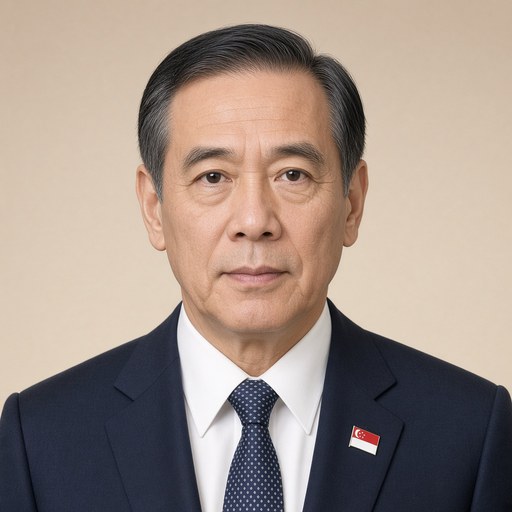
PM Lee Hsien Loong at the Teck Ghee Chinese New Year Dinner 2020
 Lee Hsien Loong · Prime Minister of Singapore
- Context
- Lee addressed residents at the Teck Ghee Chinese New Year Dinner on 1 February 2020, focusing on Singapore's response to the novel coronavirus outbreak.
- Main themes
- Novel coronavirus response, public health preparedness, SARS comparison and lessons, community solidarity and cohesion, fake news and social media misinformation, contact tracing and isolation measures, Singapore's healthcare infrastructure, Chinese New Year celebrations, Year of the Rat, inclusivity and social support
- Duration
- ~36 min
- Words
- 4,356
- Sentences
- 262
- Readability
- 64
- Grade
- 8.5
- Syntax
- 2.87
- Vocabulary
- 1.97
Translated from Multiple languages
The broad sphere of national life a sentence belongs to. Every sentence has an Arena, so it is the denominator the other indices are read against.
Other262 sentences in 49 paragraphs
Good evening, friends and residents!
I wish everyone prosperity in the Year of the Rat, may all your wishes come true, and most importantly, I wish everyone good health!
Today is the eighth day of the new year, so of course, I also wish everyone great fortune!
This year, my New Year speech has a serious topic. I believe everyone is very concerned about the novel coronavirus pneumonia epidemic and worried that the local outbreak will continue to spread. Some people may recall the experience we had during the SARS outbreak in 2003. Seventeen years ago, those who are older will remember that everyone felt anxious and fearful, worried about themselves or their family members getting sick. In the face of that crisis, although the entire nation felt scared, we still bravely responded and stood united. After several months of anti-epidemic efforts, we ultimately overcame the virus and got through the difficult times. So that was a catastrophe, a test. We remember the fear in our hearts, but we also remember our cohesion, our confidence, and our cooperation. In the end, we succeeded.
With this lesson learned, we have made many preparations since then. Now, Singapore is much more equipped to deal with infectious diseases. We have better medical facilities, such as the National Centre for Infectious Diseases, which I visited yesterday. This infectious disease center has the latest facilities and more than three hundred beds specifically prepared for infectious disease patients. We also have more trained healthcare professionals who are skilled in combating infectious diseases. In addition, government hospitals have sufficient protective equipment to safeguard both patients and medical staff. Therefore, I believe we can respond to this challenge with greater composure.
This novel coronavirus, with its long name, is a new virus. This new virus is related to the SARS virus from last time — their DNA, their genes are eighty percent overlapping, they are the same. So the two are similar, but there are also some important differences.
The first difference: the new virus does not have a high fatality rate like SARS, so most of the infected people will recover. In fact, some people infected with this virus, although it is said to cause pneumonia, actually only show mild symptoms or even no pneumonia at all. So I hope this can reassure everyone. So this is the first difference. It is related to SARS, but it is different from SARS.
The second difference: the new virus may be more contagious than the SARS virus, so the possibility of spreading is faster — just look at the situation in China, it has spread to various parts of the country. Such a thing did not happen with SARS in China. So the spread is faster, and patients may transmit the virus during the incubation period before showing any symptoms. This makes our work to prevent transmission even more challenging. So this is the difference between the new virus and the last SARS outbreak.
We have two strategies to deal with this virus: first, when we discover suspected cases, we immediately isolate them. Second, once someone is confirmed to be infected, we comprehensively trace and isolate all individuals who have come into contact with the patient. So the ninety-two Singaporeans who returned from Wuhan the day before yesterday, we have isolated them to ensure they return healthy. So far, we have confirmed two individuals who were fine when they returned, but now they have the new virus. So we are already handling them in the hospital. Therefore, by doing this, we can keep everyone safe and at ease.
So far, our approach has successfully prevented the new virus from spreading locally. So although there are new cases, we can control each case, preventing one from spreading to two, two from spreading to ten, and so on, which would be disastrous. So new cases may continue to be imported from abroad, but each time we do our best to confirm and contain them, preventing them from spreading. I hope we can continue to effectively contain the virus and avoid a major community transmission issue in Singapore.
This is the first challenge — the new virus is different from the old virus. The second challenge is not related to the virus, but to everyone’s mobile phones and social media.
Seventeen years ago during SARS, very few people had mobile phones. No one had social media. At that time, people got news from television, radio, or newspapers. Today, everyone gets news from social media or WhatsApp, passed on by friends. It could be news, it could be rumors, it could be fake news, and you have no way of knowing. When you see it, you might get anxious and spread the news. One tells ten, ten tells a hundred. It spreads faster than the virus.
This is not a joking matter. It requires very effective policies, very effective laws, and a determined government to quickly curb the spread of fake news. This is what we, as the government, need to do, and we will do it. So POFMA has been very busy these past few days. Because some people spread fake news unintentionally. But some people spread fake news deliberately.
So let’s look at fake news. If there is malicious intent, we will immediately curb it before the problem arises. Let everyone know that this is fake news, not the real facts. This is what the government can do. But I hope everyone can cooperate with us. Please, if you receive news, do not immediately pass it on to all your friends and contacts. Especially if the headline is shocking or alarmist news. The more sensational it is, the more you need to verify whether it is true or not. Is it really the case? If it is not, please delete that message or WhatsApp immediately. Do not pass on fake news to more people.
If you have any doubts, it is best to check the government’s fake news website first. The fake news website http://www.gov.sg/factually actually has many questions you need to know, and the answers are all there. You can go there for the correct answers. Or check with mainstream media. I am promoting MediaCorp and Singapore Press Holdings. Listen to their radio stations, read their newspapers, watch their television videos, and follow their news broadcasts. This is reliable and has been verified. When you look at it, you will truly understand the situation.
If there is something, we will definitely inform you. If there is good news, we will definitely share it with you. So to know what is happening in Singapore, rely on formal media. Listen to, read, and watch government messages and reports. So this is the second issue, which is about social media and fake news.
The third issue is also a personal matter. That is the source of this virus. Everyone knows this virus came from Wuhan, China. So some people call it Wuhan pneumonia. And this virus has spread in China. But this is a public health emergency, a public health issue, not a problem between countries, and certainly not a racial issue.
Some people do not understand this, so it is regrettable that we have seen some countries exhibiting anti-Chinese sentiments. Because this virus came from China, so Chinese people or those of Chinese descent are seen as problematic. Sometimes people cannot distinguish clearly, seeing someone of Chinese ethnicity or descent and assuming they are from China or Wuhan, leading to a sense of distance towards them.
For example, in Australia, there was a Singaporean tour group traveling there, consisting of Singaporean Chinese. They were not allowed to go up a certain mountain for sightseeing because they appeared to be Chinese, and they might be carrying this new virus. This is ignorant, illogical, and an impulsive mindset. We can understand that everyone is very scared, but in our fear, we must calm ourselves down, think logically about the facts, and discern what needs to be prevented and what we should not believe.
I believe such incidents will not happen in Singapore. But online, it is another matter. Because online, you may see some netizens boycotting Chinese people. As I said earlier, this is a wrong mindset and a very bad practice. With such a mindset, you will only create more panic for yourself. It cannot help you solve the problem. So I hope everyone understands that this is not a nationality or racial issue, but a public health issue. In fact, China is doing everything it can to control the spread of the epidemic, including canceling all outbound tour groups and arranging special flights to bring back Hubei residents from overseas. So what China is doing is responsible. We, as countries, must also take the necessary actions.
Yesterday, after careful consideration, the Singapore government announced that starting from February 2, all travelers who have been to Mainland China in the past 14 days, regardless of nationality, will be prohibited from entering or transiting through Singapore. So if this person has been in China in the past fourteen days, whether they are Chinese or not, we are temporarily prohibiting them from entering or transiting through Singapore, and they cannot transit at Changi Airport. We are doing this purely to safeguard public health and ensure that the people are not infected. I hope everyone understands our intentions and goodwill. We hope that China will succeed in controlling the epidemic and win this battle. We are also confident that China and countries around the world can work together to overcome this challenge.
In the face of this epidemic, we should remain calm and composed, and not panic. It is completely understandable to feel uneasy and worried. The government will fulfill our responsibilities, mobilizing all departments, all resources, and grassroots efforts to comprehensively address this issue. At the same time, each of us should take our own responsibility and do our part to ensure the safety of ourselves and our families.
What can we do? “We are one person,” as the song says, what is this meager strength? The most important thing is to maintain good hygiene habits and wash your hands frequently. Because the most common way this disease spreads from person to person is through touching surfaces that may have the virus, such as tables, cups, or dirty objects. If you carelessly touch your face, or touch your mouth or eyes, you can infect yourself. So the most important thing is to wash your hands frequently. If you have a fever or cold symptoms, you can wear a mask and see a doctor to let the doctor diagnose whether it is indeed this virus. I think it should not be, but just in case, let the doctor confirm, to be safe. However, if you are healthy and have no symptoms, the doctor’s advice is that we all do not need to wear masks.
I know that previously, many people were anxious because they could not buy masks. So to reassure the public, the government has made arrangements. Starting today, every household can receive a set of four masks. Everyone can go to the designated time to collect them at the community center or residents' committee. So, I hope everyone can use the masks responsibly, so that we can ensure there are enough masks for medical personnel and patients. There are enough masks. If we need to use them when necessary, we can do so; if we do not need to use them, we do not need to. We in Singapore have enough masks stored for our use, especially for our healthcare personnel. But if everyone wears masks for no reason, then one person may need three or four masks a day, which is not enough. Because masks get dirty after use, you cannot wear them again. You must throw them away and change to a new one. If the masks run out and healthcare personnel do not have masks, then we will have a problem. So we distribute masks to every household to reassure everyone. You can keep them as a precaution. If needed, you already have them. If not needed, keep them just in case.
In Teck Ghee, the mask distribution activity has been successfully carried out. I just visited the Teck Ghee Zone Cares Residents' Committee. They have started distributing masks this afternoon. The residents' committee manages three thousand households. After a busy afternoon, they have already distributed masks to over five hundred households. The two residents' committees in Teck Ghee have distributed a total of over one thousand packets of masks today. Because we are starting with these two residents' committees. Other residents' committees will start distributing masks from Tuesday. After that, masks will be distributed from the contact points. I am very grateful for the efforts of the grassroots leaders; everyone has worked hard! I also thank all the residents for their support. Everyone can rest assured.
Even as we face the epidemic with all our efforts, the government does not forget other important responsibilities, continuing to pay attention to the needs of the people and building the nation, while ensuring economic development continues. To do this well, we must have a good team, a good leadership team, to lead the entire population in facing challenges. We also need everyone to care for each other, strengthen social cohesion, work closely together, get through the tough times, and achieve final victory. In this way, no matter what difficulties we face, we can solve them together and welcome a better future together. This way, we will have abundance year after year, favorable weather, national peace, and good health. So I wish everyone a Happy New Year and may all your wishes come true. Thank you all!
Friends and residents of Teck Ghee, let me say a few words in English and summarize what I said in Chinese just now.
We are all worried about the coronavirus situation. Many of us would remember what happened when we had SARS in 2003, 17 years ago. It was frightening. We did not know how it would spread, how long it would last, whether our loved ones would be alright, or would they be infected. But we stayed united and dealt with the crisis as one people, and fortunately, after a few months, we overcame it, and we got Singapore back together again. We upheld public confidence, we upheld our cohesion and our unity. We dealt with the problem, and we kept Singaporeans safe and healthy.
Since then, after SARS, we did a very serious post-mortem to study what we could do better, and since then, we have been preparing ourselves, because we knew that sooner or later, something like this would happen again. SARS was not the last time, and it will happen again one day. We have been preparing ever since then and now we are much better prepared than back in 2003.
We have better facilities like the National Centre for Infectious Diseases (NCID) which I visited yesterday, and healthcare professionals well-trained to deal with this scenario. I met some of them at NCID in good spirits. They were in good spirits and I thanked them for putting themselves on the frontline and at risk in order to deal with the problem and keep Singaporeans safe. I have every confidence that we can overcome the challenge before us.
This situation with the coronavirus is something like SARS. In fact, the coronavirus is related to SARS. If we look at the DNA, it is 80 per cent similar. But the virus is also somewhat different. Most importantly, it seems to be less lethal than SARS. SARS had a death rate of about 10 per cent but this one is about two per cent. We will see, but possibly, it may go lower. But the new virus is more infectious – you may be able to infect people even before you show any symptoms. Before you have a runny nose, fever, coughing or have pneumonia, you may already be able to infect people.
So, detection is more difficult. Which means that we have to work harder to isolate suspect cases as soon as we can identify them, and to stop the virus from spreading in the community. So far the cases we have had, all come from overseas. Mostly Chinese or PRC people who came from Wuhan. Also, in the planeload of Singaporeans who came back from Wuhan two days ago, two of them have since fallen ill with the coronavirus but we have quarantined them. They are in the hospital, under treatment, and have been taken care of. I think they will be alright and I am sure Singaporeans will be alright. Hopefully we will be able to maintain this, keep the virus contained and prevent the virus from spreading locally in Singapore.
Yesterday after we assessed the situation carefully, we decided to announce that from tomorrow, visitors who have travelled to Mainland China within the last two weeks, will not be allowed to enter or transit through Singapore. This is so, regardless of their nationality. Because we want to protect ourselves from the situation, which is in China, where the spread is much wider and numbers are much bigger.
We are doing this as a preemptive measure, purely to protect the public health. Some other countries have also done the same. We know that China is doing all they can to contain the spread of the virus. They have imposed their own travel restrictions in China, and on their own people. Including cancelling all outbound tour groups and bringing back Hubei residents from overseas. It is a much stronger response than what they did when SARS first broke out in 2003. So our efforts to stop the entry of people who have been to China recently will complement China’s efforts.
We wish China well in their efforts to fight the virus; we have confidence that China and the other countries will work together to win this battle internationally. It is not just in China that there will be a problem. If in other countries, the countries fail to prevent the virus from spreading and you have a big outbreak in another country – for example somewhere in Southeast Asia – then we will have a big problem in Singapore.
Because we have so many travellers come in and out from Singapore every day – hundreds of thousands. From Malaysia, more from Indonesia and others from Southeast Asia, from India and all over the world.
If all that has to come to a stop, I think the impact on us, our economy and livelihood will be quite severe. We will work with the other countries and with China to cooperate, fight the virus, understand the disease and prevent its spread. We hope to stop the epidemic and gradually to be able to bring the cases down.
We should see this as a public health problem, but unfortunately because people are scared, I think in some countries we have seen not just fear of the virus but also anti-PRC sentiments come up because the virus came from China. So therefore, there is an anti-PRC sentiment. People become afraid of and against China and in fact, against the Chinese.
As I said just now, there was a Singaporean tour group in Australia – Singaporean Chinese – and they were mistaken for PRC Chinese and they were prevented from entering some tourist site because people were afraid. But this is not helpful at all, because the virus may have started in China but it does not respect nationality or race. It does not check your passport before it goes into your body, and anybody can be infected. This is a problem that all countries have to work together to solve, because otherwise, as I explained, internationally we will have a problem. That is one big issue we have to be concerned about, making sure we see this as a health problem and not as a race or international diplomatic problem.
Another issue we have to be concerned about this time which we did not have to worry about with SARS is social media. In a crisis where social media has been both a boon and a bane, a plus and a minus. A plus because we can get our news out very quickly and there is a lot of information online which you can look up if you go to the right places. It is a bane and minus because there is a lot of untrue things and rumours circulating online on WhatsApp and Facebook. All kinds of stuff which go around. And it is difficult for people to tell what is true, or what is false.
Sometimes, it is because people are anxious, and they are sharing information that frightens them, and they want others to know. But, unfortunately when this happens, people’s anxieties are multiplied, and it is harder for them to get the correct information, and it can even spark fear and panic. So I strongly advise everybody, if you hear something shocking, please, before you believe it or share it, check with the proper channels, check from trusted places – check the mainstream media, check MediaCorp, SPH, check the government websites, sign up for the WhatsApp group that the government is offering, and in four languages, so you can get the messages from the government, whether you want it in English, Chinese, Malay or in Tamil.
We will put out the information as soon as we can to the media, and through these chatgroups, so that you can get the information soon, and you can get updated, and you can know what you need to do to protect yourself. And I think there is something that each of us can do to protect ourselves. What is it? Practise good hygiene and wash your hands frequently. That is the most important thing because the most common way such viruses travel, is people-to-people, is when you touch something, or when you touch somebody and the virus travels from contact to contact. Then you touch your face, or your eyes, and it gets into your body.
Not so often it is a droplet that is carried in the air that you breathe in and you need a mask. So washing your hands regularly, use disinfectant if you have it. You can get it, it is not hard to get. That may go a long way to keeping you safe. But if you have a fever, or are showing symptoms of a cold, then put on a mask and go and see the doctor, because if you are ill, you do not want to give your germs to other people. Go and see the doctor, let the doctor check and make sure that you do not have the coronavirus. And if you have the coronavirus, then you can be quarantined, admitted to hospital – you can be treated, and you can be taken care of, and your family, your friends and other Singaporeans will be well.
I know that some of you were worried earlier because you could not buy your masks. But as I have explained, if you are healthy and do not have any symptoms, you do not really need one. But nevertheless, just to make sure that everybody is reassured and that everybody has some at home just in case, the government has decided to mobilise the PA, the SAF – we have packaged masks for every household – one packet, four masks, and we are distributing them at the RCs from today.
I just went to visit our own RCs who were distributing it. Zone Cares RC – just a ten-minute walk from here – to see how it was going, and it is going well because they have been distributing it all afternoon. At Zone Cares, they have distributed about 500, and altogether in Teck Ghee they have distributed about 1,000 masks this afternoon. And we will continue tomorrow, Monday, Tuesday, and thereafter, at the CC as well.
So I thank all the grassroots leaders and the volunteers for working hard, for sacrificing their time, for manning the counters, for helping us to be able to do this, and to explain to residents, what you need to do, what you do not need to do, here is what you have, here is how we can help you, here is what you can do and please do, to help yourselves.
Let us remain resilient and calm, and respond as one united nation. Let us show care and concern for our fellow human beings. We continue with our lives as much as possible. We have the Chinese New Year dinner today. They asked me whether to proceed. I said yes, we proceed. We take precautions, we borrow a scanner, we put out scanners, we ask you not to come if you have a fever, when you come, we will put up the scanner and will see whether you have a red spot on your forehead, so we can check whether you have a fever or not. We can reduce the risk, but life goes on. And we have to keep on meeting, going to school, working, and keeping Singapore ticking over.
I have confidence that we will get through this, and we will get through this together because we are well prepared and we have dealt with more serious situations before. So it is a serious Chinese New Year message, but I think this is a serious Year of the Rat. The rat is an animal which is supposed to be clever, survivable – wherever you chase it, it will find a place to go, and it will continue to be able to live and to survive.
Singapore must be as wily, as resilient and as survivable as the rat, not just in the Year of the Rat, but all 12 years of the Chinese zodiac! So I wish you a happy New Year, good health, prosperity and happiness for this year and many years to come. Thank you very much.
The original Multiple languages. The tags above are read on the English translation's sentences.
各位朋友、各位居民、大家晚上好!
祝大家鼠年兴旺、心想事成、万事如意、最重要的祝大家身体健康!
今天是年初八,当然也会祝大家发发发!
我今年新年演讲有一个严肃的课题。我相信大家都很关心新型冠状病毒感染的肺炎疫情,也担心本地的疫情会继续蔓延。有些人可能会联想起2003年我们经历过的SARS爆发的那个经验。当时,十七年前,年纪大的还会记得,大家都觉得惶恐不安,担心自己或者自己的家人会患病。在面对那场危机的时侯,全体国民虽然感到害怕,但是我们还是勇于应对,团结一致。历经了几个月的抗炎活动,我们最终战胜病毒,度过难关。所以那个是一场浩劫,是一个考验。我们记得自己心里的恐惧,但是我们也记得我们的凝聚力、我们的信心、我们的合作。最后,我们的成功。
有了这个前车之鉴,我们从那个时候开始就做了许多准备。现在,新加坡在应对传染疾病方面已经有更多的把握了。我们有更好的医药设施,例如我昨天参观的国家传染病中心( National Centre for Infectious Diseases.) 这个传染病中心就有最新的设施,有更多的床位 — 有三百多个床位 — 特别为传染病病人准备的。我们也拥有更多的专业医疗人员,他们在对抗传染病方面都训练有术。此外,政府医院也有足够的防护配备,能保护好病人以及医疗人员。所以,我相信我们可以更从容的应付这一次的考验。
这个新型冠状病毒,名词很长,是一种新的病毒。这个新的病毒跟上一次SARS的病毒是有关联的 — 它们的DNA, 它们的基因百分之八十是重叠的,是一样的。所以两者是相似的,但是两者也有一些重要的差别。
第一个差别:新的病毒不像SARS那样具有高致命率,所以大部分患病的人都会回复健康的。甚至还有一部分感染这个病毒的人,虽然这个病毒名称说是会引起肺炎,但是其实有一部分的人只会呈现轻微的病状,甚至没有肺炎。所以我希望这一点能够让大家安心一点。所以这个是第一个不同。跟SARS有关,可是跟SARS不同。
第二个不同:新病毒的传染力或许比SARS病毒来得强,所以散播的可能性比较快 — 你看中国的情况就散播到全国各地了。SARS在中国也没有这样的事情发生。所以散播得比较快,并且患者在没有出现病状的潜伏期的时候就可能会传播这个病毒。这样一来,我们防止传播的工作会更加艰巨。所以这个是新的病毒跟上一次SARS的不同点。
我们应对这个病毒有两个对策:第一,发现疑似病例的时候,就马上把他们隔离起来。第二,一旦有人证实患病,就全面追踪和患者接触过的人士,并且也把他们隔离起来。所以前天从武汉回来的九十二个新加坡人,我们都把他们隔离起来,确保他们回来是健康的。到目前为止,有两个人我们已经确认,其实两个人回来的时候还好,可是现在已经有这个新病毒了。所以我们已经在医院在处理他们。所以,我们这样做可以保持大家的安全,可以让大家安心。
到目前为止,我们这个做法成功地阻止了新病毒在本地扩散。所以虽然有新的病例,但是每个病例我们都能够控制着它,不会一个传两个,两个传十个,一传传开去那就不得了了。所以,新的病例或者会继续从外地引进来,但是每一次我们都尽量确认它、遏制它,不让它散开来。我希望我们能够继续地有效地围堵病毒,避免新加坡出现社区传播的大问题。
这个是第一个挑战 — 新的病毒和旧的病毒不相同。第二个挑战跟病毒没有关系,但是跟大家的手机跟社交媒体有关系。
十七年前SARS 的时候,很少人有手机。没有人有社交媒体。当时大家听新闻是看电视,听广播电台,或者读报纸。今天大家的新闻从社交媒体或者WhatsApp,朋友传来的。可能是新闻、可能是谣言、可能是假消息、你无从知道。那你看了可能紧张了,把这个消息传出去。一传十,十传百。传的比病毒还要快。
这个不是个开玩笑的问题。这需要很有效的政策,很有效的法令规定,很有决心的政府,很快地遏制假新闻的传播。这个是我们做政府需要做的事,我们会做。所以POFMA这几天来就很忙了。因为有些人发布的假新闻是无意中的。但是有些人发布假新闻是故意作祟的。
那我们看看假新闻,如果有作祟的潜能,我们马上,问题还没有出现的时候,就经量的去遏制他。让大家知道这个是假新闻,不是真正的事实。这是政府能够做的事。但是我希望大家能够跟我们合作。请大家如果收到新闻的时候,不要马上把这个新闻传达给所有的朋友,所有电话联络的电话号码。特别是如果标题惊人,或者是危言耸听的新闻。越刺激的越需要去确认,是真是假,有这回事吗?的确是这样的吗?如果不是请你马上把这一个短信或者WhatsApp删掉。千万不要把假新闻传给更多人。
如果有任何疑虑的话,最好先到政府打假新闻的网站,查一查看。 打假新闻的网站http:www.gov.sg/factually其实有很多你要知道的问题,答案都在那边。你去那边就有正确的答案了。或者去主流媒体去查证。我替新传媒打广告,也替新加坡报业控股中心打广告。去听他们的广播电台,去读他们的报纸,去看他们的电视视频,去看大家的新闻广播。这个是可靠的,曾经确认过的。你看了,你会真正的了解事情。
有事情我们会肯定告诉你。有好事我们肯定也会传给你。所以你要知道新加坡什么事情发生,依靠正规的媒体。听读看政府的消息,政府的报告。所以这个是第二个事情,就是关于社交媒体和假新闻的事情。
第三的事情也是一个人的事情。那就是这个病毒的来源。大家都知道这个病毒是中国武汉来的。所以有些人叫它成武汉肺炎。并且这个病毒在中国扩散了。但是这是一个公共卫生突发事件,是公共卫生事件,不是一个国与国之间的问题,更不是一个种族的问题。
有些人不了解这个事情,所以很令我们遗憾的,我们看到了有些国家出现了排华的现象。因为这个病毒是中国来的,所以中国人或者华人就有问题了。有时大家分不清青红皂白,看到华族或者是华裔就以为是中国来的,或者以为是武汉来的。就对他们有隔距的感觉。
比如在澳洲就有一个新加坡的旅行团去那边旅行,是新加坡华人。他们要上某一个山,要去观光。(他们)不准上山,因为你看来是华人,你可能会带着这个新的病毒。这个是愚昧、不合逻辑,一个很冲动的心态。我们可以了解大家是很害怕,但是我们害怕之中必须把自己安定下来,必须镇定、稳定考虑事实,合逻辑的去了解事实,去辨清什么是需要去防止的,什么是我们不应该去听信的。
新加坡我相信不会出现这样的事。但是网上呢,就是另外一回事了。因为网上,你或者会看到一些网民,纷纷抵制中国人。我刚才说了,这是错误的心态,也是很不好的做法。 你有这样的心态你只会造成自己更慌恐。不能够帮助自己解决这个问题。所以我希望大家都能了解这不是一个国籍或者是种族的问题,而是一个公共卫生的问题。其实,中国正在尽全力、倾全力控制疫情的扩散,包括取消所有出境的旅游团,也安排专机把那些在海外的湖北中国人接回中国。所以中国做的是负责任的事情。我们各国也必须自己采取我们所需要做的行动。
昨天,新加坡政府经过慎重地考虑,宣布从二月二号开始,禁止所有过去14天曾经到中国大陆的旅客,无论国籍,会禁止他们入境我国或过境新加坡。所以如果这个人在过去十四天曾经在中国,是中国人,或者可能不是中国人,那暂时目前我们禁止他入境新加坡或者过境新加坡,不能够在樟宜机场过境。我们这样做纯粹是为了保障国家的公共卫生,确保人民不受感染。我希望大家会了解我们的用意和善意。我们希望中方在控制疫情方面会取得成功,打赢这场战役。我们也有信心中国与世界各国能够携手克服这场挑战。
在面对这个疫情时侯,我们应该冷静沉着,不要恐慌。大家感觉不安、担忧,这个是完全可以理解的。政府呢,我们会尽我们的责任,动员所有的部门、所有的资源、基层,全面第处理这个问题。同时,我们每个人都应该尽自己的责任,尽自己一份力,确保自己和家人的安全。
我们能够做什么呢?“我们一个人”刚才他唱这首歌说,一份微薄的力量,是什么力量?最重要的是,大家要保持良好的卫生习惯,经常洗手。因为这个病从人传人最普遍的方式是因为手摸到有病毒的,可能是桌子、是杯子,或者肮脏的东西。那你不在意地摸到你的脸、或者你摸到你的嘴巴、或者眼睛,就传给自己了。所以最重要是经常洗手。如果你有发烧、或者有感冒的症状,那你就可以戴上口罩去看医生,让医生诊断的确是不是真的是这个病毒。我看应该不是。但是万一是的话,让医生确认,以防万一。但是如果你身体健康,没有症状,医生的劝告是我们大家都不需要戴口罩。
我知道之前,很多人买不到口罩,因此感到着急。所以为了安定民心,让大家放心,政府特地做了安排,从今天开始,每一户家庭可以领取一套/四个口罩。大家也可以按照指定的时间,到居委会或民众俱乐部/联络所领取。所以,我希望大家能够负责任地使用口罩,这样我们才能确保有足够的口罩给医疗人员以及病患使用。口罩是足够的。如果我们需要用的时候用它,不需要用的时候不用它,我们新加坡有足够的口罩存积起来,够我们用,尤其够我们的医护人员用。但是如果大家无缘无故都戴口罩,那一天一个人就需要三四面口罩,还不够。因为口罩用了肮脏了,你不能够再戴上去。你必须丢掉换一个。那口罩完了,医护人员没有口罩,那我们就出问题了。所以我们分发口罩给每个家庭,让大家安心。这个你放在那边是一种镇定剂。万一需要的话,你已经有了。如果不需要的话,把它放在那边,以防万一。
在德义区,分发口罩的活动已经顺利地进行了。刚才我走访德义Zone Cares 居委会。他们从今天下午开始已经陆续分发口罩了。居委会,他们管的是三千个住户。忙了一个下午,已经分了口罩给500多户家庭。德义的两个居委会今天就总共分发了1000多包口罩。因为我们今天先发两个居委会。其他居委会从星期二开始,会发口罩。过后,口罩会从联络所发出去。我非常感谢基层领袖们的付出,大家辛苦了!也感谢各位居民的支持。大家可以安心了。
即使我们正全力面对疫情,政府也不忘其它重要的责任,继续关注人民的需求和建设国家,并且确保经济持续发展。要做好这些工作,必须要有良好的团队,良好的领导团队,带领全民应付挑战。也需要大家互相关怀,加强社会凝聚力,密切合作,度过难关,取得最后的胜利。这样,无论面对什么难题,我们都能够一起解决,共同迎接更好的未来。这样我们才会年年有余、风调雨顺、国泰民安、身体健康。所以祝大家新年快乐,万事如意。谢谢各位!
Friends and residents of Teck Ghee, let me say a few words in English and summarise what I said in Chinese just now.
We are all worried about the coronavirus situation. Many of us would remember what happened when we had SARS in 2003, 17 years ago. It was frightening. We did not know how it would spread, how long it would last, whether our loved ones would be alright, or would they be infected. But we stayed united and dealt with the crisis as one people, and fortunately, after a few months, we overcame it, and we got Singapore back together again. We upheld public confidence, we upheld our cohesion and our unity. We dealt with the problem, and we kept Singaporeans safe and healthy.
Since then, after SARS, we did a very serious post-mortem to study what we could do better, and since then, we have been preparing ourselves, because we knew that sooner or later, something like this would happen again. SARS was not the last time, and it will happen again one day. We have been preparing ever since then and now we are much better prepared than back in 2003.
We have better facilities like the National Centre for Infectious Diseases (NCID) which I visited yesterday, and healthcare professionals well-trained to deal with this scenario. I met some of them at NCID in good spirits. They were in good spirits and I thanked them for putting themselves on the frontline and at risk in order to deal with the problem and keep Singaporeans safe. I have every confidence that we can overcome the challenge before us.
This situation with the coronavirus is something like SARS. In fact, the coronavirus is related to SARS. If we look at the DNA, it is 80 per cent similar. But the virus is also somewhat different. Most importantly, it seems to be less lethal than SARS. SARS had a death rate of about 10 per cent but this one is about two per cent. We will see, but possibly, it may go lower. But the new virus is more infectious – you may be able to infect people even before you show any symptoms. Before you have a runny nose, fever, coughing or have pneumonia, you may already be able to infect people.
So, detection is more difficult. Which means that we have to work harder to isolate suspect cases as soon as we can identify them, and to stop the virus from spreading in the community. So far the cases we have had, all come from overseas. Mostly Chinese or PRC people who came from Wuhan. Also, in the planeload of Singaporeans who came back from Wuhan two days ago, two of them have since fallen ill with the coronavirus but we have quarantined them. They are in the hospital, under treatment, and have been taken care of. I think they will be alright and I am sure Singaporeans will be alright. Hopefully we will be able to maintain this, keep the virus contained and prevent the virus from spreading locally in Singapore.
Yesterday after we assessed the situation carefully, we decided to announce that from tomorrow, visitors who have travelled to Mainland China within the last two weeks, will not be allowed to enter or transit through Singapore. This is so, regardless of their nationality. Because we want to protect ourselves from the situation, which is in China, where the spread is much wider and numbers are much bigger.
We are doing this as a preemptive measure, purely to protect the public health. Some other countries have also done the same. We know that China is doing all they can to contain the spread of the virus. They have imposed their own travel restrictions in China, and on their own people. Including cancelling all outbound tour groups and bringing back Hubei residents from overseas. It is a much stronger response than what they did when SARS first broke out in 2003. So our efforts to stop the entry of people who have been to China recently will complement China’s efforts.
We wish China well in their efforts to fight the virus; we have confidence that China and the other countries will work together to win this battle internationally. It is not just in China that there will be a problem. If in other countries, the countries fail to prevent the virus from spreading and you have a big outbreak in another country – for example somewhere in Southeast Asia – then we will have a big problem in Singapore.
Because we have so many travellers come in and out from Singapore every day – hundreds of thousands. From Malaysia, more from Indonesia and others from Southeast Asia, from India and all over the world.
If all that has to come to a stop, I think the impact on us, our economy and livelihood will be quite severe. We will work with the other countries and with China to cooperate, fight the virus, understand the disease and prevent its spread. We hope to stop the epidemic and gradually to be able to bring the cases down.
We should see this as a public health problem, but unfortunately because people are scared, I think in some countries we have seen not just fear of the virus but also anti-PRC sentiments come up because the virus came from China. So therefore, there is an anti-PRC sentiment. People become afraid of and against China and in fact, against the Chinese.
As I said just now, there was a Singaporean tour group in Australia – Singaporean Chinese – and they were mistaken for PRC Chinese and they were prevented from entering some tourist site because people were afraid. But this is not helpful at all, because the virus may have started in China but it does not respect nationality or race. It does not check your passport before it goes into your body, and anybody can be infected. This is a problem that all countries have to work together to solve, because otherwise, as I explained, internationally we will have a problem. That is one big issue we have to be concerned about, making sure we see this as a health problem and not as a race or international diplomatic problem.
Another issue we have to be concerned about this time which we did not have to worry about with SARS is social media. In a crisis where social media has been both a boon and a bane, a plus and a minus. A plus because we can get our news out very quickly and there is a lot of information online which you can look up if you go to the right places. It is a bane and minus because there is a lot of untrue things and rumours circulating online on WhatsApp and Facebook. All kinds of stuff which go around. And it is difficult for people to tell what is true, or what is false.
Sometimes, it is because people are anxious, and they are sharing information that frightens them, and they want others to know. But, unfortunately when this happens, people’s anxieties are multiplied, and it is harder for them to get the correct information, and it can even spark fear and panic. So I strongly advise everybody, if you hear something shocking, please, before you believe it or share it, check with the proper channels, check from trusted places – check the mainstream media, check MediaCorp, SPH, check the government websites, sign up for the WhatsApp group that the government is offering, and in four languages , so you can get the messages from the government, whether you want it in English, Chinese, Malay or in Tamil.
We will put out the information as soon as we can to the media, and through these chatgroups, so that you can get the information soon, and you can get updated, and you can know what you need to do to protect yourself. And I think there is something that each of us can do to protect ourselves. What is it? Practise good hygiene and wash your hands frequently. That is the most important thing because the most common way such viruses travel, is people-to-people, is when you touch something, or when you touch somebody and the virus travels from contact to contact. Then you touch your face, or your eyes, and it gets into your body.
Not so often it is a droplet that is carried in the air that you breathe in and you need a mask. So washing your hands regularly, use disinfectant if you have it. You can get it, it is not hard to get. That may go a long way to keeping you safe. But if you have a fever, or are showing symptoms of a cold, then put on a mask and go and see the doctor, because if you are ill, you do not want to give your germs to other people. Go and see the doctor, let the doctor check and make sure that you do not have the coronavirus. And if you have the coronavirus, then you can be quarantined, admitted to hospital – you can be treated, and you can be taken care of, and your family, your friends and other Singaporeans will be well.
I know that some of you were worried earlier because you could not buy your masks. But as I have explained, if you are healthy and do not have any symptoms, you do not really need one. But nevertheless, just to make sure that everybody is reassured and that everybody has some at home just in case, the government has decided to mobilise the PA, the SAF – we have packaged masks for every household – one packet, four masks, and we are distributing them at the RCs from today.
I just went to visit our own RCs who were distributing it. Zone Cares RC – just a ten-minute walk from here – to see how it was going, and it is going well because they have been distributing it all afternoon. At Zone Cares, they have distributed about 500, and altogether in Teck Ghee they have distributed about 1,000 masks this afternoon. And we will continue tomorrow, Monday, Tuesday, and thereafter, at the CC as well.
So I thank all the grassroots leaders and the volunteers for working hard, for sacrificing their time, for manning the counters, for helping us to be able to do this, and to explain to residents, what you need to do, what you do not need to do, here is what you have, here is how we can help you, here is what you can do and please do, to help yourselves.
Let us remain resilient and calm, and respond as one united nation. Let us show care and concern for our fellow human beings. We continue with our lives as much as possible. We have the Chinese New Year dinner today. They asked me whether to proceed. I said yes, we proceed. We take precautions, we borrow a scanner, we put out scanners, we ask you not to come if you have a fever, when you come, we will put up the scanner and will see whether you have a red spot on your forehead, so we can check whether you have a fever or not. We can reduce the risk, but life goes on. And we have to keep on meeting, going to school, working, and keeping Singapore ticking over.
I have confidence that we will get through this, and we will get through this together because we are well prepared and we have dealt with more serious situations before. So it is a serious Chinese New Year message, but I think this is a serious Year of the Rat. The rat is an animal which is supposed to be clever, survivable – wherever you chase it, it will find a place to go, and it will continue to be able to live and to survive.
Singapore must be as wily, as resilient and as survivable as the rat, not just in the Year of the Rat, but all 12 years of the Chinese zodiac! So I wish you a happy New Year, good health, prosperity and happiness for this year and many years to come. Thank you very much.
Explore related topics