




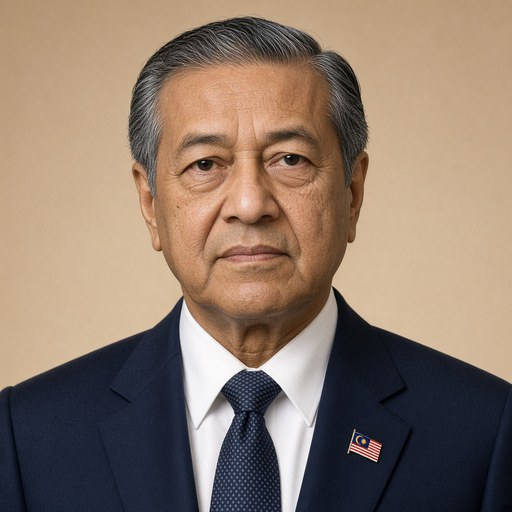
ANNUAL DINNER OF THE ADMINISTRATIVE AND DIPLOMATIC SERVICE ASSOCIATION (PPTD) AT NIRWANA HALL
 Mahathir Mohamad · Prime Minister of Malaysia
- Context
- Mahathir addressed the Administrative and Diplomatic Service Association annual dinner in Kuala Lumpur on 27 December 1981, speaking on governance and public service leadership.
- Main themes
- Public service leadership, sense of purpose and urgency, administrative and diplomatic service roles, governance models, national development, work ethic and dedication, Malaysia's potential and resources, responsibilities of government officials, complacency versus progress
- Duration
- ~13 min
- Words
- 1,527
- Sentences
- 72
- Readability
- 47
- Grade
- 11.8
- Syntax
- 2.87
- Vocabulary
- 2.38
Translated from Malay
The broad sphere of national life a sentence belongs to. Every sentence has an Arena, so it is the denominator the other indices are read against.
Other72 sentences in 16 paragraphs
Your Excellency Tun Dr. Hussein Onn and Toh Puan Suhailah; The Honorable Dato' Musa Hitam; The Honorable Tan Sri Hashim Aman, Chief Secretary to the Government; Distinguished Dr. Elyas Omar, President of the Administrative and Diplomatic Service Association; Honored Guests; Ladies and Gentlemen.
Assalamu'alaikum warahmatullahi wabarakatuh. On behalf of my wife and myself, I would like to express my heartfelt gratitude to the Administrative and Diplomatic Service Association, especially to the Honorable Dr. Elyas Omar, President of the Association, and all the members of the Association's Committee for inviting me to this Annual Dinner and for the honor bestowed upon me.
2. To me, the Administrative and Diplomatic Service represents senior officers who serve as managers and executives in a large part of the public sector. Members of the Administrative and Diplomatic Service are a significant part of those closely related to the performance of the public service machinery. Therefore, the opportunity to be present with all of you at an event like this is a golden opportunity for me to speak on certain matters. Although since I took office as Prime Minister, I have had several opportunities to meet and engage with many Administrative and Diplomatic Service officers.
3. Therefore, I would like to take this opportunity to touch upon the roles and responsibilities of managers and executives. What I will discuss is only a small part or "the tip of the iceberg" in the field of administration and management, which is the area of expertise of all of you. I am confident that, with your knowledge and experience, you will be able to reflect on these matters in more detail and thoroughly.
4. To me, there are two models of governance or management. The first model is when we are so impressed with our achievements that we become complacent and negligent until a situation awakens us from our delusion. The second model is when we always hold the view that what we have achieved is still low compared to the capabilities and potential we have or could develop, which results in us constantly striving to improve whatever we do. What distinguishes these two models is two things: first, "sense of purpose," and second, "sense of urgency." Determination, clear objectives, and prioritizing them. Therefore, it is best to forget the first model, which we can consider as the "complacency model" that will render an individual powerless and a nation and country as backward and weak.
Ladies and gentlemen.
6. For those of you who have traveled the world or visited other countries, you would surely agree with me about being citizens of this country. In some countries, it is not only almost impossible for foreigners to become citizens, but the opportunities to participate in economic activities and improve the living standards for a large part of the population are very dim. Just look at most countries, and we should be grateful that our people, as Malaysians, do not suffer from the hunger that now afflicts millions of people; we are not struck by natural disasters that take lives and destroy property and crops on a large scale.
7. As a small developing country with its problems amidst an unstable international political and economic environment, we must place "sense of purpose" and "sense of urgency" as two determinants or considerations in all our actions, regardless of whether in policy matters, planning, or implementation, and regardless of whether the matter is small or large. Thank God, we are fortunate to have various natural resources and raw materials that are valuable and needed by the world, our climate is good and can nourish crops and plants, and our geographical situation aids in our economic activities and relations. If we acknowledge all the factors I have mentioned, we will realize that we have the potential and all possibilities to become a respected and advanced nation and country. The factor that can turn this aspiration into reality is the perseverance to fulfill the goals and objectives of that aspiration with "a sense of urgency."
8. Since I took office as Prime Minister, I have repeatedly emphasized and explained how important it is to work diligently and with dedication. These qualities are not limited to any particular group or party but should become the traits and personality of the modern Malaysian nation. Therefore, these characteristics must also be the traits of modern managers and executives, whether they work in the public or private sector. What should drive and motivate every citizen is the quality of their efforts and the level of their achievements in doing something. High-quality efforts and achievements should provide satisfaction that cannot be measured in monetary terms or material rewards.
9. Government officials are managers and executives responsible for driving the Government machinery to achieve the set goals. The Government is the trustee of the people, and it must carry out its responsibilities efficiently, smoothly, and cleanly. Every government official, whether an administrator or a professional and technical officer, must uphold the aspirations I have mentioned. Every officer, in their context, is a manager and executive and must not forget or neglect the tasks required of a manager or executive. An officer must pay personal attention to management tasks such as planning, control, supervision, staff development, finance, maintenance, and others. I mention personal attention because taking action on a case or file in the financial field, for example, does not necessarily mean that an officer has fulfilled their financial duties, as the perfect execution of financial duties is to give importance and pay attention to every aspect of finance in terms of planning, implementation, control, and supervision. Without a clear concept of these tasks and how to execute them neatly and orderly, modern tools and environments may not help. That is why sometimes an organization continuously faces problems.
10. An officer must also have the attitude to carry out these tasks as efficiently and smoothly as possible. They must learn, read, and broaden their experience so that they can perform their duties well. Let me give an example to prove that management is more about "common sense." For instance, when I make a point about beautification and cleanliness, it is easy to see how much the principle of "common sense" has been applied by those responsible for carrying out this task. To beautify the roadsides, trees have been planted. Here, it would also be good if the relevant officer equips themselves by reading books about trees and the characteristics of certain trees in terms of diseases and care, and broadens their experience perhaps by asking nursery owners for more practical guidance. I mention this because sometimes the planted trees are not arranged properly, or trees that shed many leaves are planted in high-traffic areas, making cleaning difficult. Or trees that require meticulous care have been planted in places that are hard to maintain. Sometimes those who are instructed to water are told to water even when the trees have died. At times, trees are pruned so neatly for beautification, but the cut branches are not immediately disposed of but left to become "decorations." When lawnmowers are used, areas that are hard to reach are left untouched, adorned instead by weeds or long grass. I could continue to elaborate on "common sense" in the field of beautification and cleanliness. Likewise, I believe all of you can observe and feel "the state of the civil service" that requires our collective action to improve the entire Government machinery.
Ladies and gentlemen.
11. I believe that if every government officer gives importance and priority to "sense of purpose," "sense of urgency," and "common sense," and views a situation and the needs of tasks through these lenses, we will certainly achieve much. Only then will all efforts to improve systems and regulations make sense so that the services provided improve and the tools and work environment assist in more effective actions. I hope senior officers at the forefront, regardless of what service they are in, will make clear and constructive interpretations of the principles required to guide the entire Government members to enter and support a new era in efforts to enhance the performance of the machinery and the capabilities of the Government.
12. The Administrative and Diplomatic Service of Malaysia, formerly known as MCS, is regarded as an "elite service." This expression has its history in the colonial government administration system where there were elements of "master and servant." After independence, and with our desire to bring our country to a level of achievement comparable to developed countries and great civilizations, the concept of "elite" must mean leadership that is people-oriented and driven by high achievement standards. I am confident that if every Administrative and Diplomatic Service officer equips themselves with the characteristics I mentioned earlier and strives to enhance their capabilities to provide the highest quality service to the country, the Administrative and Diplomatic Service will become the "avant-garde" that brings change to a potential and dynamic public service. I want to see this phenomenon happen as soon as possible.
13. With this message and hope, I wish all of you success and a fruitful service to the nation.
Wassalamu'alaikum warahmatullahi wabarakatuh.
The original Malay. The tags above are read on the English translation's sentences.
Yang Amat Berbahagia Tun Dr. Hussein Onn dan Toh Puan Suhailah; Yang Amat Berhormat Dato' Musa Hitam Yang Berbahagia Tan Sri Hashim Aman, Ketua Setiausaha Negara; Yang Berusaha Dr. Elyas Omar, Presiden PPTD; Dif-dif Kehormat; Tuan-tuan dan Puan-puan sekelian.
Assalamu'alaikum warahmatullahi wabarakatuh.Bagi pihak isteri saya dan diri saya sendiri, saya mengucapkan berbanyak-banyak terima kasih kepada Persatuan Perkhidmatan Tadbir dan Diplomatik, khususnya kepada Yang Berusaha Dr. Elyas Omar, Presiden PPTD, serta sekelian ahli-ahli Jawatankuasa PPTD kerana sudi menjemput saya ke Majlis Makan Malam Tahunan ini dan di atas penghormatan yang diberikan kepada saya.
2. Bagi saya PTD memberi erti pegawai-pegawai kanan yang bertugas sebagai pengurus dan eksekutif sebahagian besar daripada sektor awam. Anggota PTD merupakan sebahagian besar daripada mereka yang berkait rapat dengan prestasi jentera perkhidmatan awam. Oleh itu peluang untuk hadhir bersama-sama saudara-saudara sekelian di dalam Majlis seperti ini, merupakan satu peluang keemasan bagi saya untuk memperkatakan sesuatu. Walaupun semenjak saya memegang jawatan Perdana Menteri saya telah beberapa kali berpeluang pertama saya berpeluang bertemu dan berhadapan dengan pegawai-pegawai PTD dengan begitu ramai sekali.
3. Oleh itu, sukalah saya mengambil kesempatan ini untuk menyentuh sedikit sebanyak mengenai peranan dan tanggungjawab pengurus dan eksekutif. Apa yang saya sentuh hanya merupakan sebahagian kecil atau "the tip of the iceburg" dalam bidang pentadbiran dan pengurusan, iaitu bidang yang menjadi kemahiran saudara-saudara sekelian.Saya yakin, dengan pengetahuan dan pengalaman tentulah saudara-saudara sekelian dapat merenung perkara-perkara ini dengan lebih terperinci dan teliti.
4. Bagi saya terdapat dua model pemerintahan ataupun pengurusan. Model pertama ialah apabila kita begitu kagum dengan pencapaian kita hinggakan kita menjadi puas hati dan lalai hinggalah sesuatu keadaan membangunkan kita daripada khayalan. Model kedua ialah apabila kita sentiasa berpendirian bahawa apa yang kita capai adalah masih rendah jika dibandingkan dengan kemampuan dan kebolehan yang ada atau yang mungkin kita adakan yang mengakibatkan kita sentiasa berusaha untuk memperbaiki apa-apa jua yang kita buat. Yang membezakan kedua-dua model ini ialah dua perkara, pertama "sense of purpose," dan kedua ialah "sense of urgency." tekad, jelas tujuannya dan kita memberi keutamaan dan kepentingan kepadanya. Oleh itu, elok kita lupakan model pertama, iaitu apa yang boleh kita anggap sebagai "complacency model" yang akan menjadikan seseorang manusia sebagai individu yang tidak bermaya dan sesuatu bangsa dan negara sebagai bangsa dan negara yang mundur dan lemah.
Saudara-saudara sekelian.
6. Bagi saudara-saudara yang telah menjelajah dunia atau melawat negara-negara lain tentu bersependapat dengan saya menjadi rakyat negara ini. Bagi setengah negara, bukan sahaja hampir mustahil bagi rakyat asing untuk menjadi warganegara tetapi peluang-peluang untuk menyertai kegiatan ekonomi dan memperbaiki taraf hidup bagi sebahagian besar penduduk adalah begitu malap sekali. Lihat sahaja kepada kebanyakan negara dan kita tentu bersyukur bahawa rakyat kita, sebagai rakyat Malaysia tidak mengalami kebuluran yang sekarang menimpa berjuta-juta manusia, kita tidak dilanda malapetaka bencana alam yang meragut nyawa dan memusnahkan harta benda dan tanaman dengan luas dan besar-besaran.
7. Sebagai sebuah negara membangun yang kecil dengan masalah-masalahnya di tengah-tengah suasana politik dan ekonomi antarabangsa yang tidak begitu stabil, kita tidak dapat tidak mesti meletakkan "sense of purpose" dan "sense of urgency" sebagai dua penentu atau pertimbangan dalam semua tindakan kita, tidak kira sama ada dalam perkara dasar, perancangan ataupun pelaksanaan, dan tidak kira sama ada perkara itu kecil atau besar. Syukur, alhamdulillah, kita bernasib baik mempunyai berbagai sumber alam dan bahan mentah yang bernilai dan diperlukan oleh dunia, iklim kita baik dan dapat menyuburkan tanaman dan tumbuhan, situasi kita dari segi geografi membantu dalam kegiatan dan hubungan ekonomi kita. Jika kita insafi segala faktor-faktor yang saya sebutkan itu kita akan sedar bahawa kita mempunyai potensi dan segala kemungkinan untuk menjadi satu bangsa dan negara yang maju dan disegani umum. Faktor yang boleh menjadikan cita-cita ini sebagai kenyataan ialah kegigihan berusaha untuk memenuhi tujuan dan matlamat cita-cita itu dengan "a sense of urgency." 8. Semenjak saya memegang jawatan Perdana Menteri saya telah berulang-kali menegas dan menjelaskan betapa pentingnya usaha yang gigih dan dedikasi di dalam menjalankan kerja. Sifat-sifat ini bukanlah terhad kepada mana-mana pihak atau golongan malahan harus menjadi sifat dan keperibadian bangsa Malaysia moden. Oleh itu ciri-ciri ini juga semestinyalah menjadi ciri pengurus dan eksekutif moden tidak kira sama ada mereka berkerja di dalam sektor awam ataupun sektor swasta. Yang harus menjadi pendorong dan penggerak setiap rakyat ialah mutu usahanya dan tingkat pencapaiannya dalam melakukan sesuatu. Mutu usaha dan tingkat pencapaian yang tinggi harus memberi kepuasan yang tidak dapat dinilai dengan wang ringgit dan ganjaran material.
9. Pegawai-pegawai Kerajaan adalah pengurus dan eksekutif yang bertanggungjawab bagi menggerakkan jentera Kerajaan untuk mencapai matlamat-matlamat yang ditentukan. Kerajaan adalah pemegang amanah rakyat dan ia harus menjalankan tanggungjawab-tanggungjawabnya dengan cekap, licin dan bersih. Setiap pegawai Kerajaan, tidak kira sama ada ianya seorang pentadbir atau seorang pegawai profesional dan teknikal, harus mendukung hasrat yang saya sebutkan itu.Setiap pegawai dalam konteksnya adalah seorang pengurus dan eksekutif dan ianya tidak harus lupa atau lalai daripada tugas-tugas yang dikehendaki daripada seorang pengurus atau eksekutif. Seseorang pegawai mestilah memberi perhatian yang personal kepada tugas-tugas pengurusan seperti perancangan, pengawalan, pengawasan, pembangunan staff, kewangan, maintenance dan lain-lain. Saya menyebutkan perhatian personal kerana mengambil tindakan terhadap sesuatu kes atau fail dalam bidang kewangan misalnya tidak semestinya bermakna seseorang pegawai itu telah melaksanakan tugas kewangan kerana pelaksanaan tugas kewangan yang sempurna ialah dengan memberi kepentingan dan mengambil perhatian kepada setiap aspek kewangan dari segi perancangan, pelaksanaan, pengawalan dan pengawasannya.Tanpa konsep yang jelas mengenai tugas-tugas ini dan cara melaksanakannya yang kemas dan teratur, peralatan dan suasana moden mungkin tidak dapat menolong. Itulah sebabnya kadang-kadang sesebuah organisasi itu tidak putus-putus mempunyai masalah.
10. Seseorang pegawai juga mestilah mempunyai sikap untuk melaksanakan tugas-tugas ini dengan paling cekap dan licin. Ia harus belajar, harus membaca, harus meluaskan pengalaman supaya ia dapat menjalankan tugasnya dengan baik. Biarlah saya memberi satu contoh untuk membuktikan bahawa sebenarnya pengurusan adalah lebih merupakan perkara yang berasaskan "common sense." Misalnya bila saya membuat perhatian tentang kecantikan dan kebersihan ataupun "beautification and cleanliness," dengan senang sahaja kita dapat melihat sejauh mana prinsip "common sense" ini telah digunakan oleh anggota-anggota yang bertanggungjawab bagi melaksanakan tugas ini. Untuk mencantikkan tepi-tepi jalan, pokok-pokok telah ditanam. Di sini elok juga kalau pegawai yang berkenaan melengkapkan dirinya dengan membaca buku mengenai pokok-pokok dan sifat-sifat pokok-pokok tertentu dari segi penyakit dan penjagaannya dan meluaskan pengalamannya mungkin dengan bertanyakan kepada tuan punya-tuan punya "nursery" untuk mendapatkan panduan yang lebih praktikal.Saya sebutkan perkara ini kerana ada ketikanya pokok yang ditanam tidak teratur, ataupun pokok yang banyak menggugurkan daun ditanamkan di tempat yang banyak lalu lintas hingga menyusahkan pembersihan. Ataupun pokok yang memerlukan jagaan yang begitu teliti telah di tanam di tempat-tempat yang susah untuk dijaga. Ada kalanya mereka yang menyiram disuruh menyiram walaupun pokoknya telah mati.Ada ketikanya pokok-pokok yang digunting dengan begitu rapi untuk memberi kecantikan tetapi ranting-ranting yang dipotong tidak dibuangkan serta merta tetapi dibiarkan pula untuk menjadi "hiasan". Apabila mesin memotong rumput digunakan tempat-tempat yang sukar dicapai oleh mesin dibiarkan begitu sahaja untuk dihiasi oleh lalang ataupun rumput-rumput yang panjang. Saya boleh terus menerus menghuraikan tentang "common sense" dalam bidang kecantikan dan pembersihan ini. Begitu juga saya rasa saudara-saudara sekelian tentu dapat memerhati dan merasai "the state of the civil service" yang memerlukan tindakan kita bersama untuk memperbaiki keseluruhan jentera Kerajaan.
Saudara-saudara sekelian.
11. Saya percaya sekiranya setiap pegawai Kerajaan memberi kepentingan dan keutamaan kepada "sense of purpose," "sense of urgency," dan "common sense," dan melihat sesuatu suasana dan keperluan tugas dari kaca mata-kaca mata ini sudah tentu banyak yang akan dapat kita capai. Dengan ini barulah bermakna segala usaha memperbaiki sistem dan peraturan supaya perkhidmatan yang diberikan bertambah baik dan peralatan serta suasana kerja dan membantu dalam tindakan yang lebih berkesan. Saya harap pegawai-pegawai kanan yang berada di barisan hadapan, sama ada dalam perkhidmatan apa jua sekalipun, akan membuat interpretasi yang jelas dan membina daripada prinsip-prinsip yang dikehendaki bagi memandu menggerak keseluruhan anggota-anggota Kerajaan untuk memasuki dan mendukung era baru dalam usaha meningkatkan prestasi jentera dan kemampuan Kerajaan.
12. Perkhidmatan Tadbir dan Diplomatik Malaysia yang dahulunya dipanggil MCS adalah dianggap sebagai "elite service." Ungkapan ini mempunyai sejarahnya dalam sistem pentadbiran Kerajaan penjajah di mana terdapat unsur-unsur "tuan dan hamba." Selepas merdeka, dan dengan hasrat kita untuk membawa negara kita kepada satu tahap pencapaian yang setaraf dengan negara-negara maju dan tamadun-tamadun besar, konsep "elite" mestilah membawa erti kepimpinan yang berjiwa rakyat dan yang didorong oleh mutu pencapaian yang tinggi.Saya yakin, sekiranya setiap pegawai PTD melengkapkan dirinya dengan ciri-ciri yang saya sebutkan tadi dan seterusnya berusaha untuk meningkatkan kemampuannya bagi memberi perkhidmatan yang paling bermutu kepada negara, PTD akan menjadi "avant garde" yang membawa perubahan kepada satu perkhidmatan awam yang berpotensi dan dinamis. Saya ingin melihat fenomena ini berlaku dalam masa yang sesingkat-singkatnya.
13. Dengan pesanan dan harapan ini saya mengucapkan kepada saudara-saudara sekelian selamat maju jaya dan selamat berkhidmat untuk negara.
Wassalamu'alaikum warahmatullahi wabarakatuh.