




Report to the Second Plenary Session of the Seventh Central Committee of the Communist Party of China
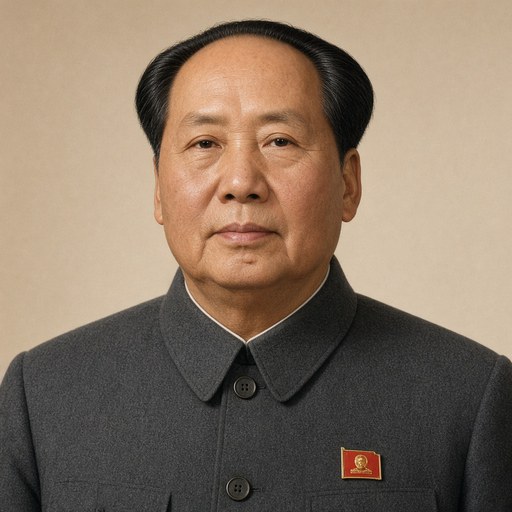
 Mao Zedong · Chairman of the Central Committee of the Communist Party of China
- Context
- Mao addressed the Second Plenary Session of the Seventh Central Committee of the Chinese Communist Party on March 5, 1949, shifting the Party's focus from countryside to cities and setting out economic, military and diplomatic policy for nationwide victory.
- Main themes
- Shift of the Party's work from village to city, Tientsin, Peiping and Suiyuan ways of dealing with Kuomintang troops, People's Liberation Army as fighting and working force, restoration of urban production, seven points on the new-democratic economy, regulation of capital and control of foreign trade, cooperatives for agriculture and handicrafts, destruction of imperialist control and recognition policy, negotiations with the Nanking government, Political Consultative Conference and coalition government, cooperation with democrats outside the Party, guarding against sugar-coated bullets
- Duration
- ~44 min
- Words
- 5,279
- Sentences
- 200
- Readability
- 36
- Grade
- 15.2
- Syntax
- 3.22
- Vocabulary
- 2.27
Translated from Chinese Source: GitHub qinglee/maoxuan (毛泽东选集) ↗
The broad sphere of national life a sentence belongs to. Every sentence has an Arena, so it is the denominator the other indices are read against.
Other200 sentences in 27 paragraphs
I
After the Liaohsi-Shenyang, Huai-Hai and Peiping-Tientsin campaigns, the main forces of the Kuomintang army have been destroyed. Only a little over one million Kuomintang combat troops remain, scattered over a vast area from Sinkiang to Taiwan and along very long fronts. From now on there are three ways of dealing with these one million and more Kuomintang troops: the Tientsin way, the Peiping way and the Suiyuan way. To deal with the enemy by fighting, as was done in Tientsin, must still be the first thing we pay attention to and prepare for. All commanders and fighters of the People's Liberation Army must never in the slightest relax their will to fight; any thinking that relaxes the will to fight or that underestimates the enemy is wrong. The possibility of settling problems in the Peiping way has increased, that is, compelling the enemy troops, by peaceful means, to reorganize quickly and thoroughly into the People's Liberation Army in accordance with the system of the People's Liberation Army. Settling problems in this way is somewhat less effective than settling them by war for the rapid sweeping away of counter-revolutionary remnants and the rapid elimination of counter-revolutionary political influence. But this way inevitably appears after the main forces of the enemy have been destroyed; it is unavoidable; and it is also to the advantage of our army and the people, that is, it can avoid casualties and destruction. Therefore, the leading comrades of all field armies should pay attention to this form of struggle and learn it. It is a form of struggle, a bloodless form of struggle; it does not mean that problems can be solved without struggle. The Suiyuan way is deliberately to keep a part of the Kuomintang troops intact, or largely intact, that is, to make a temporary concession to these troops in order to help win them over politically to our side or keep them neutral, so that we can concentrate our forces on first dealing with the main part of the remaining Kuomintang forces, and then, after a fairly long time (for example, after a few months, half a year or a year), go on to reorganize these troops into the People's Liberation Army in accordance with the system of the People's Liberation Army. This is another form of struggle. This form of struggle will preserve more of the counter-revolutionary remnants and counter-revolutionary political influence than the Peiping way, and preserve them for a longer time. But there is not the slightest doubt that these counter-revolutionary remnants and this counter-revolutionary political influence will in the end be eliminated. We must never think that once the counter-revolutionary forces submit to us, they become revolutionaries and their counter-revolutionary ideas and designs cease to exist. Certainly not. Many of them will be remoulded, some of them will be weeded out, and certain resolute counter-revolutionaries will be suppressed.
II
The People's Liberation Army is always a fighting force. Even after nationwide victory, during the historical period in which classes have not been abolished in our country and the imperialist system still exists in the world, our army will remain a fighting force. There must be no misunderstanding or wavering on this point. The People's Liberation Army is also a working force, especially when problems are being settled in the Peiping way or the Suiyuan way in the various parts of the south. As fighting gradually decreases, its role as a working force increases. There is a possible situation in which, before very long, the People's Liberation Army will be entirely transformed into a working force, and we must take this situation into account. The 53,000 cadres now ready to go south with the army are very inadequate for the immense new areas we shall soon occupy, and we must prepare to turn all of our 2,100,000 field troops into a working force. Then there will be enough cadres, and work can be developed in the vast areas. We must look upon our 2,100,000 field troops as a gigantic school for cadres.
III
From 1927 to the present, the centre of gravity of our work has been in the villages, gathering strength in the villages, using the villages to encircle the cities and then taking the cities. The period for this method of work has now ended. From now on, the period has begun of going from the city to the village and of the city leading the village. The centre of gravity of the Party's work has shifted from the village to the city. In the various parts of the south, the People's Liberation Army will occupy the cities first and the countryside afterwards. Attention must be given to both city and countryside, and urban work and rural work, workers and peasants, industry and agriculture, must be closely linked. On no account may the countryside be neglected and attention be paid only to the city; such thinking is entirely wrong. Nevertheless, the centre of gravity of the work of the Party and the army must be in the cities; we must exert the utmost effort to learn how to administer and build the cities. We must learn how to wage political, economic and cultural struggles against the imperialists, the Kuomintang and the bourgeoisie in the cities, and also how to wage diplomatic struggles against the imperialists. We must learn how to carry on open struggles against them, and we must also learn how to carry on covert struggles against them. If we do not pay attention to these problems, if we do not learn how to wage these struggles against these people and win victory in the struggles, we shall be unable to maintain our political power, we shall be unable to stand on our feet, we shall fail. After the enemies with guns have been wiped out, there will still be enemies without guns; they are bound to wage a life-and-death struggle against us, and we must never underestimate these enemies. If we do not now raise and understand the problem in this way, we shall commit the gravest mistakes.
IV
On whom shall we rely in our struggles in the cities? Some muddle-headed comrades think we should rely not on the working class but on the masses of the poor. Some comrades who are even more muddle-headed think we should rely on the bourgeoisie. As for the direction of industrial development, some muddle-headed comrades maintain that we should mainly help the development of private enterprise and not state enterprise; or, conversely, that it is enough to pay attention to state enterprise and that private enterprise is of little importance. We must criticize these muddled views. We must rely wholeheartedly on the working class, unite with the rest of the labouring masses, win over the intellectuals, and win over to our side, or keep neutral, as many as possible of the national bourgeois elements and their representatives who can cooperate with us, so that we can wage a determined struggle against the imperialists, the Kuomintang and the bureaucrat-bourgeoisie and defeat these enemies step by step. At the same time we shall begin our work of construction and learn, step by step, how to administer the cities and restore and develop production in them. Regarding the restoration and development of production, it must be established: first, the production of state industry; second, the production of private industry; third, handicraft production. From the very first day we take over a city, our eyes must be turned towards the restoration and development of its production. We must on no account grab at things and blunder about blindly, forgetting the central task, with the result that several months after occupying a city its production and construction still have not got on the right track, and many industries have even come to a standstill, causing unemployment among the workers, lowering their standard of living and making them dissatisfied with the Communist Party. Such a state of affairs is absolutely impermissible. To this end, our comrades must do their utmost to learn the techniques of production and the methods of managing production, and must learn commerce, banking and other work closely related to production. Only when production in the cities has been restored and developed, when consumer cities have been transformed into producer cities, can the people's political power be consolidated. Other work in the cities, for example, Party organizational work, the work of the organs of political power, trade union work, the work of the various other people's organizations, work in culture and education, the work of suppressing counter-revolutionaries, and the work of news agencies, newspapers and broadcasting stations, all revolves around and serves the central task of production and construction. If we are ignorant in production work, cannot quickly learn production work, cannot restore and develop production as speedily as possible and achieve solid results, first improving the lives of the workers and then improving the lives of the people in general, we shall be unable to maintain our political power, we shall be unable to stand on our feet, we shall fail.
V
Conditions in the south differ from those in the north, and so the Party's tasks must also differ. The south is still under Kuomintang rule at present. There, the tasks of the Party and the People's Liberation Army are to wipe out the reactionary Kuomintang armed forces in city and countryside, set up Party organizations, set up organs of political power, arouse the masses, set up trade unions, peasant associations and other people's organizations, build people's armed forces, eliminate the Kuomintang remnant forces, and restore and develop production. In the countryside, the first thing is to launch, step by step, struggles to clean up bandits and to oppose the local despots, that is, the faction of the landlord class in power, and to complete preparations for the reduction of rent and interest, so that the task of rent and interest reduction can be accomplished about one or two years after the arrival of the People's Liberation Army in a given area, creating the prerequisites for the distribution of land; at the same time care must be taken to maintain the present level of agricultural production as far as possible and prevent it from falling. In the north, apart from a few newly liberated areas, the situation is entirely different. Here Kuomintang rule has been overthrown, the people's rule has been established, and the land problem has been fundamentally solved. The Party's central task here is to mobilize all forces to restore and develop production; this is the centre of gravity of all work. At the same time it is necessary to restore and develop cultural and educational work, eliminate the remnant reactionary forces, consolidate the whole north and support the People's Liberation Army.
VI
We have already carried out extensive economic construction, and the Party's economic policy has been put into effect in practical work and has achieved marked success. However, on the question of why this economic policy and not some other should be adopted, on questions of theory and principle, there are many muddled ideas within the Party. How should this question be answered? We think it should be answered as follows. As to the proportions of industry and agriculture in China's national economy, for the country as a whole, before the War of Resistance Against Japan, modern industry accounted for about 10 per cent and agriculture and handicrafts for about 90 per cent. This was the result of oppression of China by the imperialist system and the feudal system, the economic expression of the semi-colonial and semi-feudal character of old China's society, and also the basic point of departure for all questions in the period of the Chinese revolution and for a fairly long period after the victory of the revolution. From this point of departure arise a whole series of questions of strategy, tactics and policy for our Party. A further clear understanding and solution of these questions is an important task for our Party at present. That is to say:
First, China already has a modern industrial economy of about 10 per cent; this is progressive, this is different from ancient times. Because of this, China already has new classes and new political parties — the proletariat and the bourgeoisie, proletarian and bourgeois political parties. The proletariat and its party, having been oppressed by several kinds of enemies, have been steeled and have become qualified to lead the Chinese people's revolution. Whoever overlooks or underestimates this point will commit the error of Right opportunism.
Second, China still has about 90 per cent of its economy in scattered, individual agriculture and handicrafts; this is backward, this is not very different from ancient times — about 90 per cent of our economic life remains in ancient times. In ancient times there was feudal ownership of land, which we have abolished or are about to abolish; in this respect we have become, or soon will become, different from ancient times, and we have gained, or soon will gain, the possibility of gradually developing our agriculture and handicrafts in the direction of modernization. But today, and for a fairly long time to come, our agriculture and handicrafts, in their basic form, are and will remain scattered and individual, that is to say, similar to those of ancient times. Whoever overlooks or underestimates this point will commit the error of "Left" opportunism.
Third, although the output value of China's modern industry still accounts for only about 10 per cent of the total output value of the national economy, it is extremely concentrated; the largest and most important part of the capital is concentrated in the hands of the imperialists and their lackeys, the Chinese bureaucrat-capitalists. The confiscation of this capital and its transfer to the people's republic led by the proletariat will enable the people's republic to control the economic lifelines of the country and will make the state-owned economy the leading component of the entire national economy. This part of the economy is socialist in character, not capitalist. Whoever overlooks or underestimates this point will commit the error of Right opportunism.
Fourth, China's private capitalist industry occupies second place in modern industry and is a force that must not be ignored. Because they have been oppressed or restricted by imperialism, feudalism and bureaucrat-capitalism, China's national bourgeoisie and its representatives have often taken part in the people's democratic revolutionary struggle or maintained a neutral stand. For these reasons, and because China's economy is still backward, there will be a need, for a fairly long period after the victory of the revolution, to make use of the positive qualities of urban and rural private capitalism as far as possible, in the interest of developing the national economy. In this period, all components of urban and rural capitalism that are not harmful but beneficial to the national economy should be allowed to exist and develop. This is not only unavoidable but also economically necessary. But the existence and development of capitalism in China will not be unrestricted and uncurbed as in the capitalist countries. It will be restricted from several directions — in the scope of its operations, in tax policy, in market prices and in labour conditions. We shall adopt well-measured and flexible policies for restricting capitalism from various directions, according to the specific conditions in each place, each line of business and each period. Sun Yat-sen's slogan of "regulation of capital" we must still use and can still use. But for the sake of the whole national economy and the present and future interests of the working class and the labouring people, we must never restrict private capitalist economy too much or too rigidly; we must allow it room to exist and develop within the orbit of the economic policy and economic planning of the people's republic. The policy of restricting private capitalism is bound to meet with resistance in varying degrees and forms from the bourgeoisie, especially from the big owners of private enterprises, that is, the big capitalists. Restriction versus opposition to restriction will be the main form of class struggle within the new-democratic state. It is entirely wrong to think that we need not restrict capitalism now and can discard the slogan of "regulation of capital"; that is the viewpoint of Right opportunism. But conversely, it is also entirely wrong to think that private capital should be restricted too much or too rigidly, or that private capital can simply be eliminated very quickly; that is the viewpoint of "Left" opportunism or adventurism.
Fifth, the scattered, individual agriculture and handicrafts, which make up 90 per cent of the total output value of the national economy, can and must be led prudently, step by step and yet actively, to develop towards modernization and collectivization; the view that they may be left to take their own course is wrong. It is necessary to organize producers', consumers' and credit cooperatives and leading bodies of cooperatives at the central, provincial, municipal, county and district levels. Such cooperatives are collective economic organizations of the labouring masses, based on private ownership and under the direction of the state power led by the proletariat. The cultural backwardness of the Chinese people and their lack of a tradition of cooperatives may cause us difficulties; but cooperatives can be organized, must be organized, must be popularized and developed. With only a state-owned economy and no cooperative economy, it would be impossible for us to lead the individual economy of the labouring people step by step towards collectivization, impossible to develop from a new-democratic society into the future socialist society, and impossible to consolidate the leadership of the proletariat in the state power. Whoever overlooks or underestimates this point will likewise commit the gravest of errors. The state-owned economy is socialist in character, and the cooperative economy is semi-socialist; these, plus private capitalism, plus the individual economy, plus the state-capitalist economy in which the state and private capital cooperate, are the main components of the economy of the people's republic; these constitute the new-democratic economic formation.
Sixth, the restoration and development of the national economy of the people's republic would be impossible without a policy of control of foreign trade. When imperialism, feudalism, bureaucrat-capitalism and the rule of the Kuomintang (which is the concentrated expression of these three) have been eliminated from China, the problem of establishing an independent and integrated industrial system will still not have been solved; it will be finally solved only when our economy has been greatly developed and China has been transformed from a backward agricultural country into an advanced industrial country. And to achieve this end, control of foreign trade is indispensable. After the countrywide victory of the Chinese revolution and the solution of the land problem, two basic contradictions will still exist in China. The first is internal, that is, the contradiction between the working class and the bourgeoisie. The second is external, that is, the contradiction between China and the imperialist countries. Because of this, after the victory of the people's democratic revolution, the state power of the people's republic led by the working class must not be weakened but must be strengthened. Regulation of capital at home and control of foreign trade abroad are the two basic policies of this state in its economic struggle. Whoever overlooks or underestimates this point will commit the gravest of errors.
Seventh, China's economic heritage is backward, but the Chinese people are brave and industrious; with the victory of the Chinese people's revolution and the founding of the people's republic, the leadership of the Communist Party of China, and in addition the assistance of the working class of the countries of the world, chiefly the assistance of the Soviet Union, the speed of China's economic construction will not be very slow but may be fairly fast, and the prosperity of China can be counted on day by day. There is no ground whatever for pessimism about China's economic revival.
VII
Old China was a semi-colonial country under imperialist control. The thoroughly anti-imperialist character of the Chinese people's democratic revolution has made the imperialists bitterly hostile to this revolution and led them to help the Kuomintang with all their might. This has aroused the deep indignation of the Chinese people against the imperialists even more and has caused the imperialists to lose their last shred of prestige among the Chinese people. At the same time, the whole imperialist system has been greatly weakened since the Second World War, while the strength of the world anti-imperialist front headed by the Soviet Union has grown as never before. All these circumstances make it possible for us, and require us, to adopt the policy of systematically and thoroughly destroying imperialist control in China. This imperialist control is manifested in the political, economic, cultural and other spheres. In every city and every place where the Kuomintang troops are wiped out and the Kuomintang government is overthrown, imperialist political control is overthrown with it, and so is imperialist economic and cultural control. But the economic and cultural establishments run directly by the imperialists are still there, and so are the diplomatic personnel and the journalists recognized by the Kuomintang. We must deal with all these properly, in order of priority and urgency. Refusing to recognize the legal status of any foreign diplomatic establishments and personnel of the Kuomintang period, refusing to recognize the continued existence of any of the treacherous treaties of the Kuomintang period, abolishing all imperialist propaganda agencies in China, immediately taking control of foreign trade and reforming the customs system — these are the first steps we must take upon entering the big cities. When we have done these things, the Chinese people will have stood up in the face of imperialism. As for the remaining imperialist economic and cultural establishments, they can be allowed to exist for the time being, subject to our supervision and control, to be dealt with after our countrywide victory. As for ordinary foreign nationals, their legitimate interests will be protected and not infringed upon. As for the question of the recognition of our country by the imperialist countries, we should not be in a hurry to solve it now, and need not be in a hurry to solve it even for a fairly long period after countrywide victory. We are willing to establish diplomatic relations with all countries on the principle of equality, but the imperialists, who have always been hostile to the Chinese people, will definitely not be quick to treat us as equals, and so long as they do not change their hostile attitude, we shall not for a single day grant the imperialist countries legal status in China. As for doing business with foreigners, there is no question about that; wherever there is business to be done, we shall do it, and we have already started; the businessmen of several capitalist countries are competing with one another. So far as possible, we must first of all trade with the socialist and people's democratic countries; at the same time we will also trade with capitalist countries.
VIII
All the conditions are ripe for convening the Political Consultative Conference and forming a democratic coalition government. All the democratic parties, people's organizations and democrats without party affiliation are on our side. The bourgeoisie of Shanghai and the Yangtze valley is trying to establish ties with us. Shipping and postal services between north and south have already begun. The Kuomintang, which has fallen apart, has become divorced from all the masses. We are preparing to negotiate with the reactionary Nanking government. The forces pushing for these negotiations on the side of the reactionary Nanking government are the Kwangsi warlords, the peace faction of the Kuomintang and the Shanghai bourgeoisie. Their aim is to get a share for themselves in the coalition government, to keep as many troops as possible, to preserve the interests of the bourgeoisie of Shanghai and the south, and to do their utmost to give the revolution a moderate colouring. These people accept our eight terms as the basis for negotiations, but they hope to bargain so that their losses will not be too great. Those who are trying to wreck these negotiations are Chiang Kai-shek and his diehards. Chiang Kai-shek still has sixty divisions south of the Yangtze, and they are still preparing to fight. Our policy is not to refuse negotiations but to demand that the other side accept the eight terms in their entirety, with no bargaining allowed. In exchange, we will not fight the Kwangsi clique and the other members of the Kuomintang peace faction; we will postpone the reorganization of their troops for about a year; some of the personnel of the Nanking government will be allowed to take part in the Political Consultative Conference and the coalition government; and certain interests of the bourgeoisie of Shanghai and the south will be allowed protection. These negotiations are comprehensive in nature; if they succeed, they will remove many obstacles to our advance into the south and our occupation of the big cities of the south, and this will be of great benefit. If they fail, local negotiations will be carried on separately after our advance. The negotiations are planned for the latter part of March. We hope to occupy Nanking in April or May, then convene the Political Consultative Conference in Peiping, form a coalition government and make Peiping the capital. Since we have agreed to negotiate, we must be prepared for the many troublesome things that will come after the negotiations succeed, and we must be prepared, with a clear head, to deal with the policy the other side will adopt of acting like Monkey, who got into the belly of the Princess of the Iron Fan to play havoc there. So long as we are fully prepared mentally, we can defeat any Monkey who plays havoc. Whether the peace negotiations are general or local, we should prepare for them in this way. We should not refuse these negotiations because we are afraid of trouble and want peace and quiet, nor should we accept these negotiations in a muddle-headed way. We must be firm in principle; we must also have all the flexibility that is permissible and necessary for carrying out our principles.
IX
The people's democratic dictatorship led by the proletariat and based on the worker-peasant alliance requires that our Party conscientiously unite the entire working class, the entire peasantry and the broad masses of revolutionary intellectuals; these are the leading force and the basic force of this dictatorship. Without this unity, this dictatorship cannot be consolidated. It also requires that our Party unite with as many as possible of the representatives of the urban petty bourgeoisie and national bourgeoisie who can cooperate with us, and with their intellectuals and political groups, so that, during the revolution, the counter-revolutionary forces may be isolated and the domestic counter-revolutionary forces and imperialist forces thoroughly overthrown, and so that, after the victory of the revolution, production may be speedily restored and developed, foreign imperialism dealt with, China steadily transformed from an agricultural into an industrial country and built into a great socialist country. Therefore, the policy of our Party of long-term cooperation with democrats outside the Party must be firmly established in the thinking and work of the whole Party. We must regard the majority of democrats outside the Party as we do our own cadres, consult and settle with them sincerely and frankly those problems that require consultation and settlement, give them work to do, give them real authority in their posts and help them make a success of their work. Proceeding from the desire to unite with them, we should carry on serious and appropriate criticism or struggle against their errors and shortcomings, so as to achieve the aim of uniting with them. It would be wrong to adopt an accommodating attitude towards their errors or shortcomings. It would also be wrong to adopt a closed-door or perfunctory attitude towards them. In every big and medium city, in every strategic region and in every province, we should cultivate a group of democrats outside the Party who have prestige and can cooperate with us. The incorrect attitude towards democrats outside the Party, fostered within our Party by the closed-door style of work during the Agrarian Revolutionary War, was not completely overcome during the War of Resistance Against Japan, and it appeared again in 1947 during the high tide of land reform in the base areas. This attitude would only isolate our Party, prevent the consolidation of the people's democratic dictatorship and provide the enemy with allies. Now that, for the first time in China, a Political Consultative Conference under the leadership of our Party is about to be convened, a democratic coalition government is about to be established and the revolution is about to win victory throughout the country, the whole Party must seriously examine this question and gain a correct understanding of it, must oppose both tendencies — the Rightist tendency of accommodationism and the "Left" tendency of closed-doorism or perfunctoriness — and adopt an entirely correct attitude.
X
Very soon we shall be victorious throughout the country. This victory will break through the eastern front of imperialism and will have great international significance. To win this victory will not require much more time or much more effort; to consolidate it will require a great deal of time and a great deal of effort. The bourgeoisie doubts our ability to construct. The imperialists reckon that eventually we will have to beg alms from them in order to live. Because of victory, certain moods may grow within the Party — arrogance, the airs of a self-styled hero, inertia and unwillingness to make progress, love of pleasure and distaste for continued hard living. Because of victory, the people are grateful to us and the bourgeoisie will come forward to flatter us. It has been proved that the enemy cannot conquer us by force of arms. However, the flattery of the bourgeoisie may conquer the weak-willed in our ranks. There may be some Communists who were never conquered by enemies with guns and who deserved the name of heroes in face of these enemies, but who cannot withstand sugar-coated bullets; they will be defeated by sugar-coated bullets. We must guard against such a situation. To win countrywide victory is only the first step in a long march of ten thousand li. Even if this step is worthy of pride, it is comparatively tiny; what will be more worthy of pride is yet to come. When we look back on the victory of the Chinese people's democratic revolution after several decades, it will seem like only a brief prologue to a long drama. A drama must begin with a prologue, but the prologue is not the climax. The Chinese revolution is great, but the road after the revolution is longer, the work greater and more arduous. This must be made clear in the Party now. The comrades must be helped to remain modest, prudent and free from arrogance and rashness in their style of work. The comrades must be helped to preserve the style of plain living and hard struggle. We have the Marxist-Leninist weapon of criticism and self-criticism. We can get rid of a bad style and keep a good one. We can learn what we did not know. We are not only good at destroying the old world, we shall also be good at building the new. Not only can the Chinese people live without begging alms from the imperialists, they will live a better life than that in the imperialist countries.
The original Chinese. The tags above are read on the English translation's sentences.
一
辽沈、淮海、平津三战役以后,国民党军队的主力已被消灭。国民党的作战部队仅仅剩下一百多万人,分布在新疆到台湾的广大的地区内和漫长的战线上。今后解决这一百多万国民党军队的方式,不外天津、北平、绥远三种。用战斗去解决敌人,例如解决天津的敌人那样,仍然是我们首先必须注意和必须准备的。人民解放军的全体指挥员、战斗员,绝对不可以稍微松懈自己的战斗意志,任何松懈战斗意志的思想和轻敌的思想,都是错误的。按照北平方式解决问题的可能性是增加了,这就是迫使敌军用和平方法,迅速地彻底地按照人民解放军的制度改编为人民解放军。用这种方法解决问题,对于反革命遗迹的迅速扫除和反革命政治影响的迅速肃清,比较用战争方法解决问题是要差一些的。但是,这种方法是在敌军主力被消灭以后必然地要出现的,是不可避免的;同时也是于我军于人民有利的,即是可以避免伤亡和破坏。因此,各野战军领导同志都应注意和学会这样一种斗争方式。这是一种斗争方式,是一种不流血的斗争方式,并不是不用斗争可以解决问题的。绥远方式,是有意地保存一部分国民党军队,让它原封不动,或者大体上不动,就是说向这一部分军队作暂时的让步,以利于争取这部分军队在政治上站在我们方面,或者保持中立,以便我们集中力量首先解决国民党残余力量中的主要部分,在一个相当的时间之后(例如在几个月,半年,或者一年之后),再去按照人民解放军制度将这部分军队改编为人民解放军。这是又一种斗争方式。这种斗争方式对于反革命遗迹和反革命的政治影响,较之北平方式将要保留得较多些,保留的时间也将较长些。但是这种反革命遗迹和反革命政治影响,归根到底要被肃清,这是毫无疑问的。决不可以认为反革命力量顺从我们了,他们就成了革命党了,他们的反革命思想和反革命企图就不存在了。决不是这样。他们中的许多人将被改造,他们中的一部分人将被淘汰,某些坚决反革命分子将受到镇压。
二
人民解放军永远是一个战斗队。就是在全国胜利以后,在国内没有消灭阶级和世界上存在着帝国主义制度的历史时期内,我们的军队还是一个战斗队。对于这一点不能有任何的误解和动摇。人民解放军又是一个工作队,特别是在南方各地用北平方式或者绥远方式解决问题的时候是这样。随着战斗的逐步地减少,工作队的作用就增加了。有一种可能的情况,即在不要很久的时间之内,将要使人民解放军全部地转化为工作队,这种情况我们必须估计到。现在准备随军南下的五万三千个干部,对于不久将要被我们占领的极其广大的新地区来说,是很不够用的,我们必须准备把二百一十万野战军全部地化为工作队。这样,干部就够用了,广大地区的工作就可以展开了。我们必须把二百一十万野战军看成一个巨大的干部学校。
三
从一九二七年到现在,我们的工作重点是在乡村,在乡村聚集力量,用乡村包围城市,然后取得城市。采取这样一种工作方式的时期现在已经完结。从现在起,开始了由城市到乡村并由城市领导乡村的时期。党的工作重心由乡村移到了城市。在南方各地,人民解放军将是先占城市,后占乡村。城乡必须兼顾,必须使城市工作和乡村工作,使工人和农民,使工业和农业,紧密地联系起来。决不可以丢掉乡村,仅顾城市,如果这样想,那是完全错误的。但是党和军队的工作重心必须放在城市,必须用极大的努力去学会管理城市和建设城市。必须学会在城市中向帝国主义者、国民党、资产阶级作政治斗争、经济斗争和文化斗争,并向帝国主义者作外交斗争。既要学会同他们作公开的斗争,又要学会同他们作荫蔽的斗争。如果我们不去注意这些问题,不去学会同这些人作这些斗争,并在斗争中取得胜利,我们就不能维持政权,我们就会站不住脚,我们就会失败。在拿枪的敌人被消灭以后,不拿枪的敌人依然存在,他们必然地要和我们作拚死的斗争,我们决不可以轻视这些敌人。如果我们现在不是这样地提出问题和认识问题,我们就要犯极大的错误。
四
在城市斗争中,我们依靠谁呢?有些糊涂的同志认为不是依靠工人阶级,而是依靠贫民群众。有些更糊涂的同志认为是依靠资产阶级。在发展工业的方向上,有些糊涂的同志认为主要地不是帮助国营企业的发展,而是帮助私营企业的发展;或者反过来,认为只要注意国营企业就够了,私营企业是无足轻重的了。我们必须批判这些糊涂思想。我们必须全心全意地依靠工人阶级,团结其它劳动群众,争取知识分子,争取尽可能多的能够同我们合作的民族资产阶级分子及其代表人物站在我们方面,或者使他们保持中立,以便向帝国主义者、国民党、官僚资产阶级作坚决的斗争,一步一步地去战胜这些敌人。同时即开始着手我们的建设事业,一步一步地学会管理城市,恢复和发展城市中的生产事业。关于恢复和发展生产的问题,必须确定:第一是国营工业的生产,第二是私营工业的生产,第三是手工业生产。从我们接管城市的第一天起,我们的眼睛就要向着这个城市的生产事业的恢复和发展。务须避免盲目地乱抓乱碰,把中心任务忘记了,以至于占领一个城市好几个月,生产建设的工作还没有上轨道,甚至许多任务业陷于停顿状态,引起工人失业,工人生活降低,不满意共产党。这种状态是完全不能容许的。为了这一点,我们的同志必须用极大的努力去学习生产的技术和管理生产的方法,必须去学习同生产有密切联系的商业工作、银行工作和其它工作。只有将城市的生产恢复起来和发展起来了,将消费的城市变成生产的城市了,人民政权才能巩固起来。城市中其它的工作,例如党的组织工作,政权机关的工作,工会的工作,其它各种民众团体的工作,文化教育方面的工作,肃反工作,通讯社报纸广播电台的工作,都是围绕着生产建设这一个中心工作并为这个中心工作服务的。如果我们在生产工作上无知,不能很快地学会生产工作,不能使生产事业尽可能迅速地恢复和发展,获得确实的成绩,首先使工人生活有所改善,并使一般人民的生活有所改善,那我们就不能维持政权,我们就会站不住脚,我们就会要失败。
五
南方和北方的情况是不同的,党的工作任务也就必须有所区别。南方现时还是被国民党统治的区域。在这里,党和人民解放军的任务是在城市和乡村中消灭国民党的反动武装力量,建立党的组织,建立政权,发动民众,建立工会、农会和其它民众团体,建立人民武装力量,肃清国民党残余势力,恢复和发展生产事业。在乡村中,则是首先有步骤地展开清剿土匪和反对恶霸即地主阶级当权派的斗争,完成减租减息的准备工作,以便在人民解放军到达那个地区大约一年或者两年以后,就能实现减租减息的任务,造成分配土地的先决条件;同时必须注意尽可能地维持农业生产的现有水平不使降低。北方则除少数新解放区以外,是完全另外一种情况。在这里,已经推翻了国民党的统治,建立了人民的统治,并且根本上解决了土地问题。党在这里的中心任务,是动员一切力量恢复和发展生产事业,这是一切工作的重点所在。同时必须恢复和发展文化教育事业,肃清残余的反动力量,巩固整个北方,支持人民解放军。
六
我们已经进行了广泛的经济建设工作,党的经济政策已经在实际工作中实施,并且收到了显着的成效。但是,在为什么应当采取这样的经济政策而不应当采取别样的经济政策这个问题上,在理论和原则性的问题上,党内是存在着许多糊涂思想的。这个问题应当怎样来回答呢?我们认为应当这样地来回答。中国的工业和农业在国民经济中的比重,就全国范围来说,在抗日战争以前,大约是现代性的工业占百分之十左右,农业和手工业占百分之九十左右。这是帝国主义制度和封建制度压迫中国的结果,这是旧中国半殖民地和半封建社会性质在经济上的表现,这也是在中国革命的时期内和在革命胜利以后一个相当长的时期内一切问题的基本出发点。从这一点出发,产生了我党一系列的战略上、策略上和政策上的问题。对于这些问题的进一步的明确的认识和解决,是我党当前的重要任务。这就是说:
第一,中国已经有大约百分之十左右的现代性的工业经济,这是进步的,这是和古代不同的。由于这一点,中国已经有了新的阶级和新的政党——无产阶级和资产阶级,无产阶级政党和资产阶级政党。无产阶级及其政党,由于受到几重敌人的压迫,得到了锻炼,具有了领导中国人民革命的资格。谁要是忽视或轻视了这一点,谁就要犯右倾机会主义的错误。
第二,中国还有大约百分之九十左右的分散的个体的农业经济和手工业经济,这是落后的,这是和古代没有多大区别的,我们还有百分之九十左右的经济生活停留在古代。古代有封建的土地所有制,现在被我们废除了,或者即将被废除,在这点上,我们已经或者即将区别于古代,取得了或者即将取得使我们的农业和手工业逐步地向着现代化发展的可能性。但是,在今天,在今后一个相当长的时期内,我们的农业和手工业,就其基本形态说来,还是和还将是分散的和个体的,即是说,同古代近似的。谁要是忽视或轻视了这一点,谁就要犯“左”倾机会主义的错误。
第三,中国的现代性工业的产值虽然还只占国民经济总产值的百分之十左右,但是它却极为集中,最大的和最主要的资本是集中在帝国主义者及其走狗中国官僚资产阶级的手里。没收这些资本归无产阶级领导的人民共和国所有,就使人民共和国掌握了国家的经济命脉,使国营经济成为整个国民经济的领导成分。这一部分经济,是社会主义性质的经济,不是资本主义性质的经济。谁要是忽视或轻视了这一点,谁就要犯右倾机会主义的错误。
第四,中国的私人资本主义工业,占了现代性工业中的第二位,它是一个不可忽视的力量。中国的民族资产阶级及其代表人物,由于受了帝国主义、封建主义和官僚资本主义的压迫或限制,在人民民主革命斗争中常常采取参加或者保持中立的立场。由于这些,并由于中国经济现在还处在落后状态,在革命胜利以后一个相当长的时期内,还需要尽可能地利用城乡私人资本主义的积极性,以利于国民经济的向前发展。在这个时期内,一切不是于国民经济有害而是于国民经济有利的城乡资本主义成分,都应当容许其存在和发展。这不但是不可避免的,而且是经济上必要的。但是中国资本主义的存在和发展,不是如同资本主义国家那样不受限制任其泛滥的。它将从几个方面被限制——在活动范围方面,在税收政策方面,在市场价格方面,在劳动条件方面。我们要从各方面,按照各地、各业和各个时期的具体情况,对于资本主义采取恰如其分的有伸缩性的限制政策。孙中山的节制资本的口号,我们依然必须用和用得着。但是为了整个国民经济的利益,为了工人阶级和劳动人民现在和将来的利益,决不可以对私人资本主义经济限制得太大太死,必须容许它们在人民共和国的经济政策和经济计划的轨道内有存在和发展的余地。对于私人资本主义采取限制政策,是必然要受到资产阶级在各种程度和各种方式上的反抗的,特别是私人企业中的大企业主,即大资本家。限制和反限制,将是新民主主义国家内部阶级斗争的主要形式。如果认为我们现在不要限制资本主义,认为可以抛弃“节制资本”的口号,这是完全错误的,这就是右倾机会主义的观点。但是反过来,如果认为应当对私人资本限制得太大太死,或者认为简直可以很快地消灭私人资本,这也是完全错误的,这就是“左”倾机会主义或冒险主义的观点。
第五,占国民经济总产值百分之九十的分散的个体的农业经济和手工业经济,是可能和必须谨慎地、逐步地而又积极地引导它们向着现代化和集体化的方向发展的,任其自流的观点是错误的。必须组织生产的、消费的和信用的合作社,和中央、省、市、县、区的合作社的领导机关。这种合作社是以私有制为基础的在无产阶级领导的国家政权管理之下的劳动人民群众的集体经济组织。中国人民的文化落后和没有合作社传统,可能使得我们遇到困难;但是可以组织,必须组织,必须推广和发展。单有国营经济而没有合作社经济,我们就不可能领导劳动人民的个体经济逐步地走向集体化,就不可能由新民主主义社会发展到将来的社会主义社会,就不可能巩固无产阶级在国家政权中的领导权。谁要是忽视或轻视了这一点,谁也就要犯绝大的错误。国营经济是社会主义性质的,合作社经济是半社会主义性质的,加上私人资本主义,加上个体经济,加上国家和私人合作的国家资本主义经济,这些就是人民共和国的几种主要的经济成分,这些就构成新民主主义的经济形态。
第六,人民共和国的国民经济的恢复和发展,没有对外贸易的统制政策是不可能的。从中国境内肃清了帝国主义、封建主义、官僚资本主义和国民党的统治(这是帝国主义、封建主义和官僚资本主义三者的集中表现),还没有解决建立独立的完整的工业体系问题,只有待经济上获得了广大的发展,由落后的农业国变成了先进的工业国,才算最后地解决了这个问题。而欲达此目的,没有对外贸易的统制是不可能的。中国革命在全国胜利,并且解决了土地问题以后,中国还存在着两种基本的矛盾。第一种是国内的,即工人阶级和资产阶级的矛盾。第二种是国外的,即中国和帝国主义国家的矛盾。因为这样,工人阶级领导的人民共和国的国家政权,在人民民主革命胜利以后,不是可以削弱,而是必须强化。对内的节制资本和对外的统制贸易,是这个国家在经济斗争中的两个基本政策。谁要是忽视或轻视了这一点,谁就将要犯绝大的错误。
第七,中国的经济遗产是落后的,但是中国人民是勇敢而勤劳的,中国人民革命的胜利和人民共和国的建立,中国共产党的领导,加上世界各国工人阶级的援助,其中主要地是苏联的援助,中国经济建设的速度将不是很慢而可能是相当地快的,中国的兴盛是可以计日程功的。对于中国经济复兴的悲观论点,没有任何的根据。
七
旧中国是一个被帝国主义所控制的半殖民地国家。中国人民民主革命的彻底的反帝国主义的性质,使得帝国主义者极为仇视这个革命,竭尽全力地帮助国民党。这就更加激起了中国人民对于帝国主义者的深刻的愤怒,并使帝国主义者丧失了自己在中国人民中的最后一点威信。同时,整个帝国主义制度在第二次世界大战以后是大大地削弱了,以苏联为首的世界反帝国主义阵线的力量是空前地增长了。所有这些情形,使得我们可以采取和应当采取有步骤地彻底地摧毁帝国主义在中国的控制权的方针。帝国主义者的这种控制权,表现在政治、经济和文化等方面。在国民党军队被消灭、国民党政府被打倒的每一个城市和每一个地方,帝国主义者在政治上的控制权即随之被打倒,他们在经济上和文化上的控制权也被打倒。但帝国主义者直接经营的经济事业和文化事业依然存在,被国民党承认的外交人员和新闻记者依然存在。对于这些,我们必须分别先后缓急,给以正当的解决。不承认国民党时代的任何外国外交机关和外交人员的合法地位,不承认国民党时代的一切卖国条约的继续存在,取消一切帝国主义在中国开办的宣传机关,立即统制对外贸易,改革海关制度,这些都是我们进入大城市的时候所必须首先采取的步骤。在做了这些以后,中国人民就在帝国主义面前站立起来了。剩下的帝国主义的经济事业和文化事业,可以让它们暂时存在,由我们加以监督和管制,以待我们在全国胜利以后再去解决。对于普通外侨,则保护其合法的利益,不加侵犯。关于帝国主义对我国的承认问题,不但现在不应急于去解决,而且就是在全国胜利以后的一个相当时期内也不必急于去解决。我们是愿意按照平等原则同一切国家建立外交关系的,但是从来敌视中国人民的帝国主义,决不能很快地就以平等的态度对待我们,只要一天它们不改变敌视的态度,我们就一天不给帝国主义国家在中国以合法的地位。关于同外国人做生意,那是没有问题的,有生意就得做,并且现在已经开始做,几个资本主义国家的商人正在互相竞争。我们必须尽可能地首先同社会主义国家和人民民主国家做生意,同时也要同资本主义国家做生意。
八
召集政治协商会议和成立民主联合政府的一切条件,均已成熟。一切民主党派、人民团体和无党派民主人士都站在我们方面。上海和长江流域的资产阶级,正在同我们拉关系。南北通航通邮业已开始。陷于四分五裂的国民党,已经脱离了一切群众。我们正在准备和南京反动政府进行谈判。南京反动政府方面在这个谈判中的推动力量是桂系军阀,国民党主和派和上海资产阶级。他们的目的是使联合政府中有他们一份,尽可能地保存较多的军队,保存上海和南方资产阶级的利益,力求使革命带上温和的色彩。这一派人承认以我们的八条为谈判基础,但是希望讨价还价,使他们的损失不要太大。企图破坏这一谈判的是蒋介石及其死党。蒋介石还有六十个师位于江南一带,他们仍在准备作战。我们的方针是不拒绝谈判,要求对方完全承认八条,不许讨价还价。其交换条件是不打桂系和其它国民党主和派;一年左右也不去改编他们的军队;南京政府中的一部分人员允许其加入政治协商会议和联合政府;对上海和南方资产阶级的某些利益允许给以保护。这个谈判是全面性的,如能成功,对于我们向南方进军和占领南方各大城市将要减少许多阻碍,是有很大利益的。不能成功,则待进军以后各个地进行地方性的谈判。谈判的时间拟在三月下旬。我们希望四月或五月占领南京,然后在北平召集政治协商会议,成立联合政府,并定都北平。我们既然允许谈判,就要准备在谈判成功以后许多麻烦事情的到来,就要准备一副清醒的头脑去对付对方采用孙行者钻进铁扇公主肚子里兴妖作怪的政策。只要我们精神上有了充分的准备,我们就可以战胜任何兴妖作怪的孙行者。不论是全面的和平谈判,或者局部的和平谈判,我们都应当这样去准备。我们不应当怕麻烦、图清静而不去接受这些谈判,我们也不应当糊里糊涂地去接受这些谈判。我们的原则性必须是坚定的,我们也要有为了实现原则性的一切许可的和必需的灵活性。
九
无产阶级领导的以工农联盟为基础的人民民主专政,要求我们党去认真地团结全体工人阶级、全体农民阶级和广大的革命知识分子,这些是这个专政的领导力量和基础力量。没有这种团结,这个专政就不能巩固。同时也要求我们党去团结尽可能多的能够同我们合作的城市小资产阶级和民族资产阶级的代表人物,它们的知识分子和政治派别,以便在革命时期使反革命势力陷于孤立,彻底地打倒国内的反革命势力和帝国主义势力;在革命胜利以后,迅速地恢复和发展生产,对付国外的帝国主义,使中国稳步地由农业国转变为工业国,把中国建设成一个伟大的社会主义国家。因为这样,我党同党外民主人士长期合作的政策,必须在全党思想上和工作上确定下来。我们必须把党外大多数民主人士看成和自己的干部一样,同他们诚恳地坦白地商量和解决那些必须商量和解决的问题,给他们工作做,使他们在工作岗位上有职有权,使他们在工作上做出成绩来。从团结他们出发,对他们的错误和缺点进行认真的和适当的批评或斗争,达到团结他们的目的。对他们的错误或缺点采取迁就态度,是不对的。对他们采取关门态度或敷衍态度,也是不对的。每一个大城市和每一个中等城市,每一个战略性区域和每一个省,都应当培养一批能够同我们合作的有威信的党外民主人士。我们党内由土地革命战争时期的关门主义作风所养成的对待党外民主人士的不正确态度,在抗日时期并没有完全克服,在一九四七年各根据地土地改革高潮时期又曾出现过。这种态度只会使我党陷于孤立,使人民民主专政不能巩固,使敌人获得同盟者。现在中国第一次在我党领导之下的政治协商会议即将召开,民主联合政府即将成立,革命即将在全国胜利,全党对于这个问题必须有认真的检讨和正确的认识,必须反对右的迁就主义和“左”的关门主义或敷衍主义两种倾向,而采取完全正确的态度。
十
我们很快就要在全国胜利了。这个胜利将冲破帝国主义的东方战线,具有伟大的国际意义。夺取这个胜利,已经是不要很久的时间和不要花费很大的气力了;巩固这个胜利,则是需要很久的时间和要花费很大的气力的事情。资产阶级怀疑我们的建设能力。帝国主义者估计我们终久会要向他们讨乞才能活下去。因为胜利,党内的骄傲情绪,以功臣自居的情绪,停顿起来不求进步的情绪,贪图享乐不愿再过艰苦生活的情绪,可能生长。因为胜利,人民感谢我们,资产阶级也会出来捧场。敌人的武力是不能征服我们的,这点已经得到证明了。资产阶级的捧场则可能征服我们队伍中的意志薄弱者。可能有这样一些共产党人,他们是不曾被拿枪的敌人征服过的,他们在这些敌人面前不愧英雄的称号;但是经不起人们用糖衣裹着的炮弹的攻击,他们在糖弹面前要打败仗。我们必须预防这种情况。夺取全国胜利,这只是万里长征走完了第一步。如果这一步也值得骄傲,那是比较渺小的,更值得骄傲的还在后头。在过了几十年之后来看中国人民民主革命的胜利,就会使人们感觉那好像只是一出长剧的一个短小的序幕。剧是必须从序幕开始的,但序幕还不是高潮。中国的革命是伟大的,但革命以后的路程更长,工作更伟大,更艰苦。这一点现在就必须向党内讲明白,务必使同志们继续地保持谦虚、谨慎、不骄、不躁的作风,务必使同志们继续地保持艰苦奋斗的作风。我们有批评和自我批评这个马克思列宁主义的武器。我们能够去掉不良作风,保持优良作风。我们能够学会我们原来不懂的东西。我们不但善于破坏一个旧世界,我们还将善于建设一个新世界。中国人民不但可以不要向帝国主义者讨乞也能活下去,而且还将活得比帝国主义国家要好些。