




Speech by the President of the Government in the Lower House of Parliament to report on the European Council meetings on 22 and 23 November and on 13 and 14 December 2012.
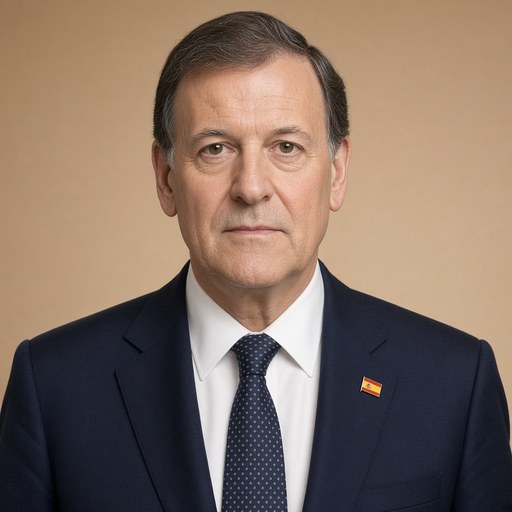
 Mariano Rajoy · Prime Minister of Spain
- Context
- Rajoy addressed the Spanish Lower House of Parliament in December 2012 to report on two European Council meetings concerning EU budget and financial framework negotiations.
- Main themes
- EU Multiannual Financial Framework 2014-2020, European Council meetings November and December 2012, Spain's EU funding interests, Cohesion Policy, Common Agricultural Policy, EU budget negotiations, economic crisis impact on Spain, job creation and growth, EU contributions and net beneficiary status, bilateral negotiations with Council President
- Duration
- ~37 min
- Words
- 4,452
- Sentences
- 175
- Readability
- 39
- Grade
- 14.1
- Syntax
- 3.22
- Vocabulary
- 2.17
The broad sphere of national life a sentence belongs to. Every sentence has an Arena, so it is the denominator the other indices are read against.
Other175 sentences in 76 paragraphs
Mr Speaker, ladies and gentlemen of the House,
I am here to report on the results from the two most recent meetings of the European Council, both held within the space of one month: the extraordinary European Council meeting on 22 and 23 November; and the ordinary European Council meeting on 13 and 14 December.
In strict chronological order, I will begin by commenting on the European Council meeting held in November. As you are aware, this extraordinary meeting focused on a single topic: that of negotiating the European Union Multiannual Financial Framework for the period 2014-2020.
This is a very important matter for Spain given that we have traditionally been a net beneficiary of EU funds. In other words, up until now, due to our level of income and position in the Union, we have been receiving more funds than we contributed to the EU budget. Nobody can ignore the fact that Spain has used these funds very well to raise standards of living and improve welfare for its citizens. This is recognised by both our European partners and the European institutions.
Well, with that in mind, what happened at this meeting of the European Council?
As you are aware and was fully expected to be the case, the meeting ended without an agreement. We shouldn't be surprised by that. Given the complexity of the issues being discussed, it is normal for an agreement in this area to require more than one round of negotiations to accommodate the interests of no less than twenty-eight countries. The same thing happened during the negotiations in 1999 and 2005. Therefore, nothing out of the ordinary or that wasn't expected has taken place here. An agreement isn't even urgent at this time given that the new budgetary framework won't be applied until 2014 and, although it will need to be passed through the European Parliament, we still have plenty of time to get that done.
Despite not reaching an agreement, as I said in my public appearance after the Council meeting, I was reasonably satisfied because, as I will explain shortly, I think that Spain managed to put forward its arguments well and because I felt a strong political will from our EU partners to carry the negotiations through to their proper conclusions.
Ladies and gentlemen,
The last stage of the negotiations on the next Multiannual Financial Framework has, for various months now, already been focused on its more technical aspects and began with the proposal presented by the European Commission in June 2011. Since then, firstly under the Polish Presidency of the EU and then under the Danish and Cypriot Presidencies, the delegations from the twenty-eight countries have presented their positions and various proposals have followed. The proposal that was on the table at the start of this European Council meeting was drafted by its President and I must say, to be absolutely frank, that it was not a good one for the interests of Spain.
It is true that the per capita income in Spain has risen since the preceding period and that it is getting close to the European Union average. Whereas Spanish per capita income equated to 91% of the average income in the EU in 1995, this figure stood at 99% of the average in 2011.
For that reason, it is only logical that the amount of EU funds given to Spain should be reduced. Furthermore, it is only natural that our contribution to the EU be increased, as usual, in line with the growth of our GDP. However, it is no less true to say that the crisis is affecting certain countries, Spain in particular, more than it is affecting others and it is equally true, as was also concluded by the European Council meeting in June, that the EU budget should be an instrument capable of acting as a catalyst for growth and job creation throughout the European Union.
This should be emphasised because, until now, in my opinion, it has not been considered to the extent it should be in the proposals being put forward. And, of course, it wasn't considered in the proposal on the table at the start of the European Council meeting in November. For various reasons, neither did that proposal satisfy most of our EU partners. This meant that all of the delegations were in very different positions when the meeting started.
As you know, the President of the Council, Mr Van Rompuy, held a round of bilateral meetings with all the members of the Union, Spain included, before the meetings of the twenty-eight. The proposal offered to us by the Presidency would generate a result that would have been unacceptable for us. It required the countries most affected by the crisis to make the greatest efforts and largest cut-backs, beyond the reasonable, to the funds we receive in terms of the Cohesion Policy and the Common Agricultural Policy. A few days earlier and shortly after the proposal from the Council was released, we had already expressed our disagreement to the President of the Commission, Mr Durao Barroso.
Ladies and gentlemen,
Three aspects are considered to be the most important for Spain in these negotiations:
- Firstly, Spain's contribution must be in line with its degree of wealth when compared with the rest of the EU but it must also consider the effects being caused by the crisis, which are greater in certain countries than in others.
- Secondly, we cannot accept the proposed cuts to the Common Agricultural Policy. Agriculture is hugely important in Spain for both economic and social reasons. Furthermore, the agri-food industry is growing fast at the moment and exports from this sector are contributing greatly to achieving a positive result in our trade balance with the Eurozone, something that has never happened since we joined the European Union. This policy is also very important to France, so Spain and France made a joint proposal that was later joined by Ireland. Our efforts continue to encourage other countries to also join.
- Thirdly, the Cohesion Policy. In spite of a convergence by income in Spain with the EU average, there are still regions within Spain that should still be able to benefit from this aid. This is the position being defended by Spain. Ceuta and Melilla, for example; the outermost regions, which would be the Canary Islands in Spain's case; the less-developed regions, such as Extremadura; the so-called transitory regions, such as Andalusia, Galicia, Castile-La Mancha and Murcia; and, in short, those regions that, albeit more developed, have not yet reached the European average, such as Castile and Leon, and Valencia.
Ladies and gentlemen, these are the ideas that the Spanish delegation upheld during the Council meeting, during its contact with the institutions and particularly during its contact with delegations from other countries. In summary, dual criteria for defining contributions: per capital income and the varying effects of the economic crisis, a better treatment in terms of agricultural policy and making felt the point that there are some regions within Spain that should continue to benefit from European funds.
We defended the interests of Spain, obviously, but did not fail to consider the opinions expressed by everyone else and, above all, the interests of the Union as a whole. Nobody can say that Spain is only looking out for itself and disregarding the needs of Europe. We are a great country of the Union, jointly responsible for its future and highly aware that the interests of the Union are also the interest of Spain. We are looking at the problems from both perspectives: the Spanish and the European.
Over the two days that the Council meeting lasted, I met with the Heads of State and Government from our main partners. Specifically, I met with Mrs Merkel; Mr Cameron; Mr Monti; Mr Hollande; Mr Passos-Coehllo; and Mr Rutte; as well as with the President of the European Commission and the President of the European Council, Mr Durao Barroso and Mr Van Rompuy.
This work produced some favourable results for the interests of Spain. This was demonstrated during the Council meeting by Mr Van Rompuy when he handed out a second proposal that was much more sensitive to Spain's position. This is nothing more than a first step, a proposal from the Presidency, and the final result will need to be agreed upon by the twenty-eight Member States; but it shows that our position is being heard.
In short, ladies and gentlemen, progress was achieved: on the one hand, at least with regard to the proposals (more sensitive to the interests of Spain); and on the other, the intense round of bilateral contacts that enabled us to hear first-hand the positions of our main partners, to be told they are sensitive to our interests, to build alliances and to show that an agreement is possible.
These are the reasons why I returned reasonably satisfied from the Council meeting in November.
That said, the negotiations remain open and Spain must maintain the defence of its position until a final agreement is reached. We are working on that, through bilateral contacts with other Member States, with the Commission and with the European Council. I hope that a result can be achieved in the first quarter of next year that is satisfactory for Spain and also capable of contributing to the general interests of the European Union.
Let us now, ladies and gentlemen, move on to the European Council meeting in December, the one held last week.
It is not always easy for our citizens to see the relationship that exists between the issues discussed at these meetings and their more immediate and direct concerns; for example, between the new supervisory powers we have granted to the European Central Bank and the greater ease this will bring to a self-employed worker or a small business owner when trying to take out a loan.
But the truth is that such a relationship exists. The guarantee given to the banking system by supervision of this nature will lead to increased confidence in the banks and, therefore, easier and better conditions for attracting funds from the international financial markets. This will eliminate one obstacle to increasing liquidity and reducing the cost of money, which will enable SMEs and the self-employed, who have been hit particularly hard by the credit crunch, to access financing again. This is what it's all about and that is what we discussed at this meeting: the instruments that will enable us to change the status quo.
First of all, I want to point out that this meeting brings to a close a year in which Europe has progressed towards greater integration and, particularly, towards banking union. This year, and against a backdrop of economic crisis, the European Union has paid growing attention to the issues that, in our opinion, are a priority and has taken some important steps forward. Some of those steps might seem rather modest today and there is no doubt that this Government would have liked those steps to be taken more quickly, but let us not forget that even the agreements we have now reached seemed out of the question to many only a few short months ago.
Allow me, for the sake of greater clarity, to take brief stock of the work done at the European Council meetings this year, in 2012.
At the meetings in January and March, we recognised the need to double our efforts on pulling Europe out of the crisis. However, the measures agreed upon at the time did not manage to build a coherent tool for action. Even so, important steps were taken.
Firstly, we finalised two very important treaties for the future of Europe: the Stability, Cooperation and Governance Treaty, the so-called "Fiscal Pact"; and the Treaty Establishing the European Stability Mechanism.
I would also like to remind you that, for the most part, the measures agreed at the last European Council meeting were already contained in the letter written by twelve Member States, including Spain, to Mr Durao Barroso, President of the Commission, indicating the need to steer EU action towards stimulating growth.
So, we took important steps at the meetings in January and March but they proved to be insufficient for this Government. My message to the European Council was very clear on this: in order to start the recovery, it is essential for us to provide financing at reasonable rates. Even though the specific measures on injecting liquidity implemented by the European Central Bank had eased the tense situation in the markets at the time, it was still necessary to make progress on strengthening the Euro.
I should say that the European Council meetings in June, October and December echoed these concerns and enabled specific agreements to be reached in the right direction. Furthermore, the initiatives by the European Central Bank and the agreements reached to resolve the final aspects of the Greek crisis have reinforced the decisions taken by the European Council.
Ladies and gentlemen, in this brief summary, allow me to spend a little time on the European Council meeting in June, the results of which were key to this entire process.
Firstly, we adopted the Growth and Employment Pact at that meeting, a pact that highlighted the need to foster economic activity. The starting point for that Pact is the recognition given to the importance of three fundamental topics: consolidation of public finances; structural reforms to gain competitiveness; and "smart investment" aimed at promoting sustainable growth.
With the Growth and Employment Pact, we aim to mobilise resources equivalent to 1% of European GDP for the promotion of growth.
All the measures approved within the scope of the EU are aimed at either further developing the internal market or promoting increased financing for the economy. This focus is entirely coherent with the economic rhetoric from this Government and we are firmly supportive of it.
I am especially satisfied with the attention given by this Pact to facilitating finance to small- and medium-sized businesses. Resources will be earmarked for this purpose by the European Investment Bank and the European Structural Funds. We agreed to increase the equity capital of the European Investment Bank by ten billion euros before the end of this year in order to expand the credit issued by this entity by sixty billion euros. That will mean the mobilisation of total investment capital amounting to 180 billion euros.
Secondly, we agreed in June to strengthen the architecture of the Economic and Monetary Union. It's hard to overstate the importance of this agreement. Without question, we have opened a debate that will mark the future of the European Union and that will lead to important changes in the way we look at Europe over the coming decades.
Ladies and gentlemen, I have said here on more than one occasion that European integration has yet to be completed. It is not a new argument but it is one that shouldn't be forgotten. The architects of the Euro have said from the start that, without establishing true economic union in the broadest sense, the monetary union would be exposed to turbulence that could frustrate the progress already made on the European project.
To that end, the European leaders commissioned the President of the European Council to draft a work programme, with a strict calendar, for achieving true economic and monetary union. This project should be based on greater integration in terms of financing, taxation, economics and politics. Furthermore, the Eurozone countries committed to the implementation of stabilisation measures. It was thus agreed that, once a single banking supervision mechanism was established with involvement from the European Central Bank, the European Stability Mechanism could start to issue loans directly to any banking entity that needs one, without the need for resources to be channelled through a State.
This is a very important step forward for breaking the bond of contagion between sovereign debt and the banks. Doubts over the solvency of specific entities have negatively affected the perception held by the markets regarding the sound nature of certain States and, therefore, their ability to access international credit.
The Member States of the Euro agreed to use all the European "firewalls" available flexibly and efficiently to guarantee financial stability, with the only requirement being to respect the obligations arising from the European semester, the Stability and Growth Pact and the Excessive Macroeconomic Imbalance Procedures. That opened the door for the European Central Bank to once again intervene on the sovereign debt markets, which concluded in September with the announcement of a new programme to buy debt, the so-called OMT Programme, which has clearly appeased the international markets.
The Council meeting in October then made progress on the agreements from June by including those countries not forming part of the Euro. Certain aspects of the supervision mechanism were explained and, above all, discussion took place for the first time on a complete report on the steps needed for creating true Monetary Union. We were thus able to send a much-needed message of unity and determination on the process of European integration.
In addition to all this, highly significant steps have been taken this year on stabilising the difficult situation in Greece.
And so we arrive at the Council meeting in December, at which we agreed on a single supervisor for the banking sector; something that was unthinkable, as I said, only a few months ago at the start of the year.
This meeting had two fundamental objectives: to obtain tangible and applicable results on banking supervision; and to make progress on defining Economic and Monetary Union, through banking, fiscal, economic and political union.
The first objective has been met. The agreement on banking supervision is very good news for several reasons: because of its content, because of the progress it means for the European integration process; because of the security it brings to the people and investors in our financial system; and because it shows that European countries meet the targets we set ourselves.
The key aspect of this agreement is that all the European banking entities with more than thirty billion euros in capital will depend on the single supervisor. In Spain, that will cover 95% of all assets within the Spanish banking system. The rest of the entities will be supervised by each individual nation, although the European Central Bank may assume direct supervision over any entity at any time, under its own initiative or following a request from a competent supervisor.
This is especially good for us because, following the important process of external assessment carried out on the Spanish banking system in June, which reinforced the credibility of our financial system, European supervision is now taking another step forward. The ECB, the new supervisor, is the largest central bank in the world, on a par with the Federal Reserve, and this represents a solid guarantee for the Spanish banking system given that our financial system will be supervised to the highest standards.
Following the agreement, supervision guidelines will be the same throughout Europe and will be applied by the same supervisor in every Euro country.
As regards the decision process, the agreement states that the most important issues will be subject to the principle of qualified majority. Spain, as the fourth-largest economy in the Eurozone, therefore has a sizeable influence over the decisions. There is also an agreement with countries not forming part of the Eurozone to harmonise decisions.
This agreement will come into effect in March 2014, after the necessary period for developing the system by which banking supervision will be applied. If anyone thinks this seems too long, they should remember that the process to create the Euro in the first place, a similarly ambitious project, took three years to implement. We are talking here about a little over 12 months.
As you know, a key issue for Spain is the direct recapitalisation of our banks. Both in terms of direct supervision and in the conclusions, the door is opened to the idea that direct recapitalisation will become a reality once single supervision is established. In fact, the supervision rules have been written with that possibility in mind.
Some people believe that the interests of our financial system have been compromised by excluding certain financial entities from direct banking supervision by the European Central Bank. That is a mistake: supervision by the European Central Bank becomes a kind of quality bonus, a guarantee certificate, that benefits the entities subject to supervision. The Spanish financial system, more transparent today than ever, needs the security conveyed by that supervision for gaining access to lines of financing from the international markets. We would have preferred supervision for 100% of European banks, because that would have meant supervision for 100% of our banks. Beyond what it means for progress on the overall European integration process, we are the ones who are most interested in greater transparency and security for the financial systems.
Therefore, in summary, very important progress on consolidating the image of our financial system. That is the reality and whoever thinks otherwise is wrong.
As regards the second objective, defining the Economic and Monetary Union (banking, fiscal, economic and political unions), the Conclusions from the last European Council meeting further develop the measures and elements that will need to be included in the new design of the European Union.
Progressing in these four areas requires a new institutional framework, such as the one presented in the documents from the four Presidents, the Commission and the Parliament. They are very ambitions documents. The Government of Spain agrees with their basic ideas.
Ladies and gentlemen,
I would like to remind you at this point that Spain was actively involved in this debate and presented specific proposals for developing banking union and fiscal union. These proposals, which were positively welcomed by the European institutions and our partners, were reflected, for the most part, in the reports from the four Presidents and in the agreement from the European Council.
The content of the report by the four Presidents introduces absolutely new elements with a grand outlook for the future of the Union. Spain will do everything it can to ensure that progress in this area is achieved as quickly as possible. The important thing is for there to be consensus on completing the institutional architecture and for the documents I mentioned to be used as the basis for discussion.
The most important issues looking forward include the fact that the Conclusions from the Council define specific deadlines for the unity process, as was called for by Spain. I have repeatedly argued for the need to establish a process similar to the Maastricht process on achieving the single currency. I am pleased that this approach has been adopted in the European debate.
Firstly, banking union must be established in 2013, thus enabling the vicious circle between the banking markets and sovereign debt to be broken. This is related, for example, to direct recapitalisation, on which a definitive agreement must be reached in the first half of 2013.
As regards the single resolution mechanism, the creation of which was also called for by Spain in order to develop banking union, the European Commission will draft a proposal that will be discussed in 2013 and that must be approved during the current European parliamentary cycle, i.e. before May 2014.
Secondly, the Presidents of the Council and the Commission must present a programme with binding dates on fiscal and economic union in June 2013 - the Government of Spain is absolutely convinced that this must take place as planned - on the following issues: coordination of economic policies; social dimension of the European Union; and making it possible to introduce agreements on promoting competitiveness and growth. This will support structural reforms, which are strengthened by solidarity mechanisms.
In other words, we are creating the start of what is being called a "fiscal power"; a European fund to incentivise structural reforms in all areas: unemployment, research and development, competitiveness reform, etc.; all the areas that will help us grow. In this regard, you will notice similarities with the Spanish proposal to create a fund for the Eurozone enabling "asymmetrical shocks" to be tackled and to incentivise States to undertake structural reforms.
Thirdly, progress was also made in terms of political union. Specifically, more involvement will be sought from national and European parliaments. Spain has been discussing this topic with its partners and will present specific proposals in this regard within the next few weeks.
Finally, ladies and gentlemen, the European semester has begun with the annual growth report and an approach to European economic policy based on the correction of public deficits, re-establishing financing for the economy, improving competitiveness, the fight against unemployment and reform of the public administration services. As you can see, the same approach as being adopted by the Government of Spain.
In short, ladies and gentlemen, Europe is taking the necessary decisions and is progressing in the right direction. Fiscal discipline is all we could talk about in January. Eleven months later, in December, and we are already talking about achieving banking, fiscal and political union, and the first steps are being taken to develop true Economic and Monetary Union. These steps will be a very useful tool for overcoming the current economic crisis and for ensuring that the accumulation of factors that led us into this situation are never repeated in the future.
I will end now, ladies and gentlemen,
The extraordinary Council meeting in November improved Spain's initial position on such a sensitive issue as the EU budgets. I know it is hard to call amounts that represent a little more than 1% of the Gross Domestic Product of the Union "European Union budgets", but how more than one billion euros is collected and distributed is no minor issue. Therefore, we will continue to work on defending the proper application of the so-called Multiannual Financial Framework of the European Union for the period 2014-2020.
As regards the most recent meeting of the Council, I recall something I said in this House only a few months ago when I paraphrased Galileo Galilei: "And yet, it moves". The European Union, although at a desperately slow pace sometimes, is moving. We would have liked to take three steps whereas we've only taken one, but it was a step forward and one in the right direction. A step, progress, in the direction that Spain has always defended.
The European project is gaining credibility and confidence again, and Spain, as far as it possibly can, will put all its weight behind it.
That is all. Thank you very much, ladies and gentlemen of the House.