




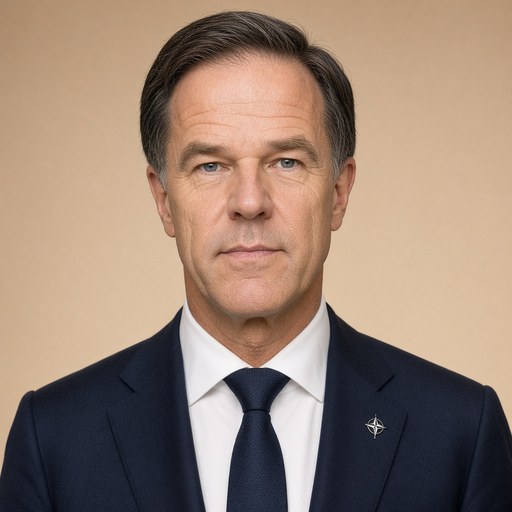
Speech by Prime Minister Mark Rutte at the Bertelsmann Stiftung, Berlin
 Mark Rutte · Prime Minister of the Netherlands
- Context
- Rutte addressed the Bertelsmann Stiftung in Berlin in March 2018, outlining his vision for the future of the EU and rejecting federalism in favor of sovereign cooperation.
- Main themes
- Future of the European Union, European integration vs. sovereignty, Brexit implications, EU as community of values, internal market and prosperity, federalism debate, rule of law and fundamental rights, member state diversity and strength, geopolitical cooperation, migration and climate change
- Duration
- ~44 min
- Words
- 5,311
- Sentences
- 363
- Readability
- 55
- Grade
- 9.2
- Syntax
- 2.69
- Vocabulary
- 2.15
Translated from Dutch
The broad sphere of national life a sentence belongs to. Every sentence has an Arena, so it is the denominator the other indices are read against.
Other363 sentences in 79 paragraphs
Ladies and gentlemen,
In fact, you had a choice today. In Great Britain, to listen to a speech on the question: how to move forward without Europe. Or in Berlin, to hear someone who genuinely wants to talk with you about how we can best move forward with Europe. I am glad you are here. And I thank the
Bertelsmann Stiftung
for the opportunity to share my observations and ideas about the future of the European Union with you. This is in the spirit of the words of
Helmut Schmidt
: '
Wer nicht redet, wird nicht gehört.'
If I am well informed, the new German coalition agreement contains the terms EU or Europe 302 times. It is therefore an understatement to say that the future of the European project is quite a concern here. But this discussion is also being conducted outside Germany with new enthusiasm and energy – a paradoxical consequence of the British decision to leave the EU. After all, Brexit underscores that EU membership is a conscious choice. We realize more than ever the importance of unity among the 27. And it forces us to take a stand, because if a Frexit, Dexit, or Nexit is not imminent – and fortunately it is not – how do we want to move forward with the EU?
Four months ago, we in the Netherlands concluded a new coalition agreement that includes a strong and fundamentally positive EU paragraph. We indeed want to move forward with Europe. And that makes sense, because the European Union is us together with our neighbors, who, like us, are rooted in the principles of the free market and democracy. In the EU, we respect the rule of law, human rights, and other fundamental freedoms. In the EU, the media are free, women and men are equal, and everyone is allowed to have any orientation and adhere to any faith. The EU is a shell that increases prosperity, provides protection, and forms a framework to absorb geopolitical and global developments. And yes, the EU is also our '
bread and butter
', the internal market on which we earn a significant part of our national income. It is the basis from which we compete with China, Silicon Valley, and India. The Netherlands is, in short, inextricably linked to Europe.
How do I view the European Union? In one sentence: as a community of values and a partnership of 27 sovereign countries that strengthen each other on issues that require a joint approach and that adhere to mutual agreements.
What the European Union is not for me is a train that inevitably speeds towards a federal destination. In the debate on European cooperation, the element always creeps in that we are inevitably on the way to a higher level of integration, where only the pace is up for discussion. 'Because the citizens of Europe must be able to follow it,' you hear.
But, in my firm conviction, a federal end goal as an inevitable historical march is not how it is. And not how it should be in the 21st century. Even if we go all the way back to the beginning of the EU, to '
nie wieder Krieg
', to '
plus jamais ça
', we see that that idealistic motivation was translated into very pragmatic cooperation around coal and steel. And that is how Europe must remain: lofty ideals filled with great sobriety. We should therefore not strive for that '
ever closer Union
', but for an ever more perfect EU.
The
bottom line
is that 27 independent European countries cooperate because there are problems that can be better or sometimes even exclusively addressed together. We work together because it increases our prosperity – think of the internal market and the monetary union. Because it improves our security – think of the fight against cross-border crime and terrorism, think of the instability at the external borders. And because only together can we formulate answers to global issues such as climate change, migration, and the future of world trade.
At its core, the primal promise of Europe has remained unchanged for almost 70 years: member states that elevate each other to a higher level of prosperity, security, and stability. There is only one question at the center: what is needed to fulfill and pass on that primal promise of Europe?
The EU can only fulfill its basic promise if the member states are individually strong and maintain their uniqueness. Nowhere in the world do we see such a rich socio-cultural diversity in recognizable nation-states on such a relatively limited surface. We must cherish that uniqueness as our breeding ground for new ideas, innovation, and creativity. After all, we did not become the most prosperous, most social, and most democratic continent in the world after 1945 by compensating for each other's weaknesses, but precisely by pooling our strengths and making each other stronger. It is up to the countries themselves to safeguard and develop that strength within the community frameworks: financially, socio-economically, and in terms of the rule of law. Because if we fail nationally and elevate that failure to the collective level, we create a giant on clay feet, with the danger of toppling. Or to put it in a painful metaphor: the absence of the Dutch national team at the upcoming World Cup cannot be a reason to advocate for a European team at the next World Cup. We will simply ensure that we are there again in 2022.
For this reason, the principle in the European Union must be: a deal is a deal. Our cooperation has long rested on the Treaty as our common basis and on the willingness to make compromises based on the trust that agreements made will also be honored. And that has brought us much. But increasingly, it seems that member states believe that agreements can be set aside when things are tough nationally. As if Europe is a menu from which one can pick and choose – the benefits without the burdens. But Europe is not a menu. We must be able to rely on each other that a 'yes' is indeed a 'yes'. For this, the community institutions, the Commission and the Court of Justice in particular, are indispensable. They safeguard the level playing field and have the sometimes thankless task of monitoring and enforcing the implementation of agreements.
This immediately touches on the support for the EU. We must not underestimate how vulnerable the sentiment in many countries is. In our country, in Germany, and also elsewhere. People see that the EU often promises more than it delivers. I see that too. Promises of more prosperity, security, and stability are repeatedly made, reaffirmed, and renewed, while the implementation is sometimes mediocre. And that undermines credibility and trust. But is it not the EU's duty to excel? To consistently deliver more than promised instead of the other way around? What else can people expect from the European Union than concrete results? As far as I am concerned, these are rhetorical questions.
Ladies and gentlemen, these are the Dutch principles for the future of the EU:
1: fulfill the basic promises: prosperity, security, and stability. No words but deeds.
2: it starts and ends with the member states. Brussels serves the member states, not the other way around.
And 3: a deal is a deal. The necessary compromises apply to all of us completely, not just the parts that sell easiest at home. Solidarity requires responsibility.
For the Netherlands, these are the principles in addressing the major cross-border issues we face in all member states. And the question is: what does this mean concretely for the approach to migration and security in times of great international instability? For the approach to sustainability in times of climate change? For working on economic growth in times of global competition? And for a fair labor market in times of open borders?
Ladies and gentlemen, I preach results, so you can also expect me to deliver them. I give you 9 concrete examples of the possibilities I see through that lens. 9 positive proposals with which we can start tomorrow and that will quickly yield results for the citizens of our countries, from north to south and from east to west, in the cities and in the countryside. For more prosperity. For more security. For stability. And for a strong rule of law.
Proposal 1: make the European services market truly open. There are currently 5,000 protected professions in the EU. That is 50 million people, 22 percent of all workers. Eliminate those protected professions. Only where safety, health, and consumer protection are at stake should we still impose specific and binding requirements. Notaries and architects, to name just two, do not need national protection. But a notary who is going to work in another EU country may indeed be required to meet a language requirement. And every small entrepreneur in Europe should be able to sell their goods and services online elsewhere in the Union without administrative barriers making this impossible. After the European elections of 2019, it is time to finally tackle the barriers that prevent us from making the digital market and the services market as great a success as the goods market.
Of course, we have already achieved a lot in the internal market: free movement of goods, people who can relatively easily work and study abroad, and recently roaming at domestic rates. But we are still far from there in the services market and the digital market. And we must take this to heart. Services account for 70 percent of economic activity in the EU. And if we implement the Commission's proposals, we can add 410 billion euros to GDP in the digital market.
The celebration of 25 years of internal market this year should, in my view, be modest. Because we are still leaving over 1,000 billion euros a year on the table, if I may quote the European Parliament's estimate. That is the primal promise of the EU. The internal market must improve. So when people ask me what I think of the internal market, I freely quote Gandhi: 'What a good idea. Let's do that.'
We must finalize the 4 internal market strategies for the digital market, capital, energy, and goods and services in 2018. Because a deal is a deal. Too often, legislative proposals from internal market strategies get stuck at the level of the trade unions. Decisions cannot wait. Our economy is becoming more digital every nanosecond. In the here and now. I therefore embrace Donald Tusk's Leaders Agenda. During the upcoming European Council on March 22 and 23, we must make decisions about the digital market.
I should add that I agree with the warning of many of my colleagues in the European Council: a level playing field must not lead to abuse and unfair competition. Not within the EU and not from outside the EU. '
Deeper and fairer
', we say. Or to be clearer: equal pay for equal work at the same place. I also welcome the provisional agreement reached yesterday between the Council and the European Parliament on the posting of workers directive. We need that to counter further distortions. It is not for Dutch and German plumbers and bricklayers to explain that their jobs are being taken over for a wage below the minimum through sham constructions by colleagues from other countries. Just as it is not socially just that Polish or Slovak plumbers and bricklayers must settle for worse working conditions than their German or Dutch colleagues. In the future European labor market, there can be no unfair competition on working conditions within member states. That is proposal 2: Existing agreements must be honored and enforced, starting with better cooperation between inspection services to combat cross-border fraud and abuse. Not new, I know. But important enough to mention separately. And moreover: a ‘
done deal
’ is only ‘done’ when the deal has also been executed. A deal is a deal.
The EU is a world power in international trade. This must remain so. I expect that we can soon say a definitive yes to a trade agreement with Japan. The trade agreements with Mexico and the Latin American Mercosur countries are also nearing completion. In the slightly longer term, crucial agreements must follow with Australia and New Zealand. And of course, it remains important to keep the door open to the US. The tide is not favorable now, but let us not forget in the long term that a trade agreement between the EU and the United States can make a huge contribution to growth and jobs on both sides of the Atlantic. Moreover, it would strengthen the transatlantic relationship, and that is important too.
The foundations of our trade policy system are under pressure. The EU must, together with other major trading countries, including the US, find solutions for frictions around dispute resolution and market access for state-owned enterprises. The EU is a trendsetter for free trade in a fair, sustainable, and socially responsible manner. Trade must be free and fair. We are working hard on that. We must protect ourselves, but we must not fall into the trap of protectionism, because a short-term benefit for one is often a long-term disadvantage for many others. The Netherlands stands firmly for free trade on a level playing field.
Ladies and gentlemen, then the euro. What does it mean if we return to the primal promise of the euro? What does it mean for our currency if I say: it starts and ends with the member states? And what does 'a deal is a deal' mean in the eurozone?
Without a strong euro and a stable monetary union, any discussion about the future of Europe is almost a theoretical exercise. What I advocate is that we return to the basic promise of the euro. To the promise that a common currency should bring us all more prosperity and not a redistribution of existing wealth. Because that is what ultimately happens if we continue to allow some countries to have prolonged high deficits, accumulate high debt, and fail to modernize their economies. Then the monetary union ends up as a transfer union, and that is not the way to make the euro stronger. Let alone to strengthen the support for it. I invite everyone to explain that in the Netherlands or Germany. I do see the necessity to achieve significant risk reduction through the Banking Union before we can talk about a European Deposit Guarantee Scheme. And I also believe that the European budget could do much more to stimulate reforms in the Eurozone. I will return to that last point when I later speak about the Multiannual Financial Framework.
In recent years, we have crawled through the eye of the needle. I was there myself during that exciting Greek summer of 2011, and during all those sleepless nights, it was a close call a few times. Especially when other countries also ran into trouble. The fact is that the countries that took difficult measures during the crisis, countries that implemented reforms to meet the commitments of the Stability and Growth Pact, are now showing the best figures. Fortunately, this also applies to countries like Spain, Portugal, and Ireland, which fell under the Troika regime. I take my hat off to that. From experience, I know that creating growth potential through reforms is a painful process, but it does bear fruit. And I would like to express my support for President Macron, who does not shy away from tough measures in the labor market and pensions. That is not only in the interest of France but of all of us.
The reality is: we are coming out of a period in which non-compliance with the commitments of the Stability and Growth Pact had become the norm, and we need to get back in line. Let’s not kid ourselves. If national buffers do not work, a European buffer will not work either. So back to the agreement that countries in the eurozone must get their own budgets and national debts in order and maintain them, thus ensuring their own shock-absorbing fund at the national level to cope with a sudden crisis. My conviction is that we, figuratively speaking, need 19 national shock-absorbing funds in the eurozone. I do not need to propose that, as we have long made this agreement. Let’s all adhere to it. The pie does not get bigger through centrally managed emergency funds and the printing press, but through structural reforms and a healthy budget.
If I may use the example of my own country: we too had to have a higher budget deficit than the allowed 3 percent in 2008 and thereafter. But by implementing strict reforms and austerity measures, we have recorded a surplus for the second consecutive year. The budget deficit is now a surplus, and the national debt is now well below the 60 percent ceiling. This means that the Netherlands, if a similar shock were to occur as in 2008, can borrow large amounts if necessary to take emergency measures.
Everyone keeps their own house in order. And if it really cannot be helped, good neighbors help each other. But that is the order. European funds are a last resort, not first aid. My proposal, number 3, is to transform the European Stability Mechanism into an intergovernmental European Monetary Fund, the EMF, where the current roles of the Commission, European Central Bank, and European Stability Mechanism in support programs are brought under one roof. Not as a form of further risk-sharing, not as a form of solidarity that goes one way, but as a last resort. Just like the ESM now, thus maintaining the requirement of unanimous decision-making.
For the Netherlands, it is a hard condition that support programs for countries with unsustainable debt can only come if holders of government bonds first contribute to the rescue through a restructuring. The future EMF must determine, based on a debt sustainability analysis, whether a debt is sustainable. If not, then a restructuring of outstanding debt, including bonds, is a prerequisite for a loan from the EMF. That is proposal 4: the Netherlands advocates a
Sovereign Debt Restructuring Mechanism.
Those who invest in countries with an unsustainable budget and unwise economic policy, under favorable conditions, are taking a conscious risk. It would be unfair for taxpayers from other countries to bear the costs if things go wrong with private parties.
Ladies and gentlemen,
What I also want is for the EU to do more in the areas of security, stability, migration, and climate policy.
Because it must. Because the necessity is pressing. There is no doubt that an effective common European foreign and security policy and a common asylum policy are urgently needed. This necessity has become self-evident in recent years. It is restless at the external borders of Europe, in Crimea and Eastern Ukraine, in Turkey, the Middle East, and North Africa. There is political unrest and armed conflict with the threat of terrorism and uncontrolled migration as a result. The relationship with Russia has deteriorated sharply, the one with the United States is no longer a given, and the one with China is subject to rapid changes. It is abundantly clear that no member state can cope with these developments alone. Insecurity and instability are multi-headed monsters. Our unity is the best weapon against this.
I am positive about the agreements we have made regarding internal and external security. Cooperation between police, justice, immigration services, and border control is becoming increasingly intensive. This is now really improving a lot.
In military terms, NATO remains our best guarantee of peace and security. But that does not mean that the EU can afford to do nothing. We are making good strides, for example, with the establishment of a European Defense Fund and Permanent Structured Cooperation – PESCO. The Netherlands wants to contribute significantly to this. PESCO is a good example of the added value of concrete cooperation between member states. Not a European army, but joint procurement, aligning military needs, and facilitating troop movements. It starts and ends with member states, as I said earlier.
Let me also make a concrete proposal in the area of military mobility, number 5. To begin with, the Netherlands wants all countries to grant permission for military transport to cross national borders as soon as possible. Less 'red tape', therefore, less unnecessary bureaucratic hassle. We must also agree to make a number of highways, bridges, and overpasses suitable for military transport. This speeds up responsiveness and strengthens the military capability of the EU. The Netherlands aims for a ‘mobility pledge’ to be made in NATO and EU contexts. The EU, NATO, and the individual member states and allies must commit to this permanently.
International stability, internal security, and migration are interconnected. Our part of the world has an enormous attraction. In 2015, the situation was extremely precarious. We saw people in rickety boats who, with the help of human smugglers, attempted to cross from Turkey to the Greek islands in large numbers. We saw images of drownings. Of crowds making their way through Europe. Of temporary, sometimes improvised facilities to provide people with basic shelter. In 2016, we managed to reach an agreement with Turkey under high tension. There we saw Europe at its most effective. We need more of these kinds of agreements with third countries. We must also increase the possibilities for reception in the region. The EU can provide financial and political support for this.
We must ensure a comprehensive approach to combating irregular migration on all fronts, along all parts of the migration route, to prevent similar emergencies in the future. What does that mean in practice? First of all: prevention is better than cure. The Netherlands stands for a broad approach. We must do more to eliminate the root causes of migration – poverty, violence, climate change – so that people can see a future in their own country again. Therefore, development cooperation must be more focused than it is now on creating better prospects for people. European countries can also do more to promote security, stability, and better border management. France sets a good example with the G5 Sahel initiative, which helps African countries improve their border management. The Netherlands contributes to this. We must also do more to improve reception in the region.
The management of the European external borders remains crucial. Therefore, it is important that member states fully utilize the toolbox of the renewed European Border and Coast Guard Regulation together with Frontex. We must show solidarity with member states like Italy and Greece in the initial reception of refugees. And we must especially ensure that we, as the EU, are prepared for a new crisis. The experiences of 2015 and 2016 teach us what happens when governments are no longer 'in control'.
Specifically: proposal 6. We urgently need to agree on a new Common European Asylum System. This must focus on a better distribution of responsibility among member states when the influx increases significantly again, including a rapid return of migrants who do not qualify for asylum and a redistribution mechanism. And I tell you honestly: I am concerned about that last point. The redistribution of refugees across Europe remains a difficult issue because not all countries are willing to bear their share. To those countries, I say: I understand your concerns, but solidarity is not a one-way street. Moreover, as the 'front door', the external border, becomes increasingly controlled, an important argument for countries that do not want to cooperate in the redistribution of refugees also falls away. Controlled external borders prevent uncontrolled influx and unmanageable numbers.
In the area of climate, the Netherlands is coming up with far-reaching proposals. Simply because it is also unavoidable. The current European target of a 40 percent reduction in CO2 emissions by 2030 compared to 1990 dates back to before the Paris Climate Agreement. It was agreed that the earth may warm a maximum of 2 degrees and that we strive for one and a half degrees. That agreement calls for an update, for a higher European ambition. 40 percent is too little to achieve that 2 degrees, let alone one and a half degrees. The bar must be raised. Therefore, Proposal 7: we agree on a CO2 reduction of 55 percent by 2030, which will allow us to fulfill our commitment to Paris. With 55 percent as a joint EU contribution to the global ambition, we do our part to keep that one and a half degrees in sight. And let’s not wait. The current Commission can still prepare this. As far as I am concerned, the European Council should give this mandate in June.
And let’s not perceive that goal as a pure burden. Such an enhanced ambition also helps us innovate and brings the energy-efficient, sustainable, and circular economy closer. My assertion is that every investment in the climate is also an investment in the strength of the European economy. That may be a long-term story, but we will say goodbye to our fossil addiction one way or another. And do not be mistaken: most of us will still experience that. In this, the future Europe also has a task and a mission.
Then, ladies and gentlemen, the money.
Last week, we had a first round of discussions in the European Council about the new Multiannual Financial Framework. I explained the Dutch position there. How are we going to use the EU budget for the new priorities in security, stability, prosperity, and climate policy? And I will summarize that immediately in proposal 8: accept that the British are leaving and the budget will be smaller, and modernize by freeing up money within the existing funds for the challenges of tomorrow.
The Netherlands is a wealthy country, and in that respect, it is logical that we are a net contributor. It is not always easy, but even in the Dutch public debate, I stand for our financial contribution to the European Union. Because, once again, 17 million Dutch people receive prosperity and security in return, the primal promise.
But I want to be very clear. My goal for the multiannual budget is: no higher contributions, but better results within a smaller budget. The Netherlands wants the EU to seize this opportunity to fulfill the primal promise of added value through cooperation. The 27 member states that continue together cannot simply fill the Brexit gap. And we also cannot tackle the challenges of the 21st century with a budget that reflects an old reality from decades ago. We talk a lot about new priorities for the EU: sustainability, climate, security, migration, innovation. It is inevitable that funding for new priorities cannot leave ongoing programs and subsidies untouched. But let us also remain realistic: 70 percent of the Union's expenditures go to agriculture and structural funds. A little less in these areas creates room for our new priorities. We must make sharp choices and deliver on our commitments.
A reasonable contribution to the Union can also include a rebate. I have been hearing lately that, now that the British are leaving the Union, the system of rebates must come to an end. After all, the British had 'the mother of all rebates,' so the reasoning goes. I want to counter that: the system of contributions and revenues must be perceived as fair by all member states. This means that countries with a comparable level of prosperity pay a similar net contribution. No one should end up in an extreme contribution position because of the agreements we make. Whether the British are in or out of the Union, this principle remains valid.
Also in the case of the budget, the EU must not be a menu of choices. Upward convergence, one of the main objectives of the EU budget, must be stimulated by more strongly linking EU funds to the implementation of structural reforms. In my view, there should also be conditions that guarantee that solidarity within the EU works both ways. My proposal 9 is about this: link the EU budget to encouraging member states to reform and modernize their economies as agreed. I am not at all opposed to the idea that richer member states provide support to the poorer ones. But that must then yield structural economic growth. This can be achieved by incorporating a mechanism in the EU budget that links support from the structural and cohesion funds to the extent to which countries make progress on those reforms. We can measure that against the annual reporting by the European Commission on the so-called country-specific recommendations. There is no need for a separate eurozone budget, as we already have an EU budget. Jean-Claude Juncker is absolutely right about that.
The concept of conditionality is, by the way, not new. We discussed it last week in Brussels. You understand, I am also a strong advocate of it in general. Because: fulfilling the primal promise starts and ends with the member states, and an agreement is an agreement. My proposal focuses on economic reform. But I also hear suggestions for linking it to addressing the migration issue and compliance with the principles of the rule of law.
And that is not without reason. Those who say that the rule of law is an internal matter of the member states and that the EU should only deal with the internal market are mistaken. The internal market can only exist and be successful if the rule of law is strong in all countries. If companies and investors know that their money is safe. And if they know that a potential conflict can be brought before an independent judge, without interference from the sitting government. Those who undermine the rule of law undermine the internal market. And those who undermine the internal market undermine the European Union. Here, the principle of an agreement being an agreement applies very strongly.
Ladies and gentlemen,
I am an optimist. And from experience, I know that we always find a way together in the EU. That gives confidence. But I am also concerned. I already mentioned that the sentiment around the EU is fragile. Brexit shows that the EU is not an irreversible certainty. In many member states, the parties in the political center, the parties with a long European tradition, are under pressure.
But as I also argued: we did not simply become the most stable, most prosperous, most social, and most free continent in the world after 1945. Those achievements rest on a foundation of shared values, mutual trust, and the willingness to make compromises. Time and again, to become stronger as individual member states and as a collective. If we allow that foundation to erode, we are cutting at the root of everything that has been built.
And that danger is not imaginary, as we see parties rising on the flanks of the political spectrum across Europe that simply deny the great importance of European cooperation. Complaining about that is pointless. The only thing we can counter with is results. Therefore, the center parties in all member states bear a great responsibility to prove that cooperation pays off and delivers added value. If we do not fulfill that primal promise of the EU, people will sooner believe the false promises and fantasies of politicians on the flanks.
Grand visions do not create jobs and security. Shouting from the flanks does not either. Only hard work, step by step, Schritt für Schritt, yields results that people can benefit from in their daily lives. If we do that, and continue to encourage and challenge each other, then I am sure we will fulfill that promise of Europe.
Thank you.
The original Dutch. The tags above are read on the English translation's sentences.
Dames en heren,
Feitelijk had u vandaag een keuze. In Groot Brittannië luisteren naar een toespraak over de vraag: hoe verder zonder Europa. Of in Berlijn naar iemand die uit overtuiging met u wil spreken over de vraag hoe we het beste verder gaan met Europa. Ik ben blij dat u hier bent. En ik dank de
Bertelsmann Stiftung
voor de gelegenheid om mijn observaties en ideeën over de toekomst van de Europese Unie met u te kunnen delen. Dit met de woorden van
Helmut Schmidt
indachtig: '
Wer nicht redet, wird nicht gehört.'
Als ik goed ben geïnformeerd, bevat het nieuwe Duitse regeerakkoord 302 keer de termen EU of Europa. Het is dus een
understatement
om te zeggen dat de toekomst van het Europese project de gemoederen hier nogal bezig houdt. Maar deze discussie wordt ook buiten Duitsland met nieuw elan en nieuwe energie gevoerd – een paradoxaal gevolg van het Britse besluit om uit de EU te treden. Brexit onderstreept immers dat het lidmaatschap van de EU een bewuste keus is. We realiseren ons meer dan ooit het belang van eensgezindheid van de 27. En het dwingt tot positie kiezen, want als een Frexit, Dexit of Nexit niet aanstaande is – en gelukkig is dat zo – hoe willen we dan wél verder met de EU?
4 maanden geleden sloten we in Nederland een nieuw regeerakkoord met daarin een stevige en principieel positieve EU-paragraaf. Wij willen inderdaad verder met Europa. En dat is ook logisch, want de Europese Unie, dat zijn wij samen met onze buren, die net als wij geworteld zijn in de principes van de vrije markt en democratie. In de EU respecteren we de rechtstaat, mensenrechten en andere fundamentele vrijheden. In de EU zijn media vrij, vrouwen en mannen gelijk en mag iedereen elke geaardheid hebben en elk geloof aanhangen. De EU is een schil die de welvaart vergroot, die bescherming biedt en een kader vormt om geopolitieke en mondiale ontwikkelingen op te vangen. En ja, de EU is ook ons '
bread and butter
', de interne markt waarop we een flink deel van ons nationaal inkomen verdienen. Het is de basis van waaruit wij concurreren met China, Silicon Valley en India. Nederland is, kortom, onlosmakelijk met Europa verbonden.
Hoe kijk ik naar de Europese Unie? In 1 zin: als een waardengemeenschap en samenwerkingsverband van 27 soevereine landen, die elkaar sterker maken op onderwerpen die om een gezamenlijke aanpak vragen en die onderlinge afspraken nakomen.
Wat de Europese Unie voor mij niet is, is een trein die onvermijdelijk voortraast naar een federale eindbestemming. In het debat over Europese samenwerking sluipt altijd weer het element binnen dat we onontkoombaar op weg zijn naar een hoger niveau van integratie, waarbij alleen het tempo nog ter discussie staat. 'Omdat de burgers van Europa het wel moeten kunnen volgen,' hoor je dan.
Maar, naar mijn vaste overtuiging, is een federaal einddoel als onvermijdelijk historische mars niet hoe het is. En niet hoe het moet zijn in de 21e eeuw. Zelfs als we helemaal teruggaan naar het begin van de EU, naar het '
nie wieder Krieg
', het '
plus jamais ça
', zien we dat die idealistische motivatie vertaald werd in zeer pragmatische samenwerking rond kolen en staal. En dat moet Europa blijven: hooggestemde idealen met grote nuchterheid ingevuld. We moeten dus niet streven naar die '
ever closer Union
', maar naar een steeds perfectere EU.
De
bottom line
is dat 27 zelfstandige Europese landen samenwerken, omdat er nu eenmaal problemen zijn die je beter of soms zelfs uitsluitend gezamenlijk kunt aanpakken. We werken samen omdat het onze welvaart vergroot – denk aan de interne markt en de muntunie. Omdat het onze veiligheid verbetert – denk aan de strijd tegen grensoverschrijdende misdaad en terrorisme, denk aan de instabiliteit aan de buitengrenzen. En omdat we alleen samen antwoorden kunnen formuleren op mondiale vraagstukken als klimaatverandering, migratie en de toekomst van de wereldhandel.
In de kern is de oerbelofte van Europa al bijna 70 jaar onveranderd: lidstaten die elkaar naar een hoger niveau brengen van welvaart, veiligheid en stabiliteit. Er staat maar een vraag centraal: wat is er nodig om die oerbelofte van Europa waar te maken en door te geven?
De EU kan zijn basale belofte alleen waarmaken als de lidstaten afzonderlijk sterk zijn en hun eigenheid bewaren. Nergens ter wereld zien we op zo’n relatief beperkt oppervlak zo’n rijke sociaal-culturele diversiteit in herkenbare natiestaten. Die eigenheid moeten we koesteren als onze voedingsbodem voor nieuwe ideeën, innovatie en creativiteit. We zijn per slot van rekening na 1945 niet het meest welvarende, meest sociale en meest democratische continent ter wereld geworden door elkaars zwaktes te compenseren, maar juist door onze krachten te bundelen en elkaar sterker te maken. Het is aan landen zelf om binnen de communautair gestelde kaders die eigen kracht te bewaken en uit te bouwen: financieel, sociaal-economisch en rechtsstatelijk. Want als we nationaal falen naar het collectieve niveau gaan tillen, creëren we een reus op lemen voeten, met gevaar voor omvallen. Of om het met een pijnlijke metafoor te zeggen: dat het Nederlands elftal ontbreekt op het komende wereldkampioenschap voetbal kan geen reden zijn om te pleiten voor een Europees elftal op het volgende WK. We gaan er als Nederland gewoon zelf zorgen dat we er weer bij zijn in 2022.
Ook daarom moet in de Europese Unie gelden: afspraak is afspraak. Onze samenwerking rust sinds jaar en dag op het Verdrag als onze gemeenschappelijke basis en op de bereidheid compromissen te sluiten vanuit het vertrouwen dat gemaakte afspraken ook worden nagekomen. En dat heeft ons veel gebracht. Maar steeds vaker lijkt het dat lidstaten vinden dat afspraken terzijde kunnen worden gelegd als het nationaal even tegenzit. Alsof Europa een keuzemenu is waaruit naar believen kan worden geplukt – wel de lusten, niet de lasten. Maar Europa is geen keuzemenu. We moeten van elkaar op aan kunnen dat een 'ja' ook echt een 'ja' is. Hiervoor zijn de communautaire instellingen, de Commissie en het Hof van Justitie in het bijzonder, onmisbaar. Zij bewaken het gelijke speelveld en hebben de soms ondankbare taak om uitvoering van afspraken te controleren en af te dwingen.
Dit raakt meteen aan het draagvlak voor de EU. We moeten niet onderschatten hoe kwetsbaar het sentiment in veel landen is. In ons land, in Duitsland en ook elders. Mensen zien dat de EU vaak meer belooft dan ze waarmaakt. Ik zie dat ook. Afspraken over meer welvaart, veiligheid en stabiliteit worden steeds weer herhaald, herbevestigd en vernieuwd, terwijl de uitvoering soms middelmatig is. En dat werkt ondermijnend op de geloofwaardigheid en het vertrouwen. Maar is juist de EU het niet aan haar stand verplicht om te excelleren? Om consequent meer te leveren dan toegezegd in plaats van andersom? Wat anders mogen mensen van de Europese Unie verwachten dan concrete resultaten? Wat mij betreft zijn dat retorische vragen.
Dames en heren, dit zijn de Nederlandse uitgangspunten voor de toekomst van de EU:
1: kom de basisbeloften na: welvaart, veiligheid en stabiliteit. Geen woorden maar daden.
2: het begint en eindigt met de lidstaten. Brussel dient de lidstaten, niet andersom.
En 3: afspraak is afspraak. De noodzakelijke compromissen gelden voor ons allemaal helemaal, niet alleen de stukjes die thuis het makkelijkst verkopen. Solidariteit vergt verantwoordelijkheid.
Voor Nederland zijn dit de uitgangspunten bij de aanpak van de grote grensoverschrijdende onderwerpen waarvoor we ons in alle lidstaten geplaatst zien. En de vraag is: wat betekent dit concreet voor de aanpak van migratie en veiligheid in tijden van grote internationale instabiliteit? Voor de aanpak van duurzaamheid in tijden van klimaatverandering? Voor het werken aan economische groei in tijden van wereldwijde concurrentie? En voor een eerlijke arbeidsmarkt in tijden van open grenzen?
Dames en heren, ik preek resultaten, dus mag u ook van mij verwachten dat ik die lever. Ik geef u 9 concrete voorbeelden van de mogelijkheden die ik door die bril zie. 9 positieve voorstellen waarmee we morgen kunnen beginnen en die snel resultaten opleveren voor de inwoners van onze landen, van noord naar zuid en van oost naar west, in de steden en op het platteland. Voor meer welvaart. Voor meer veiligheid. Voor stabiliteit. En voor een sterke rechtsstaat.
Voorstel 1: maak de Europese dienstenmarkt echt open. Er zijn nu 5000 beschermde beroepen in de EU. Dat zijn 50 miljoen mensen, 22 procent van alle werkenden. Schaf die beschermde beroepen af. Alleen waar veiligheid, gezondheid en consumentenbescherming aan de orde zijn zouden we nog specifieke en bindende eisen moeten stellen. Notarissen en architecten, om er maar eens 2 te noemen, hebben geen nationale bescherming nodig. Maar aan een notaris die in een ander EU-land gaat werken, mag natuurlijk wel een taaleis worden gesteld. En elke kleine ondernemer in Europa moet via het internet elders in de Unie zijn goederen en diensten kunnen verkopen zonder dat administratieve hindernissen hem dit onmogelijk maken. Na de Europese verkiezingen van 2019 is het zaak eindelijk de barrières te lijf gaan die ons ervan weerhouden om van de digitale markt en de dienstenmarkt net zo’n groot succes te maken als van de goederenmarkt.
Natuurlijk, we hebben op de interne markt, al veel bereikt: vrij verkeer van goederen, mensen die relatief gemakkelijk kunnen werken en studeren in het buitenland, sinds kort roaming tegen binnenlands tarief. Maar op de dienstenmarkt en de digitale markt zijn we er nog lang niet. En dat moeten we ons aantrekken. Diensten maken 70 procent uit van de economische activiteit in de EU. En als we de Commissievoorstellen uitvoeren kunnen we op de digitale markt 410 miljard euro BNP toevoegen.
Het feestje van 25 jaar interne markt, dit jaar, moeten we wat mij betreft dus bescheiden vieren. Want we laten nu nog ruim 1000 miljard euro per jaar liggen, als ik de schatting van het Europees Parlement mag aanhalen. Dat ís de oerbelofte van de EU. Op de interne markt moet het beter. Dus als mensen aan mij vragen wat ik van de interne markt vind zeg ik vrij naar Gandhi altijd: 'Wat een goed idee. Laten we dat doen.'
We moeten in 2018 de 4 interne markt strategieën voor de digitale markt, kapitaal, energie, en goederen en diensten echt afronden. Want afspraak is afspraak. Nog te vaak blijven wetsvoorstellen uit interne markt strategieën hangen op het niveau van de vakraden. Besluiten kunnen niet wachten. Onze economie wordt per nano-seconde digitaler. In het hier en nu. Ik omarm daarom de Leaders Agenda van Donald Tusk. Tijdens de komende Europese Raad van 22 en 23 maart moeten we besluiten nemen over de digitale markt.
Ik zeg hier overigens bij dat ik het eens ben met de waarschuwing van veel van mijn collega’s in de Europese Raad: een level playing field moet niet leiden tot misbruik en oneerlijke concurrentie. Niet binnen de EU en niet van buiten de EU. '
Deeper and fairer
', zeggen we dan. Of iets duidelijker: gelijk loon voor gelijk werk op dezelfde plaats. Ik verwelkom dan ook het voorlopige akkoord tussen Raad en Europees Parlement over de detacheringsrichtlijn dat gisteren is bereikt. Dat hebben we nodig om verdere scheefgroei tegen te gaan. Het is niet aan Nederlandse en Duitse loodgieters en metselaars uit te leggen dat hun banen voor een loon onder het minimum via schijnconstructies worden overgenomen door collega’s uit andere landen. Net zoals het niet sociaal rechtvaardig is dat Poolse of Slovaakse loodgieters en metselaars met slechtere arbeidsvoorwaarden genoegen moeten nemen dan hun Duitse of Nederlandse collega’s. Op de toekomstige Europese arbeidsmarkt kan er binnen lidstaten geen oneerlijke concurrentie zijn op arbeidsvoorwaarden. Dat is voorstel 2: Bestaande afspraken moeten worden nagekomen en gehandhaafd, te beginnen bij betere samenwerking tussen inspectiediensten om grensoverschrijdende fraude en misbruik tegen te gaan. Niet nieuw, dat weet ik. Maar belangrijk genoeg om apart te benoemen. En bovendien: een ‘
done deal
’ is pas ‘done’ als de deal ook is uitgevoerd. Afspraak is afspraak.
De EU is een wereldmacht in de internationale handel. Dit moet zo blijven. Ik verwacht dat we binnenkort definitief ja kunnen zeggen tegen een handelskoord met Japan. Ook de handelsakkoorden met Mexico en de Latijns-Amerikaanse Mercosur-landen staan voor een afronding. Op de iets langere termijn moeten de cruciale akkoorden volgen met Australië en New Zeeland. En natuurlijk blijft het belangrijk om de deur naar de VS open te houden. Het tij is nu niet gunstig maar laten we voor de lange termijn niet vergeten dat een handelsakkoord tussen de EU en de Verenigde Staten een enorme bijdrage kan leveren aan groei en banen aan twee kanten van de Atlantische oceaan. Bovendien zou het de trans-Atlantische relatie nog sterker maken en ook dat is belangrijk.
De fundamenten van ons handelspolitieke systeem staan onder druk. De EU moet, samen met andere grote handelslanden, ook met de VS, oplossingen vinden voor fricties rond geschillenbeslechting en markttoegang van staatsbedrijven. De EU is een trendsetter voor vrije handel op een eerlijke en duurzame en sociaal verantwoorde manier. Handel moet vrij zijn en eerlijk zijn. Daar werken we hard aan. We moeten onszelf beschermen, maar we moeten niet in de val trappen van protectionisme, want een korte termijn voordeel voor de een is vaak een lange termijn nadeel voor veel anderen. Nederland staat pal voor vrije handel op een gelijk speelveld.
Dames en heren, dan de euro. Wat betekent het als we teruggaan naar de oerbelofte van de euro? Wat betekent het voor onze munt als ik zeg: het begint en eindigt in de lidstaten? En wat betekent 'afspraak is afspraak' in de eurozone?
Zonder een sterke euro en een stabiele muntunie is elk gesprek over de toekomst van Europa een bijna theoretische exercitie. Waar ik voor pleit, is dat we teruggaan naar de basisbelofte van de euro. Naar de belofte dat een gemeenschappelijke munt ons allemaal meer welvaart moet brengen en niet een herverdeling van de bestaande welvaart. Want dat is wat er per saldo gebeurt als we blijven toestaan dat sommige landen langdurig een hoog tekort hebben, een hoge schuld opbouwen en hun economieën niet moderniseren. Dan eindigt de muntunie in een transferunie en dat is niet de manier om de euro sterker te maken. Laat staan om het draagvlak te versterken. Ik nodig iedereen uit dat in Nederland of Duitsland uit te komen leggen. Ik zie wél de noodzaak om tot aanzienlijke risicoreductie te komen via de Bankenunie, voordat we kunnen praten over een Europees Deposito Garantiestelsel. En ik vind ook dat de Europese begroting veel meer zou kunnen doen om de hervormingen in de Eurozone te stimuleren. Ik kom op dat laatste terug als ik straks kom te spreken over de Meerjarenbegroting.
We zijn de afgelopen jaren door het oog van de naald gekropen. Ik was er zelf bij in die spannende Griekse zomer van 2011 en het was tijdens al die doorwaakte nachten een paar keer op het randje. Zeker toen ook andere landen in de problemen kwamen. Feit is dat de landen die tijdens de crisis moeilijke maatregelen hebben genomen, landen die hervormingen hebben doorgevoerd om te voldoen aan de afspraken uit het Stabiliteits- en Groeipact, nu de beste cijfers laten zien. Dat geldt gelukkig ook voor landen als Spanje, Portugal en Ierland, die onder het regime van de Trojka vielen. Ik neem daar mijn hoed voor af. Uit ervaring weet ik namelijk dat groeivermogen creëren via hervormingen een pijnlijk proces is, maar het werpt wel vruchten af. En ik spreek graag mijn steun uit aan president Macron, die stevige maatregelen op de arbeidsmarkt en in de pensioenen niet uit de weg gaat. Dat is niet alleen in het belang van Frankrijk, maar van ons allemaal.
De realiteit is: we komen uit een periode waarin niet-voldoen aan de afspraken uit het Stabiliteits- en Groeipact de norm was geworden en we moeten terug in het gareel. Laten we onszelf niets wijsmaken. Als nationale buffers niet werken, werkt een Europese buffer ook niet. Terug dus naar de afspraak dat landen in de eurozone hun eigen begroting en staatsschuld op orde brengen en houden, en zo zorgen voor hun eigen schokabsorptiefonds op nationaal niveau om een plotselinge crisis op te vangen. Mijn overtuiging is dat we, figuurlijk gesproken, 19 nationale schokabsorptiefondsen in de eurozone nodig hebben. Ik hoef daar geen voorstel voor te doen, want deze afspraak hebben we al lang gemaakt. Laten we die dan ook allemaal gestand doen. De koek wordt niet groter door centraal gerunde noodfondsen en de geldpers, maar door structurele hervormingen en een gezonde begroting.
Als ik het voorbeeld van mijn eigen land mag gebruiken: ook wij hebben in de jaren 2008 en daarna noodgedwongen een hoger begrotingstekort gehad dan de toegestane 3 procent. Maar door streng te hervormen en te bezuinigen schrijven we voor het 2e jaar op rij zwarte cijfers. Het begrotingstekort is nu een overschot en de staatsschuld is inmiddels weer ruim lager dan het plafond van 60 procent. Dat betekent dat Nederland, wanneer zich een soortgelijke schok zou voordoen als in 2008, zo nodig grote bedragen kan lenen om noodmaatregelen te nemen.
Iedereen houdt zijn eigen huis op orde. En als het echt niet anders kan, helpen goede buren elkaar. Maar dat is de volgorde. Europese fondsen zijn een laatste uitweg, geen eerste hulp. Mijn voorstel, nummer 3, is om hiervoor het Europees Stabiliteitsmechanisme om te vormen tot een intergouvernementeel Europees Monetair Fonds, het EMF, waarbij de huidige rol van de Commissie, Europese Centrale Bank en Europees Stabiliteitsmechanisme bij steunprogramma’s onder 1 dak worden gebracht. Niet als vorm van verdergaande risicodeling, niet als vorm van solidariteit die 1 kant op gaat, maar als last resort. Net zoals het ESM nu, dus met behoud van de eis van unanieme besluitvorming.
Voor Nederland gaat het over 1 instituut dat onafhankelijk steunprogramma’s uitonderhandelt, financiert en ook monitort. En het zou goed zijn als het EMF in de toekomst ook onafhankelijk economische analyses gaat maken van alle eurolanden. Want het is mooi om een noodvoorziening te hebben, maar een waarschuwingssysteem is nog beter.
Het EMF moet dus een instelling zijn van de lidstaten en niet van de Europese Commissie. De Commissie vervult in het Stabiliteits- en Groeipact immers een veelheid aan rollen: ze analyseert, doet voorstellen voor wetgeving, is controleur en initiator van sancties. Het is duidelijk dat de geloofwaardigheid van de Europese Commissie als hoeder van de euro staat of valt met de rigoureuze onpartijdigheid waarmee zij de regels toepast en handhaaft. Dat vraagt om een zo zuiver mogelijke scheiding van rollen – checks and balances – en geen eigen politieke afweging. Dit is ook precies de reden waarom ik tegen een steeds politiekere Commissie ben. De Europese Commissie dient de lidstaten, niet andersom, weet u nog.
Voor Nederland geldt als harde voorwaarde dat steunprogramma’s voor landen met een onhoudbare schuld er alleen kunnen komen als houders van staatsobligaties via een herstructurering eerst zelf meebetalen aan de redding. Het toekomstige EMF moet aan de hand van een schuldhoudbaarheidsanalyse vaststellen of een schuld houdbaar is. Zo niet, dan is eerst een herstructurering van uitstaande schuld, inclusief obligaties een voorwaarde voor een lening uit het EMF. Dat is voorstel 4: Nederland pleit voor een
Sovereign Debt Restructuring Mechanism
. Wie, tegen gunstige voorwaarden, investeert in landen met een onhoudbare begroting en onverstandig economisch beleid, neemt immers een welbewust risico. Het zou
unfair
zijn als belastingbetalers uit andere landen daarvoor op moeten draaien als het even tegenzit bij private partijen.
Dames en heren,
Wat ik ook wil is dat de EU méér gaat doen op het gebied van veiligheid, stabiliteit, migratie en klimaatbeleid.
Omdat het moet. Omdat de noodzaak zich opdringt. Het lijdt geen enkele twijfel dat een effectief gemeenschappelijk Europees buitenlands en veiligheidsbeleid en een gemeenschappelijk asielbeleid dringend zijn. Die noodzaak dringt zich de laatste jaren vanzelf op. Het is onrustig aan de buitengrenzen van Europa, op de Krim en in Oost-Oekraïne, in Turkije, het Midden-Oosten en Noord-Afrika. Er is politieke onrust en gewapend conflict met dreigend terrorisme en ongecontroleerde migratie als gevolg. De relatie met Rusland is sterk verslechterd, die met de Verenigde Staten niet meer vanzelfsprekend, en die met China aan snelle veranderingen onderhevig. Het is volstrekt duidelijk dat geen enkele lidstaat deze ontwikkelingen alleen het hoofd kan bieden. Onveiligheid en instabiliteit zijn veelkoppige monsters. Onze eensgezindheid is het beste wapen hiertegen.
Ik ben positief over de afspraken die we met elkaar gemaakt hebben over de interne en externe veiligheid. De samenwerking tussen politie, justitie, immigratiediensten en grensbewaking wordt steeds intensiever. Dit gaat nu echt veel beter.
Op militair gebied is en blijft de NAVO onze beste garantie op vrede en veiligheid. Maar dat wil niet zeggen dat de EU het zich kan veroorloven niets te doen. We zetten goede stappen, bijvoorbeeld met de oprichting van een Europees Defensiefonds en de Permanent Gestructureerde Samenwerking – PESCO. Nederland wil hier veel aan bijdragen. PESCO is een goed voorbeeld van de meerwaarde van concrete samenwerking tussen lidstaten. Geen Europees leger, maar wel samen inkopen, militaire behoeften onderling afstemmen en makkelijker troepen verplaatsen. Het begint en eindigt met lidstaten, zei ik eerder al.
Laat ik op het gebied van militaire mobiliteit ook een concreet voorstel doen, nummer 5. Om te beginnen wil Nederland dat alle landen zo snel mogelijk toestemming verlenen aan militair transport om de landsgrenzen te passeren. Minder '
red tape
' dus, minder overbodige bureaucratische rompslomp. We moeten ook met elkaar afspreken om een aantal snelwegen, bruggen en viaducten geschikt te maken voor militair transport. Dit versnelt het reactievermogen en versterkt de militaire slagkracht van de EU. Nederland streeft naar een ‘mobility pledge’ die in NAVO en EU-verband wordt gedaan. EU, NAVO en de afzonderlijke lidstaten en bondgenoten moeten zich hiervoor blijvend inzetten.
Internationale stabiliteit, interne veiligheid en migratie zijn communicerende vaten. Ons deel van de wereld heeft nu eenmaal een enorme aantrekkingskracht. In 2015 was de situatie uiterst penibel. We zagen mensen in wankele bootjes die met hulp van mensensmokkelaars in groten getale de oversteek waagden van Turkije naar de Griekse eilanden. We zagen beelden van verdrinkingen. Van mensenmassa’s die zich een weg baanden door Europa. Van tijdelijke, soms geïmproviseerde voorzieningen om mensen basale opvang te kunnen bieden. We hebben in 2016 onder hoogspanning een overeenkomst weten te sluiten met Turkije. Daar zagen we Europa op zijn effectiefst. We hebben meer van dit soort overeenkomsten met 3e landen nodig. We moeten ook de mogelijkheden voor opvang in de regio vergroten. De EU kan hier financiële en politieke steun aan geven.
We moeten we op alle fronten, langs alle delen van de migratieroute, zorgen voor een sluitende aanpak in de strijd tegen irreguliere migratie, om vergelijkbare noodsituaties in de toekomst te voorkomen. Wat betekent dat in de praktijk? Allereerst: voorkomen is beter dan genezen. Nederland staat voor een brede aanpak. We moeten méér doen om de grondoorzaken van migratie – armoede, geweld, klimaatverandering – weg te nemen, zodat mensen weer toekomst zien in hun eigen land. Daarom moet ontwikkelingssamenwerking meer dan nu worden gericht op het scheppen van betere perspectieven voor mensen. Ook kunnen Europese landen meer doen om veiligheid, stabiliteit en beter grensbeheer te bevorderen. Frankrijk geeft een goed voorbeeld met het G5 Sahel-initiatief, dat Afrikaanse landen helpt hun grensbeheer te verbeteren. Nederland draagt hier aan bij..We moeten ook méér doen om de opvang in de regio te verbeteren.
Het beheer van de Europese buitengrenzen blijft cruciaal. Daarom is het belangrijk dat de lidstaten samen met Frontex de gereedschapskist van de vernieuwde Europese Grens- en Kustwachtverordening ten volle benutten. We moeten solidair zijn met lidstaten als Italië en Griekenland in de eerste opvang van vluchtelingen. En we moeten vooral zorgen dat we als EU zijn voorbereid op een nieuwe crisis. De ervaringen van 2015 en 2016 leren wat er gebeurt als overheden niet langer 'in control' zijn.
Concreet: voorstel 6. We moeten het dringend eens worden over een nieuw Gemeenschappelijk Europees Asiel Stelsel. Dat moet gericht zijn op een betere verdeling van de verantwoordelijkheid tussen de lidstaten als de instroom weer fors toeneemt, inclusief een snelle terugkeer van migranten die niet voor asiel in aanmerking komen en een herverdelingsmechanisme. En ik zeg u eerlijk: over dat laatste punt maak ik me zorgen. De herverdeling van vluchtelingen over Europa blijft een moeizaam punt, omdat niet alle landen bereid zijn hun deel te dragen. Tegen die landen zeg ik: ik begrijp uw zorgen, maar solidariteit is geen eenrichtingsweg. Bovendien: naarmate de 'voordeur', de buitengrens, steeds meer onder controle komt, vervalt ook een belangrijk argument van landen die niet mee willen werken aan herverdeling van vluchtelingen. Gecontroleerde buitengrenzen voorkomen ongecontroleerde instroom en onbeheersbare aantallen.
Op klimaatgebied komt Nederland met vergaande voorstellen. Simpelweg omdat het ook onontkoombaar is. De huidige Europese doelstelling van 40 procent CO2-reductie in 2030 ten opzichte 1990 dateert van voor het klimaatakkoord van Parijs. Daar is afgesproken dat de aarde maximaal 2 graden mag opwarmen en dat we streven naar anderhalve graad. Die afspraak vraagt om een update, om een hogere Europese ambitie. 40 procent is te weinig om die 2 graden te bereiken, laat staan anderhalve graad. De lat moet hoger. Daarom Voorstel 7: we spreken met elkaar voor 2030 een CO2-reductie af van 55 procent, waarmee we onze handtekening onder Parijs wél waarmaken. Met 55 procent als gezamenlijke EU-bijdrage aan de mondiale ambitie doen we ons deel om die anderhalve graad in beeld te brengen. En laten we niet wachten. Dit kan de huidige Commissie nog voorbereiden. Wat mij betreft geeft de Europese Raad in juni deze opdracht.
En laten we die doelstelling ook niet als een pure last ervaren. Zo’n aangescherpte ambitie helpt ons ook te innoveren en de energiezuinige, duurzame en circulaire economie dichterbij te brengen. Mijn stelling is dat elke investering in het klimaat ook een investering is in de kracht van de Europese economie. Dat is misschien een verhaal van de lange adem, maar we gaan hoe dan ook afscheid nemen van onze fossiele verslaving. En vergis u niet: de meesten van ons gaan dat nog meemaken. Ook daarin heeft het toekomstige Europa een taak en een opdracht.
Dan dames en heren, het geld.
Vorige week hebben we in de ER een 1e ronde gesproken over de nieuwe Meerjarenbegroting. Ik heb daar de Nederlandse inzet toegelicht. Hoe gaan we de EU-begroting inzetten voor de nieuwe prioriteiten op veiligheid, stabiliteit, welvaart, én klimaatbeleid? En dat vat ik maar meteen in voorstel 8: accepteer dat de Britten eruit gaan en de begroting kleiner wordt en moderniseer door binnen de bestaande fondsen geld vrij te maken voor de uitdagingen van morgen.
Nederland is een rijk land en in dat opzicht is het logisch dat we een netto betaler zijn. Het is niet altijd makkelijk, maar ook in het Nederlands maatschappelijk debat sta ik voor onze financiële bijdrage aan de Europese Unie. Want, nogmaals, 17 miljoen Nederlanders krijgen er welvaart en veiligheid voor terug, de oerbelofte.
Maar ik wil heel duidelijk zijn. Mijn doel voor de meerjarenbegroting is: geen hogere afdrachten, maar beter resultaat binnen een kleinere begroting. Nederland wil dat de EU deze kans grijpt om de oerbelofte van meerwaarde door samenwerking waar te maken. De 27 lidstaten die samen verder gaan kunnen het Brexit-gat niet zomaar vullen. En we kunnen ook niet de opgaven van de 21e eeuw aangaan met een begroting die een oude werkelijkheid van tientallen jaren geleden reflecteert. We hebben onze mond vol over nieuwe prioriteiten voor de EU: duurzaamheid, klimaat, veiligheid, migratie, innovatie. Het is onvermijdelijk dat financiering van nieuwe prioriteiten de lopende programma’s en subsidies niet ongemoeid kan laten. Maar laten we ook reëel blijven: 70 procent van de uitgaven van de Unie gaat naar landbouw en structuurfondsen. Een onsje minder op deze onderdelen biedt ruimte voor onze nieuwe prioriteiten. We moeten scherpe keuzes maken en boter bij de vis leveren.
Bij een redelijke bijdrage aan de Unie kan ook een korting horen. Ik hoor de laatste tijd vaak dat, nu de Britten de Unie verlaten, er een einde moet komen aan het systeem van de kortingen. Immers de Britten hadden '
the mother of all rebates
', zo luidt dan de redenering. Daar wil ik tegenin brengen: het systeem van afdrachten en inkomsten moet door alle lidstaten als eerlijk worden ervaren. Dat betekent dat landen met een vergelijkbaar welvaartsniveau een vergelijkbare netto afdracht betalen. Niemand moet in een extreme afdrachtspositie geraken door de afspraken die wij maken. Of de Britten nu in of uit de Unie zijn, dit principe blijft gelden.
Ook in het geval van de begroting mag de EU geen keuzemenu te zijn. Opwaartse convergentie, 1 van de hoofddoelstellingen van de EU-begroting, moet worden gestimuleerd door EU-fondsen sterker te verbinden aan het doorvoeren van structurele hervormingen. Er moeten wat mij betreft bovendien voorwaarden komen die garanderen dat solidariteit binnen de EU 2 kanten opwerkt. Mijn voorstel 9 gaat hierover: koppel de EU-begroting aan het stimuleren van lidstaten om hun economieën te hervormen en moderniseren zoals afgesproken. Ik verzet me helemaal niet tegen het idee dat rijkere lidstaten de armere een steun in de rug geven. Maar dat moet dan wel structurele economische groei opleveren. Dat kan door in de EU-begroting een mechanisme in te bouwen dat steun uit de structuur- en cohesiefondsen koppelt aan de mate waarin landen werk maken van die hervormingen. We kunnen dat afmeten aan de jaarlijkse rapportage door de Europese Commissie over de zogeheten landenspecifieke aanbevelingen. Hiervoor is geen apart eurozone-budget nodig, want we hebben al een EU-begroting. Daar heeft
Jean-Claude
Juncker
helemaal gelijk in.
Het concept van conditionaliteit is overigens niet nieuw. We spraken er vorige week over in Brussel. U begrijpt, ik ben er ook in algemene zin groot voorstander van. Want: de oerbelofte nakomen, het begint en eindigt met de lidstaten, en afspraak is afspraak. Mijn voorstel richt zich op economische hervorming. Maar ik hoor ook suggesties voor koppeling met de aanpak van de migratieproblematiek en de naleving van de beginselen van de rechtsstaat.
En dat is niet voor niets. Zij die zeggen dat de rechtstaat een interne aangelegenheid is van de lidstaten en dat de EU zich alleen met de interne markt bezig moet houden, hebben het mis. De interne markt kan alleen bestaan en een succes zijn als de rechtstaat in alle landen sterk is. Als bedrijven en investeerders weten dat hun geld veilig is. En als zij weten dat een potentieel conflict voor een onafhankelijke rechter gebracht kan worden, zonder inmenging van de zittende regering. Wie de rechtsstaat uitholt, holt de interne markt uit. En wie de interne markt uitholt, holt de Europese Unie uit. Hier geldt wel héél sterk: afspraak is afspraak.
Dames en heren,
Ik ben een optimist. En uit ervaring weet ik dat we er in de EU altijd samen uitkomen. Dat geeft vertrouwen. Maar ik ben ook bezorgd. Ik zei al dat het sentiment rond de EU kwetsbaar is. Brexit laat zien dat de EU geen onomkeerbare zekerheid is. In veel lidstaten staan de partijen in het politieke midden, de partijen met een lange Europese traditie, onder druk.
Maar zoals ik ook al betoogde: we zijn na 1945 niet zomaar het meest stabiele, meest welvarende, meest sociale en meest vrije continent ter wereld geworden. Die verworvenheden rusten op een basis van gedeelde waarden, onderling vertrouwen en de bereidheid compromissen te sluiten. Steeds weer opnieuw, om als individuele lidstaten én als collectief sterker te worden. Als we die basis laten eroderen, leggen we de bijl aan de wortel van alles wat is opgebouwd.
En dat gevaar is niet denkbeeldig, want aan de flanken van het politieke spectrum zien we overal in Europa partijen opstaan die het grote belang van Europese samenwerking simpelweg ontkennen. Daarover klagen heeft geen zin. Het enige dat we er tegenover kunnen zetten, zijn resultaten. Op de schouders van de middenpartijen in alle lidstaten rust daarom een grote verantwoordelijkheid om te bewijzen dat samenwerking loont en meerwaarde oplevert. Als we die oerbelofte van de EU niet nakomen, gaan mensen de valse beloftes en fantasieën van politici aan de flanken eerder voor waar aannemen.
Hoogdravende visies leveren geen banen en veiligheid op. Geschreeuw op de flanken ook niet. Alleen hard werken, stap voor stap, Schritt für Schritt, levert resultaten op waar mensen in hun dagelijkse leven wat aan hebben. Als we dat doen, en elkaar blijven stimuleren en aanspreken, dan weet ik zeker dat we die belofte van Europa zullen vervullen.
Dank u wel.