




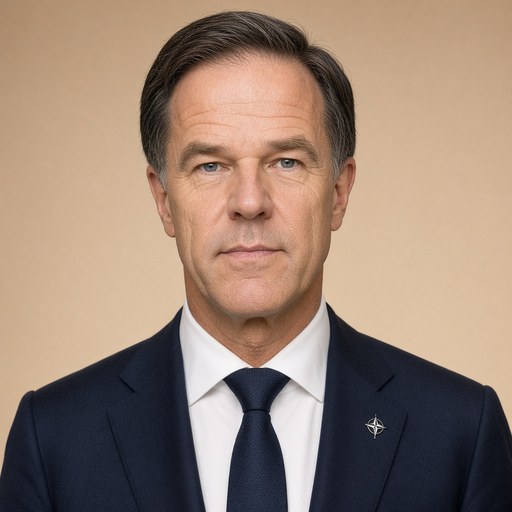
Speech by Prime Minister Mark Rutte at the National Commemoration of August 15, 1945 at the Indonesian Monument in The Hague.
 Mark Rutte · Prime Minister of the Netherlands
- Context
- Rutte addressed the National Commemoration of August 15, 1945 at the Indonesian Monument in The Hague, marking 75 years since the end of World War II in the Dutch East Indies.
- Main themes
- Commemoration of the Dutch East Indies war, Japanese occupation and prisoner of war camps, Indo-Dutch identity and memory, personal family history, silencing of East Indies war experiences, forced labor and exploitation, Indonesian Monument in The Hague, 75th anniversary of World War II end, second-generation trauma, Moluccan and Indonesian victims, postwar recognition
- Duration
- ~8 min
- Words
- 997
- Sentences
- 69
- Readability
- 63
- Grade
- 8.0
- Syntax
- 2.93
- Vocabulary
- 2.11
Translated from Dutch
The broad sphere of national life a sentence belongs to. Every sentence has an Arena, so it is the denominator the other indices are read against.
Other69 sentences in 22 paragraphs
Your Majesty, ladies and gentlemen,
This year we celebrate 75 years of living in peace and freedom since the end of the Second World War. And today, August 15, is a key moment in that. For on this day in 1945, the Second World War also ended in the Dutch East Indies, and thus in our entire kingdom. One kingdom, but with more than one story.
Today, the story of the people who experienced the war in the Dutch East Indies is central. A story that was not always heard in the Netherlands, especially not in the period immediately after liberation.
“You did not experience the war,” they often heard, silencing them. That is what Marion Bloem said, 11 years ago at this place, about the experiences of her parents who ended up in post-war Netherlands from the East Indies. “Maybe our war wasn’t so bad,” our parents thought. “Soedah, let it be.”
It is unfortunately indicative of the experiences of many Indo-Dutch people. And recognizable for their children, the people from the second generation, my generation.
Indies was always present in our family. At home, I was surrounded by the memories of my parents, sisters, and brothers of life in the Indies, and later Indonesia. My parental home was full of scents and flavors that reminded them of that time. The nasi goreng on Saturday night, the homemade Indonesian vegetables.
But it was also in words: if you meant ‘medicine’ in our house, you said ‘obat’, and the sunshade in our house was called ‘kree’. And even now, Malay words sometimes slip out of my mouth, like ‘mataglap’ or ‘soebatten’, which leads to great confusion because no one knows what it means anymore.
In any case, at our kitchen table, that other world of the Indies, with its beautiful and less beautiful sides, sometimes seemed very close. Deceptively close, because in the end, much remained unspoken, tucked away. Or to quote Marion Bloem again: “Our parents were silent and stored their past in suitcases in the attic.”
At my home, the suitcase of memories was fortunately opened regularly. My father would sit me on his knee and tell his stories. For a young boy, often exciting and educational, but you could also tell that sometimes you shouldn’t ask too many questions. That there was a dark corner with memories that my father preferred to avoid.
Not surprisingly, because for him, the war in the Indies was a pitch-black chapter. He was called to arms and then taken prisoner. Separated from his first wife and three children – my sisters and brother – who ended up in camp Tjideng.
His wife ultimately did not survive. She died of exhaustion on July 20, 1945, more than two months after the liberation of the Netherlands but still almost a month before the end of the war in the Indies. When my father finally came out of the Japanese camp, he possessed only what he was wearing.
He spoke only sparingly about what he had experienced in captivity. In 1983, the feature film ‘Merry Christmas, Mr. Lawrence’ was released, which told the story of prisoners of war in Japanese camps in a typical Hollywood manner. Of course, with a star cast, and David Bowie in the lead role.
But when I asked my father to go to the movie with me, he did not want to. I think it led him too much to the dark corner he was trying to avoid. Instead, my father told his story in his own way: cautiously, in fragments, sometimes without words. More impressive to me than any Hollywood film could ever be.
My father’s stories are now part of my baggage. I have learned a lot from them. Just as we all know much more now. About the Japanese camps where tens of thousands of men, women, and children perished. About the many outside camp survivors who had to survive in hostile and difficult circumstances. About Chinese people in the Indies who were seen as enemies by the Japanese. About Moluccans who were made outlaws because of their pro-Dutch stance.
And about Indonesians who were deployed in large numbers as forced laborers by the Japanese regime. These are stories of exploitation and forced labor, in the Indies and elsewhere in occupied Southeast Asia and Japan. About suffering, loss, and starting over. The sorrow for those who did not survive.
Today we pause to remember that. Today we commemorate the victims who fell during the Japanese occupation of the Dutch East Indies. And we do this for this monument that gives a face to the many horrors of that period.
A monument that also symbolizes how this chapter of our history has long been viewed. For it came against the tide, and only more than 40 years after the end of the war – I can still remember when it was under construction.
The reality was that it was long considered unnecessary and uncomfortable to give separate attention to the war story of the Dutch East Indies. Even though around 350,000 people from the Dutch East Indies and Indonesia came to the Netherlands, and today it is part of the family history of over 2 million Dutch people.
Ultimately, the Indo Monument was built, the memories cast in bronze and the awareness carved in stone.
And that is why the annual commemoration at this place is so important. Because it is more than looking back. It is also about acknowledgment. Acknowledging, year after year, the suffering of the civilians, soldiers, and resistance fighters from all ethnic groups who experienced the Second World War in the Indies. Acknowledging that their experiences, their stories, and their traumas matter. Acknowledging that this chapter of the Second World War is an inseparable part of our shared history.
That is why we are here today, 75 years after the Japanese capitulation. We pass on the stories. From generation to generation. For the next 75 years as well.
Thank you.
The original Dutch. The tags above are read on the English translation's sentences.
Majesteit, dames en heren,
Dit jaar vieren we dat we sinds het einde van de Tweede Wereldoorlog 75 jaar leven in vrede en vrijheid. En vandaag, 15 augustus, is daarin een sleutelmoment. Want op deze dag in 1945 eindigde de Tweede Wereldoorlog ook in Nederlands-Indië, en daarmee in ons hele koninkrijk. 1 koninkrijk, maar met meer dan 1 verhaal.
Vandaag staat het verhaal centraal van de mensen die de oorlog in Nederlands-Indië hebben doorgemaakt. Een verhaal dat in Nederland niet altijd werd gehoord, zeker niet in de periode net na de bevrijding.
“Jullie hebben de oorlog niet meegemaakt’, hoorden ze vaak, hun mond gesnoerd.” Dat zei Marion Bloem, 11 jaar geleden op deze plek over de ervaringen van haar ouders die vanuit Indië in naoorlogs Nederland terechtkwamen. “Misschien was onze oorlog zo erg nog niet’, dachten onze ouders. ‘Soedah, laat maar.”
Het is helaas tekenend voor de ervaringen van veel Indische Nederlanders. En herkenbaar voor hun kinderen, de mensen uit de 2e generatie, mijn generatie.
Indië was altijd aanwezig in ons gezin. Thuis werd ik omringd door de herinneringen van mijn ouders, zussen en broers aan het leven in Indië, en later Indonesië. Mijn ouderlijk huis was vol geuren en smaken die hen aan die tijd deden denken. De nasi goreng op zaterdagavond, de zelfbereide Indische groenten.
Maar het zat ook in woorden: als je bij ons ‘medicijn’ bedoelde dan zei je ‘obat’, en het zonnescherm in ons huis noemden we ‘kree’. En nog steeds ontglippen me weleens Maleise woordjes, zoals ‘mataglap’ of ‘soebatten’, wat tot grote verwarring leidt omdat niemand nog weet wat het betekent.
Hoe dan ook, bij ons aan de keukentafel leek die andere wereld van Indië, met de mooie en minder mooie kanten, soms heel dichtbij. Bedrieglijk dichtbij, want uiteindelijk bleef ook veel onuitgesproken, weggestopt. Of om nogmaals met Marion Bloem te spreken: ‘Onze ouders zwegen en legden hun verleden in hutkoffers op zolder.’
Bij mij thuis ging de hutkoffer met herinneringen gelukkig geregeld open. Mijn vader zette mij op zijn knie en vertelde zijn verhalen. Voor een jonge jongen vaak spannend en leerzaam, maar je merkte ook dat je soms niet moest doorvragen. Dat er een donker hoekje bestond met herinneringen die mijn vader liever wilde ontwijken.
Niet verwonderlijk, want voor hem was de oorlog in Indië een gitzwart hoofdstuk. Hij werd onder de wapenen geroepen en daarna in krijgsgevangenschap genomen. Gescheiden van zijn 1e vrouw en 3 kinderen – mijn zussen en broer -, die in kamp Tjideng terechtkwamen.
Zijn vrouw overleefde het uiteindelijk niet. Zij stierf van uitputting op 20 juli 1945, ruim 2 maanden na de bevrijding van Nederland maar nog bijna een maand voor het einde van de oorlog in Indië. Toen mijn vader eindelijk uit het jappenkamp kwam, bezat hij enkel nog wat hij aan had.
Over wat mijn vader in gevangenschap had meegemaakt, vertelde hij slechts mondjesmaat. In 1983 kwam de speelfilm ‘
Merry Christmas, Mr. Lawrence
’ uit, waarin op een typische Hollywoodmanier het verhaal van krijgsgevangenen in Japanse kampen werd verteld. Natuurlijk met een sterrencast, en David Bowie in de hoofdrol.
Maar toen ik mijn vader vroeg om mee naar de film te gaan, wilde hij niet. Het leidde hem, denk ik, teveel naar het donkere hoekje dat hij juist probeerde te vermijden. In plaats daarvan vertelde mijn vader zijn verhaal op zijn eigen manier: behoedzaam, in flarden, soms zonder woorden. Voor mij indrukwekkender dan een Hollywoodfilm ooit zou kunnen zijn.
De verhalen van mijn vader behoren nu tot mijn bagage. Ik heb daar veel van geleerd. Zoals we inmiddels allemaal veel meer weten. Over de jappenkampen waar tienduizenden mannen, vrouwen en kinderen crepeerden. Over de vele buitenkampers die moesten overleven in vijandige en moeilijke omstandigheden. Over Chinezen in Indië die door de Japanners als vijanden werden gezien. Over Molukkers die door hun pro-Nederlandse houding vogelvrij waren.
En over Indonesiërs die in groten getale door het Japanse regime werden ingezet als dwangarbeiders. Het zijn verhalen over uitbuiting en gedwongen arbeid, in Indië en elders in bezet Zuidoost Azië en Japan. Over leed, verlies en opnieuw beginnen. Het verdriet over de mensen die het niet hebben overleefd.
Vandaag staan wij daar bij stil. Vandaag herdenken we de slachtoffers die vielen tijdens de Japanse bezetting van Nederlands-Indië. En dat doen we voor dit monument dat de vele verschrikkingen uit die periode een gezicht geeft.
Een monument dat ook zelf symbool staat voor hoe er lange tijd naar dit hoofdstuk van onze geschiedenis is gekeken. Want het kwam er tegen de stroom in, en pas ruim 40 jaar na het einde van de oorlog – ik kan me nog herinneren dat het in aanbouw was.
De realiteit was dat het lang onnodig en ongemakkelijk werd gevonden om apart aandacht te geven aan het oorlogsverhaal van Nederlands-Indië. Ook al zijn er rond 350.000 mensen uit Nederlands-Indië en Indonesië naar Nederland gekomen en is het vandaag de dag voor ruim 2 miljoen Nederlanders onderdeel van hun familiegeschiedenis.
Uiteindelijk is het Indisch Monument er toch gekomen, de herinneringen in brons gegoten en de bewustwording in steen gebeiteld.
En daarom is de jaarlijkse herdenking op deze plek zo belangrijk. Omdat het meer is dan terugkijken. Het is ook erkennen. Het erkennen, ieder jaar weer, van het leed van de burgers, militairen en verzetsstrijders uit alle bevolkingsgroepen die de Tweede Wereldoorlog in Indië doormaakten. Erkennen dat hun ervaringen, hun verhalen en hun trauma’s ertoe doen. Erkennen dat dit hoofdstuk van de Tweede Wereldoorlog onlosmakelijk onderdeel is van onze gezamenlijke geschiedenis.
Daarom zijn we hier vandaag, 75 jaar na de Japanse capitulatie. We geven de verhalen door. Van generatie op generatie. Ook de komende 75 jaar.
Dank u wel.