




- Context
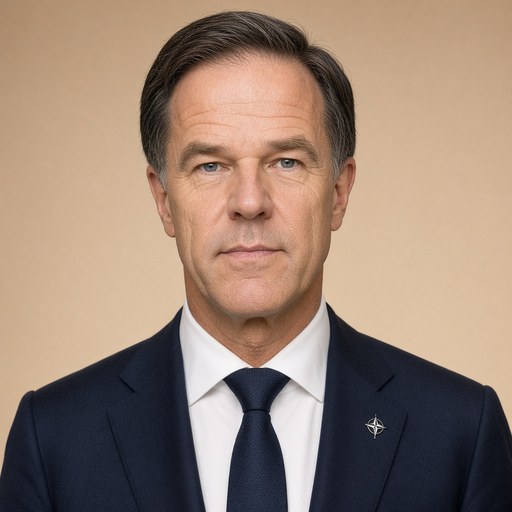
- Rutte addressed the Dutch nation on television on 15 March 2020 to explain the government's strategy for managing the COVID-19 pandemic.
- Main themes
- COVID-19 pandemic response, herd immunity strategy, public health measures, controlled virus spread, protection of vulnerable populations, healthcare capacity, scientific expert guidance, national lockdown considerations, condolences and public reassurance
- Duration
- ~12 min
- Words
- 1,443
- Sentences
- 95
- Readability
- 64
- Grade
- 8.1
- Syntax
- 2.62
- Vocabulary
- 1.93
Translated from Dutch
The broad sphere of national life a sentence belongs to. Every sentence has an Arena, so it is the denominator the other indices are read against.
Other95 sentences in 76 paragraphs
Good evening,
The coronavirus has our country in its grip. Us, and the rest of the world.
Together we face a task of enormous magnitude.
Many people will recognize the feeling that in recent weeks we have been on a rollercoaster that seems to be going faster and faster. You wonder: is this really happening? Because the measures being taken here and elsewhere are unprecedented for countries in peacetime.
At the beginning of this speech, I want to express my condolences to the families of those who have died from the virus.
I wish a speedy recovery and strength to everyone who is in the hospital or recovering at home.
And I want to address the elderly and those with weak health.
I realize that you have great concerns. And that is why I want to tell you that it is our absolute priority to minimize the risks for you as much as possible.
With all the news from home and abroad, with all the events following each other at a dizzying pace, it is completely understandable that there are widespread concerns in society.
We all have questions.
What can I do to protect myself and those around me?
What about school and work?
Can a children's party still go ahead? A family weekend? A wedding?
How long is all of this going to last?
And why does one country take different measures than another country?
In today's world, news and information travel faster than light, and an opinion is quickly formed. I understand that.
But the answer to all the questions that exist starts with the knowledge and experience of experts. Let us hold on to that.
To experts like Jaap van Dissel and his colleagues within and outside the RIVM. Virologists, intensive care doctors, and other specialists.
Their advice has been leading from the very beginning for all the measures that have been taken in the Netherlands so far. And it is important that we continue to navigate by that compass of scientific knowledge and reliable facts.
That is the only sensible way to continue taking the necessary steps. Steps that are inevitably coming our way.
Because I do not have an easy message for you tonight.
The reality is that the coronavirus is among us and will remain among us for the foreseeable future. There is no simple or quick way out of this very difficult situation.
The reality is also that a large part of the Dutch population will become infected with the virus in the coming time.
That is what the experts are telling us now.
And what they are also telling us is that while waiting for a vaccine or medicine, we can slow the spread of the virus and at the same time build controlled herd immunity.
I need to explain that.
Those who have had the virus are usually immune afterwards. Just like in the past with measles.
The larger the group that is immune, the smaller the chance for the virus to jump to vulnerable elderly people and those with weak health.
With herd immunity, you essentially build a protective wall around them. That is the principle.
But we must realize that it can take months or even longer to build herd immunity, and during that time we must shield those at greater risk as much as possible.
Overall, there are 3 possible scenarios.
The 1st scenario is: to control the virus as much as possible.
This leads to a managed spread among groups that are at the least risk.
That is the scenario of our choice.
Maximal control means that we try to flatten the peak in the number of infections with measures and spread it over a longer period.
With this approach, in which most people will only experience mild symptoms, we build immunity and ensure that the healthcare system can cope.
With the goal that nursing homes, home care, hospitals, and especially intensive care units do not become overloaded. So that there is always enough capacity to help those who are most vulnerable.
The 2nd scenario is that we let the virus run rampant.
This would completely overwhelm our healthcare system at the peak of the infection, resulting in not enough capacity to help vulnerable elderly people and other high-risk patients. That we must obviously prevent at all costs.
The 3rd scenario is that we endlessly try to hold back the virus.
That means the country would be completely locked down.
Such a drastic approach may seem attractive at first glance, but experts point out that it would certainly not be a matter of days or weeks.
In that scenario, we would effectively have to shut down our country for a year or even longer, with all the consequences that entails. And even if it were practically possible – to allow people to leave their homes only with permission for such a long time – the virus could immediately resurface as soon as the measures are lifted.
The Netherlands is an open country, and as long as there is no vaccine, the coronavirus will continue to sweep through the world and will not skip our country.
All the advice so far, all the measures that have been announced earlier, are aimed at the 1st scenario of 'maximal control'.
From the relatively simple guidelines of not shaking hands, washing hands more often, and keeping a distance of one and a half meters, to drastic measures such as banning larger gatherings and closing the hospitality sector.
And we are, of course, monitoring the situation closely every day.
How long the measures are needed and whether more is required depends on how the virus behaves in the coming weeks and months.
And on any new scientific insights, because research is ongoing.
It may be that some measures can be relaxed, but we may also need to take an extra step at times to prevent the virus from spreading unchecked.
It will remain a balancing act in the coming months.
It will remain a search for the balance between taking necessary measures and allowing normal life to continue as much as possible.
If we can steer the spread of the virus in this way, the consequences for public health will ultimately be the most manageable.
At the same time, we cannot and will not close our eyes to the economic consequences of this crisis.
Many people are worried about their jobs. Because for many companies, large and small, this is an extremely difficult period.
Many entrepreneurs suddenly find themselves with their backs against the wall. The lady from the coffee shop on the corner, the flower grower, the transport entrepreneur, the self-employed person, but it also applies to national icons like KLM.
My message to the entrepreneurs of the Netherlands and their employees is this: the government will do what is necessary to support you.
We are doing everything we can to ensure that companies do not collapse due to what is happening now and that people do not lose their jobs.
It will be a difficult time, but we will not abandon you.
Finally, I want to thank everyone in the Netherlands for the way the guidelines and measures have been followed so far and for all the heartwarming examples of mutual help and solidarity.
It is reassuring to see that we are there for each other when the need arises.
Keep doing that.
Stay alert and follow the guidelines, even if you are strong and healthy, in the interest of those who are more vulnerable.
That is really important.
Keep using your common sense and listen to the experts.
Keep helping each other where you can.
This is a time when we must find each other, beyond differences and oppositions.
A time to put the common good above individual interests.
And a time to give space and trust to all those people who are working day and night under hectic circumstances to help others and keep the virus under control.
Cleaners, nurses, and doctors in hospitals and elderly care, general practitioners and GGD staff, police officers, ambulance personnel, and all other emergency responders.
To them, and to all those who remain on duty in schools, childcare, public transport, supermarkets, and elsewhere, I want to say: you are doing fantastic work – thank you very, very much for that.
I want to end with this call: amidst all the uncertainties that exist, one thing is absolutely clear: the task we face is very large, and we really have to do this with 17 million people.
Together we will overcome this difficult period.
Take care of each other.
I am counting on you.
Thank you.
The original Dutch. The tags above are read on the English translation's sentences.
Goedenavond,
Het coronavirus houdt ons land in de greep. Ons, én de rest van de wereld.
Samen staan we voor een opgave van enorme omvang.
Veel mensen zullen het gevoel herkennen dat we de laatste weken in een achtbaan zitten die steeds sneller lijkt te gaan rijden. Je vraagt je af: gebeurt dit echt? Want de maatregelen die hier en elders worden getroffen zijn ongekend voor landen in vredestijd.
Ik wil aan het begin van deze toespraak mijn medeleven uitspreken met de families van de mensen die inmiddels aan het virus zijn overleden.
Iedereen die in het ziekenhuis ligt of thuis aan het herstellen is, wens ik veel beterschap en sterkte toe.
En ik wil me richten tot de ouderen en de mensen met een zwakke gezondheid.
Ik realiseer me dat u grote zorgen hebt. En daarom wil ik u zeggen dat het onze absolute prioriteit is de risico’s voor u zo klein mogelijk te maken.
Met al het nieuws uit binnen- en buitenland, met alle gebeurtenissen die elkaar in razend tempo opvolgen, is het volkomen logisch dat er heel breed in de samenleving zorgen leven.
We zitten allemaal met vragen.
Wat kan ik doen om mezelf en de mensen om me heen te beschermen?
Hoe zit het met school en werk?
Kan een kinderfeestje nog doorgaan? Een familieweekend? Een bruiloft?
Hoe lang gaat dit eigenlijk allemaal duren?
En waarom neemt het ene land andere maatregelen dan het andere land?
In de wereld van vandaag zijn nieuws en informatie sneller dan het licht en is een mening ook snel gegeven. Ik begrijp dat.
Maar het antwoord op alle vragen die leven, begint bij de kennis en ervaring van deskundigen. Laat ons daaraan vasthouden.
Aan deskundigen als Jaap van Dissel en zijn collega’s binnen en buiten het RIVM. Virologen, intensive care artsen en andere specialisten.
Hun advies is vanaf het begin leidend geweest voor alle maatregelen die tot nu toe in Nederland zijn getroffen. En het is belangrijk dat we op dat kompas van wetenschappelijke kennis en betrouwbare feiten blijven varen.
Dat is de enige verstandige manier om verdere stappen te kunnen blijven zetten die nodig zijn. Stappen die onvermijdelijk op ons af komen.
Want ik heb vanavond geen gemakkelijke boodschap voor u.
De realiteit is, dat het coronavirus onder ons is en voorlopig ook onder ons zal blijven. Er is geen eenvoudige of snelle uitweg uit deze zeer moeilijke situatie.
De realiteit is ook dat de komende tijd een groot deel van de Nederlandse bevolking met het virus besmet zal raken.
Dat is wat de deskundigen ons nu vertellen.
En wat zij ons ook zeggen, is dat we in afwachting van een vaccin of medicijn de verspreiding van het virus kunnen afremmen en tegelijkertijd gecontroleerd groepsimmuniteit op kunnen bouwen.
Dat moet ik uitleggen.
Wie het virus heeft gehad, is daarna meestal immuun. Net als vroeger met de mazelen.
Hoe groter de groep die immuun is, hoe kleiner de kans voor het virus om over te springen op kwetsbare ouderen en mensen met een zwakke gezondheid.
Met groepsimmuniteit bouw je als het ware een beschermende muur om hen heen. Dat is het principe.
Maar we moeten ons wel realiseren dat het maanden of zelfs langer kan duren om groepsimmuniteit op te bouwen en in die tijd moeten we mensen die een groter risico lopen zoveel mogelijk afschermen.
Alles overziend, zijn er 3 mogelijke scenario’s.
Het 1e scenario is: het virus maximaal controleren.
Dat leidt tot een beheerste verspreiding, onder groepen die het minste risico lopen.
Dat is het scenario van onze keuze.
Maximaal controleren betekent dat we proberen met maatregelen de piek in het aantal besmettingen af te vlakken en uit te smeren over een langere periode.
Met deze aanpak waarin de meeste mensen alleen lichte klachten zullen krijgen, bouwen we immuniteit op en zorgen we dat de zorg het aankan.
Met als doel dat de verpleeghuizen, de thuiszorg, de ziekenhuizen en vooral de intensive care afdelingen niet overbelast raken. Zodat er steeds voldoende capaciteit is de mensen te helpen die het meest kwetsbaar zijn.
Het 2e scenario is dat we het virus onbeheerst zijn gang laten gaan.
Daarmee zou ons zorgsysteem in de piek van de besmetting volkomen overvraagd worden, waardoor er niet genoeg capaciteit zou zijn om kwetsbare ouderen en andere patiënten met een hoog risico te helpen. Dat moeten we uiteraard koste wat kost voorkomen.
Het 3e scenario is dat we eindeloos proberen het virus tegen te houden.
Dat betekent dat het land helemaal op slot gaat.
Zo’n rigoureuze aanpak kan op het oog aantrekkelijk lijken, maar deskundigen wijzen erop dat het bepaald geen kwestie van dagen of weken zou zijn.
In dat scenario zouden we ons land feitelijk een jaar of zelfs langer moeten platleggen, met alle gevolgen van dien. En als het praktisch al zou kunnen – om mensen zo lang alleen met toestemming hun huis uit te laten komen – dan nog kan het virus meteen weer de kop opsteken als de maatregelen worden ingetrokken.
Nederland is een open land en zolang er geen vaccin is, zal het coronavirus als een golf door de wereld blijven gaan en ons land niet overslaan.
Alle adviezen tot nu toe, alle maatregelen die eerder zijn afgekondigd zijn op het 1e scenario van ‘maximaal controleren’ gericht.
Van de relatief eenvoudige richtlijnen om geen handen te geven, vaker handen te wassen en anderhalve meter afstand te houden tot ingrijpende maatregelen als het verbieden van grotere bijeenkomsten en sluiting van de horeca.
En we houden uiteraard per dag de vinger aan de pols.
Hoe lang de maatregelen nodig zijn en of er meer nodig is, hangt dus af van de manier waarop het virus zich de komende weken en maanden gaat gedragen.
En van eventuele nieuwe wetenschappelijke inzichten, want het onderzoek staat niet stil.
Het kan zijn dat enkele maatregelen versoepeld kunnen worden, maar dat we soms ook weer een extra stap moeten zetten om te voorkomen dat het virus ongeremd om zich heen grijpt.
Het blijft passen en meten de komende maanden.
Het blijft zoeken naar de balans tussen maatregelen nemen die nodig zijn en het gewone leven zoveel mogelijk door laten gaan.
Als we zo de verspreiding van het virus kunnen sturen, zijn de gevolgen voor de volksgezondheid uiteindelijk het meest beheersbaar.
Tegelijkertijd kunnen en zullen we onze ogen niet sluiten voor de economische gevolgen van deze crisis.
Veel mensen maken zich zorgen over hun baan. Want voor heel veel bedrijven, groot en klein, is dit een extreem moeilijke periode.
Heel veel ondernemers staan ineens met hun rug tegen de muur. De mevrouw van het koffietentje op de hoek, de bloemenkweker, de transportondernemer, de ZZP’er, maar het geldt ook voor nationale iconen als de KLM.
Mijn boodschap aan de ondernemers van Nederland en hun werknemers is deze: het kabinet zal doen wat nodig is om u te steunen.
We zetten alles op alles om ervoor te zorgen dat bedrijven niet omvallen door wat er nu gebeurt en dat mensen hun baan niet verliezen.
Het zal hoe dan ook een moeilijke tijd worden, maar we laten u niet in de steek.
Tot slot wil ik iedereen in Nederland bedanken voor de manier waarop de aanwijzingen en maatregelen tot nu toe zijn opgevolgd en voor alle hartverwarmende voorbeelden van onderlinge hulp en solidariteit.
Het doet goed te merken dat we voor elkaar klaarstaan als de nood aan de man is.
Blijf dat doen.
Blijf alert en volg de aanwijzingen op, ook als u sterk en gezond bent, in het belang van mensen die kwetsbaarder zijn.
Dat is echt belangrijk.
Blijf uw gezond verstand gebruiken en luister naar de deskundigen.
Blijf elkaar helpen waar dat kan.
Dit is een tijd waarin we elkaar moeten vinden, over meningsverschillen en tegenstellingen heen.
Een tijd om het gezamenlijke belang boven het eigen belang te stellen.
En een tijd om ruimte en vertrouwen te geven aan al die mensen die onder hectische omstandigheden dag en nacht bezig zijn anderen te helpen en het virus onder controle te houden.
Schoonmakers, verpleegkundigen en artsen in de ziekenhuizen en de ouderenzorg, huisartsen en GGD-medewerkers, politieagenten, ambulancepersoneel en alle andere hulpverleners.
Tegen hen, en tegen al die mensen die op hun post blijven in scholen, kinderopvang, openbaar vervoer, supermarkten en waar dan ook, wil ik zeggen: u doet fantastisch werk – heel, heel veel dank daarvoor.
Ik wil eindigen met deze oproep: bij alle onzekerheden die er zijn, is één ding volstrekt duidelijk: de opgave waar we voor staan is heel groot en we moeten dit echt met 17 miljoen mensen doen.
Samen komen we deze moeilijke periode te boven.
Let een beetje op elkaar.
Ik reken op u.
Dank u wel.