




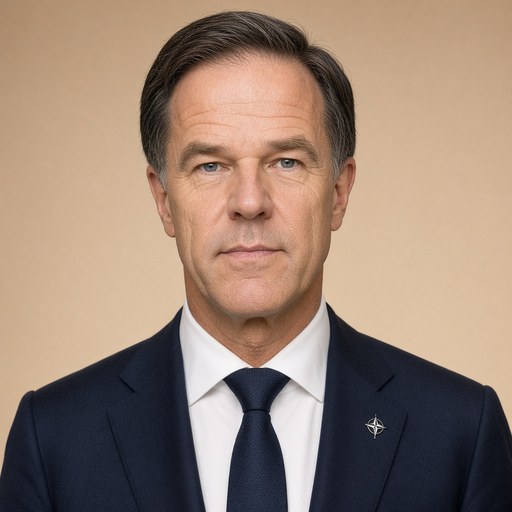
Speech by Prime Minister Mark Rutte at the presentation of a Royal Decoration to Jan Schinkelshoek, The Hague
 Mark Rutte · Prime Minister of the Netherlands
- Context
- Rutte addressed a ceremony in The Hague on 6 November 2018 to present a Royal Decoration to Jan Schinkelshoek in recognition of his 45-year career in Dutch politics.
- Main themes
- Royal Decoration ceremony, Jan Schinkelshoek's career, 45 years at the Binnenhof, political journalism, public service, Reformed Christian values, Montesquieu Institute, democracy and rule of law, civic engagement, Order of Orange-Nassau
- Duration
- ~7 min
- Words
- 837
- Sentences
- 61
- Readability
- 67
- Grade
- 7.3
- Syntax
- 2.82
- Vocabulary
- 2.25
Translated from Dutch
The broad sphere of national life a sentence belongs to. Every sentence has an Arena, so it is the denominator the other indices are read against.
Other61 sentences in 15 paragraphs
Ladies and gentlemen, but above all: dear Jan,
I saw you thinking when I walked in: ‘What is he doing here?’ Don’t be alarmed, but I’m here for you. I understood that your own Montesquieu Institute is discussing departing ministers and state secretaries this afternoon. That is certainly very interesting. But it never seems to be about the people who stay, and that is, of course, not fair.
Jan, I calculated it back. In 1973, you came to the Binnenhof as a young reporter for the Reformatorisch Dagblad and you have never left. That was 45 years ago. 45 years of political and social engagement. My first thought was: has it really only been 45 years? Because Jan, I think I share the same feeling as many others: Jan Schinkelshoek has always been there. You must have even given communication advice to Abraham Kuyper himself.
We know you in The Hague as a political animal, as a political omnivore, actually. Sometimes you were disguised as a journalist, at other times as a spokesperson, and also for a few years as a member of parliament. But with one constant: your ‘unexplainable passion for the public good,’ as you have sometimes called it. And of course your hat, your almost Donnerian gentleman’s bicycle, and your bow tie. That’s how we can picture you. On your bike, with flapping jacket tails on your way to the next meeting.
Politics has been ingrained in you from a young age. As a boy of 10 or 11, you followed the local politics in Capelle aan de IJssel and the national politics closely. You have told how you wrote everything down about the ‘Night of Schmelzer’ in a notebook. And you have never really stopped doing that. Because in all the roles you have had and still have, you have always remained that curious and contemplative journalist.
And that is also what makes you so special in the political ecosystem of The Hague. Sooner or later, everyone at or around the Binnenhof gets swallowed up by the daily grind, the headline in the morning newspaper, the latest news on our smartphones. But not Jan Schinkelshoek. That too goes back to your Reformed upbringing.
As you once said about one of the great examples, Groen van Prinsterer, and now I quote:
‘Groen pointed out that politics is more than addition and subtraction, more than bookkeeping; it is about the underlying principle. From him, I learned that you need a compass at the Binnenhof, a guiding principle. Otherwise, you are just being pragmatic. There is nothing wrong with that, but there is so little to be gained: you don’t know where you will end up.’
So there is always something in you of that relativizing view of eternity, and that absolutely helps to keep it going for 45 years and hopefully longer. And of course your wonderful sense of humor – that helps too. We owe you that well-known saying in The Hague that the ship of state is the only ship that leaks from the top. Brilliant!
And when you were once asked if you found yourself attractive, you didn’t hesitate for a moment and said: ‘No, but I try to compensate for that with charm.’ Everyone who knows you can confirm: you do that successfully.
Ladies and gentlemen, like most of you, I regularly run into Jan at and around the ‘warehouse of democracy,’ as he sometimes calls the Binnenhof. And that is, of course, always a pleasure. But our bond runs deeper. Simply because we are both great admirers of Thomas Mann. And because Jan, like my grandfather, is an elder of the Nieuwe Badkapel in Scheveningen. The church where I walked as a child on Sundays, holding my father’s hand. And that says everything about you, Jan.
Because you breathe politics, but you are certainly not one-dimensional. You have been and are involved and active in various church-related volunteer roles.
You are a director in the world of charities and Christian primary education. You are committed to a sustainable The Hague. For small and medium-sized enterprises. And through that wonderful Montesquieu Institute, also for the strengthening of our democracy and rule of law. And I am skipping over many activities.
Jan, Herman Tjeenk Willink once beautifully said that citizenship is a responsible public office. For 45 years, you have shown how that office should be filled. You understand, we all hope that you will continue for a long time. That is why I say today: let Jan Schinkelshoek finish his work! I believe that, everyone in this room believes that, but so does someone else.
Dear Jan, it is with great pleasure that I may inform you that His Majesty the King has been pleased to appoint you as a Knight in the Order of Orange-Nassau. Consider it both a lifetime achievement award and a encouragement award in one. I would like to invite you forward, to a surely thunderous applause, so that I can pin the corresponding insignia on you.
The original Dutch. The tags above are read on the English translation's sentences.
Dames en heren, maar vooral: beste Jan,
Ik zag je denken toen ik binnen kwam: ‘Wat doet die hier?’ Niet schrikken, maar ik kom voor jou. Ik begreep dat jouw eigen Montesquieu Instituut vanmiddag discussieert over vertrekkende ministers en staatssecretarissen. Dat is zeker heel interessant. Maar het gaat nooit eens een keer over de mensen die blijven, en dat is natuurlijk niet eerlijk.
Jan, ik heb het eens teruggerekend. In 1973 kwam je op het Binnenhof als jong verslaggever van het Reformatorisch Dagblad en je bent nooit meer weggegaan Dat is 45 jaar geleden. 45 jaar politieke en maatschappelijke betrokkenheid. Mijn eerste gedachte was: is het echt pas 45 jaar? Want Jan, ik denk dat ik hetzelfde gevoel heb als heel veel anderen: Jan Schinkelshoek is er altijd geweest. Jij moet Abraham Kuyper zelf nog communicatieadvies hebben gegeven.
We kennen je in Den Haag als politiek dier, als politieke omnivoor eigenlijk. Soms was je vermomd als journalist, dan weer als voorlichter en ook nog een paar jaar als Kamerlid. Maar met één constante: je ‘onberedeneerbare passie voor de publieke zaak’ zoals je dat zelf wel eens hebt genoemd. En natuurlijk je hoed, je bijna Donneriaanse herenrijwiel en je vlinderdas. Zo kunnen we je uittekenen. Op de fiets, met wapperende jaspanden op weg naar een volgende bijeenkomst.
Politiek is je thuis met de paplepel ingegoten. Als jongen van 10, 11 jaar volgde je de gemeentepolitiek in Capelle aan de IJssel en de landspolitiek al op de voet. Je hebt wel eens verteld hoe je in een schriftje alles rond de ‘Nacht van Schmelzer’ opschreef. En eigenlijk ben je daar nooit mee opgehouden. Want in alle rollen die je had en hebt, ben je steeds die nieuwsgierige en beschouwende journalist gebleven.
En dat is ook meteen wat jou in de Haagse biotoop zo bijzonder maakt. Vroeg of laat wordt iedereen op of rond het Binnenhof opgeslokt door de waan van de dag, de kop in de ochtendkrant, het laatste bericht op onze smartphones. Maar niet Jan Schinkelshoek. Ook dat gaat terug op je gereformeerde jeugd.
Zoals je zelf ooit zei over een van de grote voorbeelden, Groen van Prinsterer, en nu citeer ik:
‘Groen heeft erop gewezen dat politiek méér is dan optellen en aftrekken, méér is dan boekhouden; dat het om het achterliggende beginsel gaat. Van hem heb ik geleerd dat je op het Binnenhof een kompas nodig hebt, een leidend beginsel. Anders ben je alleen maar pragmatisch bezig. Daar is niets op tégen, maar daar is zo weinig vóór: je weet dan niet waar je terechtkomt.’
In jou zit dus altijd iets van die relativerende blik op de eeuwigheid en dat helpt absoluut om het 45 jaar en hopelijk langer vol te houden. En je geweldige gevoel voor humor natuurlijk – dat helpt ook. Zo danken we aan jou dat bekende Haagse gezegde dat het schip van staat het enige schip is dat aan de bovenkant lekt. Geniaal!
En toen jou ooit gevraagd werd of je jezelf aantrekkelijk vond, aarzelde je geen moment en zei je: ‘Nee, maar dat probeer ik te compenseren met charme.’ Iedereen die je kent kan bevestigen: dat doe je met succes.
Dames en heren, net als de meesten van u kom ik Jan regelmatig tegen op en rond het ‘pakhuis der democratie’ zoals hij het Binnenhof wel eens noemt. En dat is natuurlijk altijd een genoegen. Maar onze band zit dieper. Alleen al omdat we allebei groot bewonderaar zijn van Thomas Mann. En omdat Jan, net als mijn grootvader, ouderling is van de Nieuwe Badkapel in Scheveningen. De kerk waar ik als kind op zondagen aan de hand van mijn vader naar toe liep. En dat zegt eigenlijk meteen alles over jou, Jan.
Want je ademt politiek, maar bent zeker niet eendimensionaal. Je was en bent als vrijwilliger in verschillende functies kerkelijk betrokken en actief.
Je bent bestuurder in de wereld van de goede doelen en het Christelijk basisonderwijs. Je zet je in voor een duurzaam Den Haag. Voor het midden- en kleinbedrijf. En via dat prachtige Montesquieu Instituut ook voor de versterking van onze democratie en rechtstaat. En dan sla ik nog heel veel activiteiten over.
Jan, Herman Tjeenk Willink zei ooit heel mooi dat burgerschap een verantwoordelijk publiek ambt is. Jij laat nu al 45 jaar zien hoe dat ambt bekleed dient te worden. Je begrijpt, we hopen allemaal dat je nog lang doorgaat. Daarom zeg ik vandaag: laat Jan Schinkelshoek zijn karwei afmaken! Dat vind ik, dat vindt iedereen in deze zaal, maar dat vindt ook nog iemand anders.
Beste Jan, met alle soorten van genoegen mag ik je vertellen dat het Zijne Majesteit de Koning heeft behaagd je te benoemen tot Ridder in de Orde van Oranje-Nassau. Beschouw het maar als een oeuvreprijs en aanmoedigingsprijs ineen. Graag wil ik je naar voren vragen, onder een ongetwijfeld donderend applaus, zodat ik je de bijbehorende versierselen kan opspelden.