




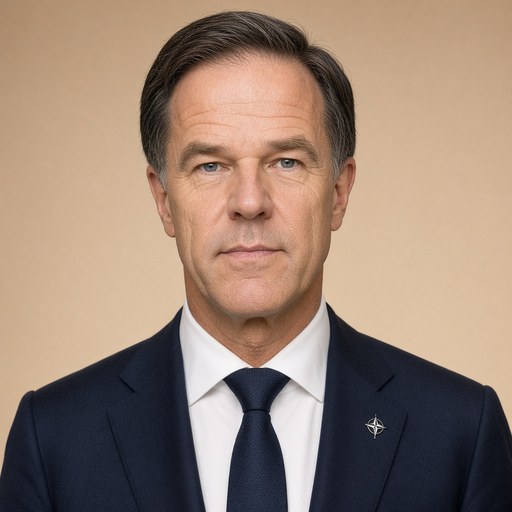
Speech by Prime Minister Mark Rutte at the farewell of Mr. Piet Hein Donner as Vice President of the Council of State, The Hague.
 Mark Rutte · Prime Minister of the Netherlands
- Context
- Rutte addressed a farewell ceremony for Piet Hein Donner as outgoing Vice President of the Council of State in The Hague on 30 October 2018.
- Main themes
- Public service dedication, farewell tribute to Piet Hein Donner, Council of State vice presidency, Dutch political and legal career, hereditary public service legacy, constitutional law, Donner family history, command of language and humor, politics and governance structure, legislative expertise
- Duration
- ~11 min
- Words
- 1,309
- Sentences
- 65
- Readability
- 55
- Grade
- 10.4
- Syntax
- 3.18
- Vocabulary
- 2.22
Translated from Dutch
The broad sphere of national life a sentence belongs to. Every sentence has an Arena, so it is the denominator the other indices are read against.
Other65 sentences in 64 paragraphs
Your Majesty, ladies and gentlemen, but of course especially: Mr. the outgoing Vice President of the Council of State,
On the day of your 70th birthday, an interview appeared in Trouw that, of course, contained one profound insight after another.
The statement that stuck with me the most was this: "Holding on to what is valuable. That is what politics is for," you said.
That is, of course, a beautiful variant on the well-known biblical word from Paul: "Test everything; hold fast what is good."
But is it so strange if I say that I also recognize your own conviction and personality in it?
Mr. Donner, you have served the public service for over four decades with great dedication.
And with a consistent message, namely that society needs structure and that not everything that can be said needs to be said.
You were never the stormer of the heavens or a revolutionary, for you are simply not one for the barricades.
But you have always been the astute jurist, with a great knowledge of the matter, an analytical mind, and a work ethic that is legendary throughout The Hague and beyond.
And, with your permission, Your Majesty, it is, of course, true that of all the positions within the Council of State, only the president and their adult successor are born for their task.
But in your case, Mr. Donner, I dare to assert that you could indeed have been destined for the vice presidency.
That is due to two things.
First of all, you are hereditary burdened.
As the son of your father, who was an authority in our constitutional law.
As the grandson of your grandfather, president of the Supreme Court and your distant predecessor as Minister of Justice.
And perhaps most of all as a descendant of your great-grandfather, Member of Parliament and Pastor Donner, who in 1897 was so enthusiastic about the presence of the underage Princess Wilhelmina at the delivery of the Throne Speech by Queen Emma that he spontaneously exclaimed: "Long live the queens."
With that, he started a tradition that we still know today and that puts the special relationship between the House of Orange and the Donner family into the right perspective.
The second reason why you were so exceptionally suited for the vice presidency lies in your career path.
You know the world of politics, government, and legislation like no other from the inside and in full breadth.
As a civil servant at the Ministries of Economic Affairs and Justice.
As an advisor to the Parliamentary RSV Inquiry Committee.
As a member and chairman of the Scientific Council for Government Policy.
As an ordinary member of this Council of State.
As Minister of Justice, Social Affairs, and Interior and Kingdom Relations.
As a two-time informateur.
And even for a brief period as a member of the House of Representatives, where you, in your own words, at the age of 58, took the floor "as a virgin" and "blushing" for your maiden speech.
That only succeeded at the last moment because the next ministerial position was already looming.
But because a fellow member of parliament yielded his place to you in an important debate about the dredging issue, you are forever recorded in the official records.
It became a memorable performance, ladies and gentlemen.
With great passion, Mr. Donner spoke about problems surrounding "tarragrond"; that is the often polluted soil that sticks to potatoes and beets when they are harvested.
He called it a "cost item for the potato and beet processing industry" and thus "a bottleneck that urgently needs to be resolved."
In passing, he also had some criticism for the outgoing Minister of Justice, a certain Donner, who had overlooked an error in a legislative amendment.
"He must have been asleep at the time," concluded the young member of parliament.
With that, I immediately touch upon two personal qualities of yours, Mr. Donner, that are praised by many and also by me.
I am, of course, referring to your enviable command of language and your infectious sense of humor.
Your speeches and other texts are without exception works of art: very precisely formulated, rich in content, fact-filled, and erudite, and of course, biblically grounded.
I would not be surprised if you personally wrote that famous rap from "De Don": "Here is Donner of Justice, I do it together with the police."
With you, the joke and the smile are never far away.
Donnerian humor is not of the laugh-or-I-shoot variety, but subtle and lightly ironic; "tongue in cheek," as the English say.
Donnerian humor also never comes at the expense of another, but has a high level of self-deprecation.
And the best jokes can be seen coming because then your mouth curls slightly upward and a twinkle appears in your eyes.
Like that time you startled your colleagues in the cabinet with the announcement of an official work and rest hours regulation for ministers, who were no longer allowed to work more than 168 hours a week.
I will leave the arithmetic on the table...
Mr. Donner, as Vice President, you have not spared the cabinet on many occasions, especially not in your introductory chapter on the annual report of the Council and in the discussions with the press about it.
And rightly so.
Your role conception has also always been very pure in this position: what needs to be said, is said.
Or as you once formulated it: "We do not exist because our advice is awaited, but to be a guarantee of legality and efficiency."
I emphasize today that important function of the Council of State.
We live in a hectic time in which the whims of the day can easily dominate political and policy processes – I confess to being guilty myself.
And precisely then, the legal review and the focus on care, feasibility, and practical effects by the Council of State are of the utmost importance.
Against that background, I welcome the fact that the field of work under your leadership has broadened.
Not only because the Council was given the task a few years ago from Europe to check whether the European budget agreements are being adhered to in our country.
But also because the Council of State is increasingly speaking at the front end with members of parliament and ministers, providing information and advice.
Or to put it again in your words: "Our role should not only be at the end of a legislative proposal; by then everything is already set."
Dear Piet Hein,
"The legislator has determined that my life is complete," you said recently in your well-known understated manner.
Fortunately, it is not literally so dramatic, but I do fear that I cannot change much about that legal obligation to depart.
What I can do is express my great gratitude and appreciation for everything you have done for the Kingdom of the Netherlands in your long and rich career.
And I want to explicitly involve your wife Marlies in that, who has played a significant role behind the scenes.
Not only as the woman who could occasionally keep you grounded, but also – as I know from close experience – as a source of advice and support for the partners of ministers from the cabinets of which you were a part.
Piet Hein, I have brought two gifts for you, one of which fits your constitutional role as viceroy: silver cufflinks with the national coat of arms.
The second gift is more suited to the new phase of life you are now entering: a jigsaw puzzle of the Binnenhof seen from the Hofvijver.
With a thousand pieces and a lot of water and air, it is not an easy puzzle, but that is well within your capabilities.
Once again, thank you very much, all the best, and undoubtedly see you again.
The original Dutch. The tags above are read on the English translation's sentences.
Majesteiten, dames en heren, maar natuurlijk vooral: mijnheer de scheidend vicepresident van de Raad van State,
Op de dag van uw 70e verjaardag verscheen in Trouw een afscheidsinterview dat uiteraard de ene bezonken wijsheid na de andere bevatte.
De uitspraak die bij mij het meest bleef hangen, was deze: ‘Vasthouden wat van waarde is. Daar is de politiek voor’, zei u.
Dat is natuurlijk een mooie variant op het bekende Bijbelwoord van Paulus: ‘Onderzoek alles, behoud het goede.’
Maar is het heel gek als ik zeg dat ik er ook uw eigen overtuiging en persoon in herken?
Mijnheer Donner, u hebt de publieke dienst ruim vier decennia lang met grote toewijding gediend.
En met een consistente boodschap, namelijk dat de samenleving structuur nodig heeft en dat niet alles wat gezegd mag worden ook gezegd hoeft te worden.
U was nooit de hemelbestormer of revolutionair, want u bent nu eenmaal niet zo van de barricades.
Maar u was wel steeds de scherpzinnige jurist, met een grote kennis van zaken, een analytische geest en een werklust die legendarisch is in heel Den Haag en omstreken.
En, met permissie Majesteit, het is natuurlijk zo dat van alle functies binnen de Raad van State alleen de voorzitter en diens meerderjarige opvolger voor hun taak worden geboren.
Maar in uw geval, mijnheer Donner, durf ik de stelling aan dat je ook wel degelijk in de wieg kunt zijn gelegd voor het vicepresidentschap.
Dat zit in twee dingen.
Allereerst bent u erfelijk belast.
Als zoon van uw vader, die een autoriteit was op het gebied van ons staatsrecht.
Als kleinzoon van uw grootvader, president van de Hoge Raad en uw verre voorganger als minister van Justitie.
En misschien nog wel het meest als nazaat van uw overgrootvader, Kamerlid en dominee Donner, die in 1897 zo enthousiast was over de aanwezigheid van de minderjarige prinses Wilhelmina bij het uitspreken van de Troonrede door Koningin Emma, dat hij spontaan uitriep: ‘Leve de koninginnen.’
Daarmee startte hij een traditie die we vandaag nog kennen en die de bijzondere relatie tussen het Huis van Oranje en de familie Donner toch even in het juiste perspectief zet.
De tweede reden waarom u zo uitermate geschikt was voor het vicepresidentschap ligt besloten in uw carrièrepad.
U kent de wereld van politiek, overheid en wetgeving als geen ander van binnenuit en over de volle breedte.
Als ambtenaar op de ministeries van Economische Zaken en Justitie.
Als adviseur van de Parlementaire RSV-Enquêtecommissie.
Als lid en voorzitter van de Wetenschappelijke Raad voor het Regeringsbeleid.
Als gewoon lid van deze Raad van State
Als minister van Justitie, Sociale Zaken én Binnenlandse Zaken en Koninkrijksrelaties.
Als tweevoudig informateur.
En zelfs nog een blauwe maandag als lid van Tweede Kamer, waar u in uw eigen woorden, op uw 58e ‘als maagd’ en ‘blozend’ het woord nam voor uw maidenspeech.
Dat lukte overigens slechts op de valreep, omdat het volgende ministerschap zich alweer aandiende.
Maar omdat een collega-Kamerlid zijn plaats aan u afstond in een belangwekkend debat over het baggerwezen, bent u toch voor de eeuwigheid sprekend in de Handelingen opgenomen.
Het werd een memorabel optreden, dames en heren.
Vol vuur sprak de heer Donner over problemen rondom de ‘tarragrond’; dat is de – vaak vervuilde – aarde die bij het rooien aan aardappels en bieten blijft vastzitten.
Hij noemde dat een’ kostenpost voor de aardappel- en bietenverwerkende industrie’ en dus ‘een knelpunt dat dringend moet worden opgelost’.
En passant had hij ook de nodige kritiek op de demissionaire minister van Justitie, een zekere Donner, die een fout in een wetswijziging over het hoofd had gezien.
‘Hij heeft toen vermoedelijk zitten slapen’, concludeerde het jonge Kamerlid.
Waarmee ik meteen op twee persoonlijke eigenschappen van u stuit, mijnheer Donner, die door velen worden geroemd en ook door mij.
Ik doel natuurlijk op uw jaloersmakende taalgevoel en uw aanstekelijke gevoel voor humor.
Uw toespraken en andere teksten zijn zonder uitzondering kunstwerken: heel precies geformuleerd, met veel inhoud, feitenrijk en erudiet, en natuurlijk Bijbelvast.
Het zou mij zelfs niks verbazen als u die beroemde rap van de ‘De Don’ persoonlijk hebt geschreven: ‘Hier is Donner van Justitie, ik doe het samen met politie.’
Bij u zijn de grap en de glimlach nooit ver weg.
Donneriaanse humor is niet van de lach-of-ik-schiet-soort, maar subtiel en licht-ironisch; ‘tongue in cheek’ zoals de Engelsen zeggen.
Donneriaanse humor gaat ook nooit ten koste van een ander, maar kent wel een hoog zelfspotgehalte.
En de beste grappen kun je zien aankomen, want dan krult uw mond licht omhoog en verschijnt er een twinkeling in uw ogen.
Zoals die keer dat u uw collega’s in het kabinet liet schrikken met de aankondiging van een officiële werk- en rusttijdenregeling voor bewindslieden, die niet langer dan 168 uur per week mochten werken.
Ik laat de rekensom even op tafel liggen…
Mijnheer Donner, als vicepresident hebt u het kabinet bij menige gelegenheid niet gespaard, vooral niet in uw inleidende hoofdstuk op het jaarverslag van de Raad en in de gesprekken met de pers daarover.
En terecht.
Uw rolopvatting is ook in deze functie steeds een heel zuivere geweest: wat gezegd moet, wordt gezegd.
Of zoals u dat zelf ooit formuleerde: ‘We bestaan niet omdat er op onze adviezen gewacht wordt, maar om een waarborg van rechtmatigheid en doelmatigheid te zijn.’
Ik onderstreep vandaag die belangrijke functie van de Raad van State.
We leven in een jachtige tijd waarin de waan van de dag politieke en beleidsmatige processen heel makkelijk gaat overheersen – ik beken ook zelf schuld.
En juist dan is de juridische toets en de blik op zorgvuldigheid, uitvoerbaarheid en praktische effecten door de Raad van State van het grootste belang.
Tegen die achtergrond juich ik het toe dat het werkveld onder uw leiding breder is geworden.
Niet alleen omdat de Raad enkele jaren geleden vanuit Europa de taak kreeg om te controleren of in ons land de Europese begrotingsafspraken worden nageleefd.
Maar ook omdat de Raad van State steeds vaker aan de voorkant spreekt met Kamerleden en bewindslieden, voorlichting geeft en adviseert.
Of om het nog een keer in uw woorden te zeggen: ‘Onze rol moet niet alleen aan het einde van een wetsvoorstel liggen, dan ligt alles al vast.’
Beste Piet Hein,
‘De wetgever heeft bepaald dat mijn leven voltooid is’ zei je laatst op je bekende onderkoelde manier.
Gelukkig is het niet letterlijk zo dramatisch, maar ik vrees inderdaad dat ik aan die wettelijke vertrekplicht niet veel kan veranderen.
Wat ik wel kan doen is mijn grote dank en waardering uitspreken voor alles wat je in je lange en rijke carrière voor het Koninkrijk der Nederlanden hebt gedaan.
En ik wil daar uitdrukkelijk ook je echtgenote Marlies bij betrekken, die achter de schermen een grote rol heeft gespeeld.
Niet alleen als de vrouw die jou zo af en toe met beide benen op de grond kon zetten, maar ook – zo weet ik van dichtbij – als vraagbaak en steun en toeverlaat van de partners van bewindslieden van de kabinetten waar jij deel van uitmaakte.
Piet Hein, ik heb twee cadeaus voor je meegebracht waarvan er één past bij je constitutionele rol van onderkoning: zilveren manchetknopen met het rijkswapen.
Het tweede cadeau past meer bij de nieuwe levensfase die je nu ingaat: een legpuzzel van het Binnenhof gezien vanaf de Hofvijver.
Met duizend stukjes en veel water en lucht is het geen gemakkelijke puzzel, maar dat is aan jou wel besteed.
Nogmaals heel veel dank, alle goeds en ongetwijfeld tot ziens.