




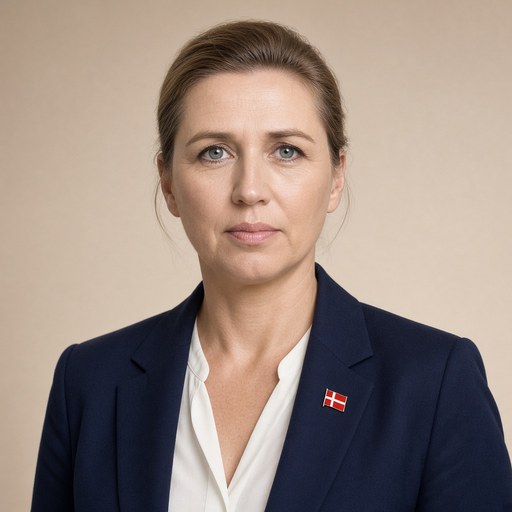
The Prime Minister's speech at the DI Summit on September 27.
 Mette Frederiksen · Prime Minister of Denmark
- Context
- Frederiksen addressed the DI Summit on September 27, 2022, speaking to Danish business leaders about green transition, energy security, and Denmark's international role amid the Ukraine war.
- Main themes
- Green transition, Danish business leadership, energy crisis and inflation, Ukraine war and European security, transatlantic cooperation, offshore wind energy, climate goals, Russian gas independence, Danish export initiatives, political consensus on climate, reconstruction of Ukraine, winter aid measures
- Duration
- ~11 min
- Words
- 1,303
- Sentences
- 157
- Readability
- 53
- Grade
- 7.3
- Syntax
- 2.15
- Vocabulary
- 2.14
Translated from Danish
The broad sphere of national life a sentence belongs to. Every sentence has an Arena, so it is the denominator the other indices are read against.
Other157 sentences in 93 paragraphs
Dear everyone.
Thank you for the invitation to come here today.
And thank you for last time, Lars. Last week we were on a trip together. To the USA.
Over 50 companies and business organizations participated. Including, of course, DI.
It was one of the largest Danish export initiatives in recent times.
And what a trip!
Fortunately for the USA and for the rest of the world, the president in the White House today is Joe Biden.
Under the new president and administration, legislative packages have been adopted that invest more than – and hold on tight – 11 trillion kroner. In climate. In infrastructure. In the future.
If Denmark can play a key role in that new American green transition, the prospects for us here in the room and for Danish wage earners are almost staggering.
On the trip, we collectively showed and told the Americans what Denmark and Danish companies can do when it comes to creating growth and jobs through green transition. From water. Offshore wind. Energy efficiency. Bio-tech. And also in the defense sector.
And we made an agreement on a transatlantic Power-to-X alliance that brings Danish companies into play when American investors are to turn dreams into reality.
* * *
Denmark is shining out there.
People notice the small country. With perhaps the world's most ambitious climate goals. And with perhaps the world's most ambitious companies, which have an exceptional eye for the potential in the climate agenda.
Denmark is already playing a role in the global green transition that extends far beyond what our size would suggest.
This also applies in Asia, where we have entered into a green strategic partnership with India.
And think about it. In just a few months, Denmark has hosted two major energy summits. First one in Esbjerg. Later one at Marienborg.
At both locations, we gathered government leaders from European neighboring countries and the President of the European Commission on Danish soil. And agreed to multiply offshore wind capacity. Both in the North Sea. And in the Baltic Sea.
Today I come directly from Poland, where we have opened a gas pipeline from Norway via Denmark to Poland. Baltic Pipe. It makes Poland independent of Russian gas. Here too, Denmark plays a crucial role.
And let me add: What has happened in the last 24 hours with gas leaks in the Baltic Sea is deeply concerning. I view it with great seriousness. The authorities in the affected areas are currently handling the situation.
This matter also underscores how crucial it is that we continue with the green transition. So that we in Europe can free ourselves completely from Russian gas.
* * *
Dear Danish companies.
Thank you for taking responsibility. For showing leadership.
My hope is that together we can continue the climate and energy fight.
This requires broad political cooperation in Christiansborg.
But it also requires a decisive green majority in the Folketing.
Do the blue parties want to? And do they dare? I am unfortunately not entirely convinced.
Venstre and the Conservatives are hesitating.
And the parties that are to be support parties for a possible center-right government – including Liberal Alliance and Nye Borgerlige – are not even on board with the 70 percent target.
If they gain the decisive mandates after an election, Denmark risks a setback on the green agenda.
That would not be good.
For there is a lot at stake.
Most importantly, of course, the climate.
But also green jobs.
Export of green technology.
Denmark's international leadership position.
And our overall resilience against Putin.
* * *
Now I have mentioned him. Putin.
He has, with his brutal invasion of Ukraine, thrown Europe into war.
But we have stood together. In Europe. In NATO.
And in Denmark, a broad majority in the Folketing has taken responsibility. And reached a historic national compromise on Danish security policy.
I would like to take this opportunity today to thank you, businesses.
Danish business has demonstrated fantastic engagement regarding Ukraine across the board.
You have supported the sanctions against Russia.
You have made voluntary contributions to the Ukrainian people.
Many of you have opened your businesses to Ukrainian refugees.
And you have also taken on a very special task regarding the reconstruction of Mykolaiv in Ukraine.
Thank you.
* * *
Putin has not only thrown Europe into a war. He has also thrown us into an energy crisis. With high inflation.
When it comes to inflation, Denmark needs resolute crisis management. We must get Denmark safely through uncertain times.
No one can magically make inflation disappear. But we can alleviate some of its negative effects.
That is why the government is pursuing a necessary and responsible economic policy.
We are doing what we can to avoid people losing their homes. And to prevent businesses from being forced to close down.
Last Friday, we reached a broad agreement on winter aid, which many Danes and businesses will benefit from.
We are allowing for a voluntary deferral of energy bills. We are temporarily lowering the electricity tax to the EU's minimum. And we are providing extra support to families with children.
All fully financed.
Thank you to many of the parties in the Folketing for taking responsibility in a difficult time.
* * *
Even though it is a difficult time. First with the climate crisis. Then the pandemic. Then the war. Energy crisis. And now inflation. There is reason to be optimistic as a Dane.
For the Danish economy has performed exceptionally well through the corona crisis. With historically high employment. Few unemployed. And healthy public finances.
And we will also handle this crisis.
The political course is clear.
In the short term, we must help in a targeted manner.
And in the long term, we must constantly make decisions that strengthen our societal model, welfare, and economy.
The key word is reforms.
We have launched an ambitious reform program that looks ten years ahead.
With
Denmark can do more I we increase structural employment.
With
Denmark can do more II we strengthen the green transition. And lay the groundwork needed to make us independent of Putin's fossil fuels.
And yesterday we presented
Denmark can do more III
. Which includes a university reform with entirely new one-year master's programs. With more quality. More teaching hours for the young, more guidance, and more feedback.
And a much closer connection to you in the business community.
The goal is to provide young people with a world-class education. The skills that the labor market demands. And to improve individuals' opportunities to return to university and enhance their skills throughout their working lives.
I would like to thank DI for your support of the government's ideas in the education sector.
* * *
Lars, a little over three years ago, both you and I were entrusted with a new responsibility.
You became the CEO of DI. I became Prime Minister.
I think we can quickly agree that much was easier back then.
That was when we did not yet know about the virus. It was before the war. Before the energy crisis. Before inflation. And the other challenges we now face.
Still, I am – as I said before – optimistic.
For even though the societal crises in recent years have almost overwhelmed us, we in Denmark have chosen to handle them together.
And we have emerged from handling them together with a stronger and better Denmark.
That is the Danish way.
Not division. Not polarization. But cooperation.
We will also need that in the coming years as we tackle some of the structural challenges that the welfare state, Danish business, and the Danish economy face.
Broad cooperation.
Every time Christiansborg chooses to work together, Denmark wins. Denmark becomes richer. More skilled. And greener.
Thank you for your attention.
The original Danish. The tags above are read on the English translation's sentences.
Kære alle sammen.
Tak for invitationen til at komme her i dag.
Og tak for sidst, Lars. I sidste uge var vi på tur sammen. Til USA.
Over 50 virksomheder og erhvervsorganisationer var med. Herunder selvfølgelig DI.
Det var et af de største danske eksportinitiativer i nyere tid.
Og hvilken tur!
Heldigvis for USA og for resten af Verden hedder præsidenten i Det hvide Hus i dag Joe Biden.
Under den nye præsident og administration er der vedtaget lovpakker, der investerer mere end – og hold nu fast – 11 tusinde milliarder kroner. I klima. I infrastruktur. I fremtiden.
Hvis Danmark kan få en nøglerolle i dén nye amerikanske grønne omstilling, så er perspektiverne for os her i lokalet og for danske lønmodtagere nærmest svimlende.
På turen fik vi i fællesskab vist og fortalt amerikanerne, hvad Danmark og danske virksomheder kan, når det handler om skabe vækst og arbejdspladser gennem grøn omstilling. Fra vand. Havvind. Energieffektivitet. Bio-tech. Og i øvrigt også på forsvarsområdet.
Og så fik vi lavet en aftale om en transatlantisk Power-to-X-alliance, der bringer danske virksomheder i spil, når de amerikanske investorer skal gøre drømme til virkelighed.
* * *
Danmark lyser op derude.
Man lægger mærke til det lille land. Med verdens måske mest ambitiøse klimamål. Og med verdens måske mest ambitiøse virksomheder, der i enestående grad har blik for potentialet i klimadagsordenen.
Danmark spiller allerede en rolle i den globale grønne omstilling, der rækker langt ud over, hvad vores størrelse tilsiger.
Det gælder også i Asien, hvor vi blandt andet har indgået et grønt strategisk partnerskab med Indien.
Og tænk. På få måneder har Danmark været vært for to store energitopmøder. Først et i Esbjerg. Senere et på Marienborg.
Begge steder fik vi på dansk jord samlet regeringsledere fra europæiske nabolande og EU-kommissionens formand. Og aftalt at mangedoble havvindskapaciteten. Både i Nordsøen. Og i Østersøen.
I dag kommer jeg direkte fra Polen, hvor vi har åbnet en gasledning fra Norge via Danmark til Polen. Baltic Pipe. Den gør Polen uafhængig af russisk gas. Også her spiller Danmark en afgørende rolle.
Og lad mig tilføje: Dét, der er sket i det seneste døgn med gaslækager i Østersøen, er dybt bekymrende. Jeg ser på det med stor alvor. Myndighederne i de berørte områder er netop nu ved at håndtere situationen.
Også denne sag sætter to tykke streger under, hvor afgørende det er, at vi fortsætter med den grønne omstilling. Så vi i Europa kan gøre os helt fri af russisk gas.
* * *
Kære danske virksomheder.
Tak fordi I tager ansvar. Udviser lederskab.
Mit håb er, at vi sammen kan fortsætte klima- og energikampen.
Det forudsætter et bredt politisk samarbejde på Christiansborg.
Men det forudsætter også et handlekraftigt grønt flertal i Folketinget.
Vil de blå partier nok? Og tør de? Jeg er desværre ikke helt overbevist.
Venstre og Konservative tøver.
Og de partier, der skal være støttepartier for en eventuel borgerlig regering – blandt andet Liberal Alliance og Nye Borgerlige – de er end ikke med på 70 procent-målsætningen.
Hvis de får de afgørende mandater efter et valg, risikerer Danmark et tilbageslag på den grønne dagsorden.
Det vil ikke være godt.
For der er rigtig meget på spil.
Vigtigst selvfølgelig klimaet.
Men også grønne arbejdspladser.
Eksport af grøn teknologi.
Danmarks internationale førerposition.
Og vores samlede modstandskraft over for Putin.
* * *
Nu har jeg nævnt ham. Putin.
Han har med sin brutale invasion af Ukraine kastet Europa ud i krig.
Men vi har stået sammen. I Europa. I NATO.
Og i Danmark har et bredt flertal i Folketinget taget ansvar. Og indgået et historisk nationalt kompromis om dansk sikkerhedspolitik.
Jeg vil gerne her i dag sige tak til jer virksomheder.
Dansk erhvervsliv har over en bred kam demonstreret et fantastisk engagement i forhold til Ukraine.
I har bakket op om sanktionerne mod Rusland.
I har givet frivillige bidrag til det ukrainske folk.
Mange af jer har åbnet jeres virksomheder for ukrainske flygtninge.
Og I har også påtaget jer en helt særlig opgave i forhold til genopbygningen af Mykolaiv i Ukraine.
Tak.
* * *
Putin har ikke alene kastet Europa ud i en krig. Han har også kastet os ud i en energikrise. Med høj inflation.
Når det gælder inflationen, har Danmark brug for resolut krisehåndtering. Vi skal have Danmark trygt igennem usikre tider.
Ingen kan trylle inflationen væk. Men vi kan afhjælpe nogle af dens negative virkninger.
Derfor fører regeringen en nødvendig og ansvarlig økonomisk politik.
Vi gør, hvad vi kan for at undgå, at mennesker skal gå fra hus og hjem. Og for at undgå, at virksomheder på stribe tvinges til at dreje nøglen om.
I fredags indgik vi en bred aftale om vinterhjælp, som mange danskere og virksomheder vil få gavn af.
Vi giver mulighed for en frivillig indefrysning af regninger på energi. Vi sænker midlertidigt elafgiften til EU’s minimum. Og giver børnefamilierne en ekstra håndsrækning.
Alt sammen fuldt finansieret.
Tak til mange af Folketingets partier for at tage ansvar i en vanskelig tid.
* * *
Selvom det er en svær tid. Først med klimakrise. Så pandemi. Så krigen. Energikrise. Og nu inflation. Så er der grund til at være optimist som dansker.
For dansk økonomi har klaret sig enestående godt igennem coronakrisen. Med historisk høj beskæftigelse. Få arbejdsløse. Og sunde offentlige finanser.
Og vi kommer også til at håndtere den her krise.
Den politiske kurs er klar.
På den korte bane skal vi hjælpe målrettet.
Og på den lange bane skal vi hele tiden træffe beslutninger, der styrker vores samfundsmodel, velfærd og økonomi.
Nøgleordet er reformer.
Vi har lanceret et ambitiøst reformprogram, der ser ti år frem.
Med
Danmark kan mere I
øger vi den strukturelle beskæftigelse.
Med
Danmark kan mere II
styrker den grønne omstilling. Og lægger de spor, der skal til for at gøre os uafhængige af Putins fossile brændstoffer.
Og i går præsenterede vi så
Danmark kan mere III
. Som blandt andet indeholder en universitetsreform med helt nye 1-årige kandidatuddannelser. Med mere kvalitet. Flere undervisningstimer til de unge, mere vejledning og mere feedback.
Og en meget tættere kobling til jer i erhvervslivet.
Målet er at give den unge uddannelse i verdensklasse. De kompetencer, som arbejdsmarkedet efterspørger. Og at forbedre den enkeltes muligheder for i løbet af arbejdslivet at vende tilbage til universitetet og dygtiggøre sig.
Jeg vil gerne takke DI for jeres opbakning til regeringens ideer på uddannelsesområdet.
* * *
Lars, for lidt over tre år siden fik både du og jeg betroet et nyt ansvar.
Du blev administrerende direktør i DI. Jeg blev statsminister.
Jeg tror hurtigt, vi kan blive enige om, at meget var nemmere dengang.
Det var dengang, vi endnu ikke kendte til virussen. Det var før krigen. Før energikrisen. Før inflationen. Og de andre udfordringer vi nu står over for.
Alligevel er jeg – som jeg sagde det før – optimist.
For selv om samfundskriserne i de senere år nærmest er væltet ind over os, så har vi i Danmark valgt at håndtere dem sammen.
Og vi har fået et stærkere og bedre Danmark ud af at håndtere dem sammen.
Dét er den danske vej.
Ikke splittelse. Ikke polarisering. Men samarbejde.
Det får vi også behov for i de kommende år, når vi skal løse nogle af de strukturelle udfordringer, som velfærdssamfundet, dansk erhvervsliv og dansk økonomi står over for.
Bredt samarbejde.
Hver gang Christiansborg vælger at arbejde sammen, så vinder Danmark. Så bliver Danmark rigere. Dygtigere. Og grønnere.
Tak for ordet.