




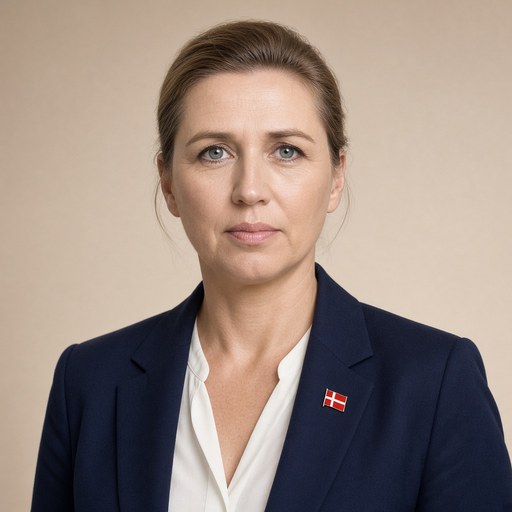
The Prime Minister's speech to the Danish Regions' General Assembly 2021
 Mette Frederiksen · Prime Minister of Denmark
- Context
- Frederiksen addressed the Danish Regions' General Assembly 2021 via video, praising healthcare workers for their pandemic response and outlining future health policy priorities.
- Main themes
- COVID-19 pandemic response, healthcare system resilience, vaccination and testing progress, tribute to healthcare workers, regional health collaboration, health policy reform, general practitioner access, decentralization challenges, post-pandemic recovery, psychiatric care investment
- Duration
- ~11 min
- Words
- 1,288
- Sentences
- 131
- Readability
- 54
- Grade
- 8.1
- Syntax
- 2.35
- Vocabulary
- 2.04
Translated from Danish
The broad sphere of national life a sentence belongs to. Every sentence has an Arena, so it is the denominator the other indices are read against.
Other131 sentences in 76 paragraphs
Dear everyone.
Thank you for allowing me to be here.
This is taking place over video at a proper distance, although fortunately we are on our way back to a more normal everyday life.
My speech was recorded two days before you see it. But think about that it is possible. We no longer fear that the situation will change drastically in a few days.
That was not the case last spring.
Do you remember? Of course you do.
You stood right in the eye of the storm. And fortunately for Denmark – you and your employees bravely faced the storm.
The pandemic has opened our eyes to many things. To community. To culture. To nature. To our nearest ones. And to how important it is to have a health policy that is democratically anchored.
Thank you to Stephanie. Thank you to you chairpersons and elected representatives in all five regions for an excellent collaboration in a historic time.
Thank you to all of you employees and leaders.
There are so many people in the Danish healthcare system who contribute an invaluable effort every day. And who have done so particularly over the past year.
From medical secretaries and staff in the emergency call center, the medical helpline, and hotlines.
To all of you men and women in the emergency services. Ambulance personnel, paramedics, emergency doctors, helicopter pilots, ambulance assistants, and students.
To you who are testing at the testing centers. And the biomedical analysts who analyze the many samples.
You who treat, care for, assess, and save lives every day. Nursing assistants and other care staff, social and health care assistants and helpers, nurses, and doctors.
Drivers, porters, laboratory technicians, pharmacists.
The cleaning staff, who have a particularly demanding and important task during the pandemic.
And you who make collaboration and innovation succeed from home offices.
And many, many more whom I cannot mention today.
The pressure has been enormous. And it is not because there was no pressure beforehand.
You accomplished the impossible.
You still do.
Do you remember when we started talking about testing 100,000 people in one day? Some said it was not possible.
Now 600,000 can be tested every single day. It is incredible. And it is necessary.
Without the many tests, no reopening.
More than one and a half million citizens have received at least their first vaccine dose. That is more than a quarter of the population.
At the same time, you have managed to catch up on the backlog of non-urgent treatments that had to be postponed due to the pandemic.
Already in 2020, you had caught up on the postponed activities from the first wave. And you are well on your way after the second wave.
Unfortunately, there are also seriously ill patients who have not received the treatment they should have. That is regrettable.
But the overall picture is that more people were referred to cancer package pathways in 2020 than before.
All the nuances and all the facts should be included in the debate. I do not think they have been.
So I want to say it clearly: Well done by everyone in the Danish healthcare system. You can be proud, and you can stand tall.
* * *
The effort during corona has taken place in a fantastic collaboration.
When it was critical, the professional boundaries of the staff suddenly became less important. What mattered was the patients, the community, getting us through the crisis.
Regions, municipalities, and state authorities found solutions across boundaries.
The public and private sectors stood together.
Never has it been clearer that we were in the same boat.
As a community, Denmark is stronger than it has been in many years.
We must take that experience with us as we fundamentally improve our healthcare system.
You run a Danish healthcare system of international top class.
Your financial framework is robust.
In the finance bill for 2020, there was extra money for psychiatry. And a political agreement for 1,000 more nurses.
The economic agreements for 2020 and 2021 have ensured that the money follows the expenses when there are more children, and we live longer. The agreements have also allowed for hiring more staff.
Negotiations for next year's agreement have just begun. I will not preempt them.
I will stick to the fact that we have a good starting point as we look ahead.
It is the government's goal to enter into a broad health agreement. We want an open and inclusive process.
First, we will address the problem that far too many Danes do not have the opportunity to have their own general practitioner.
Because the distribution across regions is uneven.
This particularly causes problems in Lolland-Falster, West Zealand, North Jutland, and parts of the larger cities – including some residential areas in Copenhagen.
Unfortunately, this is part of a larger development – or rather, a decline. The strong centralization of Denmark over the past decades.
Where smaller towns and island communities have lost jobs, retail life, and residents in a vicious spiral. Which has unfortunately been exacerbated by reforms and increased bureaucracy in the public sector.
In several places in Denmark, people experience fewer welfare services. Fewer educational opportunities. Closed hospitals. And not even access to the most fundamental welfare – to have their own doctor.
It is a geographical injustice that is tangible.
The government will strengthen medical coverage, especially in general practice.
I will briefly mention other important priorities:
Combating health inequality will be central.
The inequality that begins as soon as the little child is weighed after birth. Throughout life, it manifests in our living conditions, disease trajectories, and in the treatment we receive in the healthcare system. It is unfair.
We must and will address this.
We also still lack a proper collaboration in the elderly sector. Between the municipality, the general practitioner, and the hospital.
During the pandemic, much suddenly became possible because we did not have time for processes and too many meetings. We must take that experience with us.
We will strengthen emergency services across the country. Here too, collaboration between the regions and municipalities is central. And you are already working on it.
Finally, local hospitals.
Today, there are functions that are located in hospitals. But which would be better placed closer to the citizens and in connection with local services.
As you can hear, the health sector has a central place in the government's work to achieve better coherence throughout our country.
To bring welfare to everyone. In the countryside and in the cities.
Denmark is a small country. But there is a world of difference in whether you can get a loan for your home, find a job, pursue an education, receive medical care – depending on where in the country you live.
We have taken the first steps in a new direction.
A more equitable redistribution. Twenty new local police stations. Tax centers around the country. Better infrastructure.
We are coloring the map of Denmark with new policies. And we will continue until there are not so many empty spots on the map.
The regional development tasks also contribute to connecting the countryside and the city. The regional public transport. Educational opportunities that help create jobs and growth throughout Denmark.
And above all, you know your regions. You have knowledge that is crucial when we need to cover all bases. In our healthcare system. In our country.
Collaboration across boundaries.
When a dangerous and unknown disease hit us like a hurricane from outside. That is what we did. Stood together. Found a new strength.
Now that the storm is subsiding, we must renew, expand, and build on our strengths. I look forward to the collaboration.
Have a great day!
The original Danish. The tags above are read on the English translation's sentences.
Kære alle sammen.
Tak, fordi jeg må være med.
Det foregår over video på behørig afstand, selvom vi heldigvis er på vej tilbage mod en mere normal hverdag.
Min tale er optaget to dage, før I ser den. Men tænk på, at det
er muligt. Vi frygter ikke længere, at situationen ændrer sig drastisk på få dage.
Sådan var det ikke sidste forår.
Kan I huske det? Selvfølgelig kan I det.
I stod lige midt i orkanen. Og heldigvis for Danmark – så gik I og jeres medarbejdere uforfærdet op mod stormen.
Pandemien har åbnet vores øjne for mange ting. For fællesskabet. For kulturen. For naturen. For vores nærmeste. Og for, hvor vigtigt det er at have en sundhedspolitik, der er demokratisk forankret.
Tak til Stephanie. Tak til jer formænd og folkevalgte i alle fem regioner for et eminent samarbejde i en historisk tid.
Tak til alle jer medarbejdere og ledere.
Der er så mange mennesker i det danske sundhedsvæsen, som hver dag yder en helt uvurderlig indsats. Og som har gjort det i særlig grad det seneste år.
Fra lægesekretærerne og ansatte i vagtcentralen, lægevagten og hotlines.
Over alle jer mænd og kvinder i beredskabet. Ambulancebehandlere, paramedicinere, akutlæger, helikopterpiloter, ambulanceassistenter og elever.
Til jer, som poder på testcentrene. Og bioanalytikerne, der analyserer de mange prøver.
Jer, som hver dag behandler, plejer, udreder og redder liv. Sygehjælpere og andet plejepersonale, sosu-assistenter og sosu-hjælpere, sygeplejersker og læger.
Chauffører, portørerne, laboranter, farmaceuter.
Rengøringspersonalet, der har en særligt krævende og vigtig opgave under pandemien.
Og jer, der får samarbejdet og nytænkningen til at lykkes fra hjemmekontorerne.
Og mange, mange flere, som jeg slet ikke får med i dag.
Presset har været enormt. Og det er jo ikke, fordi der ikke var tryk på i forvejen.
I klarede det umulige.
Det gør I stadig.
Kan I huske, da vi begyndte at tale om, at 100.000 skulle testes på én dag? Nogle sagde, det ikke kunne lade sig gøre.
Nu kan 600.000 blive testet hver eneste dag. Det er vildt. Og det er nødvendigt.
Uden de mange test. Ingen genåbning.
Mere end halvanden million borgere har fået mindst det første vaccinestik. Det er mere end en fjerdedel af befolkningen.
Samtidig med alt det har I formået at indhente efterslæbet fra de ikke-akutte behandlinger, som måtte vige for pandemien.
Allerede i 2020 havde I indhentet den udskudte aktivitet fra første bølge. Og I er godt på vej efter den anden bølge.
Desværre er der også alvorligt syge patienter, som ikke har fået den behandling, de burde. Det er beklageligt.
Men det samlede billede er, at flere er blevet henvist til kræftpakkeforløb i 2020 end tidligere.
Alle nuancerne og alle kendsgerningerne bør med i debatten. Det synes jeg ikke, de har været.
Så jeg vil sige det tydeligt: Det godt klaret af alle i det danske sundhedsvæsen. I kan være stolte, og I kan ranke ryggen.
* * *
Indsatsen under corona er sket i et fantastisk samarbejde.
Da det brændte på, var personalets faggrænser pludselig mindre vigtige. Det væsentlige var patienterne, samfundet, at få os gennem krisen.
Regioner, kommuner og statslige myndigheder fandt løsninger på tværs.
Det offentlige og det private stod sammen.
Aldrig var det tydeligere, at vi var i samme båd.
Som fællesskab står Danmark stærkere end i mange år.
Den erfaring skal vi tage med, når vi helt grundlæggende skal forbedre vores sundhedsvæsen.
I driver et dansk sundhedsvæsen af international topklasse.
Jeres økonomiske rammer er robuste.
På finansloven for 2020 var der ekstra penge til psykiatri. Og en politisk aftale om 1.000 flere sygeplejersker.
Økonomiaftalerne for 2020 og 2021 har sikret, at pengene følger med udgifterne, når der bliver flere børn, og vi lever længere. Aftalerne har også givet rum til at ansætte mere personale.
Forhandlingerne om næste års aftale er netop sat i gang. Dem skal jeg ikke foregribe.
Jeg vil holde mig til, at vi har et godt udgangspunkt, når vi nu skal se frem.
Det er regeringens mål at indgå en bred sundhedsaftale. Vi ønsker en åben og inddragende proces.
Som det første vil vi tage fat på det problem, at alt for mange danskere ikke har mulighed for at få deres egen praktiserende læge.
Fordi fordelingen på tværs af landsdele er skæv.
Det giver særligt problemer på Lolland-Falster, på Vestsjælland, i Nordjylland og i dele af de større byer – blandt andet nogle boligområder i København.
Desværre er det en del af en større udvikling – eller snarere afvikling. De seneste årtiers kraftige centralisering af Danmark.
Hvor mindre byer og øsamfund har mistet arbejdspladser, butiksliv og indbyggere i en ond spiral. Som desværre blev forstærket af reformer og øget bureaukrati i den offentlige sektor.
Flere steder i Danmark oplever man, at der er færre velfærdstilbud. Færre uddannelser. Nedlagte syghuse. Og ikke engang adgang til den helt fundamentale velfærd – at have sin egen læge.
Det er en geografisk uretfærdighed, som er til at tage og føle på.
Regeringen vil styrke lægedækningen, ikke mindst i almen praksis.
Jeg vil kort nævne andre vigtige prioriteter:
Bekæmpelse af ulighed i sundhed bliver helt centralt.
Den ulighed, som begynder allerede, når det lille barn bliver vejet efter fødslen. Gennem livet sætter den sig i vores levevilkår, sygdomsforløb og i den behandling, vi får i sundhedsvæsenet. Det er uretfærdigt.
Det skal og vil vi gøre op med.
Vi mangler også – stadigvæk – at få et ordenligt samarbejde på ældreområdet. Mellem kommunen, egen læge og sygehuset.
Under pandemien kunne meget pludselig lade sig gøre, fordi vi ikke havde tid til processer og alt for mange møder. Den erfaring skal vi tage med os.
Vi vil styrke akutindsatsen i hele landet. Også her er et samarbejde mellem regionerne og kommunerne helt centralt. Og I er i gang.
Endelig nærhospitalerne.
I dag er der funktioner, som er placeret på sygehusene. Men som ville ligge bedre tæt på borgerne og i sammenhæng med lokale tilbud.
Som I kan høre, har sundhedsområdet en central plads i regeringens arbejde for at få en bedre sammenhæng i hele vores land.
Få velfærden ud til alle. På landet og i byerne.
Danmark er et lille land. Men der er en verden til forskel på, om du kan få lån til din bolig, finde et arbejde, tage en uddannelse, modtage lægehjælp – alt efter, hvor i landet du bor.
Vi har taget de første skridt i en ny retning.
En mere retfærdig udligning. Tyve nye nærpolitistationer. Skattecentre rundt i landet. Bedre infrastruktur.
Vi farver danmarkskortet med ny politik. Og vi bliver ved, til der ikke er så mange tomme pletter på kortet.
De regionale udviklingsopgaver bidrager også til at binde land og by sammen. Den regionale kollektive trafik. Uddannelser, som er med til at skabe arbejdspladser og vækst i hele Danmark.
Og frem for alt kender I jeres regioner. I har en viden, som er afgørende, når vi skal hele vejen rundt. I vores sundhedssystem. I vores land.
Samarbejde på kryds og tværs.
Da en farlig og ukendt sydom ramte os som en orkan udefra. Så var det dét, vi gjorde. Stod sammen. Fandt en ny kraft.
Nu hvor stormen er ved at stilne af, skal vi forny, bygge ud, bygge videre på vores styrker. Jeg glæder mig til samarbejdet.
Rigtig god dag!