




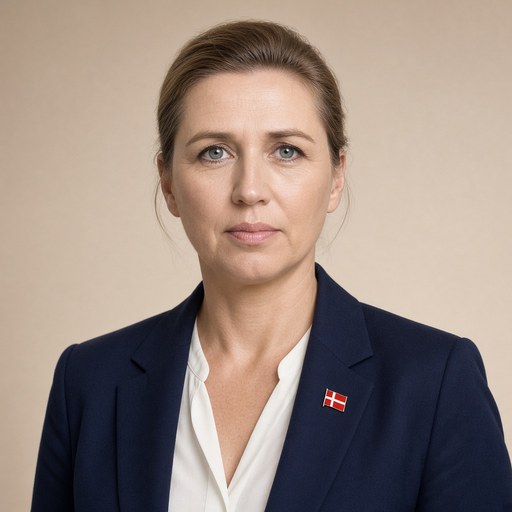
Prime Minister Mette Frederiksen's speech at the Youth Panel's presentation of recommendations at Krogerup Folk High School.
 Mette Frederiksen · Prime Minister of Denmark
- Context
- Frederiksen addressed the Youth Panel at Krogerup Folk High School in May 2021, receiving their recommendations on youth issues amid the COVID-19 pandemic's final stages.
- Main themes
- Youth resilience during COVID-19 pandemic, intergenerational solidarity, mental health of young people, empowerment and independence, Danish values and trust, post-pandemic recovery, youth policy recommendations, vulnerability vs. agency narrative, historical parallels to WWII occupation
- Duration
- ~13 min
- Words
- 1,532
- Sentences
- 173
- Readability
- 70
- Grade
- 5.6
- Syntax
- 2.15
- Vocabulary
- 1.98
Translated from Danish
The broad sphere of national life a sentence belongs to. Every sentence has an Arena, so it is the denominator the other indices are read against.
Other173 sentences in 92 paragraphs
First and foremost, thank you for the excellent work and for some truly good recommendations.
May. Beech trees. Folk high school.
Isn't that the frame today – and you, who fill it out – the classic and eternal image of youth, of hope, of the future?
That’s how it looks from here.
And yet. Your youth is not everyone’s youth. But a special youth.
You are the generation that was young during the corona pandemic.
That lost something. But perhaps also found something.
That gave something. A lot. But perhaps also received something.
That truly experienced the neglected spring. But look at what spring we are in now!
We are on our way out on the other side of the pandemic. Everyday life will soon return. All the things we all miss.
I would like to thank you, the entire Youth Panel, and you, Rasmus, for allowing me to be here today at Krogerup Folk High School.
A lot is said and written about youth. There are several versions of your story. I believe they all contain a grain of truth.
But I also want to challenge the prevailing narratives today.
The Norwegian Minister of Health has been quoted a lot during the corona crisis. He said it beautifully and rightly:
“Next summer does not exist when you are young.”
And it is true that during the pandemic, you lost something you will never get back.
But it is equally true that you took on a responsibility. Despite the fact that most of you did not fear becoming ill yourselves.
Your sacrifices were not for yourselves. But for others. For the community. For your grandparents. For society. Here at home. And globally.
When did we last see a generation that sacrificed itself for other generations?
When did we last see such deep and heartfelt solidarity?
I cannot remember.
You, who have life ahead of you. Have taken care of those who have the most years behind them.
Therefore, the feeling I have when I stand before you – and all the children and young people who stand behind you – is not that it is a pity for you. But that I am proud of you.
There is also the story of vulnerable youth.
One in five 13- to 15-year-olds has symptoms of anxiety. One in four has symptoms of depression. One in four young people feels lonely.
Some of you are among them. Some are people we know.
I have said several times – and I stand by it – that mental vulnerability is one of our greatest societal problems.
For when the competition and demands from social media become too great. If the pressure becomes too heavy. Then it is not the young person, but society that needs a diagnosis.
I will hold on to that.
It is not an individual problem – it is our common problem.
We must take it seriously. But in a way that does not make an entire generation of children and young people into victims or clients.
The development stands paradoxically in contrast to what Denmark is known for. What our country is built on. Trust. Education. Empowerment.
Americans and Chinese have visited Danish forest kindergartens and are deeply amazed to see the children making fires. And climbing to the top of a tree.
Danish children have learned to be independent. Because we adults trust our children.
Perhaps the great vulnerability of children and young people today is not only about performance and competition.
Perhaps children today lack the trust of adults.
Less adult-controlled time. Clearer independence. That you bike to school by yourself, even when you are small. An acceptance that life also includes bumps and scrapes on the knee. And that it will be okay.
And perhaps we should also extend that to you young people.
I would like to challenge the notion of youth as primarily pressured.
Let us together seek a new position where we and you stand tall.
Where we can set the ambition high. And use that ambition – not to press us down – but to push us forward.
We only solve problems by having agency. Each of us. And together.
* * *
The time during the pandemic is sometimes compared to the occupation during World War II.
Right now – in May 2021 – we are not liberated from a war. We have not fought against evil. But against a disease. That is something entirely different.
If we think there have been difficult decisions to make over the past fourteen months. Then it is nothing compared to the choices that had to be made back then. The moral questions that each person had to answer.
Still, there may be inspiration to be drawn from the time after liberation and occupation. Especially here at Krogerup.
After World War II, there was a general acceptance that the resistance movement had been carried and driven by the young.
The young had risked their lives. Some fell in battle.
I know that there were freedom fighters who were disappointed in the post-war period. They had hoped for greater changes. Perhaps for a revolution.
But it is a fact that youth was taken seriously for the first time. The social conditions of youth. Housing conditions. Youth policy. Even a youth commission – a precursor to the panel – led by Hal Koch, who was the principal right here at Krogerup.
May 1945 was youth, freedom, and hope.
The concept of youth was born.
That is in itself a great force in our democracy.
We feel that now as well.
The fight against sexism. The culture must change.
The climate fight. You have pushed for it. Demanded action.
Paved the way for perhaps the most ambitious green transition in the world. A climate goal of a 70 percent reduction by 2030.
We are well on our way. But after spending an hour with the students at Krogerup, I can conclude that we are not far enough. I agree with that.
It is important that we set common agendas. That show we can come together for a better world.
But – unfortunately, there is also a tendency in our present that pulls in the opposite direction. That does not unite, but divides.
A tendency for us to spend more time with people who are like ourselves. And to shut out viewpoints that are foreign to us.
That honestly worries me.
One should be proud of who one is – not put up with discrimination and inequality. Never ever.
But is identity really the most important thing? Our own identity?
I see a danger that solidarity is pushed to the background. That we forget all that we have in common or want to have in common – regardless of ethnicity or sexuality. That the individual’s struggle blocks the necessary, collective struggle.
We need the opposite.
A democratic space with people who are not like us and who are not in the same life situation.
We need a common conversation about crucial questions.
Not division. And battle cries. But conversation.
Youth was the first important concept that was nurtured here at Krogerup. The second is culture.
Some of the conversations that took place here at Krogerup back in the 1960s led to the establishment of a proper Ministry of Culture.
It is hard to stand here at Krogerup without quoting Koch. So I will do that ... Bodil Koch.
Bodil Koch, who later became Minister of Culture, once said: “It would have been impossible to survive in politics without the artists' constant rebuke and encouragement.”
And Bodil continues:
“For politics is also art, the art of living: to create both material and spiritual welfare for humanity in the age of technology.”
The quote is almost 60 years old. But isn’t that the challenge we face now?
Both material and spiritual welfare in the age of technology.
A country is not only built of stone, but especially of spirit, thought, and reflection.
I believe you have incorporated that into your work.
With reflection also comes a right not to have answers to everything. To lose one’s footing. To find it again.
To pause. To be present. To be amazed.
* * *
Finally, a point that is not directed solely at you young people. But is addressed to all of us.
During the pandemic, we have both shown how much we can each do. And the value, necessity, and strength of community.
It is also about the fact that we should not legislate about everything.
I look forward to the day when I do not have to deal with how to celebrate Christmas Eve, how we greet each other, and how many we are allowed to gather.
I can hardly wait for politics to move away from everyday life. And back to where politics belongs.
You have done a really good job.
I agree with what was said at the outset. Some children and young people will need special efforts.
But most importantly, children and young people have been one of the most important prerequisites for our country to have navigated well through the most difficult crisis since World War II.
You can stand tall.
The original Danish. The tags above are read on the English translation's sentences.
Først og fremmest tak for det fremragende stykke arbejde og for nogle virkelig gode anbefalinger.
Maj måned. Bøgetræer. Højskole.
Er rammen i dag – og I, som fylder den ud – ikke det klassiske og evige billede på ungdom, på håb, på fremtid?
Sådan ser det ud herfra.
Og dog. Jeres ungdom er ikke alles ungdom. Men en særlig ungdom.
I er den generation, der var unge under corona.
Som mistede noget. Men måske også fandt noget.
Som gav noget. Meget. Men måske også fik noget.
Som i sandhed oplevede det forsømte forår. Men se, hvilket forår vi står midt i nu!
Vi er på vej ud på den anden side af pandemien. Hverdagen er snart tilbage. Alt det, vi alle sammen savner.
Jeg vil gerne sige tak til jer, hele Ungdomspanelet, til dig, Rasmus, fordi jeg må være med i dag på Krogerup Højskole.
Der bliver sagt og skrevet meget om ungdommen. Der er flere versioner af jeres historie. Jeg tror, at de alle rummer et gran af sandhed.
Men jeg vil også i dag udfordre de gængse fortællinger.
Den norske sundhedsminister har været citeret meget under coronakrisen. Han har sagt det smukt og rigtigt:
”Næste sommer findes ikke, når du er ung.”
Og det er sandt, at I under pandemien mistede noget, I aldrig får igen.
Men det er lige så sandt, at I tog et ansvar på jer. På trods af, at de fleste af jer ikke frygtede selv at blive syge.
Jeres afsavn var ikke for jer selv. Men for andre. For fællesskabet. For jeres bedsteforældre. For samfundet. Herhjemme. Og globalt.
Hvornår så vi før en generation, der ofrede sig for andre generationer?
Hvornår så vi sidst så dyb og hjertevarm solidaritet?
Jeg kan ikke huske det.
I, der har livet foran jer. Har passet på dem, som har flest år bag sig.
Derfor er følelsen hos mig, når jeg står over for jer – og alle de børn og unge, der står bag ved jer – ikke, at det er synd for jer. Men at jeg er stolt af jer.
Der er også fortællingen om de sårbare unge.
Hver femte 13-15 årig har angstsymptomer. Hver fjerde har depressive symptomer. Hver fjerde unge føler sig ensom.
Det er nogle af jer. Det er nogle, vi kender.
Jeg har sagt flere gange – og jeg står ved det – at psykisk sårbarhed er et af vores største samfundsproblemer.
For når konkurrencen og kravene fra sociale medier bliver for store. Hvis presset bliver for tungt. Så er det ikke den unge, men samfundet, som skal have en diagnose.
Det vil jeg holde fast i.
Det er ikke den enkeltes problem – det er vores fælles problem.
Vi skal tage det alvorligt. Men på en måde, der ikke gør en hel generation af børn og unge til ofre eller klienter.
Udviklingen står paradoksalt nok i modsætning til det, Danmark er kendt for. Det vores land er bygget på. Tillid. Dannelse. Myndiggørelse.
Amerikanere og kinesere har besøgt danske skovbørnehaver og er dybt forundrede over at se børnene lave bål. Og kravle op i toppen af et træ.
Danske børn har lært at være selvstændige. Fordi vi voksne har tillid til vores børn.
Måske handler tidens store sårbarhed hos børn og unge ikke kun om præstation og konkurrence.
Måske mangler børn i dag de voksnes tillid.
Mindre voksenstyret tid. Klare mere selv. At man selv cykler til skole, også når man er lille. En accept af, at livet også er knubs og hudafskrabninger på knæet. Og det går nok endda.
Og måske skal vi også tage den videre til jer unge.
Jeg vil gerne i dag tage et opgør med ungdommen som primært presset.
Lad os sammen søge en ny position, hvor vi og I ranker ryggen.
Hvor vi kan sætte ambitionen højt. Og bruge den ambition – ikke til at presse os ned – men til at skubbe os frem.
Vi løser kun problemer ved at have handlekraft. Hver især. Og i fællesskab.
* * *
Tiden under pandemien bliver sommetider sammenlignet med besættelsen under Anden Verdenskrig.
Lige nu – i maj 2021 – er vi ikke befriet fra en krig. Vi har ikke kæmpet mod ondskab. Men mod en sygdom. Det er noget helt andet.
Hvis vi synes, der er svære beslutninger at tage de seneste fjorten måneder. Så er det intet mod de valg, der skulle træffes dengang. De moralske spørgsmål, som hvert menneske måtte besvare.
Alligevel kan der være inspiration at hente fra tiden efter befrielsen og besættelsen. Særligt her på Krogerup.
Efter Anden Verdenskrig var der en almindelig accept af, at modstandskampen havde været båret og drevet af de unge.
De unge havde risikeret deres liv. En del faldt i kamp.
Jeg ved godt, at der var frihedskæmpere, som blev skuffede i efterkrigstiden. De havde håbet på større forandringer. Måske på revolution.
Men det er et faktum, at
ungdommen
for første gang blev taget alvorligt. Ungdommens sociale vilkår. Boligforholdene. Ungdomspolitik. Endda en ungdomskommission – fortløber til panelet – ledet af Hal Koch, som var forstander lige her på Krogerup.
Maj 1945 var ungdom, frihed og håb.
Ungdommen som begreb blev født.
Det er i sig selv en stor kraft i vores demokrati.
Det mærker vi også nu.
Kampen mod sexisme. Kulturen skal forandres.
Klimakampen. I har presset på. Krævet handling.
Banet vejen for den nok mest ambitiøse grønne omstilling i verden. Et klimamål på 70 procents reduktion i 2030.
Vi er godt i gang. Men efter at have tilbragt en time med eleverne på Krogerup kan jeg konstatere, at vi ikke er langt nok. Det er jeg enig i.
Det er vigtigt, at vi sætter fælles dagsordener. Som viser, at vi kan samles om en bedre verden.
Men – der er desværre også en tendens i vores nutid, som trækker i den modsatte retning. Som ikke samler, men splitter.
En tendens til at vi tilbringer mere tid med folk, der ligner os selv. Og lukker af for de synspunkter, der er fremmede for os selv.
Det bekymrer mig ærlig talt.
Man skal være stolt af hvem, man er – ikke finde sig i forskelsbehandling og diskrimination. Aldrig nogensinde.
Men er identitet virkelig det vigtigste? Vores egen identitet?
Jeg ser en fare for, at sammenholdet træder i baggrunden. At vi glemmer alt det, vi er fælles om eller vil være fælles om – uanset etnicitet eller seksualitet. At den enkeltes kamp blokkerer for den nødvendige, fælles kamp.
Vi har behov for det modsatte.
Et demokratisk rum med mennesker, der netop ikke er som os selv og ikke er i samme livssituation.
Vi har behov for en fælles samtale om afgørende spørgsmål.
Ikke splittelse. Og kampråb. Men samtale.
Ungdommen var det første vigtige begreb, som fik næring her på Krogerup. Det andet er
kulturen.
Nogle af de samtaler, man havde her på Krogerup tilbage i 1960, affødte, at vi fik et egentligt kulturministerium.
Det er svært at stå her på Krogerup uden at citere Koch. Så det vil jeg gøre ... Bodil Koch.
Bodil Koch, som senere blev kulturminister, sagde engang: ”Det havde været umuligt at overleve i politik uden kunstnernes stadige revselse og opmuntring.”
Og Bodil fortsætter:
”For også politik er jo kunst, livskunst: det at skabe både materiel og åndelig velfærd for mennesket i teknikkens tidsalder.”
Citatet er næsten 60 år gammelt. Men er det ikke den udfordring, vi også står med nu?
Både materiel og åndelig velfærd i teknikkens tidsalder.
Et land er ikke kun bygget af sten, men især af ånd, tanke og refleksion.
Det synes jeg, I har fået ind i jeres arbejde.
Med refleksionen følger også en ret til ikke at have svar på alting. Til at miste fodfæstet. Til at finde det igen.
Til at stoppe op. Være til stede. Forundres.
* * *
Til sidst en pointe, som ikke er rettet alene mod jer de unge. Men er henvendt til os alle sammen.
Under pandemien har vi både vist, hvor meget vi kan hver især. Og værdien, nødvendigheden og styrken af fællesskabet.
Det handler også om, at vi ikke skal lovgive om alt.
Jeg glæder mig til den dag, hvor jeg ikke skal forholde mig til, hvordan man fejrer juleaften, hvordan vi hilser på hinanden, og hvor mange vi må samles.
Jeg kan næsten ikke vente på, at politik kommer væk fra hverdagen. Og tilbage dér hvor politik hører til.
I har lavet et rigtig godt stykke arbejde.
Jeg er enig i det, der blev sagt indledningsvist. Nogle børn og unge vil have behov for en særlig indsats.
Men vigtigst af alt har børn og unge været en af de vigtigste forudsætninger for, at vi som land har klaret os godt igennem den sværeste krise siden Anden Verdenskrig.
I kan ranke ryggen.