




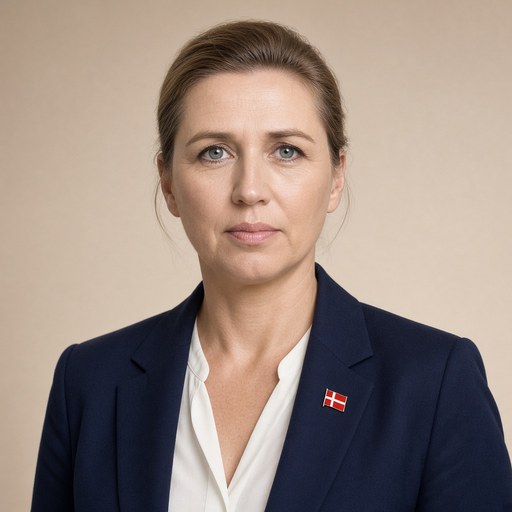
Prime Minister Mette Frederiksen's speech at the Constitution Day celebration in the Folketing on June 5, 2024.
 Mette Frederiksen · Prime Minister of Denmark
- Context
- Frederiksen addressed the Folketing on June 5, 2024, at the Constitution Day celebration marking the 175th anniversary of Denmark's 1849 constitution.
- Main themes
- Danish constitution anniversary, democracy and popular rule, history of constitutional development, civil liberties and rights, women's suffrage, welfare state, national identity, Grundtvig and Danish culture, constitutional interpretation, monarchy and governance
- Duration
- ~10 min
- Words
- 1,255
- Sentences
- 127
- Readability
- 67
- Grade
- 6.1
- Syntax
- 2.34
- Vocabulary
- 2.08
Translated from Danish
The broad sphere of national life a sentence belongs to. Every sentence has an Arena, so it is the denominator the other indices are read against.
Other127 sentences in 66 paragraphs
Your Majesties. Your Royal Highness.
Dear all of you watching from home.
Dear Chairman of the Folketing. President of the Supreme Court. Dear colleagues here in the Folketing.
Dear guests.
In March 1848, a large gathering of men from the Copenhagen bourgeoisie met. It took place at the Casino Theatre in Amaliegade. Close to the King's castle.
Rousing speeches were made. Resolutions were adopted. And the next day, a procession went to the king to demand a free constitution.
From there, things moved quickly. A sort of transitional government was formed between absolute monarchy and popular rule. A constitutional assembly was elected. And on June 5, 1849, the Constitution of the Kingdom of Denmark was signed by King Frederik the Seventh.
Denmark was, of course, a very different country back then.
Some wanted a constitution to gain freedom and a share of power. Others were mostly concerned with preventing Schleswig from breaking away from Denmark. And what women might want was not something anyone thought about. Back then.
The constitution was born out of tensions and upheaval from within – and from thoughts and ideas from outside.
Fortunately, changes were on the way in Europe. Demands for freedom and rights.
Inspired by other countries, the ideas about human rights began to drown out the old, oppressive societies.
Our constitution was written in a budding European tradition. At the same time, the constitution is as Danish as anything else.
We celebrate it every year. With song. Perhaps with strawberries and cream when we get home. The beech forest in all its splendor. And always with the Dannebrog against a blue sky. It is as if the weather is always good on June 5. But perhaps it is my memory playing tricks on me…
The constitution feels familiar to most – even though it is probably the case that very few have read it word for word.
How many times does the word "democracy" actually appear in the constitution?
Now, I have read up on the text for today. And I can therefore say with certainty that the word "democracy" does not appear a single time in the Constitution of the Kingdom of Denmark.
In contrast, the word "the King" appears 41 times.
Take, for example, paragraph 21:
"The King may propose laws and other decisions to the Folketing."
It has read like that for 175 years. With all due respect to His Majesty the King – we all know that "the King" in this case means "the government."
The old text works quite well in modern Denmark.
We interpret the old words in a new time. And we move step by step towards an even better Denmark.
* * *
The first constitution granted voting rights to men over 30 years old. And even then, only some of them. In other words: The few.
But the journey towards a democracy for the many had begun.
In the following decades, women and servants fought for influence. This was achieved with the constitution of June 5, 1915.
Only then did Denmark gain true popular rule. And it was celebrated. Thousands of women marched through the streets of Copenhagen in a procession towards Amalienborg.
The newspaper Politiken described the historic event like this. I quote:
"A more beautiful sight has Amalienborg Square never produced than yesterday, when the women had gathered there, and when the National Song rose from all these thousands of voices towards the old royal castle and against the lightly clouded June sky."
End of quote.
The constitution has only been amended a few times. Most recently in 1953. And we probably remember it best because Princess Margrethe became number one in the line of succession.
1953 – that was 71 years ago. Never before has so much time passed without a constitutional amendment.
Why?
Because we have a good constitution. It does what a constitution should.
The constitution secures our rights as free citizens in a democracy. Freedom of the press. Freedom of assembly. Freedom of association. Freedom of religion.
It obliges us as citizens towards the state with a duty to educate and a duty to serve.
And it seals that power springs from the people. We politicians are here only as long as you think it is a good idea.
On the basis of the constitution, we have built a society stone by stone with security, with trust, and where the differences are smaller than in most other places.
As one of the fathers of the constitution said:
"Then we have achieved wealth when few have too much and fewer have too little."
That is the welfare state in verse. And the poet is, of course, Grundtvig.
The Constitution of the Kingdom of Denmark is a national symbol and a cultural anchor. It contains a beauty and a solemnity.
In reality, it may be an advantage that the constitution is not a fixed and finished manual for democracy – but a text that has required interpretation.
Why is that?
Because it obliges us to know our history. To be aware of our present. To know which values hold us together.
The constitution is a framework for the picture that we – all in Denmark – paint together.
The frame is a fine, old thing with carvings and flourishes and painted in gold.
But the picture inside, that is our responsibility. It is modern. It is lived every day.
Democracy is lived through our mindset and our institutions. You and me. And it thrives when we meet across the board in the housing association, at old boys' football, or in the knitting club.
A Danish minister – it was Bodil Koch – put it this way: "The talk over coffee tables is the bloodstream of democracy."
There is an association for almost everything in Denmark. And it is here that most of us learn what it means to take responsibility for something greater than ourselves.
It is the student council in schools. That collective agreements are negotiated. The cooperative spirit. And that we raise our children with words and not slaps. That we meet in compromise and common solutions.
All of this is our democracy's great popular strength.
* * *
As the chairman also said, there are elections to the European Parliament in just four days.
I urge everyone to get out the door, to schools, libraries, town halls, and sports halls and vote on Sunday.
Democracy is an old European value. But with everything that is happening in the world, it is obviously in a completely different way than before that democracy is not a given, not even in Europe.
Tomorrow marks yet another historic anniversary – one of the most important European milestones – the 80th anniversary of D-Day. The Allied invasion of Normandy during World War II.
It was that invasion, that day and that fateful morning, that marked the beginning of the end for the Nazis' cruel dictatorship.
Imagine if Churchill had not done the right thing. Imagine if the Americans had not let their young men land on our European shores. Imagine if each young soldier had not had the courage, faith, and hope. And the will.
Now there is again war on our continent. But the Ukrainians are fighting not only for a free Ukraine. They are fighting for all of us. For a free Europe.
We live in an uncertain time. We need a secure foundation.
We have that with the Constitution of the Kingdom of Denmark.
Happy Constitution Day.
And thank you for your attention.
The original Danish. The tags above are read on the English translation's sentences.
Deres Majestæter. Deres Kongelige Højhed.
Kære alle jer, der ser med hjemmefra.
Kære formand for Folketinget. Højesteretspræsident. Kære kolleger her i Folketinget.
Kære gæster.
I marts måned i 1848, mødtes et større selskab af mænd fra det københavnske borgerskab. Det foregik i Casino-teatret i Amaliegade. Tæt på Kongens slot.
Der blev holdt brandtaler. Der blev vedtaget resolutioner. Og næste dag drog et optog til kongen for at kræve en fri forfatning.
Herfra gik det stærkt. Der blev dannet en slags overgangsregering mellem enevælde og folkestyre. Valgt en grundlovgivende forsamling. Og den 5. juni 1849 blev Danmarks Riges Grundlov underskrevet af Kong Frederik den Syvende.
Danmark var selvsagt et meget anderledes land dengang.
Nogle ønskede en grundlov for at få frihed og del i magten. Andre tænkte mest på at forhindre Slesvig i at løsrive sig fra Danmark. Og hvad kvinderne måtte ønske, var der ingen, som tænkte på. Dengang.
Grundloven blev født af spændinger og opbrud indefra – og af tanker og ideer udefra.
Der var heldigvis ændringer på vej i Europa. Krav om frihed og rettigheder.
Med inspiration fra andre lande begyndte tankerne om menneskets ret at overdøve de gamle, undertrykkende samfund.
Vores grundlov blev skrevet i en spirende europæisk tradition. Samtidig er grundloven så dansk som intet andet.
Vi fejrer den hvert år. Med sang. Måske med jordbær med fløde, når vi kommer hjem. Bøgeskoven i al sin pragt. Og altid med Dannebrog mod en blå himmel. Det er, som om vejret altid er godt den 5. juni. Men måske er det min hukommelse, der spiller mig et puds …
Grundloven føles velkendt for de fleste – selvom det nok er de færreste, der har læst den helt ord for ord.
Hvor mange gange står der egentlig ”demokrati” i grundloven?
Nu har jeg jo læst op på teksten til i dag. Og kan derfor med sikkerhed sige, at der ikke står ”demokrati” ét eneste sted i Danmarks Riges Grundlov.
Til gengæld står der ”Kongen” 41 gange.
Tag for eksempel paragraf 21:
”Kongen kan for folketinget lade fremsætte forslag til love og andre beslutninger.”
Sådan har det stået i 175 år. Med al respekt for Hans Majestæt Kongen – så ved vi nok alle sammen, at ”Kongen” i dette tilfælde betyder ”regeringen.”
Den gamle tekst fungerer ganske glimrende i det moderne Danmark.
Vi fortolker de gamle ord i en ny tid. Og flytter os skridt for skridt i retning af et endnu bedre Danmark.
* * *
Den første grundlov gav stemmeret til mænd over 30 år. Og endda kun nogle af dem. Med andre ord: De få.
Men rejsen mod et demokrati for de mange var startet.
I de følgende årtier kæmpede kvinder og tjenestefolk for at få indflydelse. Det lykkedes med grundloven af 5. juni 1915.
Først her fik Danmark ægte folkestyre. Og det blev fejret. Tusindvis af kvinder gik gennem Københavns gader i optog mod Amalienborg.
Dagbladet Politiken skildrede den historiske begivenhed sådan her. Jeg citerer:
”Et skønnere Syn har Amalienborg Plads aldrig frembragt end i Gaar, da Kvinderne var rykket derind, og da Fædrelandssangen fra alle disse Tusinder af Struber steg op mod den gamle Kongeborg og mod den letskyede Junihimmel.”
Citat slut.
Grundloven er kun blevet ændret få gange. Senest i 1953. Og det husker vi nok mest, fordi prinsesse Margrethe blev nummer ét i arvefølgen.
1953 – det er 71 år siden. Aldrig før er der gået så lang tid uden en grundlovsændring.
Hvorfor?
Fordi vi har en god grundlov. Den gør det, en grundlov skal.
Grundloven sikrer vores rettigheder som frie borgere i et demokrati. Trykkefrihed. Forsamlingsfrihed. Foreningsfrihed. Religionsfrihed.
Den forpligter os som borgere over for staten med en undervisningspligt og en værnepligt.
Og den besegler, at magten udspringer af folket. Vi politikere sidder her kun, så længe I synes, det er en god ide.
På grundloven har vi sten for sten bygget et samfund med tryghed, med tillid, og hvor forskellene er mindre end de fleste andre steder.
Som en af grundlovens fædre sagde det:
”da har i rigdom vi drevet det vid
når få har for meget og færre for lidt.”
Det er velfærdssamfundet på vers. Og poeten er selvfølgelig Grundtvig.
Danmarks Riges Grundlov er et nationalt symbol og et kulturelt anker. Det rummer en skønhed og en højtidelighed.
I virkeligheden er det måske en fordel, at grundloven ikke er en fiks og færdig brugsanvisning på demokrati – men en tekst, der har krævet fortolkning.
Hvorfor det?
Fordi det forpligter os til at kende vores historie. Være opmærksomme på vores samtid. Vide, hvilke værdier der holder os sammen.
Grundloven er en ramme om det billede, som vi – alle i Danmark – maler i fællesskab.
Rammen er en fin, gammel sag med udskæringer og krummelurer og malet i guld.
Men billedet indeni, det er vores ansvar. Det er moderne. Det leves hver dag.
Demokratiet leves gennem vores sindelag og vores institutioner. Dig og mig. Og det stortrives, når vi mødes på kryds og tværs i andelsboligforeningen, til old-boys fodbold eller i strikkeklubben.
En dansk minister – det var Bodil Koch – har sagt det sådan her: ”Snakken over kaffebordene er demokratiets blodomløb.”
Der findes en forening for næsten alt i Danmark. Og det er her, de fleste af os lærer, hvad det vil sige at tage ansvar for noget, der er større end os selv.
Det er elevrådet på skolerne. At der forhandles overenskomster. Andelstanken. Og at vi opdrager vores børn med ord og ikke lussinger. At vi mødes i kompromis og fælles løsninger.
Alt det er vores demokratis store folkelige styrke.
* * *
Som formanden også sagde det, er der valg til Europa Parlamentet om kun fire dage.
Jeg vil opfordre alle til at komme ud ad døren, hen til skoler, biblioteker, rådhuse og sportshaller og stemme på søndag.
Demokrati er en gammel europæisk værdi. Men med alt det, der sker i verden, er det åbenlyst på en helt anden måde end tidligere, at demokratiet ikke er en selvfølge, heller ikke i Europa.
I morgen markeres endnu et historisk jubilæum – en af de vigtigste europæiske mærkedage – 80-året for D-dag. De allieredes invasion i Normandiet under Anden Verdenskrig.
Det var den invasion, den dag og den skæbnesvangre morgen, som blev begyndelsen på enden for nazisternes grusomme diktatur.
Tænk, hvis Churchill ikke havde gjort det rigtige. Tænk, hvis amerikanerne ikke havde ladet deres unge mænd gå i land på vores europæiske strande. Tænk, hvis hver enkelt ung soldat ikke havde haft modet, troen og håbet. Og viljen.
Nu er der igen krig på vores kontinent. Men ukrainerne kæmper ikke kun for et frit Ukraine. De kæmper for os alle sammen. For et frit Europa.
Vi lever i en usikker tid. Vi har brug for en sikker grund.
Det har vi med Danmarks Riges grundlov.
Rigtig god grundlovsdag.
Og tak for ordet.