




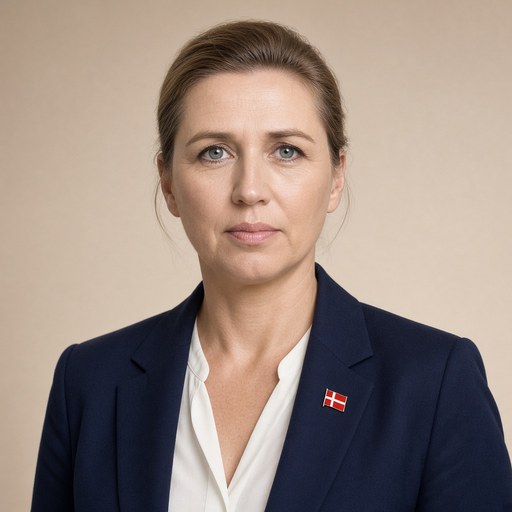
Prime Minister Mette Frederiksen's speech at the event for the Godhavnsdrengene and other children from orphanages on August 13, 2019.
 Mette Frederiksen · Prime Minister of Denmark
- Context
- Frederiksen addressed survivors of the Godhavn orphanage and other children's homes on August 13, 2019, delivering Denmark's official state apology for historical abuse.
- Main themes
- Official state apology, child abuse in orphanages, Godhavn boys, historical injustice, children's rights, welfare state failures, redress and justice, responsibility and accountability, Danish history, Greenlandic children
- Duration
- ~11 min
- Words
- 1,363
- Sentences
- 149
- Readability
- 70
- Grade
- 5.6
- Syntax
- 2.17
- Vocabulary
- 2.04
Translated from Danish
The broad sphere of national life a sentence belongs to. Every sentence has an Arena, so it is the denominator the other indices are read against.
Other149 sentences in 88 paragraphs
Dear everyone,
A few years ago, I made a promise to you, Poul Erik, which you passed on to the boys from Godhavn. I have thought about whether you then thought: She will not fulfill that.
But I will keep my promise. Today, Denmark will apologize for what happened when you were children.
In our time, there were serious failures and abuses against children in the care of society. This happened at a time when the state was responsible for oversight.
It is well documented. No one can be unaffected by Sarah Smed's account.
Children – some of you – were taken away from your mother and father.
But instead of support and education – you were put to work that no frail child's body can handle.
Instead of care – you were beaten.
Instead of warmth – you were met with humiliation and abuse.
A boy from Godhavn has told that a little boy who cried from homesickness was beaten so much that he broke his arm.
Those who wet the bed at night were put out in the yard the next morning with their wet sheets. So everyone could laugh at them.
One of the many abuses that has made a huge impression on me.
And it is exactly the same punishment of a little girl in a children's home, which more than 100 years ago helped to start Peter Sabroe's fight for children's rights in Denmark.
His heart would have bled if he had lived to witness what you experienced so many years later.
A few years ago, the film about Godhavn was released. Some of you were consultants on the film "Der kommer en dag." Poul Erik and Arne – you are here today.
One of you has said that the film is an understated documentary.
Understated because in the fiction, they had to insert a hope into the hopelessness. So that it would not be so black that the audience could not bear to watch the film.
I have tried to watch the film twice myself. But I could not.
Some of you have said that the worst was not what happened.
The worst was what did not happen. No companionship. No comfort. No care. No arm around the shoulder.
No love.
On the contrary, you were told that what happened was your own fault.
But it was not your fault. It is never the children's fault. It is the adults' fault.
The adults who commit the atrocities. And the adults who do not intervene.
The society that closes its eyes.
One asks oneself: How was it possible?
In the 1960s and 70s, Denmark was on the way to a new era.
Greater prosperity. Rebellion against authorities. Out with the black school.
In those years, we built the welfare state. A Denmark where we believe in everyone. Equal opportunities. Lifting those who fall.
In the midst of all this lay Godhavn and other children's homes like eerie time pockets. Like monuments of shame over those who were not let in. But were kept outside.
Overlooked. Forgotten. Discarded.
Grew up in the shadows, without hope of a place in the sun.
A place where children were not children. Because the adults were not adults.
In my eyes, it is one of the darkest chapters in Danish history.
And it is in contradiction to everything Denmark stands for. Security. Equality. Justice.
I am convinced that we must look back at our dark chapters.
Otherwise, we will not be able to paint the future bright. And that is what we must do.
* * *
And all of this brings me to the word that has been far too long in coming.
Many of you have had to live with scars on body and soul. Some have lived difficult lives since. Others have fought their way to a good life.
Together you have fought for one thing: An official apology from Denmark.
I know that others have the objection that we, who hold power today, cannot take the blame for something that happened long ago.
That is true. I cannot take on the blame.
But I can, on behalf of Denmark, take on the responsibility to ensure that you receive the redress you deserve.
Some believe that it was a different time. That is also true.
But the atrocities committed back then were also wrong back then.
Then there are those who say that we in Denmark do not have a tradition of apologizing back in history.
That is as true as it is said. But should that bind us? No! It is never too late to do the right thing.
One can make things difficult. Which are actually simple.
For me, it is about justice.
Justice for you, who so brutally had your only childhood stolen.
You are here. Fortunately!
Therefore, when you ask me: Mette, can you officially on behalf of Denmark give us an apology?
I answer – yes!
I say yes to the boys from Godhavn. I say yes to all the children from children's homes who suffered abuse.
Today is your day.
And there will be more days.
I will move on.
Last month, I had a visit from Greenland's Premier Kim Kielsen.
We talked about the Greenlandic children who were decided to be Danish.
Kim wishes that the work currently underway to clarify the circumstances should be completed before those who were children back then receive an apology. I respect that. But I am willing to say sorry.
And there are also others who have suffered.
The children from children's homes who are here today are not the only ones who were subjected to neglect and abuse. Unfortunately.
Others were too. For example, people with disabilities.
To all of you, I want to say: You also have the right to have your story told. Just like the children from children's homes have had it with the Godhavn report.
Society was supposed to take care of you. But the opposite happened – you were harmed.
What happened was wrong. As wrong as anything can be.
We must uncover what happened. We must learn from the mistakes of history.
I will open the doors to the dark chapters of our history. Shed light on the past. And give the victims redress.
While there is time.
In the Denmark that I believe in, no one stands outside.
I want to be a prime minister for all. Also for those whom others forget.
I desire a new and more just direction for Denmark.
With understanding, recognition, and respect.
The next person at the podium is a man whom I have great respect for. Poul Erik Rasmussen, chairman of the Godhavn Boys Association. Without the work you and others have done, we would not be here today.
Before Poul Erik comes up here, the children's choir will sing "Et hav, der vugger sig til ro."
And after Poul Erik's speech, Sofie Gråbøl will read poems for us. And Sebastian will sing for us.
Today is a day of great emotions. We need art to support us where we may lack words.
But before that, one word is more important than anything else.
Poul Erik, you have said that receiving an apology feels like having run around with a sack of cement on your back. And that is lifted off your shoulders.
I believe everyone will understand that when you carry a sack of cement on your back, you mostly look down at the ground.
But when the heavy baggage of the past is released, you can straighten your back. And lift your gaze. And look forward in life.
And we others can allow ourselves to look you in the eyes again.
Dear everyone.
You have waited long. Now you shall wait no more.
On behalf of our past, our present, and our shared future – I will look you in the eyes, each and every one, and say to you: I am sorry for the injustice that has been done to you and your loved ones.
For those who are here. For those who were. And for those who will follow.
On behalf of all of Denmark – I apologize.
The original Danish. The tags above are read on the English translation's sentences.
Kære alle sammen
For nogle år siden gav jeg dig, Poul Erik, et løfte, som du gav videre til godhavnsdrengene. Jeg har tænkt over, om I dengang tænkte: Det kommer hun ikke til at opfylde.
Men jeg vil indfri mit løfte. I dag vil Danmark give en undskyldning for det, der skete, da I var børn.
I vores tid blev der begået alvorlige svigt af og overgreb på børn i samfundets varetægt. Det skete i en tid, hvor staten var ansvarlig for tilsynet.
Det er velbelyst. Ingen kan være uberørte af Sarah Smeds beretning.
Børn – nogle af jer – blev fjernet fra deres mor og far.
Men i stedet for støtte og undervisning – blev I sat til arbejde, som ingen spinkel barnekrop kan klare.
I stedet for omsorg – fik I tæsk.
I stedet for varme – blev I mødt med ydmygelser og overgreb.
En dreng fra Godhavn har fortalt, at en lille dreng, der græd af hjemve, blev tævet så meget, at han brækkede sin arm.
De, der tissede i sengen om natten, blev næste morgen stillet ud i gården med deres våde lagener. Så alle kunne grine ad dem.
Et af de mange overgreb, der har gjort kæmpe stort indtryk på mig.
Og det er præcis den samme afstraffelse af en lille pige på et børnehjem, som for mere end 100 år siden var med til at starte Peter Sabroes kamp for børns rettigheder i Danmark.
Hans hjerte ville have blødt, hvis han havde levet til at bevidne det, som I oplevede så mange år efter.
For nogle år siden kom filmen om Godhavn. Nogle af jer var konsulenter på filmen ”Der kommer en dag.” Poul Erik og Arne – I er her i dag.
En af jer har sagt, at filmen er en underspillet dokumentar.
Underspillet, fordi man i fiktionen var nødt til at lægge et håb ind i håbløsheden. For at det ikke skulle blive så sort i sort, at publikum ikke magtede at se filmen.
Jeg har selv forsøgt at se filmen to gange. Men kunne ikke.
Nogle af jer har sagt, at det værste ikke var det, som skete.
Det værste var det, der
ikke
skete. Intet samvær. Ingen trøst. Ingen omsorg. Ingen arm om skulderen.
Ingen kærlighed.
Tværtimod fik I at vide, at det, der skete, var jeres egen skyld.
Men det var ikke jeres skyld. Det er aldrig børnenes skyld. Det er de voksnes skyld.
De voksne, der udfører uhyrlighederne. Og de voksne, der ikke griber ind.
Det samfund, der lukker øjnene.
Man spørger sig selv: Hvordan var det muligt?
I 1960’erne og 70’erne var Danmark på vej mod en ny tid.
Større velstand. Oprør mod autoriteter. Ud med den sorte skole.
I de år byggede vi velfærdssamfundet. Et Danmark, hvor vi tror på alle. Lige muligheder. Løfter dem, der falder.
Midt i alt det lå Godhavn og andre børnehjem som uhyggelige tidslommer. Som skamstøtter over, at nogle
ikke
var med indenfor. Men blev holdt udenfor.
Overset. Glemt. Kasseret.
Voksede op i skyggen, uden håb om en plads i solen.
Et sted, hvor børn ikke var børn. Fordi de voksne ikke var voksne.
Det er i mine øjne et af de mørkeste kapitler i Danmarkshistorien.
Og det er i modstrid med alt, hvad Danmark står for. Tryghed. Lighed. Retfærdighed.
Jeg er af den overbevisning, at vi bliver nødt til at se tilbage på vores mørke kapitler.
Ellers magter vi ikke at male fremtiden lys. Og det er jo det, vi skal.
* * *
Og alt det bringer mig frem til det ord, som har været alt for længe undervejs.
Mange af jer har måttet leve med ar på krop og sjæl. En del har levet dårlige liv siden. Andre har kæmpet sig til et godt liv.
Sammen har I kæmpet for én ting: En officiel undskyldning fra Danmark.
Jeg ved godt, at andre har den indvending, at vi, der har magten i dag, ikke kan tage skylden for noget, der skete engang.
Det er rigtigt. Jeg kan ikke påtage mig skylden.
Men jeg kan på Danmarks vegne påtage mig ansvaret for, at I får den oprejsning, I fortjener.
Nogle mener, at det var en anden tid. Det er også rigtigt.
Men de uhyrligheder, der blev bedrevet dengang, var også forkerte dengang.
Så er der dem, der siger, at vi i Danmark ikke har tradition for at undskylde tilbage i historie.
Det er så sandt, som det er sagt. Men skal det binde os? Nej! Det er aldrig for sent at gøre det rigtige.
Man kan gøre ting svære. Som egentlig er enkle.
For mig handler det om retfærdighed.
Retfærdighed for jer, der så brutalt fik stjålet jeres eneste barndom.
I er her. Heldigvis!
Derfor. Når I spørger mig: Mette, kan du officielt på Danmarks vegne give os en undskyldning?
Så svarer jeg – ja!
Jeg siger ja til godhavnsdrengene. Jeg siger ja til alle børnehjemsbørn, der led overlast.
I dag er jeres dag.
Og der kommer flere dage.
Jeg vil gå videre.
I sidste måned havde jeg besøg af Grønlands landsstyreformand Kim Kielsen.
Vi talte om de grønlandske børn, som man besluttede skulle være danske.
Kim ønsker, at det arbejde, der er i gang med at udrede forholdene, skal være færdigt, før de, der var børn dengang, får en undskyldning. Det respekterer jeg. Men jeg er villig til at sige undskyld.
Og der er også andre, som har lidt overlast.
I børnehjemsbørn, der er her i dag, er ikke de eneste, som blev udsat for svigt og overgreb. Desværre.
Det blev andre også. For eksempel mennesker med handicap.
Til alle jer andre, vil jeg sige: I har også krav på at få jeres historie frem. Ligesom børnehjemsbørnene har fået det med Godhavnsrapporten.
Samfundet skulle passe på jer. Men der skete det modsatte – I blev gjort fortræd.
Det, der skete, var forkert. Så forkert, som noget kan være.
Vi skal afdække, hvad der skete. Vi skal lære af historiens fejl.
Jeg vil åbne dørene til de mørke kapitler i vores historie. Kaste lys på fortiden. Og give ofrene oprejsning.
Mens tid er.
I det Danmark, som jeg tror på, står ingen udenfor.
Jeg vil være statsminister for alle. Også for dem, som andre glemmer.
Jeg ønsker en ny og mere retfærdig retning for Danmark.
Med forståelse, anerkendelse og respekt.
Den næste her på talerstolen er en mand, som jeg har kæmpe respekt for. Poul Erik Rasmussen, formand for foreningen Godhavnsdrengene. Uden det arbejde, du og andre har gjort, var vi ikke her i dag.
Før Poul Erik kommer herop, vil børnekoret synge ”Et hav, der vugger sig til ro.”
Og efter Poul Eriks tale vil Sofie Gråbøl læse digte for os. Og Sebastian vil synge for os.
I dag er de store følelsers dag. Vi har brug for kunsten til at støtte os, hvor vi selv kan mangle ord.
Men inden da er ét ord vigtigere end noget andet.
Poul Erik, du har sagt, at det at få en undskyldning er en følelse af at have rendt rundt med en sæk cement på ryggen. Og den bliver løftet af skuldrene.
Jeg tror, enhver vil forstå, at når man bærer en sæk cement på ryggen. Så ser man mest ned i jorden.
Men når fortidens tunge bagage er sluppet. Så kan I ranke ryggen. Og løfte blikket. Og se frem i livet.
Og vi andre kan tillade os at se jer i øjnene igen.
Kære alle sammen.
I har ventet længe. Nu skal I ikke vente mere.
På vegne af vores fortid, vores nutid og vores fælles fremtid – vil jeg se jer i øjnene, hver og en, og sige jer undskyld for den uret, der er gjort mod jer og jeres kære.
For dem, der er her. For dem, der var. Og for dem, der følger efter.
På vegne af hele Danmark – undskyld.