




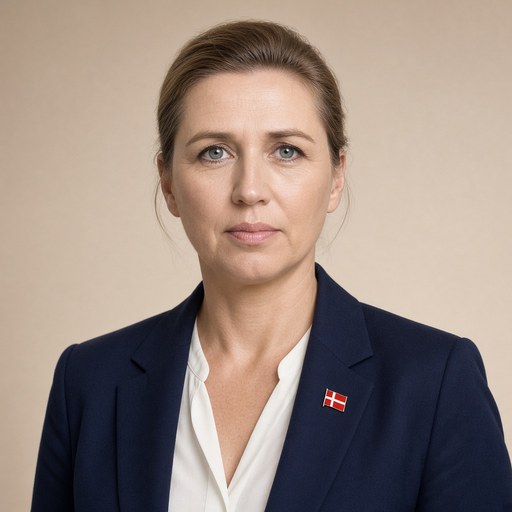
Prime Minister Mette Frederiksen's speech at the gala performance marking the 100th anniversary of Southern Jutland's reunification with Denmark on January 10, 2020, at the Royal Theatre.
 Mette Frederiksen · Prime Minister of Denmark
- Context
- Frederiksen addressed a gala audience at the Royal Theatre in Copenhagen on January 10, 2020, marking the centenary of Southern Jutland's reunification with Denmark.
- Main themes
- 100th anniversary of Southern Jutland's reunification with Denmark, peaceful democratic referendum of 1920, Danish-German relations and friendship, border region minorities, national identity, cultural coexistence, Danish-German cultural friendship year 2020, shared history and memory, democratic values, unity and cooperation
- Duration
- ~5 min
- Words
- 603
- Sentences
- 71
- Readability
- 67
- Grade
- 6.0
- Syntax
- 2.21
- Vocabulary
- 2.06
Translated from Danish
The broad sphere of national life a sentence belongs to. Every sentence has an Arena, so it is the denominator the other indices are read against.
Other71 sentences in 35 paragraphs
Your Majesty. Your Royal Highness.
Dear guests!
One hundred years ago, Southern Jutland was reunited with Denmark.
The nation was healed. The Southern Jutlanders came home.
Not with violence and power. Not with wars and conflicts, which throughout history have cost far too many lives. Torn families apart. In both Denmark and Germany.
No. This time, our ancestors found the border through a peaceful referendum. In respect for the people who lived in the region. In respect for each other.
The way to resolve a border dispute is truly unique. I do not believe there are many places in the world – if any – where a border has been drawn so democratically.
The reunification is not only an important part of our history.
It draws threads to our own time.
To who we are today.
We are a country that decides great things together. Listens to each other. And takes responsibility for the future.
We do it together. Also together with our neighbors. Yes, together with all of Europe.
We have the courage. To look beyond our own country. Our own time. To remember the next generation. The courage to ask the big questions. To make the right decisions.
In 1920, the question posed to the individual was pointed: Who are you?
Are you Danish? Or are you German?
And after the referendum, there were still Danes on the German side. And Germans on the Danish side. We must not forget them.
That is why it is so important that the national border does not only divide. But also unites. And allows for being – both Danish and German.
Danish schools and German schools, libraries and kindergartens are located door to door in the border region.
It makes me happy to think about.
To the minorities on both sides of the border, I want to say: You can be truly proud.
The majority respects the minority. And the minority respects the majority.
You show that one can both hold on to one’s own culture. And respect the majority’s.
One can have one’s heart in both places. In Denmark. And in Germany.
You are an inspiration and a role model for the whole world.
And a symbol of the close and trusting relationship between Denmark and Germany.
That is why we are not only celebrating a border that was drawn by the people. We are also celebrating the bridges that are being built between people and countries – by the people.
One hundred years ago, the reunification was an event that captivated all of Denmark – not just the Southern Jutlanders.
One hundred years later, we must again celebrate the reunification throughout Denmark. We can even simultaneously celebrate a joint Danish-German cultural friendship year in 2020.
Tonight, we kick off the festivities here at the Royal Theatre in Copenhagen. With a bouquet of artistic performances. And a world premiere of a German-Danish pas de deux. Created especially for tonight.
But this is only the beginning of a long series of events. Leading up to July 11, when there will be a celebration at Dybbøl Banke.
Thank you to all of you who have worked hard to get everything in place. You have done well. Thanks to you, all of Denmark is with us as we mark an important part of our shared past.
One hundred years ago, responsible and visionary people laid the foundations for the peaceful border community we have today.
Let us move forward in their footsteps. Towards a common future borne of friendship, respect, and freedom.
With those words. Enjoy the evening's performance.
And have a very happy reunification year.
The original Danish. The tags above are read on the English translation's sentences.
Deres Majestæt. Deres kongelige højhed.
Kære gæster!
For hundrede år siden blev Sønderjylland genforenet med Danmark.
Nationen blev helet. Sønderjyderne kom hjem.
Ikke med vold og magt. Ikke med krige og konflikter, som gennem historien har kostet alt for mange mennesker livet. Revet familier i stykker. I både Danmark og Tyskland.
Nej. Denne gang fandt vores forfædre grænsen med en fredelig folkeafstemning. I respekt for de mennesker, som boede i regionen. I respekt for hinanden.
Den måde at løse en grænsestrid på er helt unik. Jeg tror ikke, der er mange steder i verden – om nogen – hvor en grænse er tegnet så demokratisk.
Genforeningen er ikke alene en vigtig del af vores historie.
Den trækker tråde frem til vores egen tid.
Til hvem vi er i dag.
Vi er et land, som beslutter store ting i fællesskab. Lytter til hinanden. Og tager ansvar for fremtiden.
Vi gør det sammen. Også sammen med vore naboer. Ja, sammen med hele Europa.
Vi har modet. Til at se ud over vores eget land. Vor egen tid. Huske næste generation. Mod til at stille de store spørgsmål. Tage de rigtige beslutninger.
I 1920 blev spørgsmålet til den enkelte sat på spidsen: Hvem er du?
Er du dansk? Eller er du tysk?
Og efter afstemningen var der stadig danskere på den tyske side. Og tyskere på den danske side. Dem må vi ikke glemme.
Derfor er det så vigtigt, at landegrænsen ikke kun skiller. Men også samler. Og giver plads til, at man kan være – både dansk og tysk.
Danske skoler og tyske skoler, biblioteker og børnehaver ligger dør om dør i grænseregionen.
Det gør mig glad at tænke på.
Til mindretallene på begge sider af grænsen vil jeg sige: I kan i den grad være stolte.
Flertallet respekterer mindretallet. Og mindretallet respekterer flertallet.
I viser, at man både kan holde fast i sin egen kultur. Og respektere flertallets.
Man kan have hjertet med begge steder. I Danmark. Og i Tyskland.
I er en inspiration og et forbillede for hele verden.
Og et symbol på det nære og tillidsfulde forhold mellem Danmark og Tyskland.
Derfor fejrer vi ikke alene en grænse, som blev trukket af folket. Vi fejrer også de broer, der bliver bygget mellem mennesker og lande – af folket.
For 100 år siden var genforeningen en begivenhed, der optog hele Danmark – ikke kun sønderjyderne.
100 år efter skal vi igen fejre genforeningen i hele Danmark. Vi kan endda samtidig fejre et fælles dansk-tysk kulturvenskabsår i 2020.
I aften skyder vi festlighederne i gang her på Det Kongelige Teater i København. Med en buket af kunstneriske indslag. Og en verdenspremiere på en tysk-dansk pas des deux. Skabt specielt til i aften.
Men det er kun begyndelsen på en lang række begivenheder. Frem til den 11. juli, hvor der er fest på Dybbøl Banke.
Tak til alle jer, der har arbejdet hårdt med at få alting på plads. I har gjort det godt. Takket være jer er hele Danmark med, når vi markerer en vigtig del af vores fælles fortid.
For 100 år siden lagde ansvarlige og fremsynede mennesker sporene for det fredelige grænsefællesskab, vi har i dag.
Lad os gå videre i deres fodspor. Mod en fælles fremtid båret af venskab, respekt og frihed.
Med de ord. God fornøjelse med aftenens forestilling.
Og rigtig godt genforenings-år.