




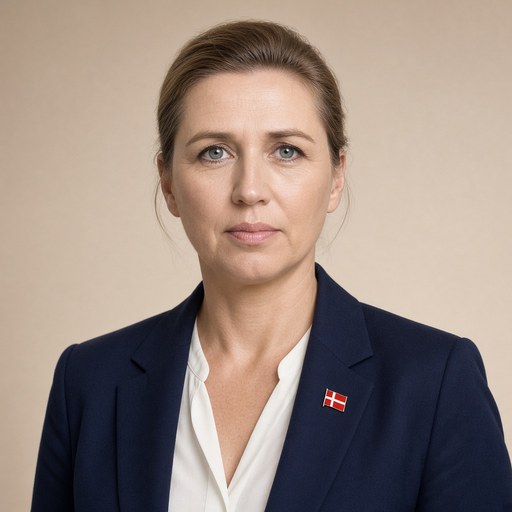
The Prime Minister's speech on Auschwitz Day at the Royal Library, January 27, 2020.
 Mette Frederiksen · Prime Minister of Denmark
- Context
- Frederiksen addressed a Holocaust Remembrance Day ceremony at the Royal Library in Copenhagen on January 27, 2020, marking 75 years since World War II's end.
- Main themes
- Holocaust remembrance, antisemitism, Jewish victims, survivor testimonies, preservation of memory, Nazi crimes, Danish Jewish rescue, human dignity, warning against hatred, minority rights, historical responsibility
- Duration
- ~9 min
- Words
- 1,061
- Sentences
- 126
- Readability
- 72
- Grade
- 5.2
- Syntax
- 2.22
- Vocabulary
- 2.14
Translated from Danish
The broad sphere of national life a sentence belongs to. Every sentence has an Arena, so it is the denominator the other indices are read against.
Other126 sentences in 51 paragraphs
Dear everyone.
Today we commemorate something that should never have happened.
This year marks 75 years since the end of World War II. We commemorate the end of the Holocaust and the Nazis' crimes against humanity.
Today we remember the victims. The unfathomably many. Who were subjected to the madness of other human beings. Both in Auschwitz-Birkenau and in other genocides.
That belongs to history. But it pertains to the present. For the future is built on experience.
The Holocaust cost around six million Jews their lives. Alone in Auschwitz-Birkenau, more than one million people died.
Auschwitz was a cessation of all humanity. All humanism. A cessation of European civilization.
It cannot be explained. It cannot be defended. It cannot be forgiven.
I visited Yad Vashem last Friday. Anti-Semitism – which is what the Holocaust was about – started as satire and propaganda. It became ghettos and Jewish stars. Then came poverty, dehumanization, and disenfranchisement. Violence and internment followed. Finally, the death camps.
The scale was and is so incomprehensible that we still cannot fully understand it. One and a half million Jewish children lost their lives back then.
Those who survived. You who survived. Were and are marked for life.
Many tried to forget. To put the horrors behind them. In order to look forward. To move on.
But as time went by, more began to tell.
Today, there are only a few left who experienced the horrors themselves. Who remember what happened.
But we who were not there. We must not forget.
In Jerusalem last week, I met two Danish survivors of the Holocaust. Jytte Israel and Robert Fischermann.
What a privilege. Their story must be told again and again – and live on.
Jytte was a very small girl. She was one of the lucky European Jews. She was helped both by people she knew. And strangers. Neighbors and other Danes who saw it as their duty to help Danish Jews on their way to Sweden.
She was transported away in the cargo hold of a large coal ship. Well assisted on her way by some quick-witted neighbors in Islands Brygge. Two young German soldiers who were about to inspect the ship – were instead lured away with the last bottle of French cognac found in the apartment.
Robert's story is completely different and painful.
The family – or at least large parts of it – was caught by the Germans in 1943. And Robert ended up in Theresienstadt at only 15 years old.
Robert tells many things, but especially a couple of them I want to share with you. Because they have, of course, made such a great impression.
On the dangerous journey, Robert – along with a few family members – was herded into the cattle cars, which were a large part of the Nazis' infrastructure throughout Europe.
The stench of far too many people in far too little space. The sickness and desperation. I don't think anyone who was there will ever be able to shake that off.
Robert tells of one thing that may be particularly important. Namely, the few times when the cattle cars stop along the way. And everyone is brutally herded out – to relieve themselves.
Some might say – and so what?
But even that was a completely conscious act on the part of the Nazis. For there one would have to sit. Exposed. With people one did not know. Across gender and age and family status.
And that was actually what the Nazis wanted. That dignity, authority, and the individual should be stripped from every single Jew.
Robert also says that "people can get used to many things. But what one never gets used to – is hunger."
Both Robert and Jytte survived. And they are still here. They will not live forever. And perhaps the most important thing we can promise each other. Is to let the stories live on.
For even though I am a persistently optimistic person. One of the things that can worry me – is when the last witnesses are no longer among us.
How then shall we ensure that the memory is allowed to live on?
And it was not only six million Jews who lost their lives during the Holocaust.
It was also their children, their grandchildren, and their great-grandchildren.
With today's event, you are all helping to keep the memory alive.
Thank you for that.
To remember and to recall is important. But it cannot stand alone. We must use that memory to do everything we can to ensure that history never repeats itself.
Therefore, I would like to use this evening. To once again express my deepest contempt. For those people who even in our time – and in our country – fan the flames of anti-Semitism.
They are here. They say it. They do it. And we must not – and we shall not accept it.
Threats against Jews and other minorities in Denmark are a threat to us all. To the values upon which we have built one of the world's best societies. The values that bind us together.
The freedom to be who you are. To believe in the God you wish. In safety for yourself and your children. It is universal.
No minority should be subjected to hatred. That is not the Denmark we want.
Instead of dividing ourselves into groups, we should unite to strengthen the community. Engage in society. Across what can divide us.
We have a tradition for that in Denmark.
And that is perhaps one of the reasons why so many Danes helped Danish Jews survive the Holocaust.
One did not help a Jew. One helped one's neighbor. A fellow human being. A Dane. An acquaintance. A friend. Or a complete stranger. Because it was one's obligation.
Here, the Danish community showed its strength and importance. And we must make that choice again.
Let us use the darkest chapters of history to collectively combat anti-Semitism, racism, and the hatred that unfortunately lives in parts of Danish society.
And thus, together stand firm – and stand up – for democracy, the rule of law, and freedom.
For that is – when all is said and done – the best shield and the only shield we have against inhumanity. In Denmark. Europe. And the rest of the world.
May we never forget what happened.
The original Danish. The tags above are read on the English translation's sentences.
Kære alle sammen.
I dag markerer vi noget, som aldrig burde være sket.
I år er det 75 år siden at anden verdenskrig sluttede. Vi markerer afslutningen på holocaust og nazisternes forbrydelser mod menneskeheden.
I dag mindes vi ofrene. De ufatteligt mange. Som blev udsat for andre menneskers vanvid. Både i Auschwitz-Birkenau og ved andre folkedrab.
Det hører historien til. Men det kommer nutiden ved. For fremtiden bygger på erfaringen.
Holocaust kostede omkring seks millioner jøder livet. Alene i Auschwitz-Birkenau døde mere end én million mennesker.
Auschwitz var et ophør af al menneskelighed. Al humanisme. Et ophør af den europæiske civilisation.
Det kan ikke forklares. Det kan ikke forsvares. Det kan ikke tilgives.
Jeg besøgte i fredags Yad Yashem. Anti-semitismen – som er det, holocaust handlede om – startede som satire og propaganda. Blev til ghettoer og jødestjerner. Så kom fattigdommen, dehumaniseringen og umyndiggørelsen. Volden og interneringen fulgte. Til sidst dødslejrene.
Omfanget var og er så ubegribeligt, at vi stadig ikke helt kan forstå det. Halvanden million jødiske børn mistede livet dengang.
De som overlevede. I som overlevede. Var og er mærket hele livet.
Mange forsøgte at glemme. Lægge rædslerne bag sig. For at kunne se frem. Leve videre.
Men som tiden gik, begyndte flere at fortælle.
I dag er der kun få tilbage, som selv oplevede rædslerne. Husker, hvad der skete.
Men vi som ikke var der. Vi må ikke glemme.
I Jerusalem i sidste uge mødte jeg to danske overlevere af holocaust. Jytte Israel og Robert Fischermann.
Sikke et privilegium. Deres historie skal fortælles igen og igen – og leve videre.
Jytte var en helt lille pige. Hun var en af de heldige europæiske jøder. Blev hjulpet både af folk, hun kendte. Og ukendte. Naboer og andre danskere der så det som deres opgave, at hjælpe danske jøder godt på vej til Sverige.
Hun blev fragtet afsted i fragtrummet af et stort kulskib. Godt hjulpet på vej af nogle snarrådige naboer på Islands Brygge. To unge tyske soldater som skulle til at inspicere skibet – blev i stedet narret væk med den sidste flaske franske cognac, man fandt i lejligheden.
Roberts historie er helt anderledes og lidelsesfuld.
Familien – eller i hvert fald store dele af den – blev i 1943 fanget af tyskerne. Og Robert ender som kun 15-årig i Theresienstadt.
Robert fortæller mange ting, men især et par af dem vil jeg dele med jer. Fordi de selvfølgelig har gjort så stort indtryk.
På den farlige rejse bliver Robert – sammen med nogle få familiemedlemmer – gennet ind i de kreaturvogne, som var en stor del af nazisternes infrastruktur i hele Europa.
Stanken af alt for mange mennesker på alt for lidt plads. Sygdommen og desperationen. Tror jeg ikke nogen, der var der, nogensinde kommer til at lægge fra sig.
Robert fortæller om en ting, der måske er særlig vigtig. Nemlig de få gange, hvor kreaturvognene stopper undervejs. Og alle på brutal vis bliver gennet ud – for at forrette deres nødtørft.
Nogen vil sige – og hvad så?
Men selv den ting var en fuldstændig bevidst handling fra nazisterne side. For der skulle man så sidde. Blottet. Med mennesker man ikke kendte. På kryds og tværs – af køn og alder og familiestand.
Og det var faktisk dét, der var nazisterne ønske. At værdigheden, myndigheden og det enkelte individ skulle tages ud af hver eneste jøde.
Robert siger også, at ”mennesker kan vænne sig til mange ting. Men det man aldrig vænner sig til – det er sulten”.
Både Robert og Jytte overlevede. Og de er her stadig. De lever ikke for evigt. Og det måske vigtigste vi kan love hinanden. Det er at lade beretningerne leve.
For selvom jeg er et vedholdende optimistisk menneske. Så er noget af det, der kan bekymre mig – det er, når de sidste vidner ikke længere er i blandt os.
Hvordan skal vi så sikre, at erindringen får lov at leve videre?
Og det var jo ikke kun seks millioner jøder, der mistede livet under holocaust.
Det var også deres børn, deres børnebørn og deres oldebørn.
Med arrangementet i dag hjælper I os alle sammen med at holde erindringen i live.
Tak for det.
At huske og erindre er vigtigt. Men det kan ikke stå alene. Vi bliver nødt til at bruge den erindring til at gøre alt, hvad vi kan, for at historien aldrig gentager sig.
Derfor vil jeg gerne bruge den her aften. Til endnu engang. At udtrykke min dybeste foragt. Over for de mennesker, som også i vor tid – og i vort land – puster til antisemitismen.
De er her. De siger det. De gør det. Og vi må ikke – og vi skal ikke acceptere det.
Trusler mod jøder og andre minoriteter i Danmark er en trussel mod os alle. Mod de værdier hvorpå vi har bygget et af verdens bedste samfund. De værdier, som binder os sammen.
Friheden til at være den man er. Tro på den Gud man vil. I tryghed for sig selv og sine børn. Den er universel.
Intet mindretal skal udsættes for had. Det er ikke det Danmark, vi ønsker.
I stedet for at dele os i grupper skal vi samles om at styrke fællesskabet. Engagere os i samfundet. På tværs af det, der kan skille os ad.
Det har vi tradition for i Danmark.
Og det er måske også en af grundene til, at så mange danskere hjalp danske jøder med at overleve holocaust.
Man hjalp ikke en jøde. Man hjalp sin nabo. Et medmenneske. En dansker. En bekendt. En ven. Eller en helt ukendt. Fordi det var ens forpligtelse.
Her viste det danske fællesskab sin styrke og vigtighed. Og det valg skal vi træffe igen.
Lad os bruge historiens aller mørkeste kapitler til i fællesskab at bekæmpe antisemitismen, racismen og det had, der desværre lever i dele af det danske samfund.
Og dermed i fællesskab stå fast – og stå op – for demokratiet, retsstaten og friheden.
For det er – når alt kommer til alt – det bedste værn og eneste værn vi har imod umenneskelighed. I Danmark. Europa. Og resten af verden.
Må vi aldrig glemme det, der skete.