




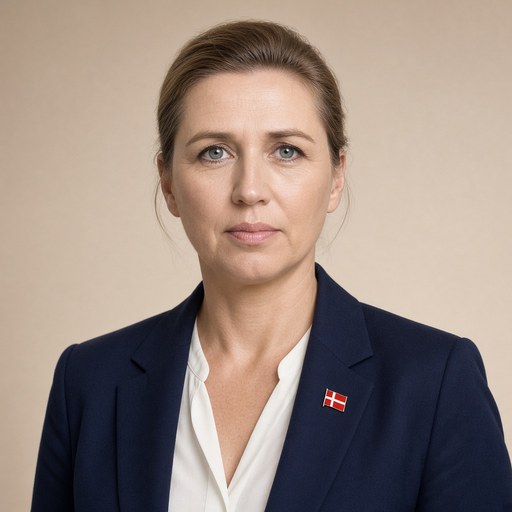
Prime Minister Mette Frederiksen's speech at the opening of the People's Meeting.
 Mette Frederiksen · Prime Minister of Denmark
- Context
- Frederiksen addressed the opening of Denmark's annual People's Meeting (Folkemødet) on Bornholm island on June 15, 2023, speaking on democracy, climate, and end-of-life dignity.
- Main themes
- Democracy and civic participation, green transition and climate action, Danish climate law and targets, dignity in end of life, freedom and open society, social cohesion, agricultural transition, renewable energy, inequality and polarization, the Danish model, Iranian women's freedom struggle
- Duration
- ~10 min
- Words
- 1,148
- Sentences
- 128
- Readability
- 66
- Grade
- 5.7
- Syntax
- 2.24
- Vocabulary
- 1.94
Translated from Danish
The broad sphere of national life a sentence belongs to. Every sentence has an Arena, so it is the denominator the other indices are read against.
Other128 sentences in 76 paragraphs
"For freedom. For freedom. For freedom."
I do not believe I am the only one who was moved during this year's opening song.
Thank you to Samara Bahrami for putting beautiful words to the brave struggle for freedom of Iranian women.
And for reminding us all of the most precious thing we have:
Our open, free society.
Our democracy.
And the very special community we have with each other here in Denmark. As will unfold over the next three days here on Bornholm.
To meet under the open sky. Across and through. From very different parts of the country and with very different backgrounds.
That is the Folketing, at its best.
Thank you to Vibe and Jacob for leading the democratic festival of all of Denmark.
Thank you to the people of Bornholm. For allowing us to borrow your island again this year.
Thank you to all of you who have come here to be part of it.
And not least, thank you to you volunteers, who have worked hard so that the rest of us can be here.
* * *
The next three days are not primarily about being right. Or about having the last word.
But about all of us participating in a common conversation.
About the big questions we face.
And about which way we should move.
Democracy is much more than casting your vote. It is using it. And listening to others.
Debating. Disagreeing. Becoming wiser.
Only in this way can we move forward as individuals and as a society.
* * *
One of the best examples of us having done just that is the green transition.
Just think. Only four years ago. Denmark had no climate law with binding climate targets.
For many, climate targets were mostly something that lived in reports and in speeches at international summits.
That might still have been the case today. If thousands of Danes – not least many young people – had not raised their voices. Demonstrated. Demanded green action on the climate changes that are destroying our planet.
Today, climate has become a matter for the people.
We have moved forward.
We have achieved one of the world's most ambitious climate laws. Broadly anchored from right to left.
We have made decisions and entered into countless green agreements. That together bring us almost three-quarters of the way to the 70 percent target.
There are still some who believe it is moving too slowly. Perhaps some of you standing here in front of me today.
There are also those who feel that the changes are happening a bit too quickly.
Both viewpoints are legitimate.
But no one can dispute that we have made significant decisions about our green future in a very short time. Decisions that mean Denmark is now regarded as the leading country we wish to be.
The green transition is one of the greatest and most important victories of Danish democracy in recent years.
And with the serious drought we are currently experiencing in Denmark and in Europe. I hope everyone is ready for the next steps.
* * *
Around the world, other countries are looking at us and asking: How do you do it?
How do you avoid rising inequality and polarization?
The answer is that we have found a special path.
The Danish way. Where climate action and green transition go hand in hand with welfare. With economic growth. With jobs.
We are one of the countries that have come the furthest. But there is still much to be done. And we are in a hurry!
Therefore, we also need to talk openly about the dilemmas and difficult questions that the green transition presents us with:
How do we avoid the cost of the green transition hitting unevenly? That people lose their jobs?
How do we move forward with the necessary transition of agriculture – while Danish farmers can compete with the rest of the world and maintain high quality?
And how do we create space for much more renewable energy – without it harming our nature and wildlife?
The answers to these questions. We will only find if we listen to each other. To the concerns. To the good ideas. And to the hope that points forward.
You are not a climate fool because you are impatient to stop climate change.
And you are not ignorant because you want to be able to run your business and put food on the table for your children.
* * *
I hope that we can use the next three days for what we are so good at here in Denmark.
Meeting each other. Making space. Especially for those we disagree with. Thinking things through one more time.
Both when it comes to the climate. And the other big questions that we must find answers to together.
Some of those questions will challenge us. In new ways. Across generations. And across party lines.
I would like to take a chance. And today talk about a topic that is very much on my mind. And which I know is important to many Danes.
Dignity in the final stages of life.
How the framework for our last time should be. How much we as individuals should be able to decide. And when.
Author and journalist Kirsten Jacobsen published the book 'The Promise' earlier this year.
It is about the ultimate test of love. When death comes close.
And describes all that is at stake in this discussion.
Kirsten Jacobsen herself points to some of the dilemmas that the discussion contains. About the possibility of receiving help to die.
In an interview about the book, she explains how one must of course acknowledge a strong welfare and healthcare system that will always try to treat. To save.
But also, that there must be a personal choice.
And then she says: "You can go to Switzerland if you are rich. But I do not think your resources should determine your ability to die."
I agree with that.
It is a difficult debate. And I am aware that, for example, the Ethical Council has expressed its opposition several times.
I personally feel very differently.
And there is much to suggest that many Danes feel as I do.
Citizen proposals have been put forward. And just the other day, I received a heartbreaking email from a woman who has just said goodbye to a family member. Without the dignity they had wished for.
It should neither be opinion polls nor experts that determine our way forward on this issue.
It should be the discussion we have with each other. As human beings. As citizens.
My clear recommendation is that we do not conclude too quickly.
But we need the conversation.
* * *
I believe that our democracy is strong enough for even the toughest conversations.
Thank you for your attention. And have a really good Folketing!
The original Danish. The tags above are read on the English translation's sentences.
”For frihed. For frihed. For frihed.”
Jeg tror ikke, at jeg er den eneste, der blev rørt under årets åbningssang.
Tak til Samara Bahrami for at sætte smukke ord på de iranske kvinders modige frihedskamp.
Og for at minde os alle sammen om det mest dyrebare, vi har:
Vores åbne, frie samfund.
Vores demokrati.
Og det helt særlige fællesskab, vi har med hinanden her i Danmark. Som de kommende tre dage vil folde sig ud her på Bornholm.
At mødes under åben himmel. På kryds og tværs. Fra vidt forskellige dele af landet og med vidt forskelligt udgangspunkt.
Det er Folkemødet, når det er bedst.
Tak til Vibe og Jacob for at stå i spidsen for hele Danmarks demokratifest.
Tak til bornholmerne. Fordi vi må låne jeres ø igen i år.
Tak til alle jer, der er kommet hertil for at være med.
Og ikke mindst tak til jer frivillige, der har knoklet for, at vi andre kan være her.
* * *
De næste tre dage handler ikke først og fremmest at få ret. Eller om at få det sidste ord.
Men om, at vi alle tager del i en fælles samtale.
Om de store spørgsmål, vi står over for.
Og om hvilken vej vi skal bevæge os.
Demokrati er meget mere end at afgive sin stemme. Det er at bruge den. Og lytte til andres.
Debattere. Være uenige. Blive klogere.
Kun sådan kan vi flytte os som mennesker og som samfund.
* * *
Et af de bedste eksempler på, at vi har gjort netop det. Det er den grønne omstilling.
Tænk engang. For bare fire år siden. Havde Danmark ingen klimalov med bindende klimamål.
For mange var klimamål mest noget, der levede i rapporter og i taler på internationale topmøder.
Sådan havde det måske stadig været i dag. Hvis ikke tusindvis af danskere – ikke mindst mange unge – havde råbt op. Demonstreret. Krævet grøn handling på de klimaforandringer, der er i gang med at ødelægge vores jordklode.
I dag er klima blevet en folkesag.
Vi har flyttet os.
Vi har fået en af verdens mest ambitiøse klimalove. Bredt forankret fra højre til venstre.
Vi har truffet beslutninger og indgået et utal af grønne aftaler. Der til sammen bringer os næsten tre fjerdedele af vejen til de 70 procent.
Der er stadig nogen, der mener, at det går for langsomt. Nok også nogle af jer, der står her foran mig i dag.
Der er også dem, der synes, at forandringerne sker lidt for hurtigt.
Begge synspunkter er legitime.
Men ingen kan anfægte, at vi på meget kort tid har truffet markante beslutninger om vores grønne fremtid. Beslutninger, der betyder, at Danmark i dag regnes for det foregangsland, vi ønsker at være.
Den grønne omstilling er en af det danske demokratis største og vigtigste sejre de senere år.
Og med den alvorlige tørke, som vi lige nu oplever i Danmark og i Europa. Så håber jeg, at alle er klar til de næste skridt.
* * *
Rundt om i verden kigger andre lande på os og spørger: Hvordan gør I?
Hvordan undgår I stigende ulighed og polarisering?
Svaret er, at vi har fundet en særlig vej.
Den danske vej. Hvor klimahandling og grøn omstilling går hånd i hånd med velfærd. Med økonomisk vækst. Med arbejdspladser.
Vi er et af de lande, der er kommet længst. Men der er stadig meget at gøre. Og vi har travlt!
Derfor har vi også behov for at tale åbent om de dilemmaer og svære spørgsmål, som den grønne omstilling stiller os over for:
Hvordan undgår vi, at prisen for den grønne omstilling rammer skævt? At mennesker mister deres job?
Hvordan kommer vi videre med den nødvendige omstilling af landbruget – samtidig med at danske landmænd kan konkurrere med resten af verden og bevare den høje kvalitet?
Og hvordan skaber vi plads til meget mere vedvarende energi– uden at det går ud over vores natur og dyreliv?
Svarene på de spørgsmål. Dem finder vi kun, hvis vi lytter til hinanden. Til bekymringerne. Til de gode idéer. Og til håbet, som peger fremad.
Man er ikke en klimatosse, fordi man er utålmodig for at stoppe klimaforandringer.
Og man er ikke ignorant, fordi man gerne vil kunne drive sin virksomhed og give sine børn mad på bordet.
* * *
Jeg håber, at vi kan bruge de næste tre dage på det, som vi er så gode til her i Danmark.
Møde hinanden. Give plads. Især til dem, vi er uenige med. Tænke efter en ekstra gang.
Både når det gælder klimaet. Og de andre store spørgsmål, som vi sammen skal finde svar på.
Nogle af de spørgsmål vil udfordre os. På nye måder. På tværs af generationer. Og på kryds og tværs i partierne.
Jeg vil gerne vove et øje. Og i dag tale om et emne, som ligger mig selv meget på sinde. Og som jeg ved, er vigtig for mange danskere.
Værdighed i den sidste tid i livet.
Hvordan rammerne for vores sidste tid skal være. Hvor meget vi som mennesker selv skal kunne bestemme. Og hvornår.
Forfatter og journalist Kirsten Jacobsen udgav tidligere i år bogen ’Løftet’.
Den handler om den ultimative prøve for kærligheden. Når døden kommer tæt på.
Og beskriver alt det, der er på spil i den her diskussion.
Kirsten Jacobsen peger selv på en del af de dilemmaer, diskussionen rummer. Om muligheden for at få hjælp til at dø.
I et interview om bogen fortæller hun, hvordan man selvfølgelig skal anerkende et stærkt velfærds- og sundhedsvæsen, der altid vil forsøge at behandle. At redde.
Men også, at der må være et personligt valg.
Og så siger hun: ”Man kan tage til Schweiz, hvis man er rig. Men jeg synes ikke, at dine ressourcer skal være afgørende for din mulighed for at dø.”
Det er jeg enig i.
Det er en svær debat. Og jeg er opmærksom på, at for eksempel Det Etiske Råd ad flere omgange har udtalt sig imod.
Selv har jeg det helt anderledes.
Og meget tyder på, at mange danskere har det som jeg.
Borgerforslag er blevet fremsat. Og forleden dag modtog jeg en hjerteskærende mail fra en kvinde, der lige har taget afsked med et familiemedlem. Uden den værdighed, de havde ønsket.
Det skal hverken være meningsmålinger eller eksperter, der afgør vores vej frem på dette spørgsmål.
Det skal være den diskussion, vi har med hinanden. Som mennesker. Som borgere.
Min klare anbefaling er, at vi ikke konkluderer for hurtigt.
Men samtalen har vi brug for.
* * *
Jeg tror på, at vores demokrati er stærkt nok til selv de sværeste samtaler.
Tak for ordet. Og hav et rigtig godt Folkemøde!