




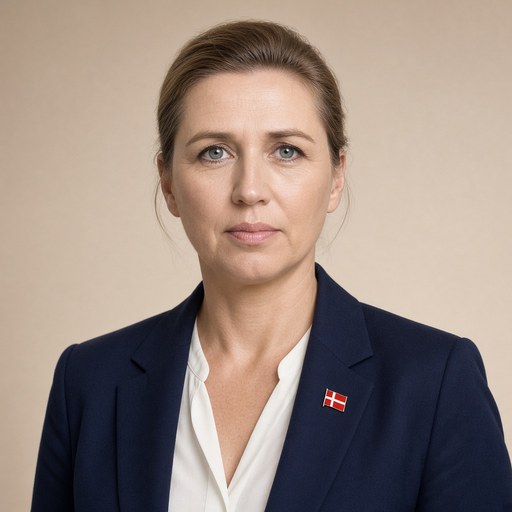
Prime Minister Mette Frederiksen's speech to the final debate of the Folketing on May 31, 2023.
 Mette Frederiksen · Prime Minister of Denmark
- Context
- Frederiksen addressed the Danish Folketing's final parliamentary debate on May 31, 2023, reflecting on the year and directing a forward-looking message to Danish youth.
- Main themes
- Artificial intelligence and ChatGPT, youth and future generations, education and opportunity, climate change, democracy and freedom, war in Ukraine and geopolitical security, Danish society and values, economic resilience, hope and optimism, Western unity
- Duration
- ~45 min
- Words
- 5,340
- Sentences
- 584
- Readability
- 62
- Grade
- 6.5
- Syntax
- 2.22
- Vocabulary
- 1.97
Translated from Danish
The broad sphere of national life a sentence belongs to. Every sentence has an Arena, so it is the denominator the other indices are read against.
Other584 sentences in 357 paragraphs
"It has been an honor and a challenge to lead a broad government in the past parliamentary year.
We have worked hard to collaborate across parties and ensure a strong and sustainable future for Denmark.
We have taken steps to combat climate change and ensure a more just and inclusive society where all citizens have equal opportunities.
We have also worked to strengthen our health and social system so that all citizens can receive the help they need.
Although we have faced challenges and resistance along the way, I am proud of what we have achieved together in the past parliamentary year.
We will continue to collaborate across parties and work hard to ensure a better future for all Danes.
Thank you for your trust and cooperation in the past parliamentary year. We look forward to continuing this work in the future."
* * *
What I just read here was not written by me.
Or by any other human being for that matter.
It was written by an artificial intelligence. ChatGPT.
And even though it may not hit the mark exactly
— neither with the details of the government's work program nor the number of periods — it is both fascinating and frightening what it is capable of.
In just a few seconds, it can write a speech, solve a university assignment, prepare a report. With such great conviction that few of us would believe it was a robot — and not a human — behind it.
Artificial intelligence is no longer the future.
It is reality.
And it will change our society. To an extent that we do not yet fully understand.
* * *
Why do I start with this? In a speech that is meant to reflect on the parliamentary year that we are concluding today?
I do so because I — instead of looking back — want to use my speaking time today to look forward.
Today, I want to address all young people in Denmark.
It is your future that this speech is about.
A future that, in many ways, differs significantly from that of your parents and grandparents.
The artificial intelligence that is surging forward is just one example of the new living conditions that you are facing.
* * *
Many words have been said about you, the youth of today.
You have been called fragile. Snowflakes. Curling kids.
None of that is my concern today.
You are a generation full of hope and dreams. A will to shape your own lives.
And a generation that is actively engaged in the society that surrounds you.
We see this not only in Denmark but also in the Faroe Islands and Greenland.
In art and culture. In the climate fight. And in the struggle for global justice. You young people are making an impact that reaches far beyond the borders of the Kingdom.
With you, you carry a strong awareness of where you come from. A pride in your roots, your language.
Rooted. But with your gaze turned outward. And determined to create change. You young people are the vanguard of a new way of engaging with the world.
* * *
You young people are growing up in a time that seems more uncertain.
With climate change. Economic turmoil. And new sharp divisions in the world between those of us who want democracy and freedom, and those who want the opposite.
The war in Ukraine — a brutal attack on a peaceful European country — was a break with everything we thought was given.
Today, we see that peace and prosperity are not something that comes automatically. But something we must — persistently — fight for.
Denmark is one of the countries that supports Ukraine the most relative to our size. We do this with a naturalness that befits our country.
We do it to help the soldiers on the battlefield. But also to ensure Danish children and young people a future with peace and freedom.
The challenges are many. But there is also reason for hope:
A Western unity that is stronger than it has been in many years.
A robust Danish economy. New solutions to climate change.
Strong Danish values. A vibrant community. A wonderful planet. And you at the center of it all.
And just around the corner. A Danish summer. With festivals. And bright nights, where you hopefully will celebrate until the sun rises.
We shape our own future. And together we can make it greener. Brighter. Better.
And each and every one of you can make a difference. If we — and you — seize the opportunities that arise every single day in our fantastic little country.
* * *
And let us start there. With the opportunities.
In the coming days and weeks, thousands of happy young people will flood the streets.
Graduates with caps on their heads. Skilled workers with diplomas in hand.
Proud parents. Speeches. Flags. Celebrations. Community.
A new cohort ready to take on the world.
Education opens the doors to the future for each of you. And makes our society smarter and smarter with each generation.
That is precisely why it is our clear ambition to include even more young people in the community.
I said just a few seconds ago that Denmark is a country with many opportunities.
But hand on heart, I know well that the opportunities are unevenly distributed.
It is easier to seize life if childhood has been good. And if mom and dad support you.
Unfortunately, that is not the case for everyone. We still do not have a society that truly offers everyone the same opportunities.
As a government, we will do everything we can to ensure that you young people who are not yet engaged in education or work receive help to move forward.
* * *
School and education are horizons that expand.
They are freedom. Spirit and culture. Knowledge, skills, and competencies. And your opportunity to have a good working life.
You are entering a labor market where you are first and foremost awaited with longing.
Thanks to the responsible economic policies that successive governments have pursued, the Danish economy is today stronger than many of us dared to hope.
Never before have so many Danes been employed. And there is demand for even more.
But also a labor market in rapid change.
This brings me back to artificial intelligence.
It was a revolution when a computer first defeated a human in chess nearly 30 years ago.
Today, robots have long since surpassed us when it comes to solving complex tasks, managing colossal amounts of data, and systematizing knowledge.
The prospects are dizzying.
Artificial intelligence can move us forward in a wide range of areas.
Help us cure serious diseases. Find answers to the major societal challenges we face. And perform tasks so we can free up time for other and more important things.
Artificial intelligence is a potent and powerful technology.
But it can unfortunately also be misused.
To create distorted realities. Without democratic control.
Already now, it is difficult to know whether a text, an image, or a speech is true or false.
And for misinformation and hate speech. Manipulation of public discourse. Strong algorithms that create echo chambers.
Children who get a new artificial "friend" on their phone. Who talks to you, engages in conversations, builds trust.
Last week, it was revealed — and you would think it was a joke — that it can provide guidance on self-harm. That is beyond all moral and ethical boundaries.
Children and young people should not be guinea pigs in an experiment whose consequences none of us know.
There is no time to be naive.
We must take control of the development. And find answers to the dilemmas that technology presents us with:
How we ensure responsible use of artificial intelligence.
How we protect our data and personal information.
How we maintain an open democratic debate.
We cannot and should not halt digital development.
But we must work purposefully to ensure that technology is used for the benefit of our society, our democracy.
Here we are behind. And it must be our promise. From us adults to you children and young people. We must take much, much better care of you. Regulate. Take responsibility.
* * *
A few weeks ago, I visited FGU Vestegnen in Hvidovre. An educational offer for young people who are finding their way in life.
Here, I met a lovely group of young people.
Some of them had had a difficult start in life. Bullying. Dyslexia. Or heavy social problems.
Others were tired of school after experiencing a primary school where the classes felt too long. The books too thick.
At FGU, they had regained enthusiasm and courage for life.
Well supported by skilled teachers. In good surroundings, they each took control of their own future.
That belief that everyone can achieve something. If you want to. And make an effort. It must permeate our education system.
Therefore, it must also come to an end to tell some of you young people that you do not belong in an education.
That label that many young people have received in the past. Not education-ready.
I believe that is too harsh. And not constructive at all.
The government and a broad political majority have abolished the assessments of education readiness.
No matter what bumps you have encountered in life, you should know that there is always a way forward.
As one of our time's most famous singers, Andreas Odbjerg, reminds us:
"The light will return. And tomorrow is also a day."
* * *
The government has set a clear goal. To create a better education system.
From primary school through youth education and vocational training to higher education. From the first school day to the last working day. You should encounter an education system that believes in each of you.
Both you, who will soon board the graduation wagon with a cap on your head.
You, who will soon hold your diploma in hand.
You, who enjoy reading and immersing yourself.
You, who learn best with tools in your hands.
You, who want to work with people.
And you, who still do not quite know what you want. And who may have stalled a bit.
Most of you will experience that you need to continue your education throughout your life.
That need will only grow in line with technological development.
Therefore, we must create an education system that provides better frameworks for just that.
More continuing education and further training. Greater interaction between school and job. And more opportunities to take a new path later in life.
We have started with the master's programs.
All of you who are pursuing a long higher education. You are important for our business community and for our entire society.
But many of you experience that you do not receive enough teaching.
Therefore, we will create new master's programs. Shorter. But with more teaching and guidance. Closer contact with the business community.
And with much more flexibility. So you can try your hand at working life and return to your studies after a few years.
In the coming parliamentary year, we will tackle primary school.
When I talk to you children and young people, you almost always tell me the same thing:
There are really many good things about going to school in Denmark.
You learn to collaborate. Think for yourself. And school gives most of you the courage for much more education afterwards.
But there is also too much noise. Too much screen time. And for some, the school day has become too academic and theoretical.
We want to create a primary school that better suits all children.
You, who are tired of school, should have a better opportunity to work while you are in school. It could be a couple of days at a company. And then a couple of days in school.
And you, who struggle to make sense of letters and to solve math problems, should receive more help and support.
Teaching in Danish and mathematics should be closer to reality.
There should be more time for practical and creative subjects.
Less time sitting on a chair behind a screen.
And more calm in the classroom.
* * *
A couple of months ago, I met Gry, who has just passed her final exam as a bricklayer at Herningsholm Business School.
She has — as the first woman ever — won the Danish Championship in Skills. Not just once. But three times.
Recently, she bought into her father's masonry company.
And she radiates pride in her craft.
Gry gave me a piece of advice:
"We need to catch the young people already in primary school. They need to know that there is a choice to become a craftsman. To go out and get your hands in some mortar and grab a screwdriver."
That pride. That joy in being skilled at using both your head and your hands. Many more children and young people should have the opportunity to experience that.
Why is it that practical skills do not play a bigger role in the older classes of primary school?
I believe we need to have higher ambitions for the craft subjects.
We need to give you real tools in your hands. Also in the higher classes. So you can build, create, construct something wilder and bigger than the trivets and birdhouses that many of you have tried to make in the lower classes.
And let you experience that practice and theory go hand in hand.
* * *
"The dream of the green transition will end in their clever heads if there are not skilled craftsmen to make them a reality."
So said the chairman of the Danish Electricians' Union Youth, Mathias Vinholt, when a group of vocational school students demonstrated in Copenhagen last year.
Mathias has been involved in starting the apprentice uprising.
A protest against dilapidated classrooms in vocational education. Old tools and equipment. Teachers who did not have enough time.
And against the feeling of being treated as second-class education, while the shortage of skilled labor continues to grow.
Mathias is right.
For how many years have we politicians not talked and talked about the necessity of strengthening vocational education?
But the task is not solved.
There have been several attempts at reforms. Changes to structures and admission methods.
And yes, there are good signs.
Significantly more students in vocational education are getting an apprenticeship.
And the vast majority of skilled workers quickly find jobs, start their own businesses, or continue their education afterwards.
That is fantastic progress. Vocational education is an attractive path for many young people.
But there are still far too few who apply. And too many who drop out along the way.
The government wants a significant strengthening of vocational education. So that it becomes attractive for even more of you to pursue a skilled education.
It is partly about economics. Therefore, vocational education comes first when it comes to investing in education.
But it is also about culture. The perception that practical education is not as fine or important as academic education.
Nothing could be further from the truth.
You, who choose the path of electrician, operator, or industrial technician. It is you who create the foundation for the green transition.
Therefore, you deserve far more respect than you receive today.
The same goes for you, who choose meaningful education in welfare.
All of you who dream of working with people. Caring. Taking care. Teaching.
It is you who hold our society together.
The education system should reflect that.
We need you more than ever before.
Every year, thousands of Danish students in higher education spend a semester abroad,
Imagine if we gave all of you who are pursuing vocational education even better opportunities to travel abroad for a period to learn your trade.
Become an industrial technician in Australia. A carpenter in Norway. A mechanic in the USA.
So you can experience the world. Bring home experiences. And work for a green future both here at home and abroad.
* * *
If the green transition can sometimes seem distant and abstract. Then think about this:
When you, who are 18 years old today, turn 40. Denmark will be completely climate neutral.
Your house will be heated with sustainable energy sources.
Your new car will run on green electricity.
When you prepare dinner. It will be with food produced in a way that better protects both the climate and nature.
All of this is what we are working to make a reality. Thanks to all of you young people who have pushed for it.
You are impatient for the sake of the planet.
And we are in a hurry. We know that.
The government has set new climate goals. But the most important thing in the coming years will be to reach the targets.
Here, we must collectively be just as impatient.
We have made decisions and presented proposals that fulfill the 2025 goal. And we are almost three-quarters of the way to 70 percent by 2030.
But this is only the beginning – in a very large transformation of our society.
I am not trying to fool you into thinking it will be easy.
On the contrary. It will be difficult.
The cost of the green transition must not be unevenly distributed. Neither socially. Nor geographically.
Therefore, we must find the balance.
One of the reasons Denmark is so strong today. That our economy is growing. That we have high employment. And that you young people hardly know the word unemployment.
Is that Denmark has managed to combine ambitious green transition with economic progress, jobs, and social cohesion.
That is what characterizes the Danish green path. We move forward together. Set ambitious goals. And act on them.
Last year, we decided to make Denmark independent of Russian gas. Thousands of Danish families are already in the process of replacing gas boilers with district heating or heat pumps. And many others are eager to get started.
In March, the first CO2 was stored in Danish underground. A technology with huge global potential.
In April, the government proposed to ramp up the expansion of renewable energy. Yesterday, we reached a broad political agreement on Denmark's largest tender for offshore wind farms in history. Which could potentially sevenfold the electricity we get from offshore wind.
And in just two years. The first green flight route will open in Denmark.
Every single day, we are one step closer to the green future. Which just a few years ago seemed like a dream.
Now it is your future. And it is close.
We must continue with the green transition of agriculture. This autumn, we will receive the experts' recommendations for a climate tax, which will be an important contribution to reaching the 70 percent target.
We must also approach that task with optimism.
Let me quote a young farmer, who recently articulated his vision for agriculture:
“Deep inside me burns a flame to do something and to move something. Both for the benefit of Denmark and eventually for the rest of the world. Denmark has always been a pioneer country, and we must continue to be.”
Danish farmers are already among the best in the world. Danish butter, cheese, or meat can be found in refrigerated counters all over the world. And we are increasingly exporting plant-based products like beans and peas. With our Danish quality stamp.
We must build on that strength.
Danish agriculture must be developed. Not dismantled. It must be done in a way that better protects the climate and nature.
* * *
The fight against climate change is not only about rising temperatures.
But also about security.
About justice.
About igniting hope in the billions of people around the world who are threatened by rising sea levels, drought, or food shortages.
I am proud that Denmark is leading the way in this transition.
By setting the bar high. By showing that green transition goes hand in hand with growth, welfare, and jobs. We inspire others to follow suit.
It is never too late to do the right thing.
But we must hurry. It is our generational contract.
The green transition is concrete proof that we can collectively achieve what we set out to do.
Let us carry that determination forward.
The courage to create change. In our society. And in ourselves.
* * *
That brings me to the last topic I want to address today.
Namely the question of zest for life. And well-being in a broad sense.
Most Danish children and young people are doing well.
Still. You probably all know at least one friend who is not thriving. Who is not doing well.
The statistics speak their own disheartening language.
More and more children and young people are receiving a psychiatric diagnosis.
And far too many young people struggle with loneliness or heavy thoughts.
Youth. Loneliness. Those words should not belong together.
The rising dissatisfaction is a heartbreaking problem. For which we have a shared responsibility to solve.
* * *
Some of it is about the healthcare system.
For you, who suffer from a mental illness, should receive far better help than you do today.
Therefore, the government will implement a historic boost to psychiatry.
Money for more hospital beds. More staff. More research. Better prevention.
We are already on our way. But we must do more.
Waiting times must be reduced.
Treatment must be strengthened. So must the follow-up support.
Many young people have told me that the transition from psychiatry to education and work can be difficult.
But it is just as important. That one gets a good start in life after a hospitalization.
None of us can live without content in our daily lives and good communities.
Therefore, I believe we should aim high. Think of prevention, help, and treatment together with relationships, civil society, and life skills.
A welfare society should be measured by how it takes care of the most vulnerable.
This applies both in psychiatry. And in the rest of the healthcare system.
There have been colossal advances in our healthcare system over the past 30 years.
Think – today, seven out of ten cancer patients survive. Just 20 years ago, it was only one in two.
In less than 30 years, the number of Danes dying from cardiovascular disease has been halved.
And you young people can look forward to living longer than any generation before you.
The healthcare system has made giant leaps forward.
That is good. But not good enough.
Therefore, the government will invest massively in health in the coming years.
In the short term. We must address the significant and completely unacceptable problems we have witnessed in cancer care recently.
Therefore, the government has allocated funds for both an acute and long-term effort to strengthen cancer treatment.
Because it is not up for discussion that Danes who are diagnosed with cancer should receive the treatment they need. In a timely manner.
The healthcare system must be strengthened. And the employees who are currently running far too fast must have more colleagues.
In the longer term. We must look at how our healthcare system is structured. It must be done thoroughly. Properly. Thoughtfully.
The goal is that you young people can face a life where we are able to treat or cure even more serious diseases. Where we intervene earlier.
Where we address the unreasonable inequality in health that still exists.
And where we also establish. That the right to control one’s own body. It is fundamental.
Therefore, the government has just proposed to extend the right to free abortion to those of you who are between 15 and 17 years old.
In a world where the rights of girls and women are being rolled back in many places, we in Denmark have the opportunity to show that the future is shaped when we move forward.
Becoming pregnant early in life is difficult. It is also difficult to have an abortion.
But my goodness, how much the right to free abortion has saved many lives.
My guess is that the vast majority of 15-17-year-olds who might become pregnant against their will will share it with their families.
But what if one does not want to? Cannot? If the family wants to decide? Which they certainly should not. In a free country.
Therefore, we are expanding the right to abortion.
This is also about helping some of the girls with immigrant backgrounds who struggle with old family structures and oppression.
No one should stand alone with the heavy choice that an abortion is. But the final decision – it belongs to the individual girl or woman. No one else.
It is an important step forward. Just as the consent legislation was a few years ago.
Here, we have shifted the boundary of what a person should have to put up with.
We must also do this when it comes to violence.
Children and young people may be the most law-abiding generation ever.
Yet we see raw and heartless violence. Everyday harassment. And far too many knife attacks.
The brutal use of violence against peers is not only wrong. It is an attack on the safety and freedom of others.
Therefore, we will implement a sentencing reform. The penalty for violent crime must be increased. And we must ensure more prison places.
We must never let the few ruin it for the many. Never.
* * *
We must create more safety for all children and young people. Better help for those of you who are struggling.
But it cannot stand alone.
For the problems with rising dissatisfaction are not only a matter of diagnoses and treatment options.
I also believe that it is about something in our time.
That pressures you young people. And that you – and we – need to be more aware of.
A study from the National Research and Analysis Center VIVE recently showed that one in four young people between 11 and 19 years old does not meet physically with a friend during a random week.
One in four young people only has contact with their friends online.
Among boys, it is one in three!
What does that do to a generation of youth?
And what does it do to our society?
Let me give a warning. What I am about to say will probably make me sound like a boomer in your ears.
But I believe we need to look at the consequences of you living larger and larger parts of your childhood and youth on digital platforms.
You are a generation that has never experienced a world without the internet.
The truth is probably that for most of you, it does not make sense to distinguish between the physical and the digital world.
And just as true is it that many of you have plenty of good experiences on digital platforms.
But there are also significant negative consequences that we can no longer turn a blind eye to.
In a way, it is paradoxical:
You young people are in many ways more social than any generation before you. Constantly in contact with each other on a multitude of platforms.
Yet many of you are lonely.
There is more anxiety. More experience depression. Diagnoses are exploding.
I have no doubt: Of course, there is a connection between screens, social media, and rising dissatisfaction. To claim otherwise is both naive and to flee from responsibility.
I visited a public school the other day. Here, students told me that they spend more than half of their waking hours on screens.
So there is very little time to be with other people. To immerse oneself. To sleep. To live.
In my generation's childhood in the 70s and 80s, teachers smoked cigarettes in the classroom and parents sat in the front seat of the car.
And if you were tired on a car trip, you lay down on the floor of the car and slept. Without a seatbelt.
No one understands that today.
I am seriously afraid that you children and young people growing up today will look back on your childhood and say: How on earth could you so uncritically leave us to the screen?
The explanation is probably that we adults are still fumbling and do not know what to do. And because we ourselves are at least as bad.
But when we spend hour after hour bent over a screen.
Is there also something that is lost?
The ability to read each other? To meet each other – really?
And to engage in a community that truly commits?
Do not misunderstand me. This is not a criticism of us as individuals. Not at all.
It is a criticism of the tech companies that are in the process of seizing your childhood and youth.
Cynical business models designed to trap you in a boundless world of quick videos, images, and clicks.
The addiction it creates. The hunt for the next 15 seconds of dopamine rush.
Controlled by algorithms that none of us can see through.
The tech giants take your time. They take your data. And perhaps they also take your self-esteem?
That challenge. We owe it to you children and young people to find answers to.
We need to take responsibility. To dare to regulate.
And find a way to make those screens take up less space. Both in school. And in your free time.
* * *
We often hear about the pressure of expectations.
It has been said – also here in the hall – that we as a society place too high demands on you young people.
I am not sure that is true.
I am fundamentally in favor of us humans meeting each other with expectations.
That we do not disregard each other.
And I believe that we grow as individuals when we engage in committed communities. Where others count on us.
But perhaps we need to look at what kind of expectations we meet you with.
Life is not a project that can be scheduled.
It is unpredictable. Wonderful. Full of detours.
The straight path is not always the right one.
It is okay not to always have a plan.
Therefore, I do not believe it is about making fewer demands.
But perhaps rather – about showing you young people greater trust.
Equipping you to master life. Even when it presents adversity, doubt, and great difficulty.
You can do more than you think.
Go out into life. Make an effort. Seek community. Help each other.
And above all: Never lose faith that you have so much good ahead of you.
* * *
Dear young people.
You may not always have been able to see yourselves in the debate we politicians have with each other here in this chamber.
You have wanted a break from polarization and harsh words. A new political culture.
We are on our way.
For the first time in decades, we are ending the parliamentary year with a broad government.
The political collaboration has taken on a new formula.
With a clear ambition to create changes that extend beyond our own time.
In the coming years, we will implement reforms. So we can strengthen our welfare and set it free.
Invest billions in health, in education, in green transition, and in defense and security.
And leave a Denmark for you young people that is even stronger. Even greener. Even safer. Even freer.
I believe that you are in many ways the most reflective generation ever.
You have clear values. Vision. Integrity. The courage to stand up when something crosses your boundaries.
You show the necessary way forward in the fight against sexism and abuse of power.
And the sensitivity you carry with you can become your greatest strength.
We do not have all the answers yet. But one thing is certain.
We need you.
Dreams paint reality.
And tomorrow is also a day.
The original Danish. The tags above are read on the English translation's sentences.
”Det har været en ære og en udfordring at lede en bred regering i det seneste folketingsår.
Vi har arbejdet hårdt for at samarbejde på tværs af partier og sikre en stærk og bæredygtig fremtid for Danmark.
Vi har taget skridt til at bekæmpe klimaforandringerne og sikre et mere retfærdigt og inkluderende samfund, hvor alle borgere har lige muligheder.
Vi har også arbejdet på at styrke vores sundheds- og socialsystem, så alle borgere kan få den hjælp, de har brug for.
Selvom vi har oplevet udfordringer og modstand undervejs, er jeg stolt af, hvad vi har opnået sammen i det seneste folketingsår.
Vi vil fortsætte med at samarbejde på tværs af partier og arbejde hårdt for at sikre en bedre fremtid for alle danskere.
Tak for jeres tillid og samarbejde i det seneste folketingsår. Vi ser frem til at fortsætte dette arbejde i fremtiden.”
* * *
Det, jeg lige har læst op her, er ikke skrevet af mig.
Eller noget andet menneske for den sags skyld.
Det er skrevet af en kunstig intelligens. ChatGPT.
Og selvom den måske ikke rammer
helt
plet. Hverken med detaljerne i regeringens arbejdsprogram. Eller antallet af punktummer.
Så er det både fascinerende og skræmmende, hvad den er i stand til.
På få sekunder kan den skrive en tale, løse en universitetsopgave, udarbejde en rapport. Med så stor overbevisning, at de færreste af os ville tro, at det var en robot – og ikke et menneske – der stod bag.
Kunstig intelligens er ikke længere fremtid.
Den er virkelighed.
Og den vil forandre vores samfund. I et omfang, som vi slet ikke forstår endnu.
* * *
Hvorfor starter jeg med det? I en tale, der skal samle op på det folketingsår, som vi i dag afslutter?
Det gør jeg, fordi jeg – i stedet for at se tilbage – vil bruge min taletid i dag til at se fremad.
I dag vil jeg henvende mig til alle unge i Danmark.
Det er jeres fremtid, som den her tale handler om.
En fremtid, der på flere måder adskiller sig markant fra jeres forældres og bedsteforældres.
Den kunstige intelligens, som brager frem, er bare et eksempel på de nye livsvilkår, som I går i møde.
* * *
Der er sagt mange ord om jer, der er unge i dag.
I er blevet kaldt skrøbelige. Snowflakes. Curlingbørn.
Intet af det er mit ærinde i dag.
I er en generation fuld af håb og drømme. Vilje til at forme jeres egne liv.
Og en generation, der er levende engageret i det samfund, der omgiver jer.
Det ser vi ikke kun i Danmark, men også på Færøerne og i Grønland.
I kunsten og kulturen. I klimakampen. Og kampen for global retfærdighed. Sætter I unge præg, der rækker langt ud over rigsfællesskabets grænser.
Med jer bærer I en stærk bevidsthed om, hvor I kommer fra. En stolthed over jeres rødder, jeres sprog.
Rodfæstede. Men med blikket rettet udad. Og opsatte på at skabe forandringer. Er I unge bannerførere for en ny måde at gå ud i verden på.
* * *
I unge vokser op i en tid, der syner mere usikker.
Med klimaforandringer. Økonomisk uro. Og nye skarpe modsætninger i verden mellem os, der vil demokrati og frihed, og dem, der vil det modsatte.
Krigen i Ukraine – et brutalt angreb på et fredeligt europæisk land – var et brud med alt det, vi troede var givet.
I dag ser vi, at fred og fremgang ikke er noget, der kommer af sig selv. Men noget, vi – vedvarende – må kæmpe for.
Danmark er et af de lande, der støtter Ukraine allermest set i forhold til vores størrelse. Det gør vi med en selvfølgelighed, der klæder vores land.
Vi gør det for at hjælpe soldaterne på slagmarken. Men også for at sikre danske børn og unge en fremtid med fred og frihed.
Udfordringerne er mange. Men der er også grund til håb:
Et vestligt sammenhold, der står stærkere end i mange år.
En robust dansk økonomi. Nye løsninger på klimaforandringerne.
Stærke danske værdier. Et levende fællesskab. En vidunderlig jordklode. Og dig midt i det hele.
Og lige rundt om hjørnet. En dansk sommer. Med festivaler. Og lyse nætter, hvor I forhåbentlig kommer til at feste, til solen står op.
Vi former selv vores fremtid. Og sammen kan vi gøre den grønnere. Lysere. Bedre.
Og hver og en af jer kan gøre en forskel. Hvis vi – og I – griber de muligheder, der åbner sig hver eneste dag i vores fantastiske lille land.
* * *
Og lad os starte der. Med mulighederne.
De kommende dage og uger vil tusindvis af glade unge strømme ud i gaderne.
Studenter med huer på hovedet. Faglærte med svendebreve i hånden.
Stolte forældre. Taler. Flag. Fester. Fællesskab.
En ny årgang klar til at indtage verden.
Uddannelse åbner dørene til fremtiden for hver enkelt af jer. Og gør vores samfund dygtigere og dygtigere for hver generation.
Netop derfor. Er det vores klare ambition at få endnu flere unge med i fællesskabet.
Jeg sagde for få sekunder siden, at Danmark er et land med mange muligheder.
Men hånden på hjertet, så ved jeg godt, at mulighederne er skævt fordelt.
Det er lettere at gribe livet, hvis barndommen har været god. Og mor og far bakker op.
Sådan er det desværre ikke for alle. Vi har stadig ikke et samfund, som reelt giver alle de samme muligheder.
Vi vil som regering gøre alt, hvad vi kan for, at I unge, der endnu ikke er i gang med uddannelse eller arbejde, får hjælp til at komme videre.
* * *
Skole og uddannelse er horisonter, der udvides.
Det er frihed. Ånd og dannelse. Viden, evner og kompetencer. Og jeres mulighed for at få et godt arbejdsliv.
I skal ud på et arbejdsmarked, hvor I først og fremmest er ventet med længsel.
Takket være den ansvarlige økonomiske politik, som skiftende regeringer har ført, er dansk økonomi i dag stærkere, end mange af os havde turdet håbe på.
Aldrig før har så mange danskere været i arbejde. Og der er efterspørgsel på endnu flere.
Men også et arbejdsmarked i hastig forandring.
Det bringer mig tilbage til den kunstige intelligens.
Det var en revolution, da en computer for knap 30 år siden for første gang besejrede mennesket i skak.
I dag har robotterne for længst overhalet os, når det handler om løse komplicerede opgaver, overskue kolossale mængder data og sætte viden i system.
Perspektiverne er svimlende.
Kunstig intelligens kan flytte os fremad på en lang række områder.
Hjælpe os med at kurere alvorlige sygdomme. Finde svar på de store samfundsudfordringer, vi står over for. Og udføre opgaver, så vi kan frigøre tid til andre og vigtigere ting.
Kunstig intelligens er en potent og kraftfuld teknologi.
Men den kan desværre også misbruges.
Til at skabe forvrængede virkeligheder. Uden demokratisk kontrol.
Allerede nu er det svært at vide, om en tekst, et billede eller en tale er rigtig eller falsk.
Og til misinformation og hadtale. Manipulation af den offentlige samtale. Stærke algoritmer, der skaber ekkokamre.
Børn, der får en ny kunstig ”ven” på telefonen. Som taler til jer, fører samtaler, opbygger tillid.
I sidste uge kom det frem – og man tror, at det er løgn – at den kan vejlede om selvskade. Det er over alle grænser for moral og etik.
I børn og unge skal ikke være forsøgskaniner i et eksperiment, som ingen af os kender konsekvenserne af.
Der er ikke tid til at være naive.
Vi skal have greb om udviklingen. Og finde svar på de dilemmaer, som teknologien stiller os over for:
Hvordan vi sikrer en ansvarlig brug af kunstig intelligens.
Hvordan vi beskytter vores data og personlige oplysninger.
Hvordan vi holder fast i en åben demokratisk debat.
Vi hverken kan eller skal bremse den digitale udvikling.
Men vi skal målrettet arbejde for, at teknologien bliver brugt til gavn for vores samfund, vores demokrati.
Her er vi bagud. Og det skal være vores løfte. Fra os voksne til jer børn og unge. Vi skal passe meget, meget bedre på jer. Regulere. Tage ansvaret på os.
* * *
For nogle uger siden besøgte jeg FGU Vestegnen i Hvidovre. Et uddannelsestilbud for unge, der er ved at finde deres vej i livet.
Her mødte jeg en dejlig flok unge mennesker.
Nogle af dem havde haft en svær start på livet. Mobning. Ordblindhed. Eller tunge sociale problemer.
Andre var skoletrætte efter mødet med en folkeskole, hvor timerne føltes for lange. Bøgerne for tykke.
På FGU havde de fået ny gejst og mod på tilværelsen.
Godt hjulpet på vej af dygtige lærere. Gode rammer. Havde de hver især taget magten om deres egen fremtid.
Dén tro på, at alle kan noget. Hvis I vil. Og gør jer umage. Den skal gennemsyre vores uddannelsessystem.
Derfor skal det også være slut med at sige til nogle af jer unge, at I ikke hører til på en uddannelse.
Det stempel, som mange unge tidligere har fået. Ikke-uddannelsesparat.
Jeg mener, at det er for hårdt. Og slet ikke konstruktivt.
Regeringen og et bredt politisk flertal har afskaffet uddannelsesparathedsvurderingerne.
Uanset hvilke bump, du har mødt i livet. Så skal du vide, at der altid er en vej fremad.
Som en af vor tids mest kendte sangere, Andreas Odbjerg, minder os om:
”Lyset vender tilbage. Og i morgen er der ogs’ en dag.”
* * *
Regeringen har sat et klart mål. At skabe et bedre uddannelsessystem.
Fra folkeskole over ungdomsuddannelser og erhvervsuddannelser til videregående uddannelser. Fra første skoledag til sidste arbejdsdag. Skal I møde et uddannelsessystem, der tror på hver enkelt af jer.
Både dig, der om lidt stiger om bord på studentervognen med huen på hovedet.
Dig, der snart står med svendebrevet i hånden.
Dig, der nyder at læse og fordybe dig.
Dig, der lærer bedst med værktøj i hænderne.
Dig, der gerne vil arbejde med mennesker.
Og dig, der endnu ikke helt ved, hvad du vil. Og som måske er gået lidt i stå.
Langt de fleste af jer vil opleve, at I skal uddanne jer løbende igennem livet.
Det behov vil kun vokse i takt med den teknologiske udvikling.
Derfor skal vi skabe et uddannelsessystem, der skaber bedre rammer for netop det.
Mere efter- og videreuddannelse. Større vekselvirkning mellem skolebænk og job. Og flere muligheder for at tage en ny vej senere i livet.
Vi er startet med kandidatuddannelserne.
Alle jer, der tager en lang videregående uddannelse. I er vigtige for vores erhvervsliv og for hele vores samfund.
Men mange af jer oplever, at I ikke får undervisning nok.
Derfor vil vi skabe nye kandidatuddannelser. Kortere. Men med mere undervisning og vejledning. Tættere kontakt til erhvervslivet.
Og med langt mere fleksibilitet. Så I kan prøve kræfter med arbejdslivet og vende tilbage til studierne efter nogle år.
I det kommende folketingsår tager vi fat på folkeskolen.
Når jeg taler med jer børn og unge, fortæller I næsten altid det samme:
Der er rigtig mange gode ting ved at gå i skole i Danmark.
I lærer at samarbejde. Tænke selv. Og skolen giver de fleste af jer mod på meget mere uddannelse bagefter.
Men der er også for meget larm. For meget skærm. Og for nogle er skoledagen blevet for boglig og teoretisk.
Vi vil skabe en folkeskole, der passer bedre til alle børn.
Du, der er skoletræt. Skal have bedre mulighed for at arbejde, samtidig med du går i skole. Det kan være et par dage på en virksomhed. Og så et par dage i skole.
Og du, der kæmper med at få bogstaverne til at give mening og regnestykkerne til at gå op. Skal have mere hjælp og støtte.
Undervisningen i dansk og matematik skal tættere på virkeligheden.
Der skal være mere tid til de praktiske og kreative fag.
Mindre tid på en stol bag en skærm.
Og mere ro i klassen.
* * *
For et par måneder siden mødte jeg Gry, der netop har bestået svendeprøven som murer på Herningsholms Erhvervsskole.
Hun har – som den første kvinde nogensinde – vundet DM i Skills. Ikke bare en gang. Men tre gange.
For nylig købte hun sig ind i sin fars murerfirma.
Og hun lyser af stolthed over sit fag.
Gry gav mig et råd med på vejen:
”Vi skal have fanget de unge allerede i folkeskolen. De skal vide, at der er et valg, der hedder, at du kan blive håndværker. Ud og have hænderne i noget mørtel og gribe skruemaskinen.”
Dén stolthed. Den glæde over at være dygtig til at bruge både sit hoved og sine hænder. Den skal mange flere børn og unge have mulighed for at opleve.
Hvorfor er det, at praktiske færdigheder ikke fylder mere i folkeskolens ældste klasser?
Jeg tror, at vi skal have højere ambitioner på håndværksfagenes vegne.
Vi skal give jer rigtigt værktøj i hænderne. Også i de store klasser. Så I kan bygge, skabe, konstruere noget vildere og større end den bordskåner og det fuglehus, som mange af jer har prøvet at lave i de små klasser.
Og lade jer opleve, at praksis og teori går hånd i hånd.
* * *
”Drømmen om den grønne omstilling kommer til at ende sine dage i deres kloge hoveder, hvis der ikke er dygtige faglærte til at kunne gøre dem til virkelighed.”
Sådan sagde formanden for Dansk El-Forbund Ungdom, Mathias Vinholt, da en gruppe erhvervsskoleelever sidste år demonstrerede i København.
Mathias har været med til at starte lærlingeoprøret.
En protest mod nedslidte undervisningslokaler på erhvervsuddannelserne. Gammelt værktøj og udstyr. Lærere, der ikke havde tid nok.
Og mod følelsen af at blive behandlet som andenrangsuddannelser, samtidig med, at manglen på faglært arbejdskraft bare vokser.
Mathias har ret.
I hvor mange år har vi politikere ikke talt og talt om nødvendigheden af at styrke erhvervsuddannelserne?
Men opgaven er ikke løst.
Der er gjort adskillige forsøg på reformer. Ændret på strukturer og optagemetoder.
Og jo, der er gode tegn.
Markant flere af eleverne på erhvervsuddannelserne får en læreplads.
Og langt de fleste faglærte kommer hurtigt i job, stifter egen virksomhed eller læser videre bagefter.
Det er fantastisk godt gået. Erhvervsuddannelserne er attraktive veje for rigtig mange unge.
Men der er stadig alt for få, der søger ind. Og for mange, der falder fra undervejs.
Regeringen ønsker en markant styrkelse af erhvervsuddannelserne. Så det bliver attraktivt for endnu flere af jer at tage en faglært uddannelse.
Det handler dels om økonomi. Derfor står erhvervsuddannelserne først, når der skal investeres i uddannelse.
Men det handler også om kultur. Opfattelsen af, at de praktiske uddannelser ikke er lige så fine eller vigtige som de boglige.
Intet kunne være mere forkert.
I, der vælger vejen som elektriker, operatør eller industritekniker. Det er jer, der skaber fundamentet for den grønne omstilling.
Derfor fortjener I langt mere respekt, end I får i dag.
Det samme gælder jer, der vælger de meningsfulde uddannelser i velfærden.
Alle jer, der drømmer om at have med mennesker at gøre. Pleje. Drage omsorg. Undervise.
Det er jer, der får vores samfund til at hænge sammen.
Det skal uddannelserne afspejle.
Vi har mere brug for jer end nogensinde før.
Hvert år tager tusindvis af danske studerende på de videregående uddannelser et semester ude i verden,
Tænk, hvis vi gav alle jer, der tager en erhvervsuddannelse, endnu bedre muligheder for at rejse til udlandet i en periode for at lære jeres fag.
Blive industritekniker i Australien. Tømrer i Norge. Mekaniker i USA.
Så I kan opleve verden. Få erfaringer med hjem. Og arbejde for en grøn fremtid både herhjemme og ude i verden.
* * *
Hvis den grønne omstilling af og til kan virke fjern og abstrakt. Så tænk på det her:
Når du, der er 18 år i dag, fylder 40. Så vil Danmark være helt klimaneutralt.
Dit hus vil blive opvarmet med bæredygtige energikilder.
Din nye bil vil køre på grøn strøm.
Når du skal lave aftensmad. Bliver det med fødevarer, der er produceret på en måde, som bedre skåner både klima og natur.
Alt det er vi i gang med at gøre til virkelighed. Takket være alle jer unge, der har skubbet på.
I er utålmodige på klodens vegne.
Og vi har travlt. Det ved vi godt.
Regeringen har sat nye klimamål. Men det vigtigste de kommende år. Det bliver at
komme
i mål.
Her skal vi i fællesskab være lige så utålmodige.
Vi har truffet beslutninger og fremlagt udspil, der indfrier 2025-målet. Og vi er næsten tre fjerdedele af vejen til 70 procent i 2030.
Men det er kun begyndelsen – i en meget stor forandring af vores samfund.
Jeg er ikke ude på at bilde jer ind, at det bliver nemt.
Tværtimod. Det bliver svært.
Prisen for den grønne omstilling må ikke ramme skævt. Hverken socialt. Eller geografisk.
Derfor skal vi finde balancen.
En af årsagerne til, at Danmark står så stærkt i dag. At vores økonomi vokser. At vi har høj beskæftigelse. Og at I unge nærmest ikke kender til ordet arbejdsløshed.
Det er, at Danmark har formået at kombinere ambitiøs grøn omstilling med økonomisk fremgang, arbejdspladser og sammenhængskraft.
Det er det, der kendetegner den danske grønne vej. Vi følges ad. Sætter ambitiøse mål. Og handler på dem.
Sidste år besluttede vi at gøre Danmark uafhængig af russisk gas. Tusindvis af danske familier er allerede i gang med at skifte gasfyret ud med fjernvarme eller varmepumper. Og mange andre er utålmodige for at komme i gang.
I marts blev den første CO2 lagret i dansk undergrund. En teknologi med et kæmpe globalt potentiale.
I april foreslog regeringen at skrue op for udbygningen af vedvarende energi. I går indgik vi en bred politisk aftale om danmarkshistoriens største udbud af havvindmølleparker. Som potentielt kan syvdoble den strøm, vi får fra havvind.
Og om bare to år. Vil den første grønne flyrute åbne i Danmark.
Hver eneste dag kommer vi et skridt nærmere den grønne fremtid. Som for bare få år siden virkede som en drøm.
Nu er det jeres fremtid. Og den er tæt på.
Vi skal videre med den grønne omstilling af landbruget. Til efteråret får vi eksperternes anbefalinger til en klimaafgift, der bliver et vigtigt bidrag til at nå de 70 procent.
Også den opgave skal vi gå til med optimisme.
Lad mig citere en ung landmand, som for nylig satte ord på sin vision for landbruget:
”Dybt inde i mig brænder der en flamme for at gøre noget og for at flytte noget. Både til gavn for Danmark og på sigt for resten af verden. Danmark har altid været et foregangsland, og det skal vi blive ved med.”
Danske landmænd er allerede blandt verdens bedste. I kølediske over hele verden ligger dansk smør, ost eller kød. Og vi eksporterer i stigende grad også plantebaserede produkter som bønner og ærter. Med vores danske kvalitetsstempel.
Den styrkeposition skal vi bygge videre på.
Dansk landbrug skal udvikles. Ikke afvikles. Det skal ske på en måde, hvor vi passer bedre på klima og natur.
* * *
Kampen mod klimaforandringerne handler ikke kun om stigende temperaturer.
Men også om sikkerhed.
Om retfærdighed.
Om at tænde et håb hos de milliarder af mennesker rundt om i verden, der er truet af stigende vandstande, tørke eller mangel på fødevarer.
Jeg er stolt af, at Danmark går forrest i den omstilling.
Ved at sætte barren højt. Ved at vise, at grøn omstilling går hånd i hånd med vækst, velfærd og arbejdspladser. Inspirerer vi andre til at følge med.
Det er aldrig for sent at gøre det rigtige.
Men vi skal skynde os. Det er vores generationskontrakt.
Den grønne omstilling er et konkret bevis på, at vi kollektivt kan opnå det, vi sætter os for.
Lad os tage den handlekraft med os videre.
Modet til at skabe forandringer. I vores samfund. Og i os selv.
* * *
Det leder mig videre til det sidste emne, jeg vil tale om i dag.
Nemlig spørgsmålet om livsmod. Og trivsel i bred forstand.
De fleste danske børn og unge har det godt.
Alligevel. Kender I sikkert alle sammen mindst en ven eller veninde. Der ikke trives. Som ikke har det godt.
Statistikkerne taler deres eget nedslående sprog.
Flere og flere børn og unge får en psykiatrisk diagnose.
Og alt for mange unge kæmper med ensomhed eller tunge tanker.
Ungdom. Ensomhed. De ord burde jo slet ikke høre sammen.
Den stigende mistrivsel er et hjerteskærende problem. Som vi har et fælles ansvar for at løse.
* * *
Noget handler om sundhedsvæsnet.
For I, der lider af en psykisk sygdom, skal have langt bedre hjælp end i dag.
Derfor vil regeringen gennemføre et historisk løft af psykiatrien.
Penge til flere sengepladser. Mere personale. Mere forskning. Bedre forebyggelse.
Vi er allerede i gang. Men vi skal gøre mere.
Ventetiderne skal ned.
Behandlingen skal styrkes. Det samme skal den opfølgende hjælp.
Mange unge har fortalt mig, at overgangen fra psykiatrien til uddannelse og job kan være svær.
Men det er jo mindst lige så vigtigt. At man kommer godt i gang med livet efter en indlæggelse.
Ingen af os kan leve uden indhold i hverdagen og gode fællesskaber.
Derfor tror jeg, at vi skal stile højt. Tænke forebyggelse, hjælp og behandling sammen med relationer, civilsamfund og livsmestring.
Et velfærdssamfund skal måles på, hvordan det tager sig af de mest sårbare.
Det gælder både i psykiatrien. Og i resten af sundhedsvæsnet.
Der er sket kolossale fremskridt i vores sundhedsvæsen de seneste 30 år.
Tænk – i dag overlever syv ud af ti kræftpatienter. For bare 20 år siden var det kun hver anden.
På under 30 år er antallet af danskere, der dør af en hjertekarsygdom, halveret.
Og I unge kan se frem til at blive ældre end nogen generationer før jer.
Sundhedsvæsnet har taget tigerspring fremad.
Det er godt. Men ikke godt nok.
Derfor vil regeringen de kommende år investere massivt i sundhed.
På den korte bane. Skal der gøres op med de store og helt uacceptable problemer, vi har været vidner til på kræftområdet den seneste tid.
Derfor har regeringen sat penge af til en både akut og langsigtet indsats for at styrke behandlingen af kræft.
For det står slet ikke til diskussion, at danskere, der rammes af kræft, skal have den behandling, de har brug for. Rettidigt.
Sundhedsvæsnet skal styrkes. Og de medarbejdere, der i dag løber alt for hurtigt, skal have flere kolleger.
På den længere bane. Skal vi se på, hvordan vores sundhedsvæsen er indrettet. Det skal gøres grundigt. Ordentligt. Gennemtænkt.
Målet er, at I unge kan gå et liv i møde. Hvor vi er i stand til at behandle eller kurere endnu flere alvorlige sygdomme. Hvor vi sætter tidligere ind.
Hvor vi får gjort op med den urimelige ulighed i sundhed, som stadig findes.
Og hvor vi også får slået fast. At retten til at bestemme over sin egen krop. Den er helt fundamental.
Derfor har regeringen netop foreslået at udvide retten til fri abort til jer, der er mellem 15 og 17 år.
I en verden, hvor piger og kvinders rettigheder mange steder bliver rullet tilbage. Har vi i Danmark muligheden for vise, at fremtiden formes, når vi bevæger os fremad.
At blive gravid tidligt i livet er svært. Det er det også at få foretaget en abort.
Men hold nu op, hvor har den fri abort reddet mange skæbner.
Mit bud er, at langt de fleste 15-17-årige, der måtte blive gravide mod deres vilje, vil dele det med deres familier.
Men hvad nu hvis man ikke har lyst til det? Ikke kan? Hvis familien vil bestemme? Hvad de selvfølgelig ikke skal. I et frit land.
Derfor udvider vi abortretten.
Det her handler også om at hjælpe nogle af de piger med indvandrerbaggrund, der slås med gamle familiestrukturer og undertrykkelse.
Ingen bør stå alene med det tunge valg, en abort er. Men den endelige beslutning – den hører til hos den enkelte pige eller kvinde. Ingen andre.
Det er et vigtigt skridt fremad. Som samtykkelovgivningen for få år siden også var.
Her har vi flyttet grænsen for, hvad et menneske skal finde sig i.
Det skal vi også gøre, når det kommer til vold.
I børn og unge er muligvis den mest lovlydige generation nogensinde.
Alligevel ser vi rå og hjerteløs vold. Hverdagschikane. Og alt for mange knivoverfald.
Den brutale brug af vold over for jævnaldrende er ikke alene forkert. Den er et angreb på andres menneskers tryghed og frihed.
Derfor vil vi gennemføre en strafreform. Straffen for personfarlig kriminalitet skal sættes op. Og vi skal sikre flere fængselspladser.
Vi må aldrig lade de få ødelægge det for de mange. Aldrig.
* * *
Vi skal skabe mere tryghed for alle børn og unge. Bedre hjælp til jer, der har det svært.
Men det kan ikke stå alene.
For problemerne med den stigende mistrivsel er ikke kun et spørgsmål om diagnoser og behandlingstilbud.
Jeg tror også, at det handler om noget i vores tid.
Som presser jer unge. Og som I – og vi – skal have bedre blik for.
En undersøgelse fra Det Nationale Forsknings- og Analysecenter VIVE viste for nylig, at hver fjerde ung mellem 11 og 19 år i løbet af en tilfældig uge slet ikke mødes fysisk med en ven.
Hver fjerde ung har altså udelukkende kontakt med vennerne online.
Blandt drengene er det en tredjedel!
Hvad gør det ved en ungdomsgeneration?
Og hvad gør det ved vores samfund?
Lad mig komme med en advarsel. Det, jeg siger nu, vil nok få mig til at lyde som en
boomer
i jeres ører.
Men jeg tror, at vi er nødt til at se på konsekvenserne af, at I lever større og større dele af jeres børne- og ungdomsliv på digitale platforme.
I er en generation, der aldrig har oplevet en verden uden internet.
Sandheden er nok, at det for de fleste af jer slet ikke giver mening at skelne mellem den fysiske og den digitale verden.
Og lige så sandt er det, at mange af jer har masser af gode oplevelser på de digitale platforme.
Men der er også store negative konsekvenser, som vi ikke længere må vende det blinde øje til.
På sin vis er det paradoksalt:
I unge er på mange måder mere sociale end nogen generation før jer. Konstant i kontakt med hinanden på et væld af platforme.
Alligevel er mange af jer ensomme.
Der er mere angst. Flere oplever depression. Diagnoserne eksploderer.
Jeg er ikke i tvivl: Selvfølgelig er der en sammenhæng mellem skærmen, de sociale medier og den stigende mistrivsel. At påstå andet er både naivt og at flygte fra ansvaret.
Jeg besøgte en folkeskole forleden dag. Her fortalte eleverne, at de bruger mere end halvdelen af deres vågne timer på skærm.
Så er der meget lidt tid til at være sammen med andre mennesker. Til at fordybe sig. Til at sove. Til at leve.
I min generations barndom i 70’erne og 80’erne røg lærerne cigaretter i klasseværelset og forældrene på forsædet af bilen.
Og var man træt på en køretur, lagde man sig på gulvet i bilen og sov. Uden sikkerhedssele.
Ingen forstår det i dag.
Jeg er alvorligt bange for, at I børn og unge, der vokser op i dag, vil se tilbage på jeres barndom og sige: Hvordan i alverden kunne I så ukritisk overlade os til skærmen?
Forklaringen er nok, at vi voksne stadig famler og ikke ved, hvad vi skal stille op. Og fordi vi selv er mindst lige så slemme.
Men når vi tilbringer time efter time bøjet over en skærm.
Er der så også noget, der går tabt?
Evnen til at aflæse hinanden? Møde hinanden – sådan rigtigt?
Og indgå i et fællesskab, der for alvor forpligter?
Misforstå mig ikke. Det her er ikke en kritik af os som individer. Slet ikke.
Det er en kritik af de tech-virksomheder, der er i gang med at lægge beslag på jeres barndom og ungdom.
Kyniske forretningsmodeller designet til at fange jer ind i en grænseløs verden af hurtige videoer, billeder og klik.
Den afhængighed, det skaber. Jagten på de næste 15 sekunders dopaminrus.
Kontrolleret af algoritmer, som ingen af os kan gennemskue.
Tech-giganterne tager jeres tid. De tager jeres data. Og måske tager de også jeres selvværd?
Den udfordring. Den skylder vi jer børn og unge at finde svar på.
Der er brug for, at vi tager ansvar. At vi tør regulere.
Og finder en vej, så vi får de skærme til fylde mindre. Både i skolen. Og i jeres fritid.
* * *
Vi hører ofte om forventningspres.
Det er blevet sagt – også her i salen – at vi som samfund stiller for store krav til jer unge.
Jeg er ikke sikker på, at det er rigtigt.
Jeg er grundlæggende tilhænger af, at vi mennesker møder hinanden med forventninger.
At vi ikke er ligeglade med hinanden.
Og jeg tror på, at vi vokser som mennesker, når vi indgår i forpligtende fællesskaber. Hvor andre regner med os.
Men måske skal vi se på, hvad det er for forventninger, vi møder jer med.
Livet er ikke et projekt, der kan skemalægges.
Det er uforudsigeligt. Forunderligt. Fyldt med omveje.
Den lige vej er ikke altid den rigtige.
Det er ok ikke altid at have en plan.
Derfor tror jeg heller ikke, at det handler om at stille færre krav.
Men måske snarere – om at vise jer unge større tillid.
Ruste jer til at mestre livet. Også når det byder på modgang, tvivl og stort besvær.
I kan mere, end I selv tror.
Gå ud i livet. Gør jer umage. Søg fællesskabet. Hjælp hinanden.
Og frem for alt: Mist aldrig troen, at I har så meget godt i vente.
* * *
Kære unge.
I har nok ikke altid kunnet spejle jer i den debat, vi politikere har med hinanden her i salen.
I har ønsket et opgør med polarisering og hårde ord. En ny politisk kultur.
Vi er på vej.
For første gang i årtier afslutter vi folketingsåret med en bred regering.
Det politiske samarbejde er sat på ny formel.
Med en klar ambition om at skabe forandringer, der rækker ud over vores egen tid.
De kommende år vil vi gennemføre reformer. Så vi kan styrke vores velfærd og sætte den fri.
Investere milliarder i sundhed, i uddannelse, i grøn omstilling og i forsvar og sikkerhed.
Og efterlade et Danmark til jer unge, som er endnu stærkere. Endnu grønnere. Endnu tryggere. Endnu friere.
Jeg tror, at I på mange måder er den mest reflekterede generation nogensinde.
I har klare værdier. Udsyn. Integritet. Mod til at sige fra, når noget overskrider jeres grænser.
I viser den nødvendige vej frem i kampen mod sexisme og magtmisbrug.
Og den følsomhed, I bærer med jer. Kan blive jeres største styrke.
Vi kender ikke alle svarene endnu. Men én ting er sikkert.
Vi har brug for jer.
Drømmene maler virkeligheden.
Og i morgen er der ogs’ en dag.