




Madagascar — Statement to the General Debate of the 81st Session of the United Nations General Assembly (2026)
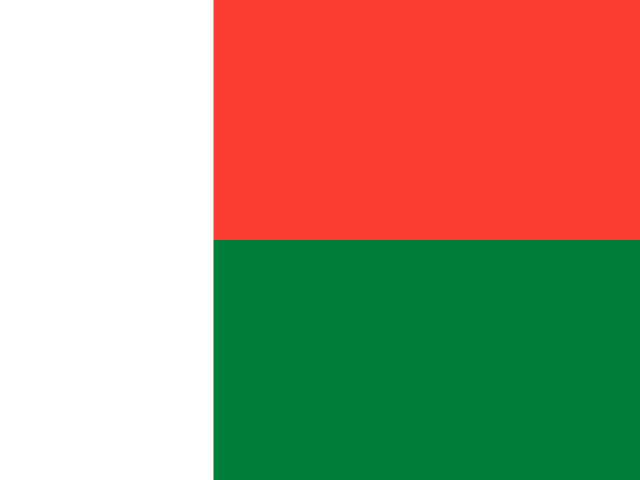 Michaël Randrianirina · President of the Refoundation of the Republic
- Context
- Randrianirina addressed the General Debate of the 81st UN General Assembly session in New York on September 24, 2026, for Madagascar, urging United Nations reform and announcing elections before the end of 2027.
- Main themes
- Restoring trust in the United Nations, reform of the multilateral system, permanent African representation on the Security Council, Ezulwini Consensus and Sirte Declaration, Multidimensional Vulnerability Index and concessional financing, sovereign debt restructuring, climate finance and the Loss and Damage Fund, food sovereignty, health and education, youth and labour-market-aligned education, maritime security in the Mozambique Channel, Madagascar's Refoundation and elections before end of 2027
- Duration
- ~19 min
- Words
- 2,276
- Sentences
- 107
- Readability
- 23
- Grade
- 15.3
- Syntax
- 2.88
- Vocabulary
- 2.38
UN General Assembly Translated from French Source: gadebate.un.org ↗
The broad sphere of national life a sentence belongs to. Every sentence has an Arena, so it is the denominator the other indices are read against.
Other107 sentences in 58 paragraphs
Your Excellency, Mr President of the United Nations General Assembly,
Your Excellencies, Heads of State and Government,
Your Excellency, Mr Secretary-General of the United Nations,
Honourable Delegates,
Ladies and Gentlemen,
I am particularly proud and honoured to take the floor today before this august assembly, on behalf of the Republic of Madagascar, on the occasion of this 81st session of the United Nations General Assembly.st session of the United Nations General Assembly. I would like, first of all, on behalf of the Malagasy People and in my own name, to extend my most sincere congratulations to Mr Khalilur Rahman on his election to the Presidency of the 81st General Assembly, as well as to our Vice-Presidents.
In this regard, I wish to reiterate the assurance of the Republic of Madagascar's support and its full readiness to work, in a genuine spirit of cooperation, towards the success of all our work throughout this session. Mr President,
Your Excellencies, Ladies and Gentlemen,
The theme of this 81st session calls on us to assume, with clear-sightedness, shared responsibility for our destiny and that of future generations, by placing collective action, the general interest and the good of humanity at the centre of our responses to the profound changes in the world. At the same time, we must recognise that the challenges we have faced for decades, namely food insecurity, disease, armed conflict and natural disasters, are still present. Thus, for Madagascar, as for many other nations, the new emerging challenges cannot overshadow the priorities that must be set.
In light of these intersecting transformations and challenges, the question of trust in our collective action arises with renewed urgency. Indeed, we must admit, bearing in mind all the regard and expectations that we, "the Peoples of the United Nations", have placed in our Organization, that trust has, over time, eroded.
The most vulnerable populations, struck by the recurrence or permanence of health crises, food insecurity or hunger, the impacts of climate disruption and conflicts aggravated by current geopolitical tensions, sometimes come to feel a certain scepticism as to our collective capacity, within the United Nations System, to provide responses to the scourges that mark our era.
Mr President,
Your Excellencies, Ladies and Gentlemen,
In this respect, the realities on the ground in my country speak for themselves.
In the South of Madagascar, mothers walk dozens of kilometres in overwhelming heat in search of water in the bed of a dried-up river. In the East, every year increasingly violent and devastating tropical cyclones sweep away crops, infrastructure and human lives in their path. In other localities, floods engulf rice granaries, affecting entire regions. These images illustrate the daily vulnerability of the population.
In the face of these recurring humanitarian emergencies, amplified by climate disruption, considerable investments, testimony to the steadfast commitment of our development partners, are made each year towards achieving the Sustainable Development Goals (SDGs), whether in the fight against hunger, in education or in access for vulnerable populations to basic services.
Indeed, Madagascar today hosts 23 agencies of the United Nations System, each of which contributes to supporting our national priorities. The implementation of the United Nations Sustainable Development Cooperation Framework (UNDAF) for the period 2024-2028 will mobilise 1.5 billion dollars over five years. Yet, beyond the commitments and resources mobilised, what matters to us is their concrete translation into the daily lives of our people.
We recognise that, in order to participate fully in the governance of their country and to benefit equitably from their rights, every citizen must be able to grow up healthy, be well nourished and have access to quality education.
In the face of the challenges of a constantly changing world, the government of the Refoundation that I lead places food sovereignty, health and education at the heart of its action. This priority commitment is addressed to the entire population, and in particular to women and children, while offering our youth the means to build their future with confidence and thereby contribute to the development of the nation.
With more than 55% of its population under the age of 25, Madagascar enjoys a tremendous demographic dividend. Driven by a resolute political will to build a bright future for this dynamic youth, we appreciate the importance of an education system fully aligned with the realities of the labour market, a sine qua non for sustainable development.
We wish cooperation in this field to move away from a strictly quantitative approach, measured solely by the volume of infrastructure built or the number of pupils enrolled, in order to adapt fully to the economic realities on the ground. The aim is to anchor our action in the sectors of the future (such as agro-industry, renewable energy and digital technology), while overhauling our indicators of success to prioritise the concrete acquisition of skills and the rate of professional integration in the medium term.
However, the achievement of our ambitions cannot be dissociated from the international context in which they take place. Can we speak of development when international peace and security are being tested by the proliferation of crises and the persistence of tensions? Mr President,
Ladies and Gentlemen,
Restoring trust depends on the UN's capacity to maintain and restore peace.
We must be concerned that the multilateral system is struggling to contain the escalation of tensions fuelled by geopolitical rivalries.
These crises, which now affect various regions of the planet, are not without consequences for our States. They have a direct impact on our economies and on the daily lives of our people through disruptions in energy supply chains and difficulties in delivering basic necessities. All these factors heighten the vulnerabilities we must confront.
In the face of this reality, we must have the courage to acknowledge and own up to the limits of the multilateral system in its current form and functioning.
It is urgent to initiate concerted and lasting action to guarantee every people its right to pursue its development in dignity and stability.
Mr President,
Ladies and Gentlemen,
Far from observing the world as a passive spectator, Madagascar positions itself as an actor fully aware of its strategic position and its responsibilities. Our country remains a committed and operational partner in the service of peace, development and security. Maritime security in the Mozambique Channel and the western Indian Ocean remains at the heart of the regional initiatives in which Madagascar diligently takes part. We are determined to intensify regional and multilateral cooperation based on respect for national sovereignty, while welcoming partnerships that align with our priorities and constitute genuine levers of development, so as to deliver tangible results for our people. Our commitment remains constant: to cooperate, to act, to produce convincing results, with respect for our sovereignty.
We therefore wish to take part in a strengthened multilateral and regional mobilisation in order to guarantee the security of our maritime spaces.
Such an approach will ensure the sustainability of our energy supply chains, an essential condition for the continuity of economic activity and the development of our nation.
Mr President,
Your Excellencies, Ladies and Gentlemen,
What kind of United Nations cooperation should we put in place to accompany the contemporary transformation of this world? How can trust be restored? Mr President,
Ladies and Gentlemen,
We must look to the future with a more resolute ambition. To guarantee a lasting and measurable impact in the medium and long term, we must take a new step: that of greater solidarity, more integrated and better coordinated. Madagascar advocates a multilateral system that is not only capable of acting but also capable of supporting member countries in their efforts to break the cycles of poverty and insecurity.
My country aspires to an international order founded on the primacy of international law, confident in the virtues of dialogue and diplomatic action. Our attachment to multilateral cooperation remains unwavering. Multilateralism constitutes a privileged forum where States unite in collective responsibility. It enables them to define common and appropriate solutions, both in the face of unforeseeable hazards, such as epidemics and climate disasters, and in the face of armed conflicts arising from contemporary geopolitical rivalries or stemming from latent multifaceted tensions.
History and posterity will judge our Organization by a single criterion: its capacity to fulfil its original mission, to serve all peoples, without exclusion or privilege, with respect for the sovereignty of nations. It is imperative to restore to the United Nations its full centrality as guardian of peace: a strengthened institution, capable of restoring order and meeting the challenges of our time.
Your Excellencies, Ladies and Gentlemen, The challenge before us today is therefore to rethink our cooperation mechanisms through greater synergy between UN agencies and State structures in order to optimise the effectiveness of our actions on the ground, but also to give greater visibility to the concrete results achieved for the benefit of the population. In this perspective, the success of our agenda depends largely on the consolidation of governance and the strengthening of institutions, priorities fully integrated into the Refoundation process in Madagascar.
We recognise that the United Nations must absolutely be reformed so that it serves all peoples. We would therefore like to propose the following:
- More inclusive global governance This must begin with rebalancing decision-making powers, first and foremost the General Assembly, which should be restored to its full political strength and its rightful place at the heart of global governance. It remains, indeed, the only body in which every nation, whatever its power, has a sovereign and equal voice.
We must, next, correct the historical imbalance affecting Africa's representation on the Security Council. Indeed, with its 1.4 billion inhabitants, it cannot remain on the sidelines of decisions concerning international peace and security. Africa must be granted permanent representation on the Security Council, in accordance with the Ezulwini Consensus and the Sirte Declaration, which express a common position founded on the demand for justice, equity and representativeness. It is also necessary to strengthen coherence between the programmes implemented by the offices of the United Nations Resident Coordinators and national priorities: UN teams on the ground must listen in order to respond precisely and effectively to the priorities defined by host governments, avoiding one-size-fits-all approaches.
- A more accessible international financial architecture for effective development support We must not overlook the overhaul of the international financial architecture. This means rebalancing access to financing. The current criteria for allocating aid and loans are often based solely on GDP per capita, excluding many vulnerable countries. The UN must therefore take into account the Multidimensional Vulnerability Index (MVI) so that access to concessional financing takes account of climate shocks and external debt.
It would also be wise to support lasting debt relief. This means advocating a faster, more predictable and more inclusive sovereign debt restructuring mechanism, enabling vulnerable countries to invest in the Sustainable Development Goals (SDGs) rather than repaying unsustainable interest.
It is also necessary to drastically simplify procedures for accessing UN funds in order to reduce disbursement times. For a vulnerable State struck by a crisis, administrative slowness destroys trust in the effectiveness of multilateralism.
- Effectiveness in the face of climate and humanitarian emergencies
The multilateral system we should put in place should guarantee that climate finance pledges are delivered. It should serve as a catalyst and guarantor so that developed countries honour their climate finance commitments (notably for adaptation and the Loss and Damage Fund) towards the most exposed nations. It is also important to link emergency aid to long-term structural investment.
Mr President,
Your Excellencies, Ladies and Gentlemen
In making this theme our own, we are making a commitment: not to postpone the indispensable reforms needed to enable our Organization to act with all the requisite integrity in the face of the challenges of our time, building on the achievements of eighty-one years of the United Nations. If our forefathers were able to build an Organization equal to their time, it now falls to us to refound it in order to meet the challenges of today and tomorrow. Let us pass on to future generations an Organization that unites, that protects and that acts.
For its part, Madagascar is preparing, at the national level, a framework conducive to these commitments and to the effective implementation of this transformation.
Indeed, the process of refoundation undertaken following the mobilisation of Malagasy youth just one year ago is the breeding ground for responsible governance, carried by solid institutions, devoted to the general interest and having restored citizens' trust in the State. It is a genuine patriotic awakening, driven by a deep conviction that sustainable development requires every citizen to find their full place within the Nation.
To give concrete form to this vision, we have initiated a historic process of inclusive national dialogue bringing together all the vital forces of the Nation: young people, women, persons with disabilities, political parties, civil society, the armed forces and the private sector. We have set a clear timetable. Our objective is to hold free, transparent elections accepted by all before the end of 2027.
I take the opportunity afforded me at this rostrum to express our gratitude to our partners for their trust. Indeed, we know that in this process we can count, on the one hand, on the fraternal support of the countries of the Southern African region, with the unfailing backing of the Southern African Development Community (SADC), and, on the other hand, on the support of our bilateral and multilateral partners who have stood by our side since the first steps of this Refoundation.
Long live international cooperation and solidarity, Long live the United Nations.
Thank you for your kind attention. Thank you very much.
The original French. The tags above are read on the English translation's sentences.
Excellence Monsieur le Président de l’Assemblée générale des Nations Unies,
Excellences Mesdames et Messieurs les Chefs d’État et de Gouvernement,
Excellence Monsieur le Secrétaire général des Nations unies,
Honorables Délégués,
Mesdames et Messieurs,
Je suis particulièrement fier et honoré de prendre la parole aujourd’hui devant cette auguste assemblée, au nom de la République de Madagascar, à l’occasion de cette 81ème session de l'Assemblée générale des Nations Unies.ème session de l'Assemblée générale des Nations Unies. Je souhaiterais, en premier lieu, adresser, au nom du Peuple Malagasy et en mon nom personnel, mes plus sincères félicitations à Monsieur Khalilur Rahman pour son élection à la Présidence de la 81ème Assemblée Générale, ainsi qu'à nos Vice-présidents.
Je tiens, à ce titre, à réitérer l’assurance du soutien de la République de Madagascar et de son entière disponibilité à œuvrer dans un réel esprit de coopération à la réussite de l’ensemble de nos travaux tout au long de cette session. Monsieur le Président,
Excellences Mesdames et Messieurs,
Le thème de cette 81ème session nous appelle à assumer la responsabilité commune de notre destin et celui des générations futures avec lucidité en plaçant l’action collective, l’intérêt général et le bien de l’humanité au centre de nos réponses aux profondes mutations du monde. Parallèlement, il nous faut reconnaitre que les défis auxquels nous sommes confrontés depuis des décennies, à savoir l’insécurité alimentaire, les maladies, les conflits armés ou encore les catastrophes naturelles demeurent toujours présentes. Ainsi, pour Madagascar, comme pour beaucoup d’autres nations, les nouveaux défis émergents ne sauraient occulter les priorisations qui doivent être faites.
A la lumière des transformations et défis croisés se pose avec une acuité renouvelée, la question de la confiance dans notre action collective. En effet, il nous faut admettre, tenant compte de toute la considération et des attentes que, nous, « Peuples des Nations unies », avons placé en notre Organisation, que la confiance s’est, au fil du temps, érodée.
Les populations les plus vulnérables, frappées par la récurrence ou la permanence des crises sanitaires, de l’insécurité alimentaire ou de la faim, des impacts du dérèglement climatique ainsi que des conflits aggravés par les tensions géopolitiques actuelles, viennent parfois à ressentir un certain scepticisme quant à notre capacité collective, au sein du Système des Nations Unies à apporter les réponses aux fléaux qui marquent notre époque.
Monsieur le Président,
Excellences Mesdames et Messieurs,
A ce titre, les réalités de terrain sont éloquentes dans mon pays.
Dans le Sud de Madagascar, des mères parcourent des dizaines de kilomètres sous une chaleur accablante, à la recherche d’eau dans le lit d’une rivière asséchée. A l’Est, chaque année les cyclones tropicaux de plus en plus violents dévastateurs, emportent sur leur passage récoltes, infrastructures et vies humaines. Dans d’autres localités, les inondations engloutissent les greniers à riz impactant des régions entières. Ces images illustrent la vulnérabilité quotidienne de la population.
Face à ces situations d’urgence humanitaire récurrente, amplifiée par le dérèglement climatique, des investissements considérables, témoignage de la constance de l’engagement de nos partenaires au développement, sont consentis chaque année en faveur de la réalisation des Objectifs de Développement Durable (ODD) — qu'il s'agisse de la lutte contre la faim, de l'éducation ou de l’accès des populations vulnérables aux services de base.
En effet, Madagascar accueille aujourd’hui 23 agences du Système des Nations Unies qui concourent chacune à l’accompagnement de nos priorités nationales. La mise en œuvre du Plan-cadre de Coopération des Nations Unies sur le Développement Durable (UNDAF) pour la période 2024-2028 mobilisera 1,5 milliards de dollars sur cinq années. Or, au-delà des engagements et des ressources mobilisées, leur traduction concrète dans la vie quotidienne de nos populations nous importe.
Nous admettons que pour participer pleinement à la gouvernance de son pays et bénéficier équitablement de ses droits, chaque citoyen doit pouvoir grandir en bonne santé, être bien nourri et accéder à une éducation de qualité.
Face aux défis d'un monde en constante évolution, le gouvernement de la Refondation que je conduis place la souveraineté alimentaire, la santé et l'éducation au cœur de son action. Cet engagement prioritaire s'adresse à l'ensemble de la population et en particulier aux femmes et aux enfants, tout en offrant à notre jeunesse les moyens de bâtir sereinement son avenir et contribuer ainsi au développement de la nation.
Avec plus de 55 % de sa population âgée de moins de 25 ans, Madagascar bénéficie d'un formidable dividende démographique. Portée par une volonté politique résolue de bâtir un avenir radieux pour cette jeunesse dynamique, nous mesurons l’importance d’un système éducatif en parfaite adéquation avec les réalités du marché du travail, condition sine qua non d’un développement durable.
Nous souhaitons que la coopération dans ce domaine s’affranchisse d'une approche strictement quantitative — mesurée par le seul volume d'infrastructures bâties ou de nombres d'élèves scolarisés — pour s’adapter pleinement aux réalités économiques du terrain. Il s'agit d'ancrer notre action dans les filières d'avenir, (telles que l'agro-industrie, les énergies renouvelables et le numérique), tout en refondant nos indicateurs de réussite pour privilégier l’acquisition concrète de compétences et le taux d'insertion professionnelle à moyen terme.
Toutefois, l’atteinte de nos ambitions ne peut être dissociée du contexte international dans lequel elles s’inscrivent. Peut-on parler de développement lorsque la paix et la sécurité internationales sont mises à l’épreuve par la multiplication des crises et la persistance des tensions ? Monsieur le Président,
Mesdames et Messieurs,
La restauration de la confiance passe par la capacité de l’ONU à maintenir et à restaurer la paix.
Nous devons nous préoccuper de ce que le système multilatéral peine à contenir l'escalade des tensions nourries par les rivalités géopolitiques.
Ces crises, qui affectent désormais différentes régions de la planète ne demeurent pas sans conséquence pour nos Etats. Elles se répercutent directement sur nos économies et sur la vie quotidienne de nos populations à travers les perturbations des chaînes d'approvisionnement énergétique, les difficultés d’acheminement des produits de première nécessité. Autant de facteurs qui viennent accentuer les vulnérabilités auxquelles nous devons faire face.
Face à cette réalité, nous devons avoir le courage d’admettre et d’assumer les limites du système multilatéral dans sa forme et dans son fonctionnement actuel.
Il serait urgent d’initier une action concertée et pérenne pour garantir à chaque peuple son droit de poursuivre son développement dans la dignité et la stabilité.
Monsieur le Président,
Mesdames et Messieurs,
Loin d'observer le monde en spectateur passif, Madagascar se positionne en acteur pleinement conscient de sa place stratégique et de ses responsabilités. Notre pays demeure un partenaire engagé et opérationnel au service de la paix, du développement et de la sécurité. La sécurité maritime dans le Canal de Mozambique et de l’Océan Indien occidental demeure au cœur des initiatives régionales auxquelles Madagascar diligemment prend part. Nous sommes résolus à intensifier une coopération régionale et multilatérale fondée sur le respect des souverainetés nationales, tout en accueillant les partenariats qui s’alignent sur nos priorités et qui constituent de vrais leviers de développement afin de produire des résultats tangibles pour nos populations. Notre engagement demeure constant : coopérer, agir, produire des résultats probants, dans le respect de notre souveraineté.
Nous souhaitons ainsi prendre part à une mobilisation multilatérale et régionale renforcée, afin de garantir la sécurité de nos espaces maritimes.
Une telle démarche permettra d’assurer la pérennité de nos chaînes d'approvisionnement énergétique, condition essentielle à la continuité des activités économiques et au développement de notre nation.
Monsieur le Président,
Excellences Mesdames et Messieurs,
Quelle coopération onusienne devrions-nous mettre en place pour accompagner la transformation contemporaine de ce monde ? Comment restaurer la confiance ? Monsieur le Président,
Mesdames et Messieurs,
Nous devons regarder vers l'avenir avec une ambition plus assumée. Pour garantir un impact durable et mesurable à moyens et longs termes, il nous faut franchir une nouvelle étape : celle d'une solidarité accrue, plus intégrée et mieux coordonnée. Madagascar plaide pour un système multilatéral non seulement capable d’agir mais aussi capable de soutenir les pays membres dans leurs efforts de briser les cycles de pauvreté et d’insécurité.
Mon pays aspire à un ordre international fondé sur la primauté du droit international confiant dans les vertus du dialogue et de l’action diplomatique. Notre attachement à la coopération multilatérale demeure sans faille. Le multilatéralisme constitue une tribune privilégiée où les États s'unissent dans une responsabilité collective. Elle leur permet de définir des solutions communes et adaptées, aussi bien face aux aléas imprévisibles — tels que les épidémies et les catastrophes climatiques — que face aux conflits armés issus des rivalités géopolitiques contemporaines ou découlant de tensions multiformes latentes.
L’histoire et la postérité jugera notre Organisation à l’aune d’un seul critère : sa capacité à accomplir sa mission originelle, servir tous les peuples, sans exclusion ni privilège, dans le respect de la souveraineté des nations. Il est impératif de redonner aux Nations Unies toute leur centralité en tant que gardiennes de la paix — une institution renforcée, capable de restaurer l'ordre et de relever les défis de notre époque.
Excellences, Mesdames et Messieurs, L’enjeu qui est la nôtre actuellement est donc de repenser nos mécanismes de coopération à travers une plus grande synergie entre les agences onusiennes et les structures étatiques afin d’optimiser l’efficacité de nos actions sur le terrain, mais aussi d’offrir une meilleure visibilité aux résultats concrets obtenus au bénéfice de la population. Dans cette optique, la réussite de notre agenda repose en grande partie sur la consolidation de la gouvernance et le renforcement des institutions - des priorités pleinement intégrées dans la dynamique de Refondation à Madagascar.
Nous admettons qu’il faut absolument procéder à la réforme de l'Organisation des Nations Unies pour qu’elle soit au service de tous les peuples. Nous aimerions ainsi proposer ce qui suit :
- Une Gouvernance mondiale plus inclusive Cela doit commencer par le rééquilibrage des pouvoirs de décision, en premier lieu l’Assemblée générale à laquelle il convient de redonner toute sa force politique et toute sa place au cœur de la gouvernance mondiale. Elle reste, en effet, le seul organe où chaque nation, quelle que soit sa puissance, dispose d'une voix souveraine et égale.
Nous devons, ensuite, corriger le déséquilibre historique qui affecte la représentation de l’Afrique au Conseil de sécurité. En effet, avec ces 1,4 milliard d’habitants, elle ne saurait rester en marge des décisions qui engagent la paix et la sécurité internationales. L’Afrique doit se voir attribuer une représentation permanente au Conseil de Sécurité, conformément au Consensus d’Ezulwini et à la Déclaration de Syrte, qui expriment une position commune fondée sur une exigence de justice, d’équité et de représentativité. Il faut également renforcer la cohérence entre les programmes mis en œuvre par les bureaux des coordonnateurs résidents des Nations unies et les priorités nationales : les équipes de l'ONU sur le terrain doivent être à l’écoute pour répondre précisément et de manière efficace aux priorités définies par les gouvernements hôtes, en évitant les approches uniformes.
- Une Architecture financière internationale plus accessible pour un soutien efficace au développement Nous ne devons pas occulter la refonte de l'architecture financière internationale. Cela consiste à rééquilibrer l'accès aux financements. Les critères actuels d'attribution de l'aide et des prêts reposent souvent uniquement sur le PIB par habitant, excluant de nombreux pays vulnérables. L'ONU doit ainsi prendre en considération l’Indice de vulnérabilité multidimensionnelle (IVM) pour que l'accès aux financements concessionnels tienne compte des chocs climatiques et de la dette extérieure.
Il serait également judicieux de soutenir l’allègement durable de la dette. Cela consiste à plaider pour un mécanisme de restructuration de la dette souveraine plus rapide, prévisible et inclusif, permettant aux pays vulnérables d'investir dans les Objectifs de développement durable (ODD) plutôt que de rembourser des intérêts insoutenables.
Il faut également simplifier drastiquement les procédures d'accès aux fonds onusiens afin de réduire les délais de décaissement. Pour un État vulnérable frappé par une crise, la lenteur administrative détruit la confiance dans l'efficacité du multilatéralisme.
- Une efficacité face aux urgences climatiques et humanitaires
Le système multilatéral que nous devrions mettre en place devrait garantir la concrétisation des promesses de financement climatique. Il devrait servir de catalyseur et de garant pour que les pays développés honorent leurs engagements en matière de finance climatique (notamment pour l'adaptation et le Fonds pertes et dommages) en direction des nations les plus exposées. Il est également important de relier l'aide d'urgence à des investissements structurels à long terme.
Monsieur le Président,
Excellences, Mesdames et Messieurs
En nous appropriant ce thème, nous prenons un engagement : celui de ne pas différer les réformes indispensables pour permettre à notre Organisation d’agir avec toute la probité requise face aux défis de notre temps, forts des acquis des quatre-vingt-une années des Nations Unies. Si nos pères ont su bâtir une Organisation à la mesure de leur temps, il nous incombe désormais de la refonder pour relever les défis d’aujourd’hui et ceux de demain. Transmettons aux générations futures une Organisation qui rassemble, qui protège et qui agit.
Pour sa part, Madagascar prépare à l’échelle nationale, un cadre propice à ces engagements et à la mise en place effective de cette transformation.
En effet, le processus de refondation engagée à la suite de la mobilisation de la jeunesse malagasy il y a tout juste un an est le terreau d’une gouvernance responsable, portée par des institutions solides, dévouée à l’intérêt général et ayant rétabli la confiance des citoyens envers l’Etat. Il s’agit d’un véritable sursaut patriotique, animé par une conviction profonde selon laquelle le développement durable exige que chaque citoyen trouve pleinement sa place au sein de la Nation.
Pour concrétiser cette vision, nous avons initié une démarche historique de concertation nationale inclusive rassemblant l’ensemble des forces vives de la Nation: les jeunes, les femmes, les personnes en situation de handicap, les partis politiques, la société civile, les forces armées et le secteur privé. Nous avons établi un calendrier clair. Notre objectif est de parvenir à tenir des élections libres, transparentes et acceptées par tous avant la fin de l’année 2027.
L’occasion m’est permise à cette tribune d’exprimer notre gratitude à l’endroit de nos partenaires pour leur confiance. En effet, nous savons pouvoir compter dans cette dynamique, d’une part, sur l’accompagnement fraternel des pays de la région Afrique australe avec le soutien indéfectible de la Communauté de Développement de l’Afrique Australe (SADC) ainsi que, d’autre part, sur le soutien de nos partenaires bilatéraux et multilatéraux engagés à nos côtés depuis les premiers pas de cette Refondation.
Vive la coopération et la solidarité internationales, Vive l’Organisation des Nations Unies.
Je vous remercie de votre aimable attention. Misaotra Tompoko.