





- Context
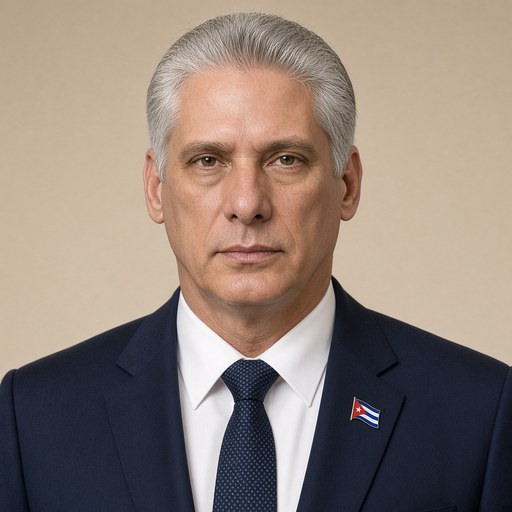
- Díaz-Canel addressed Cuba's national leadership at the Palace of the Revolution on April 4, 2020, to review COVID-19 prevention and control measures across the island.
- Main themes
- COVID-19 pandemic response, saving lives, social isolation measures, public health statistics, quarantine and containment, Cuban medical treatment protocols, Interferon Alpha 2b, community discipline and compliance, Holguín provincial efforts, MS Braemar crew quarantine, risk perception, primary health care surveillance
- Duration
- ~5 min
- Words
- 657
- Sentences
- 18
- Readability
- 31
- Grade
- 17.7
- Syntax
- 3.37
- Vocabulary
- 2.32
Translated from Spanish
The broad sphere of national life a sentence belongs to. Every sentence has an Arena, so it is the denominator the other indices are read against.
Other18 sentences in 11 paragraphs
The measures that have been adopted and those that will come, and above all the feeling, the responsibility, and the commitment of those who are fighting this battle, are for life, the leader affirmed.
Therefore, he added, we also need the understanding and support of our people. “Some measures may seem extreme at times; they may harm someone in particular, because when measures are taken in such a vast universe of situations and people, some may be more adversely affected than others; there may even be some particular cases in which actions were not taken in the most correct or clear manner; but it must be taken into account that everything being done is precisely to save lives, which is our main objective and primary concern,” he stated.
Díaz-Canel highlighted that so far good things have been achieved in the nation: “we have a lower infestation rate than we could have expected, based on how the disease has behaved in other countries. We also have a lower indicator of severity and critical cases. But this does not satisfy us; we must continue working, and this cannot generate confidence.” We continue to insist, he pointed out, that we have not yet entered the moment when we expect to have the highest accumulation of cases.
The leader referred to the good news about the medical discharge of the 43 workers who supported the operation of the British cruise ship MS Braemar, who were in quarantine and none contracted the new Coronavirus disease. In them, Díaz-Canel considered, courage, humanism, altruism, and professionalism stood out.
On the eve of a new weekend, the President of the Republic reiterated his call for the population to continue in social isolation, which “can give us a gain in time, to cut the transmission of the disease.”
To the same extent that the perception of risk has increased, he commented, people have been more disciplined, have contributed, and have participated more actively, also demanding compliance with all the measures taken. But we still have dissatisfactions, he said, regarding the behavior of some who do not observe all the rules.
As part of the follow-up to the Plan for the Prevention and Control of the new Coronavirus in Cuba, the meeting specifically reviewed the work being carried out by the Provincial Defense Council of Holguín for the containment of COVID-19 in its territory, where to date 8 cases had been confirmed; as well as the work of the General Customs of the Republic in this difficult context of the pandemic. Regarding this last topic, Prime Minister Manuel Marrero Cruz indicated the need to reinforce control measures over all goods that are being stored in the country, due to the temporary interruption of the dispatch of non-commercial cargo.
As always happens in these meetings at the Palace of the Revolution, the Minister of Public Health, José Angel Portal Miranda, updated the country's leadership regarding the situation with COVID-19 on the Island, where 269 confirmed cases were reported in 74 municipalities and 1,518 suspected cases remained hospitalized.
This Friday, in addition, 9,861 direct contacts were being followed up; 26,587 people were being monitored by Primary Health Care; and a total of 9,214,218 nationals had been surveyed that day, of which 1,781,587 were elderly adults.
In assessing the patients who had been treated for COVID-19 in Cuba, the official detailed that 52% were men; 63.2% were aged between 25 and 59 years; those over 80 years constituted 9% and those under 12 made up 6%.
He explained that worldwide about 20% of cases develop severe forms of the disease, an indicator that in the largest of the Antilles stands at 8% to date, which may be linked to the immediacy with which patients are treated, based on the active surveillance carried out by the country; or also to the treatment protocol used, which includes the Cuban drug Interferon Alpha 2b Human Recombinant, highly effective in combating the new Coronavirus.
The original Spanish. The tags above are read on the English translation's sentences.
Las medidas que se han adoptado y las que vendrán, y sobre todo el sentimiento, la responsabilidad y el compromiso de quienes están dando esta batalla, son por la vida, afirmó el mandatario.
Por eso, agregó, necesitamos también la comprensión y el apoyo de nuestro pueblo. “Alguna medida puede parecer en algún momento extrema; puede perjudicar a alguien en particular, porque cuando se toman medidas en un universo tan grande de situaciones y de personas, unos pueden estar más perjudicados que otros; puede haber incluso algunos casos particulares en los que no se obró de la manera más correcta o más clara; pero sí hay que tener en cuenta que todo lo que se está haciendo es precisamente para salvar las vidas, que es el principal objetivo y la principal preocupación que tenemos”, afirmó.
Díaz-Canel destacó que hasta ahora se han ido logrando buenas cosas en la nación: “tenemos menor índice de infestación del que podíamos esperar, a partir de cómo ha sido el comportamiento de la enfermedad en otros países. También tenemos un menor indicador en gravedad y casos críticos. Pero ello no nos satisface, hay que seguir trabajando y eso no nos puede generar confianza”. Continuamos insistiendo, apuntó, en que todavía no hemos entrado al momento en que esperamos tener la mayor acumulación de casos.
El mandatario se refirió a la buena noticia sobre el alta médica a los 43 trabajadores que apoyaron la operación del crucero británico MS Braemar, los cuales se encontraban en cuarentena y ninguno contrajo la enfermedad del nuevo Coronavirus. En ellos, consideró Díaz-Canel, se destacaron el valor, el humanismo, el altruismo y la profesionalidad.
A las puertas de un nuevo fin de semana, el Presidente de la República reiteró su llamado a que la población continúe en aislamiento social, lo que “nos pueda dar ganancia en tiempo, para cortar la trasmisión de la enfermedad”.
En la misma medida en que se ha incrementado la percepción de riesgo, comentó, las personas han sido más disciplinadas, han contribuido y han participado de manera más activa, exigiendo también el cumplimiento de todas las medidas tomadas. Pero nos quedan insatisfacciones, dijo, en el comportamiento de algunos que no observan todas las normas.
Como parte del seguimiento al Plan para la Prevención y el Control del nuevo Coronavirus en Cuba, en la reunión se pasó revista de manera particular al trabajo que despliega el Consejo de Defensa Provincial de Holguín para la contención de la COVID-19 en su territorio, donde hasta la fecha se habían confirmado 8 casos; así como al quehacer de la Aduana General de la República ante este difícil contexto de la pandemia. Acerca de este último tema el Primer Ministro, Manuel Marrero Cruz, indicó reforzar las medidas de control sobre todas las mercancías que están siendo almacenadas hoy en el país, ante la interrupción temporal de los despachos de las cargas no comerciales.
Igual que sucede siempre en estos encuentros en el Palacio de la Revolución, el ministro de Salud Pública, José Angel Portal Miranda, actualizó a la dirección del país respecto a la situación con la COVID-19 en la Isla, donde se reportaban 269 casos confirmados en 74 municipios y permanecían ingresados 1 518 considerados sospechosos.
Este viernes, además, se les daba seguimiento a 9 861 contactos directos; se vigilaban por la Atención Primaria de Salud a 26 587 personas; y se habían pesquisado en esa jornada a un total de 9 214 218 nacionales, de ellos un 1 781 587 adultos mayores.
Al hacer una valoración de los pacientes que habían sido atendidos con la COVID-19 en Cuba, detalló el titular que el 52% eran hombres; un 63,2% estaba comprendido entre las edades de 25 a 59 años; los de más de 80 años constituían el 9% y menores de 12 un 6%.
Explicó que en el mundo alrededor de un 20% de los casos desarrollan formas graves de la enfermedad, indicador que en la Mayor de las Antillas se sitúa hasta hoy en un 8%, lo cual puede estar vinculado a la inmediatez con que se atienden los pacientes, a partir de la pesquisa activa que hace el país; o también al protocolo de tratamiento utilizado, en el que se incluye el medicamento cubano Interferón Alfa 2b Humano Recombinante, de alta eficacia en el combate al nuevo Coronavirus.