




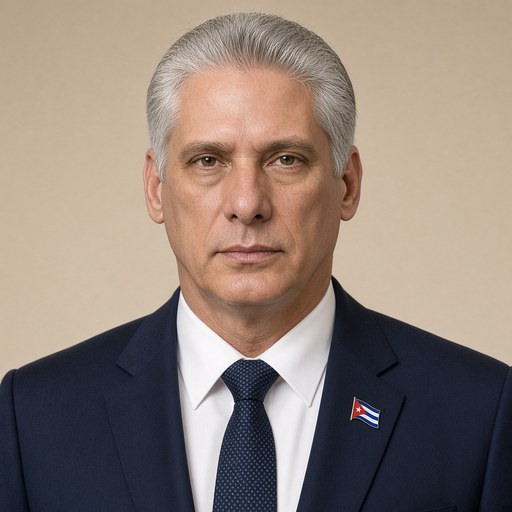
Speech delivered at the closing of the IV Ordinary Period of Sessions of the National Assembly of People's Power in its IX Legislature.
 Miguel Díaz-Canel · President of Cuba
- Context
- Díaz-Canel addressed the National Assembly of People's Power at its IV Ordinary Period closing session on December 21, 2019, reviewing Cuba's challenges that year.
- Main themes
- US economic blockade and sanctions against Cuba, Cuban revolutionary resilience, fuel shortages and economic impact, defense of Cuban medical collaboration, socialist system and anti-neoliberalism, challenges of 2019, tourism and transportation restrictions, solidarity and unity of the Cuban people, foreign trade sabotage, Cuba's 61st anniversary of the Revolution
- Duration
- ~46 min
- Words
- 5,533
- Sentences
- 221
- Readability
- 37
- Grade
- 14.1
- Syntax
- 3.09
- Vocabulary
- 2.37
Translated from Spanish
The broad sphere of national life a sentence belongs to. Every sentence has an Arena, so it is the denominator the other indices are read against.
Other221 sentences in 128 paragraphs
Dear comrade Army General Raúl Castro Ruz, First Secretary of the Central Committee of our Party;
Comrade Esteban Lazo, President of the National Assembly and the Council of State;
Comrades of the Historical Generation who accompany us;
Deputies;
People of Cuba:
On the eve of another anniversary of the undefeated and victorious Revolution, first of all, I want to exclaim: Congratulations!
We have gone through a year filled with challenges, tensions, and aggressions. Together we face them and together we are winning.
Indeed, the 61st year of the Revolution has been hard and challenging, although never as much as those that followed the triumph of January when the siege was accompanied by treacherous attacks, including: an invasion, sabotage, arson, banditry, and the isolation of Cuba throughout the hemisphere.
Those challenges were overcome one by one, leaving us with a history that deeply fills us with pride and the most formidable revolutionary school: by the people, alongside the people, and for the people: everything is possible!
Hardened in the resistance of all those years, and supported by the strength of the human work built “against all odds” over six decades, we have been able to navigate through 2019, breaking down obstacles that seemed insurmountable, and today, we have every right to celebrate what we have achieved without complacency and aware that each goal is a new starting point.
Speaking of obstacles, let us start with the worst and most encompassing of all: the economic, commercial, and financial blockade of the United States.
When the history of these days is written, a chapter must be reserved for the year 2019 for the brutal, insane way, one could say, in which during this year the aggression against Cuba escalated, practically at the rate of more than one measure per week; that is, a “tightening” every seven days to suffocate our economy.
Cruises, flights, remittances, medical services, financing, fuel transportation, and insurance were canceled, restricted, or prohibited. There is no area free from the hunt, the siege, the persecution. No revolutionary project or action remains untouched by defamation.
To justify its actions, Washington has once again resorted to gross lies, and to the crude accusation that we are a factor of instability and a threat to the region, which we have vigorously refuted.
The measures adopted are aimed at sabotaging Cuba's foreign trade and obstructing financial transactions with third countries, including payments, collections, and credit possibilities. They seek to interrupt supplies to the national industry, limit access to technology and sources of capital and economic income, with specific actions against fuel transportation, tourism, and international health services.
To this end, the United States has launched an intense and slanderous campaign against the medical collaboration that Cuba offers. It is immoral and unacceptable to question the dignity, professionalism, and altruism of the more than 400,000 health collaborators who, in 56 years, have fulfilled missions in 164 nations.
As the people know, in an unprecedented behavior, the Government of the United States today boasts of having threatened, pursued, and taken illegal measures against more than ten companies and dozens of vessels from third countries that transport oil to Cuba. For history, these aggressions are recorded as acts of cowardly piracy.
The declared objective is to deprive a country of 11 million inhabitants of fuel supplies. Its impact has not been more severe thanks to the unity and the conscious and solidary response of the people, the strength of the socialist economic and social system, and the experience of 60 years of facing imperialist aggression.
But there it is, in the results of the economy, the damage it caused. Practically all sectors had to lament interruptions or delays in their productions. We managed to scare away the uncomfortable blackouts and endure the restrictions with measures adjusted to the particular situation by territory and by organization. The whole country tightened its belt again, but no adjustment measures were implemented that would offload the cost of the criminal blockade onto the people. We are a territory free of neoliberalism!
According to our enemies and those who amplify their messages on any communication platform, the blockade is aimed at harming the Government. Lies! The blockade affects the entire people because it affects all sectors and actors of the economy.
The additional restrictions on the availability of fuel, which began in April, significantly affected public transportation, forced the temporary halt or reduction of some investments, harming agriculture, food production, and distribution, and other areas of high economic and social impact.
The interruption of the arrival of cruises, flights to provinces, the cut in remittances, the closure of consular offices, the limitation of travel licenses, among others, particularly hit the non-state sector of the economy.
The people know it because they suffer it; but they have also faced it with greater wisdom and foresight, with that inexhaustible source of energy that exists in every Cuban: creativity and the unparalleled ability to find a solution to every problem. That is our history, which teaches us that unity, resistance, struggle, and emancipation are the keys to our victories.
First and foremost, thanks to that and also to the cooperation of sovereign governments and brave entrepreneurs willing to challenge U.S. hegemony to trade with Cuba, we have faced and resisted the economic war.
And, we are here! Standing, dignified, and firm. Calm, but alert. Aware that those who go so far in their villainy will have no scruples in resorting to even more perverse plans if that allows them to erase from the map this example of audacity and resistance that irritates them so much, and that they have not been able to defeat in 61 years, neither by pressure nor by seduction.
Exactly two years ago, at the closing of the National Assembly, Army General Raúl Castro recalled that “The Cuban Revolution has resisted the onslaught of 11 administrations of the United States of different signs, and here we are and will be, free, sovereign, and independent.”
With the greatest pride, the current generations of leaders, of the people, and particularly, the Cuban youth, present today in the Revolution say: From Fidel, from Raúl, and from all their comrades in struggle: We are Continuity!
I know that this declaration alone infuriates the adversaries because it is the confirmation that none of their plans have succeeded. They have hit us and they continue to hit us. The blockade slows down progress and reduces the effectiveness of our efforts. It hurts, it annoys, and it irritates, just as abuse, arrogance, and malice hurt, annoy, and irritate; but it is important for them to know that we are not going to surrender!
The blockade is a policy so discredited, so immoral, and so contrary to all rights, that its defenders overflow any legal and human limit to maintain it, forgetting an old Spanish proverb, older than Don Quixote: “The pitcher goes to the well until it breaks.” Proverbs, by the way, express the wisdom born from the experiences of peoples, including their struggles.
Who knows if one day from the legendary struggle of the people against that monstrosity a proverb will be born in all languages as a universal monument to our resistance! That proverb could say: “Empire that isolates, ends up isolated”.
Corroded by corruption and internal dysfunction, the U.S. administration has intensified its aggressive and unilateral behavior in almost all regions of the world in the face of core problems for the future of humanity, and has exacerbated existing conflicts with absolute disrespect for International Law and the sovereign prerogatives of many States.
In the hemisphere, it officially reaffirmed the validity of the Monroe Doctrine and has been acting in full coherence with that imperialist ambition. Its political structures in charge of the region seem dominated by elements of the extreme right Cuban-American and characters associated with the terrorist and criminal trajectory of the United States in this region.
But not everyone bows under their pressures. The United Nations General Assembly, which every year speaks out against that criminal policy, has condemned it again in 2019 almost unanimously. In the region, only two governments distanced themselves from the global condemnation: only Brazil voted against, in clear submission to the empire, and Colombia abstained in the vote on a resolution that it has supported since 1992.
To justify this reprehensible decision, the Colombian authorities resorted to manipulation, ungrateful and politically motivated, regarding Cuba's altruistic, dedicated, discreet, and undeniable contribution to peace in that country, a topic in which the conduct of the Cuban Government is universally recognized.
The aggressiveness of imperialism is complemented by an intense and crude program of political subversion and interference in Cuba's internal affairs, to which they have dedicated, in the last three years, around 120 million dollars funded by the taxpayers of that country.
With increasing activism and as has been widely reported, there is direct involvement of its Embassy in Cuba in these actions, in blatant violation of Cuban laws and International Law, specifically, the Vienna Convention on Diplomatic Relations.
Faithful to the historical trajectory of the Revolution, the Cuban Government has remained firm and calm in the face of this open and growing hostility.
We have refused to take the bait of provocations and remain committed, responsibly, to preserving the formal bilateral ties and the few spaces for official cooperation that still remain in force between both countries, seeking to protect the conditions that allow family ties for millions of citizens and communication between the two countries.
However, it is worth emphasizing with absolute clarity that Cuba will adopt all necessary measures to curb the interventionist purposes of the United States, protect the tranquility and well-being of the population, safeguard national unity, and defend, at whatever cost necessary, the sovereignty and independence of the country.
We will not allow ourselves to be provoked, nor will we renounce our sacred independence. In the face of the enemy's threats, we will act as Raúl has called us: each one from their neighborhood, from their community, must be ready to go into battle and make that phrase we said when the Commander in Chief of the Cuban Revolution passed away their own: I am Fidel!
When looking outside, all the reasons to resist and create without faltering are confirmed. The crisis of multilateralism, so questioned at the most recent Non-Aligned Summit, due to the profound imbalances it causes and its permanent threat to peace, shows us a world where inequalities deepen and the majorities are marginalized and excluded.
Neoliberalism, pushed by media powers and fundamentalism of all kinds, impoverishes nations that were once prosperous. We have just seen it in Argentina, saved once from neoliberal disaster and turned, once again, into “devastated land” in just four years of disproportionate adjustments, as documented by its intellectuals and artists, outraged by the high social debts left by the outgoing government, a major proponent of neoliberal recipes.
Under similar schemes, the Chilean model, so exalted by international financial organizations, today shows its incapacity to resolve the social problems generated by the economy designed by the Chicago Boys. Its youth, beaten and abused by the hundreds, are protagonizing, in tireless demonstrations, an epic battle against the system that excludes them.
They demand rights that their Government has not seriously addressed nor seem to be visible to the OAS, which shows so much concern for stability and democracy in Venezuela, Nicaragua, and even in Cuba, which has nothing to thank the “ministry of colonies,” from which we fortunately ceased to belong more than 50 years ago.
We reaffirm that we will maintain solidarity and cooperation with the Bolivarian Republic of Venezuela, its legitimate government under the presidency of Nicolás Maduro Moros, and with the Sandinista government and people, led by President Daniel Ortega.
Let this serve as a reminder for those who stage anti-Cuban shows with the grotesque Secretary General of the OAS at the center of the scene.
Another outrageous and unacceptable episode that leaves us in 2019 is the coup against President Evo Morales Ayma in Bolivia, promoted by the local oligarchy under U.S. guidance, also with the scandalous complicity of the OAS.
Deeply racist, the executors of the coup repeat the formula tried against Venezuela of self-proclaimed powers. It no longer matters if it has been proven that the OAS report was false and that there were never any violations or fraud by the MAS. Its leaders are today sheltered in other countries, pursued by the real criminals: those who seized power with the Bible in one hand and the rifle in the other.
Since the coup began, Cuba condemned it. We reaffirm here today our solidarity with comrade Evo Morales Ayma and the Bolivian people.
To the foreign attempts to destabilize the Caribbean states of Dominica and Suriname, we respond that Cuba's solidarity with both governments and peoples is solid and firm.
In that bitter context, hopeful processes have emerged in Mexico and Argentina. None of them have proposed to build socialism or nationalize the economy, and yet, the war against their social policies has already begun, stirring the ghost of Marxist influence.
We reaffirm our sympathies and solidarity with the Government of Andrés Manuel López Obrador in Mexico, and we applaud the election of Alberto Fernández and Cristina Fernández as president and vice president of Argentina. We insist that the restoration of Lula's innocence, his political rights, and his full freedom must be demanded.
In Mexico and Argentina, we have witnessed, over the past year, the resurgence of the integrative dream and the idea of preserving CELAC, diverse and plural, which managed to establish in our country, in 2014, more than a Proclamation, a shared will to be forever a Zone of Peace.
The ties with Africa, Asia, Oceania, and the Middle East are consolidating. Our political relations and high-level exchanges with the Russian Federation, the People's Republic of China, and the Socialist Republic of Vietnam have strengthened.
It has been a positive year in relations with the European Union and its Member States in various spheres, including economic trade, investment, and cooperation.
Cuba's participation in the XVIII Summit of the Non-Aligned Movement, held in Baku, Azerbaijan, was active and fruitful. We reiterate the importance of the Movement playing an increasingly vigorous international role to face the great challenges imposed on the countries of the South united.
Comrades:
In broad strokes, we have described the international political situation, aggravated by the aforementioned crisis of multilateralism and the high American interference in our region.
In that context, fraught with risks and threats, the discreet behavior of the Cuban economy is no exception. ECLAC (Economic Commission for Latin America and the Caribbean) confirmed that the widespread deceleration in Latin America and the Caribbean persists, forecasting a growth of 0.1%. And it announces that it will be low for 2020, with an estimated rate of 1.3%, in an international context characterized by the worsening of trade tensions, among other factors. In those indices, the economic results of Cuba in 2019 move, with its 0.5% growth and the forecasts for 2020, situated at a realistic 1%.
We are not an exception. What is truly exceptional is that we have not descended under the weight of the enormous pressures and the exacerbated financial persecution this year to unusual limits.
The exceptionality is also that we have not resorted to the comfortable neoliberal recipes that are back in fashion, although it is more than proven that they only serve to widen the gap between the few, very few, increasingly rich and the majorities that are rapidly impoverishing.
Allow me to remind you that at the height of neoliberalism, in the 1990s, Fidel "went to the future and returned to tell it," as is said of his premonitory faculties. In the context of an Ibero-American Summit, in 1993, our historical leader warned:
"Neoliberalism has no future and the time will come when all of this will begin to be questioned, but time must pass and, in the meantime, we must be there fighting for the fairest things, for the most correct ideas, forming consciousness. It is very important that the peoples become aware, and the peoples will become aware as they see that these recipes do not solve the problems."
When Fidel expressed that advanced criticism, the theorists of the system were insisting on convincing us that capitalism was the end of history. Today we could say that we are witnessing the end of the history of capitalism. All we see is a repetition of formulas that have already proven their ineffectiveness and, worse still, despite their high social cost.
No, thank you, we do not want that for our people. We want prosperity and we will fight for it with all our might; but never at the cost of leaving the majorities out of its benefits.
We are not interested in a society, as we have seen so many out there, where the luminaries that advertise progress overshadow the stars in the sky, while hundreds of people sleep in parks and dozens of children throw themselves onto air-conditioned vehicles to clean the windows for their well-off passengers, men and women who believe they alleviate their consciences by tossing them a few coins to eat.
We want decency, beauty, good taste, and a culture of detail to settle in our cities and for the best productive practices to make our fields flourish. We want honest work and efficiency to win the war against illegalities, bureaucratism, complacency, inertia, and apathy.
Cubans are victors of the impossible. And it is a good moment to propose another year of positive exceptionality.
Reviewing the most outstanding events of the year that is ending, we ourselves are surprised by the leap over difficulties:
At the beginning of 2019, a devastating tornado severely damaged homes and productive centers in five municipalities of our capital. That morning of January 28, in the midst of darkness, among the rubble, few believed it would be possible to heal its deep wounds and fulfill the construction and beautification programs for the 500th anniversary of Havana.
A real tornado of work, effort, solidarity, and collective intelligence erased the blow of nature in a few months, imposing a record in the planned investments.
This contributed to the over-fulfillment that encourages us the most at the end of the first year of the approved Housing Policy. With our own efforts, subsidies, and state support, 43,700 homes were completed, 10,000 more than planned, a true inspiration for the coming years, in which we aspire to complete more than 60,000 annually. Only in this way and under new concepts of functionality, quality, and harmony with the environment will we one day resolve the accumulated housing problems.
2019 was also the year to start seeing the results of the strongest investments in land and rail transport. 80 new cars were put into operation in the national trains, which was accompanied by a renewal of the quality of these services, as well as the rehabilitation of the main railway stations.
More than 300 buses assembled in Cuba were incorporated into public services, along with 69 minibuses and 125 tricycles, while progress was made in the recovery of buses that had been out of service for a long time, which provided some relief in one of the country's most acute problems and which will continue to demand resources and efficiency.
Workers in the budgeted sector will surely remember that in 2019 their salaries multiplied up to three times, which favored, among other things, the reintegration of 12,942 teachers into classrooms, achieving 96.9% of the completion of teaching coverage without using alternatives.
Tomorrow is Educator's Day, and to our beloved Cuban teachers, we send our congratulations and recognition for their contributions on this day.
Without the salary reform yet in place, the increase raised the real value of the incomes of state sector workers and, to a lesser extent, of social security, a demand postponed for years in anticipation of an improvement in the economy, which remains pending.
It was the year in which telephone and Internet access services were extended and deepened, to the point of moving from one of the last places in the world to being one of the societies where the connection to the network of networks grew most dynamically.
Seven million three hundred thousand telephone lines, of which 6 million are for mobile phones and more than 3 million users using 3G and 4G technology, represent significant advances in the goal of achieving the greatest computerization of society.
A separate paragraph for tourism, which, being the most affected sector by the reinforcement of the blockade, along with medical services, managed to surpass 4 million tourists, put into operation 3,855 new rooms, and advance in the integration of national production, foreign investment, and the non-state sector, aspects in which we must continue to work, due to their impact on the national economy and the continuous improvement of quality.
In the Mariel Special Development Zone, industrial plants that manufacture necessary Cuban products for our internal market and with export possibilities are already operating.
But the most significant event of the year for this legislature and for all citizens is that the new Constitution was approved, which strengthens Cuban society and opens new paths to the institutionalization of the country.
From its implementation, six laws have emerged in two legislative sessions, in an unprecedented legislative exercise that today leaves us with the essential legal instruments for the better functioning of the National Assembly itself, the municipal assemblies, and the People's Councils, as well as with new figures and forms of government exercise, which must lead us to the urgent improvement of the people's power organs.
In this parliamentary session, we have elected for the first time in these years the Prime Minister and also the new Council of Ministers. We can assure you that Comrade Manuel Marrero Cruz, the vice prime ministers, and the appointed ministers will fully dedicate themselves, continuing the uplifting action of governing with the people and for the people.
We were advancing in that work dynamic in response to the most pressing needs and demands of the population when the imperial onslaught deprived us of more than 50% of our fuel needs starting in September.
The "situation" arrived, that period that strained all our forces to avoid impacts and setbacks. Jokes and memes were made on social media that will go down in history as one of the most powerful forces of national being: the ability to joke even about our most serious problems. Even those of us who initially used the word to scare away the fears provoked by the malicious rumor that the most difficult moments of the Special Period would return, eased the anxieties over full stops, empty gas stations, or long lines, halted productions, and all associated problems, laughing when there was no other way out.
That was another fight we won, but not completely. If the "situation" forced us to seek in the experiences of worse times practices of savings that had been shelved, the hardest crisis has barely passed and some drivers of state cars have returned to roll up their windows and forget about solidarity. And there are measures that cannot be temporary. We must impose them until routine turns them into habit. Like all forms of savings and all solidarity practices.
This is a decision. It is not a request. It is a directive that I give in the name of the Government and the needs of the majority. And we will demand compliance because it is the mandate of the people.
The good thing about bad times is that they educate us in better practices. And education and culture acquired in 60 years of Revolution must serve us for something, that moral wealth that no material treasure can replace or surpass.
I have mentioned only some of the most notable events of the Government's activity in the year, due to their impact on the entire population and because the reports from our Minister of Economy and our Minister of Finance have provided the essential details.
Other data and results by agencies will be published on the Presidency's website, and we hope they will enrich our social networks. There is indeed much to be proud of, as there is still much to resolve. The most pressing issue is monetary ordering.
We do not forget what the Army General said two years ago on the subject:
"No one can calculate, not even the wisest of the wise we have, the high cost that the persistence of dual monetary and exchange rates has meant for the state sector, which favors the unjust inverted pyramid, where greater responsibility receives a lesser reward and not all capable citizens feel motivated to work legally, while discouraging the promotion to higher positions of the best and most qualified workers and cadres, some of whom emigrate to the non-state sector.
"I must acknowledge that this issue has taken us too long and its solution cannot be delayed any longer." The applause that then accompanied his words we have the duty to transform into efforts to meet the planned deadlines.
We can assure you that monetary ordering is in an advanced phase of study and approval. Currently, efforts are concentrated on the comprehensive validation of the results of each topic; the drafting of legal norms, the organization and execution of training processes, political assurance, and social communication.
The integrality of the process and its complexity are confirmed, given that it encompasses closely interrelated aspects that will impact the entire society, which will be applied in the planned sequence, minimizing the effects on the population.
This process is not a currency exchange, which is why I reaffirm what I have expressed on previous occasions regarding the guarantee of bank deposits in foreign currencies, convertible pesos, Cuban pesos, as well as cash in the hands of the population.
All measures derived from it will be timely communicated to our people.
Comrades:
We have set three priorities to confront the attacks of the adversary without renouncing our development programs. The first is ideological and is directly related to our defense, from the deepest convictions. The Cuban people, trained and educated by Fidel in legendary battles, are prepared to understand and take on whatever problems the enemy's aggression poses. They only need to be informed and receive explanations in a timely manner.
This was demonstrated when we informed about the situation created by the availability of fuel and called to turn an enemy attack into an opportunity to unleash creativity and recover knowledge from other times.
Strengthening ourselves ideologically means turning resistance into learning and that learning into emancipating solutions, as they free us from old dependencies and ties to obsolete work schemes.
When we call to think as a country and to think differently, we are calling to create. Cuba is a people of creators. What has our long resistance been if not a perpetual act of creation?
Another priority is the economic battle. And see that I do not say the second battle, I say "another priority," because all are important.
The enemy has made the Cuban economy the primary target to destroy. Not only because it is the path to the destruction of the Revolution, but because it is a way to demonstrate that socialism is an unviable system. And every minute of resistance to aggression is saying just the opposite: that only socialism makes possible the miracle of a small nation victorious against a powerful empire that has not been able to subdue it.
But we are not only interested in resisting. We earned that merit a long time ago. The challenge is, in the midst of that same war, to achieve the greatest possible prosperity. For this, we need greater production, more diverse and of higher quality, with the added value of science and the linkages that must enable us to reduce imports and increase exports, in a sustainability scheme that matches scientific knowledge and the proven skills of Cubans. With such conviction, we will defend the Economic Plan and the Budget for 2020 approved in this session.
Alongside these priorities is the legislative exercise whose schedule was also approved in this Assembly.
In the coming months and years, we must approve new laws and prepare to legislate on significant issues due to their high sensitivity, which includes some that have been a concern for various people, related to gender violence, racism, animal abuse, and sexual diversity.
All four are being given attention and follow-up to reinforce and strengthen legality, but without giving space to confrontations and fractures that exogenous forces are trying to promote, intent on interfering in sacred matters for national sensitivity.
The Cuban government, born from the Revolution that freed women from domestic slavery, that made all citizens equal, that punishes and condemns violence in all its forms, knows and shares the dissatisfaction of sectors of the population affected by the remnants of abuses that survive within it, despite official policies aimed at achieving "all justice," as Martí demanded.
What we cannot lose sight of is that we will only reach that total justice as we have come this far, in the midst of the worst omens and gales; with unity and in unity.
It is not by fragmenting society, accusing the other, seeking what divides us, that we will solve our debts with what is fairest for all: United we have triumphed! United we will triumph!
Recently, we have approved a government program to confront racial discrimination. That is the spirit that inspires us as we prepare to face a new year with the certainty that this one leaves us: Together, everything is possible! A society where women have climbed in 60 years from the darkest corner of the house to the podium of the majority professional in the country; a mixed nation, where we are all so light that we seem white and so dark that we seem black, as Don Fernando Ortiz would say; a people so sensitive that they believe in life and exalt it every day, has all the conditions to confront and definitively resolve any remnants of mistreatment, exclusion, discrimination, or subjugation that have survived the just work of the Revolution. And we will do it!
This is how we see the progress of our society in equally profound, though less tangible, areas. I refer to spirituality in all its dimensions, to the need to grow in reinforcing the values that should distinguish a society like ours. And to the eradication of attitudes contrary to the morality of that society in which we recognize ourselves.
The Army General has commented more than once how in the school where he was educated as a child, he was taught an exercise of self-critical introspection that he still practices to this day: evaluating at the end of each day what he has done that is useful and good and what he has not.
In "La Edad de Oro," Martí wrote that not a day should pass without us having done a good deed, a fundamental educational principle of La Colmenita, which we admire so much.
This recommendation is not just for children. It is for all ages and for citizens as a whole. The beautiful society we owe ourselves will arrive sooner to the extent that we demand civic behaviors as an obligation.
To give a couple of examples: What good are the works for the 500th anniversary of Havana that have adorned the capital if the hygiene of the City disappears again among mountains of garbage and neither those responsible for solving it nor those who coexist with those practices at their own doors are duly sanctioned?
And another example: What good are the controls, audits, and severe sanctions if barely when the law is applied we start to see the offender as a victim?
Paternalism is another of those vices that weakens the speed and depth of our advances. During the debates in committees, more than once, the abusive practices of those who complicate and negotiate with the simplest procedures were discussed. But how difficult it is for moral sanction, denunciation, and the refusal to be bribed or to bribe to become generalized.
I have elaborated on these matters because here we are almost all the responsible parties, not only for making and approving laws but also for enforcing them. And it is our duty to turn them into living words.
There is much left to say and do, but, in addition, we need to give ourselves the time to celebrate the year that is ending, filled with tensions and challenges, but as much with victories.
Let us live the coming days and hours as if the Revolution were triumphing once again. The Revolution triumphs every time we snatch a victory from the empire for our cause. And in 2019 we did it many times.
May our urban and rural squares be filled with music and joy.
There are all the reasons to celebrate. In the 61st year of the Revolution, they tried to kill us, and we are alive. Alive, celebrating and committed to continue winning.
Homeland or Death!
Socialism or Death!
We will overcome!
The original Spanish. The tags above are read on the English translation's sentences.
Querido compañero General de Ejército Raúl Castro Ruz, Primer Secretario del Comité Central de nuestro Partido;
Compañero Esteban Lazo, Presidente de la Asamblea Nacional y del Consejo de Estado;
Compañeros de la Generación Histórica que nos acompañan;
Diputadas y diputados;
Pueblo de Cuba:
En vísperas de otro aniversario de la Revolución invicta y victoriosa, ante todo quiero exclamar: ¡Felicidades!
Atravesamos un año cargado de retos, tensiones y agresiones. Juntos los enfrentamos y juntos vamos ganando.
En verdad ha sido duro y desafiante el año 61 de la Revolución, aunque nunca tanto como aquellos que se sucedieron después del triunfo de enero cuando el asedio se acompañó de arteros ataques, incluyendo: una invasión, sabotajes, incendios, bandidismo y el aislamiento de Cuba en todo el hemisferio.
Aquellos desafíos fueron vencidos y superados uno por uno, legándonos sus protagonistas una historia que nos enorgullece profundamente y la más formidable escuela revolucionaria: por el pueblo, junto al pueblo y para el pueblo: ¡todo es posible!
Curtidos en la resistencia de todos esos años, y apoyados en la fortaleza de la obra humana levantada “contra viento y marea” durante seis décadas, hemos podido transitar este 2019 derribando obstáculos que parecían insalvables y, hoy, tenemos todo el derecho a celebrar lo conseguido sin autocomplacencias y conscientes de que cada meta es un nuevo punto de partida.
Hablando de obstáculos, empecemos por el peor y más abarcador de todos: el bloqueo económico, comercial y financiero de los Estados Unidos.
Cuando se escriba la historia de estos días, habrá que reservar un capítulo al año 2019 por el modo brutal, demente, podría decirse, en que durante este año escaló la agresión a Cuba, prácticamente, al ritmo de más de una medida por semana; es decir, una “vuelta de tuerca” cada siete días para asfixiar a nuestra economía.
Se cancelaron, restringieron o prohibieron, cruceros, vuelos, remesas, servicios médicos, financiamientos, transportación de combustible y seguros. No hay un área libre de la cacería, del cerco, de la persecución. Tampoco queda proyecto o acción revolucionaria ajena a la difamación.
Para justificar su actuación, Washington ha acudido nuevamente a groseras mentiras, y a la burda acusación de que somos un factor de inestabilidad y amenaza para la región, las que hemos desmentido enérgicamente.
Las medidas adoptadas se dirigen a sabotear el comercio exterior de Cuba y a obstaculizar las transacciones financieras con terceros países, incluyendo pagos, cobros y posibilidades de créditos. Buscan interrumpir los suministros de la industria nacional, limitar el acceso a la tecnología y a las fuentes de capital y de ingresos económicos, con acciones específicas contra el transporte de combustible, el turismo y los servicios internacionales de salud.
Con este fin, Estados Unidos ha desplegado una intensa e injuriosa campaña contra la colaboración médica que Cuba ofrece. Es inmoral e inaceptable que se cuestione la dignidad, la profesionalidad y el altruismo de los más de 400 000 colaboradores de la salud que, en 56 años, han cumplido misiones en 164 naciones.
Como conoce el pueblo, en una conducta sin precedentes, el Gobierno de Estados Unidos hoy se jacta de haber amenazado, perseguido y tomado medidas ilegales contra más de diez compañías y decenas de embarcaciones de terceros países que transportan petróleo a Cuba. Para la historia quedan registradas estas agresiones como actos de cobarde piratería.
El objetivo declarado es privar de suministros de combustible a un país de 11 millones de habitantes. Su impacto no ha sido más severo gracias a la unidad y a la respuesta solidaria y consciente del pueblo, la fortaleza del sistema económico y social socialista y la experiencia de 60 años de enfrentamiento a la agresión imperialista.
Pero ahí está, en los resultados de la economía, la afectación que causó. Prácticamente, todos los sectores tuvieron que lamentar interrupciones o atrasos en sus producciones. Logramos espantar los incómodos apagones y soportar las restricciones con medidas ajustadas a la situación particular por territorio y por organismo. Todo el país volvió a “apretarse el cinturón”, pero no se implantó ninguna medida de ajuste que descargara sobre el pueblo el costo del criminal bloqueo. ¡Somos territorio libre de neoliberalismo!
Según nuestros enemigos y los que amplifican sus mensajes en cualquier plataforma de comunicación, el bloqueo está dirigido a dañar al Gobierno. ¡Mentira! El bloqueo afecta a todo el pueblo porque afecta a todos los sectores y actores de la economía.
Las restricciones adicionales a la disponibilidad de combustible, que comenzaron en abril, afectaron sensiblemente el transporte público, obligaron a paralizar temporalmente o a disminuir el ritmo de algunas inversiones, perjudicando la agricultura, la producción y la distribución de alimentos y otros renglones de alto impacto económico y social.
La interrupción del arribo de cruceros, de vuelos a provincias, el recorte de remesas, el cierre de oficinas consulares, la limitación de licencias de viaje, entre otras, golpean especialmente al sector no estatal de la economía.
El pueblo lo sabe porque lo sufre; pero también lo ha afrontado con mayor sabiduría y previsión, con esa fuente de energía inagotable que hay en cada cubano: la creatividad y la capacidad insuperable de encontrar una solución a cada problema. Esa es nuestra historia, la que nos enseña que la unidad, la resistencia, la lucha y la emancipación son las claves de nuestras victorias.
En primerísimo lugar, gracias a eso y, también, a la cooperación de gobiernos soberanos y empresarios valientes, dispuestos a desafiar la hegemonía estadounidense para comerciar con Cuba, hemos enfrentado y resistido la guerra económica.
Y, ¡estamos aquí! De pie, dignos y firmes. Tranquilos, pero atentos. Conscientes de que quien llega tan lejos en su villanía, no tendrá escrúpulos en acudir a planes más perversos aún, si eso le permite borrar del mapa este ejemplo de osadía y resistencia que tanto los irrita, y que no han podido vencer en 61 años, ni por la presión ni por la seducción.
Hace exactamente dos años, en la clausura de la Asamblea Nacional, el General de Ejército Raúl Castro recordaba que “La Revolución Cubana ha resistido los embates de 11 administraciones de los Estados Unidos de distinto signo y aquí estamos y estaremos, libres, soberanos e independientes”.
Con el mayor de los orgullos, las actuales generaciones de dirigentes, de pueblo y, particularmente, la juventud cubana, presentes hoy en la Revolución decimos: ¡De Fidel, de Raúl y de todos sus compañeros y compañeras de lucha: Somos Continuidad!
Sé que esa declaración por sí sola enfurece a los adversarios, porque es la confirmación de que ninguno de sus planes resultó. Nos han golpeado y nos golpean. El bloqueo hace más lento el avance y les resta eficacia a nuestros esfuerzos. Duele, molesta e irrita, como duelen, molestan e irritan el abuso, la prepotencia y la maldad; pero es importante que sepan que ¡no vamos a rendirnos!
El bloqueo es una política tan desacreditada, tan inmoral y tan contraria a todo derecho, que sus defensores desbordan cualquier límite legal y humano para mantenerlo, olvidando un proverbio español, más antiguo que el Quijote: “Tanto va el cántaro a la fuente, hasta que al final se rompe”. Los proverbios, por cierto, expresan la sabiduría nacida de las experiencias de los pueblos, incluidas sus luchas.
¡Quién sabe si un día de la legendaria lucha del pueblo contra ese engendro nacerá un proverbio en todas las lenguas como un monumento universal a nuestra resistencia! Podría decir ese proverbio: “Imperio que aísla, aislado termina” (Aplausos).
Carcomida por la corrupción y la disfuncionalidad internas, la administración estadounidense ha extremado su conducta agresiva y unilateralista en casi todas las regiones del mundo frente a problemas medulares para el futuro de la humanidad, y ha agudizado los conflictos existentes con irrespeto absoluto al Derecho Internacional y las prerrogativas soberanas de muchos Estados.
En el hemisferio reafirmó oficialmente la vigencia de la Doctrina Monroe y viene actuando en plena coherencia con esa ambición imperialista. Sus estructuras políticas a cargo de la región parecen dominadas por elementos de la extrema derecha cubano-americana y personajes asociados a la trayectoria terrorista y delincuencial de los Estados Unidos en esta región.
Pero no todo el mundo se postra bajo sus presiones. La Asamblea General de Naciones Unidas, que cada año se pronuncia contra esa política criminal, la ha condenado otra vez en 2019 de manera prácticamente unánime. En la región, apenas dos gobiernos tomaron distancia de la condena mundial: solo el de Brasil votó en contra, en claro sometimiento al imperio, y el de Colombia se abstuvo en la votación de una resolución que apoyaba desde 1992.
Para justificar esta censurable decisión las autoridades colombianas acudieron a la manipulación, ingrata y políticamente motivada, sobre la altruista, consagrada, discreta e inobjetable contribución de Cuba a la paz en ese país, un tema en el que la conducta del Gobierno cubano es universalmente reconocida.
La agresividad del imperialismo se complementa con un intenso y grosero programa de subversión política e injerencia en los asuntos internos de Cuba, al que le han dedicado, en los últimos tres años, alrededor de 120 millones de dólares que sufragan los contribuyentes de ese país.
Con creciente activismo y como se ha divulgado ampliamente, hay un involucramiento directo de su Embajada en Cuba en estas acciones, en franca violación de las leyes cubanas y del Derecho Internacional, específicamente, de la Convención de Viena sobre Relaciones Diplomáticas.
Fiel a la trayectoria histórica de la Revolución, el Gobierno cubano ha permanecido firme y sereno frente a esta abierta y creciente hostilidad.
Hemos rehusado morder el señuelo de las provocaciones y seguimos comprometidos, responsablemente, con la preservación de los lazos bilaterales formales y los escasos espacios de cooperación oficial que aún permanecen en vigor entre ambos países, procurando proteger las condiciones que permiten los vínculos familiares de millones de ciudadanos y la comunicación entre los dos países.
Sin embargo, conviene enfatizar con absoluta claridad que Cuba adoptará todas las medidas que resulten necesarias para frenar los propósitos intervencionistas de los Estados Unidos, proteger la tranquilidad y el bienestar de la población, salvaguardar la unidad nacional y defender, al precio que sea necesario, la soberanía y la independencia del país (Aplausos).
No nos dejaremos provocar, ni renunciaremos a nuestra sagrada independencia. Ante las amenazas del enemigo, actuaremos como nos ha convocado Raúl: cada uno desde su barrio, desde su comunidad, debe estar listo para salir al combate y hacer suya aquella frase que dijimos cuando el fallecimiento del Comandante en Jefe de la Revolución cubana: ¡Yo soy Fidel! (Aplausos.)
Cuando se mira afuera, se confirman todas las razones para resistir y crear sin desmayos. La crisis del multilateralismo, tan cuestionada en la más reciente Cumbre de los No Alineados, por los profundos desequilibrios que provoca y su permanente amenaza a la paz, nos muestra un mundo donde se profundizan las desigualdades y se margina y excluye a las mayorías.
El neoliberalismo, empujado por los poderes mediáticos y los fundamentalismos de todo tipo, empobrece naciones que ayer fueron prósperas. Acabamos de comprobarlo en Argentina, salvada ya una vez del desastre neoliberal y convertida, nuevamente, en “tierra arrasada” en solo cuatro años de desproporcionados ajustes, como están documentando sus intelectuales y artistas, indignados por las elevadas deudas sociales que deja el Gobierno saliente, gran impulsor de las recetas neoliberales.
Bajo similares esquemas, el modelo chileno, tan exaltado por los organismos financieros internacionales, hoy muestra la incapacidad para resolver los problemas sociales que genera la economía diseñada por los Chicago Boys. Sus jóvenes, golpeados y abusados por cientos, están protagonizando, en manifestaciones incansables, una batalla épica contra el sistema que los excluye.
Reclaman derechos que no ha atendido con seriedad su Gobierno ni parecen ser visibles para la OEA, que tanta preocupación muestra por la estabilidad y la democracia en Venezuela, Nicaragua y hasta en Cuba, que no tiene nada que agradecer al “ministerio de colonias”, al que por suerte dejamos de pertenecer hace más de 50 años.
Ratificamos que mantendremos la solidaridad y cooperación con la República Bolivariana de Venezuela, su Gobierno legítimo bajo la presidencia de Nicolás Maduro Moros, y con el Gobierno y pueblo sandinistas, liderados por el presidente Daniel Ortega.
Valga el recordatorio para aquellos que montan los shows anticubanos con el grotesco Secretario General de la OEA en el centro de la escena.
Otro episodio indignante e inaceptable que nos deja 2019 es el golpe de Estado al presidente Evo Morales Ayma, en Bolivia, promovido por la oligarquía local bajo orientaciones yanquis, también con la escandalosa complicidad de la OEA.
Profundamente racistas, los ejecutores del golpe de Estado, repiten la fórmula ensayada contra Venezuela de poderes autoproclamados. Ya no importa si se ha comprobado que fue mentiroso el informe de la OEA y que jamás hubo violaciones ni fraude por parte del MAS. Sus líderes están refugiados hoy en otros países, perseguidos por los reales delincuentes: los que se hicieron del poder con la Biblia en una mano y el fusil en la otra.
Desde que se inició el golpe, Cuba lo condenó. Reafirmamos hoy aquí nuestra solidaridad con el compañero Evo Morales Ayma y el pueblo boliviano (Aplausos).
A los intentos foráneos por desestabilizar a los Estados caribeños de Dominica y Surinam, respondemos que la solidaridad de Cuba con ambos gobiernos y pueblos es sólida y firme.
En ese amargo contexto han emergido procesos esperanzadores en México y Argentina. Ninguno de ellos se ha propuesto construir el socialismo ni estatizar la economía y, aun así, ya ha comenzado la guerra contra sus políticas sociales, agitando el fantasma de la influencia marxista.
Ratificamos nuestras simpatías y solidaridad con el Gobierno de Andrés Manuel López Obrador en México, y aplaudimos la elección de Alberto Fernández y Cristina Fernández como presidente y vicepresidenta de Argentina (Aplausos). Insistimos en que debe reclamarse la restitución de la inocencia de Lula, sus derechos políticos y su consiguiente libertad plena.
En México y Argentina asistimos, durante el último año transcurrido, al resurgimiento del sueño integrador y la idea de preservar la Celac, diversa y plural, que logró establecer en nuestro país, en 2014, más que una Proclama, una voluntad compartida de ser para siempre Zona de Paz.
Los lazos con África, Asia, Oceanía y Medio Oriente, se consolidan. Se han fortalecido nuestras relaciones políticas y los intercambios de alto nivel con la Federación de Rusia, la República Popular China y la República Socialista de Vietnam.
Ha sido un año positivo en los vínculos con la Unión Europea y sus Estados Miembros en las diferentes esferas, incluida la económica comercial, de inversión y la cooperación.
La participación de Cuba en la XVIII Cumbre del Movimiento de Países No Alineados, celebrada en Bakú, Azerbaiyán, fue activa y fructífera. Reiteramos la importancia de que el Movimiento desempeñe un papel internacional cada vez más vigoroso para enfrentar unidos los grandes desafíos impuestos a los países del Sur.
Compañeras y compañeros:
A grandes rasgos hemos descrito la situación política internacional, agravada por la ya citada crisis del multilateralismo y la elevada injerencia norteamericana en nuestra región.
En ese contexto, plagado de riesgos y amenazas, el discreto comportamiento de la economía cubana no es una excepción. La Cepal (Comisión Económica para América Latina de las Naciones Unidas), confirmó que persiste la desaceleración generalizada en América Latina y el Caribe, previéndose un crecimiento del 0,1 %. Y anuncia que será bajo para 2020, con una tasa estimada del 1,3 %, en un contexto internacional caracterizado por el agravamiento de las tensiones comerciales, entre otros factores. En esos índices se mueven los resultados económicos de Cuba en 2019, con su 0,5 % de crecimiento y los pronósticos para el 2020, situados en un realista 1 %.
No somos excepción. Lo verdaderamente excepcional es que no hayamos descendido bajo el peso de las descomunales presiones y la persecución financiera exacerbada este año hasta límites insólitos.
La excepcionalidad es también que no hemos acudido a las cómodas recetas neoliberales que vuelven a ponerse de moda, aunque esté más que probado que solo sirven para agigantar la brecha entre los pocos, poquísimos, cada vez más ricos y las mayorías que se empobrecen aceleradamente.
Permítanme recordar que en el apogeo del neoliberalismo, en la década de los años 90 del pasado siglo, Fidel “fue al futuro y regresó para contarlo”, como se dice de sus facultades premonitorias. En el contexto de una Cumbre Iberoamericana, en 1993, nuestro líder histórico avisó:
“El neoliberalismo no tiene porvenir y llegará el momento en que todo eso empiece a cuestionarse, pero tiene que pasar el tiempo y, mientras tanto, tenemos que estar ahí luchando por las cosas más justas, por las ideas más correctas, formando conciencia. Es muy importante que los pueblos tomen conciencia, y los pueblos van a tomar conciencia en la medida en que ven que estas recetas no resuelven los problemas”.
Cuando Fidel expresó aquella crítica adelantada, los teóricos del sistema se empeñaban en convencernos de que el capitalismo era el fin de la historia. Hoy podríamos decir que estamos asistiendo al fin de la historia del capitalismo. Todo lo que vemos es repetición de fórmulas que ya probaron su ineficacia y, lo que es peor, a pesar de su elevado costo social.
No, gracias, no queremos eso para nuestro pueblo. Queremos prosperidad y vamos a luchar por ella a brazo partido; pero nunca al costo de dejar a las mayorías fuera de sus beneficios.
No nos interesa una sociedad, como hemos visto tantas por ahí, donde las luminarias que publicitan el progreso opacan a las estrellas en el cielo, mientras cientos de personas duermen en los parques y decenas de niños se lanzan sobre vehículos climatizados para limpiarles los vidrios a sus acomodados pasajeros, hombres y mujeres que creen aliviar sus conciencias lanzándoles unas monedas para comer.
Queremos que la decencia, la belleza, el buen gusto y la cultura del detalle se instalen en nuestras ciudades y que las mejores prácticas productivas hagan florecer nuestros campos. Queremos que el trabajo honrado y la eficiencia les ganen la guerra a las ilegalidades, al burocratismo, al acomodamiento, a la inercia y a la apatía.
Los cubanos somos vencedores del imposible. Y es un buen momento para proponernos otro año de excepcionalidad positiva.
Pasando revista a lo más sobresaliente del que termina, a nosotros mismos nos sorprende el salto por encima de las dificultades:
Comenzando 2019, un devastador tornado dañó severamente viviendas y centros productivos de cinco municipios de nuestra capital. Aquella madrugada del 28 de enero, en medio de la oscuridad, entre los escombros, pocos creyeron que sería posible restañar sus profundas heridas y cumplir los programas de construcción y embellecimiento por los 500 años de La Habana.
Un real tornado de trabajo, esfuerzo, solidaridad e inteligencia colectiva borró en unos meses el golpe de la naturaleza, imponiendo récord en las inversiones previstas.
Eso contribuyó al sobrecumplimiento que más nos anima al terminar el primer año de la Política de la Vivienda aprobada. Con esfuerzos propios, subsidios y estatalmente, se terminaron 43 700 viviendas, 10 000 más que lo planificado, una verdadera inspiración para los próximos años, en que aspiramos a terminar más de 60 000 anualmente. Solo así y bajo nuevos conceptos de funcionalidad, calidad y armonía con el entorno, llegaremos un día a resolver los acumulados problemas con la vivienda.
Fue también 2019 el año de empezar a ver el resultado de las más fuertes inversiones en el transporte terrestre y ferroviario. Se pusieron en funcionamiento 80 nuevos coches en los trenes nacionales, lo cual se acompañó de una renovación de la calidad de estos servicios, así como la rehabilitación de las principales estaciones ferroviarias.
Se incorporaron a los servicios públicos más de 300 ómnibus ensamblados en Cuba, 69 semiómnibus y 125 triciclos, al tiempo que se avanzó en la recuperación de ómnibus paralizados por largo plazo, lo que puso un poco de alivio en uno de los problemas más agudos del país y que seguirá demandando recursos y eficiencia.
Los trabajadores del sector presupuestado seguramente recordarán que en 2019 sus salarios se multiplicaron hasta tres veces, lo que favoreció, entre otras cosas, la reincorporación de 12 942 maestros a las aulas, para el 96,9 % del completamiento de la cobertura docente sin utilización de alternativas.
Mañana es el Día del Educador, a los queridos maestros cubanos llegue la felicitación y el reconocimiento por sus aportes en ese día (Aplausos).
Sin llegar aún la reforma salarial, el aumento elevó el valor real de los ingresos de los trabajadores del sector estatal y en menor medida de la seguridad social, una demanda pospuesta durante años en espera de un mejoramiento de la economía, que sigue pendiente.
Fue el año en que se extendieron y profundizaron los servicios de telefonía y acceso a Internet, al punto de pasar de uno de los últimos lugares en el mundo a ser una de las sociedades donde más dinámicamente creció la conexión a la red de redes.
Siete millones trescientas mil líneas telefónicas, de ellas 6 millones para teléfonos móviles y más de 3 millones de usuarios utilizando tecnología de 3G y 4G, significan avances trascendentes en el propósito de alcanzar la mayor informatización de la sociedad.
Párrafo aparte para el turismo que, siendo el sector más golpeado por el reforzamiento del bloqueo, junto con los servicios médicos, logró sobrepasar los 4 millones de turistas, poner en explotación 3 855 nuevas habitaciones y avanzar en el encadenamiento de la producción nacional, la inversión extranjera y el sector no estatal, aspectos en los que hay que continuar trabajando, por su incidencia en la economía nacional y en el mejoramiento continuo de la calidad.
En la Zona Especial de Desarrollo Mariel ya funcionan plantas industriales que fabrican productos cubanos necesarios para nuestro mercado interno y con posibilidades de exportación.
Pero lo más trascendente del año para esta legislatura y para todos los ciudadanos es que se aprobó la nueva Constitución, que fortalece la sociedad cubana y abre nuevos caminos a la institucionalización del país.
De su implementación han emergido seis leyes en dos periodos de sesiones, en un ejercicio legislativo sin precedentes que hoy nos deja con los instrumentos legales indispensables para el mejor funcionamiento de la propia Asamblea Nacional, las municipales y los Consejos Populares, así como con nuevas figuras y formas de ejercicio del Gobierno, que deben conducirnos al perfeccionamiento impostergable de los órganos de poder del pueblo.
En esta sesión parlamentaria hemos elegido por primera vez en estos años al Primer Ministro y además al nuevo Consejo de Ministros. Podemos asegurarles que el compañero Manuel Marrero Cruz, los viceprimeros ministros y los ministros designados se entregarán por completo, dando continuidad a la enaltecedora acción de ejercer el gobierno con el pueblo y para el pueblo.
Avanzábamos en esa dinámica de trabajo en función de las más apremiantes necesidades y demandas de la población, cuando la arremetida imperial nos privó de más de un 50 % de las necesidades de combustible a partir de septiembre.
Llegó la “coyuntura”, ese periodo que tensionó todas nuestras fuerzas para evitar afectaciones y retrocesos. Y se hicieron chistes y memes en las redes sociales que pasarán a la lista de una de las más poderosas fuerzas del ser nacional: la capacidad de bromear hasta con nuestros más graves problemas. Incluso, los que empleamos la palabra inicialmente para espantar los sustos provocados por el rumor malintencionado de que volverían los momentos más difíciles del Periodo Especial, aliviamos las angustias por las paradas llenas, las gasolineras apagadas o con largas colas, las producciones detenidas y todos los problemas asociados, riéndonos cuando no quedaba otra salida.
Esa fue una pelea más que ganamos, pero no totalmente (Aplausos). Si la “coyuntura” nos obligó a buscar en las experiencias de tiempos peores prácticas de ahorro engavetadas, apenas ha pasado la crisis más dura y algunos choferes de autos estatales han vuelto a subir los cristales y a olvidarse de la solidaridad. Y hay medidas que no pueden ser coyunturales. Tenemos que imponerlas hasta que la rutina las vuelva costumbre. Como todas las formas de ahorro y todas las prácticas solidarias.
Esta es una decisión. No es un pedido. Es una disposición que doy en nombre del Gobierno y de las necesidades de la mayoría (Aplausos). Y exigiremos su cumplimiento porque es mandato del pueblo.
Lo bueno que tienen los malos tiempos es que nos educan en mejores prácticas. Y de algo debe servirnos la educación y la cultura adquiridas en 60 años de Revolución, esa riqueza moral que no hay tesoro material que la sustituya o la supere.
He mencionado solo algunos de los hechos más notables de la actividad del Gobierno en el año, por su impacto en toda la población y porque las comparecencias de nuestro Ministro de Economía y de nuestra Ministra de Finanzas han dado los detalles indispensables.
Otros datos y resultados por organismos serán publicados en el sitio de la Presidencia y esperamos que nutran nuestras redes sociales. En verdad hay mucho de qué enorgullecernos, como queda todavía muchísimo por resolver. Lo más apremiante es el ordenamiento monetario.
No olvidamos lo que dijo hace dos años el General de Ejército sobre el tema:
“Nadie puede calcular, ni el más sabio de los sabios que tengamos nosotros, el elevado costo que ha significado para el sector estatal la persistencia de la dualidad monetaria y cambiaria, la cual favorece la injusta pirámide invertida, donde a mayor responsabilidad se recibe una menor retribución y no todos los ciudadanos aptos se sienten motivados a trabajar legalmente, al tiempo que se desestimula la promoción a cargos superiores de los mejores y más capacitados trabajadores y cuadros, algunos de los cuales emigran al sector no estatal.
“Debo reconocer que este asunto nos ha tomado demasiado tiempo y no puede dilatarse más su solución”. Los aplausos que entonces acompañaron sus palabras tenemos el deber de transformarlos en esfuerzos para cumplir con los plazos previstos.
Podemos asegurarles que el ordenamiento monetario se encuentra en fase avanzada de estudio y aprobación. Actualmente se concentran los esfuerzos en la validación integral de los resultados de cada tema; la elaboración de las normas jurídicas, la organización y ejecución de los procesos de capacitación, aseguramiento político y comunicación social.
Se confirma la integralidad del proceso y su complejidad, dado que abarca aspectos estrechamente interrelacionados que tendrán impacto en toda la sociedad, los que serán aplicados con la secuencia prevista, minimizando los efectos en la población.
Este proceso no es un canje de monedas, por lo que ratifico lo expresado en ocasiones anteriores en cuanto a que se garantizarán los depósitos bancarios en divisas extranjeras, pesos convertibles, pesos cubanos, así como el efectivo en manos de la población.
Todas las medidas derivadas del mismo serán oportunamente informadas a nuestro pueblo.
Compañeros y compañeras:
Tres prioridades nos hemos planteado para enfrentar los ataques del adversario sin renunciar a nuestros programas de desarrollo. La primera es ideológica y tiene que ver directamente con nuestra defensa , desde las más profundas convicciones. El pueblo cubano, formado y entrenado por Fidel en batallas legendarias, está preparado, para entender y asumir cuantos problemas nos plantee la agresión enemiga. Solo necesita estar informado y recibir las explicaciones oportunamente.
Lo demostró cuando informamos la situación creada con la disponibilidad de combustible y convocamos a convertir un ataque del enemigo en oportunidad para desatar la creatividad y rescatar saberes de otros tiempos.
Fortalecernos ideológicamente significa convertir la resistencia en aprendizaje y ese aprendizaje en soluciones emancipadoras, en tanto nos liberan de viejas dependencias y ataduras a esquemas de trabajo obsoletos.
Cuando convocamos a pensar como país y pensar distinto, estamos llamando a crear. Cuba es un pueblo de creadores. ¿Qué ha sido nuestra larga resistencia sino un acto perpetuo de creación?
Otra prioridad es la batalla económica . Y vean que no digo la segunda batalla, digo “otra prioridad”, porque todas tienen importancia.
El enemigo ha convertido la economía cubana en el primer objetivo a destruir. No solo porque es el camino a la destrucción de la Revolución, sino porque es un modo de demostrar que el socialismo es un sistema inviable. Y cada minuto de la resistencia a la agresión está diciendo justamente lo contrario: que solo el socialismo hace posible el milagro de una pequeña nación victoriosa frente a un poderoso imperio que no ha podido rendirla.
Pero no solo nos interesa resistir. Ese mérito lo conquistamos hace tiempo. El desafío es, en medio de esa misma guerra, conquistar la mayor prosperidad posible. Para ello necesitamos mayores producciones, más diversas y de más calidad, con el valor añadido de la ciencia y los encadenamientos que deben ponernos en capacidad de disminuir las importaciones y aumentar las exportaciones, en un esquema de sostenibilidad a la altura del conocimiento científico y las demostradas habilidades del cubano. Con tal convicción defenderemos el Plan de la Economía y el Presupuesto para el 2020 aprobados en esta sesión.
Junto a esas prioridades está el ejercicio legislativo cuyo cronograma se aprobó también en esta Asamblea.
En los próximos meses y años debemos aprobar nuevas leyes y prepararnos para legislar sobre temas trascendentes por su alta sensibilidad, que incluye algunos que han sido motivo de preocupación por diversas personas, relacionados con la violencia de género, el racismo, el maltrato animal y la diversidad sexual.
Los cuatro están siendo objeto de atención y seguimiento para reforzar y fortalecer la legalidad, pero sin dar espacio a enfrentamientos y fracturas que tratan de promover fuerzas exógenas empeñadas en interferir en asuntos sagrados para la sensibilidad nacional.
El Gobierno cubano, nacido de la Revolución que liberó a la mujer de la esclavitud doméstica, que hizo a todos los ciudadanos iguales, que sanciona y condena la violencia en todas sus formas, conoce y comparte las insatisfacciones de sectores de la población afectados por los vestigios de los abusos que sobreviven en su seno, pese a las políticas oficiales orientadas a la conquista de “toda la justicia”, como pedía Martí.
Lo que no podemos perder de vista es que solo llegaremos a esa justicia total como hemos llegado hasta aquí, en medio de los peores augurios y vendavales; con unidad y en unidad.
No es fragmentando la sociedad, acusando al otro, buscando lo que nos divide, como llegaremos a solucionar nuestras deudas con lo más justo para todos: ¡Unidos hemos vencido! ¡Unidos venceremos! (Aplausos.)
Recientemente hemos aprobado un programa de Gobierno para enfrentar la discriminación racial. Ese es el espíritu que nos anima cuando nos disponemos a enfrentar un nuevo año con la certeza que nos deja este: ¡Juntos todo es posible! Una sociedad donde la mujer escaló en 60 años del rincón más oscuro de la casa al podio de la mayoría profesional del país; una nación mestiza, donde todos somos tan claros que parecemos blancos y tan oscuros que parecemos negros, como diría Don Fernando Ortiz; un pueblo tan sensible que cree en la vida y la exalta todos los días, tiene todas las condiciones para enfrentarse y resolver definitivamente cualquier vestigio de maltrato, exclusión, discriminación o sometimiento que haya sobrevivido a la obra justiciera de la Revolución. ¡Y lo haremos! (Aplausos.)
Así es como vemos el progreso de nuestra sociedad en ámbitos igual de profundos, aunque menos tangibles. Me refiero a la espiritualidad en todas sus dimensiones, a la necesidad de ir creciendo en el reforzamiento de los valores que deben distinguir a una sociedad como la nuestra. Y a la erradicación de actitudes contrarias a la moral de esa sociedad en la que nos reconocemos.
El General de Ejército ha comentado más de una vez cómo en la escuela donde se formó de niño lo educaron en un ejercicio de introspección autocrítica que a sus años aún sigue practicando: evaluar al final de cada día qué había hecho de útil y de bueno y qué no.
En La Edad de Oro Martí dejó escrito que no debe pasar un día sin que hayamos hecho una buena acción, principio educativo fundamental de La Colmenita a la que tanto admiramos.
No es solo para los niños esa recomendación. Es para todas las edades y para los ciudadanos en su conjunto. La hermosa sociedad que nos debemos llegará más pronto en la medida en que exijamos comportamientos cívicos como obligación.
Por poner un par de ejemplos: ¿De qué valen las obras por los 500 de La Habana que han engalanado a la capital, si la higiene de la Ciudad vuelve a desaparecer entre montañas de basura y no se sanciona debidamente ni a quienes tienen la responsabilidad de resolverlo ni a quienes conviven con esas prácticas en sus propias puertas?
Y otro ejemplo: ¿De qué valen los controles, las auditorías, las sanciones severas, si apenas cuando se aplica la ley empezamos a ver al que delinque como víctima?
El paternalismo es otro de esos vicios que debilita la velocidad y profundidad de nuestros avances. Durante los debates en comisiones se discutió más de una vez sobre las prácticas abusivas de quienes complican y negocian con los trámites más sencillos. Pero, qué trabajo cuesta que se generalice la sanción moral, la denuncia, la negativa a ser sobornados o a sobornar.
Me he extendido en reflexiones sobre estos asuntos porque aquí estamos casi todos los responsables, no solo de hacer y aprobar las leyes, sino también de hacerlas cumplir. Y es nuestro deber convertirlas en letra viva (Aplausos).
Queda mucho por decir y hacer, pero, además, falta darnos el tiempo para celebrar el año que concluye, cargado de tensiones y desafíos, pero tanto como de victorias.
Vivamos los próximos días y horas como si triunfara la Revolución otra vez. La Revolución triunfa cada vez que le arrebatamos al imperio una victoria para nuestra causa. Y en 2019 lo hicimos muchas veces (Aplausos).
Que nuestras plazas urbanas y rurales se llenen de música y de alegría.
Hay todas las razones para festejar. En el año 61 de la Revolución, nos tiraron a matar y estamos vivos (Aplausos prolongados). Vivos, celebrando y empeñados en seguir ganando.
¡Patria o Muerte!
¡Socialismo o Muerte!
¡Venceremos!
(Ovación.)