




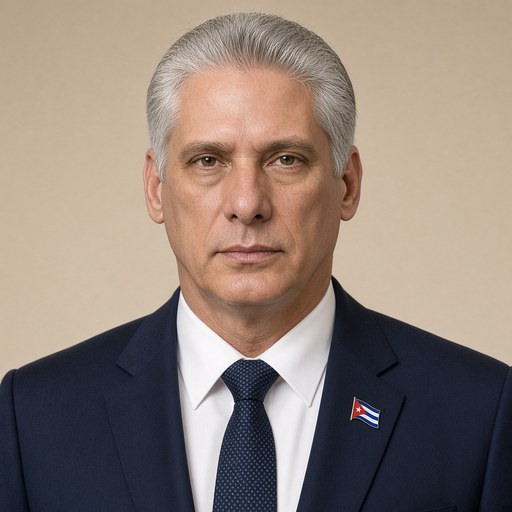
Speech delivered at the event for the 60th anniversary of the Ministry of Foreign Affairs, in the Universal Hall of the FAR, on December 23, 2019.
 Miguel Díaz-Canel · President of Cuba
- Context
- Díaz-Canel addressed the 60th anniversary celebration of Cuba's Ministry of Foreign Affairs at the FAR Universal Hall on December 23, 2019.
- Main themes
- Cuban revolutionary diplomacy, 60th anniversary of the Ministry of Foreign Affairs, Fidel Castro's foreign policy vision, Latin American integration, national sovereignty, anti-imperialism, people's diplomacy, Cuba-US relations, Raúl Roa, international economic justice, Cuba's role in world politics
- Duration
- ~30 min
- Words
- 3,551
- Sentences
- 110
- Readability
- 25
- Grade
- 17.4
- Syntax
- 3.37
- Vocabulary
- 2.34
Translated from Spanish
The broad sphere of national life a sentence belongs to. Every sentence has an Arena, so it is the denominator the other indices are read against.
Other110 sentences in 70 paragraphs
Comrade José Ramón Machado Ventura, Second Secretary of the Central Committee of the Communist Party of Cuba;
Comrade Esteban Lazo Hernández, member of the Political Bureau and President of the National Assembly of People's Power and the Council of State;
Comrade Bruno Rodríguez Parrilla, member of the Political Bureau and Minister of Foreign Affairs;
Admired and beloved founders and long-serving officials;
Comrades:
It is with pleasure that I take on the duty of speaking to you on the day that marks the official 60th anniversary of Cuban revolutionary diplomacy. Congratulations!
We share deep ties with the Ministry of Foreign Affairs and a history full of reasons to exalt the pride of being Cuban, which begins before December 23, 1959.
Revolutionary diplomacy is, without a doubt, a prior fact that shines in the ideas and voice of Fidel from the early days of triumph and from his first trips abroad. In Caracas, just 23 days after the triumph of the Revolution, the young leader already speaks of the need for Latin American integration:
“[...] How long will we be defenseless pieces of a continent that its liberator conceived as something more worthy, greater? How long will Latin Americans be living in this petty and ridiculous atmosphere? How long will we remain divided? How long will we be victims of powerful interests that prey on each of our peoples? When will we launch the great slogan of unity? The slogan of unity is launched within nations; why is the slogan of unity of nations not also launched?”
In Washington, just four months after coming down from the mountains, his ethics and defense of national sovereignty, and the demand for an equal relationship impress journalists when he tells them that if they are used to seeing representatives of other governments go there to ask for money, he did not go for that. And he clarifies: I came only to try to reach a better understanding with the American people. We need better relations between Cuba and the United States.
Just a few days later, in Buenos Aires, at the meeting of the 21, he lays out a principle that you have highlighted a lot on this anniversary of the Ministry of Foreign Affairs: the diplomacy of the people. There he improvises a speech that no veteran from the other represented governments could surpass: “I am here a new man in this type of meetings; we are, moreover, in our homeland, a new government, and perhaps that is also why we bring fresher ideas and the belief of the people, since we still feel as a people, we speak here as a people, and as a people that lives an exceptional moment in its history, as a people that is full of faith in its own destinies. I come to speak here, with the faith of that people and with the frankness of that people.”
In the name of the people or, rather, of the peoples, Fidel states on that occasion that it would be necessary to invest 30 billion in 10 years to solve the economic problem of Latin America. And he points to the United States as responsible for that investment.
It is impossible not to notice in that challenge to the empire the advance of what would be Cuba's legendary battles against external debt, the FTAA, imperialist hegemonism in the region, and the unjust International Economic Order.
Reviewing that history in light of the anniversary, it seemed impossible to me to summarize the essentials in a speech. I believe, however, that such a transcendent work merits us to say, from our learning, how we have come to respect and cherish it.
I spoke at the beginning of the day that marks the official 60th anniversary of the Ministry of Foreign Affairs, thinking about the preceding events, about those founding moments that mark the emergence of Fidel as a creator, and Cuba as a protagonist of a new political thought on the international stage.
As friends of Cuba have said more than once: a small nation from the Caribbean emerged, by the force of truth and ideas, to the forefront of world politics. With such a preamble, it was essential to transform everything. The legendary Raúl Roa arrived as a brilliant interpreter of that ideology to take the lead of the Foreign Ministry in June, and the Ministry of Foreign Affairs was born in December.
Roa, grandson of mambises and a prominent member of the glorious and anti-imperialist generation of '30, had been the ambassador to the OAS, where he expressed without “softening” the deep distrust of the Cuban people in that organization and warned: The diplomacy of the Cuban Revolution corresponds to duties and responsibilities consistent with its democratic nature, continental projection, and universal significance.
The Ministry of Foreign Affairs, a creation of the Revolution, had to change the name of what had until then been the Ministry of State, imitating the powerful neighbor. And it changed everything: concepts, structures, composition, and modes of action. The fight of David against Goliath began, and the Ministry of Foreign Affairs opened its arms to the new diplomats of the people it proudly represented.
It has often been said that this institution was not founded by “career diplomats,” but by “diplomats on the run.” But those men and women, most of them very young, had the best diploma: that of revolutionaries, patriots, martians, and fidelistas to the core.
They say that the arrival at the Ministry of Foreign Affairs, at its embassies and missions, of fighters from the Rebel Army and members of the revolutionary organizations that had fought against the dictatorship, along with the first experiences of training cadres at very early moments, allowed the Ministry, from then on, and until today, to be made up of people with limitless loyalty to the Revolution and to Fidel.
I know that several of those who made up that first group are still active and have contributed, with their experience, to the training of the younger ones. It is not difficult to see that today the Ministry of Foreign Affairs is home to several generations of cadres, officials, and workers in general, from those who entered at the beginning to the youngest, born after the Revolution had advanced, who are destined to ensure the essential turnover.
The newest ones inherit a history of tremendous dedication and heroism. Some of it has been documented and published over the years, but there will always be much left to say about the brave confrontation against the aggressions against our embassies and missions; about the permanent fight against the lies and slanders of the enemy; and how a great network of solidarity from the peoples of the world was forged over 60 years with a small nation that the empire sought to isolate so that its example would not spread. And, as we said a few days ago before the Assembly: it is the empire that will end up isolated.
Roa himself announced it when the United States imposed the suspension of Cuba's rights in the OAS, at the meeting of foreign ministers in San José, Costa Rica. Who does not still feel moved by the historic image of his departure from the room exclaiming energetically: “I leave with my people, and with me go all the peoples of America!” They say it was there that he was first called the Chancellor of Dignity. What an honorable title and so expressive of the work we celebrate today!
Along with the permanent tribute to his memory, to his fidelity, to his brilliant courage in defense of the principles of the Revolution, today we must also pay tribute to the martyrs of the Cuban Foreign Service, who fell in various latitudes in defense of the Homeland and the Revolution.
Recently, in Argentina, our delegation attended the inauguration of President Alberto Fernández and Vice President Cristina Fernández de Kirchner. There we paid tribute to the two heroic young diplomats, whose names are inscribed in the memorial to the 30,000 disappeared victims of state terrorism during the dictatorship in that brother country.
For years, what is known today about the brutal way in which Jesús Cejas and Crescencio Galañena were murdered, after suffering interrogation and torture at the hands of Cuban-origin terrorists sent by the CIA, as part of the sinister Operation Condor, was not known.
Before the workers of the Ministry of Foreign Affairs, I want to say now that the flowers we placed at the Argentine memorial were also a tribute to the long list of all those who in these years suffered without fear any type of threats and aggressions for their firm commitment to the revolutionary ideal of the Cuban people.
From the first day of the Revolution, the various U.S. administrations have worked to make the declared purpose of reinstating the neocolonial and dependent past in Cuba a reality.
Sometimes with the club and other times with the carrot, they have tried everything: from aggression to seduction. That is why, since its creation, the Ministry of Foreign Affairs has had as one of its main missions the confrontation of the policies undertaken by the United States against Cuba, not only in the diplomatic field but especially in it.
In that arduous path, the battles against the blockade in the UN General Assembly and against attempts to condemn our country in the Human Rights Commission are exemplary.
You have played a central role in the effort to prevent the isolation of Cuba and to expand, deepen, and extend our relations with the rest of the world.
As a result of that effort, proof of the high prestige gained by the Revolution in its practice of the Martian principle that “Homeland is humanity,” Cuba, which in 1958 maintained relations with just over 50 countries, today has diplomatic ties with 197 countries and international institutions.
The Ministry of Foreign Affairs, with 128 embassies and permanent missions and 20 consulates general, works for the maintenance and development of political and economic ties with friendly nations and in the care of Cubans residing abroad, among many other tasks.
We are honored to recognize that this Ministry and its members enjoy respect, prestige, and authority, even among ideological adversaries; they have become the first external trench of the Cuban Revolution in all regions, contributing, first and foremost, to our people's confrontation with the attempts of imperialism to destroy the nation.
You are daily bearers of the unwavering Cuban solidarity with our brothers in Latin America and the Caribbean, Africa, and the entire Third World, in the struggle of their peoples against imperialism, neocolonialism, and neoliberalism. And you have played an important role in denouncing the policies of the United States against sister nations, particularly now, in the face of new attempts to apply the Monroe Doctrine in our region.
Faithful to the promise of Comrade Fidel and to the historical line of the Revolution, the Ministry of Foreign Affairs has contributed to the permanent support of the Venezuelan people and government in the face of the incessant onslaught of imperialism, and to solidarity with the Sandinista Revolution in Nicaragua against the attempts to destabilize the country, promoted from Washington.
You have also fulfilled another line of principles of the Revolution in relation to the Caribbean countries, our immediate environment in cooperation, education, health, the confrontation of the damage caused by hurricanes, the fight against climate change that, although it affects all humanity, makes small island countries, like those in the Caribbean, targets of increasingly frequent and destructive climatic phenomena, and in the denunciation of the discriminatory and coercive policies that affect their economies.
Puerto Rico and its struggle for independence have always constituted a priority of our country's foreign policy and diplomacy, which has successfully worked for this right to be recognized in the United Nations, despite American manipulations.
Under the leadership of Army General Raúl Castro Ruz, our revolutionary diplomacy decisively contributed to the creation of the Community of Latin American and Caribbean States, CELAC, and to the approval of the proclamation of Latin America and the Caribbean as a Zone of Peace, signed by the Heads of State and Government of the countries of Our America at the Second CELAC Summit held in Havana.
The celebration of two Summits of the Non-Aligned Movement, at historically different moments, in extremely difficult circumstances, was yet another demonstration of Cuba's role in the struggle of the countries of the South to achieve their true independence.
Governments and foreign ministries around the world recognize the seriousness, professionalism, and hospitality of Cubans at every conference or summit held in our country. It is a merit of the leaders, officials, and workers of the Ministry of Foreign Affairs who have always distinguished themselves by their active participation, whether in the Non-Aligned Movement, the South Summit, the Group of 77, ALBA, or the Association of Caribbean States, to name just a few.
The role of our diplomats in Havana and other latitudes, alongside numerous institutions, is fundamental in the great battle led by our Commander in Chief against external debt, which has had a broad impact in the continental sphere, and which today is fully relevant in light of the onslaught of neoliberalism against the countries of the region.
How can we not recognize the performance of the Ministry of Foreign Affairs in the battle for the return to Cuba of the child Elián González, which became a serious defeat for the worst elements of the counter-revolution based in the United States, and in the fight against terrorism against Cuba, and for the extradition of Posada Carriles and his accomplices, who attempted to take the life of the Leader of the Revolution on several occasions?
The Ministry of Foreign Affairs and its embassies also played an important role in mobilizing international solidarity on a global scale in the battle for the return to Cuba of our Five Heroes.
Special mention should be made of the fight against the blockade. The achievement of increasingly massive and sustained support for the Resolution Project that Cuba has presented in the United Nations General Assembly for almost three decades is a testament to perseverance and consistency, to the struggle vote by vote against the attempts of the United States to prevent the condemnation of its genocidal policy, appealing to pressure, blackmail, and lies.
The recounting of six decades of revolutionary diplomacy has necessarily been long and will always remain incomplete, so intertwined is it with the 60 years of incessant and victorious battles of the Revolution. Although, surely, there are also problems to be resolved and achievements to be surpassed.
The Ministry of Foreign Affairs has responded to what our people expected in the battle against imperialism, neocolonialism, and neoliberalism in all latitudes, and from the United Nations to the farthest corners of the planet, the voice of Cuba has been heard.
Our diplomacy has always been present in the struggle of African peoples for their independence and development; in solidarity with the Palestinian and Sahrawi peoples, who fight to have their independent and sovereign state, and with the Syrian Arab Republic, whose independence and territorial integrity are threatened. In relations with the beloved Socialist Republic of Vietnam, from the times when it fought to confront imperialist aggression and for the reunification of the country, and in the development of fruitful political and economic ties with the People's Republic of China.
With Russia, very high-level relations have been established, and with the European Union, despite persistent differences, progress is being made towards collaboration mechanisms without interference and with full respect for Cuban sovereignty.
The relations with the United States deserve a separate mention, whose hostility and aggressiveness have been at the center, since the very beginning of the Revolution, of the battles we have fought together.
The historic participation and memorable speech of Army General Raúl Castro Ruz at the VII Summit of the Americas in April 2015 marked a milestone in the foreign policy of the Revolution.
During the brief period when, with the restoration of diplomatic relations and the recognition by the United States that its policies towards Cuba had failed, following the indications of the Army General, progress was made on a number of cooperation agreements, and negotiations for others began.
Today, as threats and the blockade intensify, as hatred for the Cuban Revolution and its example multiplies, it is up to you, along with all our people, to contribute to its most determined confrontation for the preservation of our sovereignty and independence.
Comrades:
At the beginning of this intervention, we spoke of the first experiences of the Ministry in training the new generations of diplomats. That initial effort has transformed, over the years, into a prestigious Higher Institute of International Relations, at the university level, where students receive comprehensive, academic, and revolutionary training. In them, in the quality of their preparation and the depth of their commitment, we see the continuity in the Ministry of Foreign Affairs.
We know that the link between the Ministry of Foreign Affairs and the academic world expanded with the creation nine years ago of the Center for International Policy Research (CIPI), whose work allows for multiplying assessments of global events and positively impacts the shaping of policies and strategies.
We also want to recognize the work of the Esti, incorporated seven years ago into the Ministry of Foreign Affairs, and of the translators and interpreters that make it up, whose role has been very valuable not only within the country in events of all kinds but also accompanying our leaders on their visits abroad since the very beginning of the Revolution.
At the same time, the Ministry has also advanced in its institutionalization. It has a broad and precise regulatory framework and has developed a Draft Law on the Foreign Service that will soon be debated in the National Assembly of People's Power.
In visits to other countries, in our daily relationship with the personnel working in this institution, we have learned to know and value their indispensable contribution to the policy of the Cuban state, and we have also insisted on the need to give, from our offices abroad, greater impetus to the country's economic battle to increase foreign investment and cooperation and to strengthen ties with the Cuban community abroad.
With the Cuban diplomatic officials and workers, we have met on every visit we make to another nation, to talk to them about life in the country and explain the complexity of the moment we are living. Thanks to them, we have returned to the homeland with the feeling of having also been there, even while being far away.
In these six decades of revolutionary diplomatic work, the officials and workers of the Ministry of Foreign Affairs have made a reality of the words of Army General Raúl Castro Ruz, in the 70th session of the General Assembly of the United Nations, when he said:
“The international community can always count on the sincere voice of Cuba against injustice, inequality, underdevelopment, discrimination, and manipulation; and for the establishment of a more just and equitable international order, in which the human being, their dignity and well-being, is truly at the center.”
The Ministry of Foreign Affairs should feel proud to reach this anniversary, with the main missions fulfilled and with the satisfaction of not having betrayed the founding principles of this institution, which constitute the epicenter of Cuban foreign policy, and which reflect the feelings of the Commander in Chief, on that December 23, 1959, when he officially created this organization.
Challenging days lie ahead in increasingly complex scenarios under the growing aggressiveness of imperialism, but we are certain that you will always know how to overcome obstacles and face dangers with the inspiration that the beautiful history that precedes you always provides.
I congratulate and embrace you all with heartfelt affection and the recognition you have earned from the Government and our people for your efforts and results.
I urge you to continue working with equal creativity, courage, and perseverance for the ever more accurate development of our country's foreign policy, whose true creator is Fidel and its main protagonist is the people, of whom you are a part, and to whom we all owe ourselves.
There is a phrase from Roa, among the many of his that could be recalled for this celebration, which in my view summarizes revolutionary diplomacy, as it encapsulates in a few words the root and projection of its work. Roa says:
“[...] The revolution that the people brought, hand in hand with Fidel Castro, is as Cuban as the Sierra Maestra, as American as the Andes, and as universal as the highest human values it embodies [...] it was gestated over a century, in the very bowels of the Cuban people, and crowns, at the height of time, the truncated enterprise of Martí. Hence its connections with Bolívar and Juárez, its permeability to the new currents of ideas and aspirations that nourish the living body of history.”
Keep making history! May Cuban foreign policy, daughter of the diplomacy of the mambisa wilderness and of the Revolution of 1930, consecrated in January 1959 and based on Martian and Fidelist ethical principles, anti-imperialist, supportive, and internationalist, continue to be a diplomacy of Homeland or Death!
Until victory, always!
The original Spanish. The tags above are read on the English translation's sentences.
Compañero José Ramón Machado Ventura, Segundo Secretario del Comité Central del Partido Comunista de Cuba;
Compañero Esteban Lazo Hernández, miembro del Buró Político y Presidente de la Asamblea Nacional del Poder Popular y del Consejo de Estado;
Compañero Bruno Rodríguez Parrilla, miembro del Buró Político y Ministro de Relaciones Exteriores;
Admirados y queridos fundadores y funcionarios de larga trayectoria;
Compañeras y compañeros:
Con placer asumo el deber de hablarles en el día en que se cumplen oficialmente 60 años de la diplomacia revolucionaria cubana. ¡Felicidades! (Aplausos.)
Al Minrex nos unen lazos entrañables y una historia llena de motivos para enaltecer el orgullo de ser cubanos, que comienza antes del 23 de diciembre de 1959.
La diplomacia revolucionaria es, sin dudas, un hecho previo, que brilla en las ideas y la voz de Fidel desde los días iniciales del triunfo y desde sus primeros viajes al exterior. En Caracas, apenas 23 días después del triunfo de la Revolución, el joven líder ya habla de la necesidad de la integración latinoamericana:
“[...] ¿Hasta cuándo vamos a ser piezas indefensas de un continente a quien su libertador lo concibió como algo más digno, más grande? ¿Hasta cuándo los latinoamericanos vamos a estar viviendo en esta atmósfera mezquina y ridícula? ¿Hasta cuándo vamos a permanecer divididos? ¿Hasta cuándo vamos a ser víctimas de intereses poderosos que se ensañan con cada uno de nuestros pueblos? ¿Cuándo vamos a lanzar la gran consigna de unión? Se lanza la consigna de unidad dentro de las naciones, ¿por qué no se lanza también la consigna de unidad de las naciones?”.
En Washington, a solo cuatro meses de bajar de las montañas, su ética y la defensa de la soberanía nacional, y el reclamo de una relación de iguales impresiona a los periodistas al decirles que si ellos están acostumbrados a ver a representantes de otros gobiernos ir allí a pedir dinero, él no fue a eso. Y aclara: Vine únicamente a tratar de llegar a un mejor entendimiento con el pueblo norteamericano. Necesitamos mejores relaciones entre Cuba y los Estados Unidos.
Apenas unos días después, en Buenos Aires, en la reunión de los 21, deja planteado un principio que ustedes han destacado mucho en este aniversario del Minrex: la diplomacia del pueblo. Allí improvisa un discurso que ningún veterano de los otros gobiernos representados pudo superar: “Soy aquí un hombre nuevo en este tipo de reuniones; somos, además, en nuestra patria, un gobierno nuevo y tal vez por eso sea también que traigamos más frescas las ideas y la creencia del pueblo, puesto que sentimos todavía como pueblo, hablamos aquí como pueblo, y como un pueblo que vive un momento excepcional de su historia, como un pueblo que está lleno de fe en sus propios destinos. Vengo a hablar aquí, con la fe de ese pueblo y con la franqueza de ese pueblo”.
En nombre del pueblo o, más bien, de los pueblos, Fidel plantea en aquella ocasión que haría falta invertir 30 000 millones en 10 años para resolver el problema económico de América Latina. Y señala a los Estados Unidos como los responsables de esa inversión.
Es imposible no advertir en ese desafío al imperio el adelanto de lo que serían las batallas legendarias de Cuba contra la deuda externa, el ALCA, el hegemonismo imperialista en la región y el injusto Orden Económico Internacional.
Repasando esa historia ante la cercanía de la efeméride, me parecía imposible resumir lo esencial en un discurso. Creo, no obstante, que una obra tan trascendente amerita que digamos, desde nuestro aprendizaje, cómo hemos llegado a respetarla y a quererla.
Hablaba al inicio del día en que se cumplen oficialmente 60 años del Minrex, pensando en los acontecimientos previos, en aquellos momentos fundadores que marcan la aparición de Fidel como creador, y a Cuba como protagonista de un pensamiento político nuevo en el escenario internacional.
Como han dicho amigos de Cuba más de una vez: una pequeña nación del Caribe emergía, por la fuerza de la verdad y de las ideas, a los primeros planos de la política mundial. Con semejante preámbulo, era imprescindible transformarlo todo. Llegó el legendario Raúl Roa como genial intérprete de aquel ideario para ponerse al frente de la Cancillería en junio y nació el Minrex en diciembre.
Roa, nieto de mambises y miembro prominente de la gloriosa y antimperialista generación del 30, había sido el embajador ante la OEA, donde expresó sin “paños tibios” la profunda desconfianza del pueblo cubano en aquella organización y advirtió: A la diplomacia de la Revolución Cubana corresponden deberes y responsabilidades congruentes con su naturaleza democrática, proyección continental y trascendencia universal.
El Ministerio de Relaciones Exteriores, obra de la Revolución, tenía que cambiar el nombre del que hasta entonces fue Ministerio de Estado, imitando al vecino poderoso. Y lo cambió todo: conceptos, estructuras, composición y modos de actuación. Comenzaba la pelea de David contra Goliat, y el Minrex abrió sus brazos a los nuevos diplomáticos del pueblo que orgullosamente representaba.
Se ha hablado muchas veces de que esta institución no la fundaron “diplomáticos de carrera”, sino “diplomáticos a la carrera”. Pero aquellos hombres y mujeres, muy jóvenes la mayoría, tenían el mejor de los diplomas: el de revolucionarios, patriotas, martianos y fidelistas hasta el tuétano.
Dicen que la llegada al Minrex, a sus embajadas y misiones de combatientes del Ejército Rebelde y de integrantes de las organizaciones revolucionarias que habían luchado contra la dictadura, junto con las primeras experiencias de formación de cuadros en momentos muy tempranos, permitió que el Ministerio, desde entonces, y hasta hoy, estuviera integrado por personas de una lealtad sin límites a la Revolución y a Fidel.
Sé que varios de los que conformaron aquella primera hornada se encuentran aún activos y han contribuido, con su experiencia, a la formación de los más jóvenes. No es difícil apreciar que en el Minrex conviven hoy varias generaciones de cuadros, funcionarios y trabajadores en general, desde los que ingresaron al principio hasta los más jóvenes, nacidos ya avanzada la Revolución, que están destinados a garantizar el imprescindible relevo.
Los más nuevos heredan una historia de consagración y heroísmo tremenda. Algo ha podido documentarse y publicarse durante estos años, pero siempre quedará bastante por decir sobre el enfrentamiento valeroso a las agresiones contra nuestras embajadas y misiones; sobre el permanente combate a las mentiras y calumnias del enemigo; y cómo se forjó durante 60 años una gran red de solidaridad de los pueblos del mundo con una pequeña nación a la que el imperio quiso aislar para que su ejemplo no se extendiera. Y, como hemos dicho hace unos días ante la Asamblea: es el imperio el que va a terminar aislado.
Lo anunció el propio Roa, cuando Estados Unidos imponía la suspensión de los derechos de Cuba en la OEA, en la reunión de cancilleres de San José, Costa Rica. Quién no se emociona todavía con la imagen histórica de su retirada de la sala exclamando con energía: “¡Me voy con mi pueblo y conmigo se van también todos los pueblos de América!”. Dicen que fue allí cuando se le llamó por primera vez Canciller de la Dignidad. ¡Qué título tan honroso y tan expresivo de la obra que hoy celebramos!
Junto con el homenaje permanente a su memoria, a su fidelidad, a su brillante valor en defensa de los principios de la Revolución, hoy debemos rendir tributo también a los mártires del Servicio Exterior cubano, que en distintas latitudes cayeron en defensa de la Patria y de la Revolución.
Hace poco, en Argentina, nuestra delegación asistió a la toma de posesión del presidente Alberto Fernández y de la vicepresidenta Cristina Fernández de Kirchner. Allí rendimos homenaje a los dos heroicos jóvenes diplomáticos, cuyos nombres están inscritos en el memorial a los 30 000 desaparecidos víctimas del terrorismo de Estado en la época de la dictadura en ese hermano país.
Durante años no se supo lo que se conoce hoy, sobre el modo brutal en que fueron asesinados Jesús Cejas y Crescencio Galañena, después de sufrir interrogatorio y torturas a manos de terroristas de origen cubano enviados por la CIA, como parte de la siniestra Operación Cóndor.
Ante los trabajadores del Minrex quiero decir ahora, que las flores que pusimos en el memorial argentino fueron también un homenaje a la larga lista de todos los que en estos años sufrieron sin miedo cualquier tipo de amenazas y agresiones por su firme entrega al ideal revolucionario del pueblo cubano.
Desde el primer día de la Revolución, las distintas administraciones norteamericanas han trabajado por hacer realidad el declarado propósito de reinstaurar en Cuba el pasado neocolonial y dependiente.
Unas veces con el garrote y otras con la zanahoria, lo han intentado todo: desde la agresión hasta la seducción. Por eso, desde su creación, el Minrex ha tenido como una de las principales misiones el enfrentamiento a las políticas emprendidas por Estados Unidos contra Cuba, no solo en el terreno diplomático, pero especialmente en él.
En ese arduo camino son ejemplares las batallas contra el bloqueo en la Asamblea General de la ONU y contra los intentos de condenar a nuestro país en la Comisión de Derechos Humanos.
A ustedes les ha correspondido un papel central en el empeño de impedir el aislamiento de Cuba y ampliar, profundizar y extender nuestras relaciones con el resto del mundo.
Como resultado de ese esfuerzo, prueba del elevado prestigio ganado por la Revolución en su práctica del principio martiano de que “Patria es humanidad”, Cuba, que en 1958 sostenía relaciones con poco más de 50 países, hoy mantiene vínculos diplomáticos con 197 países e instituciones internacionales.
El Minrex, con 128 embajadas y misiones permanentes y 20 consulados generales, trabaja por el mantenimiento y desarrollo de vínculos políticos y económicos con las naciones amigas y en la atención de los cubanos residentes en el exterior, entre otras muchas tareas.
Nos honra reconocer que este Ministerio y sus integrantes gozan de respeto, prestigio y autoridad, incluso, entre los adversarios ideológicos, se han convertido en la primera trinchera exterior de la Revolución Cubana en todas las regiones, contribuyendo, en primerísimo lugar, al enfrentamiento por parte de nuestro pueblo a los intentos del imperialismo por destruir a la nación.
Ustedes son portadores cotidianos de la invariable solidaridad cubana con nuestros hermanos de América Latina y el Caribe, de África y de todo el Tercer Mundo, en la lucha de sus pueblos contra el imperialismo, el neocolonialismo y el neoliberalismo. Y han desempeñado un importante papel en la denuncia de las políticas de los Estados Unidos contra las naciones hermanas, particularmente ahora, frente a los nuevos intentos de aplicar la Doctrina Monroe en nuestra región.
Fiel a la promesa del compañero Fidel y a la línea histórica de la Revolución, el Minrex ha dado su aporte al apoyo permanente al pueblo y gobierno venezolanos ante las incesantes arremetidas del imperialismo, y a la solidaridad con la Revolución Sandinista en Nicaragua frente a los intentos de desestabilizar el país, promovidos desde Washington.
Igualmente han cumplido otra línea de principios de la Revolución en la relación con los países del Caribe, nuestro entorno más inmediato en la cooperación, la educación, la salud, el enfrentamiento a los daños provocados por huracanes, la lucha contra el cambio climático que, aunque afecta a toda la humanidad, hace a los pequeños países insulares, como los caribeños, blanco de fenómenos climatológicos cada vez más frecuentes y destructivos, y en la denuncia de las políticas discriminatorias y coercitivas que afectan a sus economías.
Puerto Rico y su lucha por la independencia han constituido siempre una prioridad de la política exterior de nuestro país y de su diplomacia, la que se ha trabajado con éxito para que este derecho sea reconocido en las Naciones Unidas, a pesar de las manipulaciones norteamericanas.
Bajo la conducción del General de Ejército Raúl Castro Ruz, nuestra diplomacia revolucionaria contribuyó decisivamente a la creación de la Comunidad de Estados Latinoamericanos y Caribeños, Celac, y a la aprobación de la proclama de la América Latina y el Caribe como Zona de Paz, suscrita por los Jefes de Estado y Gobierno de los países de Nuestra América en la Segunda Cumbre de la Celac efectuada en La Habana.
La celebración de dos Cumbres del Movimiento de Países No Alineados, en momentos históricos diferentes, en circunstancias sumamente difíciles, fue una demostración más del papel de Cuba en la lucha de los países del Sur por alcanzar su verdadera independencia.
Gobiernos y cancillerías de todo el mundo reconocen la seriedad, profesionalidad y hospitalidad de los cubanos en cada conferencia o cumbre celebrada en nuestro país. Es un mérito de los dirigentes, funcionarios y trabajadores del Minrex que siempre se han distinguido por su activa participación, trátese de los No Alineados, de la Cumbre Sur, del Grupo de los 77, del ALBA o de la Asociación de Estados del Caribe, por solo mencionar algunas de ellas.
Fundamental es el papel de nuestros diplomáticos en La Habana y otras latitudes, junto a numerosas instituciones, en la gran batalla que lideró nuestro Comandante en Jefe contra la deuda externa, de amplio impacto en el ámbito continental, y que hoy está plenamente vigente a la luz de la embestida del neoliberalismo sobre los países de la región.
Cómo no reconocer el desempeño del Minrex en la batalla por el regreso a Cuba del niño Elián González que se convirtió en una seria derrota para los peores elementos de la contrarrevolución asentada en los Estados Unidos, y en el combate al terrorismo contra Cuba, y por la extradición de Posada Carriles y sus compinches, que pretendieron atentar contra la vida del Jefe de la Revolución en varias oportunidades.
El Minrex y sus embajadas también desempeñaron un papel importante en la movilización de la solidaridad internacional a escala global en la batalla por el retorno a Cuba de nuestros Cinco Héroes.
Merece mención especial la lucha contra el bloqueo. El logro del apoyo cada vez más masivo y sostenido al Proyecto de Resolución que Cuba ha presentado en la Asamblea General de las Naciones Unidas durante casi tres décadas, es una muestra de tesón y constancia, de la lucha voto a voto frente a los intentos de Estados Unidos de impedir la condena a su genocida política, apelando a la presión, el chantaje y la mentira.
Ha sido necesariamente largo y siempre quedará incompleto el recuento de seis décadas de la diplomacia revolucionaria, tan enlazada con los 60 años de incesantes y victoriosas batallas de la Revolución. Aunque, seguramente, hay también problemas por resolver y logros que superar.
El Minrex ha respondido a lo que esperaba nuestro pueblo en la batalla contra el imperialismo, el neocolonialismo y el neoliberalismo en todas las latitudes, y desde las Naciones Unidas hasta los últimos confines del planeta se ha escuchado la voz de Cuba.
Nuestra diplomacia ha estado siempre presente en la lucha de los pueblos africanos por su independencia y su desarrollo; en la solidaridad con los pueblos palestino y saharaui, que combaten por tener su Estado independiente y soberano, y con la República Árabe Siria, cuya independencia e integridad territorial están amenazadas. En las relaciones con la entrañable República Socialista de Vietnam, desde los tiempos en que luchaba por enfrentar la agresión imperialista y por la reunificación del país, y en el desarrollo de las fructíferos vínculos políticos y económicos con la República Popular China.
Con Rusia se han establecido relaciones de muy alto nivel, y con la Unión Europea, a pesar de que persisten diferencias, se avanza hacia mecanismos de colaboración sin injerencias y con pleno respeto a la soberanía cubana.
Mención aparte merecen las relaciones con los Estados Unidos, cuya hostilidad y agresividad han sido el centro, desde el inicio mismo de la Revolución, de las batallas que hemos librado juntos.
La histórica participación y el memorable discurso del General de Ejército Raúl Castro Ruz en la VII Cumbre de las Américas, en abril de 2015, marcó un hito en la política exterior de la Revolución.
Durante el breve periodo en que con el restablecimiento de relaciones diplomáticas y con el reconocimiento por parte de los Estados Unidos de que sus políticas hacia Cuba habían fracasado, cumpliendo indicaciones del General de Ejército, se avanzó en un número de acuerdos de cooperación, y comenzó la negociación de otros.
Hoy, cuando se intensifican las amenazas y el bloqueo, cuando el odio a la Revolución Cubana y a su ejemplo se multiplican, a ustedes les corresponde, junto a todo nuestro pueblo, la tarea de contribuir a su enfrentamiento más decidido para la preservación de nuestra soberanía e independencia.
Compañeras y compañeros:
Hablábamos al principio de esta intervención de las primeras experiencias del Ministerio en la formación de las nuevas generaciones de diplomáticos. Ese empeño inicial se ha transformado, a lo largo de los años, en un prestigioso Instituto Superior de Relaciones Internacionales, de nivel universitario, donde los estudiantes reciben una formación integral, académica y revolucionaria. En ellos, en la calidad de su preparación y la profundidad de su compromiso, vemos expresada la continuidad en el Minrex.
Sabemos que el vínculo del Ministerio de Relaciones Exteriores con el mundo académico se amplió al crearse hace nueve años el Centro de Investigaciones sobre Política Internacional (CIPI), cuya labor permite multiplicar las apreciaciones sobre los acontecimientos mundiales y redunda positivamente en la conformación de políticas y estrategias.
También queremos reconocer el trabajo del Esti, incorporado hace siete años al Minrex, y de los traductores e intérpretes que lo conforman, cuyo papel ha sido muy valioso no solo dentro del país en eventos de todo tipo, sino también acompañando a nuestros dirigentes en sus visitas al exterior desde el principio mismo de la Revolución.
Paralelamente, el Ministerio también ha avanzado en su institucionalización. Cuenta con una base reglamentaria amplia y precisa y ha elaborado un Proyecto de Ley del Servicio Exterior que, próximamente, será debatido en la Asamblea Nacional del Poder Popular.
En las visitas a otros países, en nuestra relación cotidiana con el personal que labora en esta institución, hemos aprendido a conocer y valorar su indispensable aporte a la política del Estado cubano y también hemos insistido en la necesidad de darle, desde nuestras sedes en el exterior, un mayor impulso a la batalla económica del país por incrementar la inversión y la cooperación extranjeras y por reforzar los vínculos con la comunidad cubana en el exterior.
Con los funcionarios y trabajadores diplomáticos cubanos nos hemos reunido en cada visita que realizamos a otra nación, para hablarles de la vida en el país y explicar la complejidad del momento que vivimos. Gracias a ellos, hemos regresado a la patria con la sensación de haber estado también en ella, aun estando lejos.
En estas seis décadas de trabajo diplomático revolucionario, los funcionarios y trabajadores del Minrex han hecho realidad las palabras del General de Ejército Raúl Castro Ruz, en el 70 periodo de sesiones de la Asamblea General de la Organización de las Naciones Unidas, cuando dijo:
“Podrá contar siempre la comunidad internacional con la sincera voz de Cuba frente a la injusticia, la desigualdad, el subdesarrollo, la discriminación y la manipulación; y por el establecimiento de un orden internacional más justo y equitativo, en cuyo centro se ubique, realmente, el ser humano, su dignidad y bienestar”.
El Ministerio de Relaciones Exteriores debe sentirse orgulloso de llegar a este aniversario, con las principales misiones cumplidas y con la satisfacción de no haber defraudado los principios fundacionales de esta institución, que constituyen el epicentro de la política exterior cubana, y que recogen el sentir del Comandante en Jefe, aquel 23 de diciembre de 1959, al crear oficialmente este organismo.
Por delante quedan días retadores en escenarios cada vez más complejos bajo la creciente agresividad del imperialismo, pero tenemos la certeza de que sabrán vencer siempre los obstáculos y enfrentar los peligros con la inspiración que siempre brinda la hermosa historia que les precede.
Los felicito y abrazo a todos con entrañable afecto y el reconocimiento que se han ganado del Gobierno y de nuestro pueblo por sus esfuerzos y resultados.
Los exhorto a seguir trabajando con igual creatividad, valor y tesón para el desarrollo cada vez más certero de la política exterior de nuestro país, cuyo verdadero creador es Fidel y su principal protagonista el pueblo, del que ustedes son parte, y al que todos nos debemos.
Hay una frase de Roa, entre las muchas suyas que podrían retomarse para esta celebración, que a mi entender sintetiza la diplomacia revolucionaria, en tanto resume en pocas palabras la raíz y la proyección de su obra. Dice Roa:
“[...] La revolución que trajo el pueblo, del brazo de Fidel Castro, es tan cubana como la Sierra Maestra, tan americana como los Andes y tan universal como los cimeros valores humanos que encarna [...] se gestó durante un siglo, en las entrañas mismas del pueblo cubano, y corona, a la altura del tiempo, la trunca empresa de Martí. De ahí sus entronques con Bolívar y Juárez, su porosidad a las nuevas corrientes de ideas y aspiraciones que alimentan el cuerpo vivo de la historia”.
¡Sigan haciendo historia! Que la política exterior cubana, hija de la diplomacia de la manigua mambisa y de la Revolución del 30, consagrada en enero de 1959 y basada en principios éticos martianos y fidelistas, antimperialista, solidaria e internacionalista siga siendo una diplomacia de ¡Patria o Muerte!
¡Hasta la victoria siempre! (Aplausos prolongados.)