




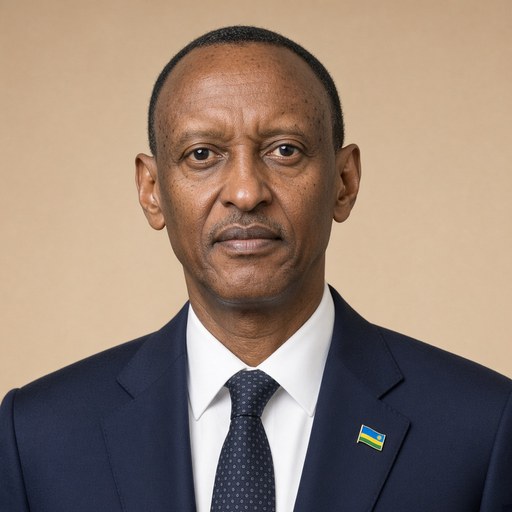
G20 SUMMIT: SESSION 2 on “Building an Inclusive, Sustainable, and Resilient Future” | Remarks by President Kagame | Kigali, 22 November 2020
 Paul Kagame · President of Rwanda
- Context
- Kagame addressed G20 leaders at the virtual 2020 Summit hosted by Saudi Arabia, speaking on building inclusive, sustainable, and resilient futures amid the COVID-19 pandemic.
- Main themes
- Environmental sustainability, Kigali Amendment to the Montreal Protocol, HFC phase-out, digital divide, broadband connectivity, gender inequality, COVID-19 pandemic impacts, inclusive and resilient societies, G20 cooperation, Africa development, Compact with Africa
- Duration
- ~2 min
- Words
- 281
- Sentences
- 16
- Readability
- 36
- Grade
- 12.5
- Syntax
- 2.97
- Vocabulary
- 2.35
The broad sphere of national life a sentence belongs to. Every sentence has an Arena, so it is the denominator the other indices are read against.
Other16 sentences in 10 paragraphs
Your Royal Highness, Excellencies, I would like to highlight three key aspects of building inclusive, sustainable, and resilient societies.
First, on environmental sustainability, perhaps the single most impactful action that can be taken is to fully implement the Kigali Amendment to the Montréal Protocol. By phasing out hydrofluorocarbons (HFCs), we can prevent 0.5°C of temperature increase by the year 2100. This is what scientists tell us.
This represents almost one-quarter of the Paris Agreement target and is an outstanding example of cooperation between the public and private sectors.
The Kigali Amendment is now in force and more than one hundred countries have already ratified it. I urge the remaining states to ratify as soon as we can.
Second, the pandemic has taught us the unacceptable cost of the world’s digital divide. Increasingly, access to affordable broadband connectivity is the entry point for education, health care, and employment.
We appreciate increased G20 support for the goals of the Broadband Commission on Sustainable Development, as well as the United Nations Secretary-General’s Roadmap for Digital Cooperation.
Finally, the pandemic has affected women disproportionately. The burden of caring for sick relatives falls primarily on the women in our families. Women have also been forced to exit formal sector employment to take care of children during lockdown.
We cannot continue to accept structural gender disparities as the status quo in a truly inclusive and sustainable future.
In closing, I note Africa’s appreciation for the special consideration for our continent, as demonstrated by the Compact with Africa and the results of the Extraordinary Summit on Covid-19 earlier this year.
I wish again to thank the Kingdom of Saudi Arabia for convening us and for hosting this summit.