




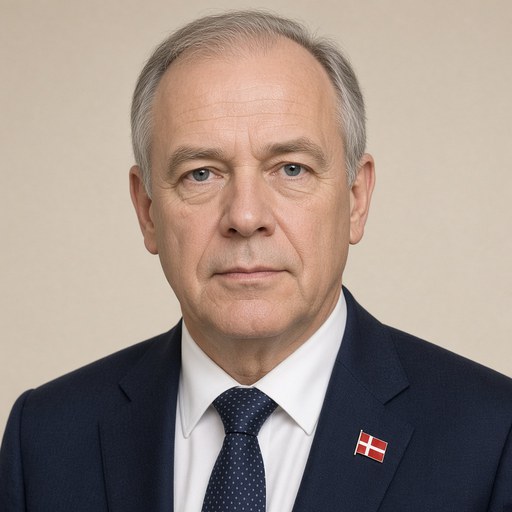
Response to inquiry F 24 from Frank Aaen (The Red-Green Alliance): "What can the Prime Minister inform about the fulfillment of the election promises from March 1998?"
 Poul Nyrup Rasmussen · Prime Minister of Denmark
- Context
- Rasmussen responded in the Folketing on February 11, 1999, to a parliamentary inquiry from Frank Aaen challenging the government's fulfillment of its March 1998 election promises.
- Main themes
- Fulfillment of election promises, early retirement scheme reform, economic responsibility, welfare state preservation, minority government coalition politics, employment and unemployment reduction, government platform implementation, fiscal policy, social democratic governance
- Duration
- ~19 min
- Words
- 2,314
- Sentences
- 147
- Readability
- 58
- Grade
- 8.5
- Syntax
- 2.71
- Vocabulary
- 1.98
Translated from Danish
The broad sphere of national life a sentence belongs to. Every sentence has an Arena, so it is the denominator the other indices are read against.
Other147 sentences in 43 paragraphs
One could almost be tempted to say: We might as well vote on it right away. I simply do not understand the purpose of this matter today. I do not know what the goal is.
I can understand that what one has not been involved in oneself does not seem as good. But that is not a new standpoint. I believe there will be a broad majority for this in the Folketing.
Furthermore, I cannot recognize the argumentation at all. It is not the most objective contribution I have heard in the Folketing. I have also read what has been said from the other side of the chamber, including the remarks of the leader of Venstre about the so-called broken promise, which Frank Aaen is also so concerned about. It is a bit tilted to one side and a bit to the other side.
Of course, Venstre feels cheated out of power. It was theirs, as Mr. Anders Fogh Rasmussen's predecessor so vividly expressed on the front page of Ekstrabladet the day before the election. But contrary to what the Enhedslisten expresses and contrary to what Venstre expressed in March last year, we, the government, have actually secured the early retirement scheme. We have secured it in a way that the economy can meet expectations and the needs of worn-out wage earners. After all, it is the task of the government and the head of government.
I am always ready to discuss the things we can see in hindsight, including who said what and when about early retirement, or about any other theme.
But I will also always stand by the fact that the task of securing Denmark's future and our welfare society is a task that cannot be solved by merely looking in the rearview mirror. It is solved by looking ahead, by steering clear of the obstacles that lie before us.
And that is what the finance agreement for 1999 was really about. It is a sensible agreement. It is a responsible agreement. It is a logical consequence of the municipal agreement and the Pentecost package. Therefore, I do not think it serves any purpose to engage in that kind of personal demagoguery and the personal attacks that I hear various people contributing to.
* * *
With the intervention in the early retirement scheme, the government has done what we found to be the right thing. We have secured the early retirement scheme, and we have not least ensured that taxpayers can afford to pay for it in the next century, and that the welfare society will have better opportunities in the future by having people who can stay a little longer in the labor market.
The programs that the governing parties each campaigned on have subsequently been worked together into a government platform. That is how the government has worked since it came to power in 1993. Like the previous government platform, the government is in the process of fulfilling the goals described in our government platform - 'Well on the Way'.
Many of the goals have actually already been met here less than a year after the election. We have come a long way. But two crucial questions obviously determine the pace at which the government can achieve its goals.
One is the parliamentary. It is known to everyone that we do not have 90 mandates ourselves. Like any other minority government, a majority must be sought from time to time among the parties we have in the Folketing. The working conditions in the Folketing are as the voters have decided. That is how it is.
The second factor that determines the implementation of the government platform is the economy. Having order in the economy is not a goal in itself. It is a means. Why do the government and I often talk about the economy? Well, we do not do it because it should be our very existence. We do it because we know very well who will be hit hardest if the economy is not in order. It is the weakest; it is those at the back; it is those who entered the labor market last who will be the first to go out again. And then the many hundreds of thousands of ordinary wage earners will feel it shortly thereafter.
That is why we said from the start in 1993: Never again an economic development under social democratic-radical leadership that brings society to the brink of the abyss. Never again an economic development under our leadership that risks forcing society back into a potato diet, where everything comes to a standstill.
It is clear that there have been concessions made along the way. That is just how it is. There is nothing new in that either. But for six years, we have placed decisive emphasis on strengthening employment and combating unemployment. And again: When we fight so hard for unemployment to continue to go down, and when we fight so hard to create jobs and employment in Denmark, it is not for the sake of the economy, but for the sake of people. It is because employment and jobs are best for self-esteem and for welfare.
* * *
And in fact, the fundamental goal has exceeded all expectations. Since we began in 1993, things have progressed faster than we had anticipated, faster than we had dared to hope, faster than we had built as a basis for our decisions. Today, we have a lower unemployment rate than we have had in 20 years. Unemployment - also for the young - is the lowest since 1979. Youth unemployment has been reduced from over 60,000 to just under 20,000. Long-term unemployment has decreased as well.
All of this did not come by itself. All of this came because we wanted it, because we could negotiate. All of this came because we implemented labor market reforms I and II, a tax reform, an educational initiative, and a responsible economic policy.
* * *
From the start, we have said: The money must be there before we can use it. We have said from the start that we will use the money to reduce debt and improve the quality of our society.
Since we began, many, many results have been achieved. More children can be cared for today than could before. 140,000 childcare places have been realized. The limits for free places have been raised to take into account the lowest incomes. Hospitals have been allocated more resources. Everyone knows that. The educational initiative has been strengthened. We have ensured slightly better elderly care, which is, by the way, better than the reputation we sometimes hear. I have noted that the Danish Municipalities' Association has just published an analysis showing that it has not - to put it mildly - become so terribly worse compared to the years before. In several areas, it has actually been possible to achieve some small progress. In others, there have been a few municipalities that have implemented some cutbacks.
The conditions for families with children, home care, elderly care, hospitals, and public schools are areas where all parties want improvements. The art consists in long-term insuring the improvements we can achieve in the various areas. It is our shared responsibility. Not only a responsibility we have here in the Parliament, but a responsibility we must share with the municipalities; a responsibility we must share with every single institution in Denmark, with the labor market parties, and with each one of us. So far, so good.
* * *
There is still much to be done, but it is a better Denmark now than it was six years ago. The government refuses to jeopardize the results that have been achieved by allowing itself to be drawn into a bidding war that Denmark does not need. The government instead says: Now it is about the next big move. This requires that we can manage the welfare society safely around the obstacles and dangers that lurk on the horizon.
When economic growth in countries in Europe slows down, when there is a crisis in Asia and Latin America, we must of course take this into account. That is what a responsible government must do, and that is precisely what we are taking into account. When there is too much speed in the Danish economy, when the increase in private and public consumption is too high, we must of course take this into account. That is what a responsible government does. We have always done that. We will always do that. The prerequisite for us to achieve all that we want is that the economy can stay on track. That has been our guiding principle until now. It continues to be.
In 1998, we entered into an agreement on the Pentecost package with the parties on the left side of the chamber. Then we implemented the municipal agreements. Then we implemented a finance bill with the parties in the middle and to the right in the chamber. The parties to the right in the chamber do not like the Pentecost package - they were not part of it - and the parties to the left in the chamber do not like the finance agreement - they were not part of that either. The government has pursued the same consistent policy all the way through, also in 1998: to secure the welfare society; to ensure that the broadest shoulders bear the most; to ensure solidarity in welfare; that is the foundation of our policy.
The finance agreement for 1999 is a clear continuation of the solidarity policy we have pursued. We have improved the conditions for vocational schools. We have implemented a labor market reform that is not a technical wish in itself, but is determined by our overarching goal of getting people into work faster than before: For their own sake and for the future of society.
We have taken the future into account when it comes to housing support. For if we did not take changes in housing support into account, a long, long line of pensioners would face difficulties in five or ten years. We have done this in a solidarity manner by taking into account that future pensioners, for some, have slightly better financial conditions than before.
We have implemented changes in medicine subsidies, but we have maintained that it should be solidarity-based, humane, and decent. We have done this by not giving as many direct subsidies for medicine as before, but by giving it to people's consumption. The greater the medicine consumption one has, the greater the subsidy from society. Changes that have been implemented in a solidarity and decent manner. Changes that take into account the individual person.
And we have implemented changes in the early retirement scheme, but again here in a solidarity and decent manner. If one has a lot on the side, and we must have the economy and people's welfare to align, then one receives a little less 'on top' from society.
* * *
I sense that the biggest criticism of the government today is actually that the government refuses to spend the same money twice.
That is how I perceive it. Politics is about wanting, politics is not about passively watching. A society is not a steamer on autopilot. A society must be led by a government that takes on responsibility together with a majority of parties, and that dares.
We set clear goals. Goals that we will achieve. We do not run away from anything. A responsible government does not do that. We do not either. We can achieve the goals we have set if we manage societal development in a responsible manner, if we maintain the good employment growth, if we maintain our responsibility for ensuring balance in the economy, then we can achieve lasting improvements in all the areas we want: hospitals, elderly care, home helpers, schools, children's conditions, etc.
But we refuse to contribute to a bidding war that may feel good to start with, but quickly becomes very, very cold, perhaps especially for the weakest groups in our country. If, on the other hand, we responsibly take into account the changes that come to us from the outside and from within, then we can safely lead society forward for the benefit of most.
* * *
I have read in the newspaper that there are several proposals for resolutions here today. I do not think those I have heard about signal anything other than a bidding war that has no economic coverage. Economic growth should be used to improve the lives of the weakest in our country, not to hand out generously to the most affluent.
The government places decisive emphasis on continued sound economic development. We know that when the economy goes wrong, it is the weakest who are hit.
We acknowledge that responsible reforms do not mean that everyone gets more in their pockets every time. We all have a shared responsibility for precisely that line. What has been proposed does not seem to add up.
That bridge would collapse if anyone tried to walk on it. The money must be there before we can use it. The population can, however, safely count on the government continuing to know how to implement targeted service improvements at the pace that can secure financing for them and in the reality that we emphasize working in.
Air castles are expensive to maintain.
My appeal to the Folketing here today should therefore be: Put the teasing aside. Drop the campaign. Roll up your sleeves - as the government has been doing since 1993. Then we would very much like to extend a hand for cooperation, as we have always done.
But it must be sustainable. It must be responsible, and it must benefit the Danes and the general reputation of this esteemed assembly.
The original Danish. The tags above are read on the English translation's sentences.
Man kunne næsten føle sig fristet til at sige: Vi kan jo lige så godt stemme om det med det samme. Jeg forstår simpelt hen ikke meningen med den her sag i dag. Jeg ved ikke, hvad der er formålet.
Jeg kan godt forstå, at det, man ikke selv har været med i, synes man ikke er så godt. Men det er jo ikke et nyt standpunkt. Det tror jeg, der vil være et bredt flertal for her i Folketinget.
Jeg kan i øvrigt slet ikke genkende argumentationen. Det er ikke det mest objektive indlæg, jeg har hørt i Folketinget. Jeg har også læst, hvad der er blevet sagt i den anden side af salen, herunder også Venstres formands bemærkninger om det såkaldte løftebrud, som også Frank Aaen er så optaget af. Det er sådan lidt til den ene side og sådan lidt til den anden side.
Selvfølgelig føler Venstre sig snydt for regeringsmagten. Den var jo hjemme, som hr. Anders Fogh Rasmussens forgænger så malende udtrykte det på Ekstrabladets forside dagen før valget. Men i modsætning til, hvad Enhedslisten giver udtryk for og i modsætning til, hvad Venstre gav udtryk for i marts sidste år, så har vi, regeringen, faktisk sikret efterlønnen. Vi har sikret den på en måde, så samfundsøkonomien kan honorere forventningerne og nedslidte lønmodtageres behov. Det er, når alt kommer til alt, regeringens og regeringschefens opgave.
Jeg er til enhver tid parat til at diskutere de ting, vi kan se i bakspejlet, herunder hvem der sagde hvad og hvornår om efterløn, eller om et hvilket som helst andet tema.
Men jeg vil også til enhver tid stå ved, at opgaven med at sikre Danmarks fremtid og vores velfærdssamfund, det er en opgave, som ikke løses ved alene at se i bakspejlet. Den løses ved at se fremad, ved at styre uden om de forhindringer, der ligger foran os.
Og det drejede finanslovaftalen for 1999 sig i virkeligheden også om. Det er en fornuftig aftale. Det er en ansvarlig aftale. Den er en logisk konsekvens af kommuneaftalen og pinsepakken. Jeg synes derfor ikke det tjener noget som helst formål, at gå ind i den form for personlig demagogi og de personangreb, som jeg hører forskellige bidrage til.
* * *
Regeringen har med efterlønsindgrebet gjort det, vi har fundet rigtigst. Vi har sikret efterlønnen, og vi har ikke mindst sikret, at skatteyderne også i det næste århundrede har råd til at betale den, og at velfærdssamfundet får bedre muligheder i fremtiden ved, at folk, der kan, bliver lidt længere på arbejdsmarkedet.
De programmer, regeringspartierne hver især gik til valg på, er efterfølgende arbejdet sammen til et regeringsgrundlag. Sådan har regeringen arbejdet siden den kom til i 1993. I lighed med det forrige regeringsgrundlag er regeringen i gang med at opfylde de mål, som er beskrevet i vores regeringsgrundlag - 'Godt på vej'.
Mange af målene er faktisk allerede indfriet her mindre end et år efter valget. Vi er nået meget langt. Men to afgørende spørgsmål bestemmer selvsagt tempoet for, hvor hurtigt regeringen kan nå sine mål.
Det ene er det parlamentariske. Det er kendt for enhver, at vi som bekendt ikke selv råder over 90 mandater. Som enhver anden mindretalsregering skal der søges et flertal fra gang til gang blandt de partier, vi har i Folketinget. Arbejdsvilkårene i Folketinget er nu engang, som vælgerne har besluttet det. Sådan er det.
Det andet, der afgør gennemførelsen af regeringsgrundlaget, er økonomien. Det at have orden i økonomien er ikke et mål i sig selv. Det er et middel. Hvorfor taler regeringen og jeg ofte om økonomien? Ja, det gør vi jo ikke, fordi det skal være selve vores eksistens. Det gør vi, fordi vi udmærket godt ved, hvem der bliver ramt hårdest, hvis økonomien ikke er i orden. Det er de svageste; det er de bageste; det er dem, som kom sidst i arbejde, som igen ryger først ud. Og så får de mange hundredtusinde almindelige lønmodtagere det at mærke kort tid efter.
Derfor sagde vi fra starten i 1993: Aldrig mere en økonomisk udvikling under socialdemokratisk-radikal ledelse, som bringer samfundet til afgrundens rand. Aldrig mere en økonomisk udvikling under vores ledelse, som risikerer, at samfundet igen tvinges ud i en kartoffelkur, hvor alting sættes i stå.
Det er klart, der er blevet givet, og der er blevet taget undervejs. Sådan er det nu engang. Det er der heller ikke nyt i. Men gennem 6 år har vi lagt afgørende vægt på at styrke beskæftigelsen og bekæmpe arbejdsløsheden. Og igen: Når vi kæmper så hårdt for, at arbejdsløsheden fortsat skal ned, og når vi kæmper så hårdt for at få skabt job og beskæftigelse i Danmark, så er det ikke for økonomiens skyld, men så er det for menneskers skyld. Så er det, fordi beskæftigelse og job er bedst for selvværd og for velfærd.
* * *
Og faktisk er den helt grundlæggende målsætning gået over al forventning. Siden vi begyndte i 1993, er det gået stærkere, end vi selv havde forudset, end vi selv havde turdet håbe, end vi selv havde bygget op som grundlag for vore beslutninger. Vi har i dag en lavere arbejdsløshed, end vi har haft i 20 år. Arbejdsløsheden - også for de unge - er den laveste siden 1979. Ungdomsledigheden er reduceret fra godt 60.000 til knap 20.000. Langtidsledigheden ligeså.
Alt det kom ikke af sig selv. Alt det kom, fordi vi ville, fordi vi kunne forhandle. Alt det kom, fordi vi gennemførte arbejdsmarkedsreform I og II, en skattereform, en uddannelsesindsats og en ansvarlig økonomisk politik.
* * *
Vi har fra starten sagt: Pengene skal være der, før vi kan bruge dem. Vi har fra starten sagt, at vi vil bruge pengene til at nedsætte gælden og højne kvaliteten i vort samfund.
Siden vi begyndte, er mange, mange resultater nået. Flere børn kan passes i dag, end de kunne før. 140.000 børnepasningstilbud er realiseret. Fripladsgrænser er blevet forhøjet for at tage hensyn til de laveste indkomster. Sygehusene har fået tilført flere ressourcer. Det ved enhver. Uddannelsesindsatsen er blevet forstærket. Vi har sikret en lidt bedre ældreomsorg, som i øvrigt er bedre end det rygte, vi sommetider hører. Jeg har hæftet mig meget ved, at Kommunernes Landsforening netop har offentliggjort en analyse, som viser, at det nu ikke - pænt sagt - er blevet så forfærdeligt ringere i forhold til årene før. På en række felter er det faktisk lykkedes at realisere nogle små fremskridt. På andre har der været enkelte kommuner, som har gennemført nogle indskrænkninger.
Børnefamiliernes vilkår, hjemmehjælpen, ældreomsorgen, sygehusene og folkeskolen er jo områder, hvor alle partier ønsker forbedringer. Kunsten består i at langtidsforsikre de forbedringer, vi kan nå på de forskellige områder. Det er vores fælles ansvar. Ikke alene et ansvar, vi har her i Tinget, men et ansvar, vi skal dele med kommunerne; et ansvar vi skal dele med hver eneste institution i Danmark, med arbejdsmarkedets parter og med hver enkelt af os. Så langt, så godt.
* * *
Der er stadig meget at gøre, men det er et bedre Danmark nu, end det var for 6 år siden. Regeringen nægter at sætte de resultater over styr, som er blevet skabt, ved at lade sig trække ind i en overbudspolitik, som Danmark ikke har brug for. Regeringen siger i stedet: Nu gælder det: Næste store træk. Det forudsætter, at vi kan styre velfærdssamfundet sikkert uden om de forhindringer og farer, der lurer i horisonten.
Når den økonomiske fremgang i landene i Europa bliver lavere, når der er krise i Asien og i Latinamerika, så må vi selvfølgelig tage hensyn hertil. Det må en ansvarlig regering gøre, og det er præcis det, vi tager højde for. Når der er for megen fart på i dansk økonomi, når stigningen i det private og det offentlige forbrug er for høj, så må vi selvfølgelig tage højde herfor. Det er det, en ansvarlig regering gør. Det har vi altid gjort. Det vil vi altid gøre. Forudsætningen for, vi kan nå alt det, vi gerne vil, er jo, at samfundsøkonomien kan holdes på sporet. Det har været vores ledetråd indtil nu. Det er det fortsat.
I 1998 indgik vi en aftale om Pinsepakken til venstre side i salen. Så gennemførte vi kommuneaftalerne. Så gennemførte vi en finanslov med partierne på midten og til højre i salen. Partierne til højre i salen synes ikke om Pinsepakken - den var de jo heller ikke med i - og partierne til venstre i salen synes ikke om finanslovsaftalen - den var de jo heller ikke med i. Regeringen har ført den samme konsekvente politik hele vejen igennem, også i 1998: At sikre velfærdssamfundet; at sikre at det er de bredeste skuldre, der bærer mest; at sikre den solidariske velfærd; det er fundamentet for vores politik.
Finanslovsaftalen for 1999 er en klar fortsættelse af den solidariske politik, vi har ført. Vi har fået forbedret erhvervsskolernes forhold. Vi har fået gennemført en arbejdsmarkedsreform, som ikke er et teknisk ønske i sig selv, men er bestemt af vores overordnede mål om at få mennesker i arbejde hurtigere end før: For deres egen skyld og for samfundets fremtids skyld.
Vi har taget højde for fremtiden, når det gælder boligstøtten. For hvis vi ikke tog højde for ændringer i boligstøtten, så ville en lang, lang række pensionister kommer i vanskeligheder i løbet af 5 eller 10 år. Vi har gjort det på en solidarisk måde ved at tage hensyn til, at fremtidens pensionister for nogens vedkommende har lidt bedre formueforhold end tidligere.
Vi har gennemført ændringer i medicintilskuddene, men vi har fastholdt, at det skal være solidarisk, menneskeligt og ordentligt. Det har vi gjort ved at lade være med at give så mange tilskud til medicinen direkte som før, men at give det til menneskers forbrug. Jo større medicinforbrug man har, jo større tilskud fra samfundet. Ændringer der er gennemført solidarisk og ordentligt. Ændringer der tager hensyn til det enkelte menneske.
Og vi har gennemført ændringer i efterlønnen, men igen også her på en solidarisk og ordentlig måde. Hvis man har meget ved siden af, og vi nu engang skal have økonomi og menneskers velfærd til at hænge sammen, så får man lidt mindre 'oveni' fra samfundets side.
* * *
Jeg fornemmer, at den største kritik af regeringen i dag i virkeligheden er, at regeringen nægter at bruge de samme penge to gange.
Sådan opfatter jeg det. Politik er at ville, politik er ikke at se passivt på. Et samfund er ikke en damper på automatpilot. Et samfund skal ledes af en regering, der påtager sig et ansvar sammen med et flertal af partier, og som tør.
Vi sætter os klare mål. Mål som vi vil nå. Vi løber ikke fra noget. Det gør en ansvarlig regering ikke. Det gør vi heller ikke. Vi kan nå de mål, vi har sat, hvis vi styrer samfundsudviklingen på en ansvarlig måde, hvis vi fastholder den gode beskæftigelsesfremgang, hvis vi fastholder vores ansvar for, at der er balance i økonomien, så kan vi nå varige forbedringer på alle de områder, vi gerne vil: Sygehusene, ældreforhold, hjemmehjælpere, skoler, børnenes forhold osv.
Men vi nægter at bidrage til en overbudspolitik, der kan lune lidt til at begynde med, men hurtigt bliver meget, meget kold, måske især for de svageste grupper i vores land. Hvis vi derimod ansvarligt tager højde for de forandringer, der kommer til os udefra og indefra, så kan vi trygt lede samfundet videre frem til gavn for de fleste.
* * *
Jeg har læst i avisen, at der er flere forslag til vedtagelser her i dag. Jeg synes ikke dem, jeg har hørt om, signalerer andet end overbudspolitik, som der ikke er økonomisk dækning for. Den økonomiske fremgang skal bruges til at forbedre tilværelsen for de svageste i vores land ikke til at dele ud med rund hånd til de mest velstillede.
Regeringen lægger afgørende vægt på en fortsat sund økonomisk udvikling. Vi ved jo, at når det går galt i økonomien, så rammes de svageste.
Vi vedstår os, at ansvarlige reformer ikke betyder, at alle hver gang får mere i lommerne. Vi har alle et fælles ansvar for netop den linje. Det, der er foreslået, synes jeg ikke hænger sammen.
Den bro ville falde ned, hvis nogen forsøgte at gå på den. Pengene skal være der, før vi kan bruge dem. Befolkningen kan derimod trygt regne med, at regeringen fortsat vil vide at gennemføre målrettede serviceforbedringer i det tempo, der kan skaffes finansiering herfor og i den virkelighed, som vi lægger vægt på at arbejde i.
Luftkasteller er dyre at vedligeholde.
Min opfordring til Folketinget her i dag skal derfor lyde: Læg drillerierne på hylden. Drop kampagnen. Træk i arbejdstøjet - som regeringen i øvrigt har været det siden 1993. Så vil vi til gengæld meget gerne række hånden frem til samarbejde, som vi altid har gjort det.
Men det skal være holdbart. Det skal være ansvarligt, og det skal være til gavn for danskerne og for det ærede Tings almindelige omdømme.