




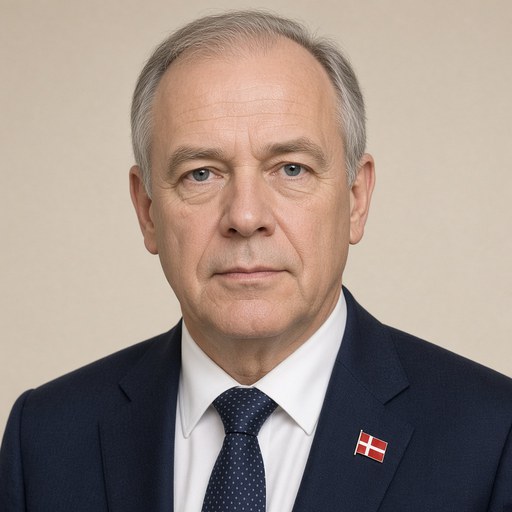
Prime Minister Poul Nyrup Rasmussen's speech at "Refugee 99 - Help Without Detours" at Base Camp, Holmen, on February 24, 1999.
 Poul Nyrup Rasmussen · Prime Minister of Denmark
- Context
- Rasmussen spoke at the 'Refugee 99 - Help Without Detours' event at Base Camp, Holmen, Copenhagen on February 24, 1999, urging Danes to engage with the global refugee crisis.
- Main themes
- Refugee crisis, humanitarian responsibility, global displacement, Danish society and identity, post-Cold War conflicts, integration of immigrants, international solidarity, civic engagement, everyday indifference versus action
- Duration
- ~25 min
- Words
- 2,977
- Sentences
- 220
- Readability
- 62
- Grade
- 7.1
- Syntax
- 2.59
- Vocabulary
- 1.83
Translated from Danish
The broad sphere of national life a sentence belongs to. Every sentence has an Arena, so it is the denominator the other indices are read against.
Other220 sentences in 91 paragraphs
We are all so busy in our diligent country. We have to get to work, get home from work, pick up our children, go to the club, to the association. We have to fit in swimming, bowling, and football on Sundays, television in the evenings. We are all so busy. All day. All week. All year.
The politicians are also busy. They have to hold meetings, they have to make decisions, some to greater satisfaction for the population than others. And the population is of course also preoccupied with scolding the politicians - if it’s not one thing, then it’s certainly the other.
* * *
So there are many good reasons why I am incredibly happy today to have the opportunity to make a few remarks about something that is more important than so much else. I believe that it is good for Denmark, for Danish society, that we have the opportunity to engage with something that is more important than so much else.
It is not healthy if we allow our lives, our culture, our political work, and our daily lives to be filled solely with harassment and petty quarrels, which block what is important and what is less important.
What we are dealing with today is very, very important.
Many of us believed, when we saw the joy, the celebration, when we saw people toppling the last part of the Berlin Wall, that - now it was a new era. And in a way, it was. The great Cold War was over, but it became a warm peace instead. Suddenly, our eyes were opened to everything that was otherwise happening behind the scenes - we saw and see people being treated in a completely unacceptable manner. Our eyes clearly see that which could not be seen before.
In a way, the Cold War also blocked our attention and awareness of the fact that things are happening on our blue planet that we must strongly distance ourselves from.
We now see the images every single day on television, in newspapers, and sometimes in advertisements:
The abandoned mother with her child on her back in a refugee camp in Somalia.
Families in shattered ruins in Afghanistan.
People with faces full of fatigue and fear crammed together in sinking fishing boats on their way across the Mediterranean, the South China Sea - or perhaps across the Baltic Sea.
The Roma family from the former Yugoslavia, who have been stopped at the airport or on the highway on their way into a Western European country.
People on their way from something, but rarely or perhaps never to something.
* * *
For a refugee, this little word to is all too often something very, very distant in every respect. And usually always something very uncertain.
Without knowledge of how tomorrow will be.
I think it is worth reflecting on as a Dane.
Of course, we can complain about many things. And we certainly do. But we always have a fairly good idea of how tomorrow will be. We have the politicians we have - we are somewhat sure of that. And we have our jobs to a greater extent than we had before - we can also be reasonably sure of that. And we have one of the highest tax burdens in the world - we are also somewhat sure of that. And besides, life shapes itself for us as it usually does. There is indeed not much uncertainty that tomorrow will also be with us Danes - in a decent and safe way.
But there are 20 million people around the world who have no idea what their day will look like tomorrow. And who are quite sure that it is a day filled with fear, uncertainty, anxiety, and struggle for existence!
* * *
And then we see the images. On TV and in newspapers. The images of all the unfortunate people on the run. We are horrified, we are angry. And in many cases, we push it away again, turn off the television. That’s just how the world is, we say.
I say: is that really right? Is it right? Is it decent? Who are we really? Can we in Denmark even make a difference?
Yes, some say, we know that well. The goods are not evenly distributed in the world. We know that well, but we cannot save the whole world. And so on.
I say: It does not help to close our eyes and speak against better knowledge. We can make a difference.
Where people know each other, as we do in Denmark, we also know deep down that we have made a difference before. It is a matter of making a decision.
I know it is not simple. It is not simple as a Dane to live in neighborhoods where the majority of residents come from a foreign culture, where a large part of the children struggle to learn Danish, and where frustrations spread. But still: Where Danes, the born Danes, really know refugees and immigrants from Nørrebro and Vesterbro, from Aarhus and from other parts of the country. There they tell all other citizens in Denmark, 'they are not so bad, those refugees and immigrants.'
New Danes can actually contribute something valuable to us. What would we do if we didn’t have refugees and immigrants when we needed fresh vegetables after normal closing hours - I’m just asking! Our newcomers are actually a large and valuable cultural and human contribution to our society. A reminder that 'yes, we are good, we Danes, but we are not so good that no one from outside can add further values to us.'
What comforts me - and what I think is worth holding on to - is when Danes are in direct, everyday contact with refugees and immigrants - because then the signal from the Danes is - try it! You actually don’t get hurt by it! It puts you in a good mood and we come much closer to each other.
* * *
I am so proud that a broad majority in the Folketing - that is why the Minister of the Interior is also here today - has adopted the world’s first and most ambitious integration law, where we now offer citizens coming from abroad housing, education, and work. Now it is here, the law, and it has been well received by municipalities and citizens. Now it must really go to work in practice.
* * *
The Minister of Culture is also here because she wants to emphasize with her presence that our culture is enriched by refugees and immigrants - not impoverished! It is simply about humanitarian work internationally and integration nationally. Very simplified, it is in that tension field - outward and globally on one side, inward and locally on the other side, that the bridges must be built.
It is in that tension field that the Danish Refugee Council works.
And it is in that tension field that your work is indispensable.
The Danish Refugee Council is simply a completely crucial part of our shared dignity in Denmark. Of our community in Denmark.
* * *
In 1995, I launched the Danish Refugee Council’s campaign 'REFUGEE 95 - 'Something to Return To'. And I am incredibly grateful to also have the opportunity this year to be part of the National Committee. The campaign is clear and unequivocal: 'Help without detours.' Now the Danish Refugee Council is focusing on the great efforts for refugees in international contexts - there, in the midst of the hotspots.
The funds raised will go to the Danish Refugee Council’s international humanitarian work.
The campaign we are launching today focuses on something absolutely crucial: That there are no detours. Not even for ourselves - in our own minds! There is no way around it - we are from Denmark, therefore we help people in need.
Help without detours means, first and foremost, work that enables a direct effort in the world’s hotspots.
Help without detours is also a call to the individual to make a difference. And I can guarantee you that one feels quite good about making a difference. Whether it is in one’s close daily life or in the larger politics, where old prejudices are falling. Each of us can and must make a difference.
It is about personal responsibility - and it is about the individual’s commitment to refugees. It is that commitment that is the foundation and lifeblood of the voluntary work.
It is what makes the cause we are gathered around today a common cause. A shared cause.
And it is the results that count.
* * *
Many, many volunteers today provide an indispensable effort for the Danish Refugee Council and for refugees. And I would like to say thank you for that, and I would like to acknowledge that. We will do what we can - from the government’s side.
But we need even more.
Therefore, I would also like to thank the sponsors who have already put their weight in financially. It is incredibly important for us to get a good start. Thank you to them, thank you to TeleDanmark, and thank you to the artists and the passionate individuals who have already - also on the textile front - provided very beautiful contributions.
I hope that the overarching goal 'Help without detours' helps to expand and promote public support for our humanitarian efforts for refugees. I therefore also hope that the campaign will help retain a significant part of the campaign’s active participants and fundraisers in the future work and thus anchor the local volunteer work.
For remember, in a way we can also say to ourselves: Let the great powers, the USA and the others, take care of the 'hard hardware'. Let us take care of humanity - and the humanitarian - and all that must be initiated before a war becomes a war. That is where our effort shines - that is where we have made - and can continue to make - a difference.
* * *
We are the world’s richest society - at least one of them. We have democracy, we have freedom of speech, we have legal protection, and a long, long list of benefits that other countries rightly envy us.
But it also gives us, in my eyes, a great responsibility as a nation, as a society, and as individuals to show - solidarity!
We must make a difference. Inwardly and outwardly. It is about solidarity.
Inwardly, we have an obligation to provide protection to a part of the world’s refugees here in the country.
Refugees residing in our society must feel safe. They must have decent conditions and opportunities - just like other citizens. Whether it is about preparing to return to the country they came from, or about creating a new and dignified existence in our country.
We must have the offers. We must provide the tools.
That is what, to a greater extent than now, will help strengthen the integration effort.
Outwardly, we must help the refugees, where they are.
I think it is important to remember that the last 4-5 years have changed the pattern for refugees in the world. Fewer people than before are now fleeing across borders to other countries. But unfortunately, there are correspondingly many more people fleeing within their own country.
All in all, there are today more people who, due to armed conflicts, find themselves in a situation where there is a need for urgent help. Their greatest hope is to be able to return and resume a better life.
They fear for their lives and health and for the future of their families and children. In refugee camps many places in the world, we meet thousands of people who must live with only the most basic necessities at best - at worst, less.
And - worst of all - the uncertainty, what will the future bring!
Then there will always be some with a penchant for simple headlines who say: 'You just need to come with a little bag of money for the refugee camps, and the rest will take care of itself, then we are free of them' - but that won’t work! It is persistence, it is the right help, and it is the lasting presence there and here that is the answer. The problems do not disappear just because the TV images or newspaper articles disappear. The people are still there behind. And it is us in Denmark who are the warm connection to those people. Hopefully, they will get a little joy from it - and we will feel a little better.
* * *
And close by. In Europe. In the former Yugoslavia, we have witnessed war, violence, and terror. Hundreds of thousands of people were driven to flee.
A few thousand have sought refuge with us.
Now things are getting better in Bosnia and Croatia, a little better. The humanitarian situation is, as has been said, under control. Some of the refugees have begun to return. But unfortunately, we have seen new conflicts flare up in the last six months.
And I can assure you that if you have sat in a small classroom in a small town in Republika Srpska and seen the men who call themselves teachers at the back of the room, the deputy mayor next to you, the students outside, and asked: How is peace really going here? Then you become aware - without fully understanding the language - that the peace is extremely fragile. That peace is only strong and lasting if we provide assistance and help! If we ensure that the schools are decent, if we ensure that the roads are built, if we ensure that employment and construction get started.
Kosovo - no one knows the conclusion of the negotiations. It certainly won’t come right away. But we know what we must do - we must help, we must be there and help.
In Africa, it seems that conflicts have been spreading more and more in recent years. Civil wars in one country spread to neighboring countries and create new streams of refugees. Wars flare up again and make it impossible for refugees to return in peace and safety.
More and more of the conflicts we are witnessing are civil wars. They are complicated, and they are less visible to the outside world. But they unfortunately often have horrific consequences for the civilian population. And they therefore concern us as well. I say this to emphasize that the forgotten continent is not forgotten, even though the great powers’ decisive military interests are no longer present. The people are still there.
* * *
Relief workers are doing a great and valuable job for refugees. A job that is becoming increasingly dangerous, as we have unfortunately seen unhappy examples of.
When you look at the difficulties that relief workers face out in the world - see the grim background for their efforts - there is every reason to affirm that our efforts actually help. We can make a difference.
They remember us. Many, many refugees, who with the assistance of the international community – from NGOs, from Denmark, the EU, and the UN – have returned, remember us. This has happened after the end of long-standing conflicts in Asia, in Latin America, and in Africa. They remember us. And we remember them.
Yet we ask ourselves again and again - can it succeed? It flares up again? I say: It can succeed. And every time it flares up, we must be there and help. For if we give up here and now - we also give up a part of ourselves!
* * *
For a large part of the most vulnerable refugees, it is the case that they cannot return home because the situation remains too uncertain. They are in dire need of help. Help to get a roof over their heads, food, and basic necessities. And the children need education. They are in their country, but they cannot return home.
That is also what Danish Refugee Council helps with. Refugees need protection. That is also what the High Commissioner for Refugees helps with. Even in the refugee agency, we can see that Denmark makes a difference. When the numbers are tallied - both absolutely and per capita - we can see that Denmark is visible. Makes a difference.
And I am so glad that it is precisely in these areas that we are visible.
* * *
The starting signal is given today for the spring's information work and fundraising.
A lot of preparatory work has already been done. I know that it is going well to find coordinators, but we need to reach all of them, otherwise, there will not be enough coordination. Contributions have already come in. I also want to sincerely thank our sponsors for that. I hope that many will sign up and help with the Danish Refugee Council's campaign this year.
There is a huge, huge task ahead.
* * *
In conclusion, I would like to encourage as many as possible to consider how he or she can contribute with an effort that benefits the work for the world's refugees. Be present, show yourselves, tell, write, talk about the Danish Refugee Council. Then we will again make a difference.
* * *
Denmark has a good reputation for willingness to sacrifice and humanitarian efforts, a tradition that we must carry on and renew. We are comfortable with that. You can also sense and feel it today. We will live up to that tradition and that community again - here on the threshold of the new millennium. Can one imagine a more Danish and a stronger bridge-building? I do not think so!
Good luck with the new fundraising!
The original Danish. The tags above are read on the English translation's sentences.
Vi har så travlt allesammen i vores flittige land. Vi skal nå at komme på arbejde, at komme hjem fra arbejde, hente vore børn, komme i klubben, i foreningen. Vi skal nå både svømning, bowling og fodbold om søndagen, fjernsyn om aftenen. Vi har så travlt allesammen. Hele dagen. Hele ugen. Hele året.
Politikerne har også travlt. De skal holde møder, de skal træffe beslutninger, nogen til større tilfredshed for befolkningen end andre. Og befolkningen er naturligvis også optaget af at skælde politikerne ud - er der ikke det ene, så er der ihvertfald med garanti det andet.
* * *
Så der er mange gode grunde til, at jeg er utroligt glad for i dag at få lejlighed til at gøre et par bemærkninger om
noget, der er vigtigere end så meget andet. Jeg tror, at det er godt for Danmark, for det danske samfund, at vi får lejlighed til at beskæftige os med
noget, der er vigtigere end så meget andet.
Det er ikke sundt, hvis vi lader vores liv, vores kultur, vores politiske arbejde og vores dagligdag fyldes alene med trakasserier og små skænderier, som spærrer for, hvad der er vigtigt og hvad der er mindre vigtigt.
Det, vi beskæftiger os med i dag, er
meget meget vigtigt.
Vi troede jo mange af os, da vi så glæden, festen, da vi så mennesker vælte den sidste del af Berlin-muren, at - så nu
var
det en ny tid. Og det var det på sin vis også. Den store kolde krig var forbi, men det blev en varm fred i stedet for. Pludselig åbnedes vores øjne for alt det, der ellers foregik bag scenen - vi så og ser mennesker blive behandlet på en helt uacceptabel måde. Vores øjne ser tydeligt dét, der ikke kunne ses før.
På sin vis spærrede den kolde krig også for vor opmærksomhed og bevidsthed om, at der foregår ting på vores blå klode, som vi må tage skarpt afstand fra.
Vi ser nu billederne hver eneste dag i fjernsynet, i aviserne og somme tider i reklamer:
Den svigtede mor med sit barn på ryggen i en flygtningelejr i Somalia.
Familier i sønderskudte ruiner i Afghanistan.
Mennesker med ansigter fulde af træthed og frygt stuvet sammen i synkefærdige fiskerskuder på vej over Middelhavet, Det sydkinesiske Hav – eller måske over Østersøen.
Sigøjnerfamilien fra det tidligere Jugoslavien, der er blevet stoppet i lufthavnen eller på motorvejen på vej ind i et vesteuropæisk land.
Mennesker på vej
fra
noget, men sjældent eller måske aldrig
til
noget.
* * *
For en flygtning er dette lille ord
til
alt for ofte noget meget meget fjernt i enhver henseende. Og som regel altid noget meget usikkert.
Uden viden om, hvordan dagen i morgen bliver.
Jeg synes, at det er værd at tænke over som dansker.
Ganske vist kan vi brokke os over mange ting. Og det gør vi sandelig også. Men vi ved altid nogenlunde, hvordan dagen i morgen bliver. Vi har de politikere vi har - det er vi sådan nogenlunde sikre på. Og vi har også vores arbejde i større grad end vi havde før - det kan vi også være rimeligt sikre på. Og vi har et af verdens højeste skattetryk - det er vi også nogenlunde sikre på. Og derudover former livet sig for os, som det nu plejer at gøre. Der er såmænd ikke den store usikkerhed om, at dagen i morgen også vil være hos os danskere - på en ordentlig og tryg måde.
Men der er altså 20 millioner mennesker rundt omkring,
som ikke aner hvordan deres dag ser ud i morgen. Og som er ret sikre på, at det er en dag med frygt, usikkerhed, angst, eksistenskamp!
* * *
Og så ser vi billederne. I TV og aviser. Billederne af alle de ulykkelige mennesker på flugt. Vi forfærdes, vi harmes. Og i mange tilfælde skyder vi det fra os igen, slukker for fjernsynet. Sådan er verden nu en gang, siger vi.
Jeg siger: er det nu rigtigt? Er det rigtigt? Er det ordentligt? Hvem er vi egentlig? Kan vi i Danmark overhovedet gøre en forskel?
Jo, siger nogen, vi ved det godt. Goderne er ikke ligeligt fordelt i verden. Vi ved det godt, men vi kan ikke kan redde hele verden. Og så videre.
Jeg siger: Det kan ikke nytte at lukke øjnene og tale mod bedre vidende. Vi
kan
gøre en forskel.
Dér hvor man kender hinanden, som vi gør det i Danmark, ved vi jo også godt inderst inde, at vi
før
har gjort en forskel. Det er et spørgsmål om at beslutte sig.
Jeg ved godt, det ikke er enkelt. Det er ikke enkelt som dansker at bo i kvarterer, hvor flertallet af beboerne kommer med en fremmed kultur, hvor en stor del af børnene har svært ved at lære det danske, og hvor frustrationer breder sig. Men alligevel: Der hvor danskerne, de fødte danskere, virkelig kender flygtninge og indvandrere fra Nørrebro og Vesterbro, fra Århus og fra andre dele af landet. Der fortæller de jo netop alle andre borgere i Danmark 'de er nu ikke så slemme de flygtninge og indvandrere'.
Nydanske kan faktisk tilføre os noget værdifuldt. Hvad gjorde vi, hvis vi ikke havde flygtninge og indvandrere, når vi skulle have friske grøntsager efter normal lukketid - jeg spørger bare! Vore nytilkomne er faktisk et stort og værdifuldt, kulturelt og menneskeligt indslag i vores samfund. En påmindelse om at 'jo, vi er gode, vi danskere, men vi er nu ikke så gode, at ingen udefra kan tilføre os yderligere værdier.'
Det, der trøster mig - og det jeg synes er værd at holde fast i - dét er, når danskere er i direkte, dagligdags samvær med flygtninge og indevandrere - for så er signalet fra danskerne - prøv det! Man tager faktisk ikke skade af det! Man bliver i godt humør af det og vi kommer hinanden meget tættere.
* * *
Så er jeg så stolt over, at et bredt flertal i Folketinget - det er derfor indenrigsministeren også er her i dag - har vedtaget verdens hidtil eneste mest, ambitiøse integrationslov, hvor vi nu stiller borgere, der kommer fra udlandet, bolig, uddannelse og arbejde i udsigt. Nu er den der, den lov, og den er blevet godt modtaget af kommuner og borgere. Nu skal den for alvor ud at arbejde i praksis.
* * *
Kulturministeren er her også, fordi hun gerne vil understrege med sin tilstedeværelse, at vores kultur bliver beriget af flygtninge og indvandrere - ikke fattiggjort! Det handler kort sagt om et humanitært arbejde internationalt og integration nationalt. Meget forenklet er det i dét spændingsfelt -
udadtil og globalt
på den ene side,
indadtil og lokalt
på den anden side, at
broerne skal bygges.
Det er i det spændingsfelt Dansk Flygtningehjælp arbejder.
Og det er i det spændingsfelt, at jeres arbejde er uundværligt.
Dansk Flygtningehjælp er simpelthen en fuldstændig afgørende del af vores fælles
værdighed
i Danmark. Af vores fællesskab i Danmark.
* * *
I 1995 åbnede jeg Dansk Flygtningehjælps kampagne 'FLYGTNING 95 – 'Noget at vende tilbage til'. Og jeg er utrolig taknemmelig for også i år at få mulighed for at være med i Nationalkomitéen. Kampagnen er klar og entydig: 'Hjælp uden omveje'. Nu sætter Dansk Flygtningehjælp fokus på den store indsats for flygtninge i internationale sammenhænge - dér, midt i brændpunkterne.
De indsamlede midler vil gå til Dansk Flygtningehjælps internationale humanitære arbejde.
Den kampagne, som vi søsætter i dag, sætter fokus på noget helt afgørende: At der ikke er nogen omveje. Heller ikke for os selv - i vores eget sind! Der er ingen vej udenom - vi er fra Danmark, derfor hjælper vi mennesker i nød.
Hjælp uden omveje betyder for det første et arbejde, der muliggør en
direkte
indsats i verdens brændpunkter.
Hjælp uden omveje er samtidig en opfordring til den enkelte om at gøre en forskel. Og jeg kan garantere jer for, at man har det ret godt med at gøre en forskel. Uanset om det nu er i ens nære dagligdag eller i den store politik, hvor de gamle fordomme står for fald. Hver især både kan og må vi gøre en forskel.
Det handler om det personlige ansvar - og det handler om den enkeltes engagement for flygtninge. Det er det engagement, der er grundlaget og livsnerven i det frivillige arbejde.
Det er det, som gør den sag, vi er samlet om i dag, til en fælles sag. En fællessag.
Og det er resultaterne, der tæller.
* * *
Mange mange frivillige yder i dag en uundværlig indsats for Dansk Flygtningehjælp og for flygtninge. Og det vil jeg gerne sige tak for, og det vil jeg gerne kvittere for. Vi vil for vor part gøre, hvad vi kan - fra regeringens side.
Men vi har brug for endnu flere.
Derfor vil jeg også gerne sige tak til de sponsorer, der allerede nu har lagt deres vægt ind pengemæssigt. Det er utrolig vigtigt, for at vi får en god start. Tak til dem, tak til TeleDanmark og tak til de kunstnere og de ildsjæle, der allerede nu - også på tekstilfronten - har leveret meget smukke bidrag.
Jeg håber, at den overordnede målsætning 'Hjælp uden omveje' er med til at udbygge og fremme den folkelige opbakning til vores humanitære indsats for flygtninge. Jeg håber derfor også, at kampagnen vil være med til at fastholde en væsentlig del af kampagnens aktive og indsamlere i det
fremtidige
arbejde og dermed forankre det lokale frivillighedsarbejde.
For husk, på en måde kan vi vel også sige til os selv: Lad bare de store magter, USA og de andre, stå for det med 'det hårde isenkram'. Lad os stå for menneskeligheden - og det humanitære - og alt det der skal igangsættes
før
en krig bliver en krig. Det er jo dér, vores indsats blinker - det er dér, vi har gjort - og fortsat kan gøre - en forskel.
* * *
Vi er verdens rigeste samfund - i alt fald et af dem. Vi har demokrati, vi har ytringsfrihed, vi har retsbeskyttelse og en lang, lang række goder, som andre lande med rette misunder os.
Men det giver os samtidig i mine øjne et stort ansvar som nation, som samfund og som enkeltpersoner for at vise - solidaritet!
Vi skal gøre en forskel. Indadtil og udadtil. Det handler om solidaritet
Indadtil
har vi har en pligt til at yde en del af verdens flygtninge beskyttelse her i landet.
Flygtninge, der opholder sig i vores samfund, skal kunne føle sig trygge. De skal have ordentlige vilkår og muligheder - på samme måde som andre borgere. Hvad enten det drejer sig om en forberedelse til at vende hjem til det land, man er kommet fra. Eller det drejer sig om at skabe sig en ny og værdig tilværelse i vores land.
Vi skal have tilbuddene. Vi skal levere værktøjerne.
Det er dét, der i højere grad end nu, er med til at styrke integrationsindsatsen.
Udadtil
skal vi hjælpe flygtningene, dér hvor de er.
Jeg synes, at det er vigtigt at huske, at de sidste 4-5 år har ændret mønsteret for flygtninge i verden. Færre mennesker end før flygter nu over grænsen til andre lande. Men der er desværre tilsvarende mange flere mennesker på flugt inden for deres eget land.
Alt i alt er der i dag flere mennesker, som på grund af væbnede konflikter befinder sig i en situation, hvor der er behov for akut hjælp. Deres største håb er at kunne vende tilbage og genoptage en bedre tilværelse.
De frygter for liv og helbred og for familien og børnenes fremtid. I flygtningelejrene mange steder i verden møder vi i tusindvis af mennesker, som må leve med kun de mest grundlæggende fornødenheder i bedste fald – i værste fald mindre.
Og – værst af alt – det med usikkerheden, hvad vil fremtiden bringe!
Så vil der altid være nogen med hang til enkle overskrifter som siger: 'I skal bare komme med en lille pose penge til flygtningelejrene, så ordner resten sig af sig selv, så er vi fri for dem' - men den går jo ikke! Det er vedholdenheden, det er den rigtige hjælp, og det er den varige tilstedeværelse dér og hér, der er svaret. Problemerne forsvinder jo ikke, fordi TV-billederne eller avisartiklerne forsvinder. Menneskene er der stadig bagved. Og det er os i Danmark, der er den varme forbindelse til de mennesker. Forhåbentlig får de lidt glæde af det - og vi får det lidt bedre.
* * *
Og tæt på. I Europa. I det tidligere Jugoslavien har vi været vidner til krig, vold og terror. Hundredetusindvis af mennesker blev drevet på flugt.
Nogle få tusinde har søgt tilflugt hos os.
Nu går det bedre i Bosnien og Kroatien, lidt bedre. Den humanitære situation er, som det blev sagt, under kontrol. En del af flygtningene er begyndt at vende tilbage. Men vi har desværre i det sidste halve år set nye konflikter blusse op.
Og jeg kan forsikre jer for, at hvis man har siddet i et lille klasseværelse i en lille by i Republika Serpska og set mændene, der kalder sig skolelærere, nede bagest i lokalet, viceborgmesteren ved siden af én, eleverne ude ved siden og spurgt: Hvordan går det egentlig med freden her? Så bliver man klar over - uden at man helt forstår sproget - at
den fred, den er
ekstrem skrøbelig. Den fred er
kun
stærk og
varig
,
hvis vi yder bistand og hjælper til! Hvis vi sørger for, at skolerne bliver ordentlige, hvis vi sørger for at vejene bliver bygget, hvis vi sørger for at beskæftigelsen og byggeriet kommer igang.
Kosovo - ingen kender konklusionen på forhandlingerne. Den kommer da heller ikke lige med det samme. Men vi ved godt, hvad vi skal gøre - vi skal hjælpe, vi skal være der og hjælpe.
I Afrika synes det, som om konflikterne i de sidste år breder sig stadig mere. Borgerkrige i ét land breder sig til nabolandene og skaber nye flygtningestrømme. Krige blusser op på ny og umuliggør flygtningenes tilbagevenden i fred og sikkerhed.
Flere og flere af de konflikter, som vi er vidner til, er borgerkrige. De er komplicerede, og de er mindre synlige for omverdenen. Men de har desværre ofte uhyggelige konsekvenser for civilbefolkningen. Og de vedkommer derfor også os. Jeg siger dette for at understrege, at det glemte kontinent ikke er glemt, selvom stormagternes afgørende militære interesser nu ikke længere er tilstede. Folkene er der jo stadig.
* * *
Nødhjælpsarbejderne udfører et stort og værdifuldt arbejde for flygtningene. Et arbejde, der bliver stadig farligere, som vi desværre har set ulykkelige eksempler på.
Når man ser på de vanskeligheder, nødhjælpsarbejderne møder ude i verden – ser den dystre baggrund for deres indsats – er der derfor al mulig grund til at slå fast, at vores indsats faktisk alligevel hjælper. Vi kan gøre en forskel.
De husker os. Mange, mange flygtninge, som med bistand fra det internationale samfund – fra NGO’er, fra Danmark, EU og FN – er vendt tilbage, husker os. Det er sket efter afslutningen af langvarige konflikter i Asien, i Latinamerika og i Afrika. De husker os. Og vi husker dem.
Så spørger vi alligevel os selv igen og igen - om det kan lykkes? Det blusser jo op igen? Jeg siger: Det kan lykkes. Og hver gang det blusser op, skal vi være der og hjælpe. For hvis vi giver op hér og nu - så giver vi også en del af os selv op!
* * *
For en stor del af de mest udsatte flygtninge gælder, at de ikke kan vende hjem, fordi situationen fortsat er for usikker. De har hårdt brug for hjælp. Hjælp til at få tag over hovedet til mad og almindelige fornødenheder. Og børnene har brug for undervisning. De er i deres land, men de kan ikke vende hjem.
Det er også dét, Dansk Flygtningehjælp hjælper til med. Flygtninge har brug for beskyttelse. Det er også det, flygtningehøjkommissæren hjælper til med. Også i flygtningehøjkommissariatet kan vi se, at Danmark gør en forskel. Når tallene gøres op - både absolut og pr. indbygger - kan vi se, at Danmark er synlig. Gør en forskel.
Og jeg er så glad for, at det netop er på de felter, vi er synlige.
* * *
Startskuddet går i dag til forårets informationsarbejde og indsamling.
Der er allerede gjort et stort forberedende arbejde. Jeg ved, at det går godt med at finde koordinatorer, men vi skal have fat i dem allesammen, ellers bliver der ikke koordineret nok. Der er allerede kommet bidrag ind. Det siger jeg også selv rigtig tak for til vores sponsorer. Jeg håber, at virkelig mange vil melde sig og hjælpe til i Dansk Flygtningehjælps kampagne i år.
Der ligger et stort, stort arbejde forude.
* * *
Som afslutning vil jeg gerne opfordre til, at så mange som muligt overvejer, hvordan
han
eller
hun
selv kan bidrage med en indsats, der gavner arbejdet for verdens flygtninge. Vær tilstede, vis jer, fortæl, skriv, tal om Dansk Flygtningehjælp. Så vil vi igen gøre en forskel.
* * *
Danmark har et godt ry for offervillighed og humanitær indsats, en tradition som vi skal videreføre og forny. Vi har det godt dermed. Det kan man også mærke og føle i dag. Den tradition og det fællesskab vil vi leve op til igen - her på tærsklen til det nye årtusinde. Kan man forestille sig en mere dansk og en stærkere brobygning? Jeg tror det ikke!
Held og lykke med den ny indsamling!