




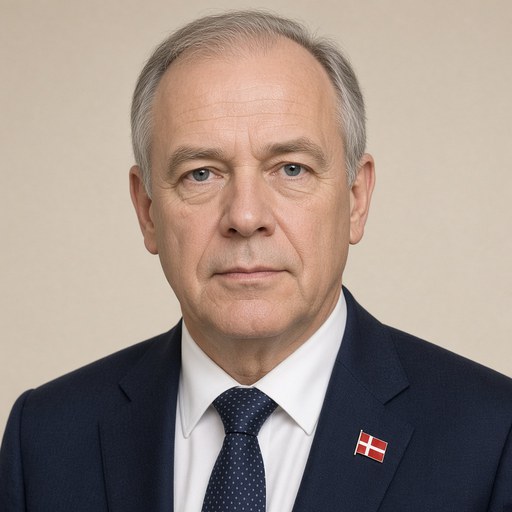
Response to inquiry F 35 submitted by the Red-Green Alliance, "The Time After the Supreme Court's Ruling on the Tvind Law"
 Poul Nyrup Rasmussen · Prime Minister of Denmark
- Context
- Rasmussen responded in the Danish Parliament to an inquiry from the Red-Green Alliance regarding the government's response to the Supreme Court's ruling that the Tvind Law was unconstitutional.
- Main themes
- Supreme Court ruling on Tvind Law, constitutionality of legislation, separation of powers, Article 3 of the Danish Constitution, parliamentary responsibility, Ministry of Justice legal advice, school subsidy eligibility, legislative limits, government accountability, judicial review
- Duration
- ~11 min
- Words
- 1,270
- Sentences
- 73
- Readability
- 46
- Grade
- 10.0
- Syntax
- 2.63
- Vocabulary
- 2.11
Translated from Danish
The broad sphere of national life a sentence belongs to. Every sentence has an Arena, so it is the denominator the other indices are read against.
Other73 sentences in 28 paragraphs
"What consequences does the government believe should be drawn from the fact that the Supreme Court has declared the Tvind Law unconstitutional?"
I would like to begin by stating that the Supreme Court's ruling of February 19 this year is historic, groundbreaking, clear, and decisive for the work of the Parliament and for the government's work. It concerns a fundamental question about the distribution of powers between the legislative and judicial branches, which has not previously been adjudicated.
In short, the ruling states that the legislative power, through the Tvind Law, has effectively made itself the judge in a specific legal dispute between the Tvind schools on one side and the Ministry of Education on the other. Thus, the legislative power has exercised a function that, according to Article 3 of the Constitution, falls under the courts.
Now that the ruling has been made, the legal interpretation it expresses is now the prevailing law. The ruling clarifies the limits of the legislative power's competence and will serve as a guideline for both the government and the Parliament in future legislative activities.
* * *
Let me immediately make the following clear: The Tvind Law is the responsibility of the government and the Parliament. We received nuanced advice, and we knew what we were doing. This is clearly stated in the remarks on the law, in the report, in the contributions to the report, and in the debate here in the Parliament.
In light of the ruling, the Minister of Education has presented a bill that repeals the provisions that must be considered invalid following the ruling. The named schools, which were deprived of the right to receive subsidies under the Tvind Law, now have the opportunity to be considered for subsidies on equal terms with other schools according to the general rules of the legislation.
It is still too early to say what the outcome will be of the processing that has now begun in the Ministry of Education. The schools will, of course, receive treatment in accordance with the general requirements for good case processing, including the rules of the Administrative Act. The general tightening of the rules in the area, which the Tvind Law also contained, will of course also be part of the case processing. These tightenings are not affected by the Supreme Court's ruling.
The Minister of Education has provided further details on the course and elements of the case processing in a consultation in the Education Committee on March 4, which I would like to refer to.
* * *
A few remarks on the advice from the Ministry of Justice: The Supreme Court has determined that parts of the Tvind Law are not compatible with the Constitution. The Ministry of Justice assessed it differently in 1996. Is there then grounds to criticize the Ministry of Justice? My answer is: Not according to the government's view, not according to my own view, and not according to the Minister of Justice's view.
I would like to repeat what I began by saying. The government and the Parliament have a clear responsibility that cannot be shifted to the civil service. It was our responsibility alone. The advice from the Ministry of Justice actually contained the nuances that good advice should contain. Just a few days after the Supreme Court ruling was made, and I had the opportunity to study it, I expressed that it had to be that way.
No one can claim that the Parliament was not aware that the Tvind legislation raised fundamental and legal-political considerations. Rarely has a set of laws been subjected to such thorough examination regarding the content of the proposal and its relationship to the Constitution. In other words: We passed the Tvind Law with our eyes wide open, and we found that there were compelling reasons to implement it. As I said before, the Ministry of Justice provided nuanced advice in connection with the law's creation.
Let me also remind you that this is the first time in the 150-year history of the Constitution that a legal provision has been set aside by the courts as unconstitutional. This is indeed the first time that laws based on the Ministry of Justice's constitutional assessments have subsequently been invalidated by the courts.
It would be too far-reaching to reproduce the Ministry of Justice's assessment of the then-proposed law's relationship to Article 3 of the Constitution. The Supreme Court has now spoken, and the government takes the ruling into account. We will adjust accordingly in the future. This applies to the government and, of course, also to the Parliament.
* * *
But it is clear that the Supreme Court's ruling will leave its mark on daily work. The Ministry of Justice has therefore also conducted a thorough review of existing procedures. The government has, on that basis, not found that this case in itself gives reason to consider the introduction of new formal procedures. But it is clear that the ruling has further sharpened the attention around the compatibility of legislative proposals with the Constitution. There is no doubt about that.
* * *
Does the Supreme Court's ruling then update the need for new bodies and organizations? The answer is no. Not according to the government's view. If we look at the question of a constitutional court, the Supreme Court's ruling in the Tvind case and the ruling in the Maastricht case show that our ordinary courts are capable of adjudicating the compatibility of laws with the Constitution.
The government therefore does not find that there is a need for a constitutional court. The Supreme Court performs that task with clarity and unambiguity. This discussion has not been given new impetus by the case we are discussing today; rather the opposite.
* * *
The same applies to the thoughts about a legislative council for the Parliament. I simply do not believe that a legislative council would significantly qualify the Parliament's legislative work or make it easier for us politicians to make decisions in cases with fundamental legal questions.
Let me conclude. There is not always a definitive answer with absolute guarantees. Law is not a completely exact science. Ultimately, it is a political decision to pass laws. There is debate, there is openness, there is room for arguments and concerns to be heard - not least here in this chamber. And that must continue. And then comes the time for political decisions. That will also be the case in the future.
In the Tvind case, all viewpoints were presented. The advice from the Ministry of Justice was nuanced, and legal responses were obtained from other sources with different conclusions. The basis for decision-making was in order, and the legal issues were illuminated and discussed.
* * *
Instead of thinking in terms of new bodies, new procedures, and more steps in the legislative process, let us use the opportunities we have. The possibilities are countless: We have the legal expertise and advice from the Ministry of Justice, which underpins the legislative proposals presented by the government. There is the parliamentary processing, and there is the committee processing. Independent responses can be obtained, and hearings can be held.
The Supreme Court's ruling actually shows the fundamental: We have an excellent system in Denmark that works.
We have received a very clear ruling that draws a line for how the government and the Parliament can act in relation to Article 3 of the Constitution regarding the separation of powers. It is important to keep this in mind in discussions about our Constitution, which, as mentioned, can celebrate its 150th anniversary this year.
The original Danish. The tags above are read on the English translation's sentences.
'Hvilke konsekvenser mener regeringen, der bør drages af, at Højesteret har kendt Tvindloven grundlovsstridig'?
Jeg vil gerne indledningsvis slå fast, at Højesterets dom af 19. februar i år er historisk, banebrydende, klar og afgørende for Folketingets arbejde og for regeringens arbejde. Den vedrører et principielt spørgsmål om kompetencefordelingen mellem den lovgivende magt og den dømmende magt, som ikke tidligere har været pådømt.
Meget kort fortalt går dommen ud på, at lovgivningsmagten med Tvindloven reelt har gjort sig til dommer i en konkret retstvist mellem Tvindskolerne på den ene side og Undervisningsministeriet på den anden. Dermed har lovgivningsmagten udøvet en funktion, som efter Grundlovens § 3 henhører under domstolene.
Nu er dommen faldet, og den retsopfattelse, som den er udtryk for, er nu gældende ret. Dommen præciserer grænserne for lovgivningsmagtens kompetence og vil både for regeringen og for Folketing været en rettesnor i den fremtidige lovgivningsvirksomhed.
* * *
Lad mig straks slå følgende fast: Tvindloven er regeringens og Folketingets ansvar. Vi fik en nuanceret rådgivning, og vi vidste, hvad vi gjorde. Det fremgår klart af bemærkningerne til loven, af betænkningen, af betænkningsbidragene og af debatten her i Folketingssalen.
I lyset af dommen har undervisningsministeren fremsat lovforslag, der ophæver de bestemmelser, der efter dommen må anses for ugyldige. De navngivne skoler, der med Tvindloven fik frataget retten til fremover at modtage tilskud, har nu mulighed for på lige fod med andre skoler at komme i betragtning til tilskud efter lovgivningens almindelige regler.
Der er endnu for tidligt at sige, hvad udfaldet vil blive af den sagsbehandling, som nu er gået i gang i Undervisningsministeriet. Skolerne vil naturligvis få en behandling i overensstemmelse med de almindelige krav til god sagsbehandling, herunder forvaltningslovens regler. Til grund for sagsbehandlingen vil selvfølgelig også indgå den generelle opstramning af reglerne på området, som Tvindloven også indeholdt. Disse opstramninger berøres selvsagt ikke af Højesterets dom.
Undervisningsministeren har nærmere redegjort for sagsbehandlingens forløb og elementer i et samråd i Uddannelsesudvalget den 4. marts, som jeg i øvrig skal henvise til.
* * *
Et par bemærkninger til Justitsministeriets rådgivning: Højesteret har fastslået, at dele af Tvindloven ikke er forenelige med Grundloven. Justitsministeriet vurderede det anderledes i 1996. Er der så grundlag for at kritisere Justitsministeriet? Mit svar er: Ikke efter regeringens opfattelse, ikke efter min egen opfattelse og ikke efter justitsministerens opfattelse.
Jeg vil godt gentage, hvad jeg indledte med at sige. Regering og Folketing har et klart ansvar, som ikke kan lægges over på embedsværket. Det var vores ansvar alene. Justitsministeriets rådgivning indeholdt faktisk de nuancer, som en god rådgivning skal indeholde. Allerede nogle få dage efter, at højesteretsdommen var faldet, og jeg havde haft lejlighed til at studere den, gav jeg udtryk for, at sådan måtte det være.
Ingen kan påstå, at Tinget ikke var klar over, at Tvindlovgivningen rejste principielle og retspolitiske overvejelser. Sjældent er et lovkompleks blevet gjort til genstand for så grundig behandling, når det gælder spørgsmålet om forslagets indhold og dets forhold til Grundloven. Med andre ord: Vi vedtog Tvindloven med åbne øjne, og vi fandt, at der forelå tungtvejende grunde til at gennemføre den. Som jeg sagde det før, gav Justitsministeriet en nuanceret rådgivning i forbindelse med lovens tilblivelse.
Lad mig også minde om, at det er første gang i Grundlovens 150-årige historie, at en lovbestemmelse er blevet tilsidesat af domstolene som grundlovsstridig. Det er altså første gang, at love, der baserer sig på Justitsministeriets grundlovsvurderinger, efterfølgende underkendes af domstolene.
Det vil føre for vidt her at gengive Justitsministeriets vurdering af det daværende lovforslags forhold til Grundlovens § 3. Højesteret har nu talt, og regeringen tager dommen til efterretning. Det vil vi indrette os på fremover. Det gælder for regeringen og naturligvis også for Folketinget.
* * *
Men det er klart, at Højesterets dom vil sætte sig spor i det daglige arbejde. Justitsministeriet har derfor også foretaget en nøje gennemgang af eksisterende procedurer. Regeringen har på den baggrund ikke fundet, at denne sag i sig selv giver anledning til at overveje indførelse af nye formelle procedurer. Men det er klart , at dommen yderligere har skærpet opmærksomheden omkring lovforslags forenelighed med Grundloven. Ingen tvivl om det.
* * *
Aktualiserer Højesterets dom så et behov for nye organer og organisationer? Svaret er nej. Ikke efter regeringens opfattelse. Hvis vi ser på spørgsmålet om en forfatningsdomstol, viser Højesterets dom i Tvindsagen og dommen i Maastrichtsagen, at vore almindelige domstole er i stand til at pådømme loves forenelighed med Grundloven.
Regeringen finder derfor ikke, at der er behov for en forfatningsdomstol. Den opgave løfter Højesteret med klarhed og med entydighed. Den diskussion har altså ikke fået ny næring med den sag, vi diskuterer i dag, snarere tværtimod.
* * *
Og det samme gør sig gældende i forhold til tankerne om et lovråd for Folketinget. Jeg tror simpelthen ikke, at et lovråd i væsentlig grad vil kvalificere Folketingets lovarbejde eller gøre det lettere for os politikere at træffe beslutninger i sager med principielle juridiske spørgsmål.
Lad mig runde af. Der gives ikke hver gang og altid en facitliste med skråsikre garantier. Jura er ikke nogen fuldstændig eksakt videnskab. Til syvende og sidst er det en politisk beslutning at vedtage love. Der gives debat, der gives åbenhed, der gives rum for, at argumenter og betænkeligheder kan nå frem - ikke mindst her i salen. Og det skal der fortsat gives. Og så kommer tidspunktet for de politiske beslutninger. Sådan vil det også være i fremtiden.
I Tvindsagen var alle synspunkter fremme. Rådgivningen fra Justitsministeriet var nuanceret, der var indhentet juridiske responsa fra anden side med andre konklusioner. Beslutningsgrundlaget var i orden, de juridiske problemstillinger var belyst og diskuteret.
* * *
I stedet for at tænke i nye organer, nye procedurer og flere led i lovgivningsprocessen, så lad os dog bruge de muligheder vi har. Mulighederne er utallige: Vi har Justitsministeriets juridiske ekspertise og rådgivning, som ligger til grund for lovforslag fremlagt af regeringen. Der er folketingsbehandlingen, og der er udvalgsbehandlingen. Der kan indhentes uafhængige responsa, og der kan afholdes høringer.
Højesterets dom viser faktisk det grundlæggende: Vi har et fortræffeligt system i Danmark, der fungerer.
Vi har fået en meget klar dom, som trækker en streg for, hvordan regering og Folketing kan agere i forhold til Grundlovens § 3 om magtens tredeling. Det er vigtigt at have for øje i diskussionerne om vores Grundlov, der netop som sagt i år kan fejre sit 150-års jubilæum.