




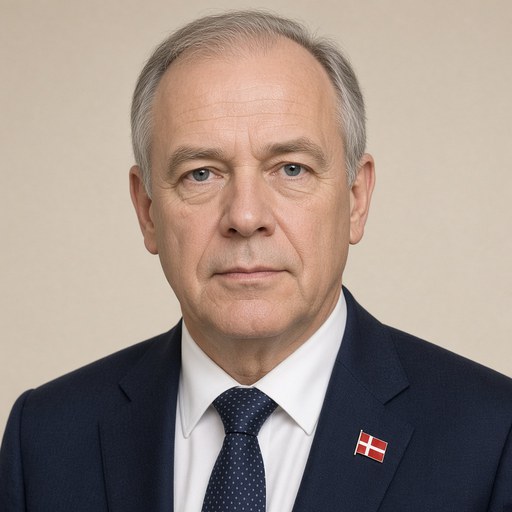
Prime Minister Poul Nyrup Rasmussen's statement at the concluding debate of the Folketing on Thursday, May 27, 1999.
 Poul Nyrup Rasmussen · Prime Minister of Denmark
- Context
- Rasmussen addressed the Folketing's final concluding debate of the century on May 27, 1999, reflecting on history and Denmark's role in the Kosovo conflict.
- Main themes
- Kosovo conflict and NATO intervention, end-of-century reflection, humanism and solidarity, democracy and freedom, Danish constitutional anniversary, Cold War legacy, South Africa and apartheid, European unity and peace, Danish foreign policy, Balkans crisis, historical lessons from 20th century
- Duration
- ~46 min
- Words
- 5,561
- Sentences
- 363
- Readability
- 52
- Grade
- 9.1
- Syntax
- 2.63
- Vocabulary
- 2.04
Translated from Danish
The broad sphere of national life a sentence belongs to. Every sentence has an Arena, so it is the denominator the other indices are read against.
Other363 sentences in 182 paragraphs
Today we embark on the final concluding debate of the Folketing in this century - in the 20th century.
It is a strange feeling - one cannot state that we humans in Europe have unequivocally become wiser. Unambiguously learned from our own mistakes over the years. Conversely, one cannot claim that we have not made progress in living standards, prosperity for the many.
A multitude of images rushes in. We have gone through terrible periods where dictators ruled, wars caused unimaginable suffering and loss of life - again followed by a prosperity in the Western world and in Western Europe that is unparalleled in history.
A prosperity linked with freedom and democracy that we in Denmark have good reason to reflect on in the 150th year of the Constitution.
The hopes of millions of people became reality on the western side of the Berlin Wall over 50 years. On the eastern side, it was different.
But in the end, humanism triumphed nonetheless in our part of the world.
It is 10 years ago. The wall is gone. The Cold War is gone. We are engaged in a massive, new popular project for all of Europe that is meant to give us lasting peace.
And we thought we had left it behind us.
Can we achieve peace, freedom, and democracy for ordinary people in Kosovo - across the entire Balkans?
There is a reference point that provides the answer in this century. When it finally came down to it, we pulled together in Europe - in cooperation with the USA. We did not close our eyes to the things happening around us, because we knew that would be to fail them and ourselves.
* * *
A very long leap to our own country yields the same result: In our own country, we also made it through. We built our society because we wanted to - because we set ourselves clear goals. Because we did not give up.
I am completely convinced that it is precisely these fundamental values: Humanism, community, solidarity - values that cannot be compromised - that have continuously been the foundation for our country to develop into the society we know today. And a prerequisite for our efforts in relation to the poor countries of the world - and in relation to the rest of Europe - to have the strength it has today.
* * *
That is why we protested when the war came - in Hungary in 1956, in Czechoslovakia in 1968.
That is why we protested in South Africa during all those years when others - including some in Denmark - said: 'It won't help. Apartheid is here to stay. We are up against too strong forces...'
But the oppressed did not give up - and most of us here at home did not give up either.
South Africa became free with a vote for every black, every white, and every colored person. Nelson Mandela came in the past parliamentary year and thanked a country that he counts among South Africa's friends. We should be proud of that. That is where we should be measured - on the principles of humanity, solidarity, and unity.
History has shown us that it can make a difference. That people can make a difference. That countries can make a difference. That we internally in our own country can make a difference - if we want to.
The struggle for peace in Kosovo
But we thought we had left it behind us - 50 years ago. Back when people said 'never again'.
And now we see it again. Mass deportations in overcrowded train cars. Unimaginable suffering, women and children loaded onto trucks in 20-kilometer-long convoys - dropped off a good distance from the border, just so they manage to cross over alive. Young men who are missing or have been killed. Terrible suffering that strikes an entire people.
The Serbian leadership is in the process of emptying an entire country of its own people.
We cannot just turn our backs on that. It must be stopped. It has to be stopped. For the sake of humanism. For our own sake.
* * *
Of course, we have all found it difficult that we in Denmark now have to engage in a military effort at the end of this century.
The military card must always be the last one played. Therefore, we have previously explored all negotiation possibilities to achieve the peaceful agreement we all desire. Every conceivable option was tried in relation to Milosevic and his generals. The OSCE was not allowed to work. Negotiation leader after negotiation leader came to Belgrade, but in vain. All avenues were explored before NATO intervened.
It was necessary - and it is necessary with the air operations and bombings that are now underway. There were no other alternatives. That is why we intervened. That is why we in Denmark are part of the task - as others are.
Our goal is simple: The Kosovo Albanians must be able to return to their own country - no more, no less!
That goal we share with everyone in Europe. Not only Western Europe, but all of Eastern and Central Europe and the USA, Japan, and Canada. It was unequivocally confirmed in Washington at NATO's 50th anniversary.
* * *
That is why it is incredibly important that we in the Folketing, with such a broad majority as is the case, can hold together around a clear signal. That we do not give up. It would be completely wrong and unforgivable in light of the brutality that the Serbian leadership is displaying in these weeks if we were to give up.
That is why Milosevic and his generals are not only isolated militarily, they are also isolated politically.
But there is a long way to go yet.
We must still arm ourselves with patience. It takes time. The negotiations for the withdrawal of the Serbian military and the cessation of abuses against innocent Kosovo Albanians are dragging on.
The air operations must continue until the abuses against innocent people have stopped - and the people can return safely to their own country.
* * *
Alongside our duty to participate in the military pressure to stop the Serbs' ethnic cleansing, we must do what we in Denmark are known for: To help humanitarian - first and foremost in the neighboring areas, in Albania, in Macedonia, and in Kosovo.
We are already making a significant effort - greater than most measured per capita. And the need is still enormous.
It fundamentally comes down to the foundation: That humanism is the most important. That the responsibility for others besides ourselves is our common value.
* * *
There will come a day when the Serbian leadership is no longer able to maintain its iron grip on Kosovo. A day when the Kosovo Albanians can return to their homeland under international military protection.
Here too, we must help to lift the next great task.
* * *
New international work
In the midst of the catastrophe in the Balkans, there may still be - somewhere - certain changes in the development that suggest that there is a higher answer to all the experiences we have from the years after the Cold War. Perhaps we are seeing the outlines of a new international cooperation with stronger values ahead of us.
UN Secretary-General Kofi Annan recently said in a speech to the UN Committee on Human Rights: 'We cannot accept a situation where people within a country's borders are brutalized, mass deported, killed. It would be directly against the UN's obligations in the 21st century. The UN Charter must never become a refuge for mass murderers.'
No democratic person can disagree with the UN Secretary-General. We are in the process of writing a new chapter in international law.
I believe that this century has delivered a message to us: That the sovereign inviolability of borders has not secured us humanism and humanity.
It is precisely in that light that we must also view the significant changes in NATO and European cooperation that the past parliamentary year has shown us.
New cooperation in Europe - the question of reservations
When we return home from the summit in Cologne on June 4, we will have had a total of 6 EU summits since the start of the parliamentary year. In addition, NATO held its summit in Washington in April.
The Kosovo crisis and the international decisions at the summits define the basis for the Danish active foreign policy, which the government has emphasized from the start.
In this decade, we have created a new foundation for all of Europe. And it is worth noting that it is a Europe where there is room for everyone. No countries are excluded in advance. Everyone has the opportunity to be part of a new community.
This became a reality for the EU when we negotiated the new Amsterdam Treaty two years ago.
This became a reality for NATO when we reached an agreement in Washington just over a month ago.
We have now future-proofed the two pillars on which Europe rests - the EU and NATO. Now it is about building a bridge between the two. We build on the same common value foundation - of humanism and democracy. We perform different tasks in the two organizations.
And we must also include the OSCE and first - and foremost - the UN, as the decisive organization for the international community.
No one can yet say what the structure will look like - how the cooperation between NATO and the EU will take shape. That is what the EU and NATO will spend the next year and a half clarifying.
But what we can already say is that we are faced with a quite different agenda than the one we had when Denmark made reservations in Edinburgh in 1992 regarding a defense cooperation in the EU. Whether the negotiations between the EU and NATO will lead to a point where we should consider whether what we decided in 1992 is still best for Denmark's future, no one can say with any objectivity.
We are still at the beginning of a process whose outcome no one knows. And therefore, as far as the defense reservation is concerned, there is also nothing for the Danish population to decide on. For it is the Danish population - and only that - that decides. This is just said to those who are pressing for a referendum here and now.
Conversely: To those who will forever exclude the possibility that the Danish people can ever be heard again, just to avoid any doubt: The government agrees with the Danish reservation in the defense area. We did in 1992, and we do today. The reservation is an expression that Denmark does not want to participate in the creation of a common European defense in competition with NATO and outside NATO.
Also precisely here, a path is emerging and for Denmark a positive development. The EU should not withdraw from NATO. Now it is about cooperation. And here we clearly have an interest in helping to shape the outcome:
Our objectives are quite clear in the defense area:
It must be fully ensured that the European defense pillar is part of NATO and not separate from NATO,
It must be ensured that the EU does not build its own European army and take on the central defense task in relation to its own territory. That task is once and for all placed in the NATO alliance. That must continue to be the case.
It is also in Denmark's interest that countries that are not EU members but are NATO members can participate in joint actions that have the character of humanitarian aid, peacekeeping, or peace-building actions.
The same applies to countries that are EU members but not NATO. Here too, there should be the opportunity to lift a task together with the other countries in Europe.
Overall, the government envisions a much broader cooperation in Europe than many envisioned just 7 or 8 years ago. The Partnership for Peace, the cooperation in NATO, which Denmark has worked for - will play a significant role.
* * *
In light of the colossal international changes we have experienced in recent years, it has been particularly important that a broad majority in the Folketing has been able to unite around a new 5-year defense agreement.
The government has from the start extended a hand for cooperation with responsible agreement parties. We will today acknowledge that it has succeeded in finding common ground on a difficult but entirely necessary renewal and restructuring of the Danish defense. We know that the closure of barracks is a painful process for the local communities affected. But the renewal and transition to the new era - after the end of the Cold War - is entirely necessary for Denmark's international responsibility and security policy. Here too, Denmark can now position itself on a new and forward-looking path.
* * *
My starting point is simple: Whether we are talking about the future of the UN, NATO, Europe, or Denmark - it is about political choices and decisions. Where do we want to go? What do we want to use the organizations we have for? What is our vision?
How do we ensure humanism, humanity within and across borders? How do we ensure that the responsibility is clear for everyone? That is the prerequisite for us to connect values and practical actions in everyday life and in international work - it is the prerequisite for the population to see a meaning in it all.
After the Amsterdam Treaty came into force on May 1 of this year, we stand with a new foundation where we can put practical content into the concept of political union in a completely different way.
The Amsterdam Treaty is the starting point for the European reality of 1999. It is the principles of the Amsterdam Treaty that outline the framework for the EMU, for the common foreign and security policy, for cooperation on refugee and immigration policy.
And it is with the Amsterdam Treaty on the table that we negotiate with the 10 Central and Eastern European countries that will, in not too many years, become members of the EU. With the agreement on the Amsterdam Treaty, we truly set the negotiations in motion. With the agreement on Agenda 2000, we have adjusted the EU's budget and policies so that there is room for enlargement. Now follows the adjustment of the EU's institutions, which is also necessary for enlargement.
For me, the Amsterdam Treaty and the negotiations on the EU's enlargement are a clear demonstration that the EU now has the basis to provide a real response to the challenges that matter for the lives and daily lives of Europeans.
* * *
Denmark is not part of the euro. Denmark is not part of a European defense. And Denmark is not part of a European justice and refugee cooperation within pillar 1. That has been determined by the Danish population. And the government - and I myself - have the utmost respect for that.
And let me for the sake of clarity repeat - for it seems necessary - that it is only the Danish population that can change the reservations.
The Danish reservations do not prevent us from discussing the issues on the European agenda. It would actually be directly irresponsible of the government if we turned our backs on reality. Therefore, Denmark will naturally - with respect for the reservations - work to ensure that European cooperation continues to move in the right direction.
When it comes to the euro, the government has already made an effort to kickstart the debate. And more informational material will follow.
In the government's view, the Economic and Monetary Union (EMU) is about much more than currency mechanics. The perspective is broader. It is not just a new, strong currency that is now emerging. The euro area also appears to be able to become the only region in the world where one combines a common currency with a strong effort for employment, for the environment, for the protection of human rights and respect for minorities, along with a fight for some fundamental welfare principles that are not far from our own.
In the larger perspective, we also see this new strong currency zone as an international actor that speaks clearly and strongly about avoiding social dumping. That will advocate for environmental issues more vigorously. That will talk about social and human minimum standards, and respect for labor rights, that will show decisiveness in the face of international financial crises created by speculators. A global response to the global challenge. That is not the case - yet! But it could well become so in the future if we decide on this perspective.
Therefore, we also believe that we should consider Danish membership in the EMU.
A Denmark on the right course
The active line we have built in Denmark's foreign policy is mirrored in Danish domestic policy.
Ensuring stable economic growth for Denmark is not an end in itself. It is the fundamental means to achieve everything we want in Danish politics. It is the foundation of the government's economic policy. If there is order in the economy, we have the strength and opportunity to realize everything that politics is about. Better conditions for most, for the marginalized, and for those who have given up hope for a better life.
If there is a crisis in the economy, we have seen time and again, back in history, that it consumes all our political energy here in the Folketing.
It is, as is well known, not an art to experience better living conditions for the few and for the well-off.
The art is to ensure good, decent living conditions and opportunities for everyone in our country - not least for those who do not have the means to manage so well without a community and a society.
It is about the responsibility for ourselves and for each other.
Internationally and nationally, it is about the fundamental values that the government works for:
The way the neighbor is doing is not only the neighbor's concern - it is also ours.
The way the weakest are doing is not only the concern of the weakest - it is also ours.
And the way the next generation will fare is not only their problem - it is also our problem.
Over the years, the government has emphasized that the values that characterize the humanism we desire - respect for the individual, our responsibility for each other, rights and duties - these values must also be manifested in practical politics and everyday life.
We have struggled to restore a welfare society that was worn down. We took over in 1993 the responsibility for a country that was running out of steam. There was not much to boast about or write home about.
The government took action with all means. Popular as well as less popular. We have improved, cleaned up, tightened, streamlined, modernized, renewed, reinvented, and rethought.
And we have done it all with one single purpose: To ensure Denmark and everyone in Denmark a good and stable progress - in an increasingly competitive international world.
Much has succeeded. Some better than expected. Unemployment - the seed of the greatest inequality and human loss - has been more than halved. The public budgets have gone from red to black figures. And the economy is doing so well that we have occasionally had to slow down a bit to avoid problems with the balance of payments.
Even the biggest pessimists have found it hard to maintain their gloom. The average Dane is better off.
* * *
This does not mean that everything is as we would wish it. The government is a minority government - and that naturally affects the politics. That must be the case.
We must see the public economy as an ordinary - large - household. We cannot have everything at once. Therefore, as in all families, we must plan, choose what to prioritize, and what to forego. Therefore, prioritization must be made - to an even greater extent in the coming years.
All debt in society must be reduced - social debt, environmental debt, monetary debt.
Many questions and challenges arise from the developments - from the changes internally and externally. And for the government, it is completely clear that we want to steer the development - we do not want a development that we will let ourselves be steered by!
This has been the guiding principle throughout the 6 years of political work that the government has led so far. It will also be the guiding principle going forward.
* * *
As usual, it has been a busy year. Many results can be mentioned. I will point out some examples and otherwise refer to the report 'The Government's Results', which has been distributed to the members of the Folketing.
Strategy for hospital policy
The government has a shared responsibility with the counties to develop and improve the Danish hospital system even better than today. The proposal for the strategy for hospital policy 2000-2002 is our suggestion on how we meet the objectives of high quality, clear communication, better service, short waiting times, and good efficiency.
The government must now - together with the counties - begin to concretize the strategy through a multi-year agreement.
The agreement should be seen in connection with the improved distribution of specialties that was implemented in connection with the capital reform.
Program for public health
The Danish life expectancy is too low, and many Danes lose good years of life due to long-term illness. And there is a clear correlation between the most disadvantaged and poor health and unhealthy lifestyles.
It is not just about money - but about attitudes and the will to live healthily.
Therefore, the government has presented a cross-cutting ten-year prevention program to improve public health.
The program is not intended to put pressure on or point fingers at people and their lifestyles. People's lifestyles are fundamentally their own business. The government can provide advice, guidance, and information. But it should hopefully end with more and more people recognizing the increased quality of life that comes with a healthy lifestyle.
The government will report in October on the organization of the program and the prioritization of efforts in the coming years.
Labor market reform III
The good employment opportunities mean that we can now take further steps to get the last unemployed people into the labor market and into jobs.
This year, we have also implemented a labor market reform. The parties in the labor market have taken on a significant responsibility here. The government would like to take this opportunity to acknowledge that. The rules have now been adjusted in such a way that we have better opportunities to reach the next goals.
By strengthening labor market policy in this way, the employment growth has good prospects for continuing without bottlenecks.
Labor market policy is a cornerstone in the work for a long-lasting and stable recovery.
Education and research
It is not the case that we all can do the same or want the same. This diversity should be reflected in our education systems. It is therefore crucial that the educational programs are equivalent.
Therefore, we have now abolished the suitability assessment. It is an important signal. In the future, no one should be categorized as suitable or unsuitable - as perhaps suitable!
Everyone should have the opportunity to develop their talents and abilities on equal terms.
The opportunities for further education have never been better. There are far more educational places now than in 1993.
At the same time, more and better research has been created. The government has significantly increased public investments in research, organized a targeted research strategy, strengthened the interaction between public and private research, and improved conditions for researchers through the establishment of research parks. All of this was long overdue.
Now we are back in the game and can assert ourselves on the international front line.
Retirement, senior policy, working environment, and gender equality
It is already clear that within a short number of years, we could find ourselves in a situation where we would lack labor if we do not address the challenge now. Looking ten years ahead, there will be 140,000 more elderly people and 220,000 fewer young people.
Therefore, we must encourage those who can and want to stay a little longer in the labor market. We have followed several paths here. We have implemented a reform of early retirement that offers much better opportunities for gradual withdrawal and increased security in the form of an early retirement guarantee certificate, while maintaining the early retirement age at 60 years.
We must maintain the perspective. We must never turn our backs on change. The central point - now that all the dust has settled - is that a large majority in the Folketing has created calm and clarity about the arrangement. And established a fair and just system that extends far into the future.
It is gratifying to note that it seems that very few are opting out of the arrangement.
And then there is the working environment, which I highlighted in the opening speech last year. Here we have now specifically addressed the 10 most dangerous job groups, strengthened accident research, and tightened monitoring.
And new paths have been laid out for gender equality work. The challenges of gender equality have changed since we established the Gender Equality Council many years ago. But there are still significant challenges, for which we are now in the process of creating new frameworks. The Gender Equality Council will be dissolved. Instead, a knowledge center, a debate forum, and - as an experiment - a complaints board will be established.
Environment, food, and consumer policy
A broad political agreement has been reached on a reform for the electricity sector. The reform entails that all consumers can freely choose their electricity supplier by 2002, that a cap is placed on the sector's CO2 emissions, that consumers are still ensured significant influence, and that renewable energy is gradually expanded.
* * *
We can also be pleased with the very positive development that has taken place in relation to the other parts of the Realm.
The Faroe Islands
May 18, 1999, was a historic day for the Faroe Islands. After negotiations spanning several decades, it was possible to sign the agreement on the delimitation between the Faroe Islands and the UK. Together with the Faroese, we could put an end to a matter of great importance for the Faroe Islands. A formal limitation on Faroese oil extraction has thus been cleared away. For me, the agreement also illustrates the strength of cooperation between our two realms.
The economic situation also looks bright in the Faroe Islands. The agreement on the continental shelf boundary, along with the improved Faroese economy, provides a good basis for looking ahead and planning for the future.
The government will publish a white paper next month that will form the basis for clarifying the future relations of the Faroe Islands with Denmark. The white paper will be debated in the Lagting and among the Faroese population.
The government has previously expressed a positive attitude towards negotiating a change in the bilateral relations between Denmark and the Faroe Islands. We stand by that.
Greenland
Greenland has now had home rule for 20 years. We congratulate them on that. It is not long when considering the development that Greenland has undergone.
The world's largest island has, of course, special conditions to contend with:
In recent months, several reports on economic conditions in Greenland have been presented. The assessments have been quite consistent. The most significant area of focus will henceforth be to create dynamic business development with the establishment of alternative employment opportunities to fishing.
As another area of focus, the reports point to the investment needs that the home rule government faces in terms of providing housing and renovating existing ones. The government and the land council have just completed a condition report for the building stock and have made proposals for how the housing stock should be maintained in the future - including how maintenance can be financed. The government and the land council will now discuss what Danish support for this work could consist of.
We will continue our good cooperation with the home rule government within the framework of home rule and in mutual respect, also regarding the safeguarding of Greenland's interests in the EU and in relation to other countries.
In this context, the government has initiated discussions with the Greenlandic home rule government about strengthening the foreign policy profile.
* * *
I would like to conclude as I began: internally and externally, we wish to make a difference in this country - internally and externally, our policy is driven by a strong determination to connect the responsibility for the individual with the responsibility for our community and our shared values - without them, we cannot find our way.
When the Kosovo Albanians in the Balkans have returned to their own homes and their own country under military protection, the next major task begins. A task that Europe and only Europe can lift and solve.
It is about winning peace. Winning peace in the Balkans will be a long and also costly task. We will only win peace if we manage to create a new social and economic progress in the Balkans - for all the populations. This requires an extraordinary degree of political determination in the EU - and above all, it requires that we take the lead, outline the perspective, and insist on an equally ambitious future for the Balkans as for the EU's expansion.
This year, we celebrate the 150th anniversary of Denmark's constitution for our democratic foundation - it was just before we took all of that for granted - until we were reminded that democracy and fundamental human rights are certainly not a given.
It is all about democracy, about duties and rights, about responsibility and shared values.
* * *
On June 10, there will be elections for the European Parliament.
When someone asks: Why should I go and vote? The answer is simple: For the same reason you vote in the municipal elections - there is no doubt about that. The regional council elections - there is no doubt about that either! Or in the parliamentary elections - there is no doubt about that either.
We must be where political decisions are made, where we choose people to take on specific tasks. This also applies to the European Parliament.
* * *
I have focused a lot on our international conditions because the changes here are so extensive. And because it is so important that we maintain a consistent line. It takes time and effort before we can see the results, but the direction is unmistakable. When solutions come into sight, we stand stronger internally.
Perhaps the effort we are making in these months in the Balkans, with such strong willingness to sacrifice from the Danish people, also helps us to strengthen solidarity and cohesion in our own country.
That feeling of community, belonging, and care for the weakest and for the whole community, which has always been there - but which may not always be visible.
That feeling of community is the desire to help, which we feel every day, right now in relation to the poor and refugees. It is a reminder that we can indeed do it in Denmark. It is also a reminder to ourselves that we want to move forward in our own society, to ensure that those who are outside in our own country can come along.
For the government, it is completely clear.
We can essentially choose for ourselves in Denmark. We can become a small, well-known pioneering country that places decisive emphasis on human values, on cohesion, on community - which is also the foundation for the individual person to thrive as best as possible.
Or we can choose self-sufficiency.
The choice is ours. We choose the pioneering country. We believe that the community can hold. But only if we decide to do so. And only if we see a vision for ourselves, where the state is not just a machine expected to take care of everything for us. Where welfare is not just something that comes in the mail, but something we all have to make an effort for. Something we all have a responsibility for.
Where we still build on valid values of rights and duties - and especially the responsibility for the weakest.
* * *
That is what we have decided.
The government thanks everyone who has shared responsibility in the past parliamentary year with us.
There were occasions when it was difficult for one of the larger opposition parties - but each time we have managed to maintain the line in good cooperation both to the right and to the left in the Parliament.
We look forward to continuing this cooperation in the next parliamentary session.
The original Danish. The tags above are read on the English translation's sentences.
I dag tager vi fat på Folketingets sidste afslutningsdebat i dette århundrede - i det 20. århundrede.
Det er en mærkelig fornemmelse - man kan ikke konstatere, at vi mennesker i Europa entydigt er blevet klogere. Entydigt har lært af vore egne fejltagelser gennem årene. Man kan omvendt heller ikke påstå, at vi ikke har gjort fremskridt i levevis, velstand for de mange.
Mylderet af billeder trænger sig på. Vi har været igennem forfærdelige perioder, hvor diktatorer herskede, krige medførte ufattelige lidelser og tab af menneskeliv - igen efterfulgt af en velstandsfremgang i den vestlige verden og i Vesteuropa, som er uden sidestykke i historien.
En velstandsfremgang koblet med frihed og demokrati som vi i Danmark på 150 året for Grundloven har god grund til at tænke på.
Håbene for millionvis af mennesker blev virkelighed på den vestlige side af Berlinmuren gennem 50 år. På den østlige side var det anderledes.
Men til sidst sejrede humanismen alligevel i vor del af verden.
Det er 10 år side. Muren er væk. Den kolde krig er væk. Vi er i gang med et kæmpemæssigt, nyt folkeligt projekt for et helt Europa, der skal give os en varig fred.
Og vi troede, at vi havde lagt det bag os.
Kan vi få fred, frihed og demokrati for almindelige mennesker i Kosovo - på hele Balkan?
Der er et holdepunkt, som giver svaret i dette århundrede. Når det endelig kom til stykket, tog vi os sammen i Europa - i samarbejde med USA. Vi lukkede ikke øjnene for ting, der skete rundt om os, fordi vi vidste, at det ville være at svigte dem og os.
* * *
Et meget langt spring til vores eget land giver det samme resultat: I vores eget land kom vi også igennem. Vi fik bygget vores samfund op, fordi vi ville - fordi vi satte os nogle klare mål. Fordi vi ikke gav op.
Jeg er helt overbevist om, at det netop er disse grundlæggende værdier: Humanismen, fællesskabet, sammenholdet - værdier, der ikke kan kompromisses om - som hele tiden op igennem årene har været fundamentet for, at vores land kunne udvikle sig til det samfund, vi kender i dag. Og en forudsætning for, at vores indsats i forhold til de fattige lande i verden - og i forhold til resten af Europa - kunne få den styrke, den har i dag.
* * *
Derfor protesterede vi, da krigen kom - i Ungarn i 1956, i Tjekkoslovakiet i 1968.
Derfor protesterede vi i Sydafrika i alle de år, hvor andre - også nogle i Danmark - sagde: 'Det kan ikke nytte noget. Apartheid er kommet for at blive. Vi er oppe mod for stærke kræfter...'
Men de undertrykte gav ikke op - og de fleste af os herhjemme gav heller ikke op.
Sydafrika blev frit med en stemme til hver sort og hver hvid og hver farvet. Nelson Mandela kom i det forgangne folketingsår og sagde tak til et land, som han regner blandt Sydafrikas venner. Det skal vi være stolte af. Det er der, vi skal måles på - principperne om menneskelighed, solidaritet og sammenhold.
Historien har vist os, at det kan nytte. At folk kan gøre en forskel. At lande kan gøre en forskel. At vi internt i vores eget land kan gøre en forskel - hvis vi vil.
Kampen for fred i Kosovo
Men, vi troede, vi havde lagt det bag os - for 50 år siden. Dengang hvor folkene sagde 'aldrig mere'.
Og nu ser vi det alligevel igen. Massedeportationer i overfyldte togvogne. Ufattelige lidelser, kvinder og børn, der læsses på lastvogne i 20 kilometer lange bilkonvojer - sættes af et godt stykke fra grænsen, så de lige når at komme over i levende tilstand. Unge mænd, der savnes eller er blevet slået ihjel. Frygtelige lidelser som rammer et helt folk.
Den serbiske ledelse er i færd med at tømme et helt land for dets eget folk.
Det kan vi ikke bare vende ryggen til. Det må stoppes. Det skal stoppes. For humanismens skyld. For vores egen skyld.
* * *
Vi har selvfølgelig alle sammen haft det tungt med, at vi i Danmark nu skulle i gang med en militær indsats ved slutningen af dette århundrede.
Det militære kort må altid være det sidste, der trækkes. Derfor har vi forud afprøvet alle forhandlingsmuligheder, for at få den fredelige aftale vi alle sammen ønsker. Alle tænkelige muligheder blev afprøvet i forhold til Milosevic og hans generaler. OSCE kunne ikke få lov at arbejde. Forhandlingsleder efter forhandlingsleder kom til Beograd, men forgæves. Alle veje blev prøvet, før NATO greb ind.
Det var nødvendigt - og det er nødvendigt med de flyaktioner og bombninger, der nu er i gang. Der var ikke andre udveje. Derfor greb vi ind. Derfor er vi i Danmark med til at løfte opgaven - som andre gør det.
Vores mål er enkelt: Kosovo-albanerne skal kunne vende tilbage til deres eget land - ikke mere, ikke mindre!
Det mål har vi tilfælles med alle i Europa. Ikke alene Vesteuropa, men hele Øst- og Centraleuropa og USA, Japan og Canada. Det blev entydigt bekræftet i Washington ved NATO’s 50 års jubilæum.
* * *
Derfor er det fantastisk vigtigt, at vi i Folketinget, med et så bredt flertal som tilfældet er, kan holde sammen om et klart signal. At vi ikke giver op. Det ville være helt forkert og utilgiveligt i lyset af den brutalitet, som den serbiske ledelse udviser i disse uger, hvis vi gav op.
Derfor er Milosevic og hans generaler ikke alene isoleret militært, de er også isoleret politisk.
Men der er lang vej endnu.
Vi må stadig væbne os med tålmodighed. Det tager tid. Forhandlingerne om en tilbagetrækning af det serbiske militær og standsning af overgreb mod de uskyldige Kosovo-albanere trækker ud.
Flyaktionerne må fortsætte indtil overgrebene mod uskyldige mennesker er standset - og folkene kan vende tilbage i tryghed til deres eget land.
* * *
Samtidig med vores pligt til at deltage i det militære pres for at standse serbernes etniske udrensninger, må vi gøre det, vi i Danmark er kendt for: At hjælpe humanitært - først og fremmest i nærområdet, i Albanien, i Makedonien og i Kosovo.
Vi gør allerede en stor indsats - større end de fleste målt pr. indbygger. Og behovet er stadig enormt.
Det handler dybest set igen om fundamentet: At humanisme er det vigtigste. At ansvaret for andre end os selv er vores egen fælles værdi.
* * *
Der kommer en dag, hvor den serbiske ledelse ikke længere er i stand til at holde sit jerngreb om Kosovo. En dag hvor Kosovo-albanerne kan vende tilbage til deres hjemland under international militær beskyttelse.
Også her skal vi være med til at løfte den næste store opgave.
* * *
Nyt internationalt arbejde
Midt i katastrofen på Balkan er der måske alligevel - et eller andet sted - visse ændringer i udviklingen som antyder, at der er et højere svar på alle de erfaringer, vi har fra årene efter den kolde krig. Måske er det konturerne af et nyt internationalt samarbejde med stærkere værdier, vi ser foran os.
FN’s generalsekretær Kofi Annan har i en tale fornylig til FN-Komitéen for Menneskerettigheder sagt: 'Vi kan ikke acceptere en situation, hvor folk inden for et lands grænser brutaliseres, massedeporteres, slås ihjel. Det vil være stik imod FN’s forpligtelser i det 21. århundrede. FN’s pagt må aldrig blive gemmestedet for massemordere'.
Intet demokratisk menneske kan være uenig med FN’s generalsekretær. Vi er i gang med at skrive et nyt kapitel til den internationale Folkeret.
Jeg synes, at dette århundrede har leveret et budskab til os: At grænsernes suveræne ukrænkelighed ikke har sikret os humanismen og menneskelighed.
Det er lige præcis i det lys, vi også skal se de store forandringer i NATO og det europæiske samarbejde, som det forløbne folketingsår har vist os.
Nyt samarbejde i Europa - spørgsmålet om forbeholdene
Når vi kommer hjem fra topmødet i Køln den 4. juni har vi ialt haft 6 EU-topmøder siden folketingsårets start. Hertil kommer, at NATO holdt sit topmøde i Washington i april.
Kosovo-krisen og de internationale beslutninger på topmøderne definerer grundlaget for den danske aktive udenrigspolitik, som regeringen fra starten har lagt afgørende vægt på.
I dette årti har vi fået skabt et nyt fundament for hele Europa. Og det er vel at mærke et Europa, hvor der er plads til alle. Ingen lande er udelukket på forhånd. Alle har mulighed for at være med i et nyt fællesskab.
Det blev en realitet for EU, da vi for 2 år siden forhandlede den ny Amsterdamtraktat på plads.
Det blev en realitet for NATO, da vi for godt en måned siden nåede til enighed i Washington.
Vi har nu fremtidssikret de to søjler, som Europa hviler på - EU og NATO. Nu gælder det om at bygge bro mellem de to. Vi bygger på det samme fælles værdigrundlag - humanismens og demokratiets. Vi varetager forskellige opgaver i de to organisationer.
Og vi skal dertil lægge OSCE og først - og sidst - FN, som den afgørende organisation for verdenssamfundet.
Ingen kan endnu sige, hvordan bygningsværket vil komme til at se ud - hvordan samarbejdet mellem NATO og EU vil forme sig. Det skal EU og NATO bruge det næste halvandet år på at afklare.
Men det vi allerede nu kan sige er, at vi står med en ganske anden dagsorden end den, vi stod med, da Danmark i 1992 tog forbehold i Edinburgh overfor et forsvarssamarbejde i EU. Om forhandlingerne mellem EU og NATO så fører til, at vi på sigt bør overveje om det vi vedtog i 1992 stadig er bedst for Danmarks fremtid, kan ingen med sagligheden i behold udtale sig om.
Vi er stadig ved begyndelsen af en proces, som ingen kender resultatet af. Og derfor er der - for så vidt angår forsvarsforbeholdet - heller ikke noget for den danske befolkning at tage stilling til. For det er den danske befolkning - og kun den - der bestemmer. Dette blot sagt til dem, som presser på for en folkeafstemning her og nu.
Omvendt: Til dem som for tid og evighed vil udelukke, at det danske folk nogensinde igen kan høres, blot dette for at der ikke skal herske tvivl: Regeringen er enig i det danske forbehold på forsvarsområdet. Det var vi i 1992, og det er vi i dag. Forbeholdet er jo et udtryk for, at Danmark ikke vil være med til, at der skabes et fælles europæiske forsvar i konkurrence med NATO og udenfor NATO.
Også netop her tegner der sig en vej og for Danmark en positiv udvikling.EU skal ikke melde sig ud af NATO. Nu handler det om samarbejde. Og her har vi klart en interesse i at være med til at præge resultatet:
Vores målsætninger er ganske klare på det forsvarsmæssige område:
Det skal sikres fuldt og helt, at den europæiske forsvarssøjle er en del af NATO og ikke adskilt fra NATO,
Det skal sikres, at EU ikke opbygger sin egen Europahær og påtager sig den centrale forsvars-opgave i forhold til eget territorium. Den opgave er en gang for alle er placeret i NATO-alliancen. Sådan skal det fortsat være.
Det er også i Danmarks interesse, at lande, som ikke er medlem af EU men NATO, kan deltage i fælles aktioner, der har karakter af humanitær hjælp, fredsbevarende eller fredsskabende aktioner.
Det samme gælder lande, som er medlem af EU men ikke NATO. Også her bør der være mulighed for at løfte en opgave sammen med de øvrige lande i Europa.
I det hele ser regeringen for sig et meget bredere samarbejde i Europa end mange så for sig for blot 7 eller 8 år siden. Partnerskab for fred, samarbejdet i NATO, som Danmark har arbejdet for - vil komme til at spille en stor rolle.
* * *
I lyset af de internationale kolossale forandringer vi har oplevet gennem de senere år har det være særskilt vigtigt, at et bredt flertal i Folketinget har kunnet samles om et nyt 5-årigt forsvarsforlig.
Regeringen har fra starten strakt hånden frem til samarbejde med ansvarlige forligspartier. Vi vil i dag kvittere for, at det lykkedes at finde sammen om en vanskelig, men helt nødvendig fornyelse og omstrukturering af det danske forsvar. Vi ved, at nedlæggelser af kaserner er en pinefuld proces for de lokal samfund, der berøres. Men fornyelsen og omstillingen til den ny tid - efter den kolde krigs ophør - er helt nødvendig for Danmarks internationale ansvar og sikkerhedspolitik. Også her kan Danmark nu placere sig på en ny og fremadrettet vej.
* * *
Mit udgangspunkt er enkelt: Uanset vi taler om FN’s fremtid, om NATO’s, om Europas, om Danmarks fremtid - det handler om politiske valg og beslutninger. Hvor er det vi vil hen? Hvad vil vi bruge de organisationer vi har til? Hvad er vores vision?
Hvordan sikrer vi humanismen, menneskeligheden indenfor og over grænserne? Hvordan sikrer vi, at ansvaret er klart for enhver? Det er forudsætningen for, at vi kan forbinde værdier og praktiske handlinger i hverdagen og i internationalt arbejde - det er forudsætningen for at befolkningen kan se en mening med det hele.
Efter Amsterdamtraktatens ikrafttræden den 1. maj i år står vi med et nyt grundlag, hvor vi på en helt anden måde kan sætte praktisk indhold i begrebet den politiske union.
Amsterdam-traktaten er udgangspunktet for den europæiske virkelighed anno 1999. Det er Amsterdam-traktatens principper, som tegner rammen for ØMU ́en, for den fælles udenrigs- og sikkerhedspolitik, for samarbejdet om flygtninge- og indvandringspolitikken.
Og det er med Amsterdam-traktaten på bordet, at vi forhandler med de 10 central- og østeuropæiske lande, der om ikke så mange år, bliver medlemmer af EU. Med enigheden om Amsterdam-traktaten fik vi for alvor sat skub i forhandlingerne. Med aftalen om Dagsorden 2000 har vi fået tilpasset EU’s budget og politikker, så der er plads til udvidelsen. Nu følger tilpasningen af EU’s institutioner, som også er nødvendig for udvidelsen.
For mig er Amsterdam-traktaten og forhandlingerne om EU’s udvidelse en klar demonstration af, at EU nu har grundlag for at komme med et reelt svar på de udfordringer, som har betydning for europæernes liv og dagligdag.
* * *
Danmark er ikke med i euroen. Danmark er ikke med i et europæisk forsvar. Og Danmark er ikke med i et europæisk rets- og flygtningesamarbejde inden for søjle 1. Det har den danske befolkning bestemt. Og det har regeringen - og jeg selv - den allerstørste respekt for.
Og lad mig for god ordens skyld gentage - for det er åbenbart nødvendigt - at det er
kun
den danske befolkning, som kan ændre forbeholdene.
Men de danske forbehold forhindrer ikke, at vi drøfter emnerne på den europæiske dagsorden. Det ville faktisk være direkte uansvarligt af regeringen, hvis vi vendte ryggen til virkeligheden. Derfor vil Danmark naturligvis - med respekt for forbeholdene - arbejde for at det europæiske samarbejde fortsat bevæger sig i den rigtige retning.
Når det kommer til
euroen
har regeringen allerede gjort en indsats for at få gang i debatten. Og mere oplysningsmateriale vil følge.
Efter regeringens opfattelse handler ØMU’en om meget mere end valutateknik. Perspektivet er større. Det er ikke bare en ny, stærk valuta, der nu vokser frem. Euro-regionen tegner også til at kunne blive den eneste region i verden, hvor man
kombinerer
en fælles valuta med en stærk indsats for beskæftigelsen, for miljøet, for sikring af menneskerettigheder og respekt for mindretallene sammen med en kamp for nogle grundlæggende velfærdsprincipper, der ikke ligger langt fra vore.
I det større perspektiv ser vi i virkeligheden også denne nye stærke valutazone, som en international aktør, der taler tydeligt og stærkt om at undgå social dumping. Som vil tale miljøsagen stærkere. Som vil tale om social og menneskelige mindstekrav, og respekt for faglige rettigheder, som vil vise handlekraft overfor internationale finanskriser, skabt af spekulanter. Et globalt svar på den globale udfordring. Sådan er det ikke - endnu! Men sådan kunne det godt blive i fremtiden, hvis vi beslutter os for dette perspektiv.
Derfor finder vi også, at vi bør overveje dansk medlemsskab af ØMU’en.
Et Danmark på fortsat ret kurs
Den aktive linie vi har opbygget i Danmarks Udenrigspolitik har sit spejl i dansk indenrigspolitik.
At sikre en stabil økonomisk fremgang for Danmark er ikke et mål i sig selv. Det er det grundlæggende middel til at nå alt det, vi ønsker i dansk politik. Det er det fundamentale for regeringens økonomiske politik. Hvis der er orden i økonomien har vi kraft og mulighed for at realisere alt det politik handler om. Bedre vilkår for de fleste for de yderste og for dem, der har opgivet håbet om en bedre tilværelse.
Hvis der er krise i økonomien, har vi jo set gang på gang, tilbage i historien, at det optager al vores politisk kraft her i Folketinget.
Det er som bekendt ikke en kunst at opleve bedre levevilkår for de få og for de velstillede.
Kunsten er at sikre gode, ordentlige livsvilkår og muligheder for alle i vores land - ikke mindst dem, som ikke har mulighed for at klare sig så godt uden et fællesskab og et samfund.
Det handler om ansvaret for os selv og for hinanden.
Internationalt og nationalt handler det om de grundlæggende værdier, som regeringen arbejder for:
Den måde naboen har det på er ikke alene naboens anliggende - det er også vores.
Den måde de svageste har det på er ikke alene de svagestes anliggende - det er også vores.
Og den måde den næste generation skal have det på er ikke alene deres problem - det er også vores problem.
Regeringen har gennem årene lagt vægt på, at de værdier som kendetegner den humanisme vi ønsker - respekten for det enkelte menneske, vores ansvar for hinanden, rettigheder og pligter - at de værdier også udmøntes i praktisk politik og hverdag.
Vi har kæmpet med at genoprette et velfærdssamfund, som var nedslidt. Vi overtog i 1993 ansvaret for et land, der var ved at køre træt. Der var ikke meget at prale af eller skrive hjem om.
Regeringen satte ind med alle midler. Populære som mindre populære. Vi har forbedret, ryddet op, strammet, slanket, moderniseret, fornyet, nyskabt og nytænkt.
Og vi har gjort det alt sammen med ét eneste formål: At sikre Danmark og
alle
i Danmark en god og stabil fremgang - i en stadig mere konkurrencepræget international verden.
Meget er lykkedes. Noget bedre end forventet. Arbejdsløsheden - kimen til størst ulighed og menneskelige tab - er blevet mere end halveret. De offentlige budgetter er gået fra røde til sorte tal. Og der er så meget gang i økonomien, at vi ind imellem har måttet bremse lidt op for ikke at få problemer med betalingsbalancen.
Selv de største sortseere har haft svært ved at bevare pessimismen. Den almindelige dansker har fået det bedre.
* * *
Det betyder langt fra, at alt er, som vi kunne ønske det. Regeringen er en mindretalsregering - og det bærer politikken naturligvis præg af. Sådan må det være.
Vi skal se den offentlige økonomi som en almindelig – stor – husholdning. Vi kan ikke få alt på en gang. Derfor må vi som i alle familier planlægge, vælge til og vælge fra. Derfor skal der prioriteres - i endnu højere grad i de kommende år.
Hele gælden i samfundet skal nedbringes - den sociale gæld, miljøgælden, pengegælden.
Masser af spørgsmål og udfordringer følger af udviklingen - af forandringerne indadtil og udadtil. Og for regeringen står det fuldstændig klart, at udviklingen ønsker vi at styre - vi ønsker ikke en udvikling, vi vil lade os styre af!
Det har været ledetråden gennem de 6 års politiske arbejde regeringen hidtil har stået i spidsen. Det vil også være ledetråden fremover.
* * *
Vanen tro har det været et travlt år. Mange resultater kan nævnes. Jeg skal pege på nogle eksempler og i øvrigt henvise til redegørelsen 'Regeringens resultater', som er omdelt til Folketingets medlemmer.
Strategi for sygehuspolitikken
Regeringen har et fælles ansvar med amterne for at udvikle og gøre det danske sygehusvæsen endnu bedre end i dag. Oplægget til strategi for sygehuspolitikken 2000-2002 er vores bud på, hvordan vi opfylder målsætningerne om høj kvalitet, klar besked, bedre service, korte ventetider og god effektivitet.
Regeringen skal nu - sammen med amterne - til at konkretisere strategien gennem en flerårig aftale.
Aftalen skal ses i sammenhæng med den forbedrede specialefordeling, som gennemførtes i forbindelse med hovedstadsreformen.
Program for folkesundheden
Den danske middellevetid er for lav, og mange danskere mister gode leveår på grund af langvarig sygdom. Og der er en klar sammenhæng mellem de dårligst stillede og det dårlige helbred og usund levevis.
Det handler ikke alene om penge - men om holdninger og vilje til at leve sundt.
Derfor har regeringen fremlagt et tværgående tiårigt forebyggelsesprogram til forbedring af folkesundheden.
Programmet er ikke til for at lægge pres på eller pege fingre af folk og den enkeltes levevis. Folks levevis er dybest set deres egen sag. Regeringen kan give råd, vejlede og oplyse. Men det skulle gerne ende med at stadig flere får øje på den forøgede livskvalitet, der følger med en sund livsførelse.
Regeringen vil til oktober redegøre for programmets organisering og prioritering af indsatsen de kommende år.
Arbejdsmarkedsreform III
De gode beskæftigelsesmuligheder betyder, at vi nu kan vi tage fat på at gøre endnu mere for at få de sidste ledige ud på arbejdsmarkedet og i job.
Også i år har vi gennemført en arbejdsmarkedsreform. Parterne på arbejdsmarkedet har løftet et stort ansvar her. Det vil regeringen gerne ved denne lejlighed kvittere for. Reglerne er nu tilpasset på en sådan måde, at vi har bedre muligheder for at nå de næste mål.
Ved at styrke arbejdsmarkedspolitikken på den vis har beskæftigelsesfremgangen gode muligheder for at fortsætte uden flaskehalse.
Arbejdsmarkedspolitikken er en hjørnesten i arbejdet for et langvarigt og stabilt opsving.
Uddannelse og forskning
Det er ikke sådan, at vi alle kan det samme eller vil det samme. Den forskellighed skal vores uddannelser afspejle. Det er derfor afgørende at uddannelserne er ligeværdige.
Derfor har vi nu afskaffet egnethedsvurderingen. Det er et vigtigt signal. Fremover skal ingen sættes i bås som egnet eller uegnet – som måske egnet!
Alle skal have mulighed for at folde deres talenter og evner ud på lige fod.
Mulighederne for at videreuddanne sig har aldrig været bedre. Der er langt flere uddannelsespladser nu end i 1993.
Der samtidig skabt mere og bedre forskning. Regeringen har øget de offentlige investeringer i forskning markant, tilrettelagt en målrettet forskningsstrategi, styrket samspillet mellem offentlig og privat forskning og forbedret vilkårene for forskerne gennem etablering af forskerparker. Det var alt sammen hårdt tiltrængt.
Nu er vi med igen og kan gøre os gældende på den internationale frontlinie.
Tilbagetrækning, seniorpolitik, arbejdsmiljø og ligestilling
Det står allerede nu klart, at vi inden for en kortere årrække meget vel kunne komme i en situation, hvor vi ville mangle arbejdskraft, hvis vi ikke allerede nu tog hånd om udfordringen. Ser vi 10 år frem, bliver der
140.000 flere ældre
og
220.000 færre unge.
Derfor skal vi opmuntre dem, der kan og vil, til at blive lidt længere på arbejdsmarkedet. Her har vi fulgt flere veje. Vi har gennemført en efterlønsreform, der rummer langt bedre mulighed for gradvis tilbagetrækning og øget tryghed i form af efterlønsgarantibevis, samtidig med at efterlønsalderen fastholdes på 60 år.
Vi skal fastholde perspektivet. Vi må aldrig vende ryggen til forandringerne. Det centrale - nu hvor al krudtrøgen har lagt sig - er, at der med et stort flertal i Folketinget er skabt ro og klarhed om ordningen. Og etableret et fair og retfærdigt system, som rækker langt ud i fremtiden.
Det er glædeligt at konstatere, at det tyder på, at ret få melder sig fra ordningen.
Og så er der Arbejdsmiljøet, som jeg fremhævede i åbningstalen sidste år. Her har vi nu målrettet taget fat i de 10 farligste jobgrupper, styrket ulykkesforskningen og skærpet overvågningen.
Og der er lagt nye spor ud for ligestillingsarbejdet. Ligestillingens udfordringer har ændret sig, siden vi for mange år siden oprettede ligestillingsrådet. Men der er stadig store udfordringer, som vi nu er i færd med at skabe nye rammer for. Ligestillingsrådet nedlægges. Der oprettes til gengæld et videnscenter, et debatforum og – som et forsøg – et klagenævn.
Miljø, fødevarer og forbrugerpolitik
Der er indgået en bred politisk aftale om en reform for el-sektoren. Reformen indebærer, at alle forbrugere inden 2002 frit kan vælge el-leverandør, at der lægges loft over sektorens CO2-udledning, at forbrugerne fortsat sikres væsentlig indflydelse, og at den vedvarende energi gradvist udbygges.
* * *
Vi kan samtidig glæde os over den meget positive udvikling, der har været i forhold til de øvrige dele af Rigsfællesskabet.
Færøerne
Den 18. maj 1999 blev en historisk dag for Færøerne. Efter forhandlinger gennem flere årtier lykkedes det at få underskrevet overenskomsten om afgrænsningen mellem Færøerne og UK. Vi kunne sammen med færingerne sætte punktum for en sag af stor betydning for Færøerne. En formel begrænsning for færøsk olieudvinding er hermed ryddet af vejen. For mig illustrerer aftalen samtidig styrken i samarbejdet mellem vore to rigsdele.
Også den økonomiske situation ser lys ud på Færøerne. Aftalen om sokkelgrænsen samt den forbedrede færøske økonomi udgør et godt grundlag for at se fremad og planlægge for fremtiden.
Landsstyret vil i næste måned offentliggøre en hvidbog, der skal danne grundlag for afklaringen på Færøerne af de fremtidige relationer til Danmark. Hvidbogen skal debatteres i Lagtinget og i den færøske befolkning.
Regeringen har tidligere stillet sig positiv til at forhandle om en ændring af de bilaterale relationer mellem Danmark og Færøerne. Det står vi ved.
Grønland
Grønland har nu haft hjemmestyre i 20 år. Det ønsker vi tillykke med. Det er ikke længe, når man tænker på den udvikling, som Grønland har været igennem.
Verdens største ø har selvfølgelig særlige forhold at kæmpe med:
Gennem de seneste måneder er der fremlagt flere rapporter om økonomiske forhold i Grønland. Vurderingerne har været ret sammenfaldende. Det væsentligste indsatsområde vil fremover være at få skabt en dynamisk erhvervsudvikling med etablering af alternative beskæftigelsesmuligheder til fiskeriet.
Som et andet indsatsområde peger rapporterne på det investeringsbehov, som hjemmestyret står over for med hensyn til at skaffe boliger og renovere de eksisterende. Regeringen og landsstyret har i samarbejde netop lagt sidste hånd på en tilstandsrapport for bygningsmassen og er kommet med forslag til, hvordan boligmassen skal vedligeholdes i fremtiden – herunder hvordan vedligeholdelsen kan finansieres. Regeringen og landsstyret vil nu drøfte, hvori en dansk støtte til dette arbejde kan bestå.
Vi vil fortsætte vort gode samarbejde med hjemmestyret indenfor hjemmestyreordningen og i gensidig respekt, også når det gælder varetagelsen af Grønlands interesser i EU og i relation til andre lande.
Regeringen har i den forbindelse indledt drøftelser med det grønlandske hjemmestyre om en styrkelse af den udenrigspolitiske profil.
* * *
Jeg vil gerne slutte, som jeg begyndte: indadtil og udadtil ønsker vi i dette land at gøre en forskel - indadtil og udadtil er vores politik båret af en stærk beslutsomhed om at forbinde ansvaret for den enkelte med ansvaret for vores fællesskab og vores fælles værdier - foruden dem kan vi ikke finde vej.
Når Kosovoalbanerne på Balkan er vendt tilbage til deres egne hjem og deres eget land under militærbeskyttelse, starter den næste store opgave. En opgave, som Europa og kun Europa kan løfte og løse.
Det handler om at vinde freden. At vinde freden på Balkan bliver en lang og også kostbar opgave. Vi vinder kun freden, hvis vi formår at skabe en ny social og økonomisk fremgang på Balkan - for alle befolkningerne. Det kræver en usædvanlig grad af politiske beslutsomhed i EU - og det kræver frem for alt, at vi går forrest, tegner perspektivet, insisterer på en ligeså ambitiøs fremtid for Balkan, som for EU’s udvidelse.
I år fejrer vi 150-året for Danmarks grundlov for vores demokratiske fundament - det var lige før vi tog alt det som en selvfølge - indtil vi blev mindet om, at demokrati og grundlæggende menneskerettigheder bestemt ikke er nogen selvfølge.
Det handler altsammen om demokrati, om pligter og rettigheder, om ansvar og fælles værdier.
* * *
Den 10. juni er der Europa-parlamentsvalg.
Når nogen spørger: Hvorfor skal jeg gå hen og stemme? Så er svaret enkelt: Af samme grund, som du skal stemme til kommunevalget - der er vi jo ikke i tvivl. Amtsrådsvalget - der er vi jo heller ikke i tvivl! Eller til folketingsvalget - der er vi heller ikke i tvivl.
Vi skal være der, hvor der træffes politiske beslutninger, dér hvor vi vælger folk til at påtage sig bestemte opgaver. Det gælder også i Europa-Parlamentet.
* * *
Jeg har opholdt mig meget ved vores internationale vilkår, fordi forandringerne her er så omfattende. Og fordi det er så vigtigt, at vi fastholder en konsekvent linie. Det tager tid og det tager kræfter, før vi kan se resultaterne, men retningen er ikke til at tage fejl af. Når løsningerne kommer i sigte, så står vi stærkere indadtil.
Måske er den indsats vi yder i disse måneder på Balkan med så stærk en offervilje fra den danske befolkning også med til at hjælpe os selv til at forstærke solidariteten og sammenholdet i vores eget land.
Den følelse af fællesskab, samhørighed og omsorg for de svageste og for hele fællesskabet, som jo i grunden hele tiden har været der - men som af og til måske ikke altid er lige synlig.
Den følelse af fællesskab er ønsket om at hjælpe, som vi mærker hver dag, lige nu i forhold til de fattige folk og flygtninge. Det er en påmindelse om, at vi godt kan i Danmark. Det er også en påmindelse til os selv om, at vi vil videre i vores eget samfund, for at sikre den der står udenfor i vores eget land - at de kan komme med.
For regeringen står det fuldstændig klart.
Vi kan sådan set selv vælge i Danmark. Vi kan blive et lille kendt foregangsland, der ligger afgørende vægt på de menneskelige værdier, på sammenholdet, fællesskabet - som jo også er fundamentet for, at det enkelte menneske, individet, kan trives bedst muligt.
Eller vi kan vælge selvtilstrækkeligheden.
Valget er vores. Vi vælger foregangslandet. Vi mener, at fællesskabet godt kan holde. Men kun, hvis vi beslutter os for det. Og kun hvis vi ser en vision for os, hvor staten ikke bare er en automat der forventes at klare alting for os. Hvor velfærd ikke bare er noget der kommer med posten, men noget vi alle skal gøre en indsats for. Noget vi allesammen har et ansvar for.
Hvor vi stadig bygger på gyldige værdier om rettigheder og pligter - og særligt ansvaret for de svageste.
* * *
Det er det,
vi
har besluttet os for.
Regeringen siger tak til alle, der har båret et medansvar i det forløbne folketingsår sammen med os.
Der var lejligheder, hvor det kneb for et af de større oppositionspartier - men hver gang er det alligevel lykkedes os at fastholde linien i et godt samarbejde både til højre og til venstre i Folketinget.
Vi ser frem til at fortsætte dette samarbejde i næste folketingssamling.